US says Sri Lanka’s prosperity depends on respect for human rights

The United States says the long-term security and prosperity of Sri Lanka depends on respecting human rights today and committing to peace and reconciliation for the future.

The US State Department also called on Sri Lanka to safeguard the rights of ​ethnic and religious minorities.

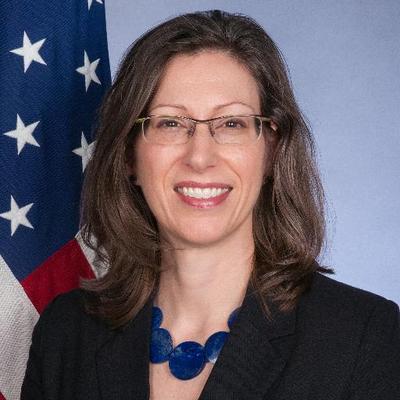
US State Department Principal Deputy Spokesperson Jalina Porter noted that the United Nations Human Rights Council passed a resolution to promote human rights in Sri Lanka.

“The United States co-sponsored this resolution and together with the international community calls on Sri Lanka to safeguard the rights of ​ethnic and religious minorities, human rights defenders, and civil society actors, and to take credible and meaningful steps to address its past, promote reconciliation, and guarantee equal access to justice for all its people,” she said.

Jalina Porter said the resolution expands reporting requirements for the Office of the High Commissioner for Human Rights and includes a mandate to collect and preserve evidence for future accountability processes and expresses concern about the trends over the past year.

UN begins monitoring Sri Lanka

The resolution on Sri Lanka which was adopted by the UN Human Rights Council will take immediate effect with the Office of the High Commissioner for Human Rights (OHCHR) beginning the process to closely monitor Sri Lanka, UN sources told Daily Mirror last night.

Monitoring Sri Lanka will be carried out immediately with existing staff while other related work will be implemented once the UN General Assembly approves funding later this year.

The resolution may not have an immediate impact on Sri Lanka but with over 40 cosponsors, sources said that in the long term there could be an impact on trade with some countries and travel restrictions imposed on some officials as a result of the resolution.

The United States, EU and a number of other countries are among the cosponsors of the resolution, some with no voting rights in the UN Human Rights Council.

The resolution has called on the Office of the High Commissioner to enhance its monitoring and reporting on the situation of human rights in Sri Lanka, including on progress in reconciliation and accountability.

OHCHR has also been told to present an oral update to the Human Rights Council at its forty-eighth session, and a written update at its forty-ninth session and a comprehensive report that includes further options for advancing accountability at its fifty-first session, both to be discussed in the context of an interactive dialogue.

Meanwhile, the United Nations said it would require more funds to fully implement the resolution on Sri Lanka.

OHCHR is looking to recruit 12 new employees to work on Sri Lanka. Among them are legal advisors with experience in international criminal justice and/or criminal investigations and prosecutions to coordinate the team and oversee an information and evidence collection strategy, analysts, two investigators/human rights officers and victim support officers.

Director of Programme Planning and Budget Division at the UN, Johannes Huisman said that draft resolution A/HRC/46/L.1/Rev.1, would require an additional one-time requirement of $2,856,300.

He said the funds required to implement the new resolution on Sri Lanka is not in the budget for the year 2021.

In a letter to Goro Onojima, the Secretary of the Human Rights Council, Huisman said that the financial requirements, in accordance with established procedures, would be brought to the attention of the General Assembly at its 76th session.

The resolution seeks OHCHR support for relevant judicial and other proceedings, including in Member States, with competent jurisdiction.

The funds will be required for the process to collect, consolidate, analyse and preserve information and evidence and to develop possible strategies for future accountability processes for gross violations of human rights or serious violations of international humanitarian law in Sri Lanka, advocate for victims and survivors, and support relevant judicial and other proceedings, including in Member States with competent jurisdiction.

Posted in Uncategorized

UN to collect evidence of alleged Sri Lanka war crimes – BBC

The United Nations human rights chief Michelle Bachelet has been authorised to collect and preserve evidence of alleged war crimes during Sri Lanka’s long civil war, which ended in 2009.

The UN believes 80,000-100,000 people died in the 26-year conflict with the Tamil Tiger rebel group.

A resolution passed by the UN Human Rights Council accused Sri Lanka of “obstructing accountability”.

Sri Lanka described the resolution as “unhelpful” and “divisive”.

The council’s resolution also called for trials of suspects in foreign countries.

Both the government and the Tamil Tiger rebels are accused of atrocities during the conflict.

Speaking to the BBC on Tuesday, Ms Bachelet said: “I welcome the Human Rights Council’s decision to continue its monitoring of human rights in Sri Lanka and pursue accountability for past crimes. I salute the courage and commitment of victims from all communities in Sri Lanka in their pursuit of truth and justice.”

She said she hoped Sri Lanka would “change course from its current policies” and “ensure full protection of minorities, human rights defenders and the media”.

In the war’s final few months, the Sri Lankan army pinned the rebels into a strip of north-eastern coast, where the government says the rebels kept thousands of civilians as human shields, exacerbating the death toll.

Yasmin Sooka, a rights lawyer involved in a civil prosecution against Sri Lanka’s current President Gotabaya Rajapaksa for alleged war crimes, said the resolution was “hugely significant for victims”.

“It really is a recognition that at the domestic level, processes have failed and there is no real hope that victims will access justice,” she told the Reuters news agency.

The push to pass the resolution was led by the UK. It passed by 22 votes to 11, with China and Pakistan among those voting against. There were 14 abstentions, including that of neighbouring India.

Ahead of the vote, the British ambassador Julian Braithwaite said: “We bring this resolution in the hope that it will help advance the human rights of all communities, including Buddhist, Christian, Muslim, Sinhala or Tamil.

“And more importantly that it will help prevent the recurrence of past grave violations of human rights which the High Commissioner warned this council about in such clear terms.”

The success of the resolution gives Ms Bachelet’s office new staff, powers and a $2.8 million budget to look at Sri Lanka’s war with a view to future prosecutions.

At a press conference in Sri Lanka’s capital Colombo, the nation’s Foreign Minister Dinesh Gunewardena said the resolution lacked authority as more nations voted against or abstained than in favour.

“The resolution was brought by countries supported by Western powers that want to dominate the Global South,” he said.

The UN Human Rights Council also expressed alarm at the human rights situation in Sri Lanka today, including a “deepening and accelerating militarisation of civilian government functions”, “the erosion of the independence of the judiciary”, and “increased marginalisation” of Tamil and Muslim minorities.

Analysis

Anbarasan Ethirajan, World Service South Asia Regional Editor

Despite weeks of intense behind-the-scenes diplomatic campaigning, the UN Human Rights Council resolution has gone against the Sri Lankan government.

The new resolution gives more powers to the UN human rights chief to ensure accountability for the alleged war crimes during the conflict with the Tamil Tiger rebels which ended in 2009, and the evidence gathered can be used for any future prosecutions.

Sri Lanka is worried that in the long term it may lead to travel and other restrictions on some of the military and civilian officials involved in the war. The government has been defiant, arguing that the resolution cannot be implemented without the consent of the country concerned.

But some Tamil community leaders believe that the UN resolution did not go far enough to impose tougher sanctions on Sri Lanka. For them, their wait to find answers about their relatives missing in the war continues. They want accountability for the thousands of deaths.

The resolution may not satisfy all the parties concerned, but it’s a clear reminder from the international community that the alleged abuses in the Sri Lankan conflict will not be forgotten or ignored.

Posted in Uncategorized

Canada welcomes UN Human Rights Council resolution on Sri Lanka

The Honourable Marc Garneau, Minister of Foreign Affairs, today issued the following statement:

“Canada welcomes the adoption of the UN Human Rights Council’s (UNHRC) resolution on promoting reconciliation, accountability and human rights in Sri Lanka.

“Today’s resolution represents the international community’s continued support for ensuring reconciliation, accountability and respect for human rights in Sri Lanka. Canada, as part of the Core Group on this resolution, worked alongside members of the council for the passage of this resolution. The Human Rights council plays a key role in preventing future serious violations, as well as in addressing those of the past. The new resolution advances accountability in Sri Lanka by mandating the Office of the United Nations High Commissioner for Human Rights ‘to collect, consolidate, analyse and preserve information and evidence’ of gross violations of human rights and humanitarian law. This mandate will be critical for future accountability processes. The continued reporting and the attention of the UNHRC will assist in monitoring ongoing human rights concerns in the country.

“Canada will continue to urge Sri Lanka to uphold its human rights obligations, end impunity and undertake a comprehensive accountability process for all violations and abuses of human rights. Canada believes the resolution is a step toward securing a safe, peaceful and inclusive future for Sri Lanka, and, to this end, we stand ready to support efforts that work towards this goal.”

Contacts
Syrine Khoury
Press Secretary
Office of the Minister of Foreign Affairs
Syrine.Khoury@international.gc.ca

Media Relations Office
Global Affairs Canada
343-203-7700
media@international.gc.ca
Follow us on Twitter: @CanadaFP
Like us on Facebook: Canada’s foreign policy – Global Affairs Canada

Sri Lanka rejects UN move to protect war crimes evidence -AFP

Sri Lanka on Tuesday rejected a UN move to preserve evidence of war crimes in the country and said the money allocated for the effort would be better spent on housing for the poor.

The resolution adopted by the UN Human Rights Council in Geneva called for a $2.8 million budget to collect and preserve evidence of war crimes for future prosecutions.

It follows a damning report from UN rights chief Michelle Bachelet on Sri Lanka’s failure to prosecute war criminals from the island’s separatist conflict that ended in May 2009.

Foreign minister Dinesh Gunawardena said the UN rights council’s censure motion, which 22 voted for and 11 against, was not binding on Colombo.

“It is a waste of money. Highly uncalled for,” Gunawardena told reporters at a hurriedly organised press conference in Colombo shortly after losing the vote.

“Without the consent and acceptance of the country concerned, it cannot be implemented.”

The money would be better spent on providing “housing for the entire population in the Jaffna peninsula”, he said, referring to the heartland of the island’s minority Tamils in the war-battered region.

Successive governments in Sri Lanka have resisted calls for an independent investigation into allegations that troops killed at least 40,000 Tamil civilians while crushing Tiger guerrillas, a charge Colombo denies.

Posted in Uncategorized

US among over 40 co-sponsors of resolution on Sri Lanka

The United States is among over 40 co-sponsors of the resolution on Sri Lanka which was adopted by the UN Human Rights Council in Geneva today.

While the US is not a member of the council with voting rights, it can sign as a co-sponsor.

The resolution has so far been co-sponsored by Albania, Australia, Austria, Belgium, Bulgaria, Canada, Croatia, Cyprus, Czechia, Denmark, Estonia, Finland,France, Germany, Greece, Iceland, Ireland, Italy, Latvia, Liechtenstein, Lithuania, Luxembourg, Malawi, Malta, Marshall Islands, Montenegro, Netherlands, New Zealand, North Macedonia, Norway, Poland, Portugal, Romania, San Marino, Slovakia, Slovenia, Spain, Sweden, Switzerland, United Kingdom of Great Britain and Northern Ireland and United States of America.

The resolution, titled ‘Promoting reconciliation, accountability and human rights in Sri Lanka’ requests the Office of the High Commissioner to enhance its monitoring and reporting on the situation of human rights in Sri Lanka, including on progress in reconciliation and accountability, and to present an oral update to the Human Rights Council at its forty-eighth session, and a written update at its forty-ninth session and a comprehensive report that includes further options for advancing accountability at its fifty first session, both to be discussed in the context of an interactive dialogue.

It further calls upon the Government of Sri Lanka to protect civil society actors, including human rights defenders, to investigate any attacks and to ensure a safe and enabling environment in which civil society can operate free from hindrance, surveillance, insecurity and threat of reprisals.

It also requests the Government of Sri Lanka to review the Prevention of Terrorism Act, and ensure that any legislation on combating terrorism complies fully with the State’s international human rights and humanitarian law obligations.

The resolution also urges the Government of Sri Lanka to foster freedom of religion or belief and pluralism by promoting the ability of all religious communities to manifest their religion, and to contribute openly and on an equal footing to society.

The resolution on Sri Lanka was adopted at the UN Human Rights Council in Geneva today with 22 voting for, 11 against it and 14 abstentions.

Posted in Uncategorized

Factors behind India’s abstention on Lanka resolution at UNHRC

India on Tuesday abstained from voting on the UN Human Rights Council (UNHRC) resolution on Sri Lanka for a variety of reasons. The immediate reason perhaps lay in the April 6 elections to the Tamil Nadu State Assembly in which the Bharatiya Janata Party (BJP) is contesting 20 seats of the 234 seats in alliance with the ruling All India Anna Dravida Munnetra Kazhagam (AIADMK).

The alleged human rights violations in Sri Lanka against the Tamil minority is a key electoral issue in Tamil Nadu, a fact which the BJP cannot ignore. And the subject matter of the UNHRC resolution is the alleged violation of the human rights of the Tamils of Sri Lanka.

If India had voted against the resolution moved by the West-led Core Group on Sri Lanka, the BJP and its ally, the AIADMK, would have had to pay a heavy electoral price.

However, New Delhi chose to be neutral rather than vote for or against the resolution. This was because it could not alienate Sri Lanka either. Sri Lanka has great geo-political importance for India in the context of China’s ever widening footprint in the island nation in the economic sphere. Dominance in the economic sphere could easily acquire an additional political and geo-strategic content.

The resolution on Sri Lanka was adopted at the UNHRC with 22 of the 47 members voting for the resolution, 11 voting against, and 14 abstaining. India, Japan, Indonesia, Libya, Bahrain, Cameroon and Nepal were among the countries that abstained. China, Pakistan, Bangladesh, Philippines, Russia, Somalia, Uzbekistan, and Venezuela were among the countries that voted against the resolution.

The Resolution

The resolution requested the Office of the High Commissioner for Human Rights (OHCHR) to enhance its monitoring and reporting on the situation of human rights in Sri Lanka, including progress in reconciliation and accountability, and to present an oral update to the Human Rights Council at its forty-eighth session, as well as a written update at its forty-ninth session, and a comprehensive report that includes further options for advancing accountability, at its fifty-first session, both to be discussed in the context of an interactive dialogue.

The resolution also encourages the OHCHR and relevant special procedure mandate holders to provide, in consultation with and with the concurrence of the Government of Sri Lanka, advice and technical assistance on implementing the above-mentioned steps.

India’s View

The Indian representative said: “India’s approach to the question of human rights in Sri Lanka is guided by two fundamental considerations. One is our support to the Tamils of Sri Lanka for equality, justice, dignity and peace. The other is in ensuring the unity, stability and territorial integrity of Sri Lanka. We have always believed that these two goals are mutually supportive and Sri Lanka’s progress is best assured by simultaneously addressing both objectives.”

“India supports the call by the international community for the Government of Sri Lanka to fulfill its commitments on the devolution of political authority, including through the early holding of elections for Provincial Councils and to ensure that all Provincial Councils are able to operate effectively, in accordance with the 13th amendment to the Sri Lankan Constitution.”

“At the same time, we believe that the work of OHCHR should be in conformity with the mandate given by the relevant resolutions of the UN General Assembly.”

“We would urge that the Government of Sri Lanka carry forward the process of reconciliation, address the aspirations of the Tamil community and continue to engage constructively with the international community to ensure that the fundamental freedoms and human rights of all its citizens are fully protected.”

Sri Lankan View

The Sri Lankan Representative C.A.Chandraprema said that the resolution was “unwarranted, unjustified and in violation of the relevant articles of the UN Charter in particular article 2 sub section 07, and relevant sections of the United Nations General Assembly resolutions 60/251 that provides for the mandate of the Human Rights Council.”

He said all members of the council would agree that UNHRC cannot assume tasks not assigned to it by the UN General Assembly in resolution 60/251 or in subsequent resolutions.

The Sri Lankan envoy said the resolution violated the principles of sovereign equality of all states and non-interference in internal affairs. The resolution was presented without the consent of Sri Lanka as the country concerned and is therefore unhelpful and divisive.

“No country has a greater interest in bringing about reconciliation among its peoples than the country concerned, a point that has repeatedly been emphasized during the proceedings of this council,” Chandraprema said.

“Notwithstanding the stated objectives of the proponents of the resolution, Sri Lanka is of the view that this resolution will polarize Sri Lankan society and adversely affect economic development, peace and harmony,” he added.

Fallout For Indo-Lankan Ties

Although Indian Prime Minister Narendra Modi is believed to have explained India’s predicament to the Sri Lankan President Gotabaya Rajapakasa over phone and had assured him that India would do no harm to Sri Lanka, the majority community in Sri Lanka, the Sinhalese, would not take kindly to the Indian abstention.

India-Sri Lanka -Lankan relations, none too good at the moment, will be further strained, observers believe. Relations had touched a new low after Sri Lanka disregarded a 2019 agreement to give India the project to construct the East Container Terminal in Colombo port. Losing faith in Colombo’s word, the government of India did not take Sri Lanka’s alternative offer of the West Contain Terminal, leaving the matter to a private Indian company, the Adanis, to negtiate.

India is also apprehensive about the fate of the 13th.Amendment (13A) of the Sri Lankan constitution which gives the provinces (particularly the Tamil-speaking Northern and Eastern provinces) a measure of autonomy. The 13A flowed from the India-Sri Lanka Accord of 1987 which was meant to solve the Tamil question in Sri Lanka through devolution of power to provinces.

For the past few months Sri Lankan ministers, including the former Provincial Councils minister Adm.Sarath Weerasekara had been talking of repealing the 13A on the grounds that the provincial councils were wasteful and divisive. Following India’s expression of concern, Lankan President Gotabaya Rajapaksa relieved Weerasekara of the portfolio and later announced that Provincial Councils elections will be held in June after clearing the legal hurdles. But India continues to be apprehensive and its representative at the UNHRC Indra Mani Pandey made the fate of the 13A the burden of his speech.

Importance of Sri Lanka

However, even though New Delhi is miffed with Colombo on several grounds, it cannot but build good relations with it in view of China’s growing economic footprint in Sri Lanka, which could acquire a political and geopolitical dimension. Geo-economics is the basis of geopolitics in this age of globalization.

Citing a security threat, New Delhi successfully thwarted Colombo’s bid to give some power projects in the Northern Province to a Chinese company. India made Sri Lanka a part of its Indian Ocean Maritime Security architecture with the responsibility to coordinate the mechanism’s activities by establishing a Secretariat in Colombo. Recently, in a thinly veiled attempt to show its military potential, India participated in the 70th.Anniversary celebrations of the Sri Lankan Air Force by sending its Tejas fighter aircraft and aerobatic teams to give demonstrations.

India bent over backwards to be the first to supply COVID-19 vaccines with the External Affairs Minister Dr.S.Jaishankar himself flying to Colombo to make the offer to President Gotabaya Rajapaksa. Although the second consignment of the COVISHIELD vaccines will be delayed because of supply constraints, to date, India is the only vaccine supplier in Sri Lanka. India is continuing its house building projects in Sri Lanka and has a US$ 15 million project to help Buddhist institutions.

However, it remains to be seen how India will reconcile its long term interest to maintain good relations with Sri Lanka with the short term and immediate interest in keeping the Tamils of Tamil Nadu happy in the un-up to the April 6 State Assembly elections. Observers see India’s neutrality in the UNHRC as a way out of the sticky situation.

Source:Newsin.Asia

Posted in Uncategorized

U.S. says Sri Lanka has to address painful past to build a strong future

The United States reiterating its dedication to Sri Lanka’s long-term peace and prosperity said the island nation has to address its painful past and ensure the rights of all citizens to build a strong future.

Commenting on the adoption of the UN Human Rights Council resolution on Sri Lanka today in Geneva, the U.S. Ambassador to Colombo Aliana B. Teplitz said the resolution co-sponsored by the U.S. acknowledges Sri Lanka’s ongoing efforts to deliver justice and accountability

However, it also recognizes that too many past promises and recommendations from government commissions have gone unfulfilled.

“For Sri Lanka to build a strong, inclusive future it has to address painful elements of the past and ensure the rights of all its citizens today,” Teplitz said in a Twitter post.

“As a co-sponsor, the U.S. reiterates its dedication to Sri Lanka’s long-term peace and prosperity,” she added.

Posted in Uncategorized

India abstains from UNHRC vote, calls for early PC polls in Sri Lanka

India has urged Sri Lanka for early holding of Provincial Council elections and to ensure that all Provincial Councils are able to operate effectively, in accordance with the 13th amendment to the Sri Lankan Constitution.

Delivering a pre-vote statement during the UNHRC session on draft resolution L1/Rev.1 titled “Promoting Reconciliation, Accountability and Human Rights in Sri Lanka,” Indian representative reiterated that his country supports the call by the international community for the Government of Sri Lanka to fulfill its commitments on the devolution of political authority.

Despite Sri Lanka’s calls for India’s support at the UNHRC sessions on its human rights and accountability record, the closest neighbor of the island nation decided to abstain from voting today. Foreign Secretary Admiral (Retired) Jayanath Colombage recently stated he is hopeful that India would stand by and vote in favor of Sri Lanka.

During the pre-vote statement, the Indian representative Mr. Pawankumar Tulshidas Badhe said, “India believes in the primary responsibility of the states for the promotion and protection of human rights and constructive international dialogue and cooperation guided by the principles and purposes of the UN Charter in support of such efforts.”

India says it has contributed to the relief, resettlement, rehabilitation and reconstruction process in Sri Lanka after 2009, as an immediate neighbor of the island nation.

“Our development assistance has focused on the restoration of livelihoods and economic revival, especially in Sri Lanka’s Northern and Eastern Provinces.”

India stressed that its approach to the question of human rights in Sri Lanka is guided by two fundamental considerations. First is their support to the Tamils of Sri Lanka for equality, justice, dignity and peace and the second is in ensuring the unity, stability and territorial integrity of Sri Lanka. “We have always believed that these two goals are mutually supportive and Sri Lanka’s progress is best assured by simultaneously addressing both objectives.”

Mr. Badhe went on to note: “India supports the call by the international community for the Government of Sri Lanka to fulfill its commitments on the devolution of political authority, including through the early holding of elections for Provincial Councils and to ensure that all Provincial Councils are able to operate effectively, in accordance with the 13th amendment to the Sri Lankan Constitution.”

India stresses that the work of OHCHR should be in conformity with mandate given by the relevant resolutions of the UN General Assembly.

India urged the Sri Lankan government to carry forward the process of reconciliation, address the aspirations of the Tamil community and continue to engage constructively with the international community to ensure that the fundamental freedoms and human rights of all its citizens are fully protected.

Japan, which was among the 14 countries that abstained from voting at the UNHRC session, meanwhile stated that in order to achieve national reconciliation and improvement of human rights situation, it is critical for Sri Lanka to implement its own initiatives.

“Japan hopes the international community will encourage and support Sri Lanka’s efforts.”

Japan recognizes the need for improvement regarding the human rights situation in Sri Lanka as well as the need for further effort for national reconciliation in the country, the representative said.

He stated that Japan takes note of the action taken by Sri Lanka such as the establishment of the commission of inquiry to investigate past cases of human rights violations and payment of reparations amounting to Rs. 142 million during 2020.

Sri Lanka loses vote at UN Human Rights Council

Sri Lanka lost a vote at the United Nations Human Rights Council today as the 47 members voted 22 to 11 to impose a resolution that will empower the UN to collect and store information that could lead to international criminal proceedings.

Fourteen members of the council, including India, Nepal and Japan abstained while China, Pakistan and Bangladesh supported Sri Lanka. The Resolution was introduced by the United Kingdom and among the proponents were Canada and the European Union states.

Foreign Minister Dinesh Gunawardena told reporters shortly after the vote that the session had been a “victory for Sri Lanka because 14 members had abstained so only 22 out of the 47 members supported the resolution.”

The resolution does not impose any sanctions on Sri Lanka as a country. The concrete result of the vote is that the UN will create an office with an annual budget of USD2.8 million to collect information about war crimes and crimes against humanity committed in the country.

The Executive Director of the Centre for Policy Alternatives Dr Paikiasothy Saravanamuttu told EconomyNext that the loss was a “foreign policy fiasco when you consider those who voted in support of Sri Lanka.”

In a statement made shortly before the vote was taken Sri Lanka’s Ambassador C A Chandraprema said that the scope of the resolution violates the United Nations Charter and accused the proponents of the resolution of politicizing the issues.

China which also supported Sri Lanka said that there was “interference in the internal affairs of Sri Lanka” in the Council proposing this resolution and urged members to oppose it.

The Philippines, which was roundly criticized by a number of Human Rights organisations for alleged extra-judicial killings, supported Sri Lanka calling for dialogue rather than a hostile resolution.

But the 22 yes votes was what most observers had predicted would happen on the eve of the vote. The supporters of the resolution had hoped for a few more yes votes so that there would have been a clear majority of yea votes.

The Sri Lankan government conducted a flurry of diplomatic moves over the past few weeks with Prime Minister Mahinda Rajapaksa visiting Bangladesh and President Gotabaya Rajapaksa making phone calls to the Secretary-General of the Organisation of Islamic Cooperation to get Muslim countries to support it.

Proposing the resolution to the Council the High Commissioner for Human Rights Michelle Bachelet pointed out that 12 years after the separatist war ended “domestic initiatives have repeatedly failed to ensure justice for victims and promote reconciliation. Despite commitments made in 2015, the current Government, like its predecessor, has failed to pursue genuine truth-seeking or accountability processes,” she said.

Earlier Bachelet had released a damning report on Sri Lanka accusing the armed forces and the LTTE of grave Human Rights violations.

She said the “impact on thousands of survivors, from all communities, is devastating. Moreover, the systems, structures, policies and personnel that gave rise to such grave violations in the past remain – and have recently been reinforced.”

In her report, the High Commissioner had noted that the space for civil society and independent media, which had grown significantly, is now rapidly shrinking in Sri Lanka.

“The independence of the judiciary, the Human Rights Commission of Sri Lanka, the National Police Commission and other key bodies has been deeply eroded by the recently adopted 20th Constitutional Amendment,” she said.

“The growing militarization of key civilian functions is encroaching on democratic governance. The continued failure to implement comprehensive reforms – or to vet personnel – leaves in place security and military officers who have been implicated in alleged grave crimes and violations,” she said.

The government had continued with its policy of forced cremations of the remains of all Covid 19 dead, despite serious objections raised by the Muslim and some Christian communities. It also disregarded recommendations by a panel of experts appointed by the Health Ministry that burial, which is the preferred method for these religious groups, could be allowed.

However, when seeking the votes of the Muslim countries in Geneva the government reversed the policy and the OIC allowed its members to vote for Sri Lanka.

Bachelet said successive Government commissions have failed to credibly establish the truth and ensure accountability. “Indeed, the Government has obstructed investigations and judicial proceedings into emblematic human rights cases,” she said.

“By repeatedly failing to advance accountability for past human rights violations committed, and by withdrawing its support for the Council’s resolution 30/1 and related measures, the Government has largely closed the door on the possibility of genuine progress to end impunity through a national process,” she added.