Lasantha’s daughter questions credibility of NPC

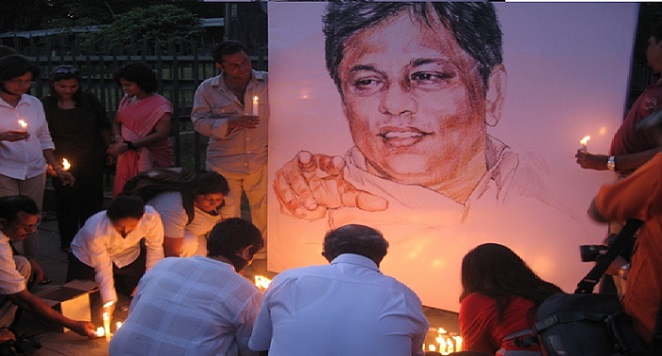
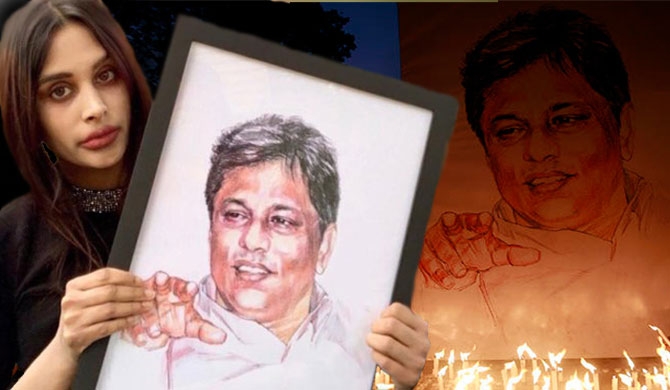
Ahimsa Wickrematunge, daughter of slain journalist Lasantha Wickrematunge, has questioned the credibility of the National Police Commission (NPC).

In a letter to the commission, Ahimsa Wickrematunge accused the commission and the Attorney General of approving the Government’s decision to put the Criminal Investigations Department (CID) in the hands of an officer who tampered with a murder investigation.

Wickrematunge said that in a previous letter to the NPC she drew attention to the fact that it appointed Prasanna J. Alwis as CID Director despite the CID having previously caught him allegedly tampering with evidence in the investigation into her father’s murder.

“I asked the commission to investigate how this happened. You confirm in your letter that evidence with regard to the death of Lasantha Wickrematunge had been suppressed by SSP A.R.P.J. Alwis and that was reported to the Magistrate of Mt. Lavinia on 4 October 2019. You also state that extracts on destroying and suppression of evidence have been handed over to Hon. Attorney General under C.R.01 40/2020. This file was submitted to the Attorney General before Mr. Alwis was appointed to head the CID,” Wickrematunge said.

She says she cannot believe that the commission and Attorney General blessed the regime’s decision to put the CID in the hands of an officer who tampered with a murder investigation.

She notes throwing natural justice to the wind, Alwis was once again allowed to oversee her father’s case and so the Commission must answer for appointing an accused criminal to head the CID.

“Never in the 140-year history of the CID had it ever been headed by an officer with even the slightest disciplinary blemish. That 140-year streak was broken when the NPC appointed a CID Director reported to court for suppressing evidence of Sri Lanka’s most emblematic unsolved murder, in which the state stands accused of killing a journalist for exposing corruption,” she said.

Ahimsa Wickrematunge says by turning a blind eye to the state’s effort to subvert these investigations, the NPC has jeopardised the credibility of the commission, the Police, the Attorney General’s Department and the entire Sri Lankan criminal justice system.

“The NPC well may go down in history as a complicit rubber stamp to an autocratic regime bent on covering up the atrocities of its leaders,” she said.

Ahimsa Wickrematunge called on the NPC to interdict and discipline Alwis, order a full audit of records of her father’s murder investigation and other CID cases including those involving Keith Noyahr and Upali Tennakoon, reveal how the commission was deceived into appointing an officer accused of hushing up a murder to run the CID and re-examine the credentials and disciplinary records of all 100+ officers who were brought into the CID since November 2019.

She notes in the letter that the commission is expected to serve the people and uphold the Constitution.
Malaysia’s 1998 playbook helps Sri Lanka shun IMF for China

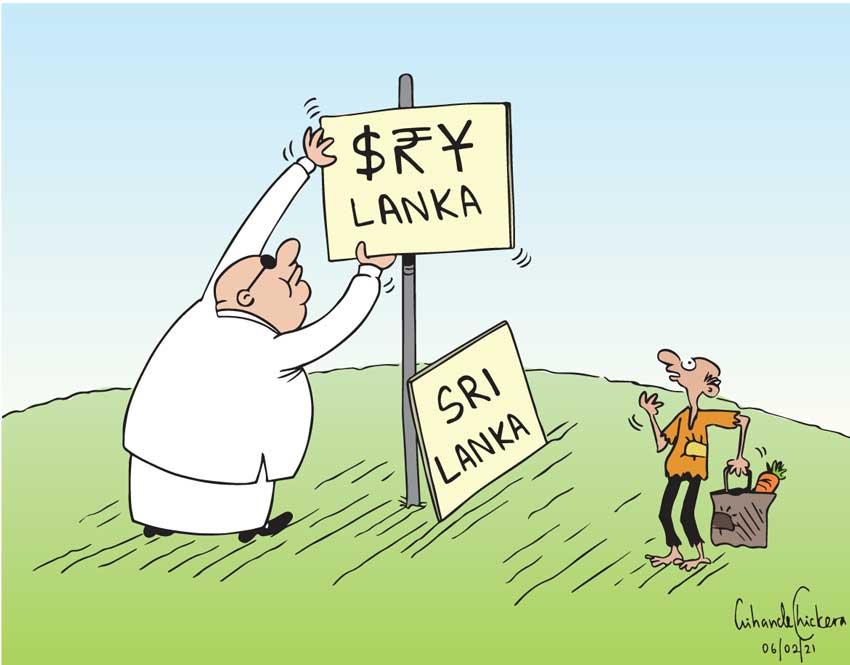
Faced with low foreign-exchange reserves and looming debt repayments, Sri Lanka is borrowing from the contrarian playbook Malaysia used during the days of the Asian crisis in 1998.

The island nation has imposed some form of capital controls and curbs on imports in signs that it’s turning inward, partly to end reliance on the International Monetary Fund before $ 3.7 billion of foreign debt matures this year.

The measures, such as repatriation of export earnings within 180 days from shipment, conversion of some export proceeds into rupees and getting commercial lenders to surrender a portion of their forex receipts to the Central Bank, are aimed at stopping the reserves from bleeding in the absence of loans from the IMF and revenue from tourism amid the pandemic.

That would help the country to rely on its own resources instead of foreign borrowing, the Central Bank of Sri Lanka said in a statement on 23 February. The steps will strengthen Sri Lanka’s credit profile, enhance exchange rate stability, and improve the resilience of the economy, it said.

What these measures also do are to help fend off interference from the IMF, whose aid comes with strict conditions – one of the reasons that prompted Malaysia’s then premier Mahathir Mohamad to shun aid from the lender despite descending into a recession following the Asian currency crisis. The IMF last year prematurely ended a loan program to Sri Lanka after disbursing $ 1.3 billion of an agreed $ 1.5 billion facility, leaving the nation scouting for ways to tide over the pandemic-induced downturn.

Sri Lanka has to repay $3.7 billion to holders of external debt this year, according to Central Bank Governor Weligamage Don Lakshman. The South Asian nation is expecting $ 32 billion from exports of goods and services, remittances and financial inflows, while the outflows are estimated at $ 27.6 billion, leaving a $ 4.4 billion surplus to service the debt, State Minister for Money and Capital Markets Ajith Nivard Cabraal said separately.

“The main thrust is to reduce the government’s reliance on foreign borrowings,” Citigroup Inc. analyst Johanna Chua wrote in a report on 25 February. “The odds of the July 2021 bond being repaid seem rather high given the willingness to pay,” she said.

Sri Lanka’s dollar bonds due in March 2030 are indicated at 59 cents on the dollar, according to prices compiled by Bloomberg. That compares with a high of 84 cents on the dollar in September 2020 before major rating firms downgraded the nation deeper into junk.

Although forex reserves this January fell to $ 4.8 billion from $ 8.9 billion about two years ago, they are enough to cover a little over three months of imports. The island nation is separately negotiating swaps and loans from countries including China and India to build its reserves buffer.

“It is the Government policy to work as much as possible to resolve our foreign exchange policies on a self-reliant basis and to hold discussions with institutions and organisations and countries which are willing to assist on a relatively non-interventionist basis,” Lakshman said in January.

That rules out the IMF, whose prescriptions for assistance included fiscal consolidation and removing caps on borrowing costs. The Government, in its latest budget, proposed increasing spending this year to support the economy, while the Central Bank, for its part, kept interest rates at a record low.

Sri Lanka is close to securing a $ 1.5 billion swap with China’s Central Bank, Cabraal said last month. Besides, discussions are on for loans worth $ 700 million with China Development Bank, Treasury Secretary S.R. Attygalle said.

Sri Lanka is following a market-oriented economy with State guidance, involving some controls and restrictions, according to Governor Lakshman.

“Such a framework would not be successful under an IMF program,” he said.

Source: Bloomberg

Posted in Uncategorized

UNP leader says Govt. is printing money like newspapers

The leader of the United National Party and former Prime Minister Ranil Wickremesinghe has said that the government is printing money in the manner of printing Sunday newspapers.

He made these remarks at a meeting held in Borella with the youth of the Green Blood organisation affiliated to the party on Sunday afternoon, regarding the current situation in the country

Responding to the questions posed by the youth members, Wickremesinghe said managing the economy was not an easy task and that it would take a decade for the Sri Lankan economy to bounce back. He pointed out that this government had printed three times the amount of money printed in the past ten years, which included the tenure of President Mahinda Rajapaksa in 2010 and of the Yahapalanaya Government in 2015.

He said that managing the economy was not an easy task and regretted the collapse of the program he had started in 2015 to stabilise the economy and repay foreign loans.

The former Prime Minister pointed out that the government had reduced taxes and reduced the country’s income by giving concessions to companies and big businesses, and that the general public did not get the benefit of such tax cuts. “In that way the income of the country decreased even before the arrival of COVID,” he said.

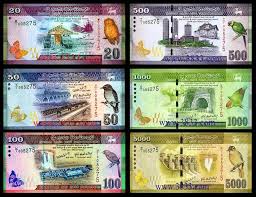
“The government prints money like printing newspapers because it has no revenue. We saved $ 7.5 billion as reserves. Now it is down to $ 4.5 billion. We built the economy although we were blamed. We allocated for money for healthcare. They opposed when we were going to give tabs to students. If tabs were given, now the problems of education would be solved.”

The former Prime Minister said that no development is taking place in the country and that investors are leaving the country, adding that the loan of $ 2 billion the Government has requested from India and China would not be received. He pointed out that the increase in prices was just the beginning and that the stars would start appearing by the end of this year.

The former Premier added that it will take an average government more than a decade to fix this economic situation.

“By then the youth age is over. The confidence of the youth who voted has been broken. The future of the youth is lost. When we talk about economic issues, the freedom of the youth is restricted.”

Posted in Uncategorized

Final version of resolution on SL after Wednesday

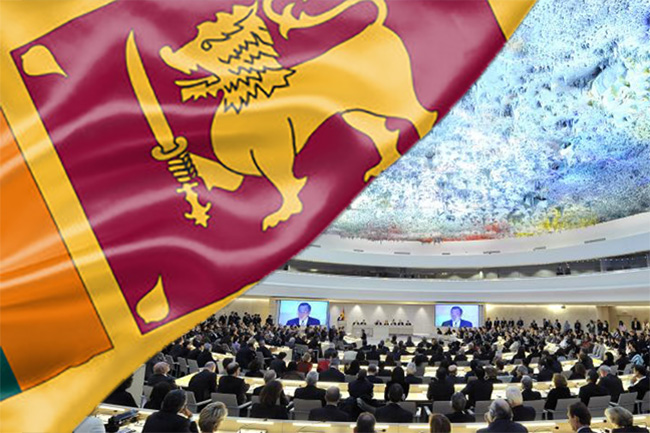
The core group of countries working on Sri Lanka’s issue at the United Nations Human Rights Council (UNHRC) will be ready with the final version of the resolution after another session of informal consultations with the states interested in the issue, an official said yesterday.

During the past week, such sessions were conducted on the resolution which Sri Lanka has already rejected. The United Kingdom which leads the core group called for these sessions.

The western countries, particularly those in the Scandinavian region, asked for strong wording of the resolution amidst objections by the member states that back

Sri Lanka. China, Russia, Cuba and Pakistan are among the countries that lead support for Sri Lanka. Sri Lanka has made engagements with India to woo its support, but there was no commitment even yesterday.

Indian Government refuses to be part of talks on WCT

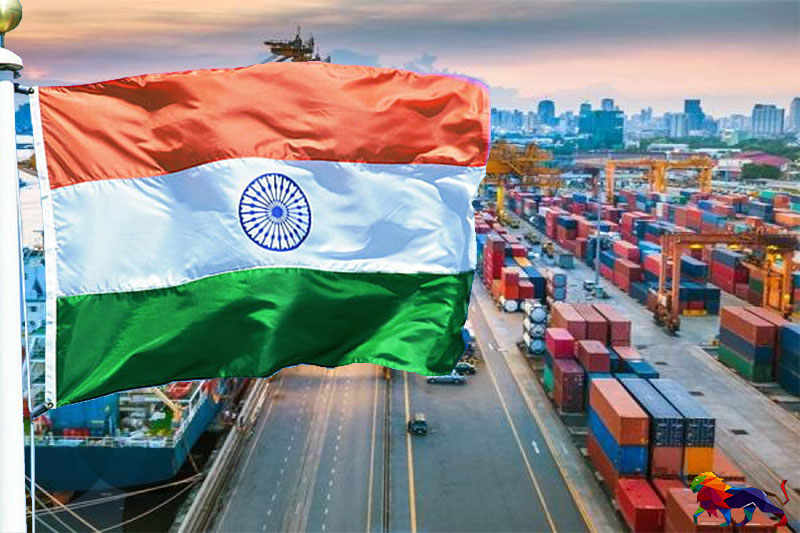
The Indian Government has refused to be part of talks between Sri Lanka and a private Indian company to develop the West Container Terminal (WCT) of the Colombo Port.

Cabinet co-spokesman Minister Udaya Gammanpila told reporters today that the Indian Government has officially informed the Sri Lankan Government that it will not be involved in the discussions underway between the private Indian company on the WCT development joint venture.

Responding to questions raised by journalists over the Indian Government’s withdrawal from the discussion, Minister Gammanpila explained that the Indian Government had nominated Adani Group of Companies to invest in the East Container Terminal (ECT) of the Colombo Port.

Thereafter, the Sri Lankan Government had made a policy decision to develop the ECT through the Sri Lanka Ports Authority. It was later decided to develop the WCT of the Port as a joint venture between Sri Lanka, India, and Japan, he said.

Minister Gammanpila said at a time when the Sri Lankan Government had made a decision with regard to the WCT, the Indian Government had nominated the Adani Group as the investor for the ECT.

He explained as it was the same investment but a change of location, the Government of Sri Lanka had assumed that India would go through with the nominated investor and had continued discussions with the Adani Group of Companies for the development of the WCT.

The Sri Lankan Government had assumed that the Indian Government would continue with the same nominated investor for the WCT development and had hence continued the discussions with the Indian company, Minister Gammanpila said.

The cabinet co-spokesman said however, the Indian Government has announced it will officially withdraw from the ongoing discussions.

He said despite this announcement, the Sri Lankan Government will continue discussions with the Adani Group of Companies on the joint venture to develop the West Container Terminal of the Colombo Port.

When inquired if Sri Lanka was comfortable with conducting discussions with a private Indian company without the involvement of the Indian Government, Minister Gammanpila said the Government of Sri Lanka has already commenced discussions on the joint venture.

When pointed out that the Adani Group operates several ports in India at present, the Minister said the WCT is not a strategic Port, as that of the ECT.

He said the ECT is strategically positioned and is capable of conducting back to back operations, due to which it cannot be jointly developed with foreign nations.

Minister Gammanpila said Ports officials and the forces believe due to the strategic positioning of the ECT, joint ventures could pose security threats to Sri Lanka.

He said however, as the WCT is not strategically positioned, developing it under a joint venture with Adani Group of Companies which also operates several ports in India, is not a conflict of interest.

Clarifying the two statements made by India and Sri Lanka on the joint venture, the Minister explained that the Indian Government had not made a nomination for the Wester Container Terminal, but had only nominated Adani Group of Companies for the East Container Terminal.

He said due to a policy change on the ECT, the Sri Lankan Government has decided to continue with the Indian Government’s nominee for the ECT, as the investor for the joint venture on the WCT.

When inquired if the Japanese Government had nominated an investor for the joint venture, Minister Udaya Gammanpila said the Sri Lanka Ports Authority has requested for a nominee, and he is yet to receive details on the progress in this regard.

Posted in Uncategorized

Strikes across the country urging the international community to take Sri Lanka before the ICC continue

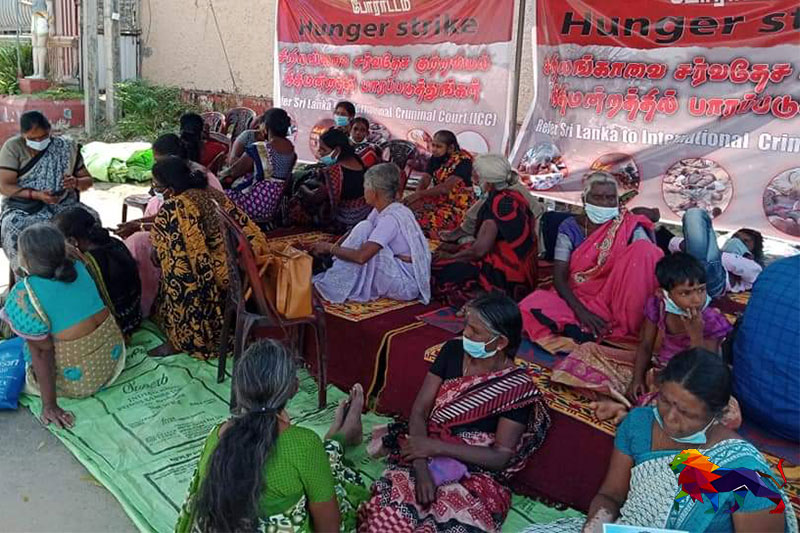
The hunger strike launched by the Tamil community to urge the international community to take the Sri Lankan government before the International Criminal Court (ICC) continues ​​in three locations in the North and East.

Religious leaders, university students and civil society activists began a hunger strike in front of the Nallur Kandaswamy Kovil in Jaffna on Sunday, February 28, demanding that all war criminals in Sri Lanka be brought before the International Criminal Court and that justice be done to the Tamil people.

While the Police attempted to prevent the fast, they later had to leave the location following the intervention of the organisers.

The fast commenced by the people of the East in front of the Mamangam Pulleyar Kovil in Batticaloa on Tuesday, March 2 continues for the sixth day today, while the fast started in front of the Draupadi Devalaya in Kalmunai, Ampara has completed five days today.

According to provincial correspondents, the Tamil people hope to continue the fast until March 23.

While the 46th session of the UN Human Rights Council (UNHRC) is currently underway in Geneva, protesters called on countries led by the UK that brought the resolution against Sri Lanka to refer Sri Lanka to the International Criminal Court.

Foremost among their demands is that justice should be done to the Tamil people in the North and East who have become victims of war crimes.

Journalists in Jaffna say that groups of university students will support the fast, which has been going on in Jaffna for more than three weeks.

At a press conference in the capital, several Sri Lankan civil society organisations recently called for all war criminals in Sri Lanka to be brought before the International Criminal Court and brought to justice.

United Nations High Commissioner for Human Rights Michelle Bachelet, in a recent report, has widely accused Sri Lanka of “grave human rights abuses” and called for accountability for war crimes.

“The time has come to take international action to bring justice to international crimes,” the High Commissioner said in her 17-page report.

Posted in Uncategorized

‘This is a test of moral authority’ – UK Shadow Minister calls for a comprehensive rewrite of UN resolution

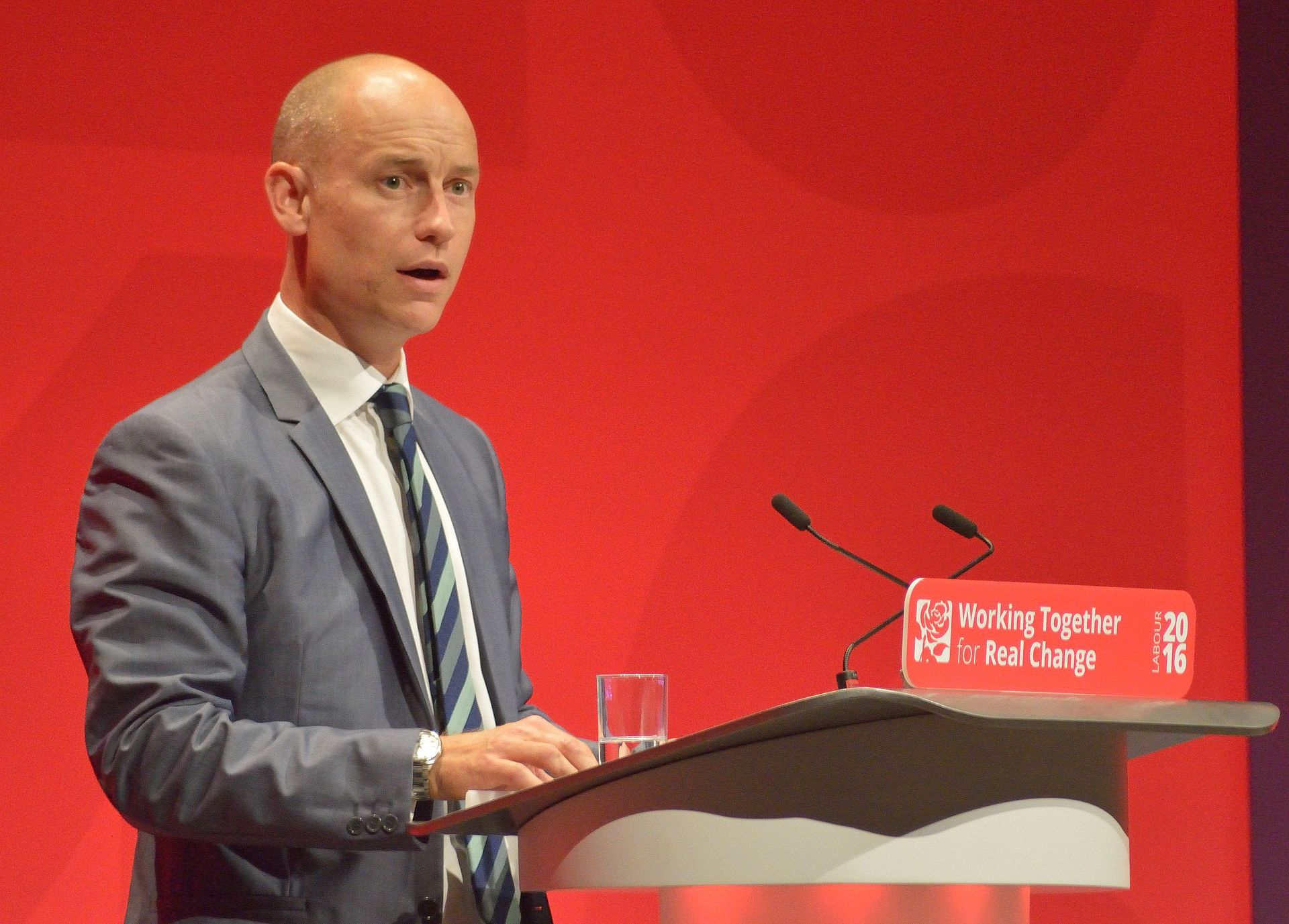
Writing to Minister of State for Asia, Nigel Adams, UK Shadow Minister for Asia and the Pacific, Stephen Kinnock, has called on the government to ‘comprehensively rewrite’ the current proposed UN resolution and questioned why the government’s review of its Global Human Rights sanctions regime does not include “a single senior Sri Lankan government minister, official or military officer”.

In his statement Kinnock criticised the government’s refusal to consider referring Sri Lanka to the ICC, maintain that Britain’s position, “should not be determined simply by the veto-wielding intentions of two of its permanent members”. Britain’s refusal to refer Sri Lanka to the ICC has sparked a great deal of criticism from human rights defenders and Tamil activists.

Failing to rise to the challenge

In his statement, Kinnock, slammed the government’s response maintain that “the UK government has a particular responsibility to demonstrate moral and political leadership on this matter, but unfortunately it is clear judging by this drafting resolution that you are failing to rise to the challenge”.

Kinnock criticised the resolution noting that it was “too vague and insufficiently robust”. Thus failing “to reflect the extent of the devasting impact of the human rights abuses that have been perpetrated in Sri Lanka”. He further maintains that it “falls far short of what is required in terms of tangible action”.

In his statement, Kinnock raised five specific concerns with the resolution

  1. Kinnock notes that Britain should support the High Commissioner’s call for the application of universal jurisprudence noting that “it is beyond doubt that the Sri Lankan government and military will continue to deny, delay and evade accountability”. He calls on the British government to confirm that the principle of universal jurisdiction must be applied to the actions of the Sri Lankan government and military
  2. The resolution is also criticised as it fails to recommend the establishment of an International Independent Investigative mechanism (IIIM). Kinnock criticises the vague reference in the resolution to strengthening evidence gathering and collation, maintain that the resolution should emphasis that a III-M is required.
  3. He also notes that whilst there would be opposition to Sri Lanka being referred to the International Criminal Court, “it is not an acceptable argument against trying”. He emphasises that the UK’s position “should not be determined simply by the veto-wielding intentions of two of its permanent members”.
  4. Kinnock highlights that there is nothing in the draft resolution about prevention and asks the government what steps it will take “to ensure that this resolution leads to tangible measures to protect human rights defenders on the ground from the increasingly aggressive actions of the Sri Lankan authorities?”
  5. Kinnock also criticises the piece noting that the time scale given for considering accountability options, “18 months”, is “unacceptably long”. The evidence is clear and the UNHRC needs to take action now, rather than allowing the Sri Lankan government yet more time to obstruct and obfuscate”. He calls for this timescale to be amended to “6 months”.

Magnitsky sanctions

Commenting on the UK’s sanction regime, he notes that the UK has not included “a single senior Sri Lankan government minister, official or military officer”. He further notes that Lord Ahmad’s claim that the government is keeping “all evidence and potential listing under review”. Responding to this he asks why “this review is taking so long, given the extent of the detailed evidence that is already widely available about the gross human rights violations that have taken place there?”

Kinnock emphasises “that the chances of the resolution being approved by the UNHRC on 24 March will be enhanced if it is made more robust and substantial”. He further warns that the UK governments’ draft resolution could be rejected “if its too weak and lacks substance”.

He concludes by emphasising that the UK “owes it to the victims and survivors of the atrocities that have taken place in Sri Lanka to ensure that it rises to the occasion and shows the moral courage and leadership that is so urgently needed”.

Posted in Uncategorized

BBS calls for Chief Prelates stance on Easter PCoI

The Bodu Bala Sena organisation has requested the Chief Prelates of the three chapters to issue a joint statement pertaining to their stance on the report by the Presidential Commission of Inquiry that probed the Easter Sunday attacks.

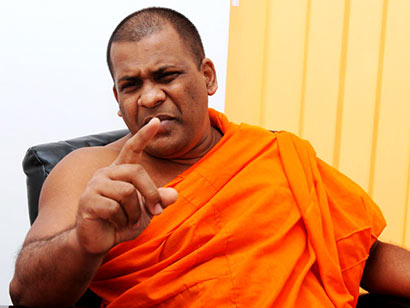
Speaking to media after calling on the Chief Prelates in Kandy today General Secretary of the Bodu Bala Sena organisation venerable Galagodaththe Gnanasara thera said the report by the Commission is warped and claimed they will launch a satyagraha campaign in protest.

Gnanasara thera said discussions were held regarding the report with the Chief Prelates.

Gnanasara thera said the Chief prelates fulfilled their duty in every occasion in the country, adding that although they don’t comment on every matter, they are closely monitoring all incidents and are notifying relevant persons when required.

The thera said a negative fate has befallen the Buddhist community through the warped report, adding that Bodu Bala Sena organisation will take the lead in uplifting the country from the disaster it fell into as a result of extremism.

Posted in Uncategorized

Northern province goes dark due to technical issue

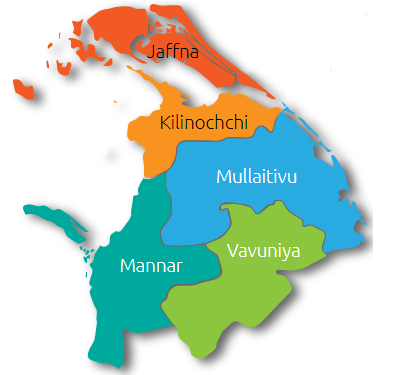
The entire northern province is experiencing an electricity disruption following a technical issue at the Anuradhapura New Grid Sub-station.

The spokesperson for the Ministry of Power Sulakshana Jayawardena speaking to News 1st said several other areas which receive electricity from the Valachchenai, Habarana, Polonnaruwa, and Vavuniya Grid Sub-Station too are experiencing a power-cut.

Both the Anuradhapura and Polonnaruwa districts are also in the dark, he added.

12 years later; Lasantha’s killers still at large

The suspects linked to the murder of The former Editor of The Sunday Leader Lasantha Wickrematunge are yet to be identified, 12 years since the horrific incident took place in broad daylight.

Last night we focused on the broad scope and state of the investigations, following Lasantha’s daughter, Ahimsa Wickramatunge’s Opinion Piece to The Washington Post.

How was the murder carried out?

At the time, the judicial medical officer of the Kalubowila Teaching Hospital claimed that Lasantha Wickrematunga had sustained 12 gunshot injuries.

But the Government Analyst as well as the Professor who performed the surgery on the journalist ruled out shooting in their reports.

When Lasantha’s remains were exhumed on the 27th of September 2016, it was confirmed that he had not died of gunshot injuries.

Question Number 1: Were the weapons used in the murder recovered during investigations?

On the 27th of January 2009, a motorcycle belonging to a resident of Vavuniya, believed to be used in the killing, was recovered from a swamp in Attidiya.

At the time of recovery, it had been more than a week since two individuals, including the motorcycle owner, had been abducted and murdered.

Question Number 2: How can the mystery of the motorcycle and its owners be explained?

03. The notebook containing vital evidence

Lasantha Wickrematunge’s notebook, where he allegedly noted down the number of the motorcycle that had been following him on that fateful day, was transferred from the possession of the Officer-In-Charge of the Mt. Lavinia Police Crimes Branch of a Deputy Police Chief in the area at that time.

Both officers were arrested in February 2018 over charges of concealing evidence but were granted bail on the 2nd of July in the same year.

Question Number 3: What happened to the notebook and the vital piece of evidence?

04. Telephone records

Investigations carried out by the Terrorism Investigation Division revealed five telephone numbers believed to be linked to the killing.

A resident of Nuwara Eliya, identified as the bearer of the National Identity Card registered to these numbers, was arrested along with an army intelligence officer.

But the owner of these numbers had died in prison on the 13th of October 2011, while the intelligence officer had been released from charges due to lack of evidence on the 6th of September 2013.

Question Number 4: What happened to the telephone records?

05. Investigations carried out by various units.

On the 25th of November 2009, investigations launched by the Crimes Branch of the Mount Lavinia Police into the incident had been transferred to the Criminal Investigations Department.

These investigations were passed on to the Terrorism Investigation Division following the presidential election in 2010.

The Officer-In-Charge of the Terrorism Investigation Division is now serving as its director.

In 2015, the task of carrying out the investigations, which bore no result, had been entrusted with the Criminal Investigations Department.

The Criminal Investigation Department director who uncovered several vital pieces of evidence at that time is now in prison.

Assistant Police Superintendent Sisira Tissera, who was also part of the investigations, has been given a transfer while Police Inspector Nishantha de Silva had fled the country.

Question Number 5: Why were there so many changes to the investigative team?

In addition to being the Editor of The Sunday Leader, Lasantha Wickrematunge was a member of the MTV/MBC/News 1st Media Network and a trusted colleague.

12 Years have passed since his murder. His daughter, Ahimsa, recently put down her anguish in an opinion piece, published in The Washington Post.

The Truth can at times be hidden, blocked or suppressed. It can even be twisted.

But just like the sun rises each morning and dispels the darkness, so will the Truth rise with absolute certainty and expose lies and deceit.

There is NO escape from the Truth.

Source:NewsFirst.lk