The End of an Era of Extremism in Sri Lanka – Victor Ivan

Professor Sirima Kiribamuna, making a lengthy review of the Mahavamsa, the great chronicle of Sri Lanka has extolled it as “the culmination of the historical thinking of the ancient Sinhalese”.

Contrary to what professor Kiribamuna has said, the Mahavamsa cannot be considered as a book of history written for the purpose of recording the history of the Sinhalese race. It is more an account of the history of the Theravada Buddhism of Sri Lanka. However, the author of the Mahavamsa has recorded the history of Theravada Buddhism as something in which the Sinhala race and Buddhism have been inextricably linked.

On the other hand, Amaradasa Liyanagamage, who can be considered a better and more courageous historian, has pointed out that according to the Mahavamsa, the Lord Buddha by his clairvoyance, had foreseen that, after his Parinirvana, the passing away, the Buddhism (the doctrine) will finally be established and preserved in Sri Lanka.

On the same day, Prince Vijaya, a member of the Sakya clan, the clan to which the Buddha also belonged to, with the blessings of the Buddha set out from Sinhapura of Lata Rata accompanied by seven hundred followers lands on the shores of Thambapanni, a location in the island of Lanka; the Buddha spoke to the God Sakka, the Lord of gods, and entrusted him with the task of carefully protecting prince Vijaya with his followers, the new settlers arriving in Sri Lanka.

The link the author of the Mahavamsa has made between the origin of the Sinhala race and Buddhism with this narrative is not only unauthentic but also will not augur well for the Sinhala race or Buddhism.

In the pre-modern era, the Mahavamsa remained in the form of an Ola script written in the Pali language. So, it can not be considered to have made a great impact on the people of that era.

The Mahavamsa became a book that affected the psychology of Sinhala Buddhists in Ceylon only after it was translated into Sinhala and published as a book during the British rule as a part of their project on the history of the country.

Anagarika Dharmapala

In the pre-modern era, race and religion except caste did not constitute a dividing line. It was only during the modern era that ethnicity and religion became a dividing line between the peoples of Sri Lanka. According to Bryce Ryan, the bitterest conflicts in Sri Lanka which erupted from the end of the nineteenth century until about 1925 had been among different castes and not among ethnic groups.

Anagarika Dharamapala was the theorist who had made use of the alleged connection between the Sinhala race and Buddhism as illustrated in the Mahavamsa, and developed a simple theory of militant racism for Sinhala Buddhists at the beginning of the modern era.

Anagarika Dharmapala was the most recognized figure by the Sinhala Buddhists among the leaders who emerged in the aftermath of Sri Lanka moving into a modern era. As Kumari Jayewardene has rightly put it, he was “the only aristocrat who walked with his head held high in the midst of a crowd of humble Sri Lankans who were cowardly shrinking and crawling on their bellies.”

Dharmapala was the staunch proponent of a policy that treated all non-Sinhala Buddhists living in Sri Lanka as Pariahs or outcasts and maintained that only the Sinhala Buddhists have the right to claim for Sri Lanka.

He blamed not only the Europeans who conquered Sri Lanka but also the minorities living in the country for the decadence of the Sihala nation and Buddhism. He referred to all those who consumed beef (he called beef Gerimas) as Vasalayas or social outcasts. The militant and racist ideas spread by Dharmapala among Sinhala Buddhist people affected the Muslims and Burghers devastatingly while he was alive.

’56 Revolution

The Sinhala-Buddhist militant racism introduced by Anagarika Dharmapala continued to act as a cancer pervading the post-independence Sinhala Buddhist community. There was a growing discontent and unrest among the community of the Buddhist Sangha over not restoring Buddhism, to the level it enjoyed during the reign of ancient Sinhala kings despite a considerable time having lapsed after independence.

In view of the prevailing unrest among the Buddhist priests, Venerable Henpitagedara Gnanaseeha Thero, Gunapala Malalasekera and NQ Dias launched a strategic program to enlighten the Buddhist priests and the Buddhist people of the circumstances and win a Sinhala Buddhist government. The movement of the Buddhist Commission constituted the strongest component of this program.

The change of government in 1956 was arguably the greatest revolution that took place in the sphere of Buddhism since the Buddhist revival movement that emerged during the colonial period. The Buddhist monks acting as the driving force has been the most important feature of the ’56 revolution.

Prime Minister Bandaranaike abolished the prominence accorded to English and made Sinhala the only official language, contrary to the agreement reached between the political parties to grant the status of an official language for both Sinhala and Tamil languages.

At the same time, the UNP too appeared for a Sinhala-only policy discarding its old language policy. Only the two leftist parties (the LSSP and CP ) appeared for the language rights of both Sinhala and Tamil communities.

After Bandaranaike

The Sinhala-only policy of Bandaranaike did not stop at pushing the Tamil people of Sri Lanka into a fierce struggle for their language rights, it also led to removing the Sinhala youth from bilingual education and restricting their medium of instruction only to the Sinhala language. Prime Minister Bandaranaike was eventually assassinated as a result of a conspiracy of Buddhist monks.

But none of these developments led to weaken the Sinhala-Buddhist supremacy but to strengthen it.

The only capacity it possessed was to bulldoze the rights of minority ethnic groups by employing the majority power it had; so it played a destructive role rather than serving as a progressive force.

Before long, the LSSP and the Communist Party, the only leftist political parties that worked among the Sinhalese people that did not endorse or recognize the domination of this movement, formed a coalition with the SLFP and pushed themselves also into a point of repulsive politics in which they opted to hold political protest rallies shouting slogans tinged with communal flavor like “dudlige baday masalawade “(Dudley’s belly is full of masalawade).

Thereafter, the new left that emerged in the form of the JVP also proved to be a political party that worked accepting the Sinhala-Buddhist supremacy, since its inception. Although the UNP formed a coalition government with the Federal Party in 1965, it also collapsed during the latter part of its term as it feared to transcend the boundaries set by the Sinhala Buddhist supremacy.

The next coalition government formed by the SLFP, LSSP and the Communist Party adopted laws that led to oppress the Tamil people while maximizing the supremacy of the Sinhala Buddhist chauvinism. These ruthless laws eventually pushed the Tamil people to launch a fight for a separate state.

Defeating Prabhakaran

Prabhakaran’s Eelam War caused to further strengthen the dominance of Sinhala Buddhist supremacy in the Sinhala society.

As the ideology of Anagarika Dharmapala was no longer adequate to overcome the new challenges, there emerged new ideologies such as those promulgated by Gunadasa Amarasekara, Nalin de Silva and Champika Ranawaka. All of them added to intensify the stupidity of the followers of their philosophy rather than improving their intellect.

The Sinhala-Buddhist supremacy was raised to its maximum carrying it to a greater height by the successful program of anti-Eelam war launched by President Mahinda Rajapaksa to defeat Prabhakaran and his persistent Eelam war. The victory of the internal war had led to conceal the decline and decay of the State. The victory of the war resulted in President Mahinda Rajapaksa being acknowledged as the crown prince of the Sinhala Buddhist people.

Another change that took place in the face of the complete defeat of the Tamil enemy was that the fight against the Muslims became the next major war of the Sinhala Buddhist nation.

The defeat of Mahinda Rajapaksa at the presidential election 2015 was a source of anger and surprise for the Sinhala Buddhist forces which they perceived as an outcome of a conspiracy hatched by the minorities against the majority of the country; as usurpation of the political power which they possessed and was entitled to.

The best way they saw to overcome this situation has been to win the next presidential election only with the support of the Sinhala Buddhist votes. As in 1956, the Buddhist monks undertook the responsibility of organizing the people for that purpose.Gotabhaya Rajapaksa was assigned the onerous task of rescuing the Sinhala Buddhist people.

The Passage to Hell, instead of Heaven

As expected, this force was able to win both the Presidential and Parliamentary elections solely on the strength of Sinhala Buddhist votes. But the victory they have achieved has brought them to the abyss of hell rather than the kingdom of heaven which they hoped for. In any case, it would have been the ultimate logical outcome of this journey.

Every leader commencing from Anagarika Dharmapala up to Gotabaya who had led the country along this path have disrupted the country and carried not only the minorities but also the majority of the Sinhala Buddhists to destruction rather than leading them to liberation.

In the context of this end result, the political movement dominated by extremist Sinhala-Buddhists is now destined to come to a historic end.

The leaders, as well as the actors of this political movement, will lose their recognition soon. Inevitably, all of them will end up in being a source of anger and contempt of the majority Sinhala Buddhists. It is important that we understand that one ugly and gloomy era is coming to an end and it is time to herald a new era that is beautiful and fair.
 

Posted in Uncategorized

US Pacific Air Forces Commander holds bilateral talks in Sri Lanka

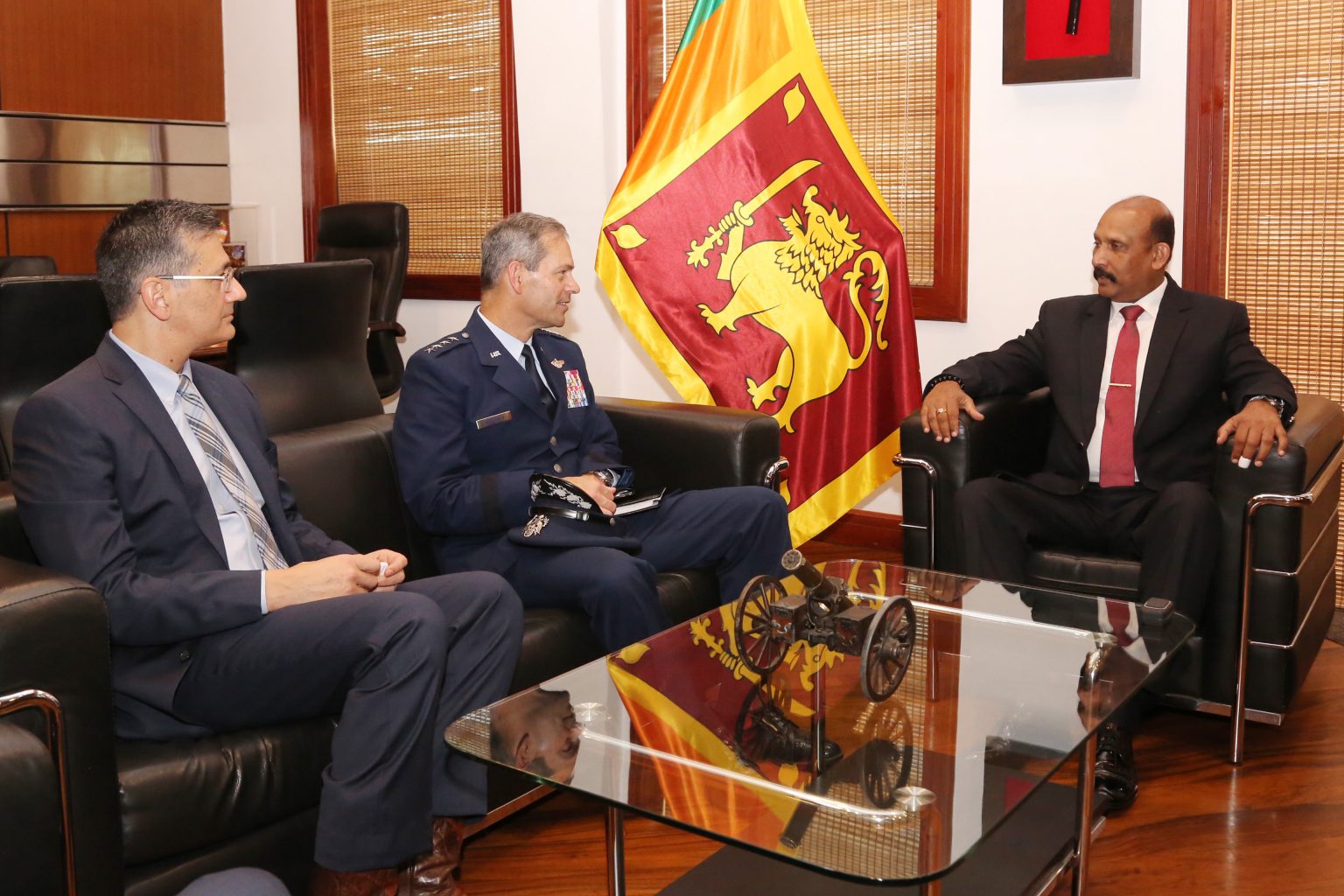
A US delegation led by the Commander of the US Pacific Air Forces, General Kenneth S. Wilsbach had talks in Colombo today.

General Wilsbach paid a courtesy call on Defence Secretary General Kamal Gunaratne (Retd) at the Defence Ministry, today (Mar 4).

The Defence Secretary held a cordial discussion with General Wilsbach on matters of bilateral importance and mutual interest during the meeting.

The meeting was held on the sidelines of events organized to celebrate the 70th Anniversary of Sri Lanka Air Force (SLAF).

Commander of the Sri Lanka Air Force, Air Marshal Sudarshana Pathirana also was present at the meeting.

The visiting General is the Commander of the US Pacific Air Forces; Air Component Commander of the U.S. Indo-Pacific Command; and Executive Director of the Pacific Air Combat Operations Staff, Joint Base Pearl Harbor-Hickam, Hawaii.

Mementos were also exchanged between General Wilsbach and the Sri Lanka Defence Secretary to mark the occasion.

SL responds to Bachelet report: rejects proposal “to advance accountability options at int’l level”

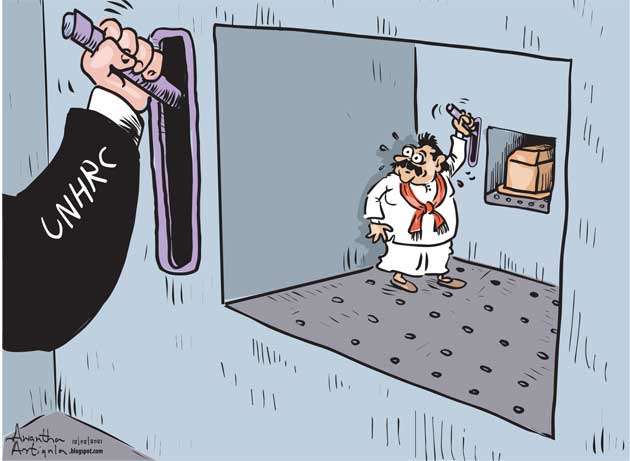
The Government of Sri Lanka (GoSL) responded to the annual report of UN High Commissioner for Human Rights Michelle Bachelet and rejected the proposal to advance accountability options at the international level in relation to Sri Lanka.

On Monday, the Advance Edited Version of the comments made by the Permanent Mission of Sri Lanka in Geneva on the OHCHR report was released.

In its observations, the GoSL said it was unfortunate that the OHCHR has decided to omit the majority of the information provided by the GoSL in writing as well as at the meeting between GoSL officials and the OHCHR ahead of the preparation of the report.

“The Office however appears to have taken a wealth of misinformation to produce a report that puts its credibility and integrity at risk. Moreover, the OHCHR reports have been highly selective, preconceived, politicized and prejudicial in levelling allegations against the GoSL in terms of the six selected ‘trends’, calling them as ‘early warning indicators that require the Human Right Council’s urgent attention,” the report by Sri Lanka said.

It defended the decision taken by Sri Lanka to appoint former military officials to the posts in the government and commented on the crimes committed by the LTTE, the PTA, communal violence in the aftermath of the Easter attacks, covid-19 cremation issue as well as the imprisonment of lawyer Hejaaz Hizbullah.

Sri Lanka further said it regretted that that OHCHR has submitted itself to the preconceived, politicized and prejudicial agenda which certain elements have relentlessly pursued to trigger such disproportionate and unwarranted measures against Sri Lanka, and cautions that any options at the international level would tantamount to an unwarranted interference in the internal affairs of a sovereign State in contravention of the UN Charter.

“The GoSL reminds that calling for targeted sanctions and travel bans against individuals, in the absence of credible findings by a competent court/body on violations committed them, itself constitutes nothing less than a political agenda against a sovereign nation, aimed at destabilizing and a violation of their rights and contravention of the principles of natural justice.

“The 20th amendment to the Constitution has not taken away the institutional checks and balances including the judicial checks that were in existence under the 19th amendment to the Constitution.

“It is maintained that the Government is able, willing and committed to pursuing meaningful mechanisms of accountability and reconciliation, in accordance with its constitutional framework.

“It is regretted that references to investigations targeted sanctions, assets freezes and travel bans against state officials and other actors, based on ‘credibly alleged’ is unfounded, unsubstantiated and totally misconceived.

“It is important to point out that the tone and substance of the report, going far beyond the legitimate scope of OHCHR, seek to establish a dangerous precedent which has grave repercussions for all sovereign States.

“The call for asset freezes, travel bans and the reference to the ICC and the exercise of universal jurisdiction by individual States, without a semblance of evidence in support, particularly in relation to a country like Sri Lanka which has consistently being compliant and engaged with the United Nation and its mechanisms, points to a distinct and eminent danger which the international community as a whole need to take note of.

“As a responsible member of the United Nations, Sri Lanka has remained open and committed to constructively engage with the UN system including the Human Rights Council on national as well as global matters of importance.

“Sri Lanka’s commitment in this regard has been amply demonstrated by, among others, its accession and implementation of all 9 core human rights conventions, the unprecedented number of special procedure mandate holders of the HRC and treaty bodies that it has received (10) particularly in recent years, and the constructive engagement that Sri Lanka has had with UN treaty bodies.

“We look forward to continuing our engagement with the OHCHR, UN Human Rights mechanisms and procedures, and to continue to work in close cooperation with the international community through capacity building and technical assistance in mutually agreed areas, in keeping with domestic priorities and policies.”

Posted in Uncategorized

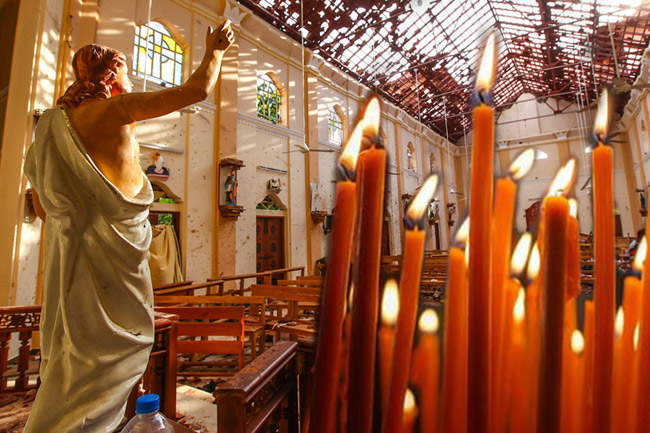
Debate on Easter attacks report in Parliament on March 10

The Committee on Parliamentary Business chaired by Speaker Mahinda Yapa Abeywardena today decided to commence the debate on the Report of the Presidential Commission of Inquiry (PCoI) into the Easter Sunday attacks on March 10.

Secretary General of Parliament Dhammika Dasanayake said the Government will move the Adjournment Debate on the Easter attack report and it will be taken up for debate from 11.00 a.m. to 5.30 p.m.

Parliament Sittings will be held on March 09th and 10th of the coming week as decided at the Committee meeting.

“I Got To Know About Plans To Hold PC Elections In June From Newspapers:” Subject Minister Janaka Tenakoon

Local Government and Provincial Council Minister Janaka Bandara Tennakoon said he got to know about the Provincial Council elections being held in June through newspaper reports.

Addressing a press conference, Tennakoon said he, as the subject minister, was not aware of any such development.

“We are now in March. So how can we conduct the election in June,” Tennakoon asked the journalist.

Before conducting the election, the government will have to pass legislation in Parliament allowing the Elections Commission to conduct the PC election under the old (PR) electoral system.

However, several media reports stated that the government was preparing to hold the Provincial Council election in June in the face of pressure exerted by India to fully implement the 13th Amendment to the Constitution. However, an influential group within the government is pushing for the postponement of the Provincial Council election until the adoption of the proposed new Constitution.

Posted in Uncategorized

Sri Lanka tells UN provisions of PTA will be revisited

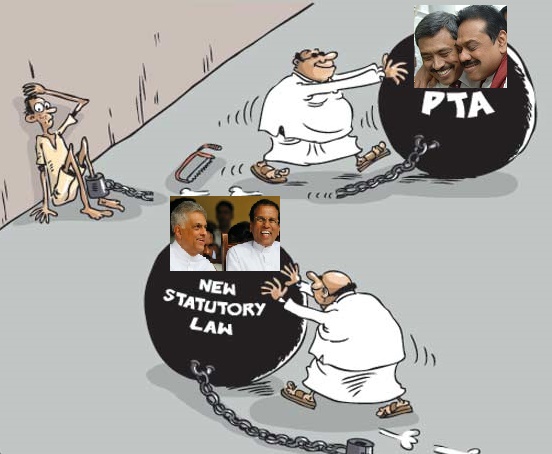
Provisions of the Prevention of Terrorism Act (PTA) are to be revisited, the Government informed the Office of the High Commissioner for Human Rights (OHCHR) in a comprehensive response to a report by OHCHR.

The response by Sri Lanka to the damning report has now been published by the UN Human Rights Council following objections raised by Sri Lanka.

Sri Lanka had written to the UN Human Rights Council demanding that the full response be published online.

Accordingly, in the response published by the UN, the government noted that the Counter Terrorism Bill was not pursued with, and withdrawn, having had due regard to the views expressed by Parliamentarians including the Sectoral Oversight Committee on International Relations of the Parliament, religious leaders, trade unions, student organizations, civil society groups and public organizations that such legislation was unwarranted at this point of time.

The government, however, said it is intent on revisiting the provisions of the PTA having due regard to the progress made in the area of development and reconciliation. In that process the government said it will draw in aid international best practices adopted by other jurisdictions and the recommendations that may be made by the CoI appointed with regard to the Easter Sunday attacks.

“It may also be noted that the Attorney General is also reviewing cases pending before the High Courts with a view to ensure the expeditious disposal of cases involving LTTE cadres in order to bring a meaningful end to the said cases,” the government said in its response.

Overall, Sri Lanka says the report by OHCHR is based on incorrect and/or unsubstantiated and extraneous sources/material, and contravenes the principles of universality, impartiality, objectivity and non-selectivity, as stipulated in the GA resolution 60/251 that created the UN Human Rights Council.

The Government rejected the High Commissioner’s proposal “to advance accountability options at the international level”, including, in particular, her proposal to take steps towards referring Sri Lanka to the International Criminal Court.

Sri Lanka regrets that that OHCHR has submitted itself to the preconceived, politicized and prejudicial agenda which certain elements have relentlessly pursued to trigger such disproportionate and unwarranted measures against Sri Lanka, and cautions that any options at the international level would tantamount to an unwarranted interference in the internal affairs of a sovereign State in contravention of the UN Charter.

The government reminded OHCHR that calling for targeted sanctions and travel bans against individuals, in the absence of credible findings by a competent court/body on violations committed them, itself constitutes nothing less than a political agenda against a sovereign nation, aimed at destabilizing and a violation of their rights and contravention of the principles of natural justice.

Similarly, the government condemned the recommendation in the report to the UN to keep Sri Lanka’s peacekeeping operations under review.

Posted in Uncategorized

Muslims to raise concerns over Iranaithivu burial with global bodies

A leading Muslim organisation in Sri Lanka will this week send an official letter of concern to the global Organization of Islamic Cooperation and the World Muslim Congress, seeking their intervention to urge the Sri Lankan government to allocate a decent land for the burial of Muslim COVID-19 victims.

The Daily Mirror learns that the Sri Lanka Islamic Centre, which is a member of the World Muslim Congress will raise serious concerns with the global bodies and will also send a letter to the World Muslim Congress office in Geneva urging for immediate intervention after the government announced that burials of the COVID-19 dead would take place on the Iranaithivu Island, in the Gulf of Mannar.

Senior Muslim officials said they were disappointed at the government’s decision to allocate the Iranaithivu Isle for the burials and instead urged the government to find a suitable land elsewhere in the country.

The Daily Mirror learns that two lands have been proposed by the Muslim community – the Kupiyawatta burial grounds in Colombo and a five acre land in Mannar, in the north which belongs to a local mosque in the area, where ground water level reports have been carried out by the Geologists from the Department of Geology from the University of Peradeniya.

When questioned, a senior geologist from the Geology Department of the Peradeniya University confirmed that ground water level reports had been carried out on both the lands and the proposed land in Mannar was found to have low water levels.

Senior Muslim officials said the proposed land in Mannar was ready to undertake burials of the COVID19 dead immediately and were concerned why these requests were ignored by the health authorities who were notified.

Meanwhile Minister of Water Supply, Vasudeva Nanayakkara told Daily Mirror that according to his knowledge, he was not aware of any feasibility report carried out on the Iranaithivu Island to bury COVID-19 dead but said he had proposed two more lands, one in the North and another in the East which had low water levels and was suitable to bury the COVID19 dead. He said he had handed over these recommendations to the expert committee for them to decide.

India undecided at UNHRC as Foreign Secretary dismisses 13A

India are yet to formally announced their stance on Sri Lanka in relation to the United Nations Human Rights Council.

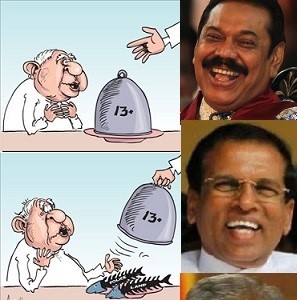
The Indian Representative who addressed the 46th UNHRC Session last month said that India expects that Sri Lanka would fully implement the 13th Amendment to the Constitution in the country.

Secretary to the Foreign Ministry Admiral Prof. Jayanath Colombage, speaking to ‘The Hindu’ newspaper, said that the 13th Amendment came about with the aim of ending the violence and developing war-affected areas, of Sri Lanka’s only legislative guarantee so far on power devolution to the provinces, including those with a Tamil majority.

The Secretary stated that he wishes that India doest “not really harp on the same thing that prevailed in 1987 because the dynamics have changed.”

Earlier today the Minister Provincial Councils & Local Government Janaka Bandara Thennakoon stated that the rumours about the Provincial elections being held in June are untrue.

Indian Visa Application Centre in Jaffna reopens

The Indian Visa Service (IVS) Application Centre at No.145 Temple Road, Jaffna, shut on 13th March 2020 due to COVID-19, has resumed its operations from yesterday. It will function every Wednesday from 0900 hrs to 1300 hrs.

It will accept all categories of visa applications except tourism, which remains suspended due to COVID-19. Applicants have the option of receiving their serviced passports by courier by paying the prescribed fee at the IVS Application Centre or they can collect the serviced passport only when the IVS Application Centre opens on Wednesdays or from the Consulate directly from 1700 to 1730 hrs. Applicants can submit visa applications directly at the Consulate from 0900-1200 hrs on other days in the case of emergencies. Please visit the “visa” menu at the Consulate’s website “cgijaffna.gov.in” for information on online visa application, documentation required for various categories of visas and other requirements.

Posted in Uncategorized

House Foreign Affairs Committee seeks US push for justice in Sri Lanka

The US House Foreign Affairs Committee has called for a push by the US Government to ensure justice in Sri Lanka.

The House Foreign Affairs Committee tweeted saying freedom of the press is a fundamental principle of any democracy, as is accountability for those who commit atrocities.

The House Foreign Affairs Committee noted that escaping justice for the murder of a journalist deeply undermines both of these principles.

“The US must reassert its leadership role on human rights and support calls for justice in Sri Lanka,” the House Foreign Affairs Committee tweeted.

The House Foreign Affairs Committee tweeted in response to an article by Ahimsa Wickrematunge, daughter of slain journalist Lasantha Wickremetunge.

Ahimsa Wickrematunge wrote in the Washington Post that in 2007, her father, Lasantha Wickrematunge, one of Sri Lanka’s most fiercely independent journalists, exposed an arms deal involving then-Secretary of Defense Gotabaya Rajapaksa embezzling over $10 million in government funds.

“Rajapaksa took him to court, alleging defamation. Shortly thereafter, my father’s printing press at the Sunday Leader, where he was editor in chief, was stormed by a masked gang in the middle of the night. Two of his staff were assaulted, and the press itself was set on fire,” she wrote.

She noted that on January 8, 2009, weeks before her father could testify about the corrupt arms deal, military intelligence officers ambushed him as he drove to work. They murdered him, tearing her family apart, ripping a hole in her soul and petrifying journalists across Sri Lanka.

“I hold Rajapaksa responsible — as I made plain when I moved to sue Rajapaksa in Los Angeles for his role in my father’s murder. His shocking November 2019 election as president of Sri Lanka has brought immeasurable pain to me and my family and damage to the fabric of Sri Lankan civil society,” she said.

Ahimsa Wickrematunge said that today, as the killers of heroes like Anna Politkovskaya, Jamal Khashoggi and her father rub shoulders on the world stage, it seems that killing a journalist is just another rite of passage for emerging autocrats.