How Rajapaksa Clan And Chinese Loans Put Sri Lanka on Expressway of Economic Collapse

IA chief Bill Burns has rightly defined the reason behind Sri Lanka’s current economic crisis. Burns says Sri Lanka made dumb bets on China, and when we see Sri Lanka’s financial past, we find his statement has elements of gravity.

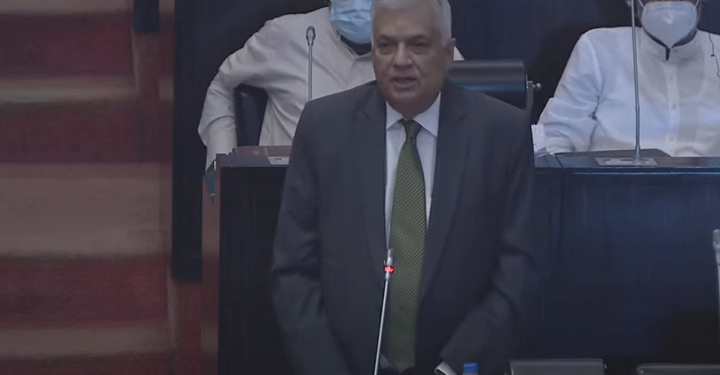
In fact, China was not alone. It was the Rajapaksa-China combined push that forced Sri Lanka to see this day when public protests after the economic collapse forced the fall of the Gotabaya Rajapaksa government. People of the nation are so angry that they are not ready to accept even the next government and its president Ranil Wickremesinghe as he is considered very close to the Rajapaksa clan.

The Rajapaksa clan, which has been ruling Sri Lanka since 2005, first wanted to make the country another Singapore and then a Dubai-like financial powerhouse. It saw easy loans from China as a quick fix for its infrastructure dreams and greener pastures ahead, while easily forgetting the fact that Sri Lanka’s imports were significantly higher than its exports and it needed a safe zone of foreign currency reserve to remain economically viable whenever it faced some tough times as it happened with the Covid crisis. The pandemic affected the country badly, hitting its two major foreign currency earners, tourism and remittances, leading to an economic default.

In the name of upgrading the country to become an infrastructure role model, the Sri Lankan government led by the Rajapaksa clan started developing the southern province, even as the western province with capital Colombo was seen as the nation’s political and financial core.

The Hambantota district in the southern province is the native place of the Rajapaksa clan and Mahinda Rajapaksa wanted to transform the city into the next Colombo, the next political and financial hub, even if feasibility studies didn’t permit such projects.

Built with much hype, the projects ultimately proved to be absolute financial disasters. Clearly, the Sri Lankan approach under the Rajapaksas can be summed up as “dumb bets”, as Burns says. His reaction in fact captures the essence when he counts high-debt Chinese investments as a major factor behind Sri Lanka’s economic collapse.

The above chart clearly puts the economic crisis in perspective of what went wrong. The chart carries data for 2005 to 2011 from the World Bank and from the Central Bank of Sri Lanka from 2012 onwards. The Rajapaksa clan, which has become more or less a political dynasty now with dozens of family members and relatives given government positions when it was in power, had its first family member, Mahinda Rajapaksa, as Sri Lanka’s president in 2005.

His main aim was to end the Sri Lankan civil war with the Tamil militant group LTTE. For that, Sri Lanka needed military support on arms and ammunition and foreign currency to purchase lethal weapons from other countries. No country including India came forward to help Sri Lanka get lethal weapons, except China.

During those four years of civil war under the Mahinda Rajapaksa regime, Sri Lanka’s gross external debt went up by 72%, from $11.3 billion in 2005 to $19.5 billion in 2009, the year of the decisive victory over the LTTE.

Buoyed by the win in the civil war that had crippled life on the island nation for decades, the next stage for Mahinda Rajapaksa was to make Sri Lanka an economic powerhouse like Singapore. He needed financial support for this, which was not available in his nation torn by decades of civil war.

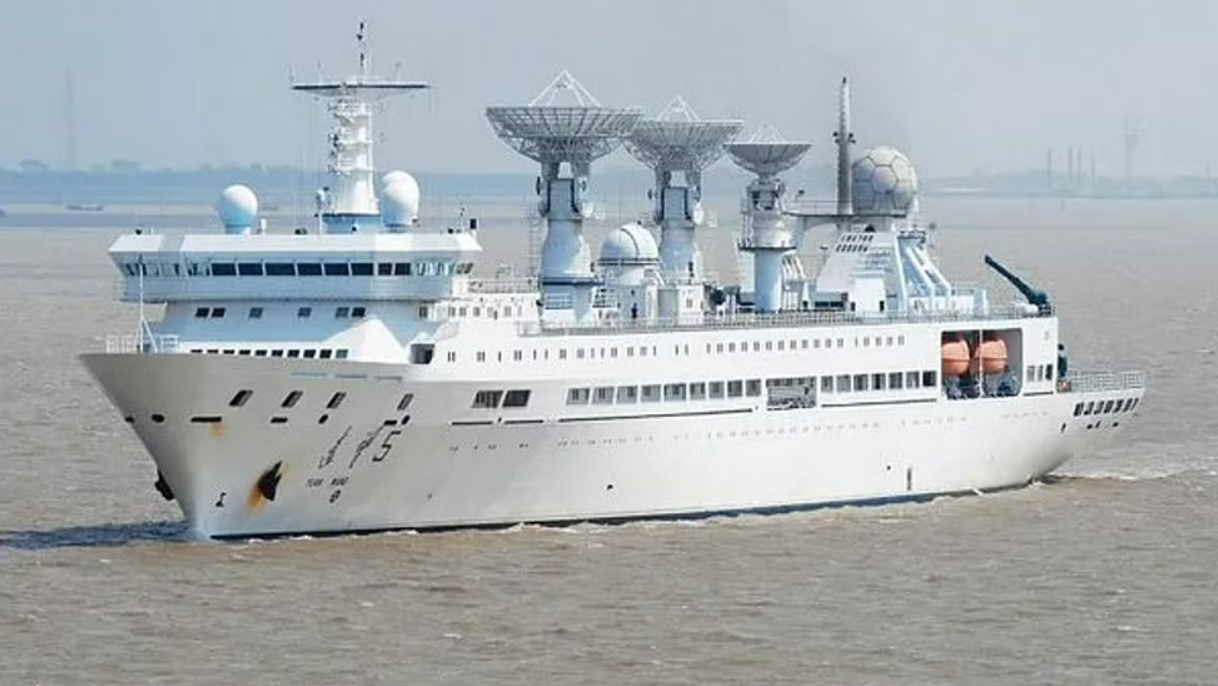
Mahinda Rajapaksa found a solution with China again coming to help. But Beijing came with its own designs of pushing China’s economic colonisation in Sri Lanka under its Belt and Road Initiative (BRI). The country certainly needed infrastructure growth but China even pushed for projects that were expected to be commercially unviable in the long run, like the Hambantota deep sea port and Mattala airport in the Hambantota district.

Both of these projects are white elephants, not generating any significant revenue. Hambantota port in fact went under Chinese control for 99 years in 2017 after Sri Lanka was unable to pay the $1.4 billion bill on it. China also got control of 15,000 acres of land surrounding the airport. It was the first success story of China’s economic colonisation process in Sri Lanka.

Mattala international airport with a capacity to handle one million passengers annually is also called the world’s emptiest airport. It was opened for operations in March 2013. As per Sri Lankan media reports, at times, the airport is not even able to earn enough to pay for its electricity cost. The striking point is the fact that the $210 million airport was made on high-interest commercial loans from China. The government-to-government loans from China to Sri Lanka come at a 2% interest rate but commercial loans are given at much higher interest rates.

Hambantota also saw an international connection centre opened in November 2013, another investment from a Korean loan that has failed to generate any revenue.

While the two big projects mentioned above already failed, the Rajapaksas and China decided to build another, an artificial island built on 269 hectares of land reclaimed from the sea. Loaned and being built by China and called Sri Lanka’s economic game changer, the Colombo Port City project is expected to be the next success story of China’s economic colonisation in Sri Lanka with the country already having defaulted on debt payments.

Under Gotabaya Rajapaksa, Sri Lanka passed the Colombo Port City Economic Commission Bill in May 2021. The legislation gave China absolute authority in an area that is just 700 km away from Chennai in India. Opposition parties in Sri Lanka alleged that the bill was intended to undermine the country’s sovereignty and create a Chinese colony. Sri Lanka’s Supreme Court, while hearing petitions against the bill, also said that certain provisions of it were unconstitutional. China can launch its own currency in the Colombo Port City area.

Why Chinese loan is the main factor

According to the Sri Lankan government’s Department of External Resources (ERD), 47% of the Chinese loans are in the form of external market borrowings. Sri Lanka, in 2007, started issuing international sovereign bonds to tap loans from the global financial markets. These market borrowings are usually short-term loans, with 5 to 10 years of life, and come at a higher interest rate, around 6%. 13% of the Sri Lankan loans are from the Asian Development Bank. China and Japan, as per the government data, sit in third place with 10% of the loans.

But when we go deeper into the details, we find that Chinese loans constitute a much higher proportion of Sri Lankan loans. According to a news analysis published in The Diplomat, China accounted for 20% of Sri Lankan loans at the end of 2021. Out of this 20%, 14% was Chinese debt stock while 6% was in term loan facilities.

If we correlate this figure to the current gross external debt of Sri Lanka, it comes out to be $10.144 billion with $3 billion in the form of term loan facilities. Most of this loan amount from China came after 2005 and it can be confirmed by an official Sri Lankan government statement. According to ERD, “The amount of loan funds obtained from China from 1971 to 2004 was very marginal and it significantly increased after 2005.”

In the last 16 years, Sri Lanka has taken loans worth $40 billion and almost a fourth of it is from China. True, Sri Lanka needs infrastructure projects to boost the country’s economy, but the failure of large-scale infrastructure projects loaned and built by China in fact has eclipsed any good effect on other projects as well, particularly when the country was hit hard by the pandemic.

Chinese approach and the $25 billion miscalculation

An easy approach from China to Sri Lanka’s regular requests for loans and its promise to build massive infrastructure projects to change the Sri Lankan destiny made the Mahinda Rajapaksa government overconfident. It started pushing for loans from other sources as well, mostly in the form of short-term market borrowings or ISBs.

These market borrowings now cost almost half of total Sri Lankan loans, at $25 billion. In January 2022, Sri Lanka, somehow, paid a $500 million bond on its maturity. The country had to pay $1 billion on bond payments this month but it defaulted in May and had to suspend further debt repayments.

Source: News 18

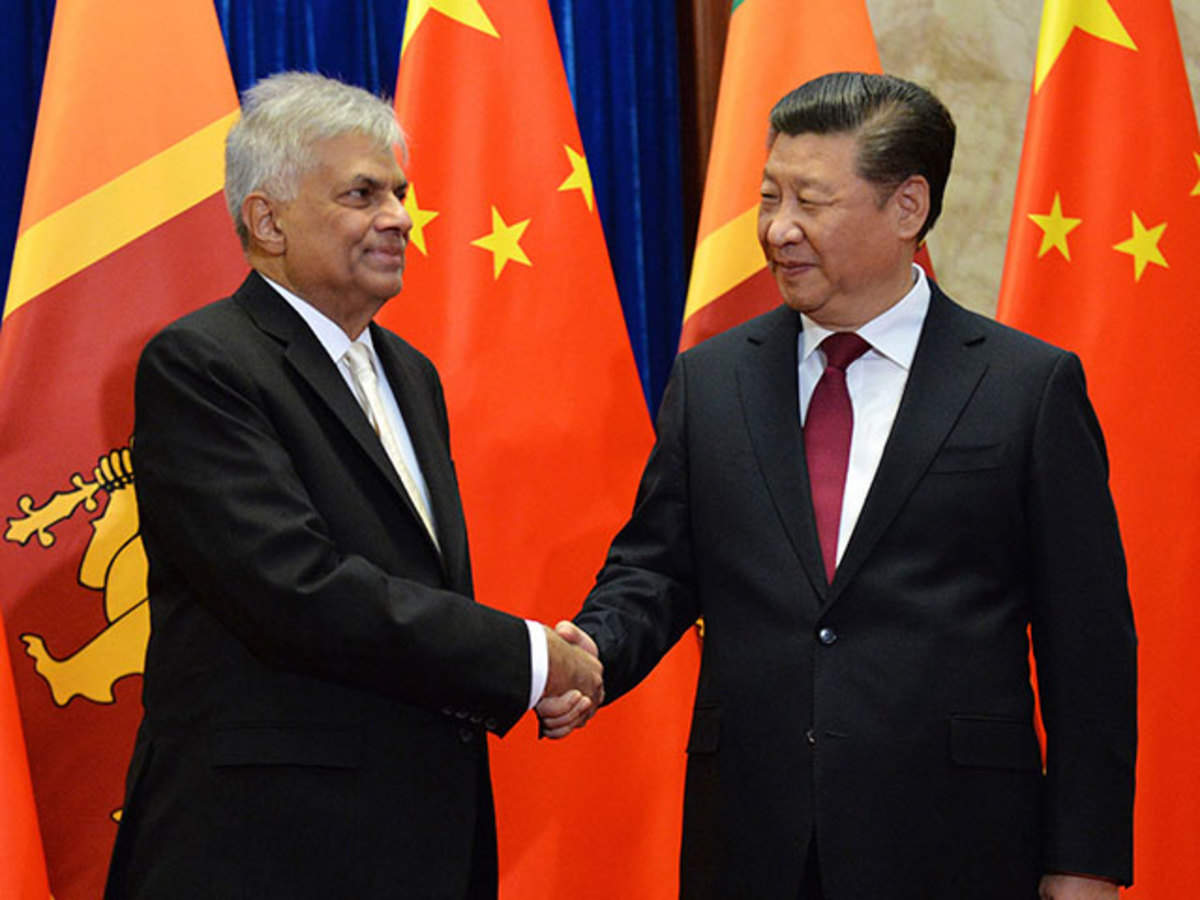
Chinese President congratulates Ranil Wickremesinghe

China President Xi Jinping has extended his congratulations to Ranil Wickremesinghe on his election as President.

China’s Ministry of Foreign Affairs in a statement said President Xi Jinping pointed out that China and Sri Lanka are traditional friendly neighbours and believes that under the leadership of President Wickremesinghe, Sri Lanka will surely overcome temporary difficulties and advance the process of economic and social recovery.

The statement noted that since the establishment of diplomatic ties 65 years ago, the two countries have been advancing the development of bilateral relations on the basis of mutual respect, equality and mutual benefit, setting a good example of friendly coexistence and mutually beneficial cooperation between countries of different sizes.

President Xi said he attaches great importance to the development of China-Sri Lanka relations and is willing to provide support and assistance within China’s capacity to President Wickremesinghe and the Sri Lankan people in their efforts.

Source: News Radio

EU reminds Sri Lanka on GSP+ commitments

The European Union (EU) has reminded Sri Lanka on the need to work in full compliance with its GSP+ commitments.

Issuing a statement, the EU said that following Sri Lanka’s Parliament swift action to elect Ranil Wickremesinghe as new President of the country in the wake of President Gotabaya Rajapaksa’s resignation, the EU underlines the need of upholding freedom of opinion and expression and individual rights of Sri Lankan citizens in the process of a democratic, peaceful and orderly transition.

In the light of reports of unnecessary violence against protestors, the EU stressed the importance of the right to freedom of peaceful assembly and association and condemns the unwarranted use of force against peaceful demonstrators.

The EU said that the urgency of the domestic situation requires the swift establishment and implementation of a structured plan of reforms in order to return the country’s economy back onto a sustainable path. In this context, it is essential to safeguard human rights and the rule of law while fostering good and inclusive governance and promoting reconciliation efforts.

The EU will continue to support all efforts in favour of Sri Lankan people, aimed at returning to more stability and economic recovery and advancing reconciliation agenda, in full respect of democratic values.

Over the years, the EU and its member states have provided more than EUR 1billion in assistance to the Sri Lankan people. The re-introduction in 2017 of preferential access to the European Single Market under the GSP+ scheme has been essential for Sri Lanka’s economic development. The EU expects the new Government to work in full compliance with its GSP+ commitments. Current and future cooperation programmes (EUR 70 million) are being aligned with Sri Lanka’s most pressing needs. In addition to delivering medicines through the EU’s Joint Civil Protection Mechanism, member states and the EU are closely monitoring food security on the island in order to fund actions targeting the most vulnerable communities.

Source: Colombo Gazette

Posted in Uncategorized

US envoy meets President Ranil, raises concerns over violence against protesters

Ambassador of the United States to Sri Lanka Julie Chung says she called on President Ranil Wickremesinghe to express her grave concern over the “unnecessary and deeply troubling” escalation of violence against protesters overnight.

Taking to her official Twitter handle, the US envoy noted that the President and the Cabinet of Ministers have an opportunity as well as an obligation to respond to the calls of Sri Lankans for a better future.

“This is not the time to crack down on citizens,” she pointed out.

It is time to look ahead at the immediate and tangible steps the government can take to regain the trust of the people, restore stability, and rebuild the economy, the US envoy said further..

Source: Adaderana

Posted in Uncategorized

Singapore Government Says Former Sri Lankan President Rajapaksa Granted Short-term Visit Pass

Singapore has granted a 14-day short-term visit pass to former Sri Lankan president Gotabaya Rajapaksa as he entered the country on a “private visit” on July 14, according to immigration authorities here. Rajapaksa, 73, on July 13 fled Sri Lanka to the Maldives and then Singapore and resigned after a popular uprising against his government for mismanaging the economy.

In a statement released in response to media queries about Rajapaksa’s visit to Singapore, the Immigration and Checkpoints Authority said that he was granted a short-term visit pass (STVP) on arrival. Rajapaksa was issued a 14-day visit pass when he arrived here on July 14, according to a report by The Straits Times newspaper.

A Ministry of Foreign Affairs spokesman said last week that Rajapaksa has not asked for asylum and neither has he been granted any asylum. The ICA said visitors from Sri Lanka who enter Singapore for social visits will generally be issued with an STVP with a duration of up to 30 days.

Those who need to extend their stay here may apply online for an extension of their STVP. Applications will be assessed on a case-by-case basis, said the ICA.

HOME » NEWS » WORLD » SINGAPORE GOVERNMENT SAYS FORMER SRI LANKAN PRESIDENT RAJAPAKSA GRANTED SHORT-TERM VISIT PASS
2-MIN READ
Singapore Government Says Former Sri Lankan President Rajapaksa Granted Short-term Visit Pass
PTI
Last Updated: JULY 21, 2022, 10:25 IST
Singapore
Rajapaksa was issued a 14-day visit pass when he arrived in Singapore on July 14. (Image: Reuters/File)Rajapaksa was issued a 14-day visit pass when he arrived in Singapore on July 14. (Image: Reuters/File)
A Ministry of Foreign Affairs spokesman said last week that Rajapaksa has not asked for asylum and neither has he been granted any asylum
Follow us:
Facebook
Twitter
Instagram
Telegram
Google News
Singapore has granted a 14-day short-term visit pass to former Sri Lankan president Gotabaya Rajapaksa as he entered the country on a “private visit” on July 14, according to immigration authorities here. Rajapaksa, 73, on July 13 fled Sri Lanka to the Maldives and then Singapore and resigned after a popular uprising against his government for mismanaging the economy.

In a statement released in response to media queries about Rajapaksa’s visit to Singapore, the Immigration and Checkpoints Authority said that he was granted a short-term visit pass (STVP) on arrival. Rajapaksa was issued a 14-day visit pass when he arrived here on July 14, according to a report by The Straits Times newspaper.

A Ministry of Foreign Affairs spokesman said last week that Rajapaksa has not asked for asylum and neither has he been granted any asylum. The ICA said visitors from Sri Lanka who enter Singapore for social visits will generally be issued with an STVP with a duration of up to 30 days.

Those who need to extend their stay here may apply online for an extension of their STVP. Applications will be assessed on a case-by-case basis, said the ICA.

RELATED NEWS

‘I Am Not Criminal, Political Reason Behind Delay in Nod for Singapore Visit’: Kejriwal

Singapore Open: PV Sindhu Sails Into Final

Meanwhile, Sri Lankans in Singapore remain optimistic about the situation back home. But they say a real change has to go beyond the changing of guards with more decisive policies and more engaged voters, Channel News Asia reported as it interviewed several Sri Lankans in the country.

Some Sri Lankans in Singapore are skipping meals to save money and sending items such as medicine and other essential goods back to their home country amid the economic crisis there. Some are shipping bicycles as it is very difficult to travel in the country, one Sri Lankan told the Channel.

“People are using bikes as a mode of transport and we have a shortage of bikes (back home) because we have only two manufacturers (in the country),” said Samira Peiris, an engineer, who had recently moved to Singapore to work. Peiris says a meal in Singapore is equivalent to three back home and as such he skips meals and cuts down on spending.

“This is not purely out of desperation but I don’t feel it is right for me to enjoy life here when people back home are suffering.” He said many others like him in Singapore are coming up with ways to contribute.

Paul William, an auditor, said that Sri Lankans in Singapore would definitely send money when they can. But they want to send it through a reliable source as that is the main concern. If it goes into the wrong hands, then there is no point, said William.

“Every single time we meet a Sri Lankan, this is the discussion we have.” William, a permanent resident here, is concerned about how his 72-year-old mother is coping. He is sending her money through the United Kingdom where his sister is based.

Source: News 18

Posted in Uncategorized

In with the old: Sri Lanka picks a new president to replace the one that fled

Ranil Wickremesinghe must fix a mess which many think is partly his fault

Ranil wickremesinghe is a familiar sight to anyone who has taken even a passing interest in Sri Lankan politics in recent decades. First elected to Parliament in 1977, he has held a variety of cabinet jobs over the years, including, on six occasions, that of prime minister. His most recent stint was in the service of Gotabaya Rajapaksa, whose tenure as president came to an ignominious end on July 14th when he tendered his resignation by email from Singapore, having fled the country in the dead of night the day before.

Fearing prosecution for alleged corruption and crimes committed during Sri Lanka’s civil war, the disgraced ex-president is expected to lay low abroad for the foreseeable future. But Mr Wickremesinghe (pictured in effigy) will remain a familiar face around Colombo, the capital.

After taking over from his boss in an acting capacity the week before, he was officially elected president by a clear majority of 134 of the 225 members of Parliament on July 20th. He is expected to serve out the remainder of Mr Rajapaksa’s term, which ends in 2024.

His election raises hopes that Sri Lanka, which has been in economic and political turmoil for months, will at last regain the political stability required to solve its economic problems. But Mr Wickremesinghe’s chances of success are complicated by his willingness to work with the Rajapaksas. The protesters who chased Mr Rajapaksa from office had also demanded Mr Wickremesinghe’s resignation as prime minister. Their idea of his stepping down hardly involved a promotion to the highest office in the land. That bodes ill for his chances of uniting Sri Lankans behind him in a time of crisis.

There is some room for optimism. Mr Rajapaksa, for all his reluctance to relinquish the powers he enjoyed, eventually departed in the face of public pressure rather than call in the army to quash protests and rule by decree. Mr Wickremesinghe imposed a curfew, declared a state of emergency and described the largely peaceful protesters as “fascists”, suggesting a degree of personal anger which he will have to keep in check over the coming months. But he also submitted to the constitutional process rather than seek to prolong his interim stint in power. Security forces acted with restraint compared with past crises. Anarchy and large-scale violence were avoided.

The new president is likely to stick to a programme of economic reforms which he had begun to implement as prime minister. The plan proposes increases in income and corporation tax, the privatisation of state-owned enterprises, a public-sector hiring freeze and a stronger social-safety net to cushion the blow of the other policies. It was drawn up by a diverse group of activists and policy wonks. Its direction enjoys broad support even among members of the opposition. Getting the country’s finances into a state that is sufficient to obtain a bail-out from the imf is widely seen as a priority.

Politically, Mr Wickremesinghe has tried to sound conciliatory. In a speech to Parliament shortly after his election he acknowledged that Sri Lanka was in deep trouble and that young people in the country were demanding “systemic change”. He then announced talks with all parties represented in Parliament as soon as the following day. Before his election, he had begun work on curtailing some of the powers of Sri Lanka’s mighty executive presidency, though he had not committed to abolishing it, as protesters have demanded.

That may not be enough to convince the movement that drove out Mr Rajapaksa and whose aim is a wholesale change in the country’s politics. Given that Mr Wickremesinghe was prime minister, few expect major changes to the cabinet. He has been silent on the prospect of an early parliamentary election, another of the protesters’ demands. They see Mr Wickremesinghe’s ascendancy as a victory for the discredited political class they blame for the country’s travails. They say they will continue to occupy the presidential secretariat, which they took over on July 9th. Even a powerful executive presidency is, in the end, not immune to the wrath of the people it serves.

Source: The Economist

Posted in Uncategorized

Sri Lanka: Forces raid anti-government protest camp

Security forces in Sri Lanka raided the main anti-government protest camp in the capital early on Friday, arresting protesters and dismantling tents.

Hundreds of troops and police commandos moved on the protesters outside the presidential offices in Colombo, hours before they were due to leave the area.

A BBC video journalist was beaten by the army and one soldier snatched his phone and deleted videos.

Nine people, including two who are injured, have been arrested by police.

Police described the incident as a “special operation to take [back] control of the presidential secretariat”.

When asked about the attack on the BBC journalist, one police spokesman said he was unaware of the incident.

It comes as Ranil Wickremesinghe was sworn in as president on Thursday, after ex-president Gotabaya Rajapaksa fled the country last week.

Mr Wickremesinghe – the former prime minister – is seen as deeply unpopular with the public and has vowed tough action against demonstrators.

Separately on Friday, Dinesh Gunawardena – a senior politician considered to be a long-time Rajapaksa loyalist – took the oath as new prime minister, stepping into Mr Wickremesinghe’s former shoes.

Sri Lanka has seen months of mass unrest over an economic crisis and many blame the former government for mishandling the nation’s finances.

Protests had remained peaceful after Mr Wickremesinghe had been sworn into office on Thursday. Despite deep distrust, many demonstrators had said they would give him a chance to lead the country out of its economic crisis.

In remarks after his inauguration, he said any attempt to topple the government or occupy government buildings was not “not democracy, it is against the law”.

On Friday morning, security forces moved in on the protest camp and reclaimed the building from demonstrators, who had earlier pledged to hand the building back.

The raid took place in the early hours of Friday, at around 01:00 local time (19:30 GMT Thursday). Security forces later completely sealed off a section of the road leading to the site.

Tensions between the two groups continued to simmer in the afternoon as about 100 protesters stood off against security forces lined up in rows near the presidential offices.

Source: BBC News
Written by: George Wright & Frances Mao

Posted in Uncategorized

Sri Lanka public debt surges over 127-pct of GDP as monetary instability bites

Sri Lanka’s government debt has surged to around 126 percent of gross domestic product by the first quarter of 2022, with central bank debt contributing close to 10 percent of GDP in foreign debt, official data shows.

Sri Lanka’s central government debt rose to 21.6 trillion rupees of 117.4 percent of revised GDP by March 2022, from 104.6 percent as a ‘flexible exchange rate’ or soft-peg collapsed from 200 to 360 to the US dollar weighed down by a surrender requirement and low rates.

Government with central bank debt rose to 127 percent of GDP with the monetary authority borrowing money to finance either imports or debt repayments after printing money.

Gross central bank debt was around 9.58 billion rupees by March 2022.

About 1.8 billion in gross reserves borrowed from China are left with the central bank unable to use it due to prudential rules placed by China.

Goverment guaranteed debt of state enterprises topped 14 percent of GDP by April 2022, according to finance ministry data, taking the total to at least 140 percent of GDP.

By April however the rupee had depreciated further.

Sri Lanka’s central government debt started to climb with monetary instability worsening from the third quarter of 2014 with aggressive liquidity injections.

Sri Lanka was hit by currency crises in 2016 and 2018 as the central bank injected money through overnight repo, term repo and outright purchases of government securities driving up debt and slowing growth after each currency collapse.

Monetary instability came under ‘flexible’ inflation targeting and output gap targeting (printing money to boost growth) and the currency was allowed to depreciate after printing money through REER targeting a type of BBC (band, basket, crawl) policy advocated by Mercantilists in the 1980s.

In the seven years to 2022 there was monetary stability only in 2017 and 2019.

Sri Lanka’s central government debt ratcheted up from 72.3 percent of GDP in 2014 to 86.6 percent by 2019.

Source: Economy Next

Posted in Uncategorized

US, UN recognise new Sri Lanka president, call for united, democratic approach to crisis

The United States and the United Nations have recognised the appointment of a new president in Sri Lanka and have stressed on the need for a united effort in overcoming the economic crisis while ensuring freedom of assembly and expression.

US Ambassador Julie Chung tweeted Thursday July 21 morning that the US looks forward to working with newly sworn in President Ranil Wickremesinghe.

“In these challenging times, it will be essential for all parties to redouble efforts to work together to tackle the economic crisis, uphold democracy and accountability, and build a stable and secure future for all Sri Lankans,” she said.

UN Sri Lanka Resident Coordinator Hanaa Singer-Hamdy tweeted that the UN acknowledges the constitutional transfer of power to a new president.

“Now is the time for all stakeholders to engage in broad and inclusive consultations to resolve the current economic crisis and the grievances of the people,” she said.

Elaborating on the statement, she said: “A peaceful and stable Sri Lanka will require dialogue, full respect for democracy, human rights and the rule of law, including respect for the freedom of assembly and expression. The UN stands ready to work with all stakeholders to fulfil the aspirations of the Sri Lankan people.”

Source: Economy Next

Ranil Wickremesinghe sworn in as new Sri Lanka President

Ranil Wickremesinghe took oaths as the 8th Executive President of Sri Lanka a short while ago. He was sworn in before Chief Justice Jayantha Jayasuriya at the parliament complex.

Sri Lanka’s 225-member parliament voted Wickremesinghe in as the new Head of State with a total of 134 votes cast in his favour. He faced off SLPP’s dissident MP Dullas Alahapperuma who was polled second with 82 votes. NPP leader MP Anura Kumara Dissanayaka secured only 03 votes.

Wickremesinghe, a six-time former prime minister had the backing of the Sri Lanka Podujana Peramuna (SLPP), the largest bloc in the parliament.

Two parliamentary members had abstained from voting while four of the 223 votes cast by the members were meanwhile found invalid.

The procedure for electing a succeeding president by Parliament is provided in the Constitution and the Presidential Elections (Special Provisions) Act (No. 2 of 1981), in the event of a vacancy in the office of the President before the end of the term. To be elected for the office of succeeding president, a candidate should get 50% or more votes from the valid number of votes.

Following the conclusion of the counting process, Secretary-General of Parliament, Dhammika Dasanayake announced to the House that Ranil Wickremesinghe was been elected as the 8th Executive President.

Pursuant to the provisions of the Presidential Elections (Special Provisions) Act (No. 2 of 1981), Wickremesinghe’s appointment was published in a special gazette notification last evening.

Wickremesinghe is thus qualified to hold the office of the President for the remaining term of the presidency, which was left vacant after his predecessor Gotabaya Rajapaksa stepped down last week. Wickremesinghe was appointed as the caretaker president, Rajapaksa fled the country on a military plane to the Maldives and then took a commercial flight to Singapore.

He has held the office of prime minister six times although he never completed a term. His latest and shortest term in office as the prime minister was when former President Gotabaya Rajapaksa appointed him to the position on July 13 this year, after his brother Mahinda Rajapaksa was forced to step down amidst growing public agitation over economic mismanagement and corruption allegations.

Brief history of new President Ranil Wickremesinghe

Ranil Wickremesinghe was elected to the 9th Parliament on June 23rd, 2021 as a National List Member representing the United National Party.

Born on March 24th, 1949, Ranil Wickremesinghe also held the position of Prime Minister of the previous Yahapalana government.

An alumnus of the Royal College of Colombo, Wickremesinghe was later selected to the Faculty of Law of the University of Colombo and sworn in as a lawyer.

He started his political career as the chief organizer of the United National Party in Kelaniya Constituency in the mid of 1970 and was later appointed as the chief organizer of the Biyagama Constituency.

In 1977, he was elected as a Member of Parliament for the first time and was the youngest cabinet minister in the J.R. Jayewardene government where he held the position of Minister of Youth Affairs and Employment.

He was the Minister of Foreign Affairs at the age of 28, and later served as the cabinet minister for Youth Affairs, Education and Industry, Science and Technology.

Ranil Wickremesinghe, who also served as the Leader of the House between March 06, 1989 and May 07, 1993, also served as the Leader of the Opposition in the Parliament of Sri Lanka from 1994 to 2001 and from 2004 to 2015.

He was first elected as the Prime Minister of Sri Lanka on May 7, 1993 and held that position until August 19, 1994. Ranil Wickremesinghe was the Prime Minister of Sri Lanka for the second time from December 9, 2001 to April 2, 2004, for the third time from January 9, 2015 to August 21, 2015, for the fourth time from August 24, 2015 to October 26, 2018, and for the fifth time from December 16, 2018 to November 21, 2019.

Thereafter, given the resignation of the former Prime Minister Mahinda Rajapaksa on the 9th of May, Ranil Wickremesinghe returned to the post of Prime Minister on the 12th of the same month in the capacity of Prime Minister.

Following the resignation of Gotabaya Rajapaksa from the office of President, he became the Acting President from 14th as per the Constitution.

Source: Adaderana