Sri Lanka’s ousted president says he ‘took all possible steps’ to prevent crisis

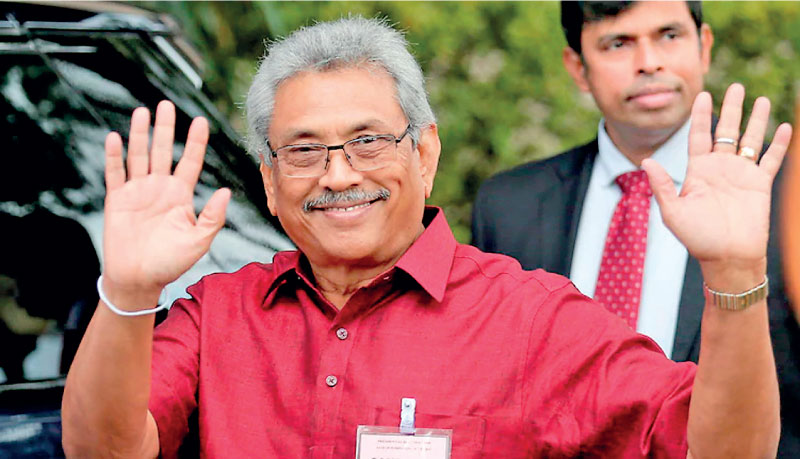
Sri Lanka’s ousted president Gotabaya Rajapaksa, who fled overseas this week to escape a popular uprising against his government, has said he took “all possible steps” to avert the economic crisis that has engulfed the island nation.

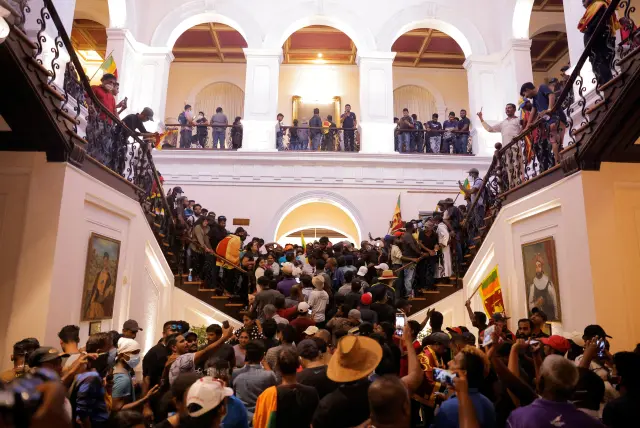
Rajapaksa’s resignation was accepted by parliament on Friday. He flew to the Maldives and then to Singapore after hundreds of thousands of anti-government protesters came out on the streets of Colombo a week ago and occupied his official residence and offices.

Sri Lanka’s parliament met on Saturday to begin the process of electing a new president, as a shipment of fuel arrived to provide some relief to the crisis-hit nation.

During the proceedings Dhammika Dasanayake, the secretary general of Sri Lanka’s parliament, formally read out Rajapaksa’s resignation letter, the contents of which have not previously been made public.

In his letter Rajapaksa said Sri Lanka’s financial crisis was rooted in years of economic mismanagement that pre-dated his presidency, along with the Covid-19 pandemic that drastically reduced Sri Lanka’s tourist arrivals and remittances from foreign workers.

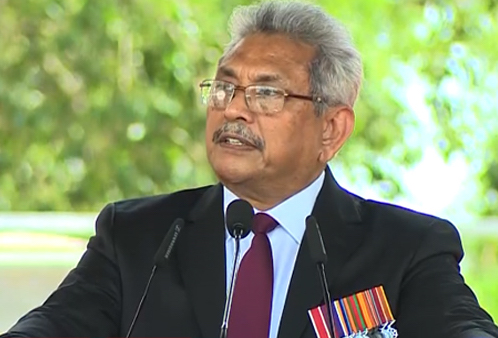
“It is my personal belief that I took all possible steps to address this crisis, including inviting parliamentarians to form an all-party or unity government,” the letter said.

Parliament will next meet on Tuesday to accept nominations for the post of the president. A vote to decide the country’s leader is set to take place on Wednesday.

Six-time prime minister Ranil Wickremesinghe, an ally of the Rajapaksas who is the sole representative of his party in parliament, has been sworn in as acting president until then.

Wickremesinghe, who protesters want gone too, was selected as the ruling party’s candidate for president on Friday, leading to the prospect of further unrest should he be elected.

The opposition’s presidential nominee is Sajith Premadasa, while the potential dark horse is senior ruling party lawmaker Dullas Alahapperuma.

Over 100 police and security personnel with assault rifles were deployed on the approach road to parliament on Saturday, manning barricades and a water cannon to prevent any unrest. Columns of security forces patrolled another approach road to parliament, though there were no signs of any protesters.

Street protests over Sri Lanka’s economic meltdown simmered for months before boiling over on July 9, with protesters blaming the Rajapaksa family and allies for runaway inflation, shortages of basic goods, and corruption.

Days-long fuel queues have become the norm in the island nation of 22 million, while foreign exchange reserves have dwindled to close to zero and headline inflation hit 54.6% last month.

Sri Lanka received the first of three fuel shipments on Saturday, Energy Minister Kanchana Wijesekera said. These are the first shipments to reach the country in about three weeks.

A second diesel consignment will also arrive on Saturday, with a shipment of petrol due by Tuesday.

“Payments completed for all 3,” the minister said in a tweet.
Rajapaksa Told to Leave Singapore After 15 Days, India Refuses to Let Him Stay Here

More trouble seems to be in store for Gotabaya Rajapaksa, who resigned as the Sri Lankan President on Friday, as Singapore is not keen on letting him stay for long, according to sources.

Rajapaksa, 73, left the country along with his wife and two security officers on a military jet on Wednesday and went to the Maldives, from where he headed to Singapore.

The authorities in Singapore have told Rajapaksa that he has permission to stay for 15 days, which is unlikely to be extended, added sources.

Rajapaksa is not clear about his plan after the next 15 days, they added. Sources confirmed to CNN-News 18 that he has also approached India, but India has denied his request. India does not want to be seen against the Sri Lankan people, said sources.

Source: News 18

Gota quits on the run

President Gotabaya Rajapaksa, who was forced out of office by waves of public protests, sent in his registration letter from Singapore yesterday bringing to an end nearly three years of rudderless and chaotic rule.

The President, who fled the country on Wednesday, emailed his resignation letter via the Sri Lanka High Commission in Singapore last night to Speaker Mahinda Yapa Abeywardena. Rajapaksa did so after arriving in Singapore via a Saudi Air flight from the Maldives where he spent a day after being flown in by an Air Force military plane in the early hours of Wednesday.

Rajapaksa was allowed to enter Singapore on the basis of a private visit and has not been granted asylum, the city-State said, after the leader arrived from the Maldives.

“It is confirmed that Rajapaksa has been allowed entry into Singapore on a private visit,” Singapore’s Foreign Ministry said in a statement. “He has not asked for asylum and neither has he been granted any asylum. Singapore generally does not grant requests for asylum.” There was speculation that Rajapaksa is planning to travel to another country from Singapore.

Speaker Abeywardena said last night he will formally announce that Rajapaksa has vacated the post of President to the public today in keeping with the relevant constitutional provisions after verifying the authenticity of the letter. The Attorney General (AG) was consulted last night by the Speaker’s office in this connection,” the Daily FT learns. Originally Rajapaksa said he will tender his resignation on Wednesday 13 July.

The President was forced out of office just two years and eight months into his five-year term, making him the first President to resign from his post. It is a humiliating exit for a man who was elected by a landslide in the Presidential poll held in November 2019 on the back of the promise of efficient and clean administration.

The office of Prime Minister Ranil Wickremesinghe, who is the Acting President, could not confirm if he will take oath today as interim President pending the vote in Parliament to select a successor to Rajapaksa.

A spokesperson for the office said they are waiting to get confirmation regarding the resignation letter.

The Sri Lanka Podujana Peramuna (SLPP) announced yesterday that it will not field a candidate to contest for the Presidency when the Parliament meets to elect a new President.

The party said that it was bowing to the public demand for a change in a SLPP-led administration and has hence taken this decision.

Party leaders had earlier agreed to hold the election to elect a new President for 20 July but this may be delayed as an earlier decision for Parliament to meet today has been postponed. The House will now meet on Tuesday as scheduled when the Speaker will inform the House that a vacancy has occurred in the post of President and fix a date to call for nomination.

In a related development representatives of several parties including the SJB, SLFP, the independent group within the SLPP, TNA that met yesterday decided to inform the Speaker that they will nominate Opposition Leader Sajith Premadasa for the post of Prime Minister of the all-party Government that is being mooted to overcome the economic crises facing the country. The JVP did not attend the meeting.

Source: Daily FT

Posted in Uncategorized

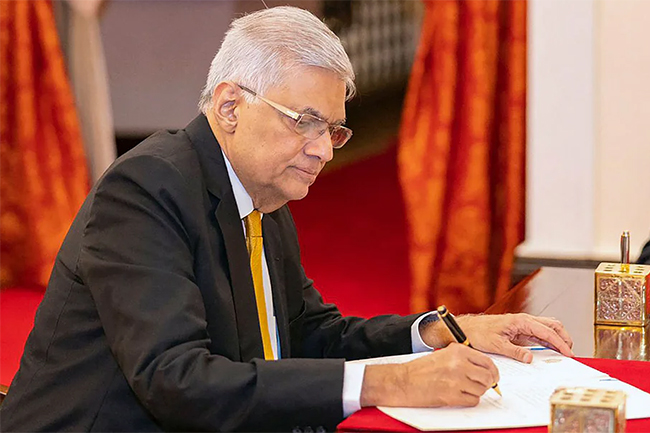
Ranil to take oaths as Acting President today

Following the official confirmation of Gotabaya Rajapaksa’s resignation from the presidency, Ranil Wickremesinghe is expected to swear in as the Acting President today (July 15) to fill in the vacated position.

Meanwhile, the Office of the Speaker of Parliament announced last night that a letter of resignation from President Rajapaksa was received through the Sri Lankan High Commission in Singapore.

However, an official statement in this regard will be made by Speaker Mahinda Yapa Abeywardena today after verifying the authenticity of the letter and finalizing all legal matters.

Pursuant to Article 38 of the Constitution, the Head of State can step down by submitting a resignation letter signed by him to the Speaker of Parliament.

The resignation letter was sent after the embattled President landed in Singapore after departing the Maldives on board a Saudia Airlines flight yesterday. His final destination still remains uncertain.

With regard to President Rajapaksa’s arrival, the Singapore Foreign Ministry said that neither “had he asked for asylum, nor had he been granted asylum” in the country.

Source: Adaderana

Commonwealth urges Sri Lankan leaders to safeguard democratic governance

The Commonwealth Secretary-General, Patricia Scotland QC, has called on political leaders in Sri Lanka to safeguard democratic governance, the rule of law and human rights, in adherence with the values and principles of the Commonwealth Charter.

The Secretary-General also reiterated the Commonwealth Secretariat’s commitment to support Sri Lanka in protecting and strengthening its institutions and constitutional governance and facilitating economic stability. She called on all in Sri Lanka to exercise restraint with a view to a peaceful transition.

Speaking on the situation, the Secretary-General Patricia Scotland QC said the Commonwealth is a community that is underpinned by shared values and Sri Lanka, as one of the oldest democracies in Asia and a founding member of the modern Commonwealth, has always shown its strong commitment to these tenets, which are cherished and trusted by its people.

“I call on all those in positions of leadership to safeguard democratic principles, the rule of law and human rights.”

The Secretary-General has been in contact with the Prime Minister Ranil Wickremesinghe and other leaders of Sri Lanka.

In her statement on the situation, the Secretary-General also said it is important that the concerns of the people of Sri Lanka on governance and other issues are addressed.

The Commonwealth Chief urged continued dialogue to this end and called on the international community to continue to assist Sri Lanka in this hour of economic need.

“I am hopeful that these challenges will be met according to the letter and spirit of the Constitution of Sri Lanka and the values enshrined in the Commonwealth Charter. The Commonwealth Secretariat stands ready to assist Sri Lanka in ensuring constitutional principles, and the values of the Commonwealth Charter, are upheld.”

Source: ColomboPage

Posted in Uncategorized

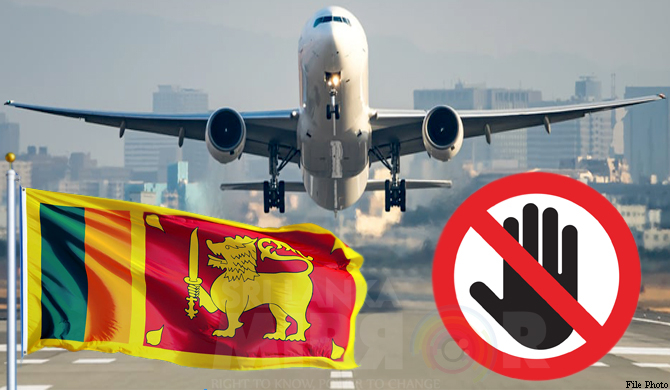
Several countries advice against travel to SriLanka

The United Kingdom, Singapore, and Bahrain have asked their citizens to avoid non-essential travel to Sri Lanka as an economic collapse in the country has led to massive protests.

The island nation is experiencing a severe economic crisis which has led to shortages of basic necessities including medicines, cooking gas, fuel and food.

Source: News 1st

Posted in Uncategorized

Protesters leave Temple Trees and Prime Minister’s Office

Protesters vacated Temple Trees and the Prime Minister’s Office today.

The protesters said that they handed back the buildings to the public.

The Galle Face protesters had decided to hand over the President’s House, President’s Office, and Prime Minister’s Office back to the authorities.

The decision was announced by the protesters today.

Thousands stormed the Presidents House on 9th July and occupied the premises since then.

Protesters also stormed the Presidential Secretariat and Temple Trees on the same day.

Yesterday protesters stormed the Prime Minister’s House at Flower Road.

The Bar Association of Sri Lanka had appealed to the protesters to return the buildings to the State.

Posted in Uncategorized

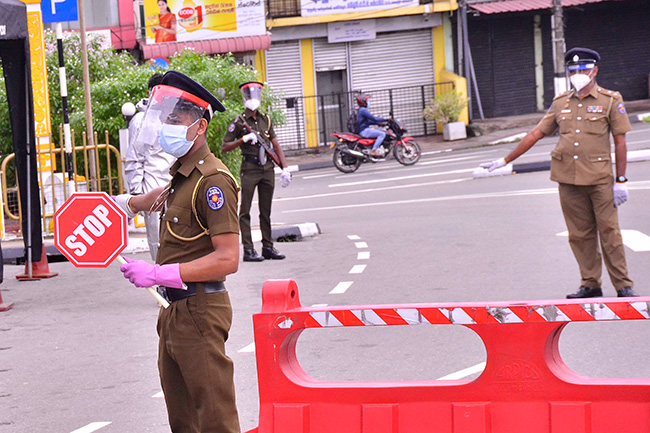
Curfew imposed in Colombo District

Curfew has been imposed in the Colombo administrative district with effect from 12 noon today until 5.00 a.m. tomorrow (15), the Government Information Department announced.

Acting President and Prime Minister Ranil Wickramasinghe has imposed the curfew under the provisions of the Public Security Ordinance, it said.

The curfew order directs that no person shall be on any public road, railway, public park, public recreation ground or other public ground or the seashore in such areas, during that period except under the authority of a written permit granted by Secretary to Ministry of Defence or Secretary to Ministry of Public Security or Inspector-General of Police or any officer authorized by them.

An island-wide curfew imposed from 12 noon yesterday was lifted at 5.00 a.m. today (14). Prior to that, the Acting President had ordered to impose a curfew in the Western Province and a state of emergency island-wide.

He had also ordered the security forces to arrest those engaging in unruly behaviour and to take into custody the vehicles they travel in.

The move came as thousands of angry protesters gathered outside the PM’s office, and several other locations in Colombo. Protesters had later stormed and occupied the prime minister’s office.

Source: Adaderana

Posted in Uncategorized

We will stand by the people of Sri Lanka: India

India, on Thursday, made it clear that it would continue to stand by the people of Sri Lanka as they seek to realise their aspirations for prosperity and progress through democratic means and values as well as established institutions and constitutional framework.

At a media briefing here, Ministry of External Affairs (MEA) spokesperson Arindam Bagchi noted that India had responded promptly to the economic hardships faced by the people of the island nation by extending assistance to the tune of $3.8 billion this year alone.

The spokesperson said Sri Lanka is an important neighbour and India was closely monitoring the evolving situation there. New Delhi continued to remain engaged with all relevant stakeholders in Sri Lanka, he confirmed.

”We look forward to an early solution to the situation related to the government and the leadership through democratic means,” the spokesperson added.

He reiterated that India had no role in facilitating President Gotabaya Rajapaksa’s escape from the island nation yesterday after the public revolt against his leadership.

Source: The Statesman

As Sri Lanka’s ruling Rajapaksas flee, Pandora Papers reveal ties to UAE properties

When embattled Sri Lankan President Gotabaya Rajapaksa attempted to flee his country in the face of economic and political crisis this week, he chose the United Arab Emirates as his preferred destination, underscoring the ruling Rajapaksa family’s ties to the Persian Gulf financial hub.

Rajapaksa and some of his relatives, including a former finance minister, were stopped from boarding flights to Dubai, the UAE’s commercial center, on Tuesday as protesters surrounded the airport, CNN reported. Rajapaksa was expected to resign today, but instead fled to the Maldives on a military jet, with some media speculating that he may head to Dubai at a later stage.

The vast wealth of the Rajapaksa family, who have dominated the country’s politics for nearly two decades, became a flashpoint in massive protests that have engulfed the country since March as Sri Lanka faces critical shortages of fuel, medicines and other goods partly triggered by years of mismanagement of state funds. A series of top political resignations left the president and his brother, then-Prime Minister Mahinda Rajapaksa, further isolated. The mass demonstrations culminated in hundreds of protesters occupying the palaces of the president and prime minister on Saturday, partying at the estates and setting the latter on fire in recent days.

The hidden assets of some Rajapaksa family members were revealed last fall in the Pandora Papers, a global investigation of offshore finance led by the International Consortium of Investigative Journalists. The documents revealed how Nirupama Rajapaksa, a scion of the ruling family, and her husband, businessman Thirukumar Nadesan, had used secretive shell companies and trusts to accumulate more than $18 million in tax havens, and own artworks and luxury properties in London and Sydney.

The Pandora Papers documents, leaked from 14 offshore service providers, show that the couple has secret ownership ties to UAE properties as well.

Included in the leak of 11.9 million confidential files are utility bills, a UAE resident identity card and other records showing that, as of 2019, Nadesan and the couple’s two children were residents of Dubai. The documents link them to an apartment in a luxury residential skyscraper but don’t say whether the family owns the property.

Nadesan, identified in the files as the manager of a Dubai-based asphalt trader in 2016, also listed another Dubai address as his residence in an application to open a bank account for one of his shell companies.

Nirupama Rajapaksa is related to both Gotabaya Rajapaksa and his brother, Mahinda, who over the years have exchanged top posts, including president and prime minister until recently, when both were forced to step down amid the economic crisis

Following the Pandora Papers revelations about the couple’s offshore holdings last October, President Rajapaksa announced his government will look into the matter and the Commission to Investigate Allegations of Bribery or Corruption launched an investigation. But the probe stalled, according to Sri Lankan media which cited banks’ delay in providing information about Nadesan and Nirupama Rajapaksa’s accounts.

In the meantime, she has traveled to Dubai at least once, Sri Lankan newspapers reported. Their son, who resides in the emirate according to the leaked records, often parades his luxurious lifestyle in the Gulf in selfies published on his Instagram channel.

Images captured on a blog show the young man dining on a rooftop against the backdrop of Dubai’s night skyline.

Nirupama Rajapaksa, Nadesan and their son did not respond to ICIJ’s requests for comments sent via email and Instagram.

A rising hideaway for powerful exiles
In recent years, the UAE has become a popular destination for oligarchs and criminals who seek a safe haven to hide their wealth after other offshore jurisdictions introduced more controls under pressure from the international community.

As part of the Pandora Papers investigation, ICIJ documented how the confederation of seven sheikdoms offers shell companies that mask their real owners’ identities, dozens of internal free-trade zones that provide even more shadows for them to hide in, and a regulatory system known for what anti-corruption advocates call its “ask-no-questions, see-no-evil approach” to dealing with money tied to gold smuggling, arms trafficking and other crimes.

Source: International consortium of investigative journalists