China – SL FMs exchange wishes on 65th anniversary of diplomatic ties

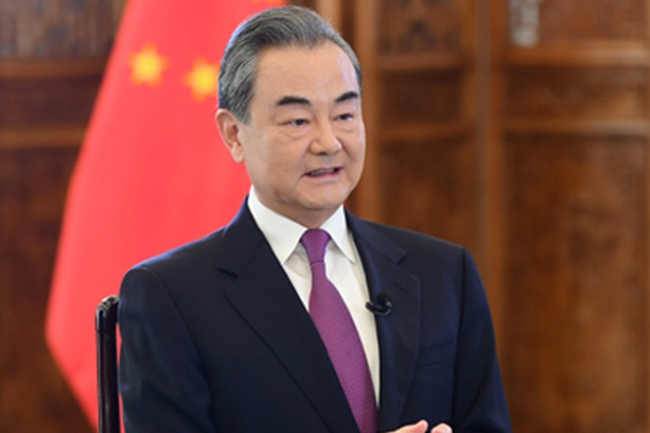
Chinese State Councilor and Foreign Minister Wang Yi and Sri Lankan Foreign Minister G.L. Peiris on Monday exchanged congratulatory messages on the 65th anniversary of the establishment of the two countries’ diplomatic relations.

Wang said in his message that China and Sri Lanka have always shown each other mutual understanding and support, setting a good example of friendly exchanges and mutually beneficial cooperation between countries of different sizes. The two countries have worked together to fight the COVID-19 pandemic in the spirit of mutual assistance since its outbreak, enhancing their traditional friendship. The two countries are now seeking further alignment of their development strategies and high-quality Belt and Road cooperation, so as to inject impetus to the post-pandemic economic recovery.

Wang said he paid a successful visit to Sri Lanka recently and jointly launched celebrations marking the 65th anniversary of the establishment of diplomatic ties between the two countries and the 70th anniversary of the signing of the Rubber-Rice Pact. Both sides agreed to carry forward the tradition of solidarity and mutual assistance, deepen China-Sri Lanka practical cooperation and expand shared interests of the two countries.

Wang said he is ready to work with Peiris to maintain close communication and coordination, and move forward the strategic cooperative partnership featuring sincere mutual assistance and enduring friendship.

In his message, Peiris mentioned that the 65th anniversary of the establishment of diplomatic ties between Sri Lanka and China coincides with the 70th anniversary of the signing of the Rubber-Rice Pact.

Over the years, he said, the enduring friendship and cooperation between Sri Lanka and China have flourished, bringing common benefits to their partnership in various fields, and the close exchanges between the leaders of the two countries have witnessed the enduring development of bilateral relations.

Despite difficulties brought by the pandemic, Wang visited Sri Lanka during his first overseas trip in 2022, which fully demonstrates the priority both sides give to Sri Lanka-China relations, Peiris said.

Peiris said he believes that Sri Lanka and China will continue to strengthen cooperation in economy, poverty reduction, international and regional issues, people-to-people exchanges and vaccine cooperation, among others.

He also looks forward to working closely with Wang to further deepen and expand the traditional friendship and the strategic cooperative partnership between Sri Lanka and China, delivering benefits to the two peoples together.

Sri Lanka: Grave Abuses Under Discredited Law

The Sri Lankan government is using the discredited Prevention of Terrorism Act (PTA) to commit prolonged arbitrary detention and torture, Human Rights Watch said in a report released today. The European Union, other trading partners, and donors, should press for time-bound action to repeal the abusive law and reject the government’s proposed amendments, which would not end widespread abuses.

The 59-page report, “In a Legal Black Hole’: Sri Lanka’s Failure to Reform the Prevention of Terrorism Act,” documents the Gotabaya Rajapaksa administration’s misuse of the PTA against the minority Tamil and Muslim communities, and to suppress civil society groups. The administration rejected pledges by the previous government to repeal the law after it was readmitted to the EU’s Generalized Scheme of Preferences plus (GSP+), which grants Sri Lanka special tariff-free access to EU markets.

“Sri Lankan authorities continue to use the Prevention of Terrorism Act to sweep away targeted people’s basic rights, reneging on past government promises to repeal the law,” said Meenakshi Ganguly, South Asia director at Human Rights Watch. “Proposed government changes to the PTA appear aimed to assuage the concerns of the EU and other governments, without ending abuses.”

This report is based on Human Rights Watch research on the Prevention of Terrorism Act carried out since 2018, interviews conducted between January and December 2021, and a review of newly available court documents. Human Rights Watch wrote to the attorney general of Sri Lanka and to the Human Rights Commission of Sri Lanka, and received a response from the commission which is included in the report.

The PTA allows the authorities to arrest people without warrants for unspecified “unlawful activities,” and to detain suspects for up to 18 months without producing them before a court. This denies suspects’ basic due process rights and removes safeguards that would help protect them from abuse, effectively creating a legal black hole, Human Rights Watch said. Under the government’s proposed amendments, published on January 27, 2022, this period of detention without judicial oversight would be reduced to 12 months.

Between 1983 and 2009, during the civil war between the government and the separatist Liberation Tigers of Tamil Eelam (LTTE), the authorities used the law primarily against suspected members or supporters of the LTTE or other armed groups. Since the deadly 2019 Easter Sunday bombings by a little-known Islamist militant group that targeted churches and hotels, the authorities have used the law to arbitrarily detain hundreds of Muslims. In the past three years the authorities have arrested over 600 people under the PTA, according to Human Rights Commission of Sri Lanka data.

Many suspects have been held for years awaiting trial. Statistics indicate that most are tortured in custody, and convictions frequently rely on confessions obtained under torture. The government’s proposed amendments would leave provisions that have led to widespread torture intact, including on the admissibility of confessions to the police, and the authorities’ power to detain and interrogate suspects at any place of their choosing.

The proposed amendments would not, for instance, have prevented abuses against Ahnaf Jazeem, a 26-year-old Muslim poet, who was arrested under the act in May 2020 and accused of promoting “religious extremism” in a 2017 book of Tamil verse. Jazeem testified in a July 2021 Supreme Court affidavit that police interrogators threatened “to hang him from the roof and beat him.”

After 18 months in PTA custody, when he was released on bail, Jazeem told journalists that the police denied him proper food and the use of a toilet, kept him in handcuffs, and initially refused him legal counsel. “They forced me during this time to deliver a confession,” he said. “They threatened me saying that they would keep me in prison for 15 or 20 years.”

Hejaaz Hizbullah, a prominent Muslim lawyer, was arrested under the act in April 2020, accused of aiding the Easter Sunday suicide bombers. While the initial allegations were dropped, the police made new allegations under the act of causing “communal disharmony” to extend his custody. Students alleged that police coerced them to testify that Hizbullah incited violence at a school. He remained in custody at the time of writing.

The Rajapaksa administration has used the PTA to detain or intimidate the families of victims of past abuses, human rights activists and lawyers, and journalists. “When we talk to the families of the disappeared, they say they can be arrested at any time,” said an activist working with the Tamil community. “Police are arresting people for posting pictures on Facebook. They can arrest you for anything.”

The EU had removed Sri Lanka from GSP+ in 2010 amid rights violations at the end of the civil war, but readmitted the country in 2017 after the then-government renewed commitments to adopt and implement 27 human rights and other international conventions, and in particular to repeal the PTA. This followed a consensus resolution of the United Nations Human Rights Council in 2015, in which Sri Lanka agreed to ensure accountability and reparations for war crimes, to investigate enforced disappearances, and to repeal this law. Most of these pledges have yet to be fulfilled.

In June 2021, the European Parliament adopted a resolution calling on the European Commission to “push for advancement on Sri Lanka’s human rights obligations and demand the repeal or replacement of the PTA” when assessing Sri Lanka’s eligibility for GSP+ status. A review is currently underway, and is expected to be completed later this year. The government’s proposed amendments to the PTA were published two weeks ahead of a meeting with the EU to examine Sri Lanka’s compliance with obligations under GSP+. The Rajapaksa government has since early 2021 pledged to review provisions of the act. Yet, the government introduced an ordinance in 2021 that would make the law even more abusive. Proposed changes to the Code of Criminal Procedure would also further undermine human rights protections. Before enacting any counterterrorism law, the Sri Lankan government should conduct meaningful and inclusive consultations with civil society groups and adopt the “necessary prerequisites” set out in December 2021 by seven United Nations human rights experts for meeting Sri Lanka’s international human rights obligations, Human Rights Watch said. The UN experts noted that the PTA contradicts Sri Lanka’s obligations under several international human rights conventions. Sri Lanka’s participation in GSP+ includes a commitment to implement these conventions. The proposed amendments do not bring the PTA into compliance with international law under any of the benchmarks set out by the UN experts. “The Rajapaksa administration’s abusive actions will not be addressed by its misleading proposal to amend the PTA,” Ganguly said. “The EU, United States, and United Kingdom should hold the Sri Lankan government to its international obligations and push for meaningful action to protect human rights.”

Posted in Uncategorized

President orders speedy release of essentials held up at Customs

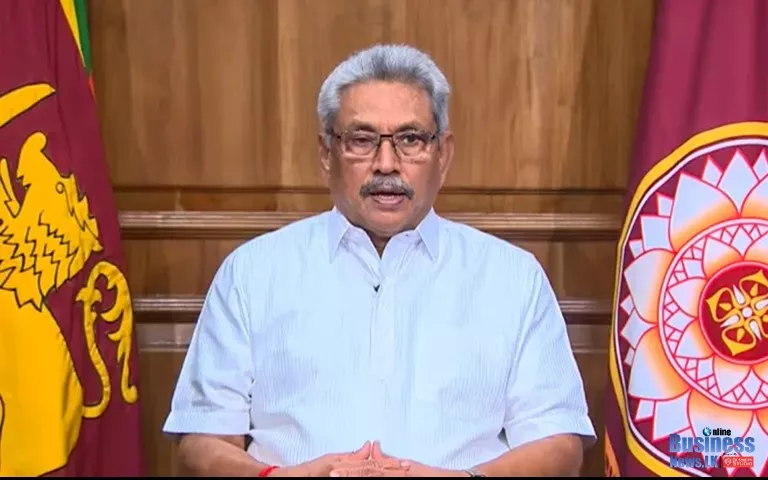
Following multiple direct and public requests made by the Essential Food Commodities Importers’ and Traders’ Association (EFCITA) from the Government, President Gotabaya Ra,japaksa has instructed relevant officials to take immediate steps to release containers containing essential items held up at Sri Lanka Customs, the President’s Media Division (PMD) announced yesterday.

President Rajapaksa issued these instructions with the aim of preventing any shortages in the market, at a special discussion held at the Presidential Secretariat yesterday with regard to the essential goods that are presently in the custody of the Customs, the press release said.

The release added that President Rajapaksa also appointed a committee headed by Finance Minister Basil Rajapaksa to ensure that there is no shortage of essential commodities, including food, during the upcoming festive season. It also said that President Rajapaksa stressed the importance of providing the people with the opportunity to purchase essential items including food without any shortage and instructed the officials to make plans for this immediately.

In view of the upcoming festive season, the importers of essential food commodities had urgently requested the Government to release a certain amount of dollars every month so as to prevent a shortage of essential commodities.

However, when contacted by The Morning yesterday prior to the PMD release, Trade Ministry Secretary Bhadranie Jayawardhana said that the Trade Ministry could not intervene in releasing $ 175-200 million, as requested by the EFCITA. Claiming that it is the importers’ duty to make the relevant imports, she said that the Trade Ministry would only intervene in fair issues.

“All the importers don’t have this issue. Some importers make the imports using their own US dollars (USD). They open the letters of credit through commercial banks. When the imports are being made in that way, no issue arises. Also, we cannot intervene in releasing the amount of USD that they have requested. Especially, when the rice imports were allowed, the importers agreed to import rice by spending their own USD. That is their duty,” she added.

Jayawardhana further said that if the importers are facing an issue on acceptable grounds, then the relevant importer should reach the Trade Ministry through the EFCITA. She added that when such a request is received, the Trade Ministry would write to the Central Bank of Sri Lanka (CBSL), after which the relevant arrangements would be made to release the USD.

She explained: “There are no control prices now. Therefore, the importers can import goods and sell them in the open market. That is their business. If they have US dollars, they can spend them. However, if there is any issue on acceptable grounds, the Trade Ministry will intervene. The particular importer should reach us through their association and then we will write to the CBSL.”

At yesterday’s meeting, President Rajapaksa had stressed the need to allow the importation of selected essential commodities and not to allow over-importing and stockpiling of goods with malicious intent, and had instructed to prepare a new mechanism to expedite the release of essential commodities, including food, to the market, and directed the new committee to regulate and oversee the matter.

Finance Minister Basil Rajapaksa, Trade Minister Dr. Bandula Gunawardana, Minister of Ports and Shipping Rohitha Abeygunawardena, Central Bank of Sri Lanka Governor Ajith Nivard Cabraal, State Minister of Co-operative Services, Marketing Development, and Consumer Protection Lasantha Alagiyawanna, Secretary to the President Gamini Senarath, Secretary to the Ministry of Finance S.R. Attygalle, and senior officials of the Ministry of Finance and Sri Lanka Customs were also present at the meeting with the President.

EU welcomes release of those detained under PTA

The EU also said that civil society’s critical engagement on PTA reforms and human rights issues should be welcomed rather than met with hostility.

“Welcomes the recent releases on bail of those detained under the Prevention of Terrorism Act (PTA). Civil society’s Critical engagement on PTA reforms and human rights issues should be welcomed rather than met with hostility,” the EU office in Colombo tweeted.

Meanwhile, Human Rights Watch claimed in a report that the Sri Lankan Government is using the discredited Prevention of Terrorism Act  to commit prolonged arbitrary detention and torture.

HRW said that the European Union, other trading partners, and donors, should press for time-bound action to repeal the abusive law and reject the government’s vague pledges of reform.

The 59-page report, ‘“In a Legal Black Hole’: Sri Lanka’s Failure to Reform the Prevention of Terrorism Act,” documents the Gotabaya Rajapaksa administration’s misuse of the PTA against the minority Tamil and Muslim communities, and to suppress civil society groups. The administration rejected pledges by the previous government to repeal the law after it was readmitted to the EU’s Generalized Scheme of Preferences plus (GSP+), which grants Sri Lanka special tariff-free access to EU markets.

“Sri Lankan authorities continue to use the Prevention of Terrorism Act to sweep away targeted people’s basic rights, reneging on past government promises to repeal the law,” said Meenakshi Ganguly, South Asia director at Human Rights Watch. “EU members and other countries should reject the Rajapaksa administration’s unconvincing promises to reform the PTA and press for the law’s prompt repeal.”

This report is based on Human Rights Watch research on the Prevention of Terrorism Act carried out since 2018, interviews conducted between January and December 2021, and a review of newly available court documents. Human Rights Watch wrote to the attorney general of Sri Lanka and to the Human Rights Commission of Sri Lanka, and received a response from the commission which is included in the report.

The PTA allows the authorities to arrest people without warrants for unspecified “unlawful activities,” and to detain suspects for up to 18 months without producing them before a court. This denies suspects’ basic due process rights and removes safeguards that would help protect them from abuse, effectively creating a legal black hole, Human Rights Watch said.

Between 1983 and 2009, during the civil war between the government and the separatist Liberation Tigers of Tamil Eelam (LTTE), the authorities used the law primarily against suspected members or supporters of the LTTE or other armed groups. Since the deadly 2019 Easter Sunday bombings by a little-known Islamist militant group that targeted churches and hotels, the authorities have used the law to arbitrarily detain hundreds of Muslims. In the past three years the authorities have arrested over 600 people under the PTA, according to Human Rights Commission of Sri Lanka data.

Many suspects have been held for years awaiting trial. Statistics indicate that most are tortured in custody, and convictions frequently rely on confessions obtained under torture.

Posted in Uncategorized

Case against Swiss Embassy employee Ganiya Bannister fixed for trial

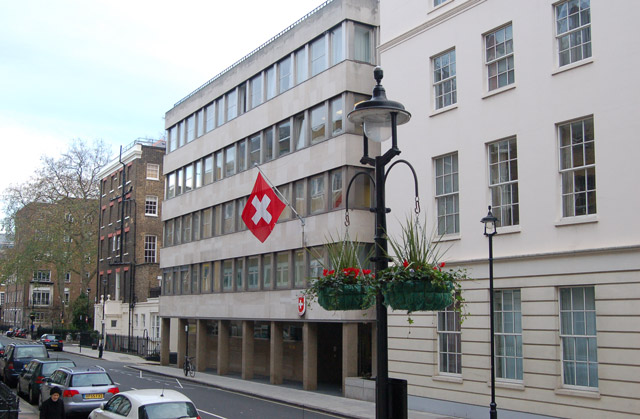
The case filed against Swiss Embassy employee Ganiya Bannister Francis for allegedly making a false claim that she has been abducted and sexually harassed was today fixed for trial by Colombo High Court.
High Court Judge Namal Balalle fixed the case to be taken up for trial on August 5. The Court also issued summons on the first and second witnesses in the case to appear in court next trial date.
Ganiya Bannister has been accused of giving false information to embarrass the Government and fabricating evidence in her abduction claim.
The Attorney General alleged Ganiya Bannister Francis had made a false claim that on or around 25th of November 2019, five persons in a white vehicle abducted her in the Cinnamon Gardens area in Colombo, threatened her with a firearm, detained her for several hours and questioned about CID Inspector Nishantha Silva who had fled the country.
President’s Counsel Kalinga Indatissa with Senior Counsel Upul Kumarapperuma appeared for the accused. Senior State Counsel Janaka Bandara appeared for the Attorney General.
Posted in Uncategorized

Hejaaz Hizbullah granted bail, but not yet released

The Court of Appeal yesterday granted bail to human rights lawyer Hejaaz Hizbullah, who has been held under the Prevention of Terrorism (Temporary Provisions) Act No. 48 of 1979 (PTA) for around 22 months, but he is yet to be released as a motion will have to be filed at the Puttalam High Court (HC) for the release.

The petition filed at the Court of Appeal was heard before Justices Menaka Wijesundera and Neil Iddawala yesterday, where they directed the relevant court (the Puttalam HC) to grant bail to Hizbullah.

Although Foreign Minister Prof G.L. Peiris told diplomats last month that the Attorney General has no objection to granting bail to Hizbullah, the Puttalam HC last month said that it does not have the necessary jurisdiction to grant bail under the PTA.

Issuing the order yesterday, the Court of Appeal noted that while it is the responsibility of the legislature/Parliament to amend the draconian elements of laws combating terrorism, it is up to the Judiciary to interpret those elements in the interests of justice.

“Four decades have passed and the PTA has strayed far from its historical context. The PTA, if in its application and implementation, creates a vicious cycle of abuse, the very purpose of the statute is defeated. The preamble of the Act refers to the affirmation that ‘men and institutions remain free only when freedom is founded upon the respect for the rule of law and that grievances should be redressed by a constitutional method’. However, it is alleged that the PTA has been utilised at times to the detriment of personal liberty by its draconian implementation. Ultimately, it is up to the legislature to ensure that the draconian elements of the law combating terrorism are dispensed with modern-day contexts. Until such time, it is the Judiciary’s duty to employ existing legal provisions and constitutional powers to interpret the same elements in the interests of justice,” said the Court of Appeal yesterday.

Thus, the conditions of bail are a cash bail of Rs. 100,000, two surety bails of Rs. 500,000 each (Rs. 1 million in total), that Hizbullah report to the Puttalam Police Division twice a month, that his passport be submitted to the Puttalam HC, that his permanent residential address be submitted to the Puttalam HC, and that he not interfere with the witnesses under any circumstances.

Hizbullah, who was arrested in April 2020, was charged almost a year later, under Section 2(1)(h) of the PTA (by words either spoken or intended to be read or by signs or by visible representations or otherwise causes or intends to cause the commission of acts of violence or religious, racial, or communal disharmony or feelings of ill-will or hostility between different communities or racial or religious groups) and Section 3(1) of the International Covenant on Civil and Political Rights (ICCPR) Act (incitement to discrimination, hostility, or violence). He was first arrested over alleged links to the Easter Sunday terror attacks, although evidence of terror-related activity was never produced.

Commenting on the decision yesterday, Amnesty International South Asia, who named Hizbullah a “prisoner of conscience” last year, said that while granting him bail is a relief, “he should not have spent a day behind bars in the first place without committing any offence”.

“He was in prolonged detention under the draconian PTA, without a shred of credible evidence. We call on the authorities to drop all charges against him and to release him unconditionally. The authorities must immediately review the detention of all those held under the PTA, ensure adequate access to fair bail hearings, and immediately release all those not facing internationally recognisable charges,” Amnesty International South Asia Tweeted yesterday.

Opposition and Samagi Jana Balawegeya (SJB) Leader Sajith Premadasa Tweeted: “Hizbullah’s release after 20 months of detainment based on baseless charges is proof that the PTA is not a tool but a weapon.”

Similarly, SJB Parliamentarian Eran Wickramaratne Tweeted that while he welcomes news of bail being granted to Hizbullah, “we must not waver from our call to repeal the much-abused PTA that was used to detain him in the first place. We must ensure that there will be no more prisoners of conscience like Hizbullah”.

The European Parliament, earlier last year, called on the Government of Sri Lanka to repeal the PTA and the European Commission to consider the temporary withdrawal of the Generalised Scheme of Preferences Plus (GSP+) trade concessions from Sri Lanka if it is not done, where they specifically noted the prolonged detention of Hizbullah.

Posted in Uncategorized

Sri Lanka seeks US$200mn credit lines from Australia, Pakistan: report

Sri Lanka is seeking a 200 million US dollar credit line from Australia for lentils and other foods a media report said, soon after reports of 200 million dollars being sought from Pakistan amid forex shortages.

Sri Lanka’s The Sunday Times newspaper quoted Trade Minister Bandula Gunewardene as saying that 200 million dollar credit line sought from Australia as well a billion US dollar credit line from India in the works could be used to bring goods for the upcoming New Year season.

“The two credit lines will be sufficient for the imports of essentials for about six months,” the newspaper quoted Minister Gunewardene as saying.

Sri Lanka’s Foreign Minister G L Pieiris expected to visit India shortly and there are expectations of progress over the billion dollar credit.

India had already given a 500 million dollar credit line for fuel and a 400 million dollar swap to the central bank. India had also deferred a payment under the Asian Clearing Union from the central bank.

Sri Lanka is facing severe forex shortages amid liquidity injected to maintain excessive low rates.

Two years of money printing has sent inflation soaring to 14.2 percent a year by January 2022. Money in recent months has been printed to sterilize interventions for imports and maintain policy rates at 6.5 percent.

There a complaints that 1,500 containers are stuck at the port awaiting foreign currency. In December imports are estimated to have soared to 2.2 billion US dollars.

Posted in Uncategorized

SJB demands Basil’s resignation over North Korea deal

Rajapaksa was quoted in the media as saying that during the height of the civil war, Sri Lanka purchased weapons from North Korea using money sourced from the Black Market.

The Foreign Ministry later rejected the media report but there was no denial issued by the Finance Minister.

SJB General Secretary Ranjith Mandumabandara told reporters today that Basil Rajapaksa must resign.

“There is no room in our laws to allow anyone to use black money,” Ranjith Mandumabandara said.

He also said the public have not given the Government a mandate to deal with a country against who sanctions have been imposed by the international community.

Civil society slam Foreign Ministry over statement against Ambika

A number of civil society organisations and individuals have come out in support of human rights lawyer and advocate, Ambika Satkunanathan after the Foreign Ministry criticised her over comments she had made to the EU Parliament’s Sub-Committee on Human Rights.

In a joint statement, 161 individuals and 47 organisations/networks/trade unionists said they consider the targeting of outspoken members of civil society by a Government institution using dangerous insinuations to be a form of intimidation aimed at stifling dissent and freedom of expression.

“Statements such as this by the Foreign Ministry, we believe, aim to constrain civil society engagement as an independent interlocutor with the international community on democracy and rights issues, standing up for the rights and protection of affected communities and individuals,” the joint statement said.

In her submission to the EU, Ms. Satkunanathan made a critical assessment of the human rights situation in Sri Lanka and its international and national obligations to its citizens, and provided recommendations to European Union member states.

“Rather than engage substantively with the issues raised, the Sri Lankan Government instead chose to cast aspersions on an individual with an unimpeachable record of principled research, advocacy and public service for the improvement of human rights in Sri Lanka. The attempt by the Foreign Ministry to draw an analogy between the independent advocacy of a Tamil activist and researcher with the claims of the LTTE is both unwarranted, mischievous and chilling,” the joint statement said.

Issuing a statement earlier, the Foreign Ministry noted with concern what it claimed were numerous misleading statements contained in the testimony of Ambika Satkunanathan, during an exchange of views on the situation of human and labour rights in Sri Lanka at the European Parliament’s Subcommittee on Human Rights on January 27, 2022.

“We note with deep concern the continuing incidents of harassment of victim-survivors, human rights activists, media workers and civil society organisations by state actors. Creating an enabling environment for civil society will require more than mere assertions that civil society is treated as a partner, and the shifting of the NGO Secretariat to a new Ministry,” civil society organisations and individuals said.

Lankan court bails out Hejaaz Hisbullah, Amnesty International “Prisoner of Conscience”

The Sri Lankan Court of Appeal on Monday ordered to release on bail Attorney-at-Law Hejaaz Hizbullah, who had been arrested under the Prevention of Terrorism Act (PTA).

The order was issued by a judge bench comprising Justices Menaka Wijesundera and Neil Iddawela after accepting motion filed on behalf of Mr. Hizbullah seeking his release on bail.

When the petition in question was taken up recently, the Attorney General’s Department informed the court that it would not object to the request for bail.

Accordingly, after taking into consideration the facts presented by President’s Counsel Romesh de Silva on behalf of the petitioner and AG’s Department, the Court of Appeal ordered the Puttalam High Court to release Attorney-at-Law Hejaaz Hizbullah on bail.

Hejaaz Hizbullah was arrested on April 14, 2020 under the PTA iin order to be questioned regarding the Easter Sunday attacks. He was accused by the police of aiding and abetting Insaf Ahamed, who was involved in the April 21, 2019 bombings.

Hejaaz Hizbullah is a 41-year-old human rights lawyer who has been unlawfully detained by the Prevention of Terrorism Act (PTA) in Sri Lanka.

He earned his Master’s degree in the United Kingdom as a Chevening scholar, which is the UK’s international scholarships program. He had begun studying constitutional law at early stages of his career.

He is married to Maram Khalifa and together they have a daughter, but he has never been able to see her because she was born while he was in detention in November 2020.

Hizbullah wrote a letter for Eid this year to his wife that reads “I too miss Egypt and how free we are or how free I am. I don’t feel constrained by anything. I think (daughter’s name here) will be a good travel companion. I can see myself swimming with her in the Red Sea!! InshAllah.” For context, his wife Maram is from Egypt.

Alleged Crime and Imprisonment

Hizbullah was arrested on April 14, 2020 by the Criminal Investigation Department (CID), but not officially charged until March 3, 2021. He was originally arrested under the Prevention of Terrorism Act for alleged involvement in the 2019 Easter bombings. He was accused of aiding and abetting suicide bomber Inshaf Ahamed, but this accusation has been withdrawn. He was placed under detention on order of the President of Sri Lanka, Gotabaya Rajapaksa under section 9 PTA This allows a minister the permission and power to detain by order up to eighteen months if there is reasonable belief that the person is connected to an unlawful act.

Hizbullah has had case files removed, was detained over six months without charge, and had numerous laws violated against him. A person must be presented before a magistrate within 72 hours of being detained by the PTA if a detention order is not issued. Hizbullah did not receive an order until April 25, 2020, 11 days later. The order was renewed on October 14 and his case before the magistrate was pushed to February 18, 2021.

He was charged on March 3, 2021 with speech “inciting communal disharmony,” and “advocating national, racial or religious hatred that constitutes incitement to discrimination, hostility or violence” under the ICCPR Act and “for conspiracy and abetment charges” under the Penal Code.

Since arrest, Hizbullah has been denied due process. He has been detained for an extended period of time without oversight or bail. In police custody, he was not allowed to have legal counsel and since his February indictment, has not been able to see his family.

As of August 2021, he had been detained for 16 months without any evidence. He was being locked up in a 6×3 foot cell.

His family believes that he was targeted because of his activism and human rights work. He has been openly critical of the government, especially when abuses towards religious and ethnic minorities have been increasing.

Influence and Recognition

Hejaaz Hizbullah’s case has gained international attention and also brought awareness to the cases of others unlawfully detained under the PTA such as 26-year-old poet and teacher Anhaf Jazeem.

In July 2021, 11 international human rights organizations called for the release of Hizbullah. They are Amnesty International; Human Rights Watch; Article 19; Asian Forum for Human Rights and Development; CIVICUS: World Alliance for Citizen Participation; Front Line Defenders; International Bar Association’s Human Rights Initiative; International Commission of Jurists; International Movement Against All Forms of Discrimination and Racism (IMADR); International Working Group on Sri Lanka; and Sri Lanka Campaign for Truth and Justice.

The European Parliament’s June 10, 2021 Resolution on “Sri Lanka, in particular the arrests under the Prevention of Terrorism Act” specifically mentioned Hizbullah by name. In section ‘F’ it states “whereas the PTA has been systematically used for arbitrary arrests and the detention of Muslims and minority groups in Sri Lanka, including Ahnaf Jazeem, a 26-year-old Muslim teacher and poet, and Hejaaz Hizbullah, a well-known lawyer for minority rights and the rule of law”.

The United Nations Core Group on Sri Lanka, consisting of Germany, Canada, North Macedonia, Malawi, Montenegro, and the United Kingdom has raised concerns at the 44th, 45th, and 47th sessions over the detention of Hejaaz.

In her June 21, 2021 opening speech at the 47th session of the Human Rights Council, UN High Commissioner for Human Rights Michelle Bachelet mentioned the PTA’s targeting of minorities. “I am concerned by further Government measures perceived as targeting Muslims, and by the harassment of Tamils,” she said, adding “Recent counter-terrorism regulations – which include the listing and/or prohibition of more than 300 Tamil and Muslim groups and individuals for alleged support of terrorism – will also not advance reconciliation.”

He has been recognized by Amnesty International as a “prisoner of conscience,” meaning those who have not called for violence or hatred, but detained for their identity or belief systems, such as religious or political.


Posted in Uncategorized