China’s bare-chested turn to Sri-Lankan Tamils is India’s new headache -The Print

The arrest of more than 60 Indian fishermen by the Sri Lankan Navy last month created a political stir in Tamil Nadu. The state’s fishermen are continuing their indefinite strike from 19 December, with a plan to stage a ‘massive rail roko’ agitation if all the arrested fishermen are not released. Writing to External Affairs Minister S. Jaishankar, the state’s chief minister M.K. Stalin has also asked the Narendra Modi government to ensure “fishermen’s safety and the right to livelihood” from the intimidatory tactics of the Sri Lankan Navy.

In this context, the release of 13 fishermen by a Sri Lankan court on 5 January has come as a respite. Yet, the continuous resurfacing of the dispute between the Tamil fishermen on the two sides of the Palk Strait has serious implications for the bilateral relationship between India and Sri Lanka. In 2021, there were at least four instances when the Sri Lankan Navy assaulted Tamil fishermen, leading to many deaths.

New developments: India versus China? 

The ongoing crisis must be seen within the context of two interesting developments in northern Sri Lanka. First, days before the escalation, Sri Lankan Fisheries Minister Douglas Devananda met US Ambassador Martin K. Kelly on 13 December and sought his assistance to resolve the fisheries dispute between India and Sri Lanka. The push for the internationalisation of the dispute by a prominent Sri Lankan Tamil leader is likely to create tensions in the India-Sri Lanka relationship. The fact that Devananda has been a long-term critic of Indian influence in Sri Lanka and has been in an alliance with the current Rajapaksa government makes it likely that such a move enjoys backing from President Gotabaya Rajapaksa.

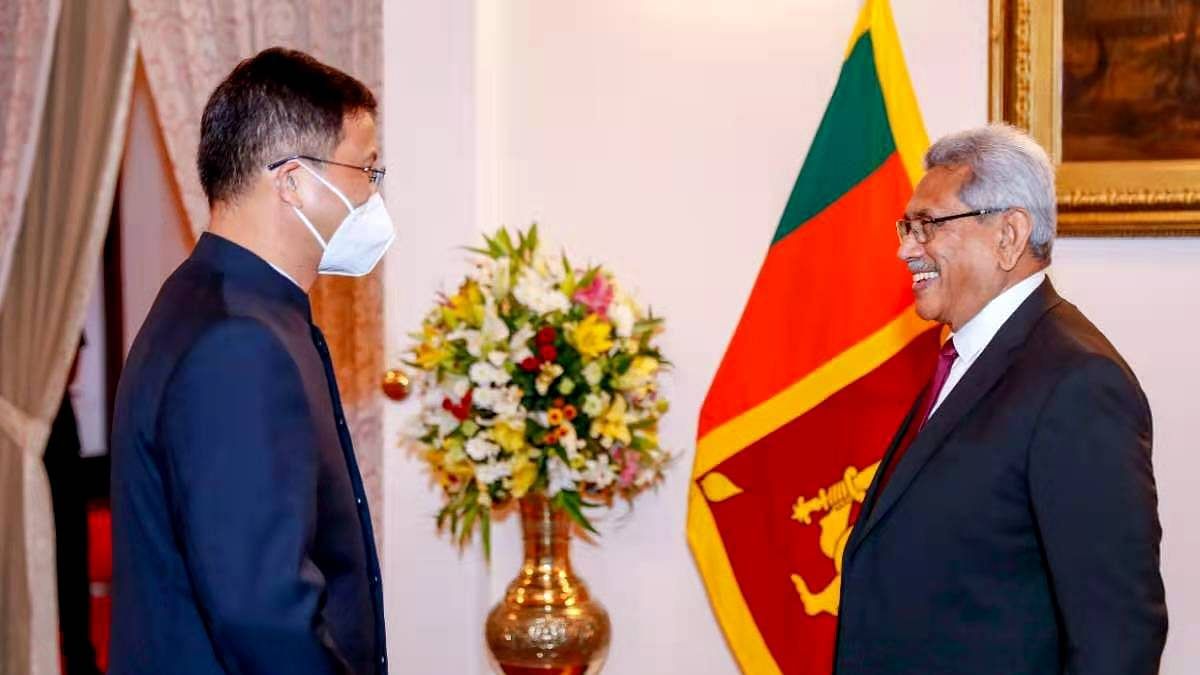
More importantly, the attempts to escalate the bilateral dispute with India have followed China’s unprecedented outreach among the Tamil community in Sri Lanka. The three-day visit of Chinese Ambassador Qi Zhenhong to the island’s Northern Province was nothing short of a soft-power blitzkrieg aimed at the Sri Lankan Tamils. Following his visit to the iconic Jaffna Public Library on 15 December, where he donated laptops and books, the ambassador, accompanied by the Fisheries Minister, took a trip to the sea cucumber hatchery built by a Chinese company.

The following day, a bare-chested Zhenhong donned a white dhoti to make his offerings at the Nallur Kadaswamy temple in Jaffna. Subsequently, he led a “study tour” to the New Silk Road Foodstuff factory at Mannar, which, according to the Twitter account of the Chinese embassy, provides livelihood to thousands of fisher families in the area. After distributing Covid relief supplies and fishing gears to the fishermen, he visited Point Pedro on 17 December, 30 kilometres from the Indian mainland.

China losing ground

Ever since the end of the Sri Lankan Civil War in 2009, China has remained focused on gaining influence in the Sinhalese south. Notably, its role in supporting the Sinhalese nationalists against the Liberation Tigers of Tamil Eelam (LTTE) cemented its position as a prime backer of the government in Colombo. However, the increase in China’s influence in Sri Lanka is also leading to the rise of anti-China sentiment in the island nation.

This became evident after the Rajapaksa government enacted the Colombo Port City Economic Commission (CPCEC) Act in May 2021, much to the opposition by Sinhalese-Buddhist monks. The Act raised the issue of deliberate cession of Sri Lankan sovereignty by the Rajapaksa regime to China and gave rise to the domestic suspicions of the Port City becoming a “Chinese colony”. The suspicions about China’s role in the region grew in July 2021, when a Chinese company tried to cut corners with the Presidential Secretary, leading to a backlash from the chairman of the CPCEC.

In September 2021, China received another setback after Sri Lanka’s National Plant Quarantine Service rejected the import of 20,000 tonnes of organic fertilisers, citing the presence of harmful bacteria in the consignment. In response, the Chinese embassy in Sri Lanka tweeted that it was blacklisting the state-owned People’s Bank of Sri Lanka for the non-payment of the due amount. After China demanded compensation of $6.7 million, it gave rise to the concern among many in Sri Lanka that China will take advantage of its financial muscle and get away with it.

Then, in November, Sri Lanka cancelled a $12 million renewable energy project in its northern islands, which had been awarded to the Chinese companies in January 2021. Since the projects were as close as 50 kilometres from the Indian town of Rameswaram, India lodged a strong protest with Colombo. After the projects were cancelled, the Twitter account of the Chinese embassy in Colombo gave a statement calling out the security concerns of a “third party” behind the cancellation.

The rise of anti-China sentiment is leading to a turn in the Chinese fortunes in Sri Lanka. Much of this has happened despite a patron-client relationship between the Chinese Communist Party (CCP) and the Rajapaksa brothers. Importantly, the latter’s ability to channel investments from the CCP towards the political project of majoritarian Sinhalese nationalism cemented their place at the pinnacle of Sri Lankan politics. With the growth of anti-China sentiment among the Sinhalese nationalists, the Rajapaksa regime began to balance Beijing’s influence with support from New Delhi.

Where India comes in

In August 2021, the Sri Lankan government finally sent its High Commissioner to India after a delay of more than 18 months. It also released an integrated country strategy to reinvigorate the New Delhi-Colombo relationship with common civilisational ties and Buddhism. A series of high-profile visits followed, including the visits of Indian Foreign Secretary Harsh Vardhan Shringla to Colombo in October and Sri Lankan Finance Minister Basil Rajapaksa to New Delhi in November. As a result, India is now working in an economic package and a currency swap agreement to help the Sri Lankan economy. At the same time, Sri Lanka has moved ahead on the contentious Trincomalee oil tank farm project.

For China, the rise of hostile sentiment against it among the Sinhalese nationalists in southern Sri Lanka allows it to expand its influence in the Tamil north. China’s historic role in supporting the Sinhalese-Buddhist majoritarian project in the island makes Sri Lankan Tamils wary of the CCP’s influence. Beijing hopes that a sustained outreach, backed by China’s deep pockets, would likely help it earn the trust of Sri Lankan Tamils. This also leads Beijing to support Sri Lankan fisher communities through its soft power push, especially as tensions remain high across the Palk Strait.

For New Delhi, Beijing’s efforts to wean Sri Lankan Tamils away from India are a cause of concern. Nonetheless, the fishermen dispute has consistently remained a low-priority issue for New Delhi. However, other than the immediate release of arrested fishermen, India should work towards a negotiated settlement between the two countries’ fishermen. In this context, India would also need to counter the attempts by pro-Beijing Tamil leaders to internationalise the dispute. Already, New Delhi’s position on the 13th Amendment to the Sri Lankan Constitution earns it the ire of Sinhalese nationalists. If India fails to prioritise the resolution of fishermen dispute, then a pro-India constituency of Sri Lankan Tamils is in danger of slipping away from New Delhi.

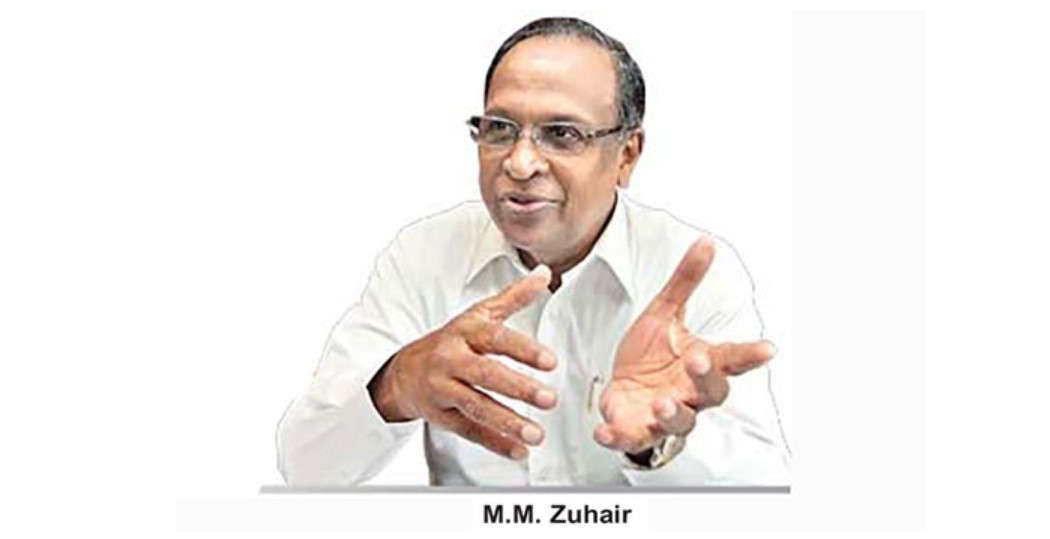
PTA amendments do not eliminate draconian provisions: Zuhair

Former MP M. M. Zuhair PC, who issued a statement on the proposed amendments to the Prevention of Terrorism (Temporary Provisions) Act No 48 of 1979 (PTA) do not eliminate the draconian aspects of the original PTA.

Citing as an example, he said the continued admission at PTA trials of specified statements made by suspects while in police custody, in violation of the time tested provisions of the Evidence Ordinance have led and will lead to further grave injustices.

These statements at times recorded by Magistrates and more often by police officers above the rank of Assistant Superintendent (ASPs) take place while the physical security of the suspects remain under the exclusive control of the police. Suspects remain in State control, both before as well as after the statements are recorded, when suspects are under total fear of reprisals if statements are not given in the manner tailor-made by the police. This often happens more often in cases where the police had not been successful in getting evidence implicating suspects already detained.

He said , “Visits by Magistrates to places of detention are welcome but will not remove the fear of mental torture that suspects in police custody will have to face soon after the Magistrate’s departure, if they disclose that they were compelled to make the confessionary statements. Reports of the superior courts, the Human Rights Commission and independent lawyers disclose the hostile conditions, harassments and indignity PTA suspects face, not only in police custody but also at the hands of officials and non-PTA suspects in most remand prisons.

The superior courts of the country have recorded a large number of cases of police intimidation to obtain confessionary statements. The recent case of a State Minister allegedly threatening some PTA suspects in remand custody is widely known. Continuing the widely criticised practice of the executive, namely the President, the Attorney General or a Superintendent of Police (SP), all of whom are executive officials deciding on the grant or refusal of bail for suspects under detention, do not meet the standards set out in our Constitution and by the Supreme Court in several cases.

The proposed amendment allowing the Court of Appeal to grant bail only if the trial had not commenced can be argued as limiting even the existing powers of the Court of Appeal and also as an attempt to remove the judicial discretion that the original courts ought to exercise when a suspect is produced before a Magistrate.

In addition, for the first time in Sri Lanka’s judicial history bail approved by the Court of Appeal under the new proposed provision, section 15B, can be ignored and in effect overruled by a lower Court, namely the High Court which can remand the suspect under the first proviso to section 15B until the conclusion of the trial, even in cases where Court of Appeal has approved bail!

If the intention of the proposed law is to continue to weaponise the PTA against the minorities, as one can easily comprehend thus far from the gross failure by the Attorney General to prosecute PTA offenders belonging to the majority community, the Ministry of Foreign Affairs would be inviting more opposition to Sri Lanka at the UN Human Rights Council from the new proposals. The proposals also contradict the President’s speech made at the recent inauguration of the new session of Parliament that human rights violations will not be condoned and that “We are a nation that respects international laws and conventions”!

The period of detention by executive fiat, though reduced from 18 months to 12 months, does not provide for any consequential provision that would enable the judiciary, even in such circumstances and also in cases of custodial torture, to grant bail.

Amending the PTA to eliminate the obnoxious provisions and bringing it in line with the provisions of our own Constitution as well as international treaties, would be the minimum that can be done to restore the country’s image as a modern nation State,”.

Sri Lanka at the edge of an economic abyss on its 74th Independence Day

It is widely acknowledged that Sri Lanka has not been in such dire straits economically as it is now in its 74 th. year as an independent nation. Seven decades of erratic economic policies adopted in the midst of a 30-year war, two insurgencies, self-defeating nationalism and ethnic and religious strife, have created a situation where the country is now going around with a begging bowl seeking loans from India, China, Pakistan and Bangladesh.

In a throw-back to 1952, when Sri Lanka had to barter its rubber for rice from China to stave off starvation, the government is now negotiating with China to secure a million tons of rice to make up for a severe rice shortage. The sudden ban on chemical fertilizers and pesticides to promote organic agriculture, and that in the midst of lockdowns, had hit farmers below the belt. A subsequent relaxation of the fertilizer policy left rice cultivation out and favored export crops like tea. Food price shot up. Government took to printed money. Inflation has now touched 14%.

A survey done by MTI Business Review found that in 2020, 74% of the businesses were down. It came down to 54% in 2021 due to the lifting of lockdowns. Thanks to the opening of the economy in 2021, there was an all-round recovery with GDP growing by 4% and industry growing by 6.8%. Some sectors in agriculture like tea and vegetables, improved with a partial relaxation of the ban on chemical fertilizer. Tea production rose by 17%. Apparel exports went up by 21.9%. Overall, exports went up by 23%  to rake in US$ 15 billion.

Grim Downside

However, the downside remains grim. In 2022, debt service payments of US$ 6.6 billion are due. The current usable official reserves are less than US$ 1 billion (2-3 weeks of imports). Tourism was down with less than 200,000 arriving in 2021. It is yet to pick up.

Sri Lanka is confronted with both a cash flow problem and a debt problem, says the Colombo-based think tank, Pathfinder Foundation (PF) in its latest report.

“The liquidity problem is compounded by the fact that the only known additional external financing, at this point, are lines of credit from India (USD 1.5 billion)  and Pakistan (USD 200 million). These will certainly contain the depletion of reserves. They will not have a very material impact on the existing external financing gap, which is likely to be at least US$ 7 billion this year, even with very optimistic assumptions about receipts from tourism, asset sales, remittances and FDI.”

“With each passing day, the dollar illiquidity will worsen unless there are large inflows. There will be some temporary reduction in the hardships being experienced by the people due to the Indian SWAP, the deferral of the Asian Clearing Union settlement and the lines of credit obtained in recent weeks. The intention of the Indian government to provide humanitarian support in this time of great need is very laudable. However, these generous initiatives will not serve to buy more than two or three months’ time. We need to do much more to help ourselves rather than relying on the goodwill of friendly neighbors, such as Bangladesh, India and Pakistan, whose per capita incomes are below ours,” Pathfinder Foundation said.

Solvency Problem

“Thanks to the high level of external debt, the country also has a solvency problem. This formidable challenge will not be resolved by a few bilateral sources temporary financing. They do not alter the debt burden.”

“The Pathfinder Foundation advocates: (1) an immediate announcement of a preemptive restructuring of external debt, (2) a very early and urgent approach to the IMF; and (3) bridging finance from friendly bilateral partners pending completion of the negotiations with creditors and the IMF which can take at least six months.”

“Debt restructuring, excluding multilateral debt, can save over USD 3 bn, during the first year. These dollars can be used to finance imports that meet the essential needs of the people and urgent requirements of businesses. An IMF program can trigger a combination of balance of payments financing and direct budgetary support from the World Bank and Asian Development Bank to the tune of USD 1.5- 2.0 bn in the first year. The combined increases in USD availability during the first twelve months will have a huge positive impact in resolving the problems currently being caused by dollar illiquidity.”

Need for Austerity

However, there can be no gain without pain, Pathfinder Foundation said.

“The painful consequences of many years of indiscipline, resulting in the country living well beyond its means, cannot be wished away. An austerity program is inevitable. Its depth and duration can be mitigated by robust structural reforms that increase productivity/competitiveness and thereby strengthen the growth framework of the economy. This would increase output, employment and incomes. The policies adopted should also prioritize inclusiveness and sustainability.”

“A home-grown program needs to be developed to meet these objectives. It should also be credible enough to negotiate with the IMF and creditors. Such a program may include, inter alia, the following:-

(1) A realistic exchange rate that contributes to building reserves; and ends the current multiple exchange rates that incentivize the expansion of the black economy. (2) Continuation of the Central Bank’s shift to a more market-oriented monetary policy. (3) A medium-term fiscal consolidation program which sets out a clear path to debt sustainability, including by improving the primary balance through a widening of the tax base, improving tax administration, rationalizing public expenditure in accordance with a clear set of national priorities, and adopting transparent fiscal rules by strengthening the Fiscal Management Responsibility Act. (4) Reform of the present highly inefficient subsidies, which disproportionately benefit the non-poor, with a well-designed and targeted system of cash transfers supported by a digital Identity Card. (5) Full-cost pricing of fuel and energy based on transparent and predictable formulas. (6) Further progress in commercializing State Owned Enterprises.

Need to Seek IMF Help

“The above could, inter alia, be key elements of a home-grown reform program that can be the basis of negotiations with the IMF. It can also be credible enough to generate confidence among creditors. However, it is also important to accelerate the long over-due structural reforms to ensure that the above program, which is primarily focused on stabilization, does not lead to a growth deficit. This has been a repeated problem with reform efforts in the past decades.”

“The structural reforms to generate growth are very well known and relate to: factor markets (land, labor and capital); the investment climate; investment promotion; trade policy, including trade agreements; trade facilitation; education, training and skills development; and digitalization.”

In conclusion the Foundation issued a grim warning: “There is much to be done, and done quickly, to avoid falling into the abyss.”

Posted in Uncategorized

GL Peiris on 2-day visit to India

Foreign Minister Prof. G.L. Peiris will set off for India Sunday for a two-day official visit, the Ministry of Foreign Affairs confirmed.

This is Prof. Peiris’ first visit to India after he assumed charge as Foreign Minister in August 2021

The Foreign Minister’s visit comes days after Sri Lanka and India signed a USD 500 million Short-Term Line of Credit (STLOC) agreement with the Export-Import Bank (EXIM) of India, to purchase petroleum products.

According to Indian Media, information on meetings scheduled during the visit has not been revealed yet.

From the beginning of this year, India has extended a total of USD 1.4 billion in relief to Sri Lanka.

Ensure participation of TN fishers in Katchatheevu fest: Stalin

Tamil Nadu Chief Minister MK Stalin on Friday expressed concern over the denial of permission for fishermen-devotees of Tamil Nadu to participate in the annual festival of St Antony’s Church at Katchatheevu.

He urged External Affairs Minister (EAM) S Jaishankar to enable the participation of Tamil Nadu fishermen in this festival by taking up the issue with Sri Lankan government, New Indian Express reported.

The Chief Minister, in his letter to the EAM, said during February/March, the State government has been facilitating the safe journey of fishermen-devotees from Tamil Nadu who wish to participate in the festival at Katchatheevu. But this year, citing various reasons, Lankan authorities have denied permission for devotees from Tamil Nadu.

“Tamil fishermen and pilgrims have a spiritual and emotional attachment with St Antony’s Church, Katchatheevu and have been participating in this traditional event for several decades now. The news of denial by Sri Lankan authorities has caused deep disappointment among the fishermen community in the State,” the Chief Minister pointed out.

Requesting the EAM to enable the participation of Tamil Nadu fishermen in the festival, as has been the tradition every year, he said, “I am sure your efforts will result in preservation of the good relations between people of both countries.”

Posted in Uncategorized

IMF ‘Ready’ to Help Crisis-Hit Sri Lanka If Support Sought

The International Monetary Fund is ready to discuss “options” with Sri Lanka if the government asks for financial support, its mission chief for the island said on Thursday.

The Covid-19 pandemic has had a disastrous impact on Sri Lanka’s economy, which has been deprived of its tourism bonanza while workers’ remittances from abroad have fallen sharply.

“While the IMF has not received a request for financial support from Sri Lanka, the staff stands ready to discuss options if requested,” mission chief Masahiro Nozaki said in a written statement.

On Wednesday, Sri Lanka’s finance minister announced the country had sought advice from the fund and was considering seeking an international bailout.

This “referred to an ongoing technical assistance mission by the IMF,” Nozaki said on Thursday.

“The mission aims to strengthen the Macro Fiscal Unit at the Ministry of Finance and focuses on training staff at the Unit, as part of our capacity development activities,” he added.

“The mission is being conducted virtually until February 9,” he said.

The IMF continues to “closely monitor economic and policy developments in Sri Lanka,” Nozaki added.

He said a fund team had visited Colombo in December last year as part of the annual bilateral discussions to review economic developments and policies.

A board meeting will be held at the end of February to review the latest economic data from the country.

Posted in Uncategorized

SL refutes former HRCSL Commissioner’s claims

Sri Lanka has rebutted the claims made by the Chairperson of the Neelan Tiruchelvam Trust, Ambika Satkunanathan during an exchange of views on the situation of human and labour rights in Sri Lanka at the European Parliament’s Subcommittee on Human Rights on 27 January.

In a statement, the Foreign Ministry noted with concern the “misleading statements” contained in the testimony of former Commissioner of Human Rights Commission of Sri Lanka (HRCSL), which it said completely ignores the progress made by the Sri Lankan government on many fronts.

It also stated that this testimony creates doubts about the Sri Lankan government’s intents and sincerity, particularly at a time when it is engaged in long-standing cooperation with the UN human rights mechanisms and the UN Human Rights Council and is delivering on its commitment to address accountability and reconciliation through domestic processes and institutions.

Expressing its disappointment, the Foreign Ministry said among the recommendations made by Satkunanathan is that the EU uses its leverage on the GSP+ facility to exert pressure on the government on human rights.

“If Sri Lanka loses the EU GSP+ facility, particularly at a time when livelihoods of millions of Sri Lankans belonging to all communities are already affected by the ongoing COVID-19 pandemic, the resulting losses would exacerbate poverty and income inequality. Some of the worst affected sectors will be fisheries and agriculture which are among the key industries in the North and the Eastern Provinces of Sri Lanka,” the statement pointed out.

The Foreign Ministry also noted that the “unfounded allegations” about discrimination of ethnic communities in Satkunanathan’s testimony are reminiscent of LTTE propaganda that once stoked hatred among communities.

In a multi-ethnic and multi-religious country such as Sri Lanka, such allegations need to be refuted in the interest of social harmony and to prevent the spread of dangerous fallacies about Sri Lanka in the international community, it emphasized.

The Foreign Ministry refuted Satkunanathan’s claims on ‘a culture of impunity.’ It pointed out that the Sri Lankan government is engaged in long-standing cooperation with the UN human rights mechanisms as well as with the UN Human Rights Council.

“Sri Lanka is delivering on its commitment to address accountability and reconciliation through domestic processes and institutions. The government has been actively engaging the international community including the UNHRC’s Universal Periodic Review and Special Procedures to address the various concerns that have been raised. This includes the allegations of systematic torture.”

The Foreign Ministry went on to say that the government has made it clear that additional reforms would be undertaken to further strengthen rule of law, access to justice, and accountability. It remains open to a constructive discussion on suggestions and further steps to address shortcomings, it added.

Speaking of Satkunanathan’s references to ‘Sinhala Buddhist nationalism’ and ‘militarisation’ as driving the actions of the government, the Foreign Ministry stated that she has made vague claims of racial profiling in the absence of any concrete evidence of discrimination against minorities.

In its response, Foreign Ministry pointed out that Sri Lanka is a secular country and all citizens, irrespective of their religion or ethnicity share the same fundamental rights under the Constitution.

Furthermore, Sri Lanka ensures access to public services such as free education and free health facilities without any discrimination on the basis of ethnicity or religion, the statement continued. “In fact, even during the military conflict when large areas of the Northern and the Eastern Provinces were under the control of the LTTE, the government continued with the provision of such public services to the areas so that the civilians, who were mainly ethnic Tamils and Muslims, would not be affected.”

Satkunanathan has pointed to the Presidential Task Force on Archaeology which she accuses of being a tool for land grabbing and changing the demographics of minority-heavy areas and the Presidential Task Force on One-Country One Law which she accuses of stoking ethnic hatred and violence, the Foreign Ministry said further.

“After the war, as displaced persons returned to the Northern and the Eastern Provinces, there has been an increase in unauthorized encroachment into forest areas inevitably leading to destruction of archaeological sites. So, there is an urgent need to take concrete measures in order to protect these sites.”

The Foreign Ministry vehemently denied the claims that the Presidential Task Force on Archaeology is a pretext for land grabbing and introducing the Sinhalese to these areas. “It may be noted that there is representation of all ethnic communities in this Task Force.”

Addressing the allegations on the Presidential Task Force on One Country One Law, the Foreign Ministry remarked that it is expected to play an advisory role only. “The Task Force’s recommendations will be first studied by the Justice Ministry, then the Cabinet of Ministers and finally the Parliament following the democratic traditions.”

With regard to her allegations that the Northern and Eastern Provinces are ‘occupied’ by the military, the Foreign Ministry responded that the majority (more than 92%) of the private lands occupied by the military at the end of the conflict in year 2009 have already been released to legitimate land owned civilians. “A mechanism is already in place to expedite the process of releasing remaining private lands.”

The Foreign Ministry also said it is particularly disappointing to see Satkunanathan’s allegations that ‘civic space’ is shrinking and that informal and extra-legal processes are used to curtail the activities of civil society organizations.

In its statement, the ministry asserted that government views NGOs as partners and not as adversaries. “The government acknowledges the constructive contributions made by civil society organisations in the work of the Office for National Unity and Reconciliation (ONUR) and Sustainable Development Council of Sri Lanka. It has also introduced certain policy changes to facilitate the work of NGOs such as bringing the NGO Secretariat under the Foreign Ministry.”

The Foreign Ministry reiterated that apart from operating routine security networks in the interest of national security, particularly after the devastating Easter Sunday terrorist attacks, the Security Forces and intelligence agencies are not engaged in monitoring or targeting any specific group of people in the country.

It refuted Satkunanathan’s claims of extra-judicial killings and arrests under the pretext of a “war and drugs.” With regard to the PTA, the statement noted that the government is in the process of amending the Act, which is now at the final stage and the international community is being briefed on that process.

Satkunanathan had also alleged that the government is exploiting its friendship with China to “undermine the efforts of states that call for accountability for human rights violations” in Sri Lanka.

On the contrary, mindful of strategic competition that is increasing in the Indo-Pacific region, the government’s main foreign policy directive is to maintain neutrality, in line with the non-aligned foreign policy we have adopted since Independence, the Foreign Ministry explained.

It also pointed out that apart from China, Sri Lanka has entered into partnerships with several countries such as India and Japan to fill gaps in national infrastructure development. Such partnerships have no bearing on Sri Lanka’s commitment to addressing accountability and reconciliation through domestic processes and institutions.

Posted in Uncategorized

Sri Lanka makes full vaccination mandatory to enter public places

Sri Lanka’s Minister of Health Keheliya Rambukwella has issued an Extraordinary Gazette preventing people who have not been fully vaccinated from entering public places, including public transport.

According to the gazette notification, without full vaccination, people will not be able to travel or stay in any public place.

“A person shall not enter any public place without having the proof of being fully vaccinated against the Coronavirus Disease 2019 (COVID – 19) unless exempted by the Proper Authority in respect of the whole of Sri Lanka,” the gazette notification says.

The provisions of this regulations will come into operation on April 30, 2022.


Posted in Uncategorized

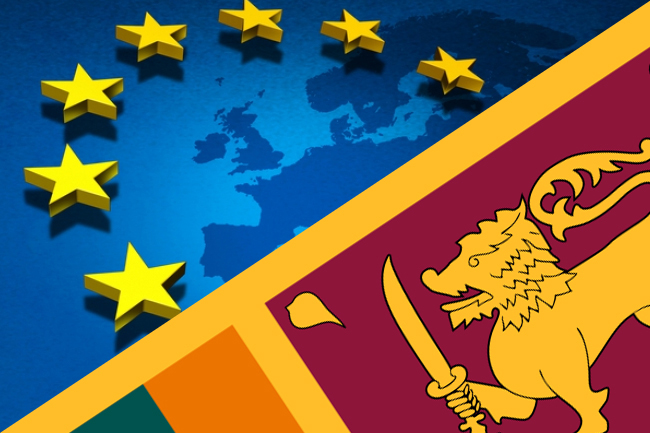
EU to fund projects in Sri Lanka to counter Chinese influence

The European Union is planning to fund projects in Indo Pacific countries such as Sri Lanka.

They stated that this would be done with the support of India to counter China’s growing influence in the region.

Accordingly, the European Union says it will introduce a transparent program to fund projects in Indo Pacific countries like Sri Lanka.

France had assumed the presidency of the European Union last month.

French Ambassador to India Emmanuel Lenain had said it’s a problem that China is using to fund projects in certain countries in the region.

He had cited Sri Lanka as an example.

The Ambassador had noted that the program may be unveiled at the EU’s Indo Pacific Form on the 22nd of this month.

France has about 8,000 troops in the Indo Pacific as it owns a cluster of islands in the Indian Ocean.

13A swap, dependent integration, Tamil thinking, Ranil’s roll-out -By Dr Dayan Jayatilleka

The ITAK/TNA keeps denouncing successive Sinhala leaderships for not ‘building upon’ and/or “going beyond” the 13th amendment, but it was precisely in the Tamil interest—not so much that of the Sinhalese—to make the 13th amendment work so as to “build upon it” and “go beyond it”. That was primarily the responsibility of the Tamil leadership. Why didn’t it do so, as the Sinn Fein so brilliantly did with the Good Friday Agreement and the ensuing devolved structures?

“Provincial Councils Abolished!” screamed the headline of a mainstream, long-established, Sinhala-language Sunday newspaper (30 Jan 2022) sympathetic to the Sinhala nationalist cause. The byline of the story is that of a relatively young, intelligent journalist of ultranationalist orientation with excellent sources in the camp of the hawks that grew into President Gotabaya Rajapaksa’s inner-circle.

The reporter claims that the draft of the new Constitution which is to be presented to the President next month and then to the Cabinet and Parliament, excludes the system of Provincial Councils and pretty much restores the 1972 Constitution, including the post of an empowered Prime Minister as the leader of the country, thereby abolishing the executive presidency.

Trapped Opposition?

The report concludes that the Government expects the new Constitution to replace the current one, within this year.

In the absence of any contradiction, one may deduce that there is a fire behind the smoke. It is likely that the lead story is based on the submissions of one or more members of the drafting committee.

If the sentence about the replacement of the elected executive Presidency by a Prime Minister is true, then the Opposition is caught in a trap of its own making. A referendum would be the earliest and best chance to break the back of the regime and expedite its end – which is how Pinochet went—but how is the Opposition to call for a NO vote when – with the possible, partial exceptions of the SJB and SLFP—much of the oppositional opinion space is ideologically and intellectually committed to the abolition of the executive presidency?

If the principle is opposition to the centralisation of power, then it is surely at least as bad in the hands of the PM as the President; in fact, it is worse because the PM represents only his/her constituency and the party he/she leads, not the majority of the people. The logical liberal-democratic stand would be a balance of power between the President and the PM, with a decisive edge for the Presidency (as in France) because it represents a majority of the citizen-voters.

If the 13th amendment is deleted or downsized and that counter-reform generates external pressure, such pressure will aim to resurrect the 13th amendment because there is no legitimate basis and consensus, internationally and regionally, to go beyond it. The UN resolutions say “implementation of the 13th amendment”

Tamil political paradigm

If one faction within the drafting committee has argued for the abolition of the system of Provincial Councils, i.e., the 13th amendment, even if there is a compromise, it is likely to be one that reduces the powers of that system. The window is fast closing for any political or politico-diplomatic struggle to defend and retain provincial semi-autonomy.

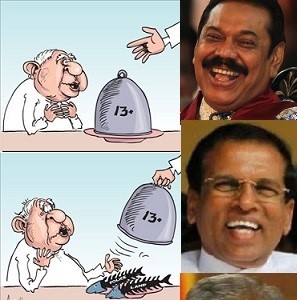
The system of Provincial Councils received only tepid support from the Tamil nationalist mainstream. At the time of its appearance, only the leftwing EPRLF came forward to contest the PC elections. Currently, Gajendrakumar Ponnambalam, MP, is riding with a convoy of vehicles carrying the figure 13 with a X running through it… He makes whistle stop addresses to the media, denouncing the 13th amendment for its accommodation to/within a unitary state—and those Tamil parties that stand for its implementation. The Sunday story should please him.

The TNA’s Sumanthiran who filibustered during the initiative of a letter to Prime Minister Modi seeking his support to uphold the 13th amendment, should be only slightly less glad.

The explicit argument of these immoderate moderates has been that “the Tamil community didn’t lose so many lives to settle for the 13th amendment.” The truth is that having lost so many lives, when the smoke cleared, all that remained was the 13th amendment and the system of provincial councils. By trashing it, or trying to leap over that durable residue and push for a new, non-unitary Constitution, the Tamil nationalists have left the 13th amendment and the PC system utterly unguarded; open to abolition by a Sinhala ultranationalist regime they helped bring about by their rejectionist and maximalist political provocations (as Hamas helped elect Netanyahu).

The real risk is that the lives sacrificed by the Tamil people will have absolutely nothing left to show politically, on the ground, on the island. Gerry Adams and Martin McGuinness never left a zero-balance sheet politically for Northern Ireland’s Irish Catholic minority.

The 13th amendment was the product of the Tamil struggle at its zenith, quite contrary to the myth that the Tamil struggle was at its height when Prabhakaran and the LTTE were fighting a spectacular yet solitary war.

The Tamil cause was politically strongest in the 1980s, and the 13th amendment was the product of that favourable balance of forces. In the 1980s, the Tamil struggle was waged by an array of militant organisations. India supported the struggle, though not its secessionist objective. The USA and the USSR deferred to India. In the aftermath of Black July 1983, the Sri Lankan state occupied the moral low-ground.

The Tamil cause never had such broad support ever again nor such powerful support from India. The Sri Lankan state was never so morally-ethically discredited and on the defensive again. In the south of the country, a civil war was fought and won, among other things in support of provincial devolution within a unitary state. What was obtained, was what was obtainable: the Indo-Lanka accord, the 13th amendment and the system of Provincial Councils within a unitary framework.

The LTTE’s spectacular military performance of the 1990s and in the new century and Millennium lacked that breadth and depth of strategic support. The Final War for Tamil Eelam was waged on politically thin ice. The only external support was the Tamil Diaspora. It ended with the (supposedly) invincible Tigers being outfought and beaten in their (supposedly) impenetrable redoubt of the Wanni jungles by soldiers from Sinhala peasant families, before being funnelled into, trapped and eliminated in the killing box. As any real genius of irregular warfare (Mao, Giap) knew—unlike Prabhakaran—if you get your politics wrong, you cannot get your war strategically right.

The ITAK/TNA keeps denouncing successive Sinhala leaderships for not ‘building upon’ and/or “going beyond” the 13th amendment, but it was precisely in the Tamil interest—not so much that of the Sinhalese—to make the 13th amendment work so as to “build upon it” and “go beyond it”. That was primarily the responsibility of the Tamil leadership. Why didn’t it do so, as the Sinn Fein so brilliantly did with the Good Friday Agreement and the ensuing devolved structures?

The answer is that mainline Tamil nationalism (but not so much the non-LTTE ex-guerrilla groups) thought/thinks as follows:

(a) The Tamils could do without India because it had more powerful friends in the West who would come through someday soon.

(b) The 13th amendment was an obstacle to federalism and self-determination.

(c) Having lost the war, international accountability for war crimes was more important than defending, entrenching and reanimating devolution/autonomy.

There was no accountability clause in the Good Friday Agreement. Accountability appeared later, as a byproduct, on the sidelines of an evolutionary process of rising consciousness.

Some personalities succeeded in including ‘federalism’ and ‘self-determination’ in the significant collective letter to Prime Minister Modi. Even the Tamil parties outside the north and east and the Muslim parties in the north and east could not subscribe to that platform.

Which Southern party which aspires to succeed the zero-devolution GR regime, can commit to anything beyond the 13th amendment and its implementation, and survive electorally?

The TNA, and earlier the TULF, pushed their Sinhala allies, President Chandrika Bandaranaike Kumaratunga and Prime Minister Ranil Wickremesinghe beyond the 13th amendment to a commitment to a new quasi-federal Constitution, and both were terminally damaged as a result, with Mahinda and later Gotabaya as beneficiaries.

Any battle for federalism, north-east merger and/or self-determination will have to be waged by the Northern Tamil parties alone. However, a battle for the 13th amendment and the system of Provincial Councils can gather the support of considerable segments of the Opposition.

The permanent hyper-inflationary spiral in Tamil political discourse is not only due to dogmatism but also to internecine competition between and within Tamil political parties. Tamil politics is driven by the dynamics of secession and succession; more succession than secession. Secessionism in the Tamil Diaspora is leveraged by contenders for succession in Tamil politics on the island, while the secessionists in the Diaspora also patronise and manipulate those contenders for succession.

The most powerful drive for self-determination in Tamil politics today is the determination to make oneself the successor to Sampanthan. A leading contender invokes Uncle Sam (claiming Washington will drive a political solution beyond 13A) to position himself as successor to “Sam” (Sampanthan).

Let alone constitutional change, if the electoral reforms in the pipeline are enacted, the number of Tamil politicians in the legislature will be the lowest in decades.

If the 13th amendment is deleted or downsized and that counter-reform generates external pressure, such pressure will aim to resurrect the 13th amendment because there is no legitimate basis and consensus, internationally and regionally, to go beyond it. The UN resolutions say “implementation of the 13th amendment”.

Tamil politicians have perhaps only days to embark upon a prudent, pragmatic and purely defensive strategy in support of 13A, with the broadest possible alliances, Tamil, Muslim and Sinhala.

Strategic economic integration of Sri Lanka with India, i.e., permanent strategic economic dependency, is an enormously flawed idea

13A swap for dependent integration

Could India be tempted to let the 13th amendment go, in a swap for a strategic economic foothold? The Gotabaya gambit is signalled in the interview given to Sri Lanka hand Nirupama Subramanian of the Indian Express by High Commissioner Moragoda. He says, “I think President Rajapaksa wants the two countries to come together, he wants the two economies to integrate more.” (Daily FT)

Moragoda elaborated in an address to the Vivekananda Foundation, the founder-director of which is India’s NSA Ajith Doval and present director is ex-Deputy NSA Dr. Gupta: “…he stressed the need to integrate the Trincomalee Oil Tank Farms and the Port of Trincomalee to the overall energy strategy of India…” (Daily FT)

Strategic economic integration of Sri Lanka with India, i.e., permanent strategic economic dependency, is an enormously flawed idea. India’s sage Chanakya, a.k.a Kautilya says in the Arthashasthra that a state by virtue of its shared or proximate border is bound to have a conflict of interests with its neighbour, which therefore constitutes the source or direction of the greatest threat, and should be balanced-off by tilting to the neighbour’s neighbour.

While such classic geo-strategic axioms need not overly circumscribe Sri Lanka’s omnidirectional options, they tend to prove objectively parametric over the long term. Therefore, a vital distinction must be drawn between (a) exploring greater economic synergies with India through multiple though selective linkages and expansion of shared economic space and congruent interests, and (b) “integration” of Sri Lanka’s economy with India’s. The latter brings to mind the integration of a sprat with a shark or a minnow with a whale. Moragoda wants Sri Lanka to play Puerto Rico to India’s USA.

Sri Lanka’s long-term existential interests of optimising sovereignty and strategic autonomy are far better served by a multipolar diversification of dependence.

Nirupama Subramanian pointedly queried about the 13th amendment. In response, Moragoda, who was as close to former Prime Minister Ranil Wickremesinghe as he is to President Gotabaya Rajapaksa, never mentioned the Indo-Sri, the 13th amendment, devolution, a political solution or the Indo-Sri Lanka Accord. As did President GR in his recent address to parliament, Moragoda stressed ‘development’ instead, flatly asserting that “…in the north and the east, people are not interested in constitutions.” Presumably, the Tamil people aren’t interested in whether or not the 13th amendment/provincial devolution is in this, or any successor Constitution.

Can Ranil give sensible counsel on either an economic policy that can last two terms or ensuring policy continuity by winning two consecutive terms, when he was never re-elected for a second consecutive term, there were 15 years in-between his premierships, and his second term ended with his party’s electoral extermination?

Ranil raps ‘rot’

Ex-Prime Minister Ranil Wickremesinghe rolled-out his economic wisdom at the Rotary Club of Colombo West. The stark contrast between his precept and his practice is staggering.

He advocates a ‘long-term national plan’, but didn’t it start while PM in 2001 and 2015.

In January 2016, Nobel Prize winner in Economic Sciences, former Vice-President and Chief Economist of the World Bank and former Chairman of the US President’s Council of Economic Advisors, Prof Joseph Stiglitz, visited Yahapalanaya Sri Lanka. On a panel with Prime Minister Wickremesinghe, Stiglitz enthusiastically stressed socioeconomic policy priorities for ‘Sri Lanka’s Rebirth’ in the ‘post-conflict’ period. (Sri Lanka’s Rebirth by Joseph E. Stiglitz – Project Syndicate (columbia.edu))

Included in the 2011 TIME magazine’s Top 100 influential people, Stiglitz had zero-influence on Ranil and his economic team. Instead, they turned to neoliberal ‘shock therapy’ guru Ricardo Hausmann. Hausmann notoriously drafted the policy platform of Venezuela’s presidential pretender, Trumpian Trojan horse and far-right flop Juan Guaido. South America’s finance ministers who shared Hausmann’s socially polarizing policy perspective have triggered “A string of victories for progressives in Latin America…Since 2018, left-of-center candidates have won presidential elections in Argentina, Bolivia, Chile, Mexico, and Peru, and leftists lead in the polls in this year’s campaigns in Brazil and Colombia.” (Foreign Policy, Jan 31, 2022)

Prime Minister Wickremesinghe pulled the plug on all Chinese projects including the Port City; Western investment didn’t flow; the Central Bank Bond scam was a drain of inestimable magnitude and duration on the economy according to the (then) Auditor-General Gamini Wijesinghe; the growth-rate dropped; the bills piled-up; he borrowed more externally than Mahinda Rajapaksa ever did with very much less to show for it; and coughed-up more real estate in Hambantota to the Chinese than Mahinda had done, thereby triggering a spiral of countervailing demands for economic real-estate from India and the USA, creating the dependency trap we are now caught in.

Wickremesinghe correctly situates the contemporary crisis: “Economically, we have not seen such a situation since 1988, 1989”. Sri Lanka exited that crisis and recovered spectacularly through a vibrant new economic model, a Rooseveltian New Deal variant of the Open Economy, instituted by President Premadasa. Prime Minister Wickremesinghe didn’t retrieve that model on the two occasions he was in charge of economic policy, 2001-4 and 2015-2019. As Prof Howard Nicholas underscored last December, industrialisation is the only way out of the Sri Lankan crisis, President Premadasa was the only one who took that path, and “I don’t think Ranil followed it…”

Today, Ranil says “…we have to realise that anyone who is saying that I will do it in one term is talking rot.” President Premadasa did it in under half a term!

Can Ranil give sensible counsel on either an economic policy that can last two terms or ensuring policy continuity by winning two consecutive terms, when he was never re-elected for a second consecutive term, there were 15 years in-between his premierships, and his second term ended with his party’s electoral extermination?

Ronnie de Mel, architect of the Open Economy of 1977, said last year that “the only hope” he sees for Sri Lanka in this crisis is Sajith Premadasa and “getting the whole thing under the control of your [Sajith’s] policies”. Opposition leader Premadasa’s discourse parallels Joe Stiglitz’ policy direction for ‘Sri Lanka’s Rebirth’.