Sri Lankan farmers reject govt compensation, paddy price

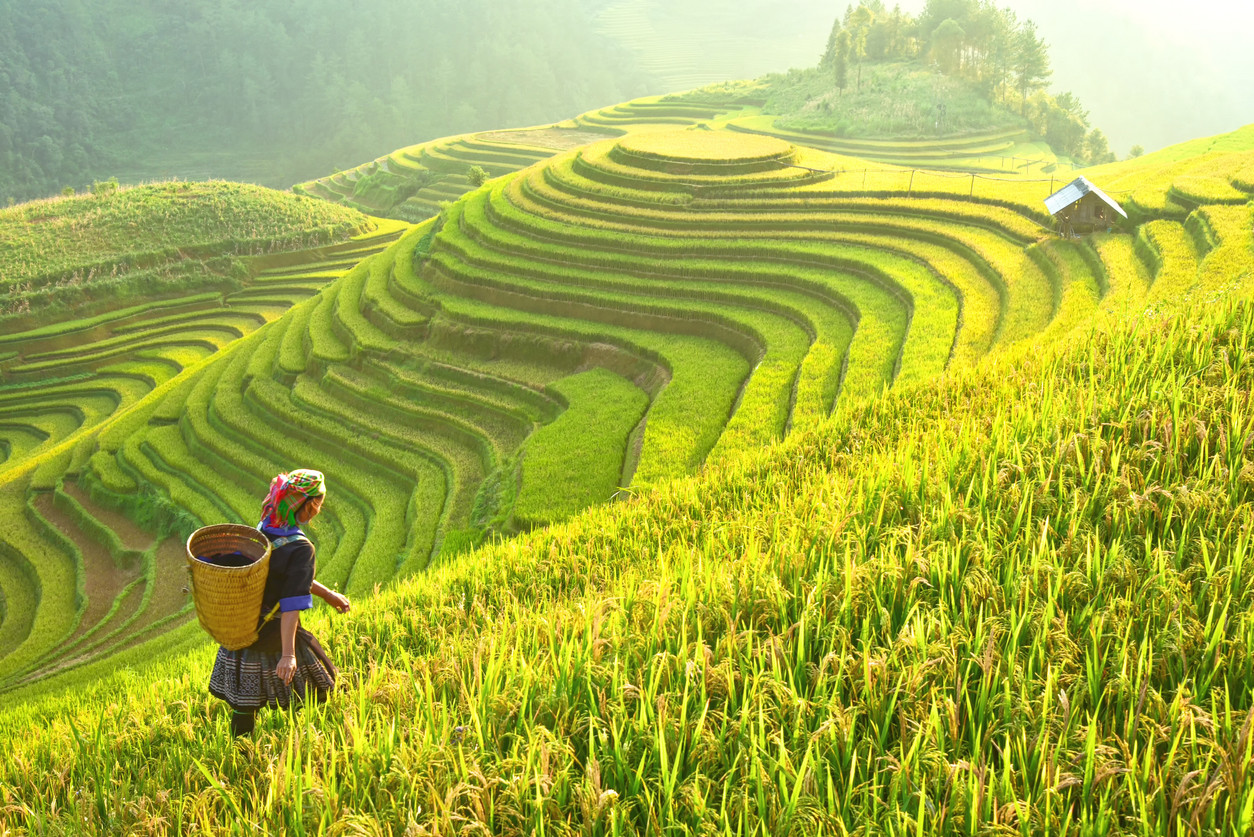
Sri Lankan farmers have rejected a compensation offer and guaranteed purchase price for paddy for being inadequate and discriminatory.

“The farming community is not ready to accept the guaranteed price of 75 rupees [37 US cents] per kilo as it was not sufficient to cover the production costs of farmers,” said Namal Karunaratne, convener of the All Ceylon Farmers Federation.

He also criticized the decision to pay compensation to farmers who cultivated paddy only using organic fertilizer. “Compensation for crop losses should be paid to all farmers, whether it is paddy, vegetables or tea plantations. The government should pay more than 100,000 rupees per acre,” Karunaratne demanded.

The island nation’s farmers have been in crisis since the government banned chemical fertilizers and agrochemical imports in April 2021 to make the agriculture sector 100 percent organic.

The government decided to revoke the ban in November, allowing the private sector to import after a serious shortage of fertilizers across the nation and protests by farmers’ organizations and opposition parties.

Some farmers gave up cultivation during the season while others incurred huge debts as the crops failed due to a shortage of fertilizers.

Now the government has decided to pay compensation to all farmers who cultivated paddy during the season using organic fertilizer.

Minister of Agriculture Mahindananda Aluthgamage said the cabinet had approved 40,000 million rupees as compensation meant for paddy farmers who used organic fertilizers.

Tea plantation workers and vegetable growers affected by crop damage are now demanding that the government compensate them as well for crop damages.

Rights activist Nalin Suresh Hewawadu alleged the ban on chemical fertilizer imports was initiated to tide over the foreign currency reserves crisis and not for the benefit of farmers.

Posted in Uncategorized

Turkish Foreign Minister arrives in Sri Lanka

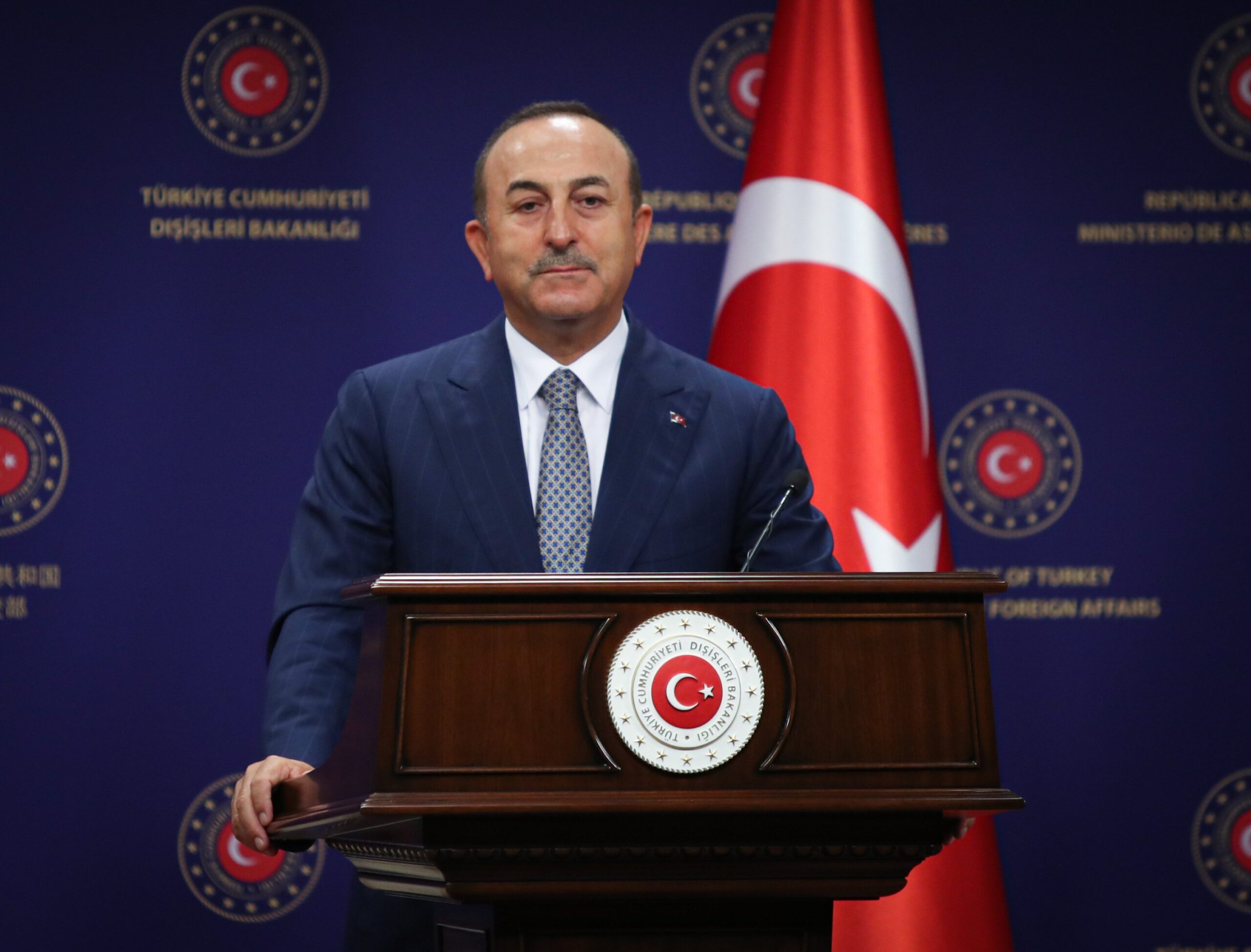
Mevlüt Çavuşoğlu, Minister of Foreign Affairs of the Republic of Turkey has arrived in Sri Lanka on a one-day official visit.

The Turkish Foreign Minister, accompanied by a 13-member delegation arrived at the Katunayake Bandaranaike International Airport on a special flight from Turkey.

State Minister of Regional Cooperation Tharaka Balasuriya and the Turkish Ambassador to Sri Lanka welcomed the delegation at the BIA.

The Turkish Foreign Minister and the delegation are scheduled to depart Sri Lanka at 3.15 pm today.

“Mevlüt Çavuşoğlu, Minister of Foreign Affairs of the Republic of Türkiye, will pay official visits to the Democratic Socialist Republic of Sri Lanka and to the Republic of Maldives on 28-30 January 2022,” the Turkish Foreign Ministry said.

“All aspects of bilateral relations as well as current regional and international issues will be discussed at the meetings to be held during both visits,” the Ministry added.

SL initiates economic strategy with India

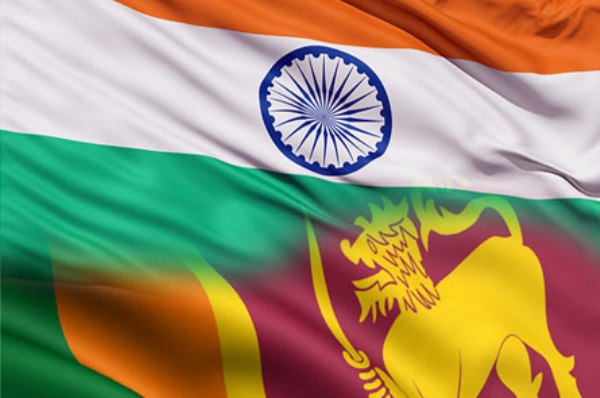
Sri Lanka has initiated a country strategy for India with an eye on integrating its ‘fragile’ economy with the Indian economy with focus on eight sectors to boost fortunes, The Economic Times reports after an interview with the Ambassador of Sri Lanka to India, Milinda Moragoda.

The Gotabaya Rajapaksa-led Government has identified energy, refineries, electricity grid, ports, real estate, tourism and information and communications technology for attracting investments from India, Moragoda has stated.

“India is the biggest economy in the region and Lanka wants to benefit from the Indian growth story,” he said. “Lanka can be a springboard for the Indian investors in the region. Our idea is to integrate our economy into the Indian economy for a win-win situation.” he mentioned.

The article reads as follows;

The Trincomalee oil firm project is one of the concrete initiative that could lead to integration with the Indian energy sector, Moragoda said. Lanka also has requirement for oil refineries and look forward to Indian refiners participation in that sector. Cross-border electricity grid is another area where Lanka is seeking to integrate into the Indian grid, given its limited requirements compared to India. “Few of India’s other neighbors have benefitted from this model,” the envoy said.

Tourism sector is the lowest hanging fruit and Indian tourists are biggest in number and contributing to Lankan economy’s recovery after the pandemic, he said. ITC is setting up its biggest luxury hotel abroad in Colombo. “But it is not just the high-end tourism, Lanka has provision for every type of tourists. We are inviting Indian investments in the tourism sector like real estate and port sectors,” said Moragoda who in the past has served as Lanka’s tourism minister.

The information technology sector is yet another sector which provides opportunity for a win-win situation, he noted. The goal is to facilitate digital connectivity between Sri Lanka and India. It would also help increase sea and air connectivity between the neighbors. The strategy document made available to ET calls for increasing Indian investments and facilitate ongoing large-scale economic development and investment-driven projects in Lanka. It also calls for increasing exports from Sri Lanka and expand Sri Lanka’s market share in India. Lankan textile sector is also keen for developing its partnership with Indian players.

Colombo also plans to expand collaboration in the fields of strategic cooperation, defence and Indian Ocean security between Sri Lanka and India, according to the country strategy document. This would include expanding bilateral joint military exercises, study tours, and increased high-level military exchanges. The goal is also to secure relevant training berths offered by India’s defence ministry and establish and maintain contacts with India’s paramilitary and police forces, with a view to securing additional training opportunities for Sri Lankan forces.

Fitch downgraded SL five times within last six years

Sri Lanka’s Fitch Credit Ratings have been downgraded five times in the last six years, Publicfinance.lk reveals.

Accordingly, Sri Lanka, which was at B in December 2018, has been downgraded to CC rating by December 2021.

However, Bangladesh has managed to maintain the credit level of BB- while Philippines has been upgraded to BBB from BBB-.

Malaysia has been downgraded once throughout the same period of time, from A- to BBB+.

Posted in Uncategorized

Sri Lanka now considering negotiating IMF deal

Sri Lanka is in talks with bondholders to avoid default and is also now considering discussing a deal with the International Monetary Fund (IMF), Finance Minister Basil Rajapaksa has said.

He told the London Financial Times that Sri Lanka is looking at all options to avoid default and alleviate the economic crisis.

“We have [international sovereign bonds] which we have to repay back, so we are negotiating with them. Then we have creditors and we have to service their debt, so whether we can have an adjustment or some type of thing,” he said.

Rajapaksa added that the Government would “think about a programme with the IMF . . . All those discussions are going as well.”

The Government had recently said that it is unlikely to seek a bailout from the IMF.

Most members of the Cabinet did not support seeking financial support from the IMF.

A majority in the Cabinet are against the pre-conditions expected to be proposed by the IMF for the funding.

IMF’s mission chief for Sri Lanka, Masahiro Nozaki had told Daily Mirror via email in late December that the staff is still ready to discuss the option if requested.

Nozaki said a staff team from the IMF visited Colombo from December 7–20 to conduct the 2021 Article IV consultation with Sri Lanka.

Posted in Uncategorized

Wife shaves head in protest over journalist husband missing for 12 years

Sandhya Eknaligoda shaved her head and asked for divine intervention so that she can have justice for her husband who went missing 12 years ago.

She is convinced that Rajapaksa supporters kidnapped her husband, Prageeth, a journalist who was investigating into allegations that the government had used chemical weapons against Tamil Tigers.

Prageeth Eknaligoda went missing in 2010 when Mahinda Rajapaksa was president; his brother, Gotabaya Rajapaksa, is the current president.

Recently, the Eknaligoda Forum organised a “puja” to mark the 12th anniversary of the disappearance of the Sri Lankan cartoonist and reporter. The ceremony began on Monday at the Nawagamuwa Pattini Devalaya monument and continued at the Kaali Kovil temple in Mutwal on Tuesday.

Sandhaya Eknaligoda told reporters that she did not trust the Sri Lankan judicial system. “I believe Kaali Mani (Mother Kaali) can punish those who perpetrate such a thing in this country,” she said. “So, today I’m going to shave my head for Kaali Mani [. . .] until I get justice.”

Refusing to give up, she said, “I have walked all over this country looking for my husband. There is evidence that my husband was abducted. I have filed a lawsuit.”

“The Rajapaksa returned to power in 2019. This is why I have no faith in what will happen in court. Witnesses who say they spoke to my husband now say they lied. They have become a joke. So how can I expect justice from the courts.”

In 2017 Sandhaya Eknaligoda received the International Women of Courage Award for her relentless fight.

She accuses the Rajapaksa administration of being involved in her husband’s abduction. He has not been seen since 24 January 2010, two days before presidential elections.

At the time, he was working as a freelance journalist for a pro-opposition website and had participated in the presidential campaign of candidate Sarath Fonseka.

“I would like to say one thing to the Rajapaksas,” Sandhaya Eknaligoda noted. “Even if you kill a man named Prageeth Eknaligoda, that man’s genes, that man’s creations, that man’s thoughts, what that man built, will be passed on to his children.”

What is more, the struggle “is for people seeking justice, the rule of law, and building a better country,” she added during the puja.

The government has always denied the allegations, but in 2008 the reporter had started investigating the government’s use of chemical weapons against Tamil Tigers in the north of the country.

Before he disappeared, he was seized once, in August 2009, and released after 24 hours.

Posturing in Sri Lanka for the March UNHRC session

With the situation in Sri Lanka coming up for discussion at the UN Human Rights Council (UNHRC) on March 3, the Sri Lankan government as well as the Tamil parties have begun posturing either to get off the hook, as in the case of the Sri Lankan government, or to corner the adversary, as in the case of the Tamil parties.

The Sri Lankan government is expecting censure following the report of Human Rights Watch (HRW) for 2021. And the Tamil side is worried as the international community may, as in the past, not walk the talk. The Tamils are trying to rope in India, which is influential among Asian and African countries. They had a meeting with the Indian High Commissioner on January 18.

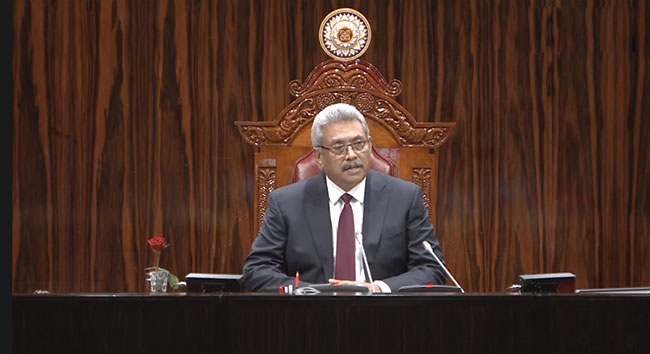
It was clearly with an eye on the forthcoming session of the UNHRC that President Gotabaya Rajapaksa mentioned the question of ethnic reconciliation in his address to the opening session of the Lankan parliament earlier in the week. He said that the Tamil problem is economic and not political, and that the solution is equitable economic development. He also promised to act on the long standing problem of missing Tamils. And to placate the hounded Muslims, the Gotabaya government informed the Court of Appeal that the detained Muslim lawyer Hejaaz Hizbullah could be granted bail. Hizbullah was arrested in April 2020 in the 2019 Easter Sunday suicide bombings case.

Be that as it may, Colombo would find it tough going at the UNHRC. According to HRW, there had been a comprehensive deterioration in the rights situation in Sri Lanka during 2021. The UNHRC had mandated the Office of the UN High Commissioner for Human Rights (OHCHR) to “collect and prepare evidence of grave crimes for use in future prosecutions.”

HRW says: “Under the administration of President Gotabaya Rajapaksa, Sri Lankan security forces harassed and threatened human rights defenders, journalists, lawyers and the families of victims of past abuses, while suppressing peaceful protests. The government continued to target members of the Tamil and Muslim minority communities using the country’s overbroad counterterrorism law, and policies that threaten religious freedom and minority land rights.”

“After Rajapaksa’s election in November 2019, he withdrew Sri Lanka from a 2015 council resolution agreed by the previous government to promote truth, justice, and reconciliation. Rajapaksa said he would not tolerate any action against ‘war heroes’ and instead appointed several officials implicated in war crimes to his administration. The UN human rights chief, Michelle Bachelet, noted that “Sri Lanka remains in a state of denial about the past, with truth-seeking efforts aborted.”

The Prevention of Terrorism Act (PTA) has for decades been used to enable prolonged arbitrary detention and torture. In 2021, President Rajapaksa issued two ordinances that would make the law more abusive. An order issued in March, which has been challenged in the Supreme Court, would allow two years of “rehabilitation” detention without trial for anyone accused by the authorities of causing “religious, racial, or communal disharmony.”

Many prisoners, especially from minority communities, remain in pretrial detention lasting many years under the PTA, or are serving lengthy terms following convictions based on confessions obtained using torture.

UN rights Commissioner Michelle Bachelet called upon UN member countries to consider imposing targeted sanctions against alleged perpetrators, and to pursue prosecutions in national courts under universal jurisdiction. The core group on Sri Lanka (the UK, Canada, Germany, Montenegro, North Macedonia, Malawi) at the Human Rights Council successfully led the adoption of Resolution 46/1, which established an international evidence-gathering mechanism, which has now been established as the OHCHR Sri Lanka Accountability Project. However, among Sri Lanka’s key trading partners, India and Japan abstained, while China opposed the resolution. In June, the European Parliament passed a resolution calling upon the European Union to ensure Sri Lanka abides by its human rights commitments under the GSP+ program. However, the EU, like other foreign partners including the United States, Australia, and the United Kingdom, was reluctant to publicly call upon the Sri Lankan government to end abuses, HRW said.

The Tamil parties of the North and East have rejected President Gotabaya Rajapaksa’s proposal for ethnic reconciliation made on the opening day of parliament earlier in the week. Speaking on the President’s speech in parliament on Wednesday, Ilankai Tamil Arasu atchi (ITAK) MP, M.A.Sumanthiran, said that contrary to the President’s notion, economic development of the Northern and Eastern provinces will not bring about reconciliation. What the Tamils need is meaningful devolution of power based on the concept of self-determination and self-rule, he stated.

Sumanthiran demanded the full implementation of the 13 th. Amendment (13A) of the constitution as it was a bilateral commitment made to India. But the 13A is not the solution to the Tamil question, he pointed out. The 13A safeguarded India’s security, but it was not the solution to the Tamil question in Sri Lanka. The permanent solution lies in a federal structure based on the concept of self-determination and not the 13A which distributes power within the framework of the existing Unitary constitution.

For India’s Security

To rope in India, the leaders of eleven Sri Lankan Tamil parties met the Indian High Commissioner in Sri Lanka, Gopal Baglay, on Tuesday told him that only fully empowered provincial councils in the Sri Lankan North and East can ensure that forces inimical to India, like China, do not get a foothold there.

Although the High Commissioner did not raise the issue of China’s determined bid to get foothold in the North and East, Suresh Premachandran, leader of the Eelam Peoples’ Revolutionary Liberation Front (EPRLF), told the envoy that strengthening the Tamils in political and economic terms will enable them to stop the entry of forces inimical to India. He pointed out that without powers over land the Northern provincial council cannot stop any project or foreign involvement desired by the central government in Colombo..

M.A. Sumanthiran of the Ilanka Tamil Arasu Katchi (ITAK) said that under one pretext or the other, the Gotabaya government has been taking over lands which were returned to the Tamils after the end of the war in May 2009. The Tamils feel that such things will not happen if the 13A is fully implemented. The 13A had given powers over land to the provinces but no government has handed over this power to the provinces. Hence the Tamils’ demand for the full implementation of the 13A with land and police powers.

However, the Tamil parties of the North and East do not feel that the 13A is really adequate for the protection of the Tamils because it is embedded in a “Unitary” Sri Lankan constitution. In a unitary constitution, powers handed over to the provinces or any other unit in the periphery, can always be taken away. But in a federal constitution, powers given, cannot be taken back. This is why, in the letter addressed to the Indian Prime Minister, the parties of the North and East gave primacy to the demand for federalism and sought Indian support for it.


Posted in Uncategorized

Fake passports puts NIA on alert as Tamil Nadu police probe reveals LTTE connection

Three arrests in Tamil Nadu over fake passports in October 2021 have put central agencies, including the National Investigation Agency (NIA) on alert.

An investigation by Tamil Nadu police revealed the involvement of active Liberation Tigers of Tamil Eelam (LTTE) cadres behind the fake passport racket.

In Chennai, Tamilnadu police ‘Q’ branch arrested Letchumanan Mary Franciska in October 2021. Another Sri Lankan national was arrested by Tamil Nadu police in Madurai airport while boarding a Sri Lankan Airlines flight with a fake Indian passport.

Meanwhile, another man was arrested at Trichy airport after his Spanish passport was found to be fake. All these arrests by state police have altered central agencies.

On January 18, the NIA, which is the premier Indian central agency, registered a case under the Unlawful Activities (Prevention) Act, Passports Act, Foreigners Amendment Act and relevant sections of the Indian Penal Code (IPC).

They have taken up the investigation into the fake passport racket.

The agency investigated the use of fake Indian identities and Indian passports to withdraw money from several banks. It is alleged that the fake passports and forged documents were used to withdraw money from the Indian Overseas Bank, Mumbai Fort branch for the terror activity of the LTTE.

The NIA took over the case from Tamilnadu police based on the Ministry of Home Affairs orders and launched an investigation against five accused, identified as Letchumanan Mary Franciska, K Baskaran, Johnson Samuel and L Sellamuthu.

This is the second case where the NIA was brought in to look into the activity of the LTTE in India.

Earlier, former intelligence chief of LTTE, 47-year-old Satakunam aka Sabesan was arrested by the NIA from Chennai for alleged smuggling of arms and drugs from Pakistan to Sri Lanka.

Two other Sri Lankan nationals, 35-year-old Chinnasuresh and 25-year-old Soundarajan were also arrested along with Satakunam.

They were also investigated by NIA in the Kerala Vizhinjam arms recovery case where the Indian coast guard arrested six Sri Lankan nationals off Minicoy Coast near Lakshadweep in March 2021. The coast guard recovered five Ak-47 rifles, 1,000 bullet rounds and 300 kg of heroin.

The draft constitution will be presented to the President next month

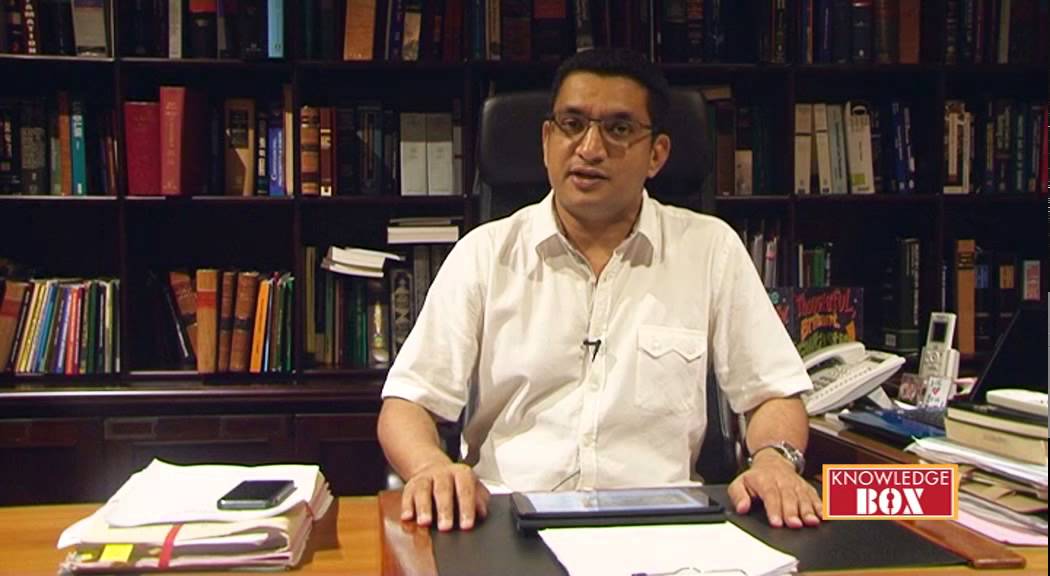
The preliminary plan for the new draft constitution will be handed over to President Gotabaya Rajapaksa next month, Justice Minister Ali Sabry said.

The committee appointed to draft the constitution under the chairmanship of President’s Counsel Romesh de Silva will complete its work in a few days, he said.

He said the President would then study the plan, discuss it and present it to the cabinet.

The Minister of Justice said that many previous attempts to draft the Constitution had failed, adding that Prof. GL Peiris, KN Chosky and former Prime Minister were among those who got involved in the task.

He added that as there was a consensus on many issues, only ten percent of the debate should take place in Parliament.

Diplomacy To Encourage Change On The Ground

The government would be relieved by the non-critical assessment by visiting UK Minister for South Asia, United Nations and the Commonwealth, Lord Tariq Ahmad of his visit to Sri Lanka. He has commended the progress Sri Lanka had made in human rights and in other areas as well, such as environmental protection. He has pledged UK support to the country. According to the President’s Media Division “Lord Tariq Ahmad further stated that Sri Lanka will be able to resolve all issues pertaining to human rights by moving forward with a pragmatic approach.” The minister, who had visited the north and east of the country and met with war-affected persons tweeted that he “emphasised the need for GoSL to make progress on human rights, reconciliation, and justice and accountability.”

Prior to the minister’s visit, President Gotabaya Rajapaksa had announced in Parliament that his government had not violated nor would support “any form of human rights violations.” This was clearly an aspirational statement as the evidence on the ground belies the words. Significantly he also added that “We reject racism. The present government wants to safeguard the dignity and rights of every citizen in this country in a uniform manner. Therefore I urge those politicians who continue to incite people against each other for narrow political gains to stop doing so.” This would be welcome given the past history especially at election time.

The timing of Lord Ahmad’s visit and the statements made regarding human rights suggest that the forthcoming session of the UN Human Rights Council in Geneva, commencing on February 28, loomed large in the background. The UN High Commissioner for Human Rights will be presenting a written report on that occasion. A plethora of issues will up for review, including progress on accountability for crimes, missing persons, bringing the Prevention of Terrorism Act in line with international standards, protecting civil society space and treating all people and religions without discrimination.

The UK government has consistently taken a strong position on human rights issues especially in relation to the ethnic conflict and the war which led to large scale human rights violations. The UK has a large Tamil Diaspora who are active in lobbying politicians in that country. As a result some of the UK parliamentarians have taken very critical positions on Sri Lanka. Lord Ahmad’s approach, however, appears to be more on the lines of supporting the government to do the needful with regard to human rights, rather than to condemn it. This would be gratifying to the architects of the government’s international relations and reconciliation process led by Foreign Minister Prof G L Peiris.

Reaching Out

In the coming week the government will be launching a series of events in the North of the country with a plethora of institutions that broadly correspond to the plethora of issues that the UNHRC resolution has identified. War victims and those adversely affected by the post war conditions in the North and livelihood issues that arise from the under-developed conditions in those areas will be provided with an opportunity to access government services through on-the-spot services through mobile clinics. The programme coordinated by the Ministry of Justice called “Adhikaranabhimani” is meant to provide “ameliorated access to justice for people of the Northern Province.”

Beginning with Kilinochchi and Jaffna there will be two-day mobile clinics in which the participating government institutions will be the Legal Aid Commission, Office for National Unity and Reconciliation, Office for Reparations, Office on Missing Persons, Department of Debt Conciliation Board and the Vocational Training Authority to mention some of them. Whether it is by revising 60 laws simultaneously and setting up participatory committees of lawyers and state officials or in now launching the “Adhikaranabhimani” Justice Minister Ali Sabry has shown skill at large scale mobilization that needs to be sustained. It is to be hoped that rather than treating them as passive recipients, the governmental service providers will make efforts to fulfill their need for justice, which means that the needs of victims and their expectations are heard and acknowledged.

It will also be important for the government to ensure that these activities continue in the longer term. They need to take place not only before the Geneva sessions in March but also continue after them. The conducting of two-day mobile clinics, although it will send a message of responsiveness, will only be able to reach a few of the needy population. The need is for infusing an ethic of responsiveness into the entirety of the government’s administrative machinery in dealing with those problems that reaches all levels, encompassing villages, divisions, districts and provinces, not to mention the heart of government at the central level.

The government’s activities now planned at the local level will draw on civil society and NGO participation which is already happening. Government officials are permitting their subordinate officials to participate in inter-ethnic and inter religious initiatives. It is in their interest to do so as they would not wish to have inter-community conflicts escalate in their areas which, in the past, have led to destruction of property and life. They also have an interest in strengthening their own capacities to understand the underlying issues and developing the capacity to handle tensions that may arise through non-coercive methods.

Building Peace

Many of the institutions that the government has on display and which are going to the North to provide mobile services were established during the period of the previous government. However, they were not operationalized in the manner envisaged due to political opposition. Given the potency of nationalism in the country, especially where it concerns the ethnic conflict, it will be necessary for the government to seek to develop a wide consensus on the reconciliation process. The new constitution that is being developed may deal with these issues and heed the aspirations of the minorities, but till that time the provincial council system needs to be reactivated through elections.

Sooner rather than later, the government needs to deal with the core issue of inter-ethnic power sharing. The war arose because Sinhalese politicians and administrators took decisions that led to disadvantaging of minorities on the ground. There will be no getting away from the need to reestablish the elected provincial council system in which the elected representatives of the people in each province are provided with the necessary powers to take decisions regarding the province. In particular, the provincial administrations of the Northern and Eastern provinces, where the ethnic and religious minorities form provincial majorities, need to be reflective of those populations.

At the present time, the elected provincial councils are not operational and so the provincial administration is headed by central appointees who are less likely to be representative of the sentiments and priorities of the people of those provinces. In the east for instance, when Sinhalese encroach on state land the authorities show a blind eye, but when Tamils or Muslims do it they are arrested or evicted from the land. This has caused a lot of bitterness in the east, which appears to have evaded the attention of the visiting UK minister as he made no mention of such causes for concern in his public utterances. His emphasis on pragmatism may stem from the observation that words need to be converted to deeds.

A video put out by the UK Foreign, Commonwealth and Development Office confirms a positive approach with regard to engaging with the Sri Lankan government. In it Lord Ahmad says “the last three days illustrated to me that we can come together and we can build a constructive relationship beyond what are today with Sri Lanka. We can discuss the issues of difference and challenge in a candid but constructive fashion.” Lord Ahmad’s aspiration for UK-Sri Lankan relations needs to be replicated nationally in government-opposition relations, including the minority parties, which is the missing dimension at the present time.