

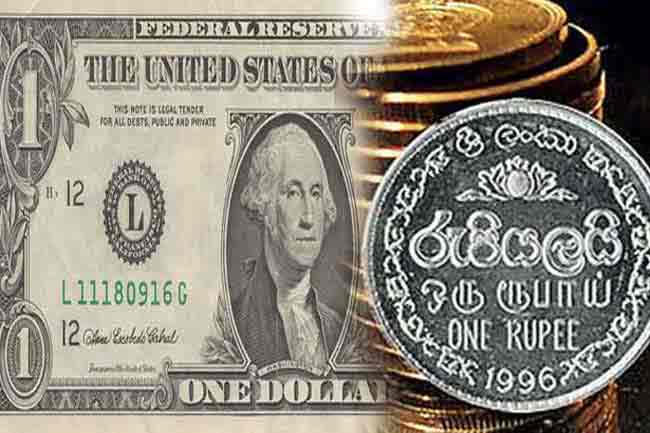
Sri Lanka rupee’s non-credible peg to the US dollar which was kept to around 203 in the breach with the moral suasion has broken to 211-215 levels with most banks giving up on the earlier, rate, market participants said.
Most domestic banks have started to sell dollars around 211 to the US dollar to importers while foreign banks are selling around 215, market participants said.
On Tuesday Commercial Bank was quoting a rate of 206.50/211.00 for Telegraphic Transfers, Hatton National Bank 206/211, Seylan Bank 204/211.
State-run Bank of Ceylon was still quoting 198.50/203 on their website with a proviso that deals above 7,500 would have to get a quote from the dealing room.
Sri Lanka’s rupee peg is non-credible (or soft) due to liquidity injections and the lack of floating overnight rate to keep the exchange rate fixed (credible peg).
Sri Lanka has been printing large volumes of money to pay state worker salaries and keep interest rates low and turn government debt into reserve money (bank notes or liquidity) at weekly bill and bond auctions which then hit the forex markets.
Two weeks ago a failed bond auction injected 53 billion rupees into money markets only part of was taken out before it disappeared as outflows mostly through government debt.
Unlike in mid 2020, when private credit collapsed, with stronger economic activity and growing private credit, printed money hits the forex market faster as cascading credit takes place.
Weak confidence had also led to capital flight from stock markets where foreign investors benefited from rising stock prices due to liquidity injections and higher profits reported by so-called ‘crony’ import substitution firms before costs and weak demand caught up with them.
Analysts had called for curbs on the domestic operations of the central bank as policy became increasingly activist since 2011 with discretionary policy involving ‘flexible’ exchange rate and ‘flexible’ inflation targeting.
Sri Lanka needs monetary discipline to avoid further downgrades: Bellwether
Bank Treasurers had warned authorities at a meeting on Wednesday that the non-credible peg at 203, which was kept through a moral suasion and informal agreement was not tenable.
Due to bar on outright interbank trading there is no price transparency for the dollar rupee rate in the spot or forward market, leading to banks charging and paying various rates to exporters and importers based on bargaining power.
Another meeting with authorities is due shortly, market participants said.
Sri Lanka’s has fallen victim to Keynesian stimulus, discretionary monetary policy and undermining of Treasuries auctions since the end of the war, critics have said.