

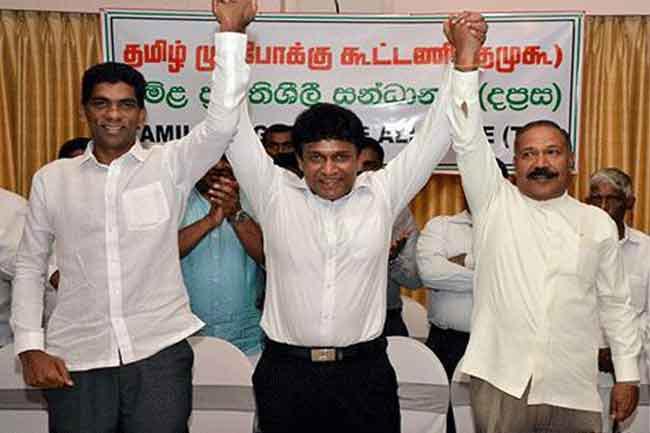
The recent floods and landslides caused by the Ditwah disaster have once again underscored Sri Lanka’s vulnerability to recurring climate-related emergencies, with plantation communities in the hill country bearing a disproportionately high impact, Democratic People’s Front–Tamil Progressive Alliance (TPA) Vice President Barath Arullsamy said yesterday.
Quoting the latest Disaster Management Centre (DMC) situation report, Arullsamy said the disaster has claimed 643 lives nationwide, with 183 persons reported missing. He added that extensive damage has been caused to housing and infrastructure, resulting in prolonged displacement across several districts.
Although plantation-sector families account for less than one percent of the total affected population, official figures show they represent a significant share of the human toll. A total of 1,526 plantation families comprising 4,113 individuals have been affected, with 73 deaths and 52 missing persons reported from plantation areas. Kandy, Badulla, Nuwara Eliya, Ratnapura and Kegalle districts were among the worst affected, with Kandy emerging as the most critical hotspot.
Arullsamy noted that disasters in plantation regions are not new, pointing out that landslides, slope failures and repeated displacement have affected hill-country estates for decades. He said the continued lack of permanent resettlement and land security has left these communities highly vulnerable.
He said the TPA has consistently advocated structural reforms in the plantation sector, including land rights, dignified housing and integration into mainstream administration. During earlier reform initiatives, the party facilitated the construction of 4,000 housing units. He added that following further representations, the Government of India approved an additional 10,000 houses for plantation communities, a project that has now commenced.
In Parliament, TPA Leader MP Mano Ganesan has raised concerns over families remaining displaced in schools and community centres, warning that reopening schools while directing families back to disaster-prone areas is unsafe and unsustainable. MP Ganesan has also written to President Anura Kumara Dissanayake requesting an urgent meeting to discuss permanent resettlement solutions.
Arullsamy stressed that there are no legal barriers to immediate resettlement, noting that plantation companies are lessees of State land under the Crown Lands Ordinance. He also cited Emergency Regulation No. 8, which empowers the State to requisition land for emergency purposes, including resettlement of disaster-affected families.
He further pointed out that Sri Lanka, as a signatory to the Sendai Framework for Disaster Risk Reduction, is obligated to integrate disaster risk into land-use planning and prioritise preventive action. The scale of losses caused by the Ditwaha disaster, he said, highlights the need for decisive post-disaster intervention.
While acknowledging ongoing government relief measures, Arullsamy said gaps remain in implementation in plantation areas, particularly in land identification and long-term resettlement planning. He reiterated the TPA’s readiness to work with the government and international partners to ensure the disaster leads to lasting solutions rather than repeated cycles of displacement.