

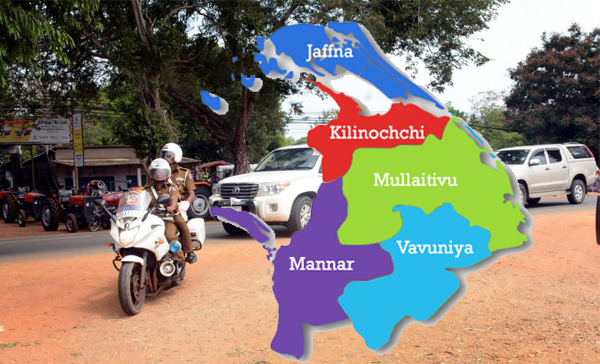
Nearly sixteen years after the guns fell silent, Sri Lanka’s North and East remain trapped in a quiet but devastating crisis. It is not a crisis of war, but of neglect. While Colombo continues to attract investment, opportunity and attention, vast districts in the North and East are still starving for meaningful economic activity. Roads may exist, elections may come and go, but livelihoods remain fragile and hope wears thin.
Successive governments have spoken at length about reconciliation, integration and development. Yet on the ground, the reality is stark. There are few notable large scale investments in the North and East that generate sustainable employment for locals or meaningfully strengthen regional economies. Young people continue to migrate to Colombo or overseas. Those who stay behind rely heavily on remittances, small scale farming or government assistance. This is not development. It is survival.
One of the biggest obstacles has been the government’s chronic inability to take firm decisions due to geopolitical anxieties. The North and East, because of their strategic location, have been viewed less as economic engines and more as geopolitical chessboards. India, China, the West and regional security concerns have repeatedly paralysed decision making. As a result, global companies that have shown interest have been left waiting, discouraged or quietly pushed away. Investors value clarity and consistency. Sri Lanka has offered neither.
Ironically, infrastructure groundwork was already laid years ago. During Mahinda Rajapaksa’s tenure, major road networks were built connecting the North and East to the rest of the country. The A9, the coastal roads, and improved internal connectivity opened doors that could have been fully utilised. But roads alone do not create prosperity. They must lead somewhere. After that initial phase, very little followed in terms of industrial zones, technology parks, agri-processing hubs or export oriented manufacturing.
Today, as the world races ahead with technology, artificial intelligence and digital economies, much of the North and East still feel frozen in time. In districts like Mullaitivu, Kilinochchi and parts of Batticaloa, even basic private sector presence is limited. Compare this with regions in Vietnam or Bangladesh that emerged from conflict or poverty and strategically positioned themselves as manufacturing and IT hubs. Vietnam’s former war zones are now home to global electronics factories. Bangladesh’s once neglected regions now power its garment export economy. Sri Lanka missed similar opportunities.
The human cost of this stagnation is immense. Youth unemployment remains high. Educated graduates drive three wheelers or wait endlessly for government jobs. Frustration deepens, creating fertile ground for political manipulation and social unrest. Development delayed too long becomes a security issue of its own.
What then must be done?
First, the government must decisively separate economic development from geopolitical paranoia. Safeguards can exist without paralysis. Clear investment frameworks, transparent land policies and long term guarantees must be offered to global and regional investors. Countries far more geopolitically sensitive than Sri Lanka have managed this balance. We can, too. Second, the North and East must be positioned as sector specific investment zones. For example, Mannar and Pooneryn have strong potential for renewable energy, particularly wind and solar. Batticaloa and Trincomalee can be developed as agri processing and logistics hubs. Jaffna, with its strong education base, can be transformed into a technology and knowledge services centre if the right incentives are provided. India’s IT expansion into tier two cities offers a clear model Sri Lanka can adapt.
Third, local communities must be active stakeholders, not passive spectators. Investment projects must prioritise local employment, skills training and supplier integration. When people see tangible benefits, resistance fades and ownership grows. Rwanda’s post conflict recovery offers an important lesson here. By tying foreign investment directly to community upliftment, it rebuilt trust and stability simultaneously.
Fourth, Colombo centric thinking must end. A nation cannot be built on one city. Even today, policy makers behave as though Colombo alone can carry the economy. It cannot. Over concentration only deepens inequality and vulnerability. Balanced regional growth is not charity. It is economic common sense. Finally, political consistency is critical. Investors will not commit to regions where policy reverses every election cycle. A bipartisan development framework for the North and East is essential. Economic revival should not be hostage to party politics. Sri Lanka often speaks of unity and reconciliation, yet continues to ignore the most practical path towards both. Jobs, dignity and opportunity heal wounds faster than speeches. The North and East do not need sympathy. They need investment, courage and vision.
If we continue to delay, we risk creating a permanent underclass within our own borders. The cost of inaction will far exceed the risks of action. It is time to stop treating the North and East as problems to be managed, and start seeing them as assets waiting to be unlocked. Colombo alone cannot carry Sri Lanka forward. The nation will only rise when every region is allowed to rise with it.