

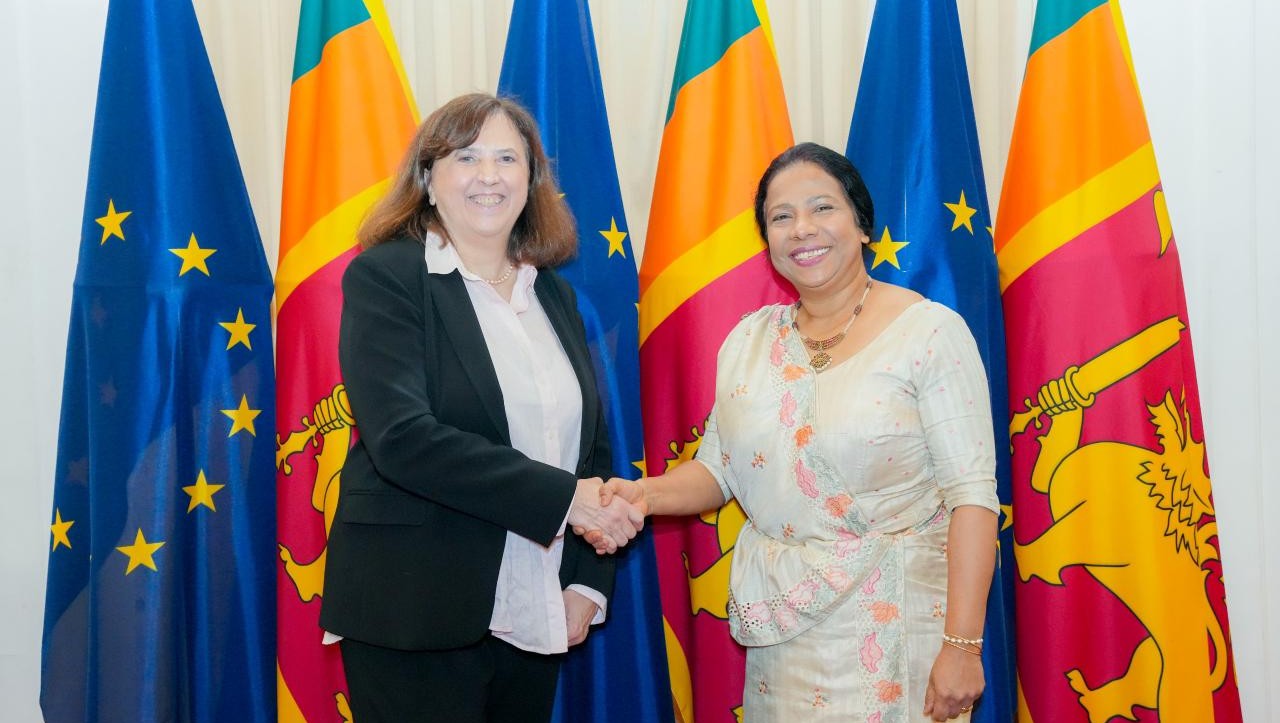
The European Union (EU) has stressed Sri Lanka for delivery on the commitments including implementing the 27 core conventions under the current Generalized scheme of tariff preferences Plus (GSP+) trade concession, a joint statement by the island nation’s Foreign Ministry and European Union said.
For Sri Lanka’s export-driven economy, the GSP+ have always carried the weight of both a lifeline and a leash.
The Ministry of Foreign Affairs this week confirmed Sri Lanka’s intention to reapply for the scheme, the announcement was haunted by the echoes of 2010, the year the EU famously pulled the plug on the concession due to significant human rights abuses following the end of the civil war.
The loss of GSP+ in 2010 sent shockwaves through the apparel sector, leading to factory closures and thousands of job losses.
“Sri Lanka appreciated the GSP special incentive arrangement’s (GSP+) contribution to sustainable development in the country and expressed its intention to reapply for the scheme after the current cycle ends,” the joint statement said.
“The EU stressed the importance of the time-bound delivery on the commitments under the current GSP+, including in particular the work on the anti-terror legislation, bringing it in line with the international conventions.”
“In this regard the EU encouraged engagement with the UN competent bodies on counter terrorism. Sri Lanka reaffirmed its commitment to implementing the 27 core conventions under the current GSP+ scheme. The EU encouraged regular updates on progress.”
EU’s withdrawal of the GSP+ was a harsh lesson in the reality that duty-free access to the world’s largest trading bloc is not a gift, but a conditional contract.
While the country regained the status in 2017, the latest meeting in Colombo served as a stern reminder that the EU’s memory is long and its conditions are non-negotiable.
The EU has been specifically eyeing the repeal of the Prevention of Terrorism Act (PTA) and the amendment of the Online Safety Act, insisting they be brought “in line with international conventions.”
For the current administration led by President Anura Kumara Dissanayake, the pressure is twofold.
Locally, the government must navigate the sensitive waters of national security legislation and globally, it must prove it has moved beyond the “rights abuses” era that led to the 2010 withdrawal.
As the EU encourages regular updates on progress, the path to the next cycle of trade benefits is paved with tangible human rights reforms, leaving no room for the legislative foot-dragging of the past, analysts say.
Source:ECONOMYNEXT