

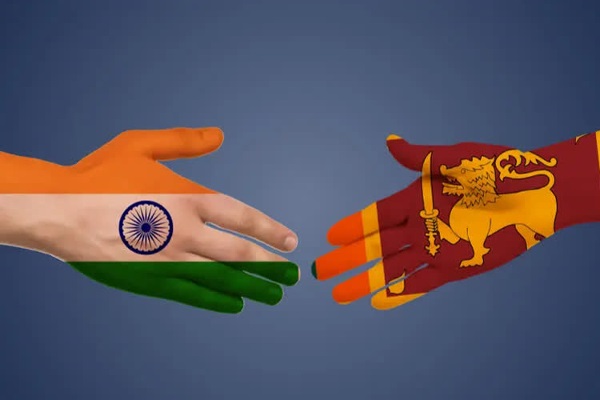
India has signalled its readiness to fast-track an upgrade of the 26-year-old India-Sri Lanka Free Trade Agreement (ISFTA) in a move that could significantly expand Sri Lanka’s export, investment, and services opportunities at a time when the island is seeking new growth drivers amid its economic recovery.
The Daily FT learns that the neighbouring economic powerhouse has conveyed its openness to accelerating discussions on an enhanced agreement and is awaiting the outcome of a newly appointed Sri Lankan task force reviewing the matter.
Sources familiar with the discussions said an upgraded pact would be more beneficial to Sri Lanka than India, pointing to the significant growth in Sri Lankan exports to India, from around $ 50 million in 2000 to over $ 1 billion in 2025 following the implementation of the ISFTA.
The ISFTA, signed in 1998 and operational since March 2000, was Sri Lanka’s first bilateral FTA and provides duty-free access for over 4,000 product lines to the Indian market. However, it is limited to trade in goods, with both countries having long explored a deeper economic partnership including services, investments, and technology cooperation.
According to sources, India’s key priorities in any upgraded agreement are the removal of non-tariff barriers and the strengthening of rules of origin.
India is also keen to include trade in services as a core component of a revised framework, although it is not seeking the opening of any specific sectors in Sri Lanka.
Discussions have included revisiting existing value-addition requirements and adopting more product-specific rules of origin similar to those found in India’s agreements with major trading partners like the US and Canada.
It was also noted that an upgraded agreement could boost Sri Lanka’s ambition of becoming an export and logistics hub linking India with the Middle East and Africa. The proposal also aligns with broader regional connectivity initiatives, including discussions on a Sri Lanka-India-Japan economic corridor.
A study on the proposed export-oriented industrial corridor has estimated that such an initiative could lift Sri Lanka’s economic growth by as much as 9.3% by 2030.
During the past six years, India has signed nine FTAs with large, developed, and consuming economies. Of these, three were singled this year including the India-EU FTA, India-US Interim Trade Framework, and India-New Zealand FTA.
The latest push comes against the backdrop of decades of efforts to deepen bilateral economic integration with Sri Lanka. A proposed Comprehensive Economic Partnership Agreement (CEPA), finalised in 2008, sought to expand the ISFTA into services, investment, and technology transfer, but failed to materialise due to domestic opposition and concerns among Sri Lankan industry groups. Subsequent efforts to negotiate an Economic and Technological Cooperation Agreement (ETCA) similarly stalled amid political resistance.
Analysts contend that while Asian economies are increasingly pursuing deeper regional integration and supply chain partnerships, Sri Lanka has lagged in advancing major trade agreements.
They argue that a carefully negotiated upgrade of the ISFTA could provide the country with greater market access, attract export-oriented investments, and position it more effectively within emerging regional value chains, provided concerns over competitiveness and implementation are adequately addressed.