
As Sri Lanka prepares to reconsider its USD 3.7 billion Hambantota refinery investment following the breakdown of negotiations with China’s Sinopec, India’s longstanding presence in the country’s petroleum industry is emerging as an important strategic consideration.
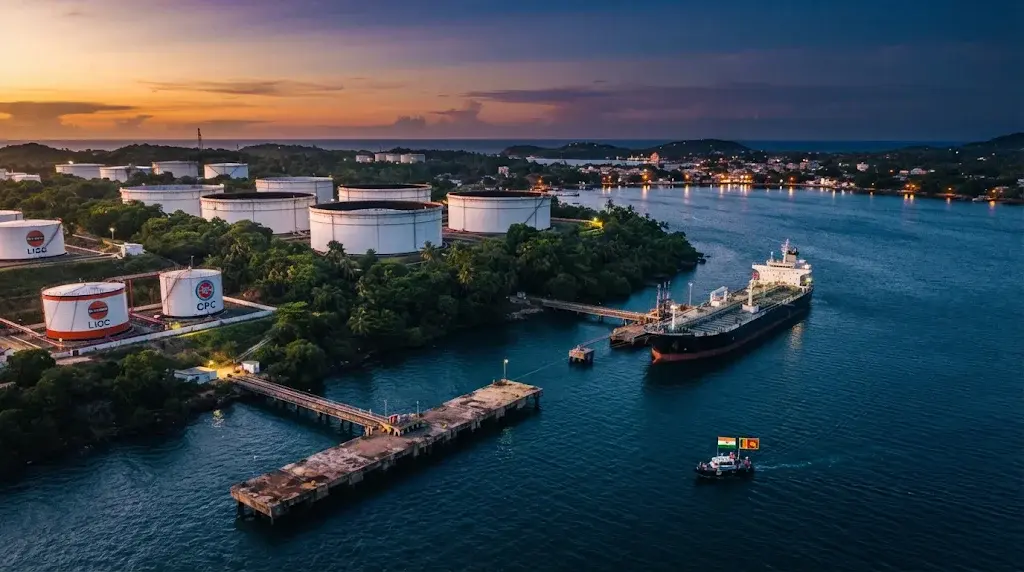
Unlike a prospective investor entering an unfamiliar market, Indian Oil Corporation (IOC), through its subsidiary Lanka IOC (LIOC), has already established an extensive operational presence in Sri Lanka’s petroleum distribution, storage, bunkering and lubricant businesses.
This existing infrastructure could give Indian energy companies a significant advantage if they participate in the government’s proposed fresh international refinery tenders.
Lanka IOC was incorporated in 2002 and commenced petroleum operations in 2003.
Over the years, it has developed a nationwide retail distribution network, becoming an established competitor to the state-owned CPC.
According to Indian Oil’s corporate information, Lanka IOC currently operates 202 petrol and diesel stations, maintains an extensive lubricant distribution network and operates storage and bunkering facilities.
It also holds a one-third interest in Ceylon Petroleum Storage Terminals Limited (CPSTL), alongside CPC’s participation.
Its involvement in Trincomalee is particularly significant.
The historic China Bay oil tank farm offers considerable potential for expanding petroleum storage, regional distribution and bunkering operations.
The existing arrangements include 14 tanks in the Lower Tank Farm leased to LIOC and a joint venture between CPC and LIOC to develop 61 tanks in the Upper Tank Farm.
The Trinco Petroleum Terminal joint venture has a 51% CPC and 49% LIOC shareholding structure, providing an existing institutional framework for cooperation between the two countries.
Retail fuel distribution is only one facet of India’s broader strategic interest.
In April 2025, Sri Lanka, India and the United Arab Emirates signed a trilateral Memorandum of Understanding to develop Trincomalee as a regional energy hub.
The proposed areas of cooperation include refurbishment of the tank farm, bunker fuel operations, petroleum infrastructure and consideration of a refinery project.
The designated agencies include CPC, Indian Oil Corporation and Abu Dhabi Ports Group.
A proposed multi-product petroleum pipeline connecting Nagapattinam in southern India with Trincomalee and Colombo could further strengthen regional connectivity, although its commercial feasibility, financing and implementation arrangements require detailed examination.
For Sri Lanka, the advantages of Indian participation could include access to technical expertise, regional crude procurement networks, established distribution channels and shorter shipping routes.
However, the government must avoid replacing dependence on one foreign investor with excessive dependence on another.
Lanka IOC’s existing market position makes competition safeguards particularly important.
Any new refinery agreement must protect CPC’s operational viability and prevent preferential domestic market allocations from distorting competition.
India should therefore be viewed as a potentially valuable strategic partner, not an automatic winner of the Hambantota or Sapugaskanda projects.
The government should invite competitive proposals from all qualified international investors.
The objective should be to secure investment, technology and regional energy integration while retaining national regulatory control.
Sri Lanka’s long-standing Indian petroleum partnership could become a major economic advantage, provided commercial competition and national energy interests remain firmly protected