Ukraine, plus or minus UNHRC?

By N Sathiya Moorthy

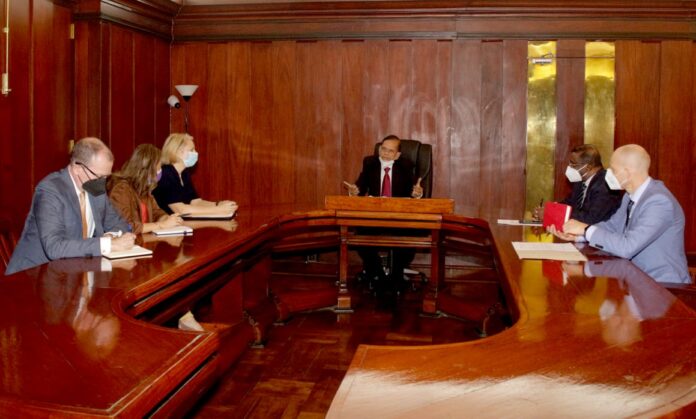
The double-quick meeting that Core Group envoys in Colombo had with Foreign Minister G L Peiris so soon after the 47th session of the UNHRC may be indicative of the predicament that both would be facing at the next session in September, where there will be a vote on Sri Lanka. The Core Group, where the ‘outsider’ US influence is predictable though the latter is formally to take over the leadership from the trans-Atlantic British ally after President Biden re-signed into the UNHRC, seems wanting a honourable way out.

In a way, for that to happen, they seem wanting some initiatives on which they would ‘feel’ convinced on Sri Lanka’s human rights front, as under the predecessor regime, but not with the ruling Rajapkasas as yet. That would mean that the government would have to come up with some way out to address a part of the UNHRC concerns even partially, whatever it means to the Tamils back home.

Yet, for the Core Group UK leader to issue a travel advisory against the nation, and pegging it also on possibilities of terror-attacks is mischievous, unwarranted and irresponsible. At a time when nations are supposedly working together to end terrorism, if White Hall really had inputs as neighbouring India had passed on ahead of the Easter serial blasts in 2019, London should have shared it with Colombo, and not issue travel advisories that do not seem to have a basis.

In comparison, Canada, another active member of the Core Group, which again has Sri Lankan Tamil Diaspora citizenry, hence voters, forming a critical electoral constituency in places, has based its travel advisory on real-life issues like the continuing economic crisis and forex issue. The latter is fair game compared to the former though even here the question arises if the Canadian advisory too owes more to domestic politics than domestic concerns for the post-Covid Canadian traveller.

Unrealistic expectations

Possibly, Sri Lanka has moved away from China, rather over-dependence on Beijing, when it re-embraced India for economic aid and also approached IMF, though after a lot of heated debate, which is not going to end any soon. It does not mean Colombo is going to dump Beijing. In economic and political terms, no government in Sri Lanka can do that without enough aid to repay all of China’s debts, and adequate reassurance that Colombo would not require Beijing’s veto-vote in the UNSC, or its diplomatic backing at the UNHRC and other international fora, if and when the nation is dragged there.

The same applies to Russia, which too has bee a trusted friend at the UN, and where like China, it too does not mix politics with human rights – or, use the latter as a ruse to stalemate, if not check-mate, non-abiding nations. Just now, the West, which constitutes the core of the UNHRC Core Group also wants Sri Lanka to condemn Russia on the Ukraine War. It is not going to be easy for Colombo, but then, Sri Lankans should feel happy that the West has suddenly feels the importance of their nation, whatever be the circumstances, whatever the motive.

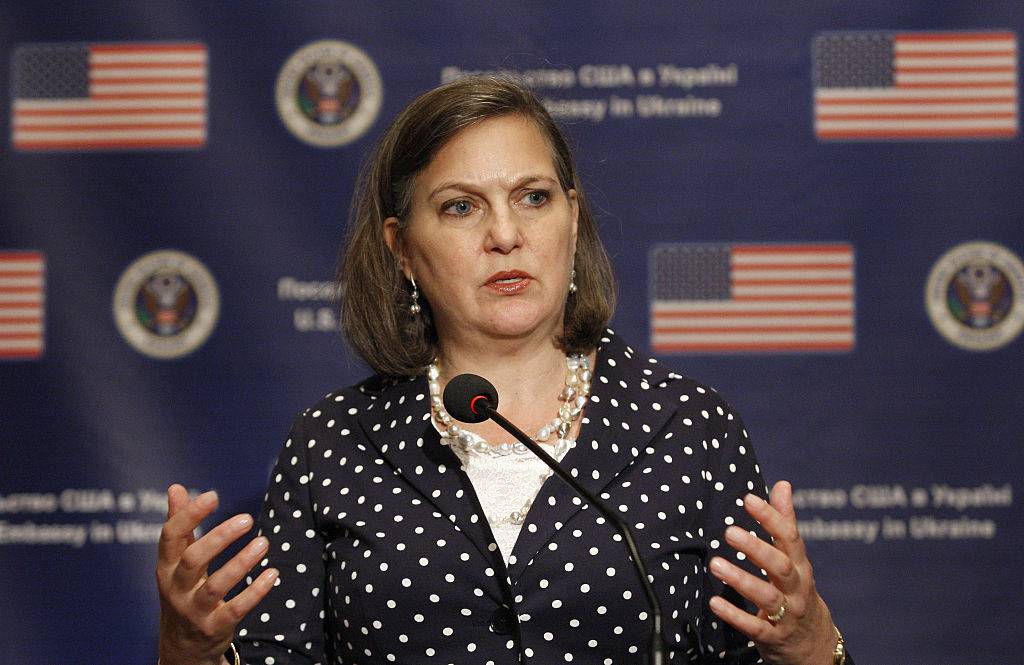
Clearly, someone somewhere seems wanting to link Sri Lanka’s position on Ukraine war to extraneous issues like UNHRC vote and IMF assistance. Or, that is what it looks like, and would remain so until greater clarity emerges. At the end of the day, IMF assistance, if not conditionalities, are as much political as they are economic, if not more of the former. It is obvious that an official team from the US, headed by U.S. Under Secretary for Political Affairs, Victoria Nuland, with focus more on these issues than possibly even on American investments in the country.

Symbolic backing

Definitely, circumstances beyond its own initiatives possibly have helped the government generate a certain goodwill in western governments. Rather, they are only test-flight on how Colombo would behave on issues of western interests whatever be the impact otherwise on the nation, per se. For instance, would and should Colombo endorse the western initiatives against Russia if it were going to harm the nation’s interests even more?

Clearly, having pulled the sanctions-trigger against Russia as if Moscow were an Iran or Iraq, Afghanistan or North Korea, the US-led West seems wanting to show up numbers beyond the western hemisphere. It’s akin to the US first involved NATO in its ‘global war on terrorism’ post-9/11, and then signed up one small country after another, to a make-belief global consensus.

This time round, they seem wanting it on the political, diplomatic fronts, as if nations like Sri Lanka, far removed from the European theatre of war, would be making a direct contribution to shaking Russia and President Putin – when those bigger powers could not do it by themselves. But they want it all the same, indicating that something was rotten in their planning from the very start.

As if reacting positively, even if in a symbolic way, reports indicate that government has decided to do away with fertiliser imports from Russia and Belarus. It is unclear if the decision also owes to the government’s current fascination for switching over from chemical to organic fertiliser. However, the decision would be tougher if Colombo were to ban other imports and exports, too. The nation may ill-afford export-ban in particular in these times of economic hardships, especially when read with Moscow’s continuing political ban.

It looks as if the US imposed sanctions believing that Putin would not have thought it all out before firing the first missile at Ukraine. Western Europe followed, not because they respected or feared the US – but because they feared Russia and Putin. Yet, the clarity with which they all have kept NATO out of the war, that too when Ukraine’s entry was the core issue, shows that they do not have stomach for an European War after 70 years of ‘cold peace’ after the Second World War.

One cannot argue that they are not fighting NATO’s war for Ukraine because Ukraine was not yet a member of NATO – and also does not want to become one, as recent reports have shown – does not wash. Afghanistan was not a NATO member, nor was the 9/11 attacks an Afghan war on NATO. It was a resourceful terrorist outfit that took the world’s mightiest of nations would not have been justification enough for NATO intervention.

Incidentally, only weeks earlier, on 24 July 2001, the LTTE had crippled Sri Lankan economy – as only the forex crisis has done now, and more – by targeting the Katunayake Airport. Of course, that was nothing compared to 9/11, where Osama bin-Laden had the cunning and audacity to cause a first-crash on the ‘Twin Towers’, which alone was an invitation for the global media to witness and record what followed. That they all had the grace and circumspection not to telecast what they saw and recorded went a long way in mitigating the all-American embarrassment of all times!
Posted in Uncategorized

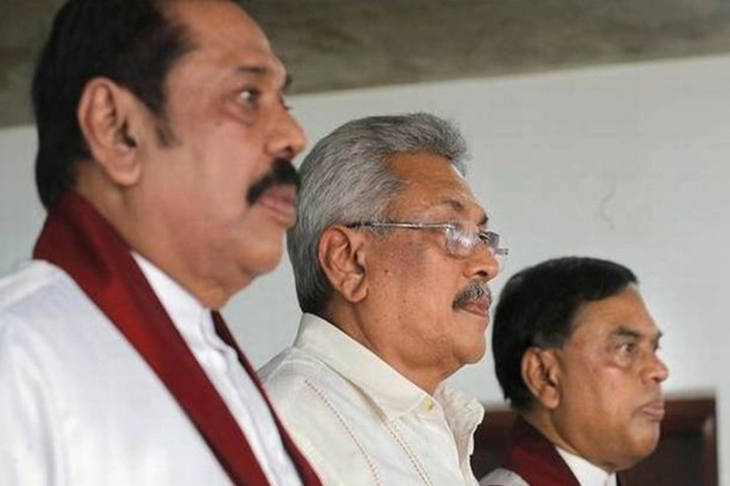
#GoHomeRajapaksas now trending in Sri Lanka

The hashtag #GoHomeRajapaksas is now trending in Sri Lanka.

Earlier the #GoHomeGota and #GoHomeGota2022 was trending in Sri Lanka.

A #WeAreWithGota campaign was also launched on social media to counter the #GoHomeGota campaign.

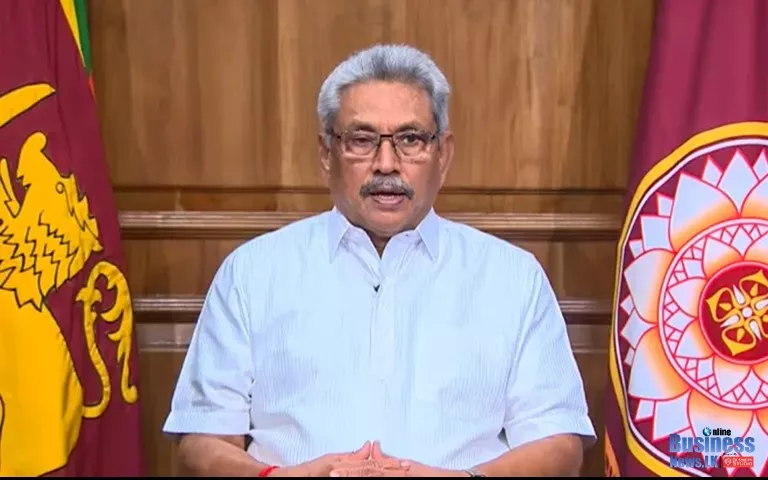
The campaign was launched to support President Gotabaya Rajapaksa as pressure mounts for the Government to resign over the current economic crisis.

Several Government politicians, artistes and media personalities, had also tweeted in support of the #WeAreWithGota campaign.

The hashtag #GoHomeRajapaksas is now trending as the public continue to express anger against the Rajapaksa regime over the economic crisis in Sri Lanka.

US Under Secretary Victoria Nuland arrives in Sri Lanka

The Under Secretary for Political Affairs of the U.S. Department of State Victoria Nuland arrived in Sri Lanka for a two-day official visit evening (March 22).

Accompanied by a delegation of five senior officials, Nuland arrived at the Bandaranaike International Airport in Katunayake at around 7.30 p.m. today from New Delhi, India.

Newly-appointed US Ambassador to Sri Lanka Julie Chung accorded a warm welcome to the US Under Secretary upon her arrival.

Under Secretary Nuland oversees regional and bilateral policy issues at the U.S. Department of State.

During the visit, Under Secretary Nuland is scheduled to call on President Gotabaya Rajapaksa, meet Foreign Minister G.L. Peiris and Foreign Secretary Jayanath Colombage, the Ministry of Foreign Affairs said.

Minister Peiris and Under Secretary Nuland will co-chair the 4th session of the Sri Lanka – U.S. Partnership Dialogue at the Foreign Ministry on Wednesday, 23 March, 2022. The Partnership Dialogue, an important platform to review bilateral relations and explore avenues to further strengthen the cooperation and partnership between Sri Lanka and the United States, was last held in 2019 in Washington D.C.

In addition, Under Secretary Nuland is scheduled to visit the Colombo Port and meet the business community and civil society.

The Assistant Secretary for South and Central Asian Affairs of the U.S. Department of State, Donald Lu and the Principle Deputy Assistant Secretary of Defense for Indo-Pacific Security Affairs Amanda Dory are among the delegation accompanying Under Secretary Nuland on the visit.

The US State Department had previously announced that the Under Secretary for Political Affairs will travel from March 19-23 to Bangladesh, India, and Sri Lanka with an interagency delegation to underscore U.S. commitment to, and cooperation with, Indo-Pacific partners.

Under Secretary Nuland is to hold Partnership Dialogues in Bangladesh and Sri Lanka and Foreign Office Consultations in New Delhi.

On each stop, Under Secretary Nuland and the delegation will meet with civil society and business leaders to strengthen economic partnerships and deepen ties in the pursuit of peace, prosperity, and security in the Indo-Pacific region.

China resumes Sri Lanka FTA push amid Indian tactics over loans, energy deals

China has pushed Sri Lanka to complete a Free Trade Agreement saying the deal “would immensely benefit” the island as India is strategically wrapping up energy deals while offering credit lines to the nations strapped for dollars due to money printed to keep rates low.

Free trade talks between China and Sri Lanka hit a hurdle in 2018 under the last administration because Beijing disagreed with Colombo’s demand for a review of the FTA after 10 years according to officials familiar with the issue.

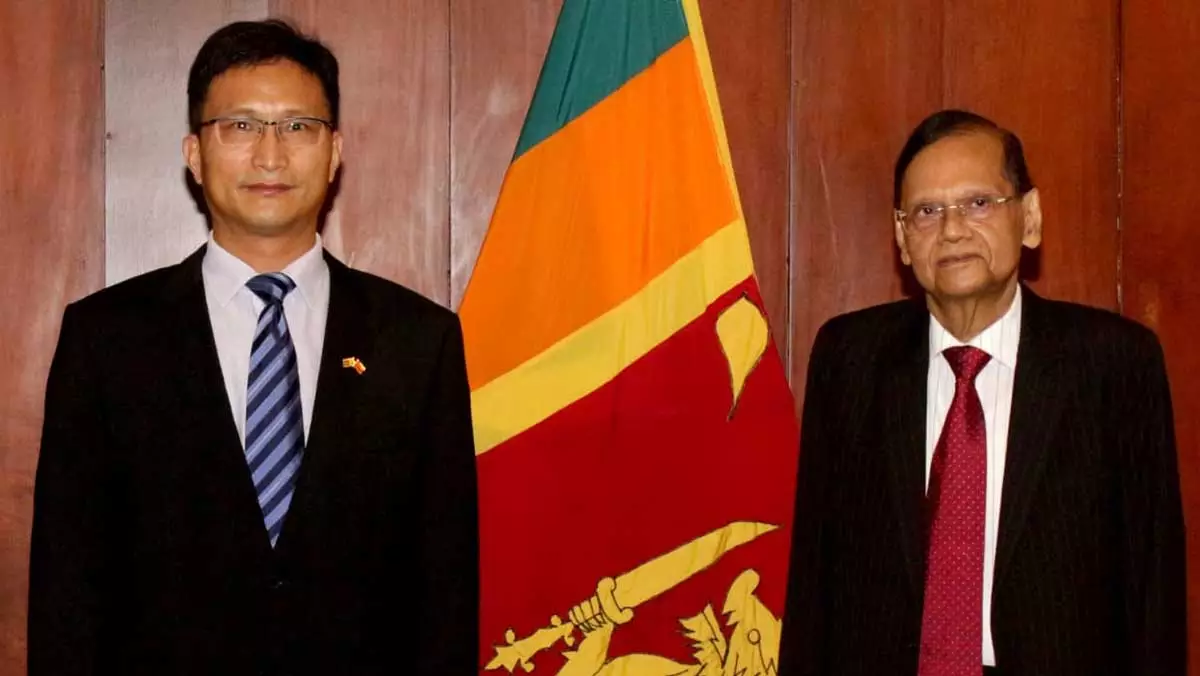
Qi Zhenhong, the Chinese Ambassador to Sri Lanka has discussed the ongoing FTA negotiations when he met Foreign Minister G L Peiris a statement said.

“Ambassador Qi while stating that China had signed over 26 FTAs, expressed that finalising the proposed FTA between Sri Lanka and China would immensely benefit the Sri Lankan local market and products,” Sri Lanka’s Foreign Ministry said in a statement on Sunday (20).

“He also urged the Sri Lankan authorities to resume the 7th round of FTA negotiations at the earliest.”

“Minister Peiris highlighted that the 7th round of FTA negotiations will soon commence with the support of the respective line agencies in Sri Lanka.”

China has invested billions of dollars building ports, airports, roads and power stations in the Indian Ocean island nation just off the southern toe of India as part of its Belt and Road Initiative (BRI) to increase its trade and other connections across Asia and beyond.

However, since the last quarter of 2021, Sri Lanka has strengthened its diplomatic relations with neighbor India, which has strategic investment and security interests in the island nation.

Sri Lanka is facing severe shortage of foreign currency and risks of sovereign debt default due to low interest rates enforced by money printing.

Sri Lanka Borrows, Signs Deals

As a result, the President Gotabaya Rajapaksa’s administration was compelled to ask for loans and swaps to prevent a sovereign debt default and a growing shortage of fuel, food, medicines, and other essential items.

India has agreed to extend a billion dollar credit line to import food, medicines, and other essential items, a 500 million US dollar credit line to import fuel, a 400-million-dollar swap, and deferment of around 912 million US dollars until May.

In return, Sri Lanka finalized nearly two-decade dragged oil tank farm deal in its Eastern port district of Trincomalee, agreed on a government-to-government deal to build a 100 MW solar power plant in Trincomalee’s Sampur area.

Power plants are also expected with India’s Adani group.

India’s leap on lending and inking the deal within shorter period comes as it along with the United States and Japan had raised concerns over increasing Chinese influence in Sri Lanka.

Sri Lanka’s Foreign Ministry said “both parties expressed great satisfaction over strong bilateral relations, including government to government contacts, people to people contacts as well as Party to Party contacts between the Chinese Communist Party and the island nation’s ruling Sri Lanka Podujana Peramuna (SLPP).

Sri Lanka consumers and businesses import more goods from China than it at the moment, some of which are inputs for exports to third countries and also products made for the domestic market.

China has already overtaken India as the top importer since 2019, the official data showed.

Sri Lanka imported $3.5 billion worth of Chinese goods in 2020 which is 22 percent of the total imports, mostly raw materials for garments, machines and electronics, metals, transport equipment and chemicals, followed by India which accounted for 19.2 percent of the total imports in the same year.

No FTA Talks in 5 Years

Ministerial level discussions about an FTA agreement have not been held since March 2017 while lower-level discussions between officials have made little progress after the deadlock over a 10-year review, Colombo officials have said.

Free trade benefits the poor and makes the country export efficient, but can hurt the profits and revenues of companies run by so-called import substation oligarchs and other firms which overcharge the public under tariff protection.

The review clause that Sri Lanka requested in 2017 would allow it to change some of the deal terms if firms that were overcharging the public faced more competition.

So-called ‘sunset clauses’ can increase uncertainty and put businesses that invest on the basis of a free trade deal at risk.

China in January signaled the desire to resume the stalled FTA talks to boost exports and come out of an economic crisis during a visit of Foreign Minister Wang Yi.

Officials from the last government had said that China wanted zero tariffs on 90 percent of goods the two countries sold to each other as soon as the FTA is signed while Sri Lanka wanted it to start with zero tariffs on only half of the products concerned and expand gradually over 20 years.

China’s push for free trade pacts with the Maldives in 2017 drew criticism from opposition political groups who said it had been rushed through parliament with less than an hour of debate.

Oligarch Power

Sri Lanka in 2018 has wanted more time to negotiate the deal as it was not sure about the economic impact of a rushed deal on its economy.

Though a leader in free trade in the region at one time, Sri Lanka has seen import tariffs go up over the last 15 or so years with protectionist oligarchs gaining more political clout, critics say.

India has tried to expand its existing FTA to a comprehensive economic partnership for more than a decade.

However, it has met with resistance from the protectionists who want to charge higher than world prices from consumers.

Exports to India under the free trade deal has grown making the country the third highest buyer of Sri Lanka goods after the US and EU.

Sri Lanka’s imports from India, some of which such as cars are heavily taxed, have also grown, as Indian products are cheaper for consumers than European or Japanese products, leaving more disposable income in the hands of consumers.

Money saved by the purchase of cheaper Indian or Chinese goods, can be spent on domestic services such as education, domestic tourism, or other products, raising living standards, expanding jobs, gross domestic product and tax revenues, analysts say.

An FTA with Singapore by the last administration was strongly resisted by the current ruling SLPP when it was in the opposition with doctors in particular making claims.

Government officials have said that some political parties resist such agreements without any knowledge but just to make sure it is not implemented under their rival government.

Posted in Uncategorized

Inflation soars to 17.5% in Feb; food inflation higher by 25%

Headline inflation shot up to 17.5% in February up from 16.8% in January, as the National Consumer Price Index (NCPI) went past the Colombo Consumer Price Index (CCPI) which showed inflation at 15.8% for the same month.

Listing contributions to the current inflation rate, the latest release from the Department of Census and Statistics found year-on-year food inflation at 24.7% in February, whilst the non-food group contribution was 11%.

The CCPI measures inflation in urban areas of the Colombo District, whilst the NCPI is measured compiling prices collected from all nine provinces. Accordingly, the NCPI now sitting higher than the CCPI is telling of the cost of living and price pressures weighing on average citizens around the island.

Core inflation, which reflects underlying inflation excluding volatile items of food, energy and transport increased to 14.1% in February this year, up from 12.9% in January.

Price increases of food items were reported once again for rice, Mysore dhal, milk powder, fresh fruits, coconuts, chilli powder, wheat flour, red onions, coconut oil, fresh fish, dried fish, dried chilies, chicken, curry powder, bread, sugar, and infant milk powder. Reductions were recorded in index values for vegetables, eggs, limes, green chilies, big onions and potatoes the Department of Census and Statistics said.

The increases in index values of non-food groups in February over the previous month was mainly due to price increases in items such as alcoholic beverages, tobacco and betel leaves, clothing and footwear, housing, water, electricity, gas and firewood, furnishing, household equipment and maintenance, transport costs, recreation and culture, restaurants and hotels and miscellaneous goods and services. The price indices for health, communication and education remained unchanged during the month.

Posted in Uncategorized

Malwathu and Asgiri Mahanayake Theras write 14-point letter to President

Malwathu and Asgiri Mahanayake Theras have presented a letter to President Gotabaya Rajapaksa highlighting the importance of convening an all-party conference of local and foreign scholars to formulate a plan for sustainable development, and 13 other issues.

The letter sent to the President was signed by Malwathu Mahanayake Most Ven. Thibbatuwawe Sri Sumangala Thera and Asgiri Mahanayake Most Ven. Warakagoda Gnanaratana Thera.

In the letter, the Mahanayake Theras pointed out the need to formulate a national policy to provide relief to the people affected by the economic crisis, the PMD reported.

The implementation of development projects based on a list of priorities identified to alleviate the foreign exchange crisis, the reduction of the cost of living and the creation of a local economic model are also among the proposals.

The Mahanayake Theras also emphasized the importance of providing relief to the production of essential food items, agriculture and the farming community, and enforcing the law against fraudulent traders who artificially create shortages of essential commodities.

The letter also proposes to increase foreign remittances through a transparent economic plan and the need to establish an exports-based economy.

The Mahanayake Theras also emphasized the importance of encouraging new investments, restructuring of public debt, providing relief to low-income earners, and formulating a sustainable plan to prevent waste, corruption and misuse of resources.

The Mahanayake Theras said President Gotabaya Rajapaksa receives the commendation of the citizens for his visionary work to ensure the security and sovereignty of the country, the PMD reports further.

The Mahanayake Theras emphasized the need for the full contribution and commitment of all Members of Parliament to develop the country economically in the face of adversity by putting the people first, regardless of party affiliation.

Troops deployed to CEYPETCO fuel stations

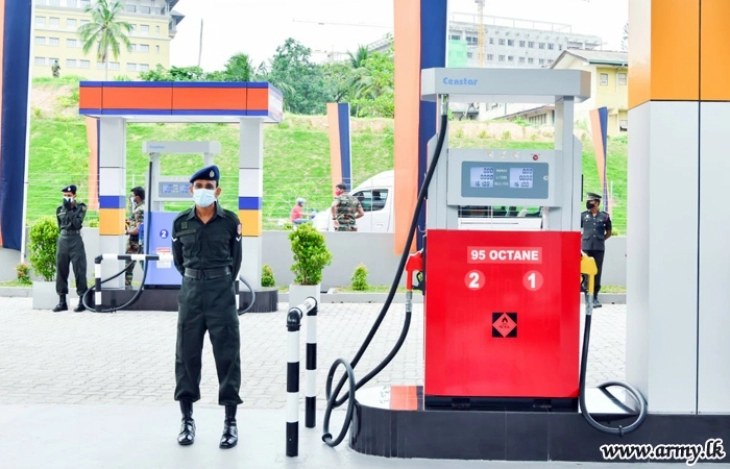
Military personnel have been deployed to monitor the distribution of fuel at filling stations operated by the Ceylon Petroleum Corporation, commonly known as CEYPETCO across the country, the Army said.

Military Spokesman Nilantha Premaratna said two military men will be deployed to each CEYPETCO fuel stations.

He said the army will only monitor the distribution of fuel, not to assist distribution.

Posted in Uncategorized

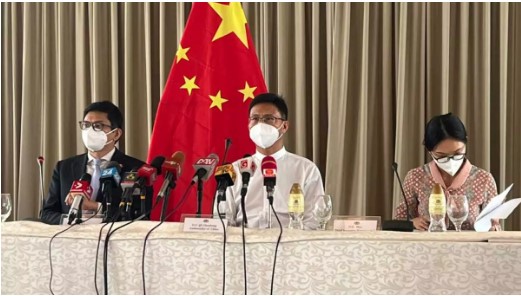
China may give Sri Lanka US$2.5bn in loans, trade credits

China is considering 2.5 billion US dollars in a loan and buyers credit to Sri Lanka Beijing’s Ambassador to Colombo Qi Zhenhong as the country is trying hard to repay foreign debt amid a forex crisis triggered by money printed to enforce low interest rates on top of tax cuts.

“We are considering 2.5 billion – 1 billion dollar loan, 1.5 billion dollars buyers credit,” Ambassador Qi told reporters in Colombo.

A buyer’s credit is usually a loan given by Exim Bank of China to purchase goods and services from the People’s Republic and has been used to finance infrastructure in the island in the past.

Sri Lanka President Gotabaya Rajapaksa last year requested debt re-structuring from China as the country was downgraded by credit ratings agencies to CC and foreign reserves ran low as money was printed.

“Sri Lanka and China have started close negotiations on bilateral relations,” Ambassador Qi told reporters responding to question on the request by President Rajapaksa to re-structure debt.

“As a true friend we will support Sri Lanka. Sri Lanka has a reputation of paying its debts.”

China from around 2018 has given budget support loans to Sri Lanka to more than repay installments falling due.

China is also pushing Sri Lanka to resume talks on a free trade deal which is required to make investments work.

Sri Lanka has said it is expecting a new loan from China to repay debts falling due following President Rajapaksa’s request to re-schedule debt.

Ambassador Qi said Sri Lanka had requested 1.5 billion US dollar facility from China. China has also given a 1.5 billion US dollar equivalent Renminbi loan to the central bank which was drawn down to boost reserves.

Sri Lanka is also getting 500 million US dollar oil credit from India and another 1 billion US dollar loan was signed with India for food and medicine imports.

Multilateral lenders including the Asian Development Bank and World Bank halted budget support loans several years ago over the reluctance of the country to do growth generating reforms and only gives project loans.

The IMF has said Sri Lanka’s debt is unsustainable amid a forex crisis triggered by money printed to keep interest rates down. Sri Lanka has also sought International Monetary Fund support and has floated the rupee but economists have called for a rate hike to make the float work, end money printing and slow domestic credit.

President calls special meeting of the ruling party

A special meeting of the ruling party is scheduled to be held tomorrow (22) under the patronage of President Gotabaya Rajapaksa.

The meeting is to be held at Temple Trees at around 6.00 pm tomorrow, government sources told Ada Derana.

All members of parliament (MPs) from the ruling party have reportedly been informed to attend the mandatory meeting.

It is reported that the discussion will focus on economic issues, including the dollar crisis in the country.

Prior to the special meeting to be held in the evening, the ruling party’s parliamentary group is scheduled to meet tomorrow morning under the leadership of Prime Minister Mahinda Rajapaksa.

The meeting will be held at the Parliament complex, according to government sources.

Posted in Uncategorized

Sri Lanka Bondholders Tap Legal Adviser for Sovereign-Debt Restructuring Talks

A group of investors in Sri Lanka’s sovereign bonds has hired law firm White & Case LLP to advise on debt negotiations as the indebted island nation contends with a severe economic downturn and growing political unrest, said people familiar with the matter.

The ad hoc group includes bondholders from BlackRock Inc. and Ashmore Group PLC, the people said. The group has yet to hire a financial adviser, said another person.

Sri Lanka is facing a balance of payments crisis as the country’s foreign-exchange reserves have declined by more than half since the beginning of the Covid-19 pandemic. The nation spends foreign exchange to import many of the goods it needs to power its economy.

Revenue from tourism, one of the country’s most important sources of foreign exchange, has declined in large part due to the pandemic. Meanwhile, remittances from Sri Lankans living abroad have dropped while a black market for foreign currencies has grown, economists say.

The Sri Lankan government owed more than $16 billion to international bondholders as of April 2021, according to government data. It also owed around $3 billion directly to China as well as to Japan, and around $1 billion to India. Sri Lanka also has outstanding debt to institutional creditors such as the World Bank and the Asian Development Bank. In total, Sri Lanka’s public debt to gross domestic product ratio in 2021 hovered at just below 120%, according to International Monetary Fund projections.

The country’s leaders stated for months that despite the runoff in foreign-exchange reserves, it had no plans to restructure its debts.

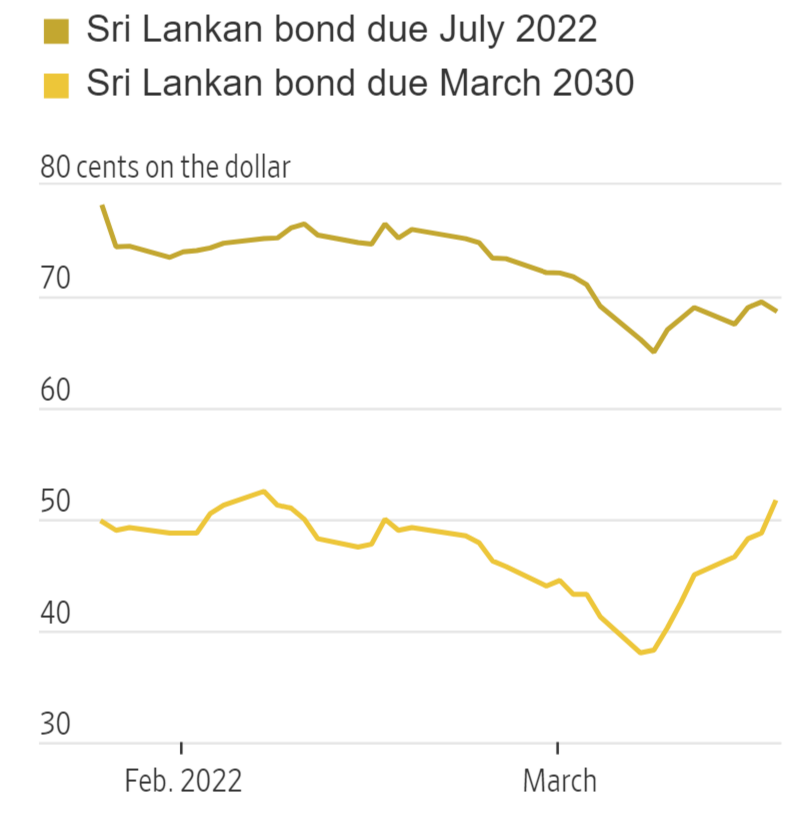
Sri Lanka faces about $7.5 billion in domestic and foreign debt payments this year, according to the federal government’s 2022 budget. Roughly $4 billion of that includes payments on foreign debts, including the $500 million bond it has already paid in January and the $1 billion bond maturing in July. However, the country’s foreign-currency reserves totalled $2.31 billion as of February, according to central bank data, and analysts have questioned whether some of that total can even be used for external debt payments, such as swap lines from the People’s Bank of China. Sri Lanka’s debt has traded at distressed levels for months as the country’s reserves have progressively dwindled.

Sri Lanka is looking at alternative strategies to raise funds from investors to deal with its coming debt payments. Recently, Sri Lankan officials have met with bankers from Rothschild & Co. and Lazard to discuss financing proposals. The country is also exploring a debt financing package that would be secured by remittances of foreign exchange into the country, according to one of the people familiar with the matter.

On Wednesday, Sri Lankan President Gotabaya Rajapaksa announced that the country was in early discussions with the IMF and other creditors on a plan to manage the country’s debt burden, following a day of antigovernment protests against goods and fuel shortages and inflation in the country’s capital. The IMF recently called the country’s public debts unsustainable, adding that pre-pandemic tax cuts plus the impact of Covid-19 had put the country’s financial wherewithal in jeopardy.

Depleting foreign-exchange reserves have recently led to severe shortages in Sri Lanka, given limits on the country’s ability to import essential goods, and has stoked inflation. Sri Lanka’s power grid instituted rolling blackouts in February amid persistent fuel shortages, worsened recently by the surge in oil and gas prices following Russia’s invasion of Ukraine.

In response to growing inflation and pressure on the rupee, Sri Lanka’s central bank announced in early March an increase in interest rates and devalued its fixed exchange rate, likely in a bid to curb the amount of currency entering the black market, analysts said.