Finance Ministry admits scarcity of four essential items

While saying that there is a minor shortage in four essential commodities, the Finance Ministry said there is an urgent need of setting up an effective mechanism where imported goods reach  the general public in a more transparent manner.

The matter was discussed in the maiden meeting of the committee appointed by the President headed by Finance Minister Basil Rajapaksa to ensure that there is no shortage of essential commodities.

The Ministry said though there is a minor shortage of four essential goods such as milk powder, LP gas, wheat flour and cement at present, sufficient stocks of all other items are in hand.

Moreover, Finance Minister Basil Rajapaksa raised the importance of displaying the prices of products clearly in shops as there is a tendency among shop owners to decide the prices as they wish.

He also highlighted that the Consumer Affairs Authority should carry out surveillance and compile report on essential food items on a daily basis and thereby, the disparity in the distribution of the imported goods could be identified.

Meanwhile, the Finance Minister said the existing forex crisis is a temporary situation.

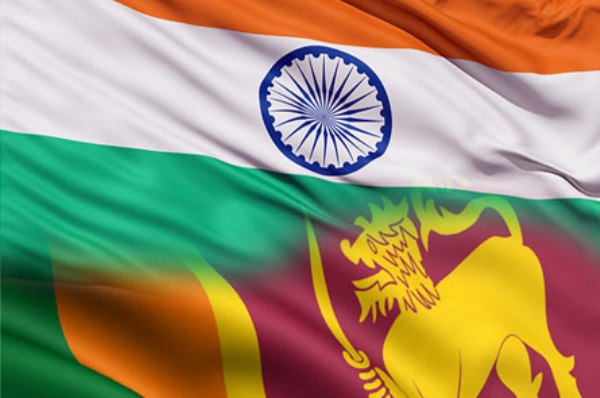
Colombo and Delhi get closer, but failure to move on the Tamil question will dampen the enthusiasm

Sri-Lanka-India relations have reached a “high point”, according to Sri Lankan foreign minister G L Peiris, who was in Delhi earlier this week. It is true that the tensions of the past do seem to have dissipated to a great extent. Colombo appears more welcoming of collaborations with India than it has been seen to in the past, especially during Rajapaksa governments.

Its economic crisis, which has led to dire shortages of essential commodities, fuel and medicines may have been a turning point in this respect. Colombo had appealed to several friendly countries for help, including India. In doing so, it also finally delivered on the Trincomalee storage tanks deal that had been held up for nearly two decades. Delhi’s financial assistance was timely. So great is the bonhomie that Sri Lanka is now talking about a closer integration of the Indian and Sri Lankan economies with more Indian investment in several sectors including ports, power, energy and tourism. In keeping with its policy since the turn of the century of supplying non-lethal military hardware, also under discussion is a proposal for Sri Lanka’s procurement of two Dornier aircraft, which will likely be deployed for maritime surveillance. India had earlier given offshore patrol vessels to the Sri Lankan coast guard. It will also help Sri Lanka launch a digital identity project along the lines of Aadhaar.

What remains troubling, however, is the continued reluctance of President Gotabaya Rajapaksa to engage with the Sri Lankan Tamil polity. He has not met Tamil parliamentarians even once since he was voted to office in November 2019. On the other hand, the government says a new draft Constitution written by a “committee of experts” could be submitted to Parliament soon. There is understandable concern in the Tamil political leadership about its contents given recent centralising tendencies, and voices demanding the abolition of the only provision that speaks of devolution of political power, namely the 13th amendment, introduced during the Indian intervention in 1987. The Sri Lankan foreign minister has said that the rivalry between Indian and Sri Lankan fishermen in the Palk Strait was the only “flashpoint” in India-Sri Lanka ties, Colombo’s foot dragging on a political settlement of the Tamil question has its own impact. A letter from Tamil parliamentarians to Prime Minister Narendra Modi seeking his intervention in the implementation of the 13th amendment, but also highlighting that provision was insufficient by the standards of “co-operative federalism” that he spoke about during his visit to Colombo, captures some of the anxiety. The upcoming United Nations Human Rights Council session may shed some light on the view from Delhi.

Posted in Uncategorized

CPA files petition before SC over PTA amendment Bill

The Centre for Policy Alternative (CPA) and its Executive Director, Dr. Paikiasothy Saravanamuttu has filed a Petition in the Supreme Court (SC SD 13/2022) challenging the Prevention of Terrorism (Temporary Provisions) (Amendment) Bill which was placed on the Order Paper of Parliament on the 10th February 2022, The Morning learns.

The Bill to amend the Prevention of Terrorism (Temporary Provisions) Act No. 48 of 1979 was tabled in parliament on the 10th of February by Foreign Minister Prof. G.L. Peiris.

Pursuant to the relevant amendments, the aggregate period of detention of a person under a detention order will be reduced from 18 months to 12 months.

The amendments will enable magistrates to visit the place of detention to ensure that the suspect is protected to the extent provided for in the Convention against Torture and Other Cruel, Inhuman or Degrading Treatment or Punishment Act, No. 22 of 1994,

Meanwhile, a detainee will be allowed to apply for a remedy guaranteed under Article 126 or 140 of the Constitution.

In addition, the amendments will enable the suspect to be produced before a judicial medical officer to ensure that such person has not been subjected to torture and provide for holding trials on a day-to-day basis to ensure the expeditious disposal of cases.

Further, provisions will be made by the amendments for granting of bail to persons in remand or in detention and to question an Order made or direction given under the principal enactment despite the protection afforded to officers for any act or thing done or purported to be done in good faith.

Safeguarding Human Rights and GSP Plus

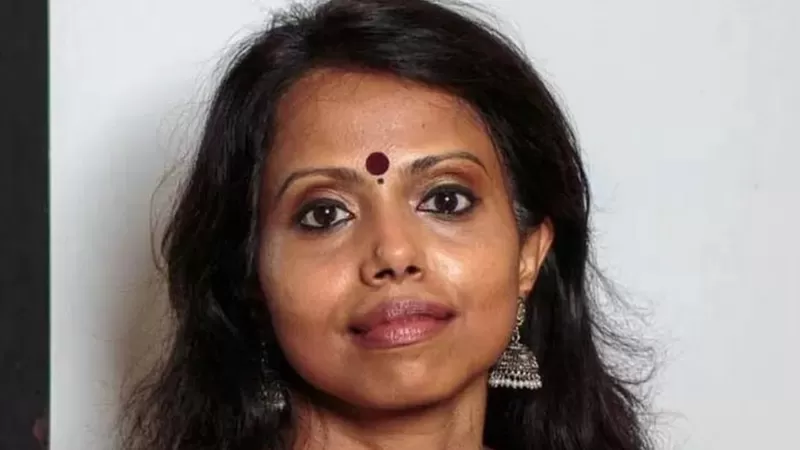
The National Peace Council (NPC)in a release condemns the manner in which The Foreign Ministry has contradicted the views expressed by the Neelan Tiruchelvam Trust Chairperson Ambika Satkunanathan on freedom of speech and expression and by doing so the NPC states that the Government underscores it has its limits on legitimate public criticism of the state’s policies and actions. Full statement follows;

Freedom of speech and expression is a constitutionally protected right. The Foreign Ministry statement contradicting the views expressed by the Chairperson of the Neelan Tiruchelvam Trust, Ambika Satkunanathan, brings up issues of the limits of legitimate public criticism of government policies and actions. We do not agree with its content and tone or with the personal targeting of Ms Sathkunananthan.

In a submission to the European Parliament’s subcommittee on Human Rights on January 27, Ms Satkunanathan made a critical assessment of the human rights situation in the country and provided recommendations in that regard. Much of what she said is also contained in statements made by the political parties representing the people of the North and East, and by civil society members including the National Peace Council.

The National Peace Council believes that as a representative of the civil society, Ms Satkunanathan has the same rights and freedoms with regard to speech and expression even if her views are not in line with government thinking and priorities. We particularly regret the paragraph in the ministry statement that draws a parallel to LTTE propaganda as a method of discrediting or silencing a critic.

The National Peace Council appreciates the Foreign Ministry and government’s willingness to engage in dialogue with different sectors in civil society which has led to positive outcomes and can be further built upon and expanded. We also wish to reiterate that just as much as the government, we in civil society want the best for our country, including retaining the GSP Plus by upholding the 27 international human rights covenants that successive governments, including our present government, have pledged to live by.

Posted in Uncategorized

Julie Chung sworn in as new US Ambassador to SL

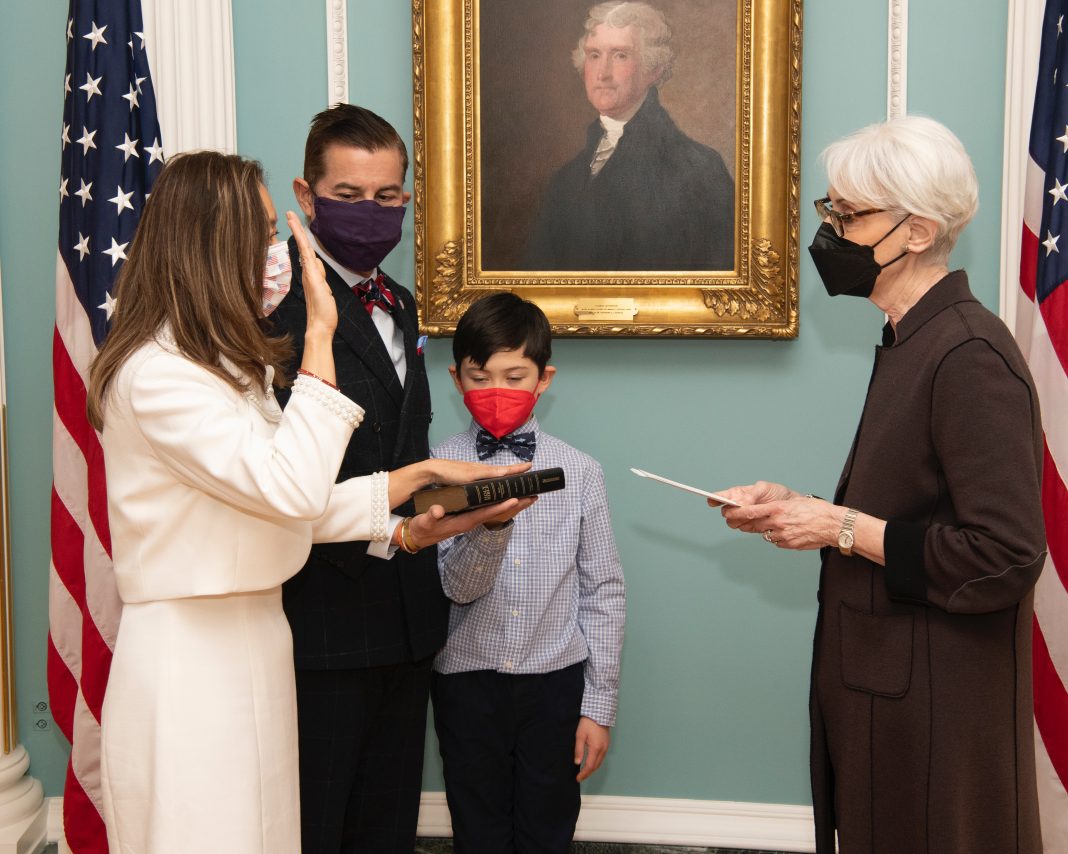
Deputy Secretary of State of the United States Wendy R. Sherman swore in Julie Chung as Ambassador to Sri Lanka yesterday.

Taking to twitter, Sherman said, “Ambassador Chung’s distinguished State Department career & exceptional leadership make her the perfect choice to represent the American people & advance the U.S.-Sri Lanka partnership. I look forward to continuing our work together,”

Chung is from Huntington Beach, California and joined the Foreign Service in 1996. She received a B.A. in Political Science from the University of California San Diego and an M.A. in International Affairs from Columbia University. Her foreign languages include Korean, Japanese, Spanish, and Khmer.

Posted in Uncategorized

Sri Lanka: Government’s badly planned organic farming policy upsets rice farmers

Sri Lankan government’s badly planned organic farming policy that has banned the use of chemical fertilizer in farms has upset farmers in this rice-growing heartland and a political stronghold of the ruling coalition.

The policy has also drawn criticism from agricultural experts, who warn that Sri Lanka’s food security is at stake.

Chairman of Minneriya Integrated Farmer Organization, Anil Gunawardhna argues that the government organic fertilizer program is an utter failure because it was announced without any proper program and work plan to achieve its aims.

“The government’s original plan was to achieve this organic cultivation in ten years time.  However, without any discussion with farmers they banned the import of chemical fertilizer,” he complains.

Writing in The Sunday Times in May last year just after the government banned chemical fertilizer imports, agricultural scientist Saman Dharmakeethi criticized the decision predicting that it would cause loss of forests and a food crisis.

In his election campaign in 2019 under the theme of ‘ Vistas of Prosperity and Splendour’  President Gotabaya Rajapakse, clearly mentioned that “building up a community of citizens who are healthy and productive, we need to develop the habit of consuming food with no contamination with harmful chemicals”. In order to guarantee the peoples’ right to such safe food, the entire Sri Lankan agriculture will be promoted to use organic fertilizers within ten years, the election policy platform said.

When President Rajapakse banned the importation of chemical fertilizers and pesticides in April 2021, he cited health concerns. The ban on its importation was imposed through an Extraordinary Gazette Notification on May 6th last year, following the Cabinet endorsement of the plan under the theme of  “Creating a Green Socio-economy with Sustainable Solutions for Climate Change”.  The document admitted that the use of chemical fertilizers has led to better harvests but has also contaminated lakes, canals and groundwater.

For more than two decades a mysterious kidney disease has been spreading among farmers in the mainly rice-growing areas, which has baffled both hydrologists and medical experts. It is suspected that the overuse of chemicals in farming may be the cause.

Weaning Away From “Green Revolution” Technology

With many vested interests at work, the government is learning a bitter lesson that it is not easy to wean away farmers from the use of chemicals in farming. It needs careful planning and closer consultations with farmers.

The agricultural production system in Sri Lanka consists of two traditional and well-defined components. One is the plantation section, established during the colonial period, consisting of large units, and producing perennial crops such as coffee, tea, rubber, and coconut mainly for export. The other is the smallholder sector comprised of small farms, which produce most of the country’s rice, vegetables, legumes, tubers, spices, and fruits.

While, fertilizers and pesticides have long been used for the production of plantation crops in Sri Lanka, until several decades ago, most of the smallholder operations were farmed with little or no input of agricultural chemicals. Wide use of chemical fertilizer was introduced to the country during the so-called ‘green revolution’ in the decades 1960-70 along with “high-yielding” seeds.

Costly Fertilizer Imports and Subsidy

In 2020, Sri Lanka imported (both state and private sector) foreign fertilizers worth  $259 million, representing 1.6 percent of the country’s total imports by value according to Central Bank statistics. Sources indicate that the 2021 import bill could potentially total in the range of $300-$400 million given current international prices. By limiting and/or banning costly foreign exchange draining fertilizer and agrochemical imports, the Sri Lankan government aims to generate significant import cost savings.

But, Professor Buddhi Marambe, a former Dean of Agriculture Faculty at the University of Peradeniya in recent newspaper articles has warned that an overnight shift to organic fertilizer could lead to crop declines that in turn cause huge food shortages within months. “We have spoken based on science. Without going for evidence-based decisions, nothing will go right,” he argues, refuting claims by the government that they are being manipulated. “Food security is national security,” he stresses, adding, “we must have sustainable policies to ensure food security because there is no point relying on food imports from outside”.

Rice Farmers’ Grievances

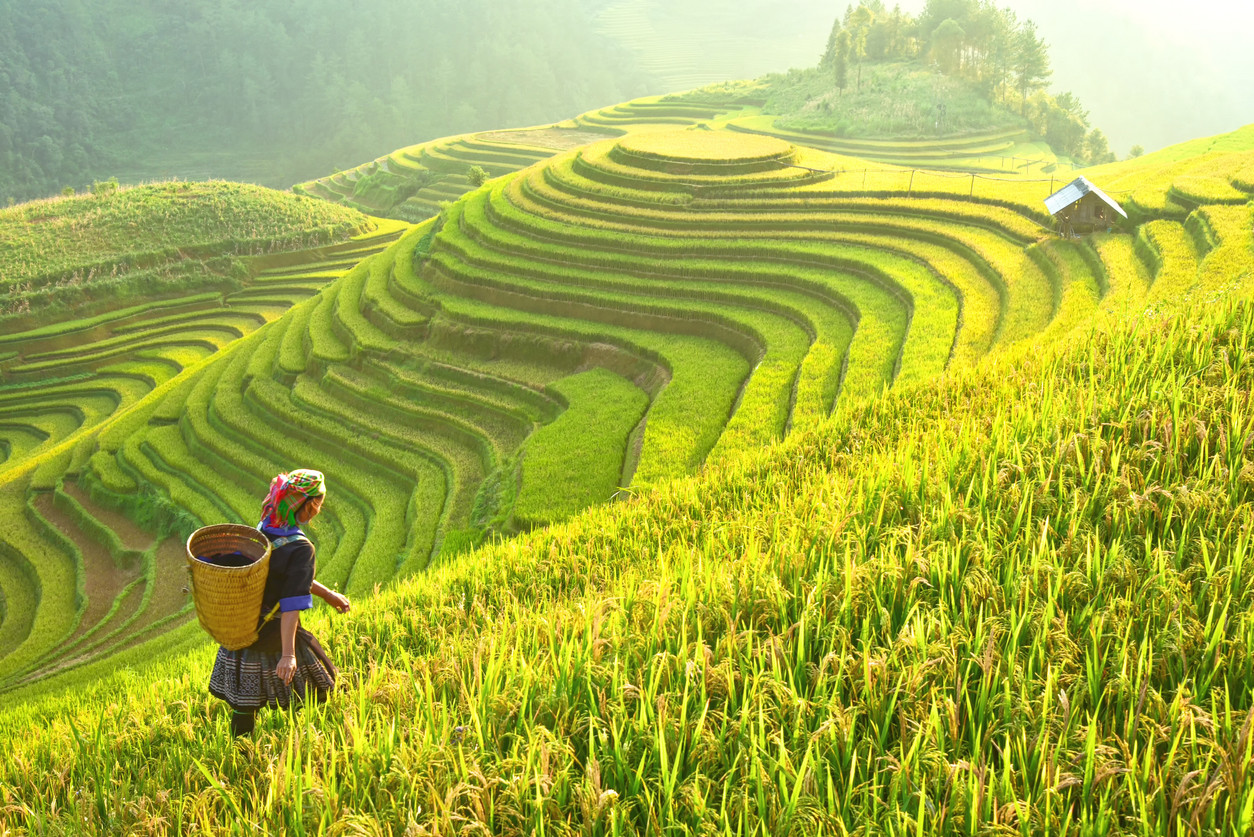
Some rural farmers have already decided not to cultivate Sri Lanka’s staple rice in the ongoing ‘Maha’ or next ‘Yala’ cultivation seasons, because of the government’s failure to supply necessary fertilizers. Farmers here are deeply unhappy at the sudden banning of the import of chemical fertilizer. They mainly cultivate paddy, low country vegetables, cereals, grains, and onions. However, in this ‘Maha’ season, they could not use chemical fertilizer, If the government promised to supply the required organic fertilizer, farmers say they didn’t receive it at the correct time.

Rice farmers have thus used different fertilizer that is normally used for tea, cinnamon, and coconut. They say this season’s rice harvest is very disappointing with resulting low incomes.

Piyarathna, Chairman, Eksath Sulu Farmer Organization, representing farmers from Dehiyannewela, Divilunkadawala ,Viharagama, Medirigiriya areas told IDN that there are 142 farmers in their farmer organization and they cultivate more than 190 acres using minor irrigation  water. “Our farmers normally harvest 100- 120 bushel (2500-3000 kg) per acre using chemical fertilizer. However, this time farmers can’t expect such harvest due to improper fertilizer usage” he says, adding, “farming is now a business enterprise, (and) farmers cultivate not only for (their)consumption”.

Paddy plants take around 3–6 months to grow from seeds to mature plants, depending on the variety and environmental conditions. They undergo three general growth phases: vegetative, reproductive, and ripening. “Our farmers cultivate two groups: the short-duration varieties which mature in 105–120 days and the long-duration varieties which mature in 150 days”, he explained.  “They (farmers) use hybrid seed and not traditional varieties. These hybrids varieties need quality fertilizer to increase the harvest. By using organic fertilizer farmers can’t expect high yield”.

Piyarathna says that farmers in the Polonnaruwa area have complained that the compost they have received is of inferior quality with most of the purchased compost having debris, seeds and stones.

Kapila Ariyawasnsa, a 38 year old farmer from the Ekamuthu Bedum Ela Farmer Organization in Mahaweli river irrigation System B told IDN that he cultivate 8 acres of low land  both in Yala and Maha seasons – mainly paddy – and there are also 206 rice farmers belonging to his organization. He thinks that the proposed organic fertilizer program is not practical in their area.

“There are not enough resources to make compost in our village. Greenery vegetables can be cultivated using compost, not paddy,” he argues, because  “there is no traditional varieties and only have all hybrid seeds (and) these hybrid seeds need required fertilizer for bumper harvest”. Further, he said that he had to spend Rs 23000 (USD 115) to purchase Yuria in black market.

Ariyawasnsa, predicts that the rural economy will collapse after the coming rice harvest. “Farmers won’t have the yield this time, they would get only 30 per cent of the harvest” he predicts.  “Most of the people in Mahaweli area depend on agriculture”. He added that not only Mahaweli B zone, but most farmers in the Polonnaruwa District, would face bad harvests due to the government’s organic fertilizer program. “The current government’s policy (has been based on) unplanned policy decisions” he laments.


Posted in Uncategorized

Indo-Lankan relations begin to be grounded in realities

India and Sri Lanka had been at odds for most of the 20th.Century. The question of the economic and political rights of the people of Indian origin troubled both pre-independence and post-independence governments in the two countries. Then, there was the dispute over Katchchativu island. From 1983, for about 30 years, the question of the political rights of the Sri Lankan Tamils bedevilled India-Lanka relations.

But now, there is a noticeable change in the ground situation that augurs well for a stable relationship between the two countries.

Questions relating to the Indian Origin Tamils’ status have been settled with the grant of Sri Lankan citizenship to them. The Kachchativu issue is a thing of the past after the demise of the Tamil Nadu Chief Minister J.Jayalalithaa. And with the elimination of the Liberation Tigers of Tamil Eelam (LTTE) in 2009, the Sri Lankan Tamil political question has also receded into the background at least as far as India-Lanka relations are concerned.

However, a new factor, the intrusion of China into the economy of Sri Lanka through its massive Belt and Road projects in 2010, raised the hackles of the Indian government. New Delhi saw these infrastructural projects, especially the ports, as having a strategic/military dimension that could, in course of time, pose a security threat to India. China’s acquisition of the strategically located Hambantota port on a 99-year lease only underscored the fear, which was fed further by the notion that China is deliberately pushing Sri Lanka into a debt trap to acquire real estate of strategic value.

The Mahinda Rajapaksa government which brought China into the picture, believed that its ouster in the 2015 elections was an India-engineered plot. The successor government of President Mithripala Sirisena and Prime Minister Ranil Wickremesinghe, were, at the outset, friendly to India. It signed many MoUs signalling a policy of being open to Indian investments also. But many of the MoUs were soon shelved and forgotten, creating disillusionment in New Delhi. The next government headed by President Gotabaya Rajapaksa, paid lip service to the commitment to give India a level playing field vis-à-vis China, but in fact, took away the Eastern Container Terminal project from India and asked India to execute the Western Container Terminal project, from scratch, at double the cost. India had no option but to accept the offer. The other MoUs signed in 2017 remained in the shelf.

However, despite these discouraging developments, the Narendra Modi government did not disengage or take a hard stand on Sri Lanka. It went in for a cooperative approach based on Modi’s oft-repeated ‘mantra’ that India will only execute those projects sought by Sri Lanka and will execute them at a pace with which Sri Lanka is comfortable.

New Delhi corrected its decades-long pro-Tamil tilt and began to address the concerns and sentiments of the Sinhala-Buddhist majority. Promotion of Indo-Lankan Buddhist ties was emphasized like never before. The primordial cultural and religious ties with India were emphasized along with a periodic demonstration of humanitarian concern which India has for Sri Lanka as part of its “Neighbourhood First Policy.” New Delhi has frequently demonstrated its claim to be the “First Responder” whenever there was a natural disaster in Sri Lanka.

On Chinese investments, the fear psychosis appears to be receding as Sri Lanka has repeatedly stated that it needs Chinese investments for infrastructural development which had been stalled by 30 years of non-development thanks to the war. To assuage India’s anxieties, Sri Lanka has been repeatedly assuring India that it will not do anything that jeopardizes India’s security.

Only recently, Colombo called off a Chinese renewable energy project on three islands in North Lanka that are close to India. The Chinese are miffed, but Colombo stood by its decision not to give the project to the Chinese. It is likely that Colombo will continue to respect New Delhi’s security concerns vis-à-vis North Sri Lanka which is largely Tamil with cultural and emotional links with India.

While there is no movement in regard to many MoUs signed in 2017, there has been significant forward movement vis-à-vis the Trincomalee Oil tanks, a long-standing issue with Sri Lankan governments. On January 6, this year, Sri Lanka and India signed a fresh agreement on the 99 giant oil tanks to supersede the controversial one signed in 2003. The 2003 agreement had given all the tanks to India for 35 years. Through the new agreement, 85 of the 99 tanks will be under the control of Sri Lanka, either directly or indirectly, the latter being through a joint venture with India in which Sri Lanka will have a 51% share. India will manage only 14 tanks.

This is a major Indian concession to Sri Lanka which should warm the cockles of Sri Lankans’ hearts. Referring to this deal at his meeting with the Indian Foreign Minister S.Jaishankar on February 7, Sri Lankan Foreign Minister G.L.Peiris said that the oil tank agreement “signals a closer integration between two countries, resulting in substantial benefits; a win-win situation for both.” The deal lays the ground for the implementation of the already envisaged renewable energy sectors.

Peiris and Jaishankar also discussed potential Indian investments in priority sectors such as pharmaceuticals, food processing and manufacturing. The two Ministers agreed on the early finalization of several agreements and MoUs in the areas of defence, culture and education, that are pending.

Peiris appreciated the financial assistance to the tune of US$ 2.4 billion that India has extended to Sri Lanka at this critical juncture when Sri Lanka is facing an economic and forex drought. He then went on to state that the “relationship between India and Sri Lanka has evolved from a transactional relationship into a strategic partnership.” Peiris stated that “it is increasingly recognized by the people of Sri Lanka that India is a true friend whom Sri Lanka can rely on at all times.”

India’s generous help during the COVID pandemic and also its US$ 1.5 billion aid to overcome the ongoing forex crisis, and Sri Lanka’s fulsome appreciation of them, indicate that the two countries have found common ground and that the fears of the past have begun to recede.

Both India and Sri Lanka are aware of their respective compulsions and national developmental and security imperatives, and both are prepared to take these into account in formulating their policies.

However, two issues which will continue to bedevil bilateral ties are the Sri Lankan Tamil demand for devolution of power and the issue of poaching of Tamil Nadu fishermen in North Sri Lankan waters. In regard to the Sri Lankan Tamils’ demand for a federal structure, New Delhi can do little because the demand will never be conceded by Colombo and India has no leverage to force anything of this sort on Colombo, especially when India is itself not a federation in the true sense of the term. India’s advice to the Tamil parties has been that even as they agitate for their aspirations, they should unitedly fight to get the existing devolution system under the 13th. Constitutional Amendment fully implemented. They should also concentrate on economic development, an area in which India can help without alienating Colombo.

On the issue of poaching, the two countries have agreed to urgently activate the dispute solving mechanisms. With mid-sea clashes taking place now, Colombo is worried. Peiris said that the situation has reached a flashpoint. The situation should worry India too partly because the impoverished fishermen of North Lanka could become anti-India, and also go into the waiting arms of China which is eyeing the North Lankan fisheries sector for its investments. Two Chinese aided projects are already functioning and more may be on the cards. The ball is now in India’s court. How India will play it, remains to be seen.

Posted in Uncategorized

Bill to amend Prevention of Terrorism Act tabled in parliament

The government today presented the Prevention of Terrorism (Temporary Provisions) Amendment Bill in Parliament to amend to amend the Prevention of Terrorisms (Temporary Provisions) Act, No. 48 of 1979.

Foreign Minister Prof. GL Peiris presented the bill to amend the PTA in parliament this morning. The Bill will be debated in parliament on a future date.

Speaking after the Bill was presented by the Minister, Tamil National Alliance (TNA) Jaffna District MP M.A. Sumanthiran questioned why an amendment bill was introduced when the Minister of Justice had stated that he would bring a separate bill.

In response, the Foreign Minister said the amendment bill was introduced in accordance with the Standing Orders and if anyone opposes the bill, they can challenge it in the Supreme Court.

“The government will wait for the court’s determination (if the bill is challenged)and there will be a full debate in the matter thereafter,” Minister Peiris said.

Following the presentation of the Bill, Leader of the Sri Lanka Muslim Congress Rauff Hakeem questioned whether the government will consider the amendments and shortcomings that were highlighted during the recently concluded Sri Lanka-EU Joint Commission meeting.

The European Union, during the 24th meeting of the EU-Sri Lanka Joint Commission on February 08 in Brussels, noted that important elements are not included in the gazetted Bill and urged the government to amend the draconian Prevention of Terrorism Act (PTA) to be fully compliant with the international norms.

Sri Lanka is under pressure from the European Union to reform the PTA, which allows detention up to 90 days without being charged with provisions for further extension of the time

India seeks clearance for Tamil Nadu delegation to visit Sri Lanka

India has sought clearance for a delegation from Tamil Nadu to visit Sri Lanka to discuss the fate of unsalvageable Indian fishing boats in Sri Lanka.

The High Commission of India in Sri Lanka said that it has seen several reports and statements regarding auctioning of Indian fishing vessels in Sri Lanka.

“At the outset, it is stressed that there is an existing bilateral understanding between the Government of India and Government of Sri Lanka on the matter,” the High Commission said.

The High Commission said that in accordance with this understanding, a team from the State of Tamil Nadu, India was to visit Sri Lanka regarding modalities to finalize disposal of unsalvageable Indian fishing boats in Sri Lanka.

The High Commission said it has recently again sought necessary clearance from the Government of Sri Lanka for the visit.

Rajapaksas’ roar from Rajarata

President Gotabaya Rajapaksa and Prime Minister Mahinda Rajapaksa yesterday urged the public to rally around the Government ushering an aggressive development drive without being deceived by the false propaganda of the power-hungry opposition.

The call on the masses by the duo in chorus was at the first major post-COVID political rally of the ruling Sri Lanka Podujana Peramuna (SLPP) in Anuradhapura.

Both speeches were heavily weighted towards exposing the motives of the Opposition which however has been firing at the Government for sheer economic mismanagement causing multiple crises ranging from foreign reserves, rising inflation, scarcity of essential food and drugs, electricity and fuel to agriculture.

However, the President said the Rajarata rally is the beginning of a series of public rallies to make aware of the targets achieved by the Government in the face of challenges in line with the national policy framework “Vistas of Prosperity and Splendour”.

President Gotabaya Rajapaksa pledged to increase the income of farmers 100% with or without fertiliser, assuring to implement the national policy framework and would not hesitate to do anything for the benefit of the farming community.

“During the first election rally, I promised to provide fertiliser free-of-charge and to increase the guaranteed price of paddy. I provided farmers with the required fertiliser and funds and returned their lands. I promise to increase the income of farmers by 100% despite the fertiliser crisis,” he said.

President Rajapaksa affirmed he is committed to take any necessary steps for the well-being of the farming community.

The President also claimed that during the former Yahapalana Government, national security was weakened resulting in the 2019 Easter Sunday attacks, whilst the intelligence units were destroyed, war heroes were betrayed and the country’s sovereignty was compromised before the international community.

He said the country’s culture and traditions were also destroyed while monks were taken before the Court.

The President asserted that the SLPP-led Government changed that situation during the past two years, amidst many challenges post-COVID.

“We have ensured national security and will reclaim the country’s religious, cultural inheritance and stabilise the economy too,” he added.

He assured to implement the Government policies, without imposing further lockdowns, to ensure economic recovery and stability.

The President requested the public to refrain from being deceived and betraying the country once again.

He also pointed out that local and foreign forces were working together to prevent the journey of the Government, as they had done to topple Mahinda Rajapaksa’s Government in 2015.

“The policies of the Government are aimed at the well-being of the future generations. Therefore, we would continue to move forward despite obstacles,” he stressed.

President Rajapaksa pointed out that opposition who take to the streets to launch protests for political propaganda should first think about the inconvenience they cause the people and not the Government.

He also reminded the State sector officials that they should make a commitment to serve the country and the people.

Prime Minister Rajapaksa said the Government has embarked on an aggressive development drive to deliver its promises, assuring to improve the economy within the next three years.

“During the past two years, the Opposition attempted to sabotage every program that was initiated by the Government. They instigated the farmers, teachers, State sector workers and union members and took it to the streets to inconvenience the public,” he claimed, adding that the SLPP-led Government will not let them deceive the people of this country.

Rajapaksa said the health and safety ensured by the Government for free movement was being misused by the Opposition for their false propaganda.

“We are prepared to go into the streets. It is not new to us, as I am one of those who led the ‘Pada Yatra’ and as a politician who stood for the rights of the labourers. We will educate the people about the program of the Government,” Rajapaksa stressed.

The Prime Minister acknowledged the hardships faced by the farmers and assured them to improve their livelihood.

“Before 2005, farmers received a mere Rs. 12 or 13 for a kilo of paddy, but we managed to increase it by several folds. We have always been with the farmers and will continue to work for the wellbeing of the farmers,” he said.

Rajapaksa recalled that the Yahapalana Government stored paddy inside the Mattala Airport and disregarded the plight of the farmers.

The Prime Minister challenged the Opposition and insisted that it should face them directly without conspiring against the Government and the country through various means.

Affirming that the Government will not allow the Opposition to sabotage its work, Rajapaksa called on the masses not to be deceived by false propaganda and rally around the Government development initiatives during the next three years.

Posted in Uncategorized