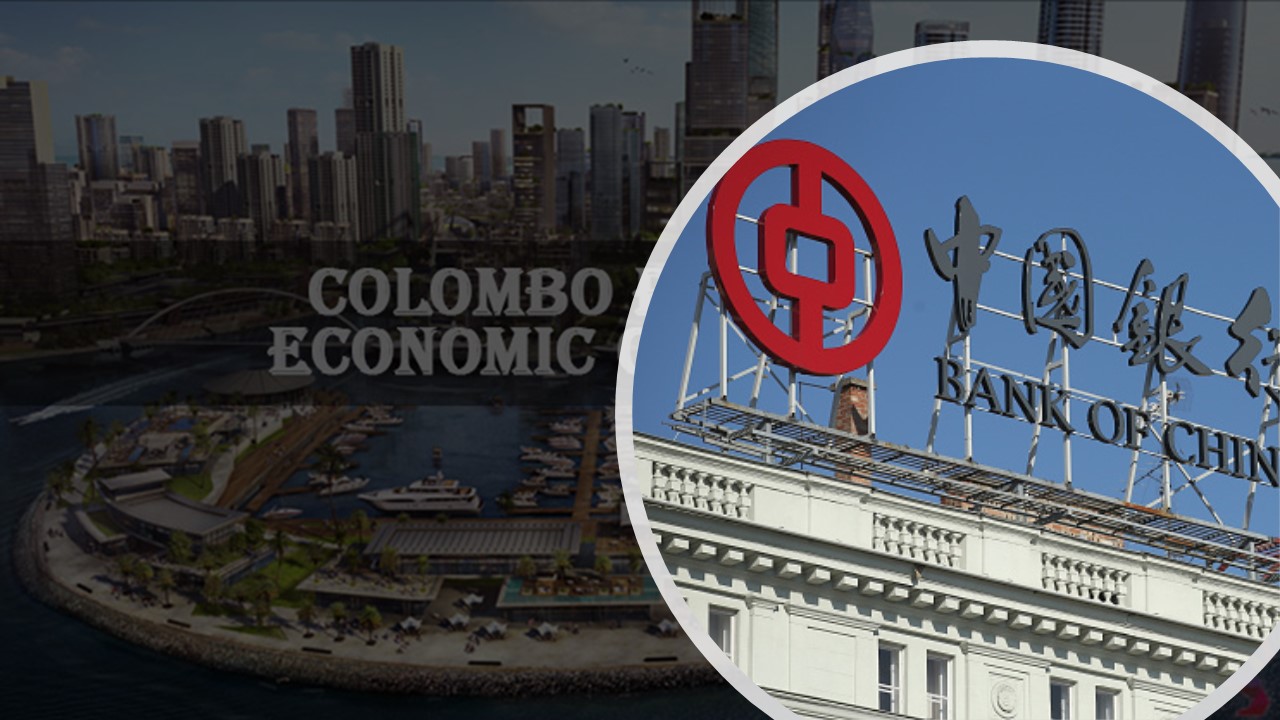
China-backed Colombo port city under scanner over row on visiting charges

China-backed Colombo Port City has again come under the spotlight for wrong reasons after the authorities broke their promise and imposed variable charges on the people visiting the site.

Last month, the Colombo Harbour Engineering Company (CHEC) Port City Co. Pvt Ltd, made a big promise. It committed itself not to charge any fee for personal photography and videography from the visitors. It, however, declared that a variable charge would be collected for professional photography and videography, according to the Policy Research Group (POREG).

The Chinese company issued a press statement reiterating the assurance as well. And even issued an advisory: ‘Don’t pay any heed to speculation in the social media that you – the public -would need to pay to take selfies, pictures, or videos during casual visits to the port city area”, POREG reported.

The Policy group said the company from the land of Bamboo Capitalists rolled back its promise. It has put in place a lot of paperwork by way of a visitor’s application and announced a rate card. According to POREG, the rate card clearly mentions separate rates for personal and commercial photography and videography. And the application form seeks to know a lot of personal details. Clearly, the intention is to keep a vigil on visitors, say observers, and aver that such information is prone to be misused by the port city owners, who are Chinese.

CHEC Head of Public Relations has confirmed the authenticity of payment requirements in the new directives. He has, however, denied any fee for personal photography and videography, POREG reported.

Colombo Port City (CPC) project was announced on Xi Jinping’s visit to Sri Lanka in 2014.

It is a USD 1.4 billion flagship programme under Beijing’s Belt and Road Initiative (BRI). Spread over 269 hectares of reclaimed land from the sea the venture represents Beijing’s single largest investment project in Sri Lanka.

Last year, Colombo Port City Project was approved in haste by the Sri Lankan government to serve China’s strategic interest in the island nation.

Sri Lanka is facing economic challenges. The island nation’s fourth-largest lender is China. Sri Lanka being influenced by China is understandable as the former wishes to make Colombo a major financial and services hub in South Asia through Chinese help through the Port City Project.

Sri Lanka seeks Commonwealth economic group support

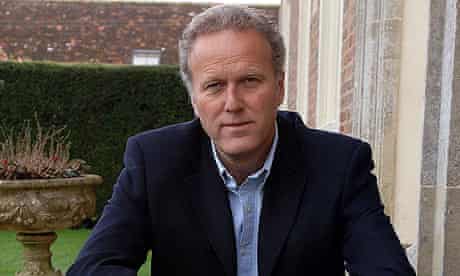
British, Lord Marland, Chairman of the Commonwealth Enterprise and Investment Council was met by both the Sri Lankan President and Prime Minister at the Temple Trees to discuss substantive economic and geopolitical matters.

Sri Lanka is trying to secure support from the 2.4 billion people strong Commonwealth, soon to become the second largest economic group in the world.

The meeting was held on the 70th anniversary of Her Majesty Queen Elizabeth, in her Role as Head of the Commonwealth and being the longest serving Monarch in recent history.

Lord Marland of Odstock and Priyanka Wadhawan have been appointed by the UK Prime Minister as Trustees of the British Museum for four year terms from 1 December 2021 to 30 November 2025.

Posted in Uncategorized

Tamil Nadu wants Modi to stop Sri Lanka boat auction

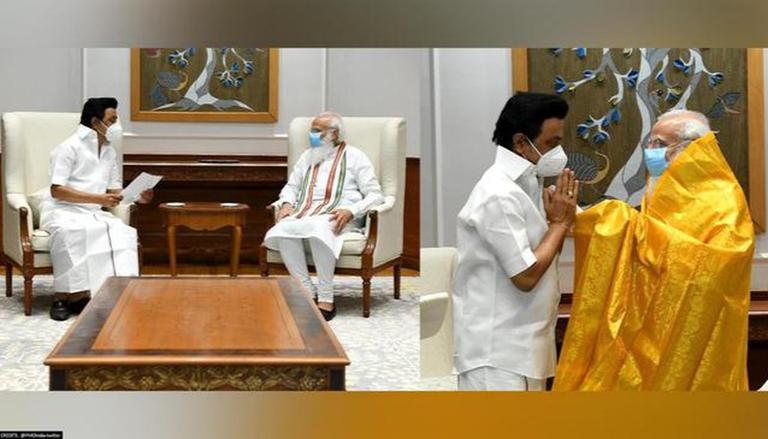
The Chief Minister of Tamil Nadu, India MK Stalin on Monday (7) requested Indian Prime Minister Narendra Modi’s urgent intervention to stop the proposed auction of over 100 boats belonging to Tamil Nadu fishermen by Sri Lanka and to obtain its concurrence for a proposed visit of state government officials.

Sri Lanka initiated action to auction 105 fishing boats belonging to Tamil Nadu fishermen from February 7th to 11th.

“This is not legal and also a matter of grave concern and therefore must be stopped,” Stalin said in a letter to Modi.

Stalin in January 2022 said he had written to Modi and External Affairs Minister S Jaishankar urging them ‘to finalize the efforts’ for the transparent disposal of 125 ‘unsalvageable’ Tamil Nadu boats that were apprehended by the Sri Lankan Navy before 2018.

Also, he had requested steps to ensure the early release of 75 boats and fishing gears seized after 2018.

Following this, the External Affairs Ministry on January 28th informed Tamil Nadu that the matter had been taken up by the Sri Lankan authorities.

Sri Lanka on Monday auctioned off over 100 Indian fishing boats that were seized by Sri Lanka Navy over years, for illegally entering the Sea of Sri Lanka.

The auction took place in Kankesanthurai (KKS), on the northern coast of the Jaffna Peninsula, near Point Pedro, the northernmost point in Sri Lanka.

The Chairman of the Jaffna Fisheries Committee A. Annarasa told News 1st that Indian boats were auctioned for prices from Rs. 10,000/- to Rs. 1.3 Million.

“We auctioned 135 Indian boats today. We will continue to work with India, However, Indian fishermen cannot enter the Sea of Sri Lanka,” he said.

A large number of Sri Lankan fishermen from Jaffna, Mullaithivu, Mannar, Puttlam, and Negombo had registered themselves to place bids at the auction to buy these boats.

The perils of “maritime blindness”

A reading of former Sri Lankan navy chief Adm. Jayanath Colombage’s works on maritime security will show that Sri Lanka would have won the war against the Liberation Tigers of Tamil Eelam (LTTE) long before it actually ended (in May 2009), if successive governments had built the navy as a priority, re-oriented it to face the LTTE’s asymmetric warfare, and put it in the forefront of the military operations.

A land-based military doctrine had prevailed till Eelam War IV (2006-2009). That had led to the strengthening the army at the expense of the navy, when all the while, the LTTE was getting its armaments and other supplies by sea using both small boats and big ocean-going vessels. If at all the navy was used, it was operating on a defensive mode responding to attacks rather than going on search and destroy missions. But, as Adm. Colombage says, the moment the Lankan navy got its due from the then President and Defense Secretary, the tide turned in the government forces’ favor dramatically. The LTTE’s seaborne assets were destroyed, its coastal warfare units were engaged proactively and crippled, its land forces very denied munitions, all leading to the outfit’s annihilation. It is now accepted that the inordinate delay in changing the military doctrine from a land-based one to a sea-based one had cost an enormous lot in terms of men, material and money.

The Lankan navy’s importance has increased now, partly due to the lessons learnt in the war, and partly due to increasing Indian and US concern over Chinese inroads into the Indian Ocean Region (IOR).

The Navy is now second in the armed forces’ pecking order in Sri Lanka.  According to Jane’s, as per the Appropriation Bill of 2022, the Army would get the lion’s share – LKR 188.1 billion, a year-on-year increase of 11%. The Navy would get LKR 63.9 billion, an increase of 4%, and the Air Force gets LKR 56 billion, an increase of 8.5%. As for capital expenditure, the Air Force would receive LKR 15 billion, while the navy and army would get LKR 9.2 billion and LKR 7.4 billion respectively.

With the military defeat of the LTTE in 2009, Sri Lanka became free from maritime terrorism. However, as Capt. Rohan Joseph, Sri Lanka’s Defense Advisor to the High Commission in New Delhi, points out, this does not mean that the seas around Sri Lanka are safe. Drug trafficking, human smuggling, IUU fishing and marine pollution pose a formidable challenge in the high seas. And Sri Lanka is unprepared to meet them.

In a paper written for the Kotalawala Defense University in 2015, Joseph says: “The sensors and platforms the Sri Lanka Navy (SLN) is in possession today is only capable of conducting maritime surveillance in the near shore areas and up to a certain extent in the Exclusive Economic Zone (EEZ). Apart from the limited surveillance capabilities of the ocean surface, we are completely blind on subsurface activities that take place in terms of submarine operations.”

Vast Area

The Lankan ocean space in indeed vast. It comprises an Exclusive Economic Zone (EEZ) that is seven times larger than the land area. The continental margin is around 21 times larger, and a search and rescue region around 27 times larger than the land area. Therefore, Joseph argues, a surveillance strategy is essential to minimize the strategic maritime blindness that Sri Lanka is facing.

“There is a need to introduce additional platforms in the navy, incorporate advanced maritime surveillance sensors/equipment, form a cooperative strategic maritime surveillance architecture with regional as well as other partners, fuse and share vital sensory information with regional navies and maritime law enforcement agencies,” he points out.

Submarines/Air Surveillance

Joseph notes that Sri Lankan naval platforms which are capable of operating in deep seas number nearly nine. The navy’s Maritime Strategy 2025 document looks at forming a 25 ship navy by 2025 mainly comprising frigates and offshore patrol vessels. But the navy does not have a single underwater vessel or sensors which are capable of detecting submarines at a considerable range. Joseph points out that except Sri Lanka, all nations in the neighborhood have acquired submarines. The latest to acquire a three dimensional force is Bangladesh.

“The presence of Chinese submarines is known, but what about those that continue to frequent the Indian Ocean without being detected?” he asks. “This is indeed a grave concern for maritime security affairs of Sri Lanka as well as to the other regional countries. The inability to have a clear image of the activities that take place in the EEZ makes the country vulnerable to IUU fishing by foreign fishermen and probable exploitation of scientific data from the Sri Lankan EEZ.”

Joseph further says: “We do not even have a single sensor which is capable of detecting a submarine at a considerable distance. This leaves the navy in total blindness with regard to subsurface maritime affairs.”

And the Lankan Air Force does not have a single dedicated long range maritime patrol air craft to carryout air surveillance covering the vast ocean space. Thus, the Lankan authorities have “no clue whatsoever about what is taking place or who is out there in the areas where no surveillance is available,” Joseph concludes.

Layers of Surveillance

There are various layers of surveillance, Joseph says. The first layer is the territorial sea monitored by RADARs and by AIS shore-based stations. The second layer, which is the EEZ, is monitored using surface platforms, HFSWRs, and space based AIS. The third layer, which is in the high seas (up to 1000-1200 nautical miles) are to be monitored by space based AIS, space based RADARs, surface and air assets.

Joseph points out that the Sri Lankan navy’s maritime apprehensions have been primarily in the territorial waters or in the EEZ. However, when one looks at the human smuggling arrests made in the deep seas, they had resulted from high level of bilateral cooperation with Australia. Highly reliable and timely intelligence had enabled Lankan naval units to intercept human smuggling boats in the deep seas, he says.

Regional Cooperation

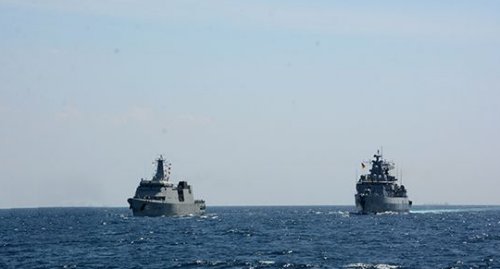
All the technological requirements for operating in the high seas can be met by regional and extra-regional cooperation. This is already taking place, to an extent. The Lankan navy will be the key agency with the establishment of a regional Maritime Rescue Coordinating Centre (MRCC) at Colombo. Joint exercises are being held with regional navies at regular intervals especially with India.

But regional and multilateral cooperation is also fraught with issues. In a paper entitled: “Problems and prospects of maritime security cooperation in the Indian Ocean Region: a case study of the Indian Ocean,” Com. Ranendra Singh Sawan, of the Indian Navy, says that maritime cooperation is largely focused at a sub-regional level, but unfortunately, the sub-region is weakly knit. The countries in the IOR littoral are very diverse and divided by clashing interests. There is no “common enemy” to unite them, Sawan points out.

Commodore C Uday Bhaskar IN (Rtd) notes that “the IOR does not lend itself to cohesion due to the disparate political and economic profile of the littorals.” He adds that the principal constraints in the management of maritime challenges in the region are: “the disparate composition of individual states, low political trust, the historical narrative about territoriality, and a deep-seated insecurity and mistrust about the other.”

External forces have also contributed to dysfunctions in security cooperation. “The IOR has been influenced largely by extra-regional powers which have significant maritime interests in the region. But at times, this is perceived as interference and is not welcomed by some IOR nations,” Sawan notes.

Be that as it may, there is also a growing realization that involvement of external powers is needed to make maritime security effective. Thus, balancing national sensitivities and the imperative of international cooperation will remain a challenging task for Sri Lanka and other countries in the IOR.

Posted in Uncategorized

There will be a penalty on SL at UNHRC – Lakshman Kiriella

Chief Opposition Whip and former Minister Lakshman Kiriella is one of the most senior politicians in the House with a vast knowledge on Standing Orders and Parliamentary etiquette. He is an authority on Parliamentary law. Mr. Kiriella, a lawyer by profession, has been elected as an MP uninterrupted for 32 years since 1989 and was the Leader of the House under the Yahapalana government. The Daily Mirror sat with him to discuss the current political situation of the country and the future of the Samagi Jans Balawegaya (SJB).

EXCERPTS:

Q     The public anger against the SLPP government and its hierarchy from all quarters of the country is mounting steadily by the day. What is the strategy of the Samagi Jana Balawegaya (SJB) as the next-in-line to power and the strongest political party in the opposition to save the nation from this predicament?

Well, we have given time to the SLPP government to fulfill their pledges given in two elections during the Presidential election in 2019 and Parliamentary election in 2020. But unfortunately, in the last two years since President Gotabaya Rajapaksa and the SLPP government were elected to power, they have failed miserably in all aspects, I mean in the economy, the rule of law, human rights and living standards of the people and general prosperity of the country in a dismal manner. They are failed in all aspects. They must look at their manifesto. If you look carefully at their manifesto, the so-called ‘Vistas of Prosperity and Splendour’, you can see that not a single promise given in two polls has been met and the country at the moment goes down a precipice of no return.

Q     But you are still to come up with your game plan to grab power at the upcoming elections?

You must realise that any political party comes with its manifesto or the game plan in the election year. No party is expected to release its election strategy or the policies of their government once they are elected to power in mid term.  No political party discloses its manifesto, three to four years before the election. If you take President Gotabaya Rajapaksa, he gave an interview after he was nominated as the candidate of the SLPP. He was asked ‘how he was going to settle the massive debt of the government. He could not answer. He paused for about a minute and looked at Mahinda Rajapaksa who was seated next to him.  Gotabaya was one of the front runners to the Presidency but he did not know how to repay the government debts.

Obviously, the SJB will have a broad alliance to contest the forthcoming polls. Sajith Premadasa will be the leader of the alliance. We consult all constituent partners of the SJB on the policies, programmes and on decision making of the alliance and the style of the government to be formed.  As I said earlier, no party publishes its manifesto years before the election.

Q     You are one of the most senior and experienced politicians in the SJB. Do you think that the SJB is capable of convincing the electorate that an SJB led government is the best answer to the disaster the country has fallen into right now?

Yes, indeed. The UNP is not in existence now.  We are the successors to the UNP. If you look at the period we ruled the country from 2015 to 2019, we controlled the food prices, we gave the biggest pay hike in history to public servants and pensioners, incurring Rs. 270 billion annually to the Treasury.  We stabilised the food prices and brought the prices of gas and kerosene down. The people enjoyed a good standard of living under our government. You must realise that when we came to power in 2015, our annual income was Rs. 1000 billion. When we left in late 2019, it was Rs. 2000 billion and we had foreign reserves of US$ 8 billion. Today, government’s income is Rs. 1,300 billion and foreign reserves are about US$ 1 billion.  We doubled the government’s income during our time. Not only that. We gave each and every demand made by the trade unions, be they public servants, pensioners or teachers. We can run the economy well under a presidency of Sajith Premadasa. You must not have any doubt about it because we can get the support of the international community. You may have seen diplomats, foreign leaders and delegates of many countries come to meet the Leader of the Opposition Sajith Premadasa regularly. We have a good rapport with them. The most crucial factor is that we have won the confidence of the international community and the global lending agencies. We will tax those who have money to increase the government revenue. When we came to power in 2015, the state revenue stood at Rs. 1000 billion. When we left in 2019, it was Rs. 2,000 billion. We doubled the government income by taxing big companies. What did Gotabaya Rajapaksa do? He cut tax in his first budget and lost 800 billion rupees of government revenue. That is what the global financial agencies want. This government does not increase the state revenue but loses it while giving huge tax relief to rich and powerful people and companies. Their recipe is to get loans as much as possible to fill the government coffers. Our strategy is to increase government revenue through taxing the corporate sector and those capable of paying. The government is under obligation to the companies as they sponsored Gota. Therefore, Gotabaya Rajapaksa is obliged to pay back these companies and people who funded his election campaign. At the very first cabinet meeting of the Gotabaya Rajapaksa regime held on November 27th of 2019, it was decided to remove PAYEE tax, Nation Building Tax, Capital Gains Tax imposed on CSE, Debt Services Tax, withholding tax, Debit Tax and VAT reduced, cutting state revenue by Rs. 800 billion annually.

Q     Sri Lanka has become a geo-political playground for super powers like the US and China and the regional power India. It is no doubt that a future SJB government will have to handle this highly sensitive issue in an extremely careful and pragmatic manner not to offend any of them. How are you going to do this?

You must realise that once you give something, you can never take it back. In that case, this government is putting future governments in jeopardy. They don’t have any foreign reserves. When we handed over the government in 2019, we had US$ 8 billion in foreign reserves. Now, they have brought it down to a little over one billion. The Vistas of Prosperity and Splendour pledged not to hand over the assets of the country to foreigners. China has been given a part of the Port City, Yugadanavi power generation plant to the US, Trincomalee oil tank farm to India. Yes, as you said, Sri Lanka has become a playground to super powers as well as to the regional powers putting the country in danger.

Government must increase production to fatten foreign reserves and state revenue. The only answer for economic prosperity is to increase export revenue. There are no short cuts to economic development other than increasing production for the global market as well as for the domestic market. A future SJB government will lay full emphasis on exports.  For example, last year there was a good rate for paddy. If the government gave the fertiliser subsidy to the entire agriculture sector, you would have increased the output by 30% because the weather was so good, it was raining round the year. What happened as a result was that the agricultural production came down by 30%.
We must have a special arrangement with India’s vast market. Don’t forget the fact that India being a huge market is next door to us. The Yahapalana government had plans to develop a major export processing zone at Hambantota with Hambantota International Port as the main export terminal with emphasis on Indian, Chinese and European markets.

Q     How do you manage to entertain Foreign Direct Investment (FDI) from both power blocks by a future SJB administration?

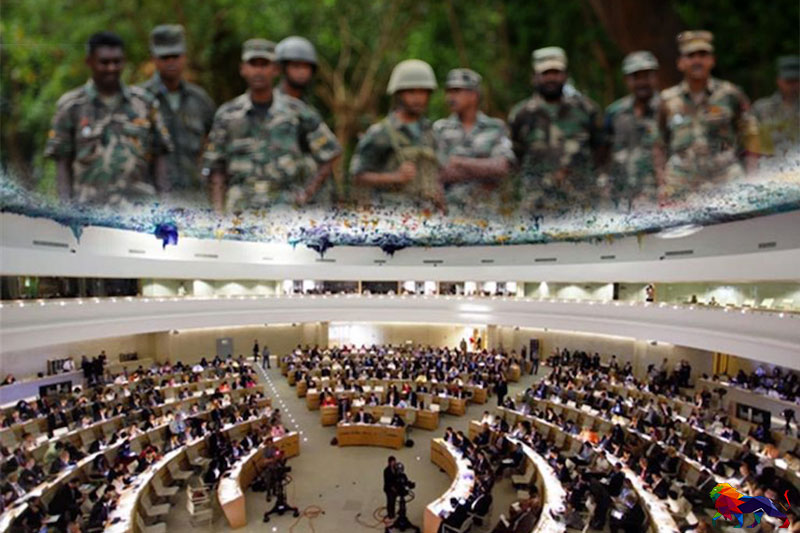
I have been telling the government in the last two years that the main criteria to attract FDI is to maintain the rule of law, respect for democracy and human rights. Those are the cardinal principles for foreign investment. When we were there, we introduced the 19th Amendment to the Constitution. Under 19A, all the institutions in the country were free and free to take decisions. We gave the opportunity to the Supreme Court, the Public Service Commission and all independent commissions to work independently and take decisions free of political influence. The Executive President did not have power over the legislature or the independent commissions. Executive President had power only to nominate members to independent commissions and the Constitutional Council had the power to reject the President’s nomination. For an example, under 19A, if the President recommended a person to the Supreme Court, Army Commander or the IGP, the council could say ‘we don’t accept your nomination and send another name’. Today, under 20A, the President’s nominee has to be accepted with no holds barred. All the institutions are under the executive and therefore, the rule of law is under question. So, investors will not come.  Then we have a UNHRC resolution against us on the dismal record. The European Parliament has passed a resolution to withdraw the GSP+ facility from Sri Lanka.  I don’t know what will happen at the March sessions of the UNHRC. Definitely, they will penalise us. There will be a penalty on Sri Lanka. The EU or the UNHRC will not pass resolutions to please us.

We are confident that our policy though non-aligned would keep close and cordial relations with the West and East and North and South. We ensure the strict adherence to the rule of law, human rights, fundamental rights, labour rights and to protect all democratic establishments in the country. We also uphold all international covenants, conventions, protocol and guidelines while treating all citizens of Sri Lanka as equal. There will be no discriminations against any community or group.
We also have highly qualified professionals like Dr. Harsha De Silva, Eran Wickremeratne and Kabir Hashim to handle the economy and investments under an SJB administration.

Q     You were one of the senior party stalwarts of the UNP before the formation of the SJB. I have no doubt that you all never expected the electoral setback and humiliation the grand old party was subjected to at the 2020 general election. What actually happened and who was responsible?

The main reason for the break up was the lack of internal democracy in the UNP. For a political party to go forward there must be internal democracy. Once when I went to India, I asked one of the senior politicians as to what had happened to the Congress Party – a super power of Indian politics.

He said there was no democracy in the Congress Party. All the political parties in India are massive and all the states are also very big. But for regional political parties there was no opportunity to produce national leaders. The Congress is dominated by Gandhis. All the regional leaders thought why they should back the Congress if they don’t have an opportunity to become national leaders. If and when there is internal democracy in a political party, then only regional leaders can become national leaders. All the regional parties in India have massive voter bases. They thought, if we don’t have a place in the Congress why should we support it to become the rulers of India and they backed away. That is what happened to the Congress party. The regional parties contested state elections under a different symbol and won without the help of the Congress and assembled to form alliances and grab power in the Central Government. That was how alliance politics started to dominate Indian politics. In the past, it was only the Indian Congress that ruled the roosts in Indian politics. Once, Deve Gowda of Janata Dal became the Prime Minister of India, but he lasted only ten months from June 1996 to April 1997. Now the status quo has been restored and BJP has become extremely powerful all over India.

The UNP must have internal democracy and no party can go forward without internal democracy. Those young leaders who aspire to become party leaders must be given the opportunity to meet their goals if the party is to survive.            .

Q     If a UNP-SJB amalgamation takes place as an alliance to confront the SLPP, what would be the position of the young and upcoming UNP leaders in the alliance who have the national leadership potentials, like Ruwan Wijewardene and Navin Dissanayaka?

The SJB is the most powerful political party in the opposition and a major political force right now across the country. So, we have the right to dominate domestic politics and we are capable of doing that. We are inviting all other political parties and politicians without naming them to join the SJB led by Sajith Premadasa. Under the SJB alliance, there are 11 political parties representing different ethnic groups and ideologies as constituent partners. There is not a single elected member of the UNP in Parliament.

During the uncertainty that dominated the UNP before the polls, I was also in a state of confusion. I summoned all the zonal leaders and candidates of the UNP in the Kandy District and consulted them as to what we should  do. In one voice they asked us to go ahead with Sajith and ensure the victory of the SJB. You must understand that political alliances are formed within three or six months before an election. Even in 2015 this was what happened. At the same time, we must develop and strengthen our individual political parties throughout.

When we went to the electorate in 2020, the only manthra was Sajith and no one else. When we went to the villages, they asked ‘Sir, which side are you? We said “We are with Sajith’. Delighted, they voted for Sajith and the SJB, notwithstanding the fact that the President was from a different political alliance. In rural areas, ‘Sajith’ was the magic word in the 2020 general election campaign  and you can see the massive popularity and respect he commands today not only in the periphery but in urban areas as well.

This must be because his late father, President Premadasa lived with the ordinary people during his entire political career. There was a conception among Sri Lankans that President Premadasa was the one and only President who had a soft spot always for the poorest of poor and the down trodden. He was the politician who did most for the poor in this country. His son cannot be an exception and Sajith has shown that he has the ability and concerns his father had, to serve the less privileged sections of the society. They have the confidence that Sajith would never let them down when he is given the opportunity.

The biggest advantage for Sajith is that he has the trust and the support of the International community. They treat him as the alternative leader of Sri Lanka. That is why the foreign diplomats and visiting leaders pay courtesy calls on him constantly. He also cuts a good figure in Parliament with his speeches and behaviour as an intelligent and respected political leader who upholds democratic, social and religious values and inter-communal harmony. He has the passion and the desire to work.
Ruwan, Navin and other young and upcoming leaders are welcome and accepted to the SJB with both hands if they are willing to do so.

I believe that Ruwan and Navin in particular have a place in national politics and serve the country blessed with the legacy of their ancestors.
Ruwan’s maternal and paternal grandfathers are national leaders. The late D.R.Wijewardene, the father of print media, and the father of the nation and first Prime Minister of independent Ceylon, D.S.Senanayake. Both fought for national independence and won.
Ruwan also comes from a family that continues to struggle vehemently to protect democracy and for the freedom of independent media for decades.

Imagine the fate of Sri Lanka if there was no accelerated Mahaweli Development Project, Navin’s father late Gamini Dissanayake gave to the nation as the Minister of Mahaweli Development under the J.R. Jayewardene regime that produces 40% of rice, many other commercial crops and 30% of hydro power of the national requirement today. It was he who pioneered to raise Sri Lanka’s cricket to the global level by taking the lead to obtain the membership of the International Cricket Council (ICC) and test status to Sri Lanka.
Therefore, these young leaders with unblemished track records in politics have a place in the SJB alliance if they wish so.

Q     You have served as the Minister of Higher Education and Highways under the Yahapalana regime. Current Highways Minister Johnston Fernando alleges you at every opportunity saying that you misused funds allocated for road development and for the Central Express Way (CEW) in particular and failed to meet development targets. Your comments?

Those are political canards. The COPE went through my ministry’s work and they found nothing to that effect. Johnston makes these utterances in bad faith and to achieve credit he does not deserve.
When the infamous and unconstitutional overthrow of the Yahapalana government took place in October 2018, the construction of 37 kilometres of the 41 kilometres in the Meerigama-Kurunegala stretch had already been completed.

After I was appointed as the Minister of Higher Education and Highways in 2015, the blueprint of the CEW was still on the drawing table. It was I who started the survey of the stretch, took over 20,000 plots of land, paid compensation to land owners and commenced construction in October 2016. I did not obtain foreign loans and selected 16 local contractors for the job after calling open tenders. The project was funded by the Treasury.
By the time of the regime change in 2020, the SLPP government had only 4 kilometres to complete of the Meerigama -Kurunegala section of the CEW but they took more than two years to construct this short distance of road but did not have the decency to tell the truth to the country. The plagiarism they have shown on this matter displays their inferior behaviour and political bankruptcy. The SLPP government opened the Meerigama-Kurunegala stretch of the CEW with much publicity and pompous ceremony last month but people of this country should know who and where the credit must go for this development project.

Q     Is Sajith the undisputed leader of the SJB and Presidential candidate in 2024?

Absolutely! He is the Presidential candidate of the SJB at the next Presidential election and all the constituent parties of the alliance led by the SJB will fully back him. As I told you earlier, ‘Sajith’ is the magic word in the rural areas in particular and that is why we demand an election for Pradeshiya Sabha, Provincial Councils or even a general election to test the water.

In a participatory democracy, it is a norm that an election is held once in two years that would reflect the public opinion. It will help the government to review its policies and take corrective measures and go for a policy change if and when the populace is unhappy on the performance of the government and the public opinion goes against it at the polls. In Sri Lanka, it is high time for the government to hold an election. I don’t think they will hold any election in the foreseeable future as the SLPP government and President Gotabaya Rajapaksa are extremely unpopular and detested by all.

Q     But India urges the Sri Lanka government to hold PC polls as early as possible?

Don’t worry about that. Take my word. When India gets the Trincomalee oil tanks, they will conveniently give up the hegemony on Sri Lanka.

Q     President Rajapaksa made an emotional appeal to the opposition for help to come out of the current apocalyptic scenario facing the country during the address to the nation he delivered at the opening of Parliament and on the Independence Day. Are you ready to extend a hand of friendship to the government?

Yes and no. The main opposition party, the SJB and opposition leader Sajith Premadasa is more than ready to assist the government in whatever way possible to help to liberate millions of our people from this sorry state of affairs. But the government must set the stage for us to do that because all the disasters are self-inflicted by the government except the COVID-19 pandemic. The huge tax cuts introduced to satisfy friends, ordering farmers to shift to organic fertiliser from chemical fertiliser overnight, food shortage, domestic gas cylinder explosions, skyrocketing food prices and scarcity of all the essential food commodities, sharp increase of cost of living and inflation, job losses, power outages, collapse of the rule of law and continuous violation of the fundamental rights and the weakening of democratic institutions and many other blunders and failures are a clear indication of Gotabaya Rajapaksa administration’s mismanagement, shortsightedness and inefficiency.

The opposition’s help must come as a team work. To do that the government must facilitate the process. When COVID-19 struck the nation in early 2020, we requested the government to pass the Disaster Management Bill and appoint the National Disaster Management Council headed by the President himself. If this highly influential national council was appointed, we could have addressed all the issues related to the pandemic successfully in a bipartisan approach. But the President is still to do that and appointed a task force led by Army commander. The pandemic continues devastating the country unchallenged, victimising thousands per day at the moment. Targeting opposition members with trumped up charges while discharging of government politicians and friends from all court cases, is a hindrance to offer any help to the government. Despite popular demand across the country for a presidential pardon, Ranjan Ramanayake is still in jail. He is not a criminal, thief, bribe taker, rapist or a murderer, but a representative of the common man. Under this extremely unhealthy and aggressive attitude, how can we  extend the hand of friendship to this government?

Posted in Uncategorized

Sri Lanka on brink of sovereign bond default, warn investors- FT.com

Investors are braced for Sri Lanka to default during the Covid-19 pandemic, saying they expect Asia’s top high-yield bond issuer to restructure its debt and call on the IMF for assistance as its financial crisis worsens.

The South Asian island was plunged into crisis after a cascade of rating downgrades following large tax cuts in 2019 and the loss of tourism during the pandemic, leaving it unable to tap global markets.

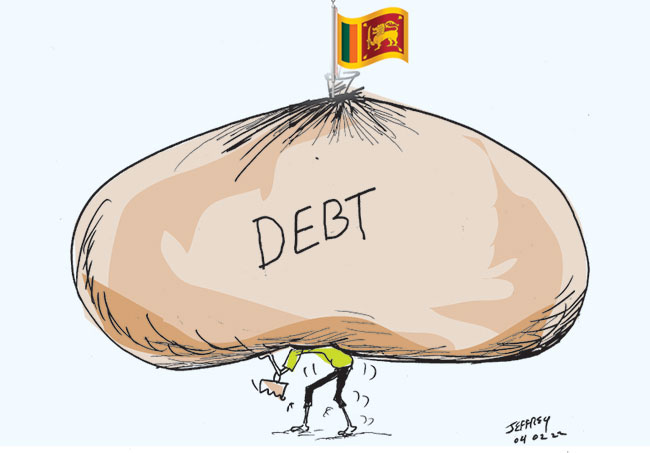
Sri Lanka owes $15bn in bonds, mostly dollar-denominated, of a total $45bn long-term debt, according to the World Bank. It needs to pay about $7bn this year in interest and debt repayments but its foreign reserves have dwindled to less than $3bn.

The government’s next big challenge is a $1bn bond repayment due in July. If it fails to pay, it would join countries including Suriname, Belize, Zambia, and Ecuador in defaulting on its debt following the pandemic.

“They are demonstrating an amazing willingness to pay,” said Richard House, head of emerging market debt at Allianz Global Investors. “But why they would want to, I’m a bit flabbergasted. They are bankrupt, pretty much.”

He added: “They are wasting precious FX reserves. It’s just delaying the inevitable.”

Sri Lanka’s finance minister, Basil Rajapaksa, told the Financial Times last month that the country was “trying all options” to avoid default. But its dollar-denominated bonds are trading at near half their face value, a level that implies a high probability investors will not be repaid in full.

“At these levels, a restructuring over the next 12 months should be the base-case scenario,” said Polina Kurdyavko, head of emerging market debt at BlueBay Asset Management, which holds some Sri Lankan bonds. “I find it difficult to see them muddling through this year.”

Sri Lanka first tapped bond markets more than a decade ago, taking advantage of western investors’ thirst for high-yielding assets as it sought to finance reconstruction following a civil war that ended in 2009.

It has since become an important player in global sovereign debt markets and has borrowed billions from countries including China and Japan. Sri Lanka has never defaulted and its successive governments have been known for a market-friendly approach.

President Gotabaya Rajapaksa’s government has said the country will survive the economic crisis by attracting more tourists and boosting exports, but many investors view this as unrealistic. It has also negotiated more than $1bn in relief from India and has asked China to restructure its debt.

The shortage of dollars has begun to inflict deep economic pain on the import-dependent nation. Cities including the commercial capital Colombo face regular electricity blackouts because of fuel shortages, while other essentials such as cement or milk powder are in short supply, resulting in double-digit domestic inflation.

“People don’t need to suffer like this,” said Roshan Rashid, the owner of a ceramics shop in Colombo. Prices of the tiles he buys have more than doubled after the government banned imports in an effort to save dollars.

Ahilan Kadirgamar, a sociologist at the University of Jaffna who works with rural co-operatives, said the economic crisis was “by far the worst kind we’ve been through since independence” in 1948.

He argued that the government needed to drastically reduce imports and prioritise distribution of food, medicine and other essentials. “Poverty is more visible now. People are finding it harder to cook one or two meals a day,” he said.

There are signs authorities are rethinking their approach. Rajapaksa told the FT that the government was “negotiating with everybody” including bondholders and was weighing an approach to the IMF.

Sri Lanka has previously entered 16 programmes with the IMF, but about half of those were not completed. Investors said the fund was likely to insist on a restructuring before providing assistance.

“If the IMF were to extend a programme, it would necessarily involve some level of restructuring,” said Daniel Alphonsus, a former adviser to Sri Lanka’s finance ministry under the previous government.

Manjuka Fernandopulle, an independent lawyer in Colombo who specialises in debt restructuring, said the “IMF is the only credible option”.

Argentina’s IMF deal offers a warning on emerging market debt But the presence of a wide range of creditors — particularly the heavy borrowing from China — could complicate attempts to restructure the debt.

In Zambia, where authorities are restructuring debts of about $15bn to secure an IMF loan, the process has been beset by accusations from bondholders that the government was favouring Chinese creditors.

Kurdyavko said: “It’s important to have all creditors on board. We want to avoid the dynamic where one group tries to push a certain angle to disadvantage the others.”

Despite the threat of default, some investors are contemplating whether now is the time to buy Sri Lanka bonds, as prices are so low. House said bondholders could end up receiving more than 50 cents on the dollar in a restructuring deal.

“It’s been a terrible credit for a long time, it’s now being priced as a terrible credit,” he said.

Source: FT .COM

Posted in Uncategorized

Gazette on payments from Non-Sri Lankans to Hotels, issued

The Monetary Board of the Central Bank of Sri Lanka recently issued Rules making it mandatory for hotel service providers to accept payments from persons resident outside Sri Lanka, only in foreign exchange.

These Rules are published in the Gazette Extraordinary No. 2263/41 dated 21 January 2022.

With the issuance of the Rules, hotel service providers registered with and licensed by the Sri Lanka Tourism Development Authority are required to;

– accept payments for services rendered to persons resident outside Sri Lanka only in foreign exchange.
– deposit such foreign currency into a Business Foreign Currency Account of the hotel service provider or sell to a licensed bank within three business days.
– credit payments into a Business Foreign Currency Account of the hotel service provider, in the event such person resident outside Sri Lanka makes payments using an Electronic Fund Transfer Card (Credit Card, Debit Card, Travel Card, etc.).

At the same time, hotel service providers may accept payments in Sri Lanka Rupees from persons resident outside Sri Lanka provided they submit original documentary evidence to prove that such Sri Lanka Rupees represent the foreign currency brought into Sri Lanka and converted through a licensed bank or an authorized money changer.

Posted in Uncategorized

China – SL FMs exchange wishes on 65th anniversary of diplomatic ties

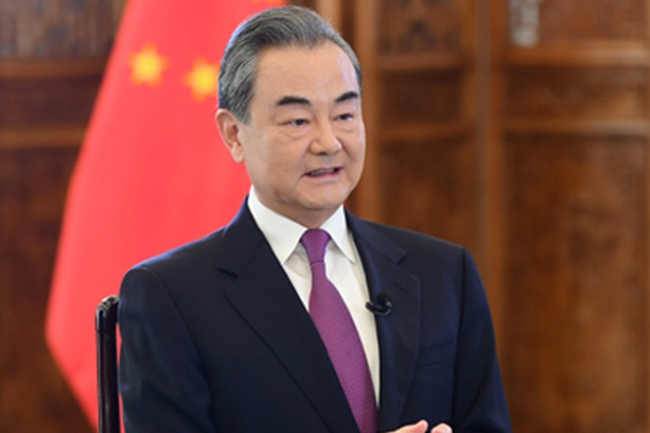
Chinese State Councilor and Foreign Minister Wang Yi and Sri Lankan Foreign Minister G.L. Peiris on Monday exchanged congratulatory messages on the 65th anniversary of the establishment of the two countries’ diplomatic relations.

Wang said in his message that China and Sri Lanka have always shown each other mutual understanding and support, setting a good example of friendly exchanges and mutually beneficial cooperation between countries of different sizes. The two countries have worked together to fight the COVID-19 pandemic in the spirit of mutual assistance since its outbreak, enhancing their traditional friendship. The two countries are now seeking further alignment of their development strategies and high-quality Belt and Road cooperation, so as to inject impetus to the post-pandemic economic recovery.

Wang said he paid a successful visit to Sri Lanka recently and jointly launched celebrations marking the 65th anniversary of the establishment of diplomatic ties between the two countries and the 70th anniversary of the signing of the Rubber-Rice Pact. Both sides agreed to carry forward the tradition of solidarity and mutual assistance, deepen China-Sri Lanka practical cooperation and expand shared interests of the two countries.

Wang said he is ready to work with Peiris to maintain close communication and coordination, and move forward the strategic cooperative partnership featuring sincere mutual assistance and enduring friendship.

In his message, Peiris mentioned that the 65th anniversary of the establishment of diplomatic ties between Sri Lanka and China coincides with the 70th anniversary of the signing of the Rubber-Rice Pact.

Over the years, he said, the enduring friendship and cooperation between Sri Lanka and China have flourished, bringing common benefits to their partnership in various fields, and the close exchanges between the leaders of the two countries have witnessed the enduring development of bilateral relations.

Despite difficulties brought by the pandemic, Wang visited Sri Lanka during his first overseas trip in 2022, which fully demonstrates the priority both sides give to Sri Lanka-China relations, Peiris said.

Peiris said he believes that Sri Lanka and China will continue to strengthen cooperation in economy, poverty reduction, international and regional issues, people-to-people exchanges and vaccine cooperation, among others.

He also looks forward to working closely with Wang to further deepen and expand the traditional friendship and the strategic cooperative partnership between Sri Lanka and China, delivering benefits to the two peoples together.

Sri Lanka: Grave Abuses Under Discredited Law

The Sri Lankan government is using the discredited Prevention of Terrorism Act (PTA) to commit prolonged arbitrary detention and torture, Human Rights Watch said in a report released today. The European Union, other trading partners, and donors, should press for time-bound action to repeal the abusive law and reject the government’s proposed amendments, which would not end widespread abuses.

The 59-page report, “In a Legal Black Hole’: Sri Lanka’s Failure to Reform the Prevention of Terrorism Act,” documents the Gotabaya Rajapaksa administration’s misuse of the PTA against the minority Tamil and Muslim communities, and to suppress civil society groups. The administration rejected pledges by the previous government to repeal the law after it was readmitted to the EU’s Generalized Scheme of Preferences plus (GSP+), which grants Sri Lanka special tariff-free access to EU markets.

“Sri Lankan authorities continue to use the Prevention of Terrorism Act to sweep away targeted people’s basic rights, reneging on past government promises to repeal the law,” said Meenakshi Ganguly, South Asia director at Human Rights Watch. “Proposed government changes to the PTA appear aimed to assuage the concerns of the EU and other governments, without ending abuses.”

This report is based on Human Rights Watch research on the Prevention of Terrorism Act carried out since 2018, interviews conducted between January and December 2021, and a review of newly available court documents. Human Rights Watch wrote to the attorney general of Sri Lanka and to the Human Rights Commission of Sri Lanka, and received a response from the commission which is included in the report.

The PTA allows the authorities to arrest people without warrants for unspecified “unlawful activities,” and to detain suspects for up to 18 months without producing them before a court. This denies suspects’ basic due process rights and removes safeguards that would help protect them from abuse, effectively creating a legal black hole, Human Rights Watch said. Under the government’s proposed amendments, published on January 27, 2022, this period of detention without judicial oversight would be reduced to 12 months.

Between 1983 and 2009, during the civil war between the government and the separatist Liberation Tigers of Tamil Eelam (LTTE), the authorities used the law primarily against suspected members or supporters of the LTTE or other armed groups. Since the deadly 2019 Easter Sunday bombings by a little-known Islamist militant group that targeted churches and hotels, the authorities have used the law to arbitrarily detain hundreds of Muslims. In the past three years the authorities have arrested over 600 people under the PTA, according to Human Rights Commission of Sri Lanka data.

Many suspects have been held for years awaiting trial. Statistics indicate that most are tortured in custody, and convictions frequently rely on confessions obtained under torture. The government’s proposed amendments would leave provisions that have led to widespread torture intact, including on the admissibility of confessions to the police, and the authorities’ power to detain and interrogate suspects at any place of their choosing.

The proposed amendments would not, for instance, have prevented abuses against Ahnaf Jazeem, a 26-year-old Muslim poet, who was arrested under the act in May 2020 and accused of promoting “religious extremism” in a 2017 book of Tamil verse. Jazeem testified in a July 2021 Supreme Court affidavit that police interrogators threatened “to hang him from the roof and beat him.”

After 18 months in PTA custody, when he was released on bail, Jazeem told journalists that the police denied him proper food and the use of a toilet, kept him in handcuffs, and initially refused him legal counsel. “They forced me during this time to deliver a confession,” he said. “They threatened me saying that they would keep me in prison for 15 or 20 years.”

Hejaaz Hizbullah, a prominent Muslim lawyer, was arrested under the act in April 2020, accused of aiding the Easter Sunday suicide bombers. While the initial allegations were dropped, the police made new allegations under the act of causing “communal disharmony” to extend his custody. Students alleged that police coerced them to testify that Hizbullah incited violence at a school. He remained in custody at the time of writing.

The Rajapaksa administration has used the PTA to detain or intimidate the families of victims of past abuses, human rights activists and lawyers, and journalists. “When we talk to the families of the disappeared, they say they can be arrested at any time,” said an activist working with the Tamil community. “Police are arresting people for posting pictures on Facebook. They can arrest you for anything.”

The EU had removed Sri Lanka from GSP+ in 2010 amid rights violations at the end of the civil war, but readmitted the country in 2017 after the then-government renewed commitments to adopt and implement 27 human rights and other international conventions, and in particular to repeal the PTA. This followed a consensus resolution of the United Nations Human Rights Council in 2015, in which Sri Lanka agreed to ensure accountability and reparations for war crimes, to investigate enforced disappearances, and to repeal this law. Most of these pledges have yet to be fulfilled.

In June 2021, the European Parliament adopted a resolution calling on the European Commission to “push for advancement on Sri Lanka’s human rights obligations and demand the repeal or replacement of the PTA” when assessing Sri Lanka’s eligibility for GSP+ status. A review is currently underway, and is expected to be completed later this year. The government’s proposed amendments to the PTA were published two weeks ahead of a meeting with the EU to examine Sri Lanka’s compliance with obligations under GSP+. The Rajapaksa government has since early 2021 pledged to review provisions of the act. Yet, the government introduced an ordinance in 2021 that would make the law even more abusive. Proposed changes to the Code of Criminal Procedure would also further undermine human rights protections. Before enacting any counterterrorism law, the Sri Lankan government should conduct meaningful and inclusive consultations with civil society groups and adopt the “necessary prerequisites” set out in December 2021 by seven United Nations human rights experts for meeting Sri Lanka’s international human rights obligations, Human Rights Watch said. The UN experts noted that the PTA contradicts Sri Lanka’s obligations under several international human rights conventions. Sri Lanka’s participation in GSP+ includes a commitment to implement these conventions. The proposed amendments do not bring the PTA into compliance with international law under any of the benchmarks set out by the UN experts. “The Rajapaksa administration’s abusive actions will not be addressed by its misleading proposal to amend the PTA,” Ganguly said. “The EU, United States, and United Kingdom should hold the Sri Lankan government to its international obligations and push for meaningful action to protect human rights.”

President orders speedy release of essentials held up at Customs

Following multiple direct and public requests made by the Essential Food Commodities Importers’ and Traders’ Association (EFCITA) from the Government, President Gotabaya Ra,japaksa has instructed relevant officials to take immediate steps to release containers containing essential items held up at Sri Lanka Customs, the President’s Media Division (PMD) announced yesterday.

President Rajapaksa issued these instructions with the aim of preventing any shortages in the market, at a special discussion held at the Presidential Secretariat yesterday with regard to the essential goods that are presently in the custody of the Customs, the press release said.

The release added that President Rajapaksa also appointed a committee headed by Finance Minister Basil Rajapaksa to ensure that there is no shortage of essential commodities, including food, during the upcoming festive season. It also said that President Rajapaksa stressed the importance of providing the people with the opportunity to purchase essential items including food without any shortage and instructed the officials to make plans for this immediately.

In view of the upcoming festive season, the importers of essential food commodities had urgently requested the Government to release a certain amount of dollars every month so as to prevent a shortage of essential commodities.

However, when contacted by The Morning yesterday prior to the PMD release, Trade Ministry Secretary Bhadranie Jayawardhana said that the Trade Ministry could not intervene in releasing $ 175-200 million, as requested by the EFCITA. Claiming that it is the importers’ duty to make the relevant imports, she said that the Trade Ministry would only intervene in fair issues.

“All the importers don’t have this issue. Some importers make the imports using their own US dollars (USD). They open the letters of credit through commercial banks. When the imports are being made in that way, no issue arises. Also, we cannot intervene in releasing the amount of USD that they have requested. Especially, when the rice imports were allowed, the importers agreed to import rice by spending their own USD. That is their duty,” she added.

Jayawardhana further said that if the importers are facing an issue on acceptable grounds, then the relevant importer should reach the Trade Ministry through the EFCITA. She added that when such a request is received, the Trade Ministry would write to the Central Bank of Sri Lanka (CBSL), after which the relevant arrangements would be made to release the USD.

She explained: “There are no control prices now. Therefore, the importers can import goods and sell them in the open market. That is their business. If they have US dollars, they can spend them. However, if there is any issue on acceptable grounds, the Trade Ministry will intervene. The particular importer should reach us through their association and then we will write to the CBSL.”

At yesterday’s meeting, President Rajapaksa had stressed the need to allow the importation of selected essential commodities and not to allow over-importing and stockpiling of goods with malicious intent, and had instructed to prepare a new mechanism to expedite the release of essential commodities, including food, to the market, and directed the new committee to regulate and oversee the matter.

Finance Minister Basil Rajapaksa, Trade Minister Dr. Bandula Gunawardana, Minister of Ports and Shipping Rohitha Abeygunawardena, Central Bank of Sri Lanka Governor Ajith Nivard Cabraal, State Minister of Co-operative Services, Marketing Development, and Consumer Protection Lasantha Alagiyawanna, Secretary to the President Gamini Senarath, Secretary to the Ministry of Finance S.R. Attygalle, and senior officials of the Ministry of Finance and Sri Lanka Customs were also present at the meeting with the President.

Posted in Uncategorized