The Rajapaksa family’s tightening grip on Sri Lanka

In 2021, the COVID-19 pandemic provided additional cover for a regressive turn in Sri Lankan politics. The consequences of economic and political crisis became starkly evident shortly before the year ended as the hold of the Rajapaksa family on the Sri Lankan state tightened.

Sri Lanka’s former leader Mahinda Rajapaksa and his brother, and Sri Lanka’s President Gotabaya Rajapaksa gesture during the swearing in ceremony at Kelaniya Buddhist temple, Colombo, Sri Lanka, 9 August 2020. (PHOTO: REUTERS/Dinuka Liyanawatte)
From early 2021, the dead came to haunt the Rajapaksa regime, as the government — against all medical and scientific advice — continued to enforce the cremation of deceased Muslims. This drew major backlash from local civil society groups, the medical community and some in the international community. When the policy was eventually changed, it was not due to any government change of heart, but more likely intended to avert harsh words at the UN Human Rights Council’s March deliberations in Geneva, when a country-specific resolution on Sri Lanka was delivered.

While alleged war criminals continue to enjoy impunity, the regime clamped down on freedom of expression, harassing and intimidating journalists and expanding the use of draconian laws, including the Prevention of Terrorism Act (PTA). Though such moves were noticed in international fora, the government used the pandemic as an excuse to silence dissenting voices and clamp down on protests. These included mothers in the North seeking justice for lost children, youth protesting the privatisation and militarisation of higher education (the KNDU Bill) and farmers protesting overnight import bans on chemical fertilisers.

Strong words at the UN Human Rights Council in March and in the High Commissioner’s September oral report on Sri Lanka added pressure on the government to address lingering injustices with seriousness and urgency. Strong objections were raised to Sri Lanka’s poor human rights record during debates related to extending the EU GSP+ tariff scheme at the European Parliament in June. Sri Lanka’s Foreign Minister in Geneva and permanent representative to the United Nations in New York both claimed an international conspiracy in response.

There were a few glimmers of hope for the victims of war crimes in practice. The administration of US President Joe Biden imposed travel bans on some of the Sri Lankan military’s top brass. The Hague-based people’s tribunal indicted the Sri Lankan government after probing the 2009 killing of Lasantha Wickramatunge — a vocal journalist who reported on the infamous 2006 MIG-deal implicating Sri Lankan President Nandasena Gotabaya Rajapaksa, who was then defence secretary.

The government played the victim in the domestic arena. The newly-formed Commission on Political Victimisation was mandated to investigate the ‘victimisation’ of public servants and state officials working in corporations, the armed forces and police. The Commission’s lofty aims were not met, and instead it became a means to ensure the ruling Rajapaksa family and their friends continue to avoid facing justice. Those who lodged legal complaints against the regime’s supporters were ‘persuaded’ to withdraw them.

Further militarisation of the state was evident with the appointment of more military personnel to civil posts. Partisans, military elites and Buddhist monks were richly rewarded for supporting the regime, while Rajapaksa ensured an intensified ‘Buddhisation’ of state institutions. Prominent Buddhist monks were given high-ranking positions on the Human Rights Commission and one was appointed as Vice Chancellor of Colombo University. The Bodu Bala Sena (Buddhist Task Force) leader Galagoda Aththe Gnanasara — a convicted criminal who has incited violence against the minority Muslim community — was ironically appointed to the President’s new pet political project, ‘One country, One law’.

The Rajapaksa regime’s economic mismanagement of state resources through continued rewards to capitalist cronies and family members further reinforced Colombo’s economic decline. Credit agency Fitch Ratings predicted impending economic crisis after downgrading Sri Lanka’s economy to CC status in December 2021. In the last quarter of 2021, Sri Lanka’s economy contracted by 1.5 per cent and foreign currency reserves shrank from US$7 billion in 2019 to US$1.5 billion in December. Subsequently, government import restrictions led to widespread food and fertiliser shortages.

Further misery was added to households battling soaring inflation by a series of gas cylinder explosions due to poor quality gas imports. Colombo also fell out of grace with the IMF, which offered COVID-19 relief packages to most countries other than Sri Lanka, citing the government’s unwillingness to restructure its ailing economy. Rapid passage of the Port City Bill concerned some citizens and the media, who noted that the bill mainly benefits close friends and relatives of the Rajapaksas — while reinforcing close ties with Chinese state companies.

While Fitch downgraded Sri Lanka’s economy to CC, disheartened citizens downgraded the President’s status from the ‘Terminator’ to ‘Nandasena’, his first name. This symbolic political move was an attempt to distinguish between the decorated war-winning defence secretary — often identified by his second name, Gotabaya, or pet name ‘Terminator’ — from the President entrusted with the responsibility of looking after the welfare of all.

It is hard to imagine what positive political and economic developments can reasonably be expected in Sri Lanka in 2022. The pandemic means that global economic growth is likely to be sluggish or even negative, and Sri Lanka’s political elite seem intent on worsening the domestic economic crisis. Perhaps Prime Minister Percy Mahinda Rajapaksa’s spiritual visit to India at the end of the year — as well as the offerings he made to Indian deities — will miraculously cure Sri Lanka’s ills. The US$500 million in emergency loans requested by Colombo from India that may materialise in 2022 more likely will.
Posted in Uncategorized

Vatican’s Attention Drawn to Delay in Justice

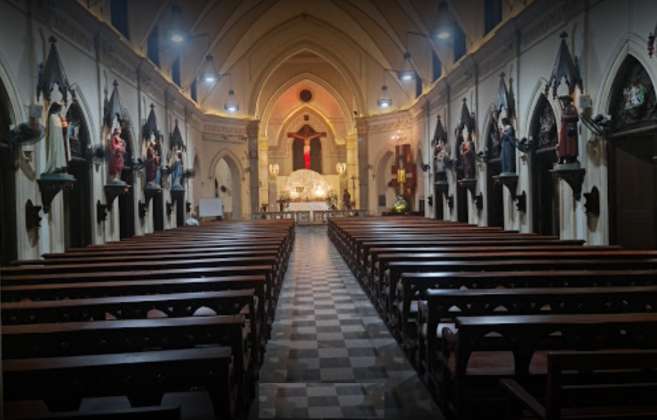
Special attention of His Holiness, the Pope and the Vatican City State administration has been drawn to the delay in justice for the Sri Lankan Catholics, following information provided on the local investigation into the 2019 Easter Sunday terror attack and the finding of a hand grenade at the All Saints’ Church in Borella recently, reliable sources revealed.

An official at Catholic Church said wide support is being provided by the Vatican City State for a separate independent investigation into the Easter Sunday massacre and related incidents. Several Catholic priests and laymen are currently communicating with the Vatican City State with regard to the matter, he added.

Several churches and hotels were attacked on Easter Sunday in 2019, during the special Easter mass. Pope Francis condemned the terror attack, saying that it was a barbaric action. Pope Francis said that he was deeply saddened and always stayed in close contact with Sri Lankan Catholics who were in pain and agony due to the attack.

Meanwhile, Colombo Archbishop Malcolm Cardinal Ranjith recently alleged the authorities are staging a drama with regard to the Police investigations on finding a hand grenade in All Saints’ Church, Borella.

He stressed that the fight against the Government will be carried out until the truth is discovered about those incidents and he is ready to obtain support from the United Nations and all the powerful nations in the world for that.

NIA to probe arrest of Lankan woman with fake passport in Chennai

The Indian National Investigation Agency (NIA) has taken over investigation of the case involving the arrest of a Sri Lankan woman with a fake Indian passport, in Chennai.

The officers are also looking into four others who have alleged ties with LTTE and possible funding to expand the activities of Tamil Tigers. The five suspects were identified as Letchumanan Mary Franciska, Kenniston Fernando, K Baskaran, Johnson Samuel and L Sellamuthu, the New Indian Express reported.

Letchumanan Mary Franciska was arrested in Chennai airport in October, 2021.

According to the NIA FIR, the case is related to creating several Indian Passports by submitting forged documents and other Indian identity documents. The suspects also used those fake documents to withdraw money from Mumbai Fort branch of Indian Overseas Bank, and allegedly used them to further activities of Liberation Tigers of Tamil Eelam (LTTE), a proscribed terrorist organisation.

Apart from a section of UAPA, the NIA has slapped the suspects with the Passport and Foreigners Amendment act.

Posted in Uncategorized

We engage with US about sanction on Sri Lanka – The UK

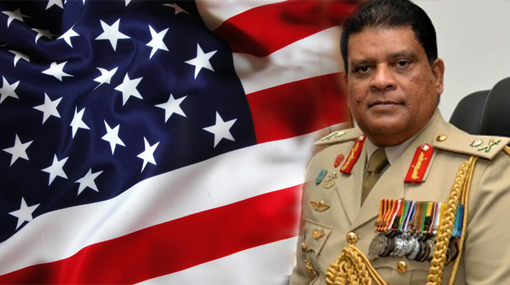
What evidence does UK government need to sanction Sri Lankan Chief of Defence staff Shavendra Silva, who is credibility accused of involvement in mass atrocity crimes including extrajudicial executions and disappearances? Siobhain McDonagh MP raised this question in the UK parliament.

What more evidence foreign secretary needs to sanction against Silva, to follow the United States government in those sanctions for war crimes, she further asked.

We regularly engage with the US and other partners on issues relating to Sri Lanka, Amanda Milling, Minister of State (Foreign, Commonwealth and Development Office), said in her reply to McDonagh.

The UK government keeps all evidence and potential designations under the UK Global Human Rights sanctions regime under close review, guided by the objectives of the sanctions regime. We would not normally speculate about future sanctions targets, as to do so could reduce their impact, she further added.

UN calls for broad consultations in Sri Lanka to identify gaps

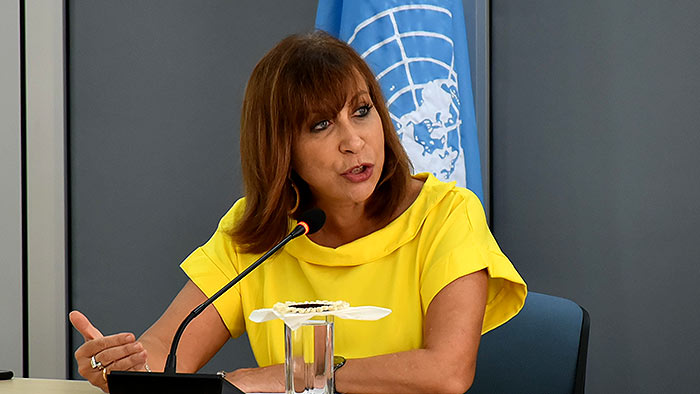
UN Resident Coordinator in Sri Lanka, Hanaa Singer-Hamdy tweeted saying as the Government continues efforts on legislative reform it is important that local mechanisms aim for international standards and meet certain benchmarks.

“Changes in legislation, go alongside behavior change by law enforcement. Broad consultations critical to identify gaps & solutions – UN stands ready to support,” Hanaa Singer-Hamdy tweeted.

Her tweet came after Foreign Minister Professor G.L. Peiris briefed the diplomatic community based in Colombo ahead of the upcoming UN Human Rights Council session in Geneva, during which the human rights situation in Sri Lanka will be discussed.

The objective of the briefing was to share information on progress related to human rights and reconciliation as part of the continued engagement ahead of the upcoming 49th Session of the Human Rights Council in Geneva, which will commence in the last week of February.

The Minister recalled that at the September 2021 Session of the Human Rights Council he reiterated Sri Lanka’s commitment to the promotion and protection of Human Rights and to remaining engaged with the United Nations including the Human Rights Council. In this context the Minister referred to the constructive engagement with the international community in a spirit of cooperation and dialogue.

Posted in Uncategorized

Sri Lanka ‘trying all options’ to avoid default – Basil

Sri Lanka is negotiating debt relief with international bondholders and is weighing an approach to the IMF, as the country struggles with a foreign reserve crisis that has left it close to default, the Financial Times reported.

Basil Rajapaksa, finance minister, told the Financial Times in an interview that the government was “negotiating with everybody” and “trying all our options” to avoid default and alleviate the economic crisis.

“We have [international sovereign bonds] which we have to repay back, so we are negotiating with them. Then we have creditors and we have to service their debt, so whether we can have an adjustment or some type of thing,” he said.

Rajapaksa added that the government would “think about a programme with the IMF . . . All those discussions are going as well.”

Sri Lanka has almost $7bn in debt payments due this year but less than $3bn of foreign reserves.

Some Sri Lankan officials have insisted that the country can avoid this fate by boosting foreign currency reserves through tourism and exports while securing additional assistance from China and India, two of its largest benefactors. The central bank governor this week told CNBC that “we don’t need relief” from the IMF.

Minister Rajapaksa insisted the government could manage but was preparing for contingencies. “I know it’s very difficult because we have to pay this year $6.9bn and, additional to that, we have to find money for medicine, raw material, fuel, all these things,” he said.

Asked if he was negotiating a restructuring with bondholders, Rajapaksa replied, “something like that”.

“Obviously you can understand what we want and you can understand what the bondholders would like to have,” he was quoted as saying by the Financial Times.

Posted in Uncategorized

Amendment of PTA: Govt ready with new legislation

Ahead of the UNHRC (United Nations Human Rights Council) session in March, the government has worked a piece of legislation amending the Prevention of Terrorism Act.

The new bill titled ‘Prevention of Terrorism (Temporary Provisions) (Amendment) Bill’ has been announced in the gazette notification ahead of its presentation in Parliament for debate and enactment later.

The UNHRC resolution 46/1 requests the Sri Lankan government to review the Prevention of Terrorism Act, and to ensure that any legislation on combating terrorism complies fully with the State’s international human rights and humanitarian law obligations. Sri Lanka has continuously come under pressure from the section of the international community that supported this resolution to take action in this regard. Besides, European Parliament, in its resolution, adopted the same, calls upon the same.

The UN High Commissioner for Human Rights is expected to make an update on Sri Lanka’s progress on the implementation of his resolution during the March session.

According to the provisions of the bill, the detention of any person has to be communicated to the Human Rights Commission of Sri Lanka in terms of section 28 of the Human Rights Commission of Sri Lanka Act, No. 21 of 1996. The persons authorised by the Human Rights Commission should be allowed to visit the place of detention.

It envisages that every Magistrate who has received a certified copy of a detention Order is duty bound to visit the place of detention at least once in every month during the period to ensure that the suspect is protected to the extent provided for in the Convention Against Torture and other Cruel, Inhumane or degrading Treatment or Punishment Act, No.22 of 1994.

A magistrate who visits such a place personally sees the suspect, and look into his well-being, welfare and conditions under which he is kept at such place of detention. He should record his observations and any complaint the suspect may make.

If a suspect has been subjected to torture, the magistrate concerned should direct him to be produced before a Judicial Medical Officer.

The Prevention of Terrorism Act, commonly known as PTA, was introduced in 1979. It was invoked mainly during the wartime to deal with the LTTE suspects.

Sri Lankan farmers reject govt compensation, paddy price

Sri Lankan farmers have rejected a compensation offer and guaranteed purchase price for paddy for being inadequate and discriminatory.

“The farming community is not ready to accept the guaranteed price of 75 rupees [37 US cents] per kilo as it was not sufficient to cover the production costs of farmers,” said Namal Karunaratne, convener of the All Ceylon Farmers Federation.

He also criticized the decision to pay compensation to farmers who cultivated paddy only using organic fertilizer. “Compensation for crop losses should be paid to all farmers, whether it is paddy, vegetables or tea plantations. The government should pay more than 100,000 rupees per acre,” Karunaratne demanded.

The island nation’s farmers have been in crisis since the government banned chemical fertilizers and agrochemical imports in April 2021 to make the agriculture sector 100 percent organic.

The government decided to revoke the ban in November, allowing the private sector to import after a serious shortage of fertilizers across the nation and protests by farmers’ organizations and opposition parties.

Some farmers gave up cultivation during the season while others incurred huge debts as the crops failed due to a shortage of fertilizers.

Now the government has decided to pay compensation to all farmers who cultivated paddy during the season using organic fertilizer.

Minister of Agriculture Mahindananda Aluthgamage said the cabinet had approved 40,000 million rupees as compensation meant for paddy farmers who used organic fertilizers.

Tea plantation workers and vegetable growers affected by crop damage are now demanding that the government compensate them as well for crop damages.

Rights activist Nalin Suresh Hewawadu alleged the ban on chemical fertilizer imports was initiated to tide over the foreign currency reserves crisis and not for the benefit of farmers.

Turkish Foreign Minister arrives in Sri Lanka

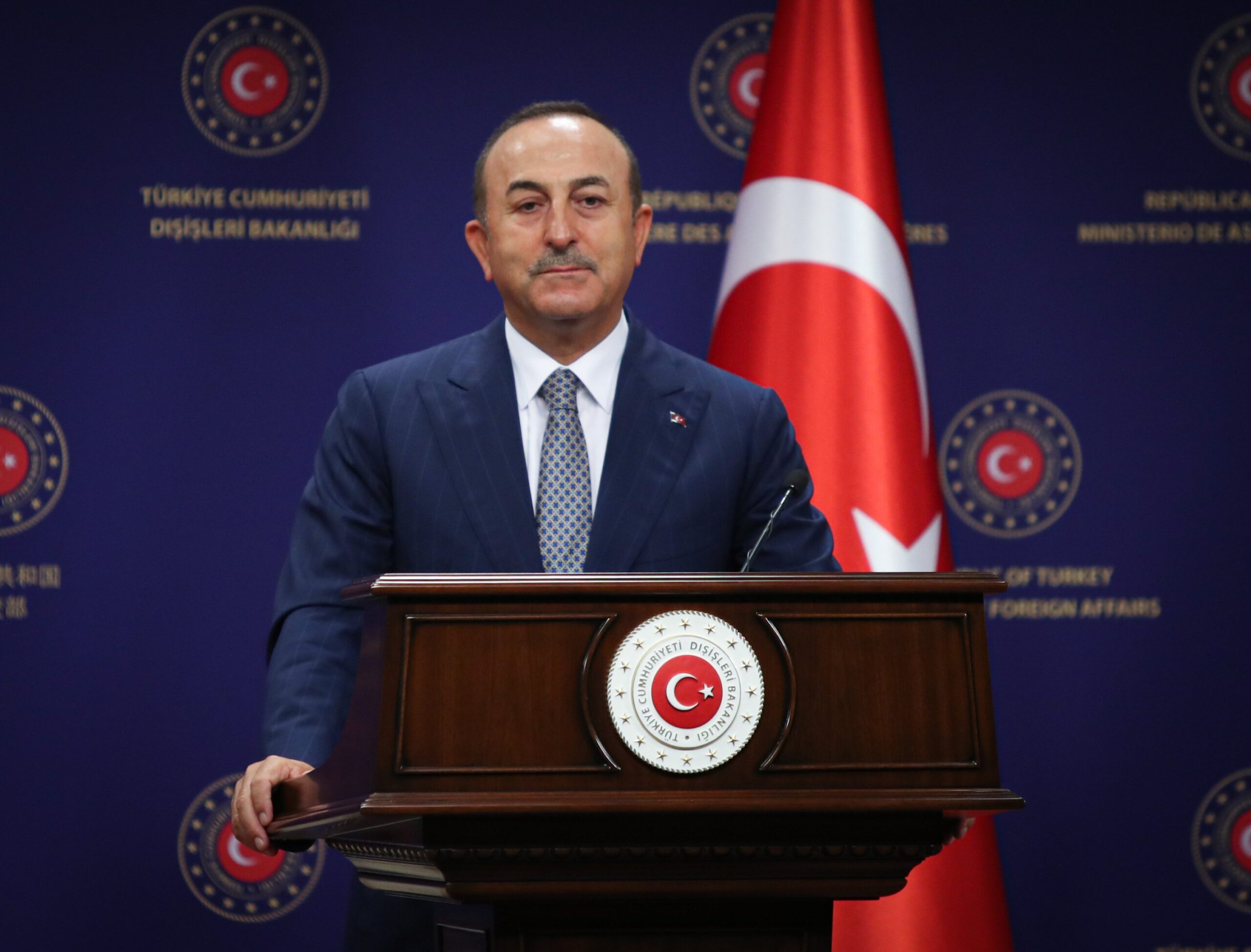
Mevlüt Çavuşoğlu, Minister of Foreign Affairs of the Republic of Turkey has arrived in Sri Lanka on a one-day official visit.

The Turkish Foreign Minister, accompanied by a 13-member delegation arrived at the Katunayake Bandaranaike International Airport on a special flight from Turkey.

State Minister of Regional Cooperation Tharaka Balasuriya and the Turkish Ambassador to Sri Lanka welcomed the delegation at the BIA.

The Turkish Foreign Minister and the delegation are scheduled to depart Sri Lanka at 3.15 pm today.

“Mevlüt Çavuşoğlu, Minister of Foreign Affairs of the Republic of Türkiye, will pay official visits to the Democratic Socialist Republic of Sri Lanka and to the Republic of Maldives on 28-30 January 2022,” the Turkish Foreign Ministry said.

“All aspects of bilateral relations as well as current regional and international issues will be discussed at the meetings to be held during both visits,” the Ministry added.

Posted in Uncategorized

SL initiates economic strategy with India

Sri Lanka has initiated a country strategy for India with an eye on integrating its ‘fragile’ economy with the Indian economy with focus on eight sectors to boost fortunes, The Economic Times reports after an interview with the Ambassador of Sri Lanka to India, Milinda Moragoda.

The Gotabaya Rajapaksa-led Government has identified energy, refineries, electricity grid, ports, real estate, tourism and information and communications technology for attracting investments from India, Moragoda has stated.

“India is the biggest economy in the region and Lanka wants to benefit from the Indian growth story,” he said. “Lanka can be a springboard for the Indian investors in the region. Our idea is to integrate our economy into the Indian economy for a win-win situation.” he mentioned.

The article reads as follows;

The Trincomalee oil firm project is one of the concrete initiative that could lead to integration with the Indian energy sector, Moragoda said. Lanka also has requirement for oil refineries and look forward to Indian refiners participation in that sector. Cross-border electricity grid is another area where Lanka is seeking to integrate into the Indian grid, given its limited requirements compared to India. “Few of India’s other neighbors have benefitted from this model,” the envoy said.

Tourism sector is the lowest hanging fruit and Indian tourists are biggest in number and contributing to Lankan economy’s recovery after the pandemic, he said. ITC is setting up its biggest luxury hotel abroad in Colombo. “But it is not just the high-end tourism, Lanka has provision for every type of tourists. We are inviting Indian investments in the tourism sector like real estate and port sectors,” said Moragoda who in the past has served as Lanka’s tourism minister.

The information technology sector is yet another sector which provides opportunity for a win-win situation, he noted. The goal is to facilitate digital connectivity between Sri Lanka and India. It would also help increase sea and air connectivity between the neighbors. The strategy document made available to ET calls for increasing Indian investments and facilitate ongoing large-scale economic development and investment-driven projects in Lanka. It also calls for increasing exports from Sri Lanka and expand Sri Lanka’s market share in India. Lankan textile sector is also keen for developing its partnership with Indian players.

Colombo also plans to expand collaboration in the fields of strategic cooperation, defence and Indian Ocean security between Sri Lanka and India, according to the country strategy document. This would include expanding bilateral joint military exercises, study tours, and increased high-level military exchanges. The goal is also to secure relevant training berths offered by India’s defence ministry and establish and maintain contacts with India’s paramilitary and police forces, with a view to securing additional training opportunities for Sri Lankan forces.