India Marks 77th Republic Day with Celebrations in Sri Lanka

The High Commission of India in Colombo celebrated India’s 77th Republic Day on January 26, 2026, marking the anniversary of the day the Indian Constitution came into effect in 1950.

High Commissioner Santosh Jha hoisted the national flag at India House, inspected a Guard of Honour, and read excerpts from the President of India’s Republic Day address.

The celebration featured patriotic music by the Sri Lanka Navy Band and cultural performances by the Swami Vivekananda Cultural Centre, showcasing India’s diverse heritage. This year also marks the 150th anniversary of Vande Mataram, India’s national song, which was commemorated through musical tributes.

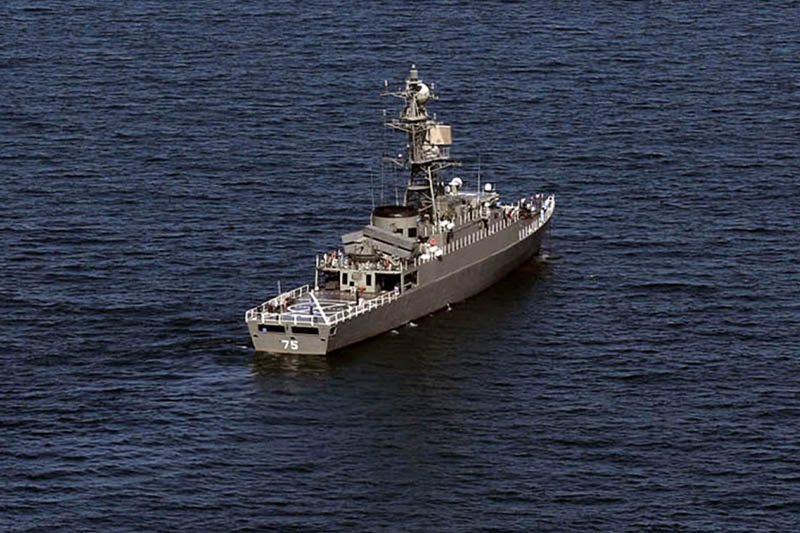
Earlier in the day, the High Commissioner and officials paid tribute at the IPKF Memorial in honour of fallen Indian peacekeepers. In the lead-up to Republic Day, a concert titled “Timeless Bollywood Melodies: Anuradha Paudwal Live in Sri Lanka” was held on January 23. Additionally, Indian Coast Guard ships Varaha and Atulya are visiting Colombo and Galle from January 24 to 27.

A ceremonial reception is scheduled for the evening at India House, with dignitaries from across Sri Lanka expected to attend. The Republic Day was also observed by Indian Consulates in Jaffna, Hambantota, and Kandy through special events.

CID Summons Namal Rajapaksa: Shiranthi and Ranil Also Under Investigation

Member of Parliament Namal Rajapaksa was summoned to the Criminal Investigation Department (CID) today to provide a statement regarding ongoing investigations into “Kehelbaddara Padme,” a member of an organized crime syndicate.

However, Police confirmed that Rajapaksa has requested a one-week extension to appear, as he is currently on an official trip to India.

In a separate development, Shiranthi Rajapaksa, wife of former President Mahinda Rajapaksa, has been summoned to the Police Financial Crimes Investigation Division (FCID) tomorrow.

She is expected to be questioned regarding alleged financial irregularities involving the “Siriliya” account, which was operated during Former President Mahinda Rajapaksa’s tenure.

Meanwhile, the case against former President Ranil Wickremesinghe is scheduled to be called again on the 28th of January.

The former President, who is currently out on bail, faces allegations of misappropriating Rs.16.6 million in public funds for a private foreign trip.

Black January and the unfinished fight for media justice

January holds a dark significance for Sri Lanka’s media community. Known as Black January, it is a month that painfully reminds journalists and media workers of a troubled history marked by killing, enforced disappearances, abductions and attacks on media institutions.

Disturbingly, a large number of these grave violations against journalists have taken place during January. Every year, Black January is commemorated to honour fallen journalists and to demand justice for crimes committed against the media. This year was no exception. The Free Media Movement (FMM) together with the Free Media Movement Journalists’ Trade Union, recently organised the Black January commemoration at the Sri Lanka Press Institute auditorium under the theme, “January is Still Black: The Journey Towards Justice.”

Freedom of expression

This event served as a memorial and a call to action. It highlighted the continuing struggle for freedom of expression, accountability and justice for media professionals who paid the ultimate price for speaking the truth.

The commemoration reaffirmed that despite the passage of time, the wounds of Black January – remain unhealed, until truth, justice and media freedom are fully secured in Sri Lanka.

The event featured Prof. Savithri Gunasekera, journalists, Wijayananda Jayaweera, Sunil Jayasekara, Hana Ibrahim, Lasantha de Silva and R. Ramkumar who shared their opinions on media freedom and justice.

The discussion was coordinated by senior journalist, Amal Jayasinghe.

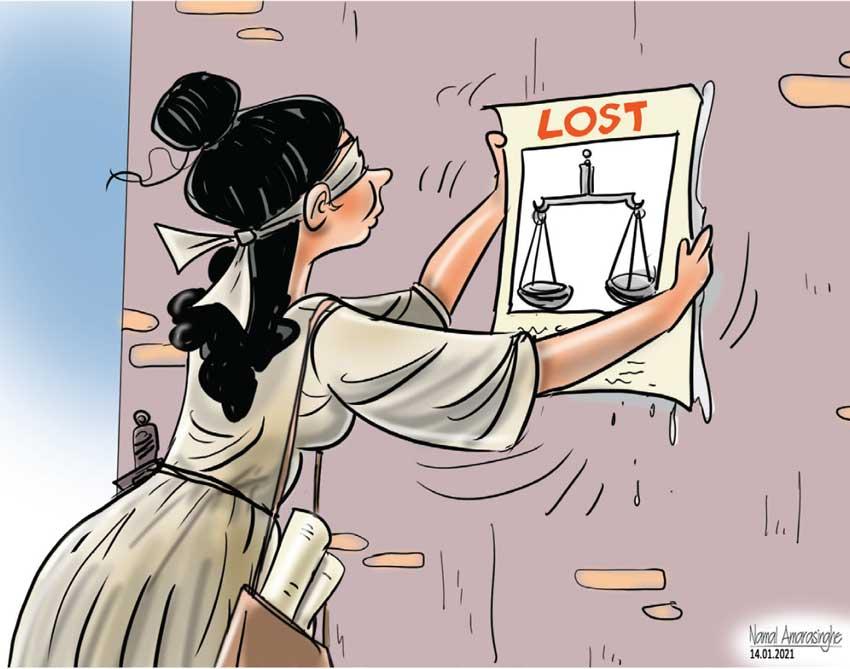
Prof. Savithri Gunasekera said that ensuring justice at its core is a very simple principal, but the law must be enforced. However, she said that the real problem lies in the failure to create conditions where the law can be effectively implemented. As a result, justice is repeatedly delayed.

She said that although January is commemorated every year as Black January, demanding justice for slain journalists such as Lasantha Wickrematunge and Sivram, meaningful accountability has yet to be achieved. Even today, justice for these prominent media figures remains elusive.

Prof. Gunasekera said that freedom of speech and expression is essential for any democratic society. She said that laws alone are not sufficient to sustain strong institutions; there must also be the necessary institutional mechanisms, capacity and procedures to enforce them effectively.

She said that safeguarding media freedom and freedom of expression requires a firm commitment and a strong sense of responsibility from the Government, adding that without such dedication, legal protections remain merely symbolic.

Upul Kumarapperuma PC said that the evidence in several court cases related to the killing of journalists had been destroyed in recent years due to State interference. As a result, he said, justice has still not been delivered to journalists who were murdered, even to this day.

He said that the majority of the journalist killings occurred between 2009 and 2015. Although investigations were initiated following the end of the war in May 2009, he said that interference by the Government in power at the time prevented investigators from identifying suspects or bringing perpetrators to justice.

Citing the Prageeth Ekneligoda case as an example, he said that although the case was filed in 2010, no suspects were produced before the Courts until August 2015. While suspects in cases such as the Ekneligoda disappearance were eventually presented to Court in 2015, proceedings were subsequently obstructed due to pressure from the then Opposition and the conduct of certain members of the clergy, which created further impediments to the administration of justice.

Delaying justice

He said that during the 2019-2022 periods, legal proceedings took a completely different turn. The Presidential Commission of Inquiry on Alleged Political Victimisation, appointed by the President at the time, recommended the release of several accused persons, thereby weakening ongoing cases and further delaying justice.

He said that from 2022 to the present criminal investigation, the Attorney General’s Department has failed to restore several of the stalled cases. He also said that Judicial Medical reports (JMO Reports) relating to the case of journalist Poddala Jayantha have gone missing, creating serious technical issues to proceed with the case in the absence of such critical evidence.

Referring to the Keith Noyahr case, he said that the main suspect has since left the country on a scholarship and has not returned to Sri Lanka to date.

Similarly, there appears to be little or no progress in cases related to the assault on journalist Upali Tennakoon.

He said that the existing general legal framework is insufficient to deliver justice in cases involving crimes against journalists. As future steps and recommendations, he said the need for a special independent mechanism to investigate and prosecute cases where evidence has been destroyed through Executive interference, adding that only such a mechanism could ensure accountability and prevent further impunity. Journalist Wijayananda Jayaweera said that the domestic mechanism for delivering justice has failed and added that greater attention must be given to the international Reports of the UNESCO Director General.

Senior journalist, Sunil Jayasekara, briefed the gathering on the history of Black January. He said that it began in 1981 in Jaffna with the killing of a photographer named Nawarathnam.

Since then, he said 114 media personnel including 56 journalists had sacrificed their lives in the struggle to protect the rights of freedom of expression.

He said that if appropriate action is not taken, the country will be forced to speak with sorrow about Black January every year. In this context, he said the need to establish mechanisms such as a Truth Commission is vital.

The event was also attended by the Chairman of the Sri Lanka Press Institute (SLPI) Kumar Nadesan, and Sandya Ekneligoda, the wife of disappeared journalist, Prageeth Ekneligoda.

Posted in Uncategorized

Ranil and Sajith to decide on leader

Former President Ranil Wickremesinghe and Opposition Leader Sajith Premadasa are expected to meet shortly to decide as to who would lead the proposed UNP and SJB alliance, UNP Deputy General Secretary Harin Fernando said yesterday.

Responding to questions raised by the media, Fernando said Wickremesinghe is likely to play an advisory role. “He had told the Buddhist clergy that he is out of active politics. Accordingly, that would be the case” Fernando said.

He said the UNP has proposed setting up a joint working committee. “We have put forward some proposals and the ball is now on SJB’s court,” he said.

Furthermore, he said a leadership board may be appointed to run the UNP.

Meanwhile, Opposition Leader Sajith Premadasa confirmed that he had a successful round of discussions with UNPers over the weekend.

“Today the SJB and the UNP held another round of successful discussions, which I am hopeful will result in a victorious conclusion. SJB General Secretary Ranjith Maddumabandara, UNP Deputy Leader Ruwan Wijewardene, General Secretary Thalatha Athukorale, Vice Chairman Navin Dissanayake, Assistant Leader Akila Kariyawasam, and Sagala Ratnayaka participated in the discussions,” Premadasa said in his X message.

Posted in Uncategorized

Bay One Residences Colombo launched in Sri Lanka’s China-backed Port City

Bay One Residences Colombo, an apartment project in Sri Lanka’s China-backed Port City special economic zone was launched by ICC, an engineering and construction group, a statement said.

The project offers apartments starting from 500,000 US dollars with sizes ranging from one bedroom (68 to 72 square metres) to 4-bedrooms (306 to 515 square metres).

Bay One is Residences is the first residential project in the dollarized, area reclaimed from the sea by China Harbhour Engineering group.

Sri Lanka’s parliament recently, passed a law setting out tax rates for businesses in the Colombo Port City.

Sri Lanka has high income tax rates of 30 percent, which are out of line with countries that have monetary stability in East Asia of around 20 percent or below.

Posted in Uncategorized

Sulipuram Army Camp closed after more than 30 years

The Sri Lanka Army has vacated the Sulipuram Army Camp, also known as Chulipuram, bringing to an end more than three decades of military presence at the site.

Troops stationed at the camp withdrew late on Friday night and were relocated to another Army facility in the area.

The closure follows decisions taken in late 2024 to dismantle selected long-standing military camps in the Jaffna peninsula, as part of efforts to return occupied land to its original civilian owners.

The formal process was carried out under the supervision of the Commander of the 513th Infantry Division, who handed over the official vacation notice to the Chankanai Divisional Secretariat last week.

The Sulipuram camp was established in the early 1990s during the height of the civil conflict and remained operational for over 30 years.

Army Spokesman Brigadier Waruna Gamage said the move should not be viewed as a sudden withdrawal, describing it instead as part of a planned restructuring of the Army.

In recent years, the Sri Lanka Army has closed or relocated several camps in the Northern Province under a broader national restructuring programme, with a focus on releasing land for civilian use.

The Katkolam Army Camp in the North was disbanded in November 2024 under the same initiative, while land occupied by the Karaitivu Army Camp in Ampara was returned to the public in October last year after 35 years.

The 10th Battalion of the Vijayabahu Infantry Regiment, which had been stationed on approximately half an acre of land in Karaitivu since 1990, was withdrawn, and the land was formally handed over to the Karaitivu Pradeshiya Sabha.

Posted in Uncategorized

India inaugurates second Bailey Bridge on Kandy–Ragala Road

A 120-foot Bailey Bridge on the B-492 Kandy–Ragala Road was inaugurated today under India’s USD 450 million reconstruction and rehabilitation assistance to Sri Lanka, aimed at restoring connectivity in areas affected by Cyclone Ditwah.

The bridge was jointly opened by India’s Deputy High Commissioner to Sri Lanka, Dr. Satyanjal Pandey, and Member of Parliament Manjula Suraweera Arachchi. The project restores a key transport link in the Central Province, improving access for passengers, essential goods transportation, and local economic activity.

This marks the second Bailey Bridge constructed on the Kandy–Ragala Road under India’s post-Ditwah reconstruction programme. The first, a 100-foot bridge at KM-21, was inaugurated on January 10 by the Indian High Commissioner along with Deputy Ministers Prasanna Gunasena and Madhura Senevirathna.

The bridges are part of India’s broader assistance following Cyclone Ditwah, which caused widespread damage to road networks due to landslides and bridge collapses, particularly in hilly regions. The reconstruction work is being carried out in coordination with the Sri Lankan Army and the Road Development Authority.

The Indian High Commission said additional Bailey bridges are scheduled to be constructed in the coming weeks as part of the next phase, to ensure full restoration of connectivity in affected areas.

Posted in Uncategorized

SLPP & SJB MP group to visit Odisha for India’s Republic Day

A group of SLPP and SJB parliamentarians, led by SLPP MP Namal Rajapaksa, are scheduled to travel to Odisha, India, on a private visit to participate in the celebrations of India’s Republic Day on January 26, following an invitation from a private university in India.

The delegation includes SJB MPs Chithral Fernando, Chamindrani Kiriella, Chathura Galappaththi, and Prasad Siriwardena, along with former SLPP MPs Indika Anuruddha, Sanjeewa Edirimanna, Sampath Athukorala, and Political Bureau member Milinda Rajapaksa.

In addition, the group is expected to undertake an observation tour of the Odisha Disaster Management Centre, recognized as one of the world’s leading disaster management institutions, and visit Buddhist archaeological sites dating back to the era of King Ashoka.

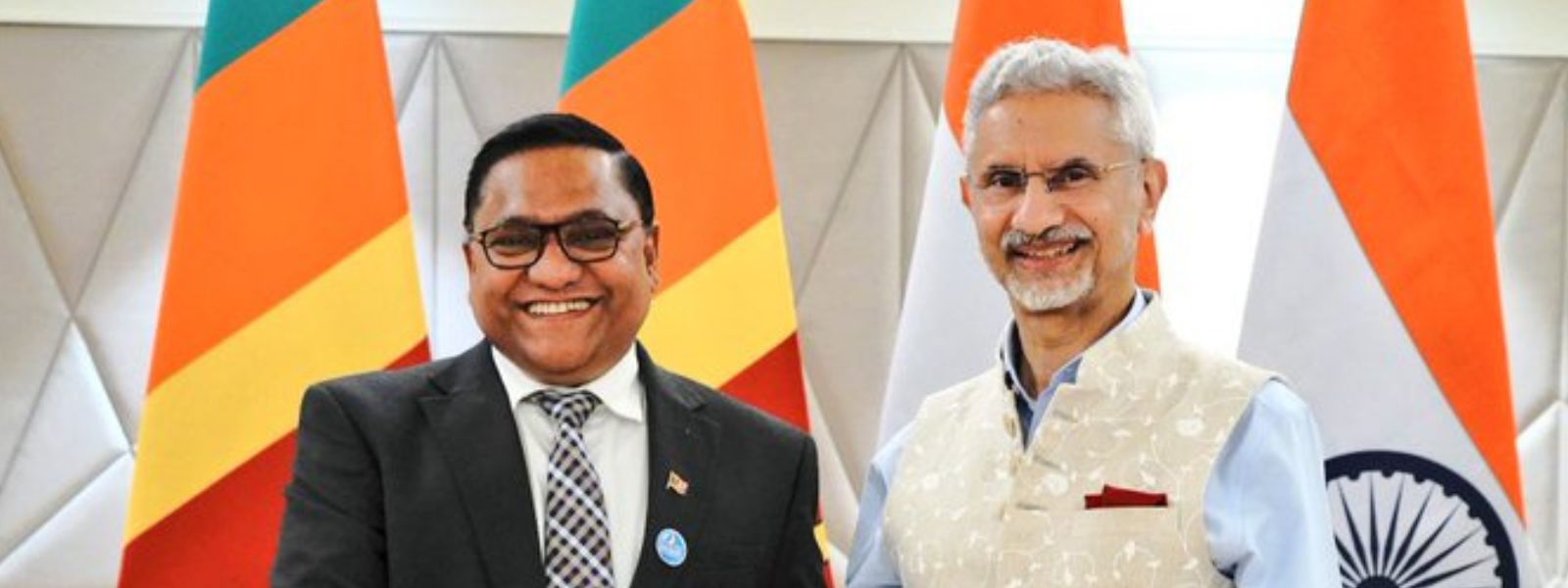
A cordial discussion regarding this visit was held recently at the official residence of the Indian High Commissioner, between the Sri Lankan delegation and the Indian High Commissioner to Sri Lanka, Santosh Jha.

Posted in Uncategorized

Historic Meeting Unites Sri Lankan Buddhist and Tibetan Buddhist Traditions

In a landmark moment for global Buddhism, a historic meeting took place today between the Most Venerable Dr. Pallegama Hemarathana Nayake Thero, the Atamasthanadhipathi of Sri Lanka, and 14th Dalai Lama, the world-renowned spiritual leader and symbol of universal compassion.

The encounter marks a watershed in the centuries-old relationship between Indo-Tibetan and Sri Lankan Buddhist traditions. It is the first recorded instance in which the spiritual heads of these two pre-eminent lineages have met in such a significant capacity, drawing wide attention across the global Buddhist community.

The position of Atamasthanadhipathi carries exceptional prestige within the Buddhist world. By ancient royal decree, Sri Lanka recognises three supreme pillars of Buddhist heritage: the Temple of the Sacred Tooth Relic, Sri Pada, and the Jaya Sri Maha Bodhi. As custodian of the Eight Sacred Places (Atamasthana) in Anuradhapura, the Atamasthanadhipathi exercises profound spiritual and legal authority over some of Buddhism’s most revered sites.

The meeting between the guardian of Sri Lanka’s most ancient living heritage and the spiritual leader of the Tibetan people symbolised a powerful convergence of the Pali and Sanskrit Buddhist traditions.

Adding deep emotional significance to the occasion, the Most Venerable Thero presented His Holiness with a sacred sapling of the Jaya Sri Maha Bodhi. For decades, the Dalai Lama has expressed a desire to undertake a pilgrimage to the Jaya Sri Maha Bodhi—the world’s oldest historically documented living tree, grown from a branch of the original Bodhi tree under which the Buddha attained Enlightenment. While circumstances had previously prevented such a visit, the presentation of the sapling is seen as symbolically fulfilling that long-held aspiration.

The sapling is scheduled to be planted tomorrow, 21 January, at the Buddhist University within the Gaden Jangtse Monastery complex, during a ceremony to be conducted with full monastic honours. Tens of thousands of Tibetan monastics and devotees from across India and overseas are expected to attend.

The initiative—described by organisers as an act of “green diplomacy”—is being viewed as a reaffirmation of the enduring spiritual and cultural bonds between Sri Lanka and India, underscoring a shared commitment to ensuring the continuity and growth of the Dhamma for generations to come.

(Satipattana Magazine)

Governor Vethanayagan says: Investor-friendly environment created in North

The Investment Summit will conclude today (22). The event, attended by local and foreign investors, entrepreneurs, policymakers, development partners, and various public and private entities, aims to showcase investment opportunities available in the Northern Province to foreign investors.

The inauguration ceremony was chaired by the Minister of Industry and Entrepreneurship Development. It was attended by the Northern Province Governor, several ministers, MPs, Government Agents from all five districts of the Northern Province, and a large number of investors from across the country. The Governor emphasised that the event, held in the historic city of Jaffna, is not merely a conference, but a decisive and strategic turning point for the Northern Province. He further stated that despite its abundant natural resources, resilient human capital, and rich cultural heritage, the province has historically contributed very little to the country’s GDP. Under the theme ‘Empowering Growth, Insightful Innovations’, he added, the province is now embarking on a journey to change that narrative.

He said, “The event comes at an opportune time, as Sri Lanka transitions from economic recovery to long-term sustainable growth. This initiative is being carried out under the vision and guidance of President Anura Kumara Dissanayake, based on the concept of an ‘Inclusive Economy’, ensuring that no province is left behind.”

The Governor highlighted that looking back at our history, the Northern Province has always been a ‘Gateway to Excellence,’ and this summit aims to reclaim that pride.

By focusing on four strategic pillars — Agriculture and Fisheries, Tourism, Education and Information Technology, and Energy — we are creating a roadmap to connect the talent of our younger generation and the experience of our elders with international capital and innovation, he said.

The Governor added that everyone will work together to ensure that the investments made today generate sustainable jobs, vibrant businesses, and a prosperous future for every citizen of the Northern Province.