Sri Lanka to overhaul loss-making national airline after failing to find buyers

The Sri Lankan government will restructure the loss-making national flag carrier after efforts to find a buyer for its management control failed, President Anura Kumara Dissanayake has said.

Presenting the 2025-26 budget on Friday (07), Dissanayake said, “There are no buyers,” referring to efforts by the successive governments to divest the Sri Lankan Airlines’ management from government control.

The national carrier’s divestiture became crucial with the tough conditions attached to Sri Lanka’s International Monetary Fund (IMF) bailout of nearly USD 3 billion, extended in 2023 after the island nation announced its first-ever sovereign default.

(PTI)

Sri Lanka to get $100mn loan from ADB to strengthen financial stability

The Asian Development Bank (ADB) has approved a 100 million dollar loan for Sri Lanka to address ‘complex and challenging structural reforms’ in its financial sector.

“This initiative builds on earlier banking sector reforms and aims to broaden access to finance for micro, small, and medium-sized enterprises, with a strong focus on empowering women-led enterprises,” said ADB Country Director for Sri Lanka Takafumi Kadono.

The loan builds on the structural reforms addressed in the previous two ADB lending programs totaling 400 million dollars since the country’s economic crisis in 2022, the global lender said.

“The program will strengthen stability, capital adequacy, risk management, and governance of the banking sector, thereby strengthening financial regulators to be better equipped and prepared to manage a financial crisis. This will help boost public confidence in the financial system and safeguard public interest.

“The program will also promote financial inclusion, while promoting sustainability to help enhance financial intermediation and the flow of credit to end-borrowers.”

The program also aims to enable improved access to finance for businesses across diverse sectors of the economy.

Posted in Uncategorized

All party conference to be called to cut PC election Gordian knot

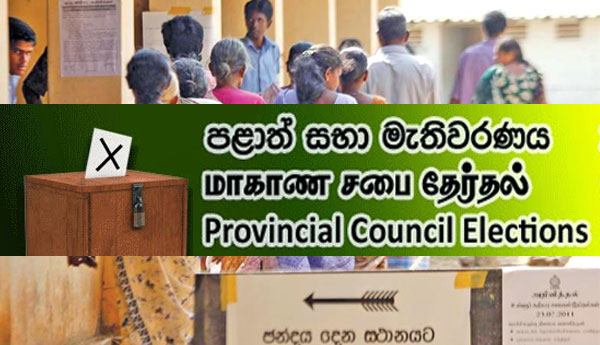
The government is to convene a meeting of all political parties and relevant civil society organizations to find ways and means to hold provincial elections which are locked in an impasse due to a legal snag since 2017.

Public Administration, Local Government and Provincial Councils Minister Dr. Chandana Abeyratne said that the government has resorted to this move as the law under which the Provincial Council elections are to be held is not clear due to this legal issue.

Following the mixed electoral system introduced for Provincial Councils in 2017, Parliament rejected the delimitation report submitted by the then Provincial Councils Minister with even the minister himself casting his vote against the report.

This required a review committee for the delimitation purpose appointed by the Speaker and headed by the Prime Minister to submit a report to the President within two months of the minister having submitted the rejected report. If this requirement is fulfilled, the elections could be held without the approval of it by the Parliament, according to the report.

However, as the President did not receive a review committee report within the prescribed two months period, Provincial Councils elections met a legal hitch which has not been resolved for the past eight years.

The minister said that currently there is no applicable law in respect of provincial council elections as the previous law has expired while the new law is incomplete.

Currently powers devolved to the provincial councils are implemented by the relevant Governors of Provinces as there are no elected Provincial Councils.

Second Day of Debate for 2026 Budget Speech Today

Today marks the second day of the debate on the 2026 Budget Speech.

The debate on the second reading of the budget is scheduled to continue for six days, until the 14th of this month.

The vote on the second reading of the 2026 Budget is scheduled to take place at 6:00 PM on the 14th of November.

The Committee Stage debate of the budget will be held from the 15th of this month until December 5th, spanning 17 days.

Meanwhile, the final vote on the third reading of the budget is scheduled for 6:00 PM on December 5th.

The 2026 Budget Speech was presented to Parliament last Friday by President Anura Kumara Dissanayake in his capacity as Minister of Finance.

This marks the second budget of the new government and the 80th national budget of independent Sri Lanka.

Posted in Uncategorized

”Hope to resume repatriation”: UNHCR India Chief on Lankan refugees

Chennai – The United Nations Refugee Agency is working closely with the Colombo Mission to resume the voluntary repatriation of Sri Lankan refugees, Areti Sienni, UNHCR Chief of Mission in India, said in an exclusive interview with NDTV today after the arrest of four returnees on arrival in Sri Lanka. The repatriation process had earliert been suspended.

Calling the arrests “worrying,” Sienni said the agency hopes that repatriation will resume soon. She noted that 200 Sri Lankan refugees had returned to their homeland last year and around 50 more have expressed interest this year.

She said the UNHCR continues to work with Indian authorities to ensure that refugees have access to durable solutions – whether through citizenship, repatriation, or resettlement.

India currently hosts more than 80,000 Sri Lankan refugees, many of whom have lived in Tamil Nadu for decades.

Since 2002, 18,643 refugees have returned to Sri Lanka under the voluntary repatriation programme.

However, for the three generations of refugees living in India – including many born on Indian soil – the absence of a refugee legislation remains a major hurdle.

Without citizenship, they continue to live in special refugee camps monitored by a section of the state police.

Although the younger generation has pursued higher education, many are forced into low-paying or menial jobs, as employers are reluctant to hire non-citizens.

Aspiring refugees are also denied access to medical education in government colleges, and many among the younger lot – born and raised in India – now consider India their only home, with no desire to return to Sri Lanka.

The Immigration and Foreigners act does not penalise Sri Lankan refugees for their over stay or entry in India whereas the Citizenship Act still categorises them as illegal migrants. The Citizenship Amendment Act does not also extend the fast-track citizenship provisions offered to non-Muslim migrants from neighbouring countries like Pakistan, Afghanistan, and Bangladesh to Lankan refugees

Amid this legal void, the Tamil Nadu government has been taking initiatives to improve the socio-economic conditions of Sri Lankan refugees – from livelihood and skill development programmes to financial assistance for women’s self-help groups and partnerships with industries to nurture the educated refugee talent pool, including those in the IT sector.

Sienni said the granting of citizenship is ultimately India’s prerogative, but noted that the Tamil Nadu government, in collaboration with legal practitioners and civil society, has been working to help eligible refugees secure Indian citizenship.

The UNHCR, she added, has been providing technical support and policy advice to both state and central governments to expand pathways toward inclusion.

“Citizenship is a concrete demonstration of belonging to a country – a solution available to very few refugees globally,” Sienni said. “When it becomes available, it puts an end to refugeehood and allows people to fully participate in the society and economy where they live,” she added.

Amid demands for grants of citizenship to Lankan refugees, she called the initiatives by Tamil Nadu and the Union government “an important example for the world,” noting that significant investments have been made to help refugees become self-reliant and productive members of society.

Posted in Uncategorized

India–Sri Lanka Policy Dialogue sets new course for regional environmental cooperation

A landmark Indo–Lanka Policy Dialogue on Regional Environmental Cooperation, held recently at the University of Colombo, has charted a bold new path for strengthening bilateral environmental collaboration between the two neighbours.

The event, jointly organised by the Faculty of Law and the Centre for Environmental Law and Policy (CELP) of the University of Colombo in collaboration with the Commonwealth Legal Education Association (CLEA) and Amity Law School, brought together top jurists, policymakers, diplomats, and academics from both countries.

The Dialogue, held at the Senate Hall was graced by distinguished guests including judges of the Supreme Court and Court of Appeal, senior policymakers, and leading legal scholars. The gathering underscored the growing recognition that environmental challenges in the Indian Ocean region demand cross-border legal and institutional responses.

Justice Surya Kant’s Call for Environmental Constitutionalism

Delivering the keynote address, Hon. Justice Surya Kant, Judge of the Supreme Court of India and Chief Patron of CLEA, urged India and Sri Lanka to approach environmental cooperation not merely as a diplomatic gesture but as an “existential necessity.”

He identified the Palk Bay and Gulf of Mannar as ecological hotspots under serious stress due to overfishing, pollution, and climate-related changes, calling for a “joint framework for monitoring, data sharing, and enforcement.”

Justice Kant reminded both countries of their constitutional duties to protect the environment, pointing to shared principles such as polluter pays, intergenerational equity, public trust, and sustainable development. He proposed that the two nations institutionalize judicial dialogues and adopt a model of regional environmental constitutionalism—a framework that recognizes cross-border environmental duties and enhances citizen engagement.

His remarks were widely applauded by the audience, many of whom saw his intervention as a turning point for bilateral environmental jurisprudence.

Academic and Policy Engagements

The Dialogue featured a dynamic exchange of ideas across disciplines. Professor Dinesha Samararatne opened the policy discussions, emphasizing the role of constitutional frameworks in ensuring environmental accountability.

Professor Surabhi Ranganathan of the University of Cambridge and Deputy Director of the Lauterpacht Centre for International Law provided a global perspective, analyzing the International Court of Justice’s 2025 Advisory Opinion on states’ obligations concerning climate change and its implications for ocean governance.

Hon. Parinda Ranasinghe (Junior), PC, Attorney General of Sri Lanka, focused on dispute resolution mechanisms and Sri Lanka’s emerging role in international environmental litigation.

Dr. Nishara Mendis, Executive Director of the Lakshman Kadirgamar Institute, explored how regional and global organizations can embed environmental principles in governance structures.

K.R. Uduwawala, Secretary to the Ministry of Environment, reaffirmed Sri Lanka’s commitment to regional partnerships, stressing that “collaboration with India is essential for achieving sustainable development in the Indian Ocean region.”

Key Takeaways and Future Directions

The Dialogue’s conclusions were both ambitious and pragmatic. Participants identified the Indian Ocean as a shared ecological commons requiring collective stewardship, with the Palk Bay and Gulf of Mannar designated as priority zones for joint action.

There was broad agreement that courts must play a proactive role in embedding sustainability principles into national jurisprudence—ensuring that environmental law keeps pace with scientific realities.

Speakers also highlighted the importance of leveraging regional platforms such as BIMSTEC to expand Indo–Lanka collaboration into multilateral initiatives covering fisheries management, marine biodiversity, and disaster preparedness.

Community and citizen engagement emerged as another recurring theme. Several participants emphasized that long-term sustainability will depend not only on top-down policy interventions but also on empowering coastal communities and incorporating local knowledge into governance frameworks.

Among the most concrete outcomes were proposals to establish a joint technical track for environmental monitoring, create a bench-to-bench judicial exchange mechanism, and embed cross-border frameworks into national environmental policies.

Bridging Law, Policy, and People

Professor Kokila Konasinghe, Director of CELP, said the Dialogue reflects the Centre’s mission to bridge gaps between law, policy, and community needs. “This event demonstrated that environmental law must evolve beyond borders—it must reflect shared regional realities,” she said.

The Vice Chancellor of the University of Colombo, Professor Indika Mahesh Karunathilake, described the event as a “milestone in building regional partnerships that combine academic expertise with policy relevance.”

Professor N.S. Punchihewa, Dean of the Faculty of Law, welcomed the participants and reaffirmed the University’s commitment to fostering meaningful regional engagement through legal scholarship.

As discussions concluded, participantsagreed that the Indo–Lanka Dialogue marks the beginning—not the end—of a deeper regional commitment to collective environmental stewardship.

Justice Surya Kant’s message captured the spirit of the event: “We cannot draw lines on the map when it comes to air, oceans, or biodiversity. Our cooperation is not an option—it is our duty to the generations yet to come.”

By Ifham Nizam ✍️Source:The Island.lk

Posted in Uncategorized

Mannar residents to continue protest against wind, power projects

The Mannar Citizens’ Committee has decided to continue its protest demanding a complete halt to the construction of wind power plants in the Mannar District and a ban on mineral sand mining around Mannar Island.

The protest, which has now entered its 100th day, reflects growing frustration among residents over environmental and social injustices caused by ongoing development activities.

At a media briefing held yesterday (06), committee representatives acknowledged the government’s decision not to proceed with any new wind power projects in Mannar, but said the authorities have yet to address the problems caused by existing wind turbines.

Residents allege that the wind farms have disrupted the local environment, including the island’s delicate bird migration zones, and have affected the livelihoods of coastal communities.

They stressed that the protest will continue until the government provides a clear assurance to resolve these issues and cancels plans for mineral sand mining operations near the island.

Speaking at the event, Rev. S. Marcus, convener of the Mannar Citizens Committee, expressed hope for a “positive and meaningful intervention” from authorities.

“Our struggle is to protect the rights of the people of Mannar and preserve the environment we depend on,” he said.

Posted in Uncategorized

AKD to deliver growth oriented Budget today

President and Finance Minister Anura Kumara Disanayake will today afternoon unveil his Government’s first fully fledged Budget amidst pressure to reignite economic growth and incomes via higher investments and exports which will also generate new jobs.

Analysts opined that the phase of natural growth after two years of contraction and stability was over and the country needs a fresh round of stimulus.

Despite having the best-ever macroeconomic indicators post-Independence and political stability with a Government intent on good and clean governance, foreign investors haven’t queued up to tap prospects in Sri Lanka internally, as well as regionally—especially the Indian market and elsewhere.

However, proving the ground situation is different, the Board of Investment (BOI) last month revealed that up to September, the realised Foreign Direct Investment (FDI) was up 138% year-on-year (YoY) to $ 827 million. However, it was inclusive of equity capital of $ 133 million, reinvested retained earnings of $ 132 million, intra-company foreign borrowings of $ 231 million, and long-term commercial loans of $ 331 million.

Some critics said that Sri Lanka needs fresh green field FDIs and pointed to Disanayake appointing proven business leader Hanif Yusoof as special Presidential envoy for that task as proof of the bigger challenge.

In that context, the 2026 Budget is expected to announce new incentives to boost investments despite strictures from the International Monetary Fund (IMF) to desist. The Government is speculated to offer relief on the tax burden on the middle-income segments as well, though rates won’t be altered.

In September, a World Bank report slammed Sri Lanka’s Value Added Tax (VAT) hike as among reasons for a dramatic rise in poverty.

Previously, the IMF had maintained that the Government can be flexible as long as it meets Extended Fund Facility (EFF) program targets. The confidence within the Government to be flexible also stems from the robust Government revenue so far in 2025. The Inland Revenue Department (IRD) has exceeded its tax revenue target for the first nine months of 2025, collecting 102% of the estimate. It collected Rs. 1.64 trillion by the end of September, against an expected Rs. 1.61 trillion, reaching 75% of its full-year goal of Rs. 2.19 trillion. Customs too has marked its highest collection of Rs. 2 trillion by end-October and is poised to surpass the 2025 target of Rs. 2.115 trillion.

Other analysts emphasised that the Government needs to step up ease of doing business, liberalisation, and reforms, which are more credible measures to boost investments than mere incentives.

Given the poor performance of public investments and capital expenditure in 2025, they also stressed that President Disanayake must come up with firm measures to speed up decision-making and implementation of proposals by bureaucracy.

The disbursement of the sixth tranche worth $ 347 million under the IMF is pending approval from the IMF Executive Board and will depend on the 2026 Budget successfully passing in Parliament and meeting required criteria, with a potential release scheduled for December 2025.

Expectations from equity investors appear to be positive. The Colombo stock market yesterday surged past the 23,100-points mark and gained by 159 points ahead of the Budget 2026 presentation.

MRIA’s operations cost 14 times higher than income in 2024

The Mattala Rajapaksa International Airport (MRIA) has recorded an operating cost of Rs. 3,600.8 million, nearly 14 times higher than its operating income of Rs. 242 million, the 2024 audit of Airport and Aviation Services (Sri Lanka) (Private) Limited (AASL) revealed.

This resulted in an operating loss of Rs. 3,358.6 million, although a net profit of Rs. 879.7 million was reported due to foreign exchange gains. Cumulative net losses from 2018 to 2024, however, amounted to Rs. 39,369 million.

Despite an expected annual passenger capacity of one million, only 321,577 passengers used the airport over six years, with a total of 3,596 flight movements.

The audit noted that Rs. 36,564 million (USD 247.7 million) spent on construction—including price escalations and variations—had not been effectively utilized.

In addition, Rs. 2,053 million was paid as annual loan interest for the USD 190 million foreign debt obtained for construction.

The audit recommended that AASL take steps to operate and upgrade MRIA efficiently and profitably.

In response, the management stated that with a proposed cancellation of the Cabinet decision on handing over operations, they plan to call for fresh investments through expressions of interest or RFPs for aviation-related business across nine specified areas.

President AKD to present 2026 Budget in Parliament tomorrow

The second reading of the Appropriation Bill for the year 2026, commonly referred to as the Budget Speech, is scheduled to take place tomorrow (07).

President Anura Kumara Dissanayake, in his capacity as Minister of Finance, is expected to deliver the second reading of the bill in Parliament tomorrow afternoon.

Following this, the budget debate will be held over six days, starting from November 8, with the vote on the second reading scheduled for Friday, November 14, at 6:00 pm.

The Committee Stage Debate is set to begin on November 15 and continue for 17 days, with the vote on the third reading scheduled for December 5 at 6:00 pm.

Posted in Uncategorized