Indian Envoy, Namal Discuss Bilateral Issues

High Commissioner of India to Sri Lanka Santosh Jha held talks with Namal Rajapaksa, the national organizer of the Sri Lanka Podujana Peramuna.

The High Commission in an X post said that the duo exchanged views on the multi-faceted India-Sri Lanka issues, ranging from ongoing development projects, investments, economic revival of Sri Lanka and other areas of mutual interest.

In a post on Facebook, Namal Rajapaksa said that he discussed the continued maintenance of the strong relationship that has existed between our two countries for many years.

Posted in Uncategorized

Will Ranil-Sajith form an alliance against AKD?

The Samagi Jana Balawega (SJB) was established in 2020 under the leadership of Sajith Premadasa, separated from the United National Party (UNP), which was known as the largest single political party in Sri Lanka.

As a result of the long-standing conflicts over the leadership of the UNP, a majority of its members split from the party and formed the SJB.

Several other parties that had joined hands with the UNP also formed an alliance with the SJB in this separation.

After Sajith Premadasa contested the presidential election for the first time in 2019 and was defeated, he left the UNP with a large group and formed the SJB, and the party was elected as the main opposition in parliament in the 2020 general election.

Although the SJB served as the main opposition, it failed to gain power in the presidential and general elections held during the economic crisis and after the struggle.

In the 2024 general election, proposals were made by both parties that the UNP and the SJB should contest the election together.

Those talks failed and both parties contested the election separately.

‘Initially, Sajith was against it’

Both parties have proposed that they should contest separately and reunite after the heavy defeats suffered by both parties.

“Initially, Sajith was against it. But all of them have said that they should unite. Accordingly, Sajith has agreed,” said former minister Rajitha Senaratne, who is intervening on behalf of the alliance on the UNP camp.

He noted that opposition leader Sajith Premadasa, who opposed the UNP-SJB alliance, is currently being pressured to rejoin.

All the opposition parties with a common emblem

Opposition leader Sajith Premadasa has proposed to contest the upcoming elections under the telephone symbol and former president Ranil Wickremesinghe under the elephant symbol.

“Without both of these, our side has said that they should unite all parts of the opposition with one common logo and agree to compete as one group. They have said that they will exert pressure on their side to do the same.”

Common opposition won cooperative votes

Former minister Rajitha Senaratne also mentioned that in the cooperative elections where the opposition parties came together and competed, they were able to defeat the ruling party and gain power.

“In Beruwala, we all contested as one team, and in almost every place, the JVP had only 30%. The rest went to the Joint Opposition. Similarly, if we unite in Biyagama and Homagama, we will win everywhere.”

Discussions to begin this week

General Secretary of SJB, MP Ranjith Madduma Bandara, had the following remarks when inquired about a potential UNP-SJB alliance.

“We will begin discussions this week,” he said, adding that he is not in a position to comment further until the discussions commence.

‘Ranil is the only one left to save the country’

The media had cited a request from the SJB as the main reason for the collapse of talks between the UNP and the SJB to contest the last parliamentary election.

The reports stated that former president Ranil Wickremesinghe was presented with a major condition for resigning from the UNP leadership.

When asked whether the same condition was valid for this time’s talks, SJB general secretary Ranjith Madduma Bandara said that they have not put forward such a condition.

“Today, the entire country is saying that Ranil is the only one left to save the country. What we have to choose at this time are not popular leaders. We need a leader who can save the country,” former MP Rajitha Senaratne said.

Discussions are scheduled to take place regarding the formation of an alliance between the UNP and other opposition parties, including the SJB, to contest the upcoming local government elections.

(With inputs from BBC Sinhala)

Posted in Uncategorized

Sri Lanka, Sinopec sign agreement for USD 3.7 bln investment in oil refinery

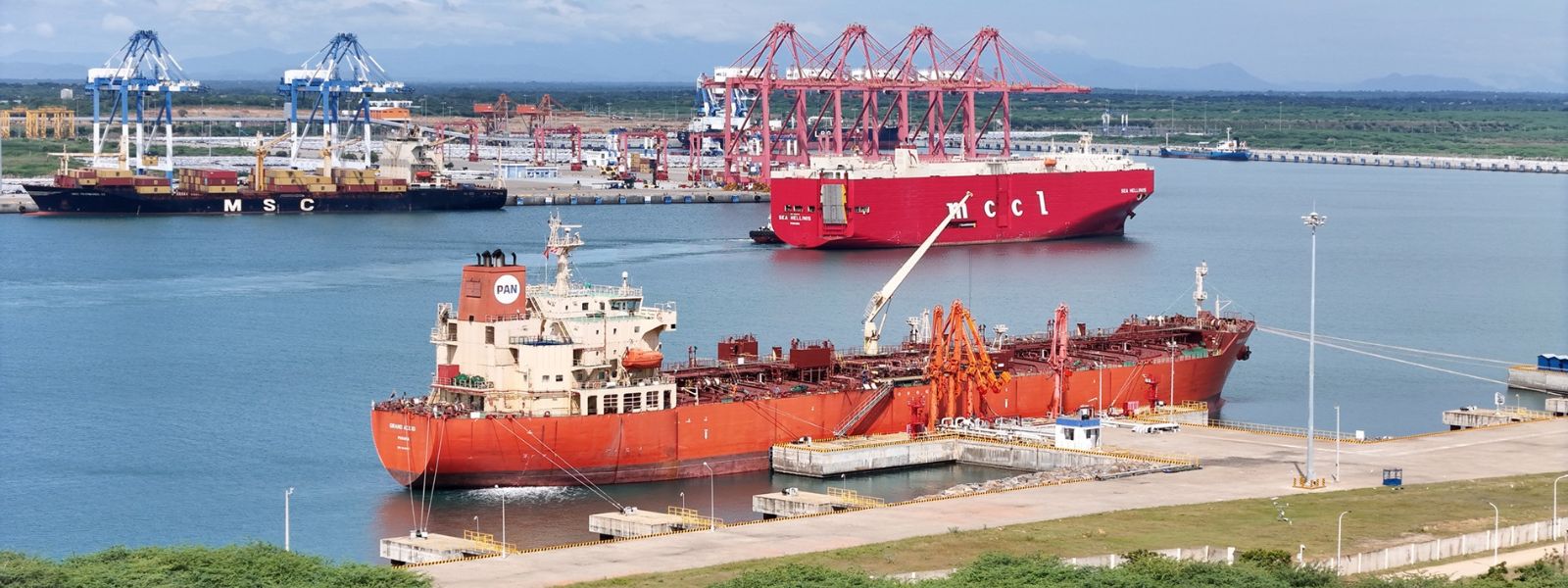
Sri Lanka’s Ministry of Power and Energy and China’s Sinopec Corporation have signed an agreement to build an oil refinery in Hambantota with an investment of USD 3.7 billion.

The agreement was signed during President Anura Kumara Dissanayake’s current state visit to China, marking the highest foreign investment secured by the government, the President’s Media Division (PMD) said.

The proposed oil refinery has a capacity of 200,000 barrels of oil, of which a significant amount is planned to be exported.

This massive investment received by Sri Lanka from China will contribute to the economic growth of the country as well as strengthening the livelihoods of the low-income people in the Hambantota area, and the entire Sri Lankan people very soon, the PMD said in a statement.

Minister of Foreign Affairs, Foreign Employment and Tourism Vijitha Herath, Minister of Transport, Highways, Ports and Civil Aviation Bimal Ratnayake, Chinese Ambassador to Sri Lanka Qi Zhenhong, and Sri Lankan Ambassador to China Majintha Jayasinghe also participated in this event.

Milinda Moragoda Visits Delhi as Part of Ongoing Dialogue

Milinda Moragoda, Founder of the Pathfinder Foundation, visited Delhi recently (14-15 January), where he met with several key government decision-makers and heads of think tanks. These interactions included meetings with Finance Minister Smt. Nirmala Sitharaman, National Security Advisor Shri Ajit Doval, and Foreign Secretary Shri Vikram Misri.

The Pathfinder Foundation maintains an ongoing dialogue with the Indian government, think tanks, civil society organizations, and the private sector. In 2015, the foundation established the Center for Indo-Lanka Initiatives, which is dedicated to strengthening and promoting bilateral relations. Pathfinder has built a strong network of partnerships in India and has facilitated several track 1.5 and 2.0 exchanges between the two countries. It has also authored several groundbreaking studies and analyses. Most recently, Pathfinder has focused on promoting trilateral and quadrilateral initiatives that bring together Sri Lanka, India, and third countries to jointly work toward Sri Lanka’s development.

The foundation also runs a Sinhala publishing program, which publishes both translations and original works of books that provide deeper insights into various aspects of the Indo-Lanka relationship.

Photos: Milinda Moragoda had discussions with (left to right) Nirmala Sitharaman, Finance Minister; Ajit Doval, National Security Advisor; and Vikram Misri, Foreign Secretary.

China expresses readiness to collaborate with Sri Lanka towards a new era of development

The People’s Republic of China has played a vital role in the social and economic development of Sri Lanka for decades, President Anura Kumara Dissanayake said after meeting Chinese President Xi Jinping today.

Dissanayake said his visit will strengthen bilateral collaborations for the benefit of both countries and their people.

President Dissanayake, who is currently on a four-day state visit to China, held an official meeting with Chinese President Xi Jinping this afternoon (15) at the Great Hall of the People.

Upon President Dissanayake’s arrival at the Great Hall, he was warmly received by President Xi Jinping. The welcoming ceremony was conducted with great honour, including a ceremonial gun salute, according to the President’s Media Division (PMD).

Following the initial cordial discussions between the two leaders, bilateral talks commenced. During the discussions, President Xi Jinping emphasized China’s readiness to work closely with Sri Lanka in ushering in a new era of development.

He also recalled the longstanding relationship between the two countries, highlighting the close friendship that has existed for decades. President Xi reiterated China’s commitment to continuing its cooperation with Sri Lanka in the future, the PMD said.

Upon concluding the official meeting, both sides proceeded to sign several key Memoranda of Understanding (MoUs) aimed at strengthening collaboration in areas such as economy, social development, and industry.

Minister of Foreign Affairs, Foreign Employment, and Tourism Vijitha Herath, Minister of Transport, Highways, Ports, and Civil Aviation Bimal Rathnayake, and Director General of the Government Information Department H.S.K.J. Bandara were also part of the delegation accompanying President Disanayake.

Posted in Uncategorized

US Applauds Sri Lanka’s ‘Clean Sri Lanka’ Initiative

The United States of America has praised the new government of President Anura Kumara Dissanayake for its dedication to economic reforms and anti-corruption measures.

US Ambassador to Sri Lanka, Julie Chung, said that as the United States prepares to inaugurate President Trump there will be a transition of the US Ambassador to Sri Lanka later this year,

“We welcome the Sri Lankan government’s commitment to staying on track with the IMF program and finalization of its international sovereign bond restructuring, to its commitment to combatting corruption and working with partners like AmCham to create a transparent, rules-based investment climate that will drive growth. ,” said Ambassador Chung highlighting the importance of Sri Lanka’s adherence to the IMF program and the finalization of its international sovereign bond restructuring.

She noted that while stability is a crucial first step, the more challenging task lies in fostering growth, productivity, and sustainable economic practices.

The launch of the “Clean Sri Lanka” initiative, which aims to reset the country’s political and economic culture, was also commended.

Ambassador Chung expressed optimism about the concrete steps that will be taken to fulfill this pledge of reforms, including the potential restructuring of inefficient state-owned enterprises, honoring contracts, and ensuring a level playing field for foreign companies.

“With the launch of the government’s “Clean Sri Lanka” that indicates not just a clean environment but a resetting of political and economic culture, we look forward to seeing what concrete steps are made and how we can all contribute to this pledge of reforms, whether it’s on anti corruption or beyond. Will inefficient state-owned enterprises be reformed? Will contracts be honored? Will foreign companies have a level playing field and not face protectionist policies? Where will AI take us in business?,” added Julie Chung.

Addressing global challenges, Ambassador Chung acknowledged the impact of shipping delays caused by Houthi attacks in the Red Sea, economic headwinds from Russia’s aggression against Ukraine, and other political flashpoints. She stressed the importance of planning, mitigating, and navigating these challenges effectively.

The United States, she noted, is already supporting Sri Lanka through Development Finance Corporation loans for SMEs, entrepreneurial training, and technical assistance from the Treasury Department and USAID on renewable energy, procurement, and tax revenue reform. As the leading export market for Sri Lanka, the US continues to be a significant contributor to the Sri Lankan economy.

Posted in Uncategorized

President pays tribute at Mao Zedong Mausoleum

In response to an invitation from Chinese President Xi Jinping, Sri Lankan President Anura Kumara Dissanayake, who is currently on a state visit to China, visited the exhibition hall on the history of the Communist Party of China today (15).

Following this, President Disanayake visited the historic Prince Kung’s Palace Museum in China, the President’s Media Division (PMD) reported.

Later, he paid his respects by offering floral tributes at the Chairman Mao Memorial Hall, also known as the Mausoleum of Mao Zedong, dedicated to the founding leader of the People’s Republic of China, according to the PMD.

Minister of Foreign Affairs, Foreign Employment, and Tourism Vijitha Herath, and Minister of Transport, Highways, Ports, and Civil Aviation Bimal Rathnayake, also participated in these events.

Central Expressway: Lanka builders urge President to revoke deal with China’s MCC

Five of Sri Lanka’s largest construction companies have urged President Anura Kumara Dissanayake to cancel a 2015-16 direct contract granted to the Metallurgical Corporation of China (Ltd) (MCC) for the much-delayed Section 1 of the Central Expressway Project (CEP) and to call for fresh tenders under an open, transparent bidding process.

The Lanka Infrastructure Development Consortium (LIDC)—comprising Access Engineering PLC,

Maga Engineering (Pvt) Ltd, International Construction Consortium (Pvt) Ltd (ICC), KDA Weerasinghe & Co. (KDAW), and

NEM Construction—maintains that not only was the MCC contract too expensive, but also that the local industry could complete the project cheaper and faster.

There would be a significant cost reduction if the balance work of Section 1 was awarded to domestic contractors, LIDC asserts, pointing out that, under the existing deal, the per-kilometre price was around US$ 33mn. However, Section 2 was built by local companies for around US$ 18mn per km.

LIDC’s letter to the President comes against the backdrop of the Cabinet approving the advancement of nearly Rs. 7.5bn in local funds to MCC to complete “critical remaining works” of Section 1 after years of delayed, then suspended, construction (owing to the non-disbursement of the China EXIM Bank loan for the project), causing some partially built construction works to collapse.

The new administration’s decision was taken on December 18 last year but was not made public. It was the confirmation of an earlier (also unannounced) decision taken by the Ranil Wickremesinghe government just days before the September 2024 presidential election to pay this sum to MCC.

The vital 37 km Kadawatha–Mirigama leg was the first section of the CEP to be awarded but is nowhere near completion, nine years later. Section 2 from Mirigama to Kurunegala was opened in January 2022.

The loan agreement for Section 1 was signed in March 2019 between the China EXIM Bank and Sri Lanka: US$ 989 million (nearly US$ 1 billion) to cover 85 percent of the contract price. It was the single largest loan passed by China EXIM for Sri Lanka. But the construction agreements were signed between MCC and the Road Development Authority (RDA) as early as 2015 and 2016.

While the original 2015 Cabinet decision was to obtain a 100 percent concessional loan from China EXIM, the final deal was that the RDA would pay 15 percent of the contract value via borrowings from the state-run Bank of Ceylon and People’s Bank.

An amount of around US$ 241 million has already been certified for payment to MCC in view of partially completed work, a Cabinet paper shows. The Government has advanced US$ 175 million of this despite China EXIM having paid only US$ 51.5 million of the total pledged loan. (After Sri Lanka declared bankruptcy on April 22, China EXIM suspended all loan disbursements.).

“The EXIM Bank of China has not disbursed any payments to the contractor after April 2022 and has failed to provide reasonable evidence to establish financial arrangements [sic] and to be maintained to pay [sic] contract price as requested by the contractor in accordance with the provisions of the contract,” the Cabinet paper says.

Even by November last year, project completion was at a mere 36 percent, another official report states. MCC suspended activities in 2023. Since then, a 30-metre-long concrete beam installed in November 2021 has collapsed, raising fears of further degradation. It is to complete certain constructions in areas where such beams were erected that Rs. 7.5 billion was approved to be paid, the documents indicate.

But LIDC has proposed to President Dissanayake that cancelling the MCC contract will be most beneficial to the country. It points to the Japan International Cooperation Agency-funded Bandaranaike International Airport expansion project, formerly awarded to Taisei Corporation: the contract was terminated and fresh tenders called, to be closed in March this year.

The government could reach a consensus on cancelling the MCC contract “based on the unwarranted delays causing substantial public inconvenience and economic losses, and within the backdrop of resolving the economic crisis of our country.” If this fails, LIDC says, the government could justify a termination because it was “in the best interest of the public”.

LIDC claims that funding the work—to be carried out by local contractors—via domestic banks would lead to a significant cost reduction of (it estimates) US$ 300 million. This will also create direct economic benefits and have multiplier effects on the Sri Lankan economy, with nearly all monies remaining within the domestic financial and banking systems. LIDC also predicts that local contractors could finish Section 1 within 24 months.

Sri Lanka to go ahead with Indian JV on Trincomalee Oil Tank Farm

Sri Lanka will continue a joint venture with India to develop Trincomalee Oil Tank farm aiming to earn more foreign exchange to the country, Energy Minister Kumara Jayakady said.

Contrary to strong protests by Marxists Janatha Vimukthi Peramuna (JVP), the key coalition partner of the ruling National People’s Power (NPP), the government will go ahead with the plan signed under the previous government.

The agreement for the Trinco Petroleum Terminal (Pvt) Ltd (TPTL) between the state-owned Ceylon Petroleum Corporation (CPC) and Lanka IOC, a subsidiary of Indian Oil Corporation, was signed in January 2022 when the island nation was grappling with a financial crisis before Colombo declared sovereign debt default.

The TPTL had originally planned to invest up to $70 million in refurbishing 51 oil tanks in the Oil Tank Farm which has 99 tanks with the capacity of 10,000 metric tons each, built in the World War II era in a 600 acre land adjacent to Trincomalee port in Eastern Sri Lanka.

Out of the 99 tanks, 15 are operated by Lanka IOC while the balance is expected to be used by CPC.

The Department of Government Information in a statement said efforts are being made to earn a huge amount of foreign exchange for the country through the Trincomalee Oil Tank Farm in line with the new government’s energy policy and programs.

“For this, the Lanka IOC and the Ceylon Petroleum Corporation are working together. So the Trinco Petroleum Terminal Ltd, a joint venture between India and Sri Lanka, is being implemented through the company,” Energy Minister Jayakady was quoted as saying.

The phase 1 of the joint venture project was estimated to cost between $15-20 million and was to be completed in 2023.

However, Sri Lanka’s unprecedented economic crisis delayed the project amid protests by JVP.

Former Energy Minister Kanchana Wijesekera has said the tanks owned by CPC in Trincomalee Oil Tank Farm cannot be developed because of a clause in the agreement with India.

President Anura Kumara Dissanayake promised to cancel the deal with India when it was signed.

Minister Jayakody during an inspection tour of the Trincomalee Port Oil Tank Farm said the tanks, which were built during the British era, are in good condition.

He said with necessary minor renovations and the construction of the pipeline network, it will develop to supply bunkering oil for ships in corporation with the Ministry of Transport, Highways, Ports and Civil Aviation along with the development of Trincomalee harbor, which is considered as one of the top natural port in the world.

Posted in Uncategorized

Glorious Tribute to the Sun

The vibrant and sacred festival of Pongal is one of the most important festivals celebrated by Tamil people across the world. It is a magnificent festival of thanksgiving and appreciation for a bountiful harvest. It is celebrated most gloriously in the farming communities across Sri Lanka and India. It celebrates the joy of a rewarding harvest. The cooking transforms the gift of agriculture into nourishment for the gods and the community on a day that Tamils traditionally believe marks the end of the Winter Solstice and starts the Sun God’s journey northwards.

The blessing of abundance by the Goddess Pongal (Uma/Parvati) is symbolically marked with the dish “boiling over”. According to tradition, the festival marks the end of the winter solstice and the start of the Sun’s six-month-long journey northwards when the Sun enters the Capricorn. The festival is named after the ceremonial “Pongal”, which means “to boil” and refers to the traditional dish prepared from the new harvest of rice boiled in fresh milk with jaggery. To mark the festival, the Pongal sweet dish is prepared, first reverently offered to the Gods and Goddesses.

Faith & Gratitude

Thai refers to the name of the 10th month in the Tamil calendar, while Pongal (from pongu) connotes “boiling over” or “overflow.” Pongal is also the name of a sweetened dish of rice boiled in milk and jaggery that is ritually consumed on this day. It is the succulent signature dish of this festival when the entire family gathers with a spirit of overwhelming gratitude. Pongal has its roots in the Sangam Period roughly identified from the sixth century BC to the second century AD. Legends say that the Pongal celebration is not less than 2,000 years old. The principal theme of Pongal is thanking the Sun God (Surya), the forces of Nature, and the farm animals and people who support agriculture. It shows how important agriculture and dairy farming are, within the Tamil community. Agriculture feeds and sustains human life.

Hinduism encompasses a diverse range of beliefs and practices, but across various sects and traditions, gratitude towards the divine is fundamental. Hindus express thankfulness for the blessings of life, creation, sustenance, and spiritual guidance from the divine. Hindus believe in fulfilling their duties towards the divine, family, society, and all living beings as an expression of gratitude for the harmony and order in the universe. Hindu scriptures, including the Vedas, Upanishads, Bhagavad Gita, and Puranas- contain teachings emphasising gratitude. The Bhagavad Gita, for instance, highlights the importance of being grateful for life’s gifts and acknowledging the divine source of all blessings.

The history of the Pongal dish in a festive and religious context can be traced to the Chola period. It appears in numerous texts and inscriptions with various spellings. The festival’s most significant practice is the preparation of the traditional “pongal” dish. It utilises freshly harvested rice and is prepared by boiling it in milk and raw cane sugar (jaggery). Sometimes additional ingredients are added to the sweet dish; they are cardamom, raisins, green gram (split), and cashew nuts. Other ingredients include coconut and ghee (clarified butter from cow milk).

In some communities, women take their cooking pots near a kovil of their choice and cook together as a social event. This is embellished with a spiritual aura and also to invoke greater divine blessings. I have witnessed this ritual in my travels to Jaffna, and the atmosphere is very friendly as people come together. The cooking is done in the morning’s sunlight, usually on a porch or courtyard and at times under the shade of a large tree. The Khomba tree is the desired tree as it also denotes purity due to its herbal charm. The cooking is done in a clay pot that is neatly garlanded with leaves or flowers, sometimes tied with a piece of turmeric root or marked with pattern artwork called kolam. It is either cooked at home or in community gatherings such as in Hindu kovils or village spaces.

The sweet Pongal dish is dedicated to the Sun God, Surya. Surya is one of the major five deities in Hinduism, considered as equivalent deities in Panchayatana puja and means to realise Brahman in the Smarta tradition. Surya is depicted with a Chakra, also interpreted as a Dharmachakra. Surya is the lord of Simha (Leo), one of the 12 constellations in the Zodiac system of Hindu astrology.

Diverse traditions

Tamil Hindus decorate their homes with banana and mango leaves and embellish the entrance space before homes, corridors and doors with decorative floral or geometric patterns drawn using coloured rice flour. This ancient design is known as kolam. Since the Tamil population is worldwide, the practice of kolam is found around the world, including Singapore, Malaysia, Indonesia, Thailand, Sri Lanka and a few other Asian countries.

A kolam is a geometrical line drawing composed of straight lines, curves and loops, drawn around a grid pattern of dots. In Tamil Nadu and Sri Lanka, it is widely practiced by female family members in front of the main entrance to the residence. In cities, the day marks the ritual visit to nearby Hindu Kovils for prayers. Kovils and communities hold processions by parading icons from the sanctum of the temple in wooden chariots, drama-dance performances encouraging social gatherings and renewal of community bonds.

Community Pongal is an event where families gather at ceremonial worship. It becomes an important part of the worship, starting from selecting the pot, igniting the fire and other rituals. Sugarcane sticks, bananas and coconuts are also offered. According to Hindu scripture, Pongal is a very auspicious festivity. Its timing is considered most sacred religious occasion of the year. The significance of the festival is that the Sun has finished its movement through Dakshinayana and is ready to enter in the Uttarayana. It is believed that celebrating Pongal goes on ushering in wealth, peace and prosperity to every living being.

Pongal is a good period for self-reflection- to become a better human. Consciousness is called Prakasa or original light. It is the light that shines the entire universe or supreme consciousness. Siva reflects on Prakasa and that reflection is called Vimarsa and the process of reflection gives self-consciousness to Siva. Vimarsa or reflection is called self-consciousness or Sakti. Arrogance, and selfish desires -according to ancient Vedic knowledge, is more than a character trait; it is a curtain that hides our true nature and blocks spiritual advancement. This negative trait stresses our relationships and separates us from our inner tranquility. The Vedas teach humility as a virtue that leads to Moksha (freedom). The Vedas cultivate humility via activities such as meditation, selfless service, and reflection. Recognising the divine in all beings and giving up worldly desires can lead to spiritual growth and peace of mind. Wishing you all a blessed radiant Pongal filled with prosperity and renewed hope.