Election Commission Launches Digital Portal

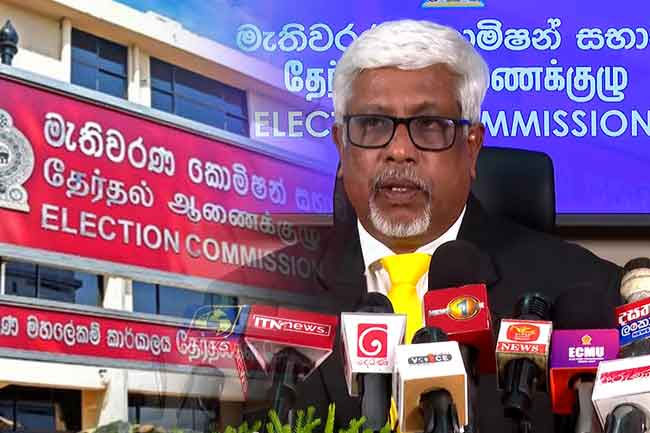
The Election Commission has taken initiative to launch a digital platform to improve and expedite services provided by the commission.

Commissioner General of Elections, Rasika Pieris, announced that the public can now access essential services from the comfort of their homes through the “Election e-Services” platform. This initiative aims to streamline the process, allowing the general public to fulfill their requirements without the need to physically visit Grama Niladhari offices, District Election Offices, or the Election Commission headquarters.

By simply logging onto eservices.elections.gov.lk, scanning the official QR code, or navigating to ec.lk/es, citizens can accesess these in via a computer or smartphone. This digital gateway is accessible 24 hours a day, providing a flexible and efficient way to engage with the Commission from any location.

The platform offers an array of services include verifying draft information for the 2026 Voter Registry revision, applying for new registrations, and submitting online requests for a change of residence. Furthermore, citizens who have recently turned 18 but are not yet registered, as well as younger citizens who possess an NIC but are awaiting their 18th birthday, can now initiate their future registration through the portal.

In addition to registration, the e-Service allows users to retrieve voter records dating back to 2015 and obtain official Voter Registration Statements bearing the Commissioner General’s signature. Crucially, the system also provides a dedicated space for citizens with disabilities to submit requests for any special assistance they may require during the voting process.

Commissioner General of Elections, Rasika Pieris further noted that all these features are available under the “Citizens” tab on the website. To ensure a smooth user experience, detailed instructions for each specific service have been provided within their respective portals to guide the public through the process.

Posted in Uncategorized

Maritime Silk Route: ‘Leverage Trinco harbour for Bay of Bengal trade growth’

Sri Lanka needs to leverage its Trincomalee natural deep-water harbour for an anticipated increase in trade within the Bay of Bengal, between Bangladesh, India, Myanmar, and Thailand, Committee on Public Finance (COPF) Chairperson Harsha de Silva said, speaking on Ada Derana’s Hydepark show on Friday (27).

“If you look at the Bay of Bengal, you look at Trincomalee, and then you look at the eastern seaboard of India, going up to Bangladesh, turning around Myanmar, Thailand, all these countries – that space is open and so much trade will happen. And Bangladesh, these countries are growing rapidly but with no deep sea ports,” De Silva said, referring to the Trincomalee natural deep-water harbour, which was once a geostrategic node in the ancient Maritime Silk Road.

Sri Lanka is also currently in high level discussions with India to renovate the World War II era British-built fuel storage facility located in China Bay, Trincomalee, to curb the impact of the growing fuel shock experienced by the nations amidst the US-Israeli war in Iran.

According to international reports, the cost of renovating each of the 61 tanks that have been earmarked of the 99 total tanks for the project, would cost roughly around $ 1.2 million per tank. Last Saturday (28) India sent a shipment of 38,000 metric tons of petroleum to Sri Lanka.

The oil storage tanks which are located in the China Bay area of Trincomalee, are situated in close proximity to the deep-water natural harbour in Koddiyar Bay, Trincomalee.

“There are studies already done by ADB and others: on fuel supplies, gas transfers, pipelines, both of which can happen on the surface of the ocean and at the bottom of the ocean. Data transfers, data pipelines, there’s so much that we can leverage within the Bay of Bengal region, and the natural absolutely number one choice is Trincomalee,” De Silva said, commenting on the key asset, which has been historically underutilised since Sri Lanka’s independence in 1948.

Sri Lanka is at the onset of experiencing a possible cost-of-living crisis tied to the rise in global energy prices and shipment disruptions, as an outcome of the Middle East conflict.

While it may be capable of fiscally supporting a fuel subsidy of Rs. 20 billion for the next two to three months, the national treasury indicates that it may not be able to continue beyond that point, which would directly impact local consumers at least for the medium term ahead.

With IMF blessing: Fuel cost subsidy to continue

The Government is to continue with the existing fuel cost subsidy, under which the State currently bears Rs. 100 per litre of diesel and Rs. 20 per litre of petrol, with the International Monetary Fund (IMF) not opposing it so far, the Energy Ministry stated.

Responding to queries by The Daily Morning yesterday (30) on whether the IMF had approved the continuation of the subsidy, Ministry Secretary Prof. Udayanga Hemapala said that the Fund had not objected to the arrangement at present. “We can continue the current arrangement. The IMF has not opposed it.”

Cabinet Spokesperson Dr. Nalinda Jayatissa said recently that the Government is currently absorbing about Rs. 20 billion per month to cushion the impact of fuel costs on consumers. He warned that if the Government is to bear the full cost of fuel imports, it would result in an additional annual expenditure of about United States Dollars 1.5 billion, placing significant pressure on the fuel sector and the national economy.

Speaking to The Daily Morning on an earlier occasion, Prof. Hemapala said that the Government planned to continue covering a portion of the fuel cost until 1 May, noting that any decision to extend the arrangement beyond that date would depend on developments in the Middle East and the IMF’s position on the matter. If the IMF approval is not granted, he said that the portion currently borne by the Government would have to be added to the fuel prices.

Posted in Uncategorized

State of Public Emergency extended by one month

The State of Public Emergency in Sri Lanka, declared by the President, has been extended by one month.

The relevant gazette notification has been issued by the Secretary to the President, Dr. N.S. Kumanayake.

This decision has been taken in view of the disaster situation caused by the Cyclone ‘‘Ditwah,’’ with the aim of ensuring public safety, maintaining normalcy in the country, and continuing the supply of essential services required for daily life.

Meanwhile, steps have also been taken to extend the gazette notification designating services provided by any state corporation, government department, local government authority, cooperative society, or their branches as essential services.

Accordingly, the gazette notification declaring several services as essential including electricity supply, distribution of petroleum products and gas, healthcare services, and public transportation has also been extended.

Posted in Uncategorized

CPC Confirms Sufficient Fuel Stocks Until May

The Ceylon Petroleum Corporation (CPC) has assured that Sri Lanka has sufficient fuel stocks until mid May.

The Corporation confirmed that all previously placed orders are being received according to the scheduled timeline.

Meanwhile, the CPC is currently discussing the specific methods for fuel distribution over the next two days, as the the days fall on odd-numbered dates.

Managing Director of CPC Mayura Neththikumarage said that a final decision regarding the distribution process for these dates is expected to be reached later today.

Posted in Uncategorized

Second Indian fuel ship docks in Colombo

Another Indian fuel vessel, HARI ANAND, arrived at the Colombo Port yesterday (29), carrying 36,000 metric tonnes (MT) of diesel and petrol, as Sri Lanka continues to grapple with fuel supply disruptions linked to the Middle East conflict.

The vessel docked at the Dolphin Jetty at around 1.30 p.m., and pumping of the fuel to the Kolonnawa storage complex commenced shortly after, authorities stated. The consignment includes 18,000 MT of diesel and 18,000 MT of 92-octane petrol.

This marks the second fuel shipment from India within days, following the arrival of a 38,000 MT consignment at the Colombo Harbour on 28 March.

President Dissanayake expressed his gratitude to the Indian Prime Minister Narendra Modi and the Government of India for the support extended to Sri Lanka amid the ongoing energy crisis.

The President said he had spoken to Modi earlier this week regarding the fuel supply disruptions faced by Sri Lanka due to the Middle East conflict.

In a post on ‘X’, formerly known as Twitter on 28 March, he said: “Grateful for India’s swift support. 38,000 MT of fuel arrived in Colombo. My thanks also to External Affairs Minister Dr. S. Jaishankar for his close coordination.”

The Indian High Commission in Colombo confirmed the earlier shipment was dispatched following a telephone conversation between President Dissanayake and Prime Minister Modi on 24 March.

In parallel, Dr. Jaishankar and Sri Lanka’s Foreign Minister Vijitha Herath also held discussions on 23 March to coordinate support.

Earlier, Lanka IOC had secured fuel supplies for March from the Middle East and Singapore. However, suppliers were unable to deliver shipments, invoking force majeure due to vessel unavailability and supply disruptions amid the ongoing conflict.

Following the setback, emergency fuel supplies were sought from India through the Indian Oil Corporation Limited (IOCL), with the 38,000 MT shipment forming part of the arrangements.

The Indian High Commission stated the Government of India stepped in to ensure the continuity of fuel supplies to Sri Lanka through Lanka IOC.

Despite Some Progress, Northern Youth Face Multiple Challenges

The condition of youth in the North cannot be understood through a single narrative. I t is shaped by history, the long period of war, social change and the pressures of a globalised economy. What emerges is a complex picture.

University students, particularly those at the University of Jaffna, have a strong sense of cultural and political custodianship. Many see themselves as protectors of Tamil identity in the post-war period. This has led to mobilisation around issues such as preserving the Tamil character of the university, especially in response to government policies that allow islandwide admissions. The entry of Sinhalese students into faculties such as law has therefore become politically sensitive. For these youth, education is not only about personal advancement but also about identity, history and collective memory.

Then there are youth who are outside formal education and employment. Remittances from the Tamil diaspora play a significant role in sustaining households. While this provides a safety net, it has also created a segment of young people who are economically dependent and disconnected from both the labour market and civic engagement. Some drift into lifestyles marked by consumption rather than production. There are rising concerns about drug use and petty crime among unemployed youth.

Diaspora money and the drug business mean that young people are able to live comfortably and buy motorcycles, smart phones and laptops without working too hard. Other than the diaspora money, young people want to do short term jobs that will earn them money quickly; they do not want to have careers. Many of them were looking for opportunities abroad, resulting in high rates of migration.

“In Jaffna the motivation is only education based on exams, not the practical skills or life skills. Only the qualification matters and usually it’s to be a doctor or engineer. Our education level is going down because children are not focussing on their education. They have different motivations,” said Rajny Rajeshwary, an activist working closely with youth in the Northern Province who is part of the Vallamai Movement that trains young people on networking, leadership, capacity building and entrepreneurship.

The drug menace was very real and drug use and selling was widespread, especially among young males. “They think that selling drugs and earning money is easier than other jobs. Although there are job opportunities because a lot of shops, supermarkets, hotels and companies are opening in Jaffna district, they can’t find people to work so they are bringing them from other areas,” Rajeshwary said.

A study by the National Peace Council (NPC) carried out in February this year captured the sentiments of a highly educated, youth-dominated demographic in Jaffna. The study revealed that there was clear evidence of improvement. A majority reported feeling safe in their daily lives. Many believed that their language and culture were treated more fairly by the state than in the past. There was also a degree of trust in the new government although it was measured and conditional. There was a significant reduction in violence and a gradual normalisation of civilian life.

“The study shows that ethnic relations at the everyday level are relatively positive. Many young people interact frequently with peers from other communities, particularly in universities and social settings. This suggests that inter-ethnic coexistence is not the primary challenge for this generation. However, such social contact does not automatically translate into political confidence or a shared national vision. The divide now lies less in daily interaction and more in unresolved structural questions,” said NPC’s Executive Director Dr Jehan Perera.

However, the optimism was sharply limited when it came to structural and historical issues. Concerns about land remained paramount. The legacy of displacement, high security zones and military occupation continued to shape perceptions. The fact that a very high proportion of young people express worried about land being taken for religious purposes indicated that the issue has evolved rather than disappeared. It was no longer only about state acquisition but also about perceived encroachment by other actors. Areas such as Palaly and other lands still under military or state control remain symbols of unfinished justice.

There was also dissatisfaction with how the past has been handled. Questions of missing persons, accountability and truth remained unresolved. These issues continued to affect trust in institutions and the sense of closure among affected communities.

The younger generation was not interested in continuing their parents’ search for their missing children. As the mothers and the fathers grew old, they were still unable to move on but their other children wanted to concentrate on going ahead with their own families and lives. Younger family members were not ready to attend protests especially when they saw how their parents’ demands have not resulted in any justice despite several decades. “They want to look after their future, so we can’t blame them and insist that we can’t forget about this; it’s not a practical life. Their lives are different,” Rajeshwary said.

Social media has widened the gap between children and their parents who are unable to understand how it works and impacts young people. “There is a big gap because the children know how to hide what they are watching. They are always on their phones even at meal times,” said Rajeshwary. “Social media is controlling our younger generation’s mind. They are not interested in the cultural aspects, religion or the rituals. Earlier we would go to temple or church together but now they don’t engage in any community activities.”

Another important dimension was internal social inequality within Jaffna society itself. The persistence of caste discrimination, along with disparities based on economic status and disability, indicated that not all challenges were externally driven. Even as perceptions of state discrimination improve, internal hierarchies continued to limit opportunities and social cohesion. This was a critical but often under-acknowledged barrier to youth empowerment.

“There needs to be credible progress on addressing the past. Even incremental steps towards truth and accountability can signal seriousness and reduce the sense of injustice that persists among young people. Land issues need urgent and transparent resolution. Returning land, reducing military involvement in civilian economic activities and establishing clear legal protections against arbitrary acquisition would go a long way in building trust,” Dr Perera pointed out.

“Youth themselves need to be engaged as active participants in shaping their future. The NPC study suggests that while they are thoughtful and aware, many are not yet mobilised around collective goals. At the community level, efforts are needed to address caste and other forms of discrimination. Youth programmes that promote inclusion, leadership and social mobility can help break down entrenched hierarchies. Creating platforms for participation in local governance, development planning and civic initiatives can harness their potential.

“The youth of Jaffna are neither trapped in the past nor fully free of it. They are navigating a transition. Their elders need to ensure that they have credible reasons to believe that it will be different from the past,” Dr Perera added.

S|ource:Groundviews

Posted in Uncategorized

Special Chinese flight deployed to remove 126 nationals from Sri Lanka

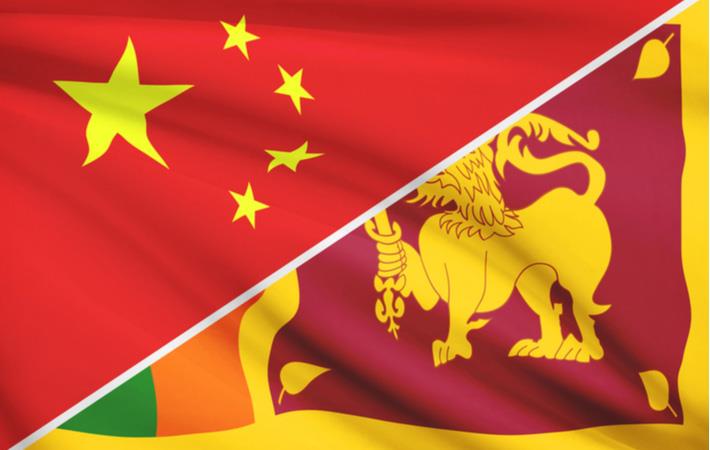
A total of 126 Chinese nationals, including six women who were arrested for visa violations, were removed from Sri Lanka to China last night via the Bandaranaike International Airport.

It was reported that a special flight from China arrived to transport the arrested individuals back to their home country.

On March 17, 2026, authorities arrested 134 foreign nationals during a joint operation conducted by the Sri Lanka Army intelligence units and the Department of Immigration and Emigration. The group included 126 Chinese nationals, four individuals from Myanmar, and four Taiwanese nationals.

The suspects were initially believed to be linked to a large-scale organised online scam network operating from several guest houses in the Anuradhapura and Mihintale areas. The operation was launched following a tip-off received by military intelligence, leading to coordinated raids at five locations used for lodging.

During the raids, officials seized a significant quantity of equipment allegedly used in the operation, including laptop computers, mobile phones, and other technical devices.

However, Police Spokesman ASP F.U. Wootler said that the arrests were made based on visa overstays. He said that if evidence of involvement in online scams had been established, the Criminal Investigation Department (CID) would have initiated further investigations.

According to him, current investigations have not revealed any links to online scam activities, but only violations related to overstaying visas.

It was also reported that a group of officials from the Department of Immigration and Emigration accompanied the individuals on the special flight to China.

The Embassy of China in Sri Lanka assisted local authorities in facilitating the removal process.

Meanwhile, Public Security Minister Ananda Wijepala said that the Chinese government had requested the removal of the arrested nationals. The individuals were removed from Sri Lanka with the approval of the Department of Immigration and Emigration.

West Asia crisis : PM Modi holds talks with President AKD

Indian Prime Minister Narendra Modi said he held discussions with President Anura Kumara Dissanayake on the evolving situation in West Asia, particularly focusing on disruptions affecting global energy security.

In a message shared on social media, Prime Minister Modi said the two leaders also reviewed progress on key initiatives aimed at strengthening India–Sri Lanka energy cooperation and enhancing regional security.

“As close and trusted partners, we reaffirmed our commitment to work closely together in addressing shared challenges,” Modi said.

The discussion comes amid growing global concerns over energy supply disruptions linked to the escalating conflict in the Middle East, which has raised fears of fuel shortages and price volatility across several countries.

Sri Lanka has already taken precautionary measures in response to the global situation, including fuel quota management and efforts to secure supply, while also exploring regional cooperation to ensure energy security.

India has remained a key partner for Sri Lanka in the energy sector, including fuel supply support, renewable energy projects, and power connectivity initiatives.

Sri Lanka Rupee Slips as Middle East Conflict Triggers Regional Currency Pressures

The Sri Lanka rupee, which remained relatively stable in the early months of 2026, has come under moderate depreciation pressure following the onset of the Middle East conflict, according to data presented in the Central Bank of Sri Lanka’s Monetary Policy Review for March 2026.

Central bank figures show that the rupee has depreciated by around 1.3 percent so far in 2026, with the exchange rate reaching approximately Rs. 314.2 against the US dollar by 25 March 2026.

This movement follows a period of relative stability at the start of the year, before global developments began to influence foreign exchange markets.

The data indicates that depreciation pressures intensified after the escalation of the Middle East conflict, reflecting broader regional and global trends. A comparative analysis of regional currencies against the US dollar suggests that Sri Lanka was not alone in experiencing currency weakness during this period.

According to the peer-country comparison, the Sri Lanka rupee recorded a 5.6 percent depreciation in 2025. In early 2026, the rupee showed a 0.2 percent appreciation during the period from end-February to end-March, but still registered a 1.6 percent depreciation from the end of 2025 to 25 March 2026.

Other regional currencies also faced similar pressures. The Malaysian ringgit showed a depreciation of 9.9 percent in 2025 and 1.6 percent so far in 2026. The Indonesian rupiah declined 3.6 percent in 2025 and 0.6 percent in 2026, while the Indian rupee weakened 4.7 percent in 2025 and 3.1 percent in the current year to date. The Thai baht, Philippine peso, Pakistan rupee, Bangladesh taka, Vietnamese dong, and Nepalese rupee also recorded varying degrees of depreciation, underscoring the region-wide impact of global uncertainties.

The Central Bank’s analysis highlights that the renewed pressures on the rupee largely coincided with heightened geopolitical tensions. Despite these challenges, the overall movement of the rupee in early 2026 has been moderate when compared with some regional peers.