Tamils in Jaffna commemorate Maaveerar Naal

Commemorations have been taking place across Jaffna as the Tamil nation marks the 36th Maaveerar Naal.

Former Northern Provincial Council member N Shivajilingham and mother of Captain Pandithar lit a flame at the native home of Lt Shankar, the first LTTE cadre to sacrifice their life in the liberation struggle.

Shivajilingham also lit a flame outside Koppay Thuyilum Illam, an LTTE cemetery, which is currently occupied by the Sri Lankan Army’s 51 Division.

In 1995, Koppay Thuyilum Illam was destroyed by the Sri Lankan army but was later rebuilt by the LTTE during the 2002 ceasefire. Koppay Thuyilum Illam, where at least 2,000 LTTE cadres are reported to have been buried, was bulldozed over by the Sri Lankan state in 2010. Now, the Sri Lankan military’s 51 Division base now stands on top of it.

Captain Pandithar’s mother also lit a flame at Revady beach, Valvettithurai, in honour of the Sea Tigers, the LTTE’s naval wing.

Lt Col Thileepan, a political wing leader of the LTTE, was honoured at his memorial in Nallur, Jaffna. In September 1987, Thileepan fasted to death in a protest appealing to the Indian government to honour pledges made to the Tamil people.

Tamils gathered outside Kodikamam Thuyilum Illam, where the Sri Lankan military’s 522nd Brigade headquarters is now based.

University of Jaffna students erected an arch outside their campus to mark the day.

A lamp was lit outside Nelliyadi Central College in memory of Captain Miller, or Vallipuram Vasanthan, the first Black Tiger to sacrifice their life.

As well as a banner marking the day, posters were displayed at the roundabout in front of Jaffna Hindu College.

The posters read: “The legacy of our heroes’ sacrifice should not be wasted. So wake up young generation .. wake up from drugs and violence, and use the weapon of knowledge.”

Has ex-minister Nasir Ahmed taken 20 crore government vehicles home?

Naseer Ahmed, who lost his position as a Member of Parliament due to a court decision,

Some social media have reported that he used two luxury jeeps used during his tenure as the Minister of Environment and used them for his personal use without returning them.

According to the media reports, these two vehicles worth nearly 20 crore rupees are two official vehicles issued to the minister by the government.

Some media reports also state that the Ministry of Environment has complained to the Mirihana Special Crime Investigation Unit regarding the non-handover of these two vehicles.

He replied that the two vehicles have been handed over to the Presidential Secretariat. But it is also mentioned in the media reports that the vehicles have not been handed over to the Presidential Secretariat till now.

True – no!

In this regard, when we asked a senior officer of the President’s Office, he said that he has arranged to hand over the two cars bearing numbers CAU-4118, CAS-9010 assigned to the duties of former Environment Minister Nasir Ahmed to the President’s Office on 08.11.2023. .

Accordingly, the officer said that the jeeps numbered CAU-4118 and CAS-9010 handed over to the President’s Office have been used for the essential duties of the President’s Office.

A letter sent by Buddhika Jayatissa, Senior Assistant Secretary (Transport) to the President informing the Secretary of the Ministry of Environment in this regard states:

zdxfdsfse

Source:The Leader.LK

Posted in Uncategorized

Yasmin Sooka protests government bid to block Tamil war dead remembrance

International human rights lawyer and Executive Director of the International Truth and Justice Project (ITJP) Yasmin Sooka has expressed her resentment regarding the refusal of the Sri Lankan government to allow remembering the war dead in Sri Lanka Police has made several unsuccessful attempts to persuade courts to ban Tamil preparations to commemorate their loved ones on November 27.

In her open letter in the Jaffna based Tamil Newspaper ‘Uthayan’, Sooka has expressed her anguish and deep concern over the failure to rectify and bring about true justice for the families of the disappeared and for those tortured and displaced during the brutal civil war which came to a bloody end in May 2009.

The English translation of her article is found below:

Impunity in Sri Lanka has deepened, given the Government of Sri Lanka’s failure to ensure any kind of accountability for those responsible for war crimes and crimes against humanity committed at the end of the civil war in May 2009.

While the war may have ended, the persecution of Tamils in Sri Lanka and abroad continues. The violence that continues to be inflicted by the security forces impacts not only on individuals and their families, but also destroys the social fabric on which coexistence, tradition and trust are built.

The Government of Sri Lanka continues to violate the legitimate rights of Tamil families to mourn on 27 November and remember those who lost their lives in the Tamil struggle for liberation.

Year after year, since 2014, my organisation has documented the testimony of torture survivors who flee abroad.

The Sri Lankan intelligence agencies photograph them after they attend remembrance events in the north east, visiting them later and threatening them

One man we interviewed, who made a speech on 27 November 2022 at a cemetery in the north said he thought it was safe to do so, as the new President had allowed the events to go ahead.

Days later, and in violation of his right to freedom of expression and freedom of movement, he was picked up and tortured; he fled, leaving behind his new-born baby and thriving business.

In interrogations the security forces ask ‘who funds these commemorations’ which misses the point.

Organising and attending commemorations are not just acts of resistance but also expressions of a very deep personal grief felt by all survivors of this terrible war. Families of victims of state sponsored violence are also themselves victims; in addition to the suffering caused by the disappearance, torture or death of their loved ones, they face the overwhelming barrier of impunity, and guilt for having survived.

In their struggle for truth and justice, the survivors consider it their moral and social responsibility to continue to remember the dead and the disappeared. It’s not just those who mourn their family and friends on 27 November but the whole community that remembers the sacrifice and the collective suffering.

Over the years we’ve seen groups of Tamil survivors abroad reclaim their right to remember the dead in private and in public spaces.

In the process they struggle with what it means to survive, and to bear witness.

They find new ways to articulate not only their individual suffering but also that of their communities in order to keep the memory alive for future generations.

No amount of repression is going to stamp out the human need to mourn, especially if it’s for your child or parent. A torture survivor described that even while detained in Boosa after the war, he and his cellmates rose early to light a candle on 27 November, knowing full well the guards would exact revenge.

Nevertheless it was the last scrap of dignity they had left and for them it was worth the cost.

President Ranil Wickremesinghe, speaks of establishing a Truth Commission; in a context where survivors of the war are unable to exercise their right to mourn and deal with their pain when they attend commemoration events, it is unlikely that survivors will participate and provide testimony to such a body.

If a Truth Commission is to be successful and credible, the President will need to guarantee state-sponsored violence will end, and that there will be no further surveillance of events by the security forces on 27 November and there will be no reprisals against those who organise or take part in them.

The diplomatic community should not remain silent in the face of this repression and should send international observers to ensure that officers in plain clothes are not taking photos.

Cardinal expresses dismay over the Online Safety Bill

The proposed Online Safety Act by the Sri Lanka Government will limit the people’s right to expression, and search for the truth, said His Eminence Malcolm Cardinal Ranjith, the Archbishop of Colombo.

He called for such efforts that would carry the country towards a dictatorship to be defeated.

“What this country needs is a change in vision. This country needs a legal transformation where all religions and communities will be treated equally,” he said while speaking at an event in Colombo.

His Eminence Malcolm Cardinal Ranjith called for the creation of a new country where all of Sri Lanka’s resources will be protected while breaking from any foreign allegiances, thus making the country self-sufficient with an economy that will provide benefits to all the people.

“The time is now to reject the traditional way of politics that had governed this country thus far,” he said, noting that nepotism must be eliminated from the country.

His Eminence Malcolm Cardinal Ranjith also stressed that the time is now to do away with the oppressive political leadership, and install a leadership that loves the country.

“There are some newspapers, television stations, and radio stations, that are somewhat connected or loyal to certain political groups, and have worked to mislead the masses,” he added.

The Archbishop of Colombo went on to note that given the situation, the people mainly use social media to express their views, and the government, citing social media regulation, is trying to limit the people’s right to expression, and their right to search for the truth.

Posted in Uncategorized

Sri Lanka awards $4.5 bln oil refinery to China’s Sinopec in Hambantota

Sri Lanka has approved China Petroleum & Chemical Corporation (SINOPEC) to establish a new Petroleum Refinery in the island nation’s deep Southern Hambantota port, Power and Energy Minister Kanchana Wijesekera said.

“Cabinet approval was granted today to award the contract to China Petroleum & Chemical Corporation (SINOPEC) of China, to enter into an agreement to establish a new Petroleum Refinery & Associated Product Processing center in Hambantota,” Wijesekera said in his X (formerly Twitter) platform.

The Minister on Saturday said the government expects at least $4.5 billion investment in the new refinery which will cater into exports as well as local markets. Sinopec has already started fuel retailing in Sri Lanka, competing with Sri Lanka’s state-owned Ceylon Petroleum Corporation (Ceypetco) and Lanka IOC, a fully owned subsidiary of Indian Oil Corporation.

Though Sinopec and Vitol Asia based in Singapore were the two firms shortlisted out of seven companies that responded to an expression of interest early this year, Vitol withdrew its bid, government officials have said.

The move will strengthen China’s position in Sri Lanka where India and other developed countries are trying to win projects and have influence in the South Asian Island nation which is facing an unprecedented economic crisis.

Beijing already has a massive port in Hambantota on a 99-year lease and expects to establish an investment zone in 15,000 acre land.

Posted in Uncategorized

Harin appointed Sports Minister, Pavithra sworn in as Irrigation Minister

Two new Ministers were sworn in a short while ago before President Ranil Wickremesinghe, the President’s Media Division (PMD) reported.

Accordingly, Harin Fernando, currently serving as the Minister of Tourism, was sworn in as the new Minister of Sports, while Minister Pavithra Wanniarachchi, currently serving as the Minister of Wildlife and Forest Resources Conservation, was sworn in as the Minister of Irrigation.

The new appointments come on the heels of former Minister of Sports and Irrigation Roshan Ranasinghe’s removal from his ministerial portfolios.

Earlier today (27 Nov.), the SLPP parliamentarian said that he received a letter from President Wickremesinghe, informing him that he has been removed from all his ministerial portfolios and positions.

Notably, Minister Harin Fernando previously served as the Minister of Sports from 2019 to 2020.

Posted in Uncategorized

Online Safety & Broadcasting Regulatory Commission laws DO NOT meet international standards – UN

Special Rapporteurs of the United Nations have expressed concerns over the proposed Online Safety Act and Broadcasting Regulatory Commission Act.

UN Special Rapporteur on the promotion and protection of the right to freedom of opinion and expression Irene Khan, Special Rapporteur on the rights to freedom of peaceful assembly and of association Clement Nyaletsossi Voule, and Special Rapporteur on the right to privacy, Ana Brian Nougrères, expressed their concerns via a statement to the Sri Lankan government.

They note that the Online Safety Act and Broadcasting Regulatory Commission Act do not meet the requirements of international law and standards.

They noted that there are potential violations of the rights to privacy, freedom of opinion and expression, and freedom of peaceful assembly and of association as protected by the Universal Declaration of Human Rights (UDHR), and the International Covenant on Civil and Political Rights (ICCPR), acceded to by Sri Lanka.

In terms of the Online Safety Act, they said that many provisions appear vague and overly broad and may therefore fail to meet the requirements of the ICCPR.

The statement added that the proposed law may severely limit the scope of online expression and may pose major barriers and threats to any individuals, especially journalists, human rights defenders and civil society organisations who may be critical of the government.

They added that the bill seems to be directed at people living in Sri Lanka and at the diaspora, with severe adverse effects on the freedom of expression of a very wide range of individuals.

On the proposed Broadcasting Regulatory Commission Act , the Special Rapporteurs said that Commission’s appointment process, if implemented in its current form, may thus give the executive the ability to punish, and/or deny licenses to media outlets that do not have a favourable view of the Government.

They stressed that it is essential that the oversight mechanism be an autonomous body, independent from any pressure or political ties.

The statement added that to protect freedom of expression, international standards require States to respect the freedom of the media.

It added that States have an obligation to refrain from engaging in indirect forms of censorship, such as the abuse of controls over newsprint, radio frequencies or infrastructure used to disseminate media content and ensure the independence of bodies which exercise regulatory powers over the media.

The Special Rapporteurs encourage the withdrawal, public consultation and substantial review of key aspects of both the proposed Online Safety Act and the Broadcasting Regulatory Commission Act.

Posted in Uncategorized

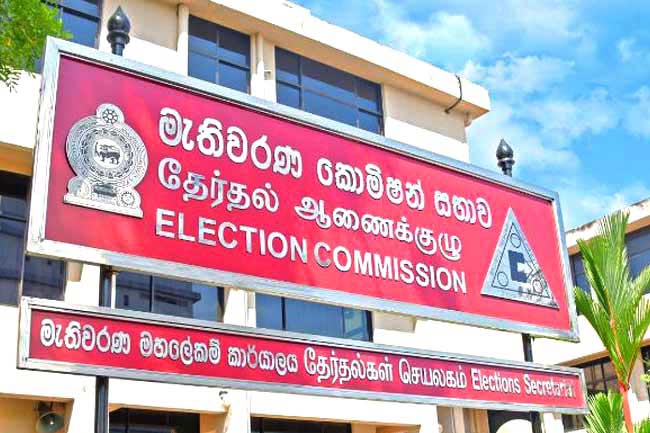
Presidential Election: EC looking at polls date from 16 Sep.-17 Oct.

The forthcoming Presidential Election is slated to take place on a day between 16 September and 17 October next year, as confirmed by Election Commission (EC) Chairman R.M.A.L. Rathnayake.

He told The Sunday Morning that the specific date for the election would be decided and officially announced in July (as per the two-month advance notice prior to the commencement of the stipulated election period).

Emphasising on adherence to constitutional and legal frameworks, Rathnayake highlighted that the selection of the election date would strictly follow the procedures outlined in both the Constitution and the Presidential Elections Act.

Accordingly, Section 2 of the Presidential Elections Act No.15 of 1981 states: “(1) Where the Commissioner of Elections is required by the Constitution to conduct the election of the President, he shall by Order published in the gazette (a) fix the date of nomination of candidates being a date not less than 16 days and not more than one month from the date of publication of such Order, and the place of nomination; and (b) fix the date on which the poll shall be taken, being a date not less than one month and not more than two months from the date of nomination.

“(2) The date fixed under paragraph (a) or paragraph (b) of subsection (1) shall be any day other than a full moon Poya day or any public holiday specified in the First Schedule to the Holidays Act No.29 of 1971; and if, after the publication of the Order under subsection (1), any day specified therein is declared to be a public holiday, such declaration shall in no way affect the validity of anything done on such day for the purposes of that subsection.”

Further, Chapter VII, Section 31(3) of the Constitution states: “The poll for the election of the President shall be taken not less than one month and not more than two months before the expiration of the term of office of the President in office.”

Explaining further, the EC Chairman said that essential measures had already been initiated to prepare for the upcoming Presidential Election, including the formation of the electoral registry.

He further disclosed that subsequent tasks, such as securing funds for activities like printing ballot papers and other documentation work, were scheduled to commence in the coming year.

When asked about the General Election, the EC Chairman clarified that the anticipated date was 2025. However, he pointed out the possibility for the newly-elected President to dissolve Parliament and expedite the General Election upon assuming office. This flexibility is contingent upon the preferences of the incoming president.

Meanwhile, President Ranil Wickremesinghe asserted in Parliament last week that both the Presidential and Parliamentary Elections were scheduled to be held next year.

North-East courts reject police requests to ban events to commemorate war dead

In the Northern and Eastern Provinces, several courts have turned down police requests seeking stay orders banning tomorrow’s commemorative events organised by the Tamil community to remember their war dead and those who were killed during the war period.

When the seven applications filed by Kilinochchi Division police stations came before the magistrate court on Friday, the court refused to grant an order under vague urgent public nuisance clauses while recognising the right of the people to remember their lost loved ones.

Police sought early stay orders from the magistrate under the Code of Criminal Procedure Section 106 (1), saying that these events were being organised to commemorate the terrorists who belonged to the Liberation Tigers of Tamil Eelam (LTTE), a terrorist organisation banned in the country. The police argued that if allowed, it would cause enmity among communities and disrupt normalcy in the region.

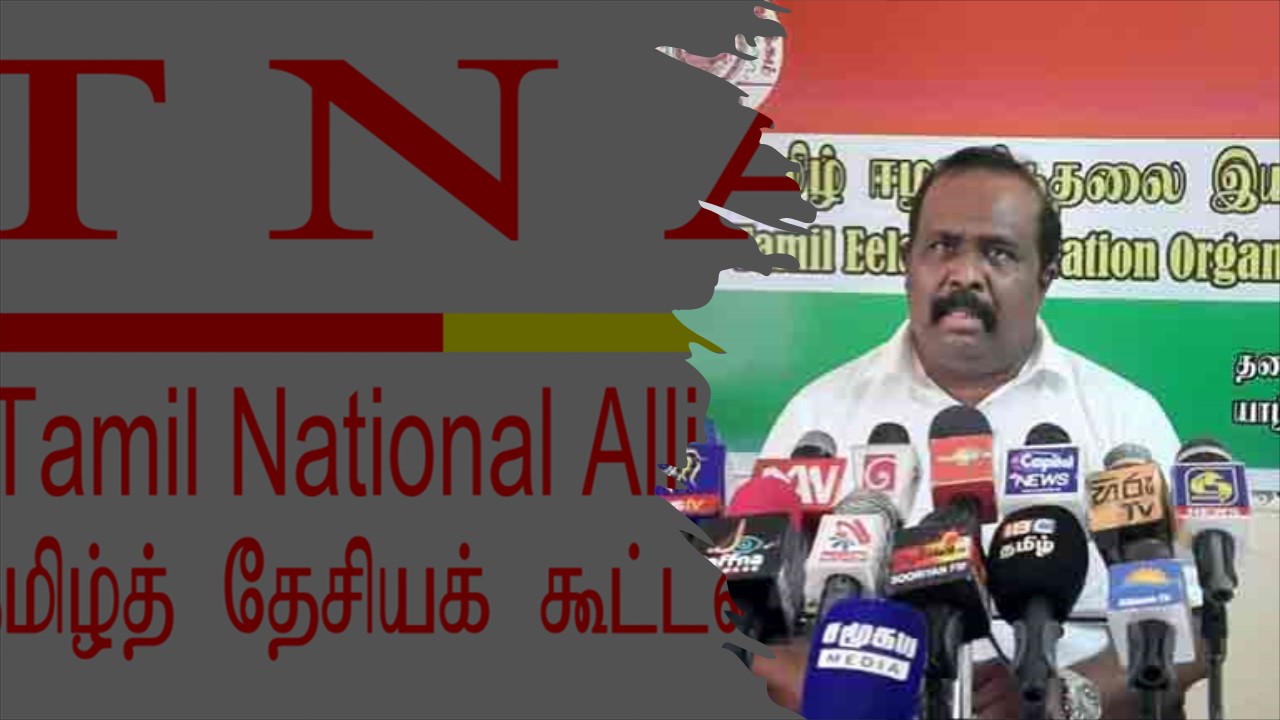
Jaffna District Tamil National Alliance Parliamentarian M.A. Sumanthiran, who appeared in the cases in the Kilinochchi Magistrate’s Court, submitted that attempts by police to prevent these events were in bad faith since similar events were conducted annually for the past thirteen years.

He told the Court that under Article 14, clauses (a), (b), and (c) of the Constitution, the right of association and freedom of religion are fundamental rights of the citizens. These ceremonies are organised to bring solace to the departed souls in line with their religious beliefs, and that fundamental right could not be curtailed, he said.

When the police told the court that if the temporary sheds collapsed, they could pose a danger to the people, the court directed the police to submit a technical report on such instances since the police acknowledged that some sheds were yet to be put up.

Similarly, in Jaffna, Mallakam, Point Pedro, Kokkadicholai, and Vavunathivu, the magistrates’ courts shot down police requests for a ban on commemorative events. However, at Sampur in Trincomalee, the magistrate court issued a stay order, but moves are underway to move a motion to urge the court to reconsider its decision on Monday.

The annual Martyrs’ Day, known as “Maveerar Day,” was introduced by the LTTE to commemorate its fallen cadres in its dedicated cemeteries on November 27 as a major public event.

Following the end of the war, many such cemeteries were either destroyed or new buildings were put up by security authorities. Currently, family members, relatives, and those who lost their loved ones during the war assemble near those cemeteries to mark the day to remember their war dead.

Meanwhile, Senior DIG (North) K.P.M. Gunaratne told the Sunday Times that if there were any violations against the laws or illegal activities such as commemorating terrorists, the police would deal with the situation according to the law.

The Inspector General of Police (IGP) and the Director of the Terrorism Investigation Division (TID), meanwhile, gave an undertaking to the Court of Appeal (CA) this week that they would take action under common law and the Code of Criminal Procedure against any attempt to commemorate the LTTE. The undertaking was given by Senior State Counsel Shamindra Wickrama, who appeared for the IGP.

The IGP and TID Director gave the undertaking when the CA took up a writ petition filed by Ananda Jayamanna, a retired military intelligence officer, requesting an order to enforce the law against any event being held to commemorate the LTTE and its late leader Velupilai Prabhakaran.

Sri Lanka refuses to bow down to Indian pressure on China

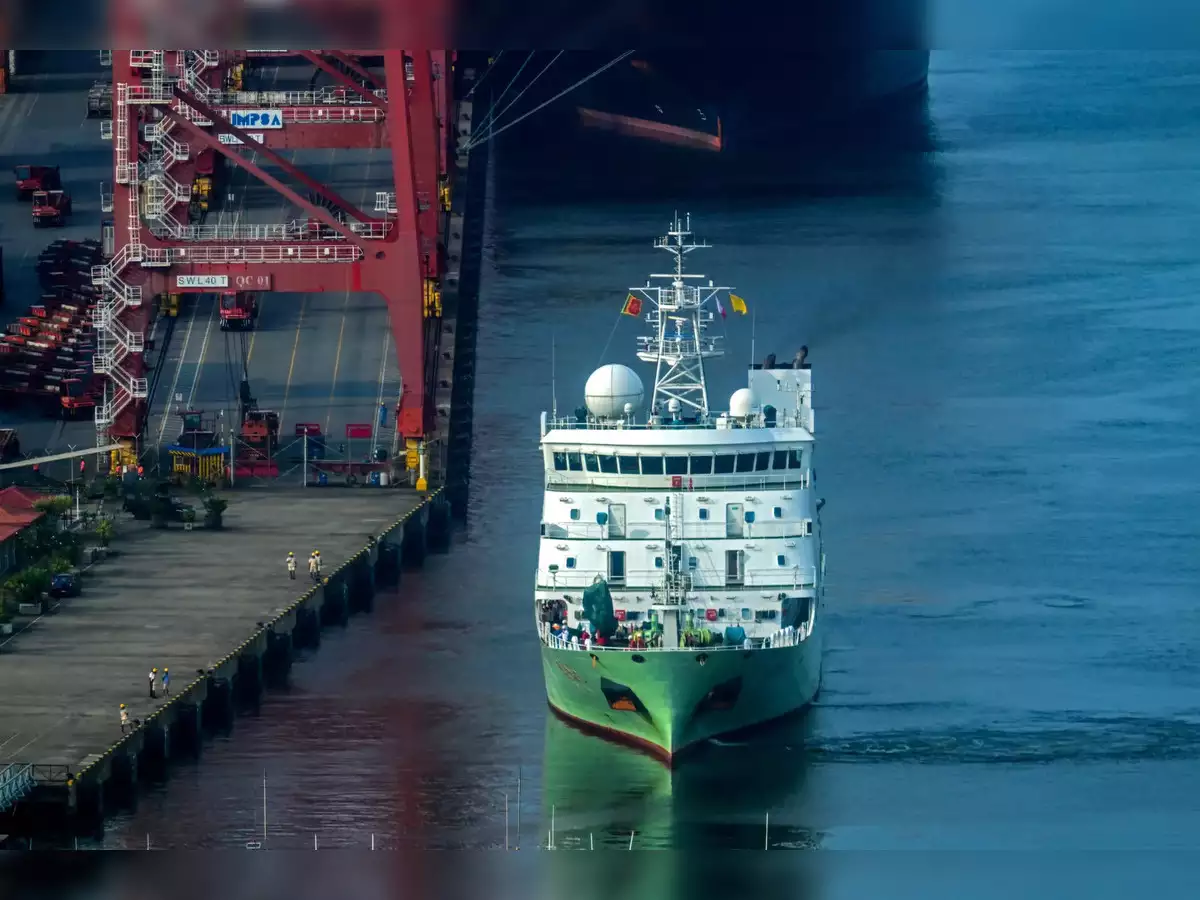
Sri Lanka has refused to bow down to Indian pressure on China and will continue to allow Chinese military ships to dock in the country.

In an interview with Firstpost’s Palki Sharma, President Ranil Wickremesinghe said that Sri Lanka will continue to allow Chinese military ships to dock in Sri Lankan ports.

He said that there was no evidence that Chinese “spy ships” had entered Sri Lankan waters.

The President said that a Chinese research vessel and another ship had arrived in Sri Lanka recently.

Wickremesinghe, however, noted that Sri Lanka will not be used to pose any threat to India’s national security.

Posted in Uncategorized