SL’s struggle with Investment Complexity – Corruption takes the lead

Sri Lanka’s strategic positioning abutting the world’s major trade arteries and in close proximity to key markets in the region makes it a leading investment destination. The successive governments, more or less, have made various attempts to attract investments. The country is still at a loss despite its enormous potential. Things have moved at a snail’s pace, leaving people largely at the receiving end in a land with promise. The failure on the part of the successive governments to unleash the potential is a serious matter to be focused on.

The World Bank has estimated Sri Lanka’s untapped potential at around US $ 10 billion, an amount sufficient to generate as many as 142,500 jobs for the youths. In one of the recent address, Faris Hadad-Zervos, World Bank Country Director for Maldives, Nepal and Sri Lanka, said that tapping this missing potential requires liberalizing trade and attracting more and better investments.

“I am glad to see the budget speech announcement that para-tariffs will be gradually phased out. This will ultimately need to be followed by a broad reduction in tariffs to increase competitiveness and export orientation. In parallel, a streamlined institutional and legal framework is required to improve the regulatory and policy environment to attract and retain investment. We are pleased to see Sri Lanka moving in this direction with a plan to put in place a comprehensive stand-alone ‘Investment Law’ to facilitate all aspects of the investment life cycle,” he said in his speech now posted online.

Complaints are however galore from diplomatic circles about what is called ‘Sri Lanka’s complex investment climate’. Bureaucratic red tape, commission–seeking politicians, technocrats and public servants, complex land laws, the absence of policy consistency even on vital matters such as taxation and foreign currency regulation stand in the way of attracting much-needed investments. The whole problem is now like a web of creepers, and the government has to take a lot of pain to untangle it.

In one example, a diplomatic source said that there are a number of Australian companies with live investment proposals that have not been approved because of the complex investment environment. For them it is hard to navigate the labyrinth.

“These cases have all been ongoing for many years, so the companies are very frustrated,” the source said.

In another instance, Sri Lanka has not pursued investment proposals sent by a team of Chinese investors. A source familiar with them said Sri Lanka failed to generate sufficient confidence and the lethargy displayed is unexplained.

“Also, the social unrest last year, the crash of the economy and the currency and the general difficulty of doing business in Sri Lanka did not help,” the source said.

The abrupt cancellation of tenders awarded, at times, is yet another reason for the erosion of investor confidence. The cancellation of the Light Rail Transit project is an example in this regard. The current government made a great deal of diplomatic efforts to convince the Japanese government in this regard. The project is now slated to be resumed.

The government has initiated some steps to improve the investment climate. The restructuring of the state-owned enterprises (SOEs) is one of them as otherwise misallocation of resources in favour of them affects competitiveness in an open market.

The Foreign Direct Investments (FDI) have largely been focused on tourism, real estate, mixed development projects, ports, and telecommunications in recent years. The country ranks 99 in the ease of doing business index. According to Transparency International’s 2022 Corruption Perceptions Index (CPI), Sri Lanka scored a 36 on a scale from 0 (“highly corrupt”) to 100 (“very clean”).

It means that there is a lot for Sri Lanka to improve the investment climate. It is always politicians who are slandered for corruption. Equally responsible for corrupt practices are bureaucrats whose connivance is needed for politicians to indulge in fraudulent activities.

Singapore and Sri Lanka discuss regional stability

Singapore and Sri Lanka today discussed regional stability during a meeting between Ranil Wickremesinghe and Singapore’s Minister for Defence Dr Ng Eng Hen.

Dr Ng Eng Hen called on President Wickremesinghe who is in Singapore for a two-day working visit.

During the meeting, Dr Ng and President Wickremesinghe discussed geopolitical developments and the importance of regional stability for small maritime countries.

“The meeting demonstrates the friendly defence ties between Singapore and Sri Lanka,” the Singapore Defence Ministry said.

Earlier, Wickremesinghe had a call with Singapore President Halimah Yacob.

“We had a fruitful discussion, covering food security, renewable energy, regional economic cooperation, amongst others. Our friendship is anchored by strong people-to-people ties and cooperation across various sectors. There is much scope to deepen our ties. I wish President Wickremesinghe a productive visit in Singapore,” President Halimah Yacob said in a brief statement.

Joining the President on this are Sagala Ratnayaka, Chief of Presidential Staff and Senior Advisor on National Security, Ruwan Wijewardena, Senior Advisor on Climate Change and Dr. R.H.S. Samaratunga, Senior Advisor on Economic Affairs.

Posted in Uncategorized

Status of 15% of Sri Lanka’s IMF commitments ‘unknown’: “Lack of Visibility on Govt’s Progress in IMF Programme”

The share of Sri Lanka’s 100 trackable commitments in the International Monetary Fund (IMF) programme for which no data has been made available to assess progress — despite passing the agreed deadline —has increased from 9% in March to 15% in July, according to Verité Research.

The lack of information to make a reasonable assessment about these commitments, the think tank notes, highlights a growing lack of visibility on the government’s progress on the IMF programme.

What can explain the increase in “Unknown” progress?

The findings are based on the IMF Tracker of Verité Research, which tracks the programme’s progress and classifies commitments as “met”, “not met”, or “unknown” on verifiable criteria.

Verité Research points out that the rise in the number of commitments, on which the achievement is “unknown”, could mean one of two things. One, the government has failed to meet these commitments and is not making the information public to delay the recognition of failure. Two, the government does not see the public or parliament as important stakeholders in programme implementation — and is uninterested in providing them with critical information.

Can Sri Lanka pick-up the rate of progress?

Sri Lanka had verifiably met 35 of the 57 commitments on the IMF programme that were due to be completed by the end of July; up from 33 in June. In July, the parliament approved the Central Bank of Sri Lanka Bill and the Anti-Corruption Bill. These bills were originally due to be approved in April and June 2023, respectively. This means that Sri Lanka is moving forward slowly and with a significant delay against the agreed timelines.

Since March, when Sri Lanka started off well with 25 commitments already completed, the average rate of verifiable completion has been less than three per month. There are 71 commitments due to be completed by the end of September, when the IMF conducts its first review of the programme and would normally disburse the second tranche of funding. To get there, Sri Lanka needs to verifiably complete 18 commitments a month in August and September.

In evaluating progress, any policy-related action that lacks public disclosure of their completion status even two months after the due date is deemed not met. Consequently, the commitment set for April regarding the “completion of the asset quality review component of the diagnostic exercise for the two largest state-owned banks and the three leading private sector banks” has been reclassified from “unknown” to “not met.” A total of seven commitments were classified as “Not Met” at the end of July.

Sri Lanka pays back $50 million to Bangladesh

Bangladesh has received the first instalment of $50 million from the $200 million loan taken by Sri Lanka in September 2021.

The financial assistance was extended by the Bangladesh Bank to Sri Lanka to address a pressing foreign exchange reserve crisis experienced by the South Asian country then.

Md Mezbaul Haque, executive director and spokesperson of the Bangladesh Bank, on Monday said that the first payment from Sri Lanka was received on August 17.

He also said that Sri Lanka was expected to pay back another instalment by August 30.

The Bangladesh Bank foresees the repayment of the entire $200 million loan by September, he added.

Under the terms of a currency swap agreement, Bangladesh provided this monetary support to Sri Lanka in three distinct tranches.

The first tranche of $50 million was sent on August 19, the second instalment of $100 million on August 30 and the rest $50 million in September of 2021.

On August 19 in 2021, the BB released $50 million as the first tranche and another $100 million as the second instalment on August 30 in 2021 and the third tranche worth $50 million on September 21 in the same year.

The initial tenure of the currency swap agreement was set at three months while the agreement contained a rollover condition, allowing Sri Lanka to extend the period of repayment of the financing facility.

Source: New Age

Posted in Uncategorized

13A is here to stay but it has to be fine-tuned BY P.K.Balachandran

The recent statements made by President Ranil Wickremesinghe and those attributed to the leaders of the Samagi Jana Balawegaya (SJB) and the Sri Lanka Podujana Peramuna (SLPP) make it clear that the 13th Amendment to the constitution (13A) that devolves some powers to the Provinces has the tacit support of the Sri Lankan political parties notwithstanding overt opposition to it.
In his Special Address to Parliament on August 10, the President stated the reasons for thinking that the 13A is necessary even as he said that the working of the Provincial Councils (PCs) set up under the 13A left much to be desired and suggested changes.

The SJB’s General Secretary Ranjith Madduma Bandara said: “We are in favour of devolution and the 13th Amendment. However, we do not want them to be used as smokescreens to delay elections.” The SLPP General Secretary Sagara Kariyawasam said that for the time being, no “expansion” of the 13A should be attempted because the country is faced with a grave economic crisis. He did not say that 13A should go. In fact, when he was President, SLPP patriarch Mahinda Rajapaksa had said that if he abolished the PCs, those politicians who were demanding abolition would be the first to agitate for its retention!

If 13A exists today, it is not because of India’s pressure but because the Lankan political system finds it useful. President Wickremesinghe said this about the 13A in Parliament: “The Provincial Councils have nurtured skilled political leaders and served as stepping stones to executive and parliamentary roles. Throughout history, numerous individuals who embarked on their political journey as Provincial Council members ascended to positions of power like the executive presidency, premiership, cabinet membership, and other significant roles. Many of the Ministers currently seated in this House have traversed a path from provincial council members to Chief Ministers and beyond. None of the parliamentary political parties advocates for the abolition of Provincial Councils. Representatives from all these parties have engaged with and been part of Provincial Councils.”

“The PCs have become an enduring component that cannot be excised from Sri Lanka’s governmental structure or political landscape,” the President said.

Consensus on the need for 13A was reached by the Steering Committee formed for framing a new constitution during the 2015-2019 Yahapalanaya regime. However, the President stressed the need for the 13A to be implemented “in a manner that aligns with Sri Lanka’s development and future.”
Referring to the drawbacks in the working of the PCs, the president pointed out that the LKR 550 billion spent on them every year, needed to be examined for their rationale. Further, the division of power and authority between the PCs, the central government, and the local bodies lacked clarity. “Subjects overlapped resulting in duplication of efforts and delayed actions.”

Steering Committee’s Recommendations

The interim report of the Steering Committee on a new constitution released in September 2017 recommended (1) Ensuring the participation of PCs in the formulation of national policies concerning matters within the Provincial List; (2) Avoiding transfer of constitutionally decentralized powers from the PCs to the Central Government; (3) Abjuring the practice of taking over the implementation of the National Policy on a Provincial subject.

There were proposals to grant authority to the PCs to provide education-related services at the school level, establish Provincial Boards for Vocational and Technical Training Services and Universities, provide grassroots agricultural innovation services and promote provincial tourism.

The President said that the Industries Act needed to be amended to increase the limit for industries of national importance from LKR 4 million to LKR 250 million. This could be raised to LKR 500 million.

He proposed to establish District Development Councils to chalk out a three-year plan for each provincial council in alignment with the central government’s national policies. Central government development programmes should be customized for each district and execution should be entrusted to the PCs.

There should be a legal framework to enable MPs, PC members and members of Local bodies representing each district to collaborate effectively in this endeavour. The President further said that a committee, led by the Prime Minister, will be established to re-evaluate the List of powers held by the central government, and provincial councils. The concurrent list would also be examined. The President suggested allowing Members of Parliament to contest in provincial council elections.

On the delicate subject of granting police powers to the PCs as per 13A, the President said: “It would be more practical for us to initially focus on reaching consensus concerning other powers. It’s advisable to progress step by step.Prioritizing sensitive matters could potentially hinder the attainment of any mutual agreement.”

EPDP’s Step by Step Reform

The Eelam Peoples’ Democratic Party (EPDP) led by Fisheries Minister Douglas Devananda had submitted a step-by-step approach to the reform of the 13A.

Stage I involves retaking functions taken over by the Centre through executive means in the last 36 years. This could be done through Administrative means. Stage II involves amending (a) certain Acts that were enacted prior to the passing of the 13A so that these are in line with the provisions of the 13A. (b) repealing certain provisions of the Provincial Councils Act No. 42 of 1987 and Transfer of Powers (Divisional Secretaries) Act No. 58 of 1992 to facilitate the smooth functioning of the PCs. These amendments could be done by a simple majority in parliament of those present and voting.

The EPDP cited some cases as examples. Agriculture and Agrarian Services is a Provincial subject. But it was taken over by the Central Agriculture Ministry. That was challenged in the Supreme Court. The Court ruled that “Agrarian Services” is in the Provincial List. And yet, the Central Agriculture Ministry continued to hold on to the subject by changing the name of the Department to “Department of Agrarian Development!”.

The Turnover Tax on wholesale and retail sales is the main revenue earner for the Provinces provided in the 13A. But that tax was done away with, and the Centre began collecting the Value Added Tax (VAT) and sharing a percentage with the Provinces. The PCswere thus deprived of an independent source of revenue.

As per the Constitution, the Finance Commission’s duty is to make recommendations to the President on the principles on which funds should be granted to the Provinces. But in practice, the Finance Commission gives directions as to how the fund should be spent also. This is not the intended function of the Finance Commission.

As per the Provincial Councils Act, No. 42 of 1987, the appointment, transfer, dismissal and disciplinary control of officers of the public service of the Provinces are vested in the Governor of that Province and the Governor, in turn, could delegate that power to the Provincial Public Service Commission. But in defiance of this provision, the Secretary of the Central Health Ministry directly decides all appointments.

On the controversial issue of devolving Police Powers, the EPDP says that the PCs should be permitted to enroll Provincial police personnel for deploying them on duties “without carrying weapons, such as traffic duties, controlling crowds etc.”

Stage III involves Constitutional Provisions that need to be Repealed or Amended. The Centre’s power over National Policy on all Subjects and Functions, including those in the Provincial List, should go. The Concurrent List should also go. The requirement of the Governor’s assent for the statutes passed by the Provincial Council to be done away with. And the Governor should be appointed by the President with the concurrence of the Chief Minister.

Some of EPDP’s suggestions are too radical, but its case that there is a wide measure of agreement on most of its proposals may not be off the mark.

Posted in Uncategorized

Minister Thondaman’s intervention leads to justice for evicted Ratwatte Estate family

The Chairman of the Ratwatte Estate in the Elkaduwa Plantation located in the Matale district has dismissed an Assistant Estate Manager who was caught on video violently evicting a poor estate worker family, including a 2-month-old child, with a weapon.

The viral video, which showed the Assistant Estate Manager and other estate officers illegally breaking a temporary shelter for the family, throwing out their food and speaking in a derogatory manner, led to several MPs and civil society organisations raising their alarm and demanding action.

Minister Jeevan Thondaman, who is responsible for the estate sector, visited the Ratwatte estate and the family on Sunday. At the inquiry, it came to light that the eviction of the estate worker and their family was illegal, without a court order or police intervention.

The General Manager of the Estate had also threatened to throw the worker family including his infant child on to the street. The Minister had then demanded for immediate action and accountability against the responsible persons.

The Chairman and the now-dismissed Assistant Manager had expressed their sincere regrets over the unfortunate episode to the affected family. The Estate has also vowed to construct a permanent residence for the aggrieved family on its grounds and committed to construct a further 11 permanent houses for families living and working on the estate, addressing long-standing housing issues they’ve faced.

Estate workers in Sri Lanka often live in sub-standard housing without access to basic services. Estate workers are also regularly subject to inhumane working conditions and often denied their basic rights. In the viral video, the deplorable housing conditions of estate workers in the Ratwatte Estate is clearly visible.

This year, the Cabinet agreed to commemorate 200 years since the arrival of estate workers of Indian Origin. Minister Thondaman also revealed that the Government is taking several policy initiatives to address the land and housing, education, health and economic issues faced by estate workers.

In his statement on the platform X (formerly known as Twitter), the Minister emphasised that “No individual should be robbed of their dignity or a home. The legacy of being born indentured to a company must come to an end. Everyone deserves the chance to flourish, live respectfully, and be free from humiliation.”

Mano wants estate manager sacked

Meanwhile, MP Mano Ganesan urged Plantation Minister Ramesh Pathirana to take immediate action against the estate manager, calling it an act of ‘modern slavery’.

Posting a message on X, the MP said he yelled at the Plantation Minister. “Sack the Fellow, We are at the end of our patience”.

Posted in Uncategorized

Sri Lanka president gains more support in potential presidential poll: IHP survey

An opinion poll for July for presidential election voting intent showed that Sri Lanka President Ranil Wickremesinghe has seen a steady rise in support though he is still behind opposition figures Anura Kumara Dissanayake and Sajith Premadasa.

A Sri Lanka Opinion Tracker Survey (SLOTS) polling by the Institute for Health Policy (IHP) for July 2023 showed a rise in support for Wickremsinghe to 19 percent of likely voters, but he remains well behind leftist National People’s Power (NPP) leader AK Dissanayake and opposition leader Sajith Premadasa at 39 and 33 percent respectively.

The IHP said in a statement that estimates are associated with a margin of error of 1 to 4 percent.

The trends in July largely maintain the pattern from previous months, but the latest data more strongly supports the recent up trend in support for President Wickremesinghe. They also suggest that recent gains in his support have been at the expense of SJB leader Sajith Premadasa, the IHP said.

A separate IHP survey for July showed a general decline for two major opposition parties and modest increases for the ruling party and the president’s party, though the largest share of likely voters remained unwilling to name a party they would support.

Posted in Uncategorized

ITAK Leader Sampanthan worried about extremism

ITAK Leader R. Sampanthan raised concerns over the escalating incidents of ethnic and religious extremism in the country, especially in the Northern and Eastern Provinces.

Sampanthan also said that a lasting solution to the burning political issues of the Tamil people is in the hands of President Ranil Wickremesinghe and he is wholeheartedly willing to end the ethnic crisis that has been going on for decades.

Sampanthan, responding to questions raised by journalists on the current political situation, said that many issues, in terms of ethnicity and religion are suddenly on the rise in the country, in particular in the Northern and Eastern provinces. The TNA is always of the stance that a lasting and sustainable peace between all communities must be ushered in.

“We, as a Party never want to witness another war in Sri Lanka. Therefore, President Wickremesinghe must come forward with a lasting solution and address the political issues of Tamil community,” Sampanthan added.

Indian Intelligence Warns of Ethnic Conflict Tensions in Sri Lanka: Tamil Newspaper Editorial

In a recent development, Indian intelligence agencies have issued a stark warning about the potential for ethnic conflict in Sri Lanka. This comes in the wake of rising tensions and concerns over cultural and ethnic clashes in the island nation.

Tamil language newspaper Tamil Mirror’s editorial notes shed light on the troubling events that have led to this dire prediction. Leading up to the final presidential election, Sri Lanka witnessed a wave of anti-Muslim sentiment, marked by false accusations against Muslim individuals and establishments.

The editorial also says;

“These baseless allegations not only sowed mistrust among the Sinhalese population but were later revealed to have been fabricated for political gain, further deepening the divide.

Another significant point of contention has been the installation of Buddha statues and temples in the traditional Tamil provinces of the Northern and Eastern regions. These actions have raised eyebrows and ignited fears of cultural and ethnic provocations, as they are seen by some as a deliberate attempt to incite tensions.

The Indian Intelligence Service’s warning echoes concerns raised about the involvement of the Archaeological Department in facilitating the establishment of temples, which has led to heightened tensions among the Tamil community.

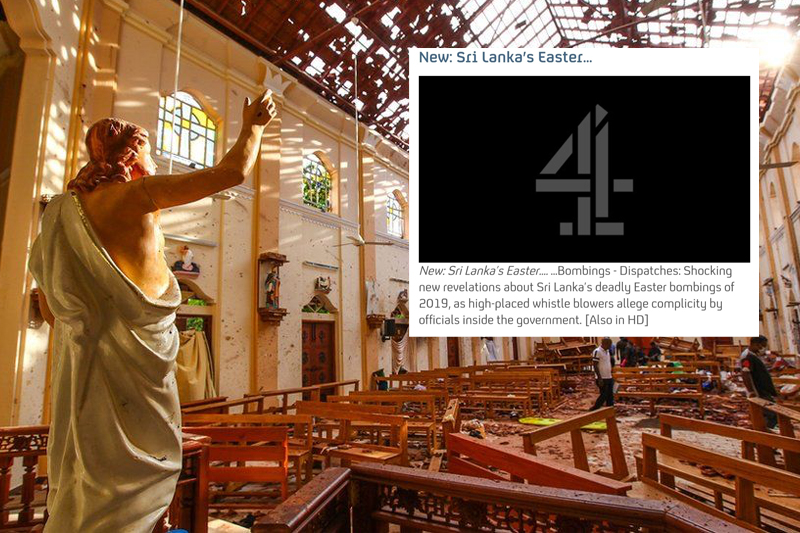
It is essential to note that the Indian Intelligence Service’s previous warnings about the April 2019 Easter bombings in Sri Lanka were tragically accurate, underscoring the gravity of the current situation.

As these tensions continue to escalate in Sri Lanka, it is becoming increasingly vital for the nation to heed these warnings and prioritize unity. Fostering unity will be crucial not only for the stability of Sri Lanka but also for its future prosperity.“

India-Sri Lanka ferry service will revive historical maritime ties: TN Minister

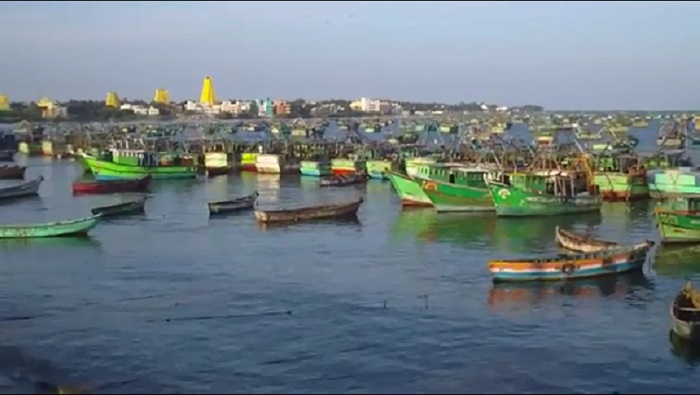
The ferry service between India and Sri Lanka will revive historical maritime ties between the two countries, said Tamil Nadu Minister for Public Works and Minor Ports E. V. Velu.

Speaking at the meeting of coastal states development committee held at Kevadia in Gujarat on Saturday, Velu said the Nagapattinam port in Tamil Nadu was getting ready to offer the ferry service to Sri Lanka.

“To connect India with the world, the external affairs ministry has given green signal for launching a ferry service to Sri Lanka from Tamil Nadu. The ferry service will nurture the cultural ties between the two countries. Apart from increasing the domestic and international tourism, the service will also increase the trade,” Velu said.

While Nagapattinam port is getting ready for the ferry service to Kankesanthurai, discussions to commence a ferry service between Rameswaram and Thalaimannar were also underway, he said.

“The service will revive the historical maritime ties between the two countries that existed till 1980,” he said. Velu then said that a port will be developed in Cuddalore.

Source : Times of India

Posted in Uncategorized