EU envoy to Sri Lanka voices concern over lack of FTAs

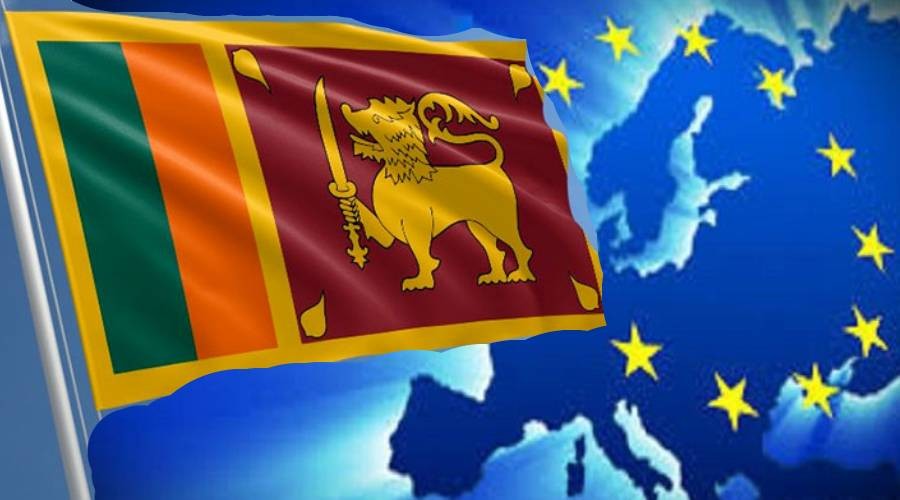
The European Union (EU) Ambassador to Sri Lanka Denis Chaibi has stressed on the urgent need for Sri Lanka to expedite its efforts in enhancing global integration, as the country could significantly lag behind its regional peers, if it were to lose access to the GSP Plus scheme.

According to the Daily Mirror, Chaibi had pointed out that integrating Sri Lanka into key markets at present is GSP Plus and neglecting to seize this opportunity could place the country at a significant disadvantage.

Chaibi told a breakfast meeting organised by the Ceylon Motor Traders Association in Colombo that South Asia is one of the least integrated regions in the world, in terms of trade and Sri Lanka not having enough free trade agreements (FTAs) under its belt does not help its position.

He pointed out that once Sri Lanka is out of GSP Plus, the island nation would face limited market access, due to the absence of comprehensive trade arrangements.

With the European Commission recently proposing a four-year extension to the current GSP Plus scheme until December 31, 2027, Sri Lanka will not lose its preferential access to the EU in the interim.

The proposed extension is due to the ongoing negotiations between the co-legislators of the EU, regarding the new GSP Plus arrangement.

The extension of the tariff facility will grant Sri Lanka continued access to the EU markets under the current set up, until 2027.

The EU was expected to adopt a new cycle of the EU GSP regulation for 2024-2033, which was slated to come into effect from January 1, 2024, for the next 10 years.

Source; Daily Mirror

Sri Lanka’s NPP has no plans to team up with “rotting” parties: Lal Kantha

Sri Lanka’s National People’s Power (NPP), an opposition alliance dominated by the leftist Janatha Vimukthi Peramuna (JVP) has rejected calls for an alliance with other opposition parties.

JVP frontliner K D Lal Kantha said speaking at an event on Wednesday August 16 that his party does not want to form alliances with what he called “rotting” parties.

“We’re getting suggestions these days, asking we can team up with the SJB or with Dullas or with this one or that one to kick Ranil out. No, we can’t,” he said.

Lal Kantha was referring to the main opposition Samagi Jana Balawegaya (SJB) and former minister turned “independent” MP Dullas Alahapperuma, among others.

“You can’t do this by forming an alliance with rotting parties. So there will be no such alliances,” he declared.

Lal Kantha’s statement comes in the wake of an opinion survey for July that showed NPP leader Anura Kumara Dissanayake has seen a dip in his net favourability rating with opposition and SJB leader Sajith Premadasa making a marginal gain while President Ranil Wickremesinghe’s rating stayed static.

A Sri Lanka Opinion Tracker Survey (SLOTS) polling by the Institute for Health Policy (IHP) showed that the net favourability rating of Dissanayake fell 15 points to -44 points in July while Premadasa’s favourability rating increased 4 points to -44 points. President Wickremasinghe’s favourability rating remained the same (-52) .

Favourability estimates for each month are based on 100–400 interviews conducted during that month and during a few weeks before and afterwards to ensure a minimum set of responses, the IHP said in a statement. The July 2023 estimates are based on 367 (Premadasa), 309 (Dissanayake), 367 (Wickremasinghe), and 154 (former President Gotabaya Rajapaksa) interviews.

“We have noted that some members of the public misunderstand media reporting of these numbers. Negative scores, i.e., a net favourability rating of less than zero, mean that the individual or institution is unpopular. Only positive scores, i.e., net favourability is more than zero, mean that the individual or institution is popular on average,” the IHP said.

A spokesperson for IHP, explained that SLOTS asks if respondents have a favourable or unfavourable opinion for a list of politicians. The list of politicians is not limited to Dissanayek, Premadasa, Wickremesinghe and Rajapaksa but is randomised and respondents are asked only about a few politicians to reduce the burden on the respondents. All respondents are not asked about all the politicians tracked by SLOTS. Therefore sample size differs for each politician for each month, the spokesperson said.

We also vary the probabilities that specific politicians are asked about to reflect relative priority, they added.

Do The Sinhalese People Live On Mars? Who Is Telling The Truth? By Amirthanayagam Nixon

Don’t the Sinhalese people know about the Buddhist monks in the North-East seizing the traditional lands of the Tamils and setting up Buddhist temples against the law? So far no Sinhalese public has condemned the injustice being done in Tamil Pradesh in the name of Buddhism. There is no news about this in the Sinhala and English media.

Sinhala and English media only highlight the illegal activities of Buddhist monks or court injunctions against the activities of Buddhist monks. In other words, those news are based on the tone that Buddhist priests and Buddhism have no place in Tamil areas.

Why are Buddhist temples and Buddha statues in Tamil territories where Buddhist Sinhalese people do not live? Where are the funds for building Buddhist temples coming from amid the current economic crisis?

It is clear that all these are planned and directed with the aim of eliminating the theory of the homeland of the Tamils and establishing the entire island of Sri Lanka as a Buddhist Sinhalese territory.

The Thirty Years War is the main reason for the current economic decline. Sinhala politicians understand this. But instead of telling the truth to the Sinhalese people, they are inciting racism. Production should be increased and the export economy should improve.

International Monetary Fund loans and aid from the US, India, and China governments alone are not enough to build Sri Lanka’s economy. It will plunge Sri Lanka into irretrievable debt.

Therefore, through the permanent political solution that Elam Tamils want, the natural resources in the North East should be developed and the productive economy should be increased.

Thirty years of continuous war made it convenient for the Sinhalese rulers to engage in corruption and abuse of power. Even after May 2009, corruption continues in other forms. Sinhalese people should understand this.

But the mainstream Sinhala English media and Sinhala politicians do not reveal the facts to the Sinhala people.

Some Sinhala and English news websites are revealing the fact that the non-presentation of a permanent political solution to the ethnic problem is the cause of all the current crises in Sri Lanka.

Certain Sinhala academics and some Sinhala alternative media have condemned the aggressive activities of the Buddhist clergy. However, they are a very small proportion of the total Sinhalese population of the island of Sri Lanka, so it will not be enough to create a proper understanding among the entire Sinhalese population.

Many Sinhalese politicians do not want to speak against Buddhist priests. In particular, the government has remained silent on Buddhistization. Many Tamil parliamentarians are accusing the Sri Lankan parliament that the government, especially the Sinhalese politicians, is behind these activities.

But they blame the government and the Sri Lankan army and maintain relations with the government through the back door. On the contrary, none of the Tamil parliamentarians are ready to take to the streets and fight. Addressing parliament with heroic fervor. But the Tamil parties are not ready to conduct continuous moral struggles in a democratic way.

The Sinhalese settlements that started in 1949 with the Kalloya Settlement Project in the Eastern Province of Amparai district continue to this day in the North East.

The project was somewhat hampered by the intervening thirty years of armed conflict. But since May 2009, today fourteen years of rapid and well-planned Sinhalese settlements are taking place.

The American and Indian governments, which provided arms and financial aid to the Sri Lankan government during the war, do not ask for justifications about this to date. The Chinese government does not need to seek justice from the Sri Lankan government regarding the Elam Tamils.

America and India have been giving full cooperation to the Sri Lankan government even after May 2009, showing and pretending to support the Elam Tamils. But the Chinese government has not lied about supporting the Elam Tamils and has been giving cooperation only to the Sri Lankan government very honestly.

The biggest concern of the Tamils is that the Tamil National Parties have not devised any mechanism to gain the political emancipation of the Elam Tamils using the contemporary geopolitical economic interests and rivalries of the dominant countries.

President Ranil Wickremesinghe, former Minister Late Mangala Samaraweera, Sri Lankan Ambassador to India Milinda Moragoda, Sri Lankan Ambassador to America Mahinda Samarasinghe, and Professor G.L Peiris are the best diplomats for the Sinhalese people.

Regardless of the parties they belong to, they act with one voice in matters related to the political liberation of Elam Tamils In other words, they are working very subtly in maintaining Sri Lankan Unitary State to strengthen Sri Lankan nationality.

But Tamils do not have good diplomats like them. They claim to be Tamil political representatives and only pay more attention to electoral politics.

Like the Sinhalese political parties, they should form a mechanism and engage in activities related to political emancipation and Tamils homeland development of the Elam Tamils with a united voice. But Tamils do not seem to have any such processes.

On the contrary, they are only devising election strategies to increase the number of members for their respective parties in the next parliamentary elections.

It is different that the Tamil people did not accept the Thirteenth Amendment Act as a political solution to the ethnic crisis. But the funny thing here is that many Sinhalese politicians do not want to fully implement even the Thirteenth Amendment.

It is a well-known fact that there is no place for economic progress and peace on the island of Sri Lanka until the Sinhalese politicians are freed from the Buddhist Mahavamsa mentality.

There is no alternative that the Sinhalese people can understand what is happening in the North East if the truth is expressed in a non-racist manner

*A. Nixon Senior Journalist, Lecturer in Media (Former president of Tamil Media Alliance)

Posted in Uncategorized

Seven Sri Lankans arrested for attempting to illegally enter Israel

The Jordanian Army arrested seven Sri Lankans who had attempted to illegally enter Israel on Wednesday morning (16), the Arab News reported.

Jordanian army said the seven were arrested by border forces and handed over to the relevant authorities.

The source further said that the armed forces will deal firmly with infiltration or smuggling attempts to protect the borders and national security.

The Jordanian-Israeli border has witnessed instances of infiltration in previous years by people coming from Africa, Asia and Turkey to seek employment in Israel.

Posted in Uncategorized

No plans to align with the President – Sajith

Opposition Leader Sajith Premadasa said he has no plans to align with President Ranil Wickremesinghe, as such a move would be a betrayal of ordinary citizens.

Premadasa’s statement came in response to remarks made by SJB MP Rohini Kumari Wijeratne, suggesting a unity between Premadasa and Wickremesinghe. Addressing the executive council of the opposition party on 16 August, Premadasa firmly voiced his stance.

He asserted that there exists no accord or alignment with the present President-led government, which he claimed is “implicated in acts of genocidal and oppressive State terrorism.” The opposition party, he emphasised, stands for the third path rather than extreme leftist or capitalist policies. It is dedicated to safeguarding human rights, as well as the economic, social, and political rights of the nation’s populace.

Premadasa also criticised the Government’s discussions about the 13th Amendment, slamming its lack of a coherent language policy. While he acknowledged that the Government is reluctant to forge ties with those engaged in false and deceitful political manoeuvres, he vowed to stand on the side of well-informed and constructive decisions for the nation. The prevailing administration, in Premadasa’s view, is steered by an unelected President, bereft of trust and recognition, indulging in political manipulations alongside an insatiable gang that has financially crippled the country. Their actions are rooted in personal greed rather than the country’s welfare.

He condemned the proposed inhumane ideas affecting the working class, arguing that they undermine international principles, language policies, and fundamental rights. These adverse proposals would be staunchly opposed.

Premadasa underscored the importance of generating wealth to foster prosperity and advocated for humanistic capitalism as a means of equitable distribution. He highlighted the skewed income distribution in the country, where the wealthiest 20 per cent amass over 52 per cent of the national income while the impoverished receive just 4 to 5 per cent.

Labour security and wealth creation, in his view, should go hand in hand.

The SJB aligns with the interests of the working class and seeks pragmatic solutions. It will not compromise with a government driven by ulterior motives. As a progressive Opposition, it stands resolutely for the rights of the working population and remains open to alternative positions that uphold the people’s welfare, he stressed.

Posted in Uncategorized

Applications called for President’s Counsel appointments

Secretary to the President Saman Ekanayake has invited qualified persons for the appointment of President’s Counsels for 2022/2023 in accordance with Article 33 (e) of the Constitution of Sri Lanka.

The guidelines for application, qualifications, and criteria are outlined in the Gazette Extraordinary No. 2255/24 of November 24, 2021.

Applicants should:

Be qualified Attorneys-at-Law of the Supreme Court of Sri Lanka.
Demonstrate eminence in the legal field with high professional standards.
Show active engagement in advocacy or law advancement within Sri Lanka.
Exhibit exceptional expertise in law, domestically or internationally.
Possess an untarnished character and uphold the Constitution.
Maintain the Rule of Law and Judicial Independence.
Have no history of disciplinary actions, misconduct, or contempt of court.
Maintain good financial standing and a minimum five-year tax registration.
Hold additional qualifications such as legal publications, presentations, further studies, teaching, or training.
Have at least twenty (20) years of Supreme Court practice, with exceptions for fifteen (15) years under special circumstances.
Not be a Notary Public or influence the application process.
The office of the President said, if any applicant has furnished false information in the application or submitted forged documents or suppressed information, the said application will ipso facto be rejected.

The duly completed written applications adhering to the specimen application, along with the certified copies of the relevant documents, should be sent by registered post, addressed to the Secretary to the President, Presidential Secretariat, Colombo 01 to reach on or before August 25, 2023.

Applications can be downloaded via www.presidentsoffice.gov.lk

Posted in Uncategorized

China is one of Sri Lanka’s “true friends”, says Lankan PM Dinesh Gunawardena

The Sri Lankan Prime Minister Dinesh Gunawardena has said that China is one of Sri Lanka’s best and true friends or “Kalyana Mitras” and acknowledged “with appreciation” China’s “much needed support in the debt restructuring process.”

”Gunawardena was speaking as the Chief Guest at the 7th China-South Asia Exhibition jointly organized by the Chinese Ministry of Commerce and the Yunnan State Government on Wednesday.

Sixty countries are participating in this huge trade exhibition, including all South and Southeast Asian countries as well as the Regional Comprehensive Economic Cooperation (RCEP) member countries.

The exhibition includes 15 exhibition halls, including a biomedical and healthcare pavilion, a resource economic pavilion and a regional cooperation pavilion, with a total area of 150,000 square meters. This exhibition is scheduled to be held until the 20th of August under the theme of ‘cooperation and coordination for development’.

State Ministers Taraka Balasuriya, Janaka Vakkambura, Kanaka Herath, Member of Parliament Yadamini Gunawardena, Secretary to the Prime Minister Anura Dissanayake, Foreign Ministers and businessmen are participating in this visit.

Here is the text of his speech:

“Mr Chairman of Expo, Firstly, I wish to convey my appreciation for the invitation to the beautiful city of Kunming in Yunan and for the excellent hospitality extended to my delegation from Sri Lanka. It is an honour to attend as the Chief Guest at the 7th China – South Asia Exposition and at the 27th Kunming Import and Export Fair. This occasion will mark another historical milestone in our bilateral relations, as we come together to further strengthen centuries of warm friendship and cooperation between our two countries.”

“At the very outset let me congratulate and extend fraternal warm wishes to His Excellency President Xi Jinping, the Communist Party of China, and to the People of China for the tremendous leadership given to People across the World in delivering the impossible and achieving unprecedented landmarks in human civilization. Especially, the alleviation of hundreds of millions of Poor People out of Poverty, and showing continuous economic growth.”

“Last year too, I was invited by Yunan Government to electronically address the South Asia Expo. It was the time when China was opening after the post-covid era for economic recovery. And I wish to recall how scientifically advanced Miracle Rice variety was introduced at that platform.”

“At the same time on behalf of the Government of His Excellency Ranil Wickramasinghe and the people of Sri Lanka, I take this opportunity to convey warm best wishes to our friends in China, especially in Yunnan Province for the success of China – South Asia Exposition, brining a larger segment of Asian countries in participation. This proudly speaks achievements in the backdrop of the 10th anniversary of the Belt and Road Initiative.”

“Friends, let me recollect the warm friendship shared between China and Sri Lanka dating back to many centuries, pioneered by Buddhist Priest Fa Hien. I would also like to note that Admiral Zheng Ha, who was born in Kunming, the city where we are here today celebrating this important event, came to Sri Lanka in early 15th century, and placed an inscription marking his visit to Sri Lanka.”

“These historical relations were fostered by thriving trade exchanges along the Maritime Silk Route and far reaching cooperation in culture and knowledge. Yapahuwa is a historical Kingdom in Sri Lanka which boasts the largest collection of Chinese coins and Chinese porcelain found in Sri Lanka.”

“Your Excellencies, the People’s Republic of China was promulgated after the long successful victory march towards 1949 Revolution, with a long and arduous journey led by the Communist Party of China with Great Leader Mao Tse Tung along with other leaders.”

“Soon after our two countries have enjoyed 66 years of excellent diplomatic relations. Even prior to establishing formal diplomatic ties, China and Sri Lanka entered to “Rubber-Rice Pact”, which marked the 70th anniversary last year, and marked a new chapter in international trade.”

“Since then, China and Sri Lanka regarded each other as good friends and a special relationship has existed between our two countries.”

“I wish to acknowledge with gratitude the unwavering support of the People’s Republic of China to Sri Lanka for national sovereignty and integrity and for continuing to stand by us during challenging times.”

“I would like to reiterate that Sri Lanka continues to uphold the ‘One China Policy’ in all spheres including bilateral and multilateral fora and I wish to affirm our commitment in this regard.”

“At a time when Sri Lanka was faced with difficult economic hardships, the Hon Governor of Yunnan Province visited Sri Lanka, in May 2023, and committed to multifaceted areas of cooperation.”

“During the devastating global covid pandemic and Sri Lanka’s recent economic crisis, China helped Sri Lanka through various humanitarian assistance, including RMB 500 Mn for fuel to farmers and fishermen, staple diet of rice to school students, and 70% of school uniform requirement for the year 2023.”

“We acknowledge with appreciation that China has extended much-needed support in debt restructuring process, which was essential to secure international support. We are confident that China will extend continued cooperation in the future towards Sri Lanka’s broader economic recovery.”

“The most significant recent Chinese development projects in Sri Lanka include the Hambantota Port, Hambantota Industrial Zone, Mattala Airport, and Colombo Port City project and all other major sectors.”

“Colombo Port City project is Sri Lanka’s flagship project on achieving a financial and commercial hub in the region, with clear strategic advantage of being located at the very centre of the East-West Maritime Trade Lanes.”

“Therefore, investments from China are critical to propelling Sri Lanka’s economy, and also, I kindly request all friends present here today to encourage more Government and Private sector investment, trade, cooperation, and ventures into Sri Lanka.”

“Chinese tourist arrivals have been one of the key strengths of the Sri Lankan tourism industry. Mainly thanks to an announcement made in February this year by the Chinese Ministry of Culture and Tourism, placing Sri Lanka among the Top 20 countries for tourism.”

“I take this opportunity to call for a joint effort between our countries to enhance tourism among us, as collectively we have much more to offer. let us not forget that This Century Belongs to Asia. This is Asia’s Century.”

“I wish to refer to the words of President Xi Jinping’s steadfast commitment to “share achievements of China towards the future betterment of mankind.”

“Continuous leadership of the CPC has guided China to emerge in the path of Socialism with Chinese characteristics as a true decisive global giant with a grand new era of development, especially in Asia, Africa, & Latin America, and towards prosperity of all Nations.”

“Dear Friends, in conclusion I wish to emphasize that in Buddhism the importance of cultivating Kalyana Mitras is taught. Kalyana Mitra is the best of friendships that sees through times of good and through times of difficulty. Sri Lanka sees the friendship cultivated with China to be one of the true best Kalyana Mitras, amidst times of good and difficulty, China stood by Sri Lanka.”

Vice Presidents of Indonesia, Mianmar, Nepal,Vice Prime Minister of Vietnam,minister of commerce Maldives,Sri Lanka State Ministers Tharaka Baalasooriya,Janaka Wakkumbura, Kanaka Herath, member of parliament Yadamini Gunawardena, Secretary to the Prime Minister Anura Dissanayaka, Government officials of many countries, representatives participated for this occasion.

Posted in Uncategorized

Chinese Research Ship to reach Sri Lanka on 25th October, confirms Navy

Sri Lanka is once again getting involved in a major geopolitical issue over a Chinese marine research vessel that is expected to reach Sri Lanka in October.

India is paying close attention to a new Chinese marine research vessel, Shi Yan 6, which is expected to dock at the Colombo and Hambantota deep sea ports in the Sea of Sri Lanka.

The Sri Lanka Navy on Wednesday (16) confirmed that the Shi Yan 6 will reach Sri Lanka on the 25th of October, and will be involved in research operations in the Sea of Sri Lanka for a period of seventeen days.

Sri Lanka Navy said that the Shi Yan 6, Research and Survey Vessel will be reaching Sri Lanka for joint research operations with the National Aquatic Resources Research and Development Agency, also known as NARA.

However, on Tuesday (15), the National Aquatic Resources Research and Development Agency (NARA) said the vessels’ arrival is part of an agreement reached with the Ruhuna University of Sri Lanka.

NARA officials said that it would link with the vessel in order to obtain water samples for its own research.

The Department of Oceanography and Marine Geology at the University of Ruhuna said that it had sought permission for its researchers to board the Shi Yan 6, but there has been no response to the request as of Tuesday (15) evening.

This is not the first time that the Shi Yan 6, Research and Survey Vessel will be visiting Sri Lanka.

The Shi Yan 6, Research and Survey Vessel had previously visited Sri Lanka on the 20th of April 2022, and remained in the Sea of Sri Lanka for a total of ten days.

Over a past few years, a large number of vessels had reached Sri Lankan ports, and a majority of them are Chinese research and survey vessels.

These vessels include the Shi Yan 6, Shi Yan 1, Shi Yan 3, Xiang Yang Hong 3, Xiang Yang Hong 18, Xiang Yang Hong 1, Xiang Yang Hong 6, and Xiang Yang Hong 19.

The Shi Yan 6 vessel had left China on July 6, 2023 and as of Tuesday (15) afternoon, the vessel was positioned in the South China Sea some 345 nautical miles away from Vietnam.

However, it had changed course towards China, and had updated its next port of call to Port of Guangzhou.

As of Wednesday (16) evening, the Shi Yan 6 vessel was heading towards the Port of Guangzhou at a speed of 11 nautical miles per hour.

India is paying close attention to a new Chinese marine research vessel, Shi Yan 6, and it is learnt that India has taken up the issue at the highest diplomatic levels.

Posted in Uncategorized

China to help Sri Lanka address challenges of financial debt: Wang Yi

Wang Yi, director of the Office of the Foreign Affairs Commission of the Communist Party of China (CPC) Central Committee, vowed that China will help Sri Lanka effectively address the challenges of financial debt on Wednesday.

Wang, also a member of the Political Bureau of the CPC Central Committee, made the remarks during a meeting with Sri Lankan Prime Minister Dinesh Gunawardena at the sidelines of the seventh China-South Asian Expo in Kunming, southwest China’s Yunnan Province.

China is always Sri Lanka’s reliable strategic partner and appreciates that Sri Lanka has always been friendly to China and has stood by China on issues related to its core interests, he said.

China also firmly supports Sri Lanka in safeguarding its sovereign independence and national dignity, and is willing to strengthen exchanges of experience in governance as well as cooperation in various fields with Sri Lanka, he said.

Wang vowed that China will help Sri Lanka improve its capacity for independent development, get rid of the “poverty trap” and the “trap of non-development,” accelerate its industrialization process and agricultural modernization.

He expressed belief that Sri Lanka will overcome its temporary difficulties, find a development path in line with its national conditions, and realize revitalization and prosperity.

Noting that Sri Lanka is an important participant and beneficiary of the China-South Asia Expo, he welcomed the Sri Lankan side to continue to make good use of this important platform to further explore the Chinese market.

For his part, Gunawardena thanked China for its firm support for Sri Lanka in safeguarding its independence, sovereignty and territorial integrity, and for its timely and effective assistance to Sri Lanka in times of difficulty.

The forward-looking flagship cooperation projects between the two sides such as the Colombo Port City and the Hambantota Port will bring benefits to the Sri Lankan people and play a key role in regional connectivity and sustainable development, he said.

Sri Lanka will work with China to expand cooperation in economy, trade and investment, agriculture, tourism, energy and innovation to help Sri Lanka achieve food self-sufficiency and accelerate the development of key industries, he added.

(CGTN)

Sri Lanka serious on laws to honour deals after diplomatic hiccups with India, Japan, US

Sri Lanka is seriously moving with a new laws which will prevent any of its future governments from backtracking bilateral and multilateral deals signed without the consent of the relevant parties involved, a government document showed.

The new move comes three years after the government of former leader Gotabaya Rajapaksa unilaterally cancelled several bilateral and multilateral deals including East Container Terminal (ECT) and Light Railway Transit (LRT) projects and resulted in diplomatic hiccups with India, Japan, the U.S. and Singapore, government officials say.

The Cabinet under the current president Ranil Wickremesinghe had discussed and decided that laws should be enacted to prevent deviation from those agreements without the consent of the relevant parties “after entering into bilateral and multilateral agreements that are determined to be essential for national development”.

“The Cabinet of Ministers approved the proposal presented by the President to advise the legal draftsman to prepare a bill based on the preliminary draft prepared accordingly,” the government document on the cabinet decisions said.

Former president Gotabaya Rajapaksa unilaterally cancelled the $500 million ECT project, a tri-party agreement with India, Japan, and Sri Lanka. He also unilaterally revoked a Japanese LRT project without any consent of Tokyo.

Rajapaksa also rejected a free trade agreement (FTA) between Singapore and Sri Lanka after a group of professionals advising him said it will be harmful for the local professionals to find jobs, while he also cancelled a $480 million worth Millennium Challenge Corporation (MCC) grant on the advice of a committee appointed by him.

All ECT, LRT, Singapore FTA, and MCC agreements were signed by the government led by then Prime Minister Ranil Wickremesinghe before Rajapaksa won the presidency in November 2019 with a landslide.

Sri Lanka faced the repercussions of Rajapaksa’s unilateral decisions including diplomatic hiccups with India and Japan, which still vary to sign bilateral trade/investment agreement with Colombo government, government officials have told EconomyNext.

The new laws will prevent any future government from cancelling bilateral and multilateral deals signed by previous governments without the consent of the other party involved with such agreement.