‘Ready to work with India with a clear plan’ – AKD

Sri Lanka’s Jathika Jana Balavegaya has expressed its willingness to work with neighbouring India with a clear vision.

It’s leader, Anura Kumara Dissanayake told constituents in an electorate in the Western Province that, given the fact that Sri Lanka has entered geopolitical discussions related to India, the Jathika Jana Balavegaya is prepared to work with India with a clear and definite vision.

However, he expressed grave concern over the agreements that were recently inked between India and Sri Lanka, during President Ranil Wickremesinghe’s meetings with Prime Minister Modi.

Sri Lanka and India reached several agreements during President Ranil Wickremesinghe’s meeting with Indian Prime Minister Narendra Modi at Hyderabad House in New Delhi on 21st July 2023.

The documents exchanged were:

– Joint declaration of intent in the field of Animal Husbandry between India and Sri Lanka

– MoU for renewable energy between India and Sri Lanka

– MoU for economic development of projects in the Trincomalee District

– Network to Network to agreement between NIPL and LankaPay for UPI (Unified Payment Interface) application acceptance in Sri Lanka

– Energy permit for the Sampur Solar Power Project handed over to Sri Lanka

Posted in Uncategorized

Sri Lanka ruling party says president must prioritise economy, not devolution

Amid speculation of factionalisation within the ruling Sri Lanka Podujana Peramuna (SLPP) over its continued support for President Ranil Wickremesinghe’s policies, the party has reiterated its position that now is not the time for discussions on devolution of power.

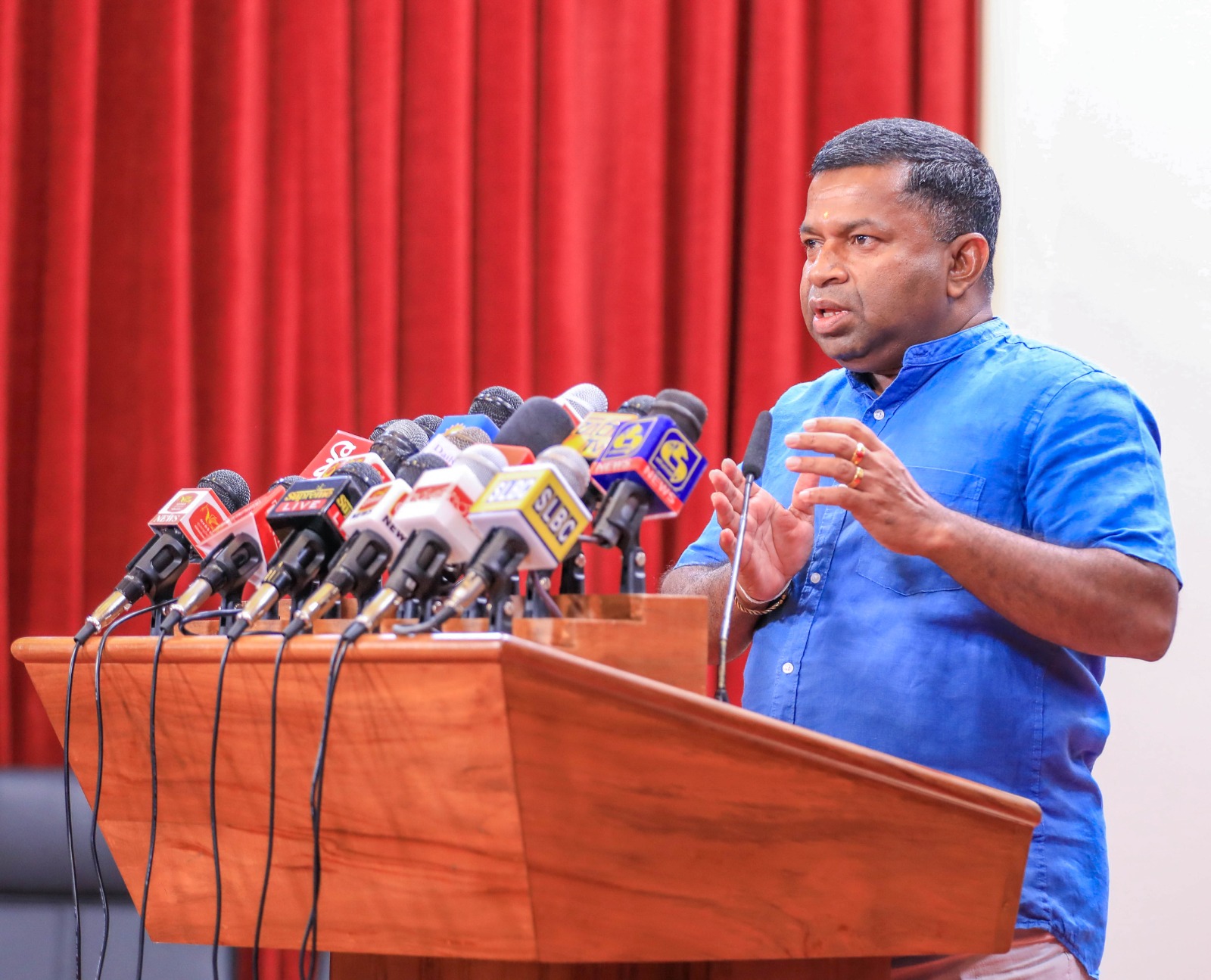
SLPP general secretary and MP Sagara Kariyawasam told reporters on Monday August 14 that his party questions the wisdom of implementing the 13th amendment to the constitution, an India-backed devolution mechanism that President Wickremesinghe is keen to implement albeit with the exception of police powers.

“The country has yet to recover from bankruptcy. We don’t see implementing the 13th amendment at this time as a very wise move,” said Kariyawasam.

Kariyawasam is widely considered a staunch loyalist of SLPP national organiser and former finance minister Basil Rajapaksa. Another former loyalist of Rajapaksa is reportedly attempting to put together his own group of SLPP parliamentarians who support Wickremesinghe’s economic policies. However, it is one clear what this faction’s stance on devolution is at present.

“When a country is down, foreign powers and various NGOs may be looking to destabilise it. They may be looking to benefit from the instability of a country,” said Kariyawasam.

The MP said implementing the 13th amendment was not something anybody had urgently sought.

“It’s something the president himself brought up. It’s not anything that’s needed now,” he said.

Kariyawasam urged President Wikcremesinghe to put the matter of devolution aside for the time being and focus instead on rebuilding the economy as a top priority.

“Be involved directly in that and forget the other matters,” he said.

“The people do not expect you to devolve power. They expect you to do only one thing: to stabilise the economy and strengthen democracy in this country,” he said.

The SLPP said earlier in August that Wickremesinghe lacks the mandate for devolution of power.

“As a party, we have already asked the president and we ask again, our country is not in a position to even discuss devolution,” said Kariyawasam.

“We’ll discuss them once the economy is strengthened as a stable country. We can then talk about other things,” he said.

President Wickremesinghe on August 09 reiterated his call for implementing the controversial constitutional amendment aimed at resolving the country’s ethnic issue, amid muted opposition from various parties including sections of the SLPP.

Wickremesinghe told parliament that there are various issues pertaining to the implementation of the 13th amendment to the constitution as well as the provincial council system that it birthed.

“We have to resolve these issues in order to move forward as a country,” he said.

He said at a meeting of ahead of the all-party conference that Sri Lanka must either retain its provincial councils (PCs) with powers adequately devolved as provided for by the 13th amendment or abolish the PC system entirely.

The 13th amendment to Sri Lanka’s constitution emerged from the controversial Indo-Lanka Accord of 1987 as a purported solution to the worsening ethnic conflict, four years after war broke out. Provincial councils came in the wake of this amendment, though land and police powers have yet to be devolved to the provinces as originally envisioned. Both Sinhalese and

Tamil nationalists have historically opposed the amendment, the former claiming it devolved too much, the latter complaining it didn’t devolve enough.

A full implementation of the amendment would see land and police powers devolved to the provinces, a development that is not likely to garner support from Sri Lanka’s more hardline parties. In February, sections of the Buddhist clergy took to the streets against the proposed full implementation of the constitutional amendment.

Pakistan exploring ways to broaden ties with Sri Lanka

Pakistan is exploring ways to broaden its ties with Sri Lanka, the High Commissioner of Pakistan in Sri Lanka, Maj Gen (Retd) Umar Farooq Burki HI (M) said.

The High Commission of Pakistan and the Pakistani community in Sri Lanka celebrated the 76th Independence Day of Pakistan today with traditional fervor and resolve to make Pakistan a strong, dynamic progressive tolerant and democratic Islamic welfare state.

The High Commissioner of the Islamic Republic of Pakistan in Sri Lanka, Maj Gen (Retd) Umar Farooq Burki HI (M) hoisted the national flag of Pakistan in an impressive ceremony at the Pakistan High Commission in Colombo. The special messages of the President and the Prime Minister of Pakistan were read out for the audience.

In his message on the occasion, the High Commissioner of Pakistan Maj Gen (Retd) Umar Farooq Burki HI (M) expressed his gratitude to our gracious hosts, the beautiful nation of Sri Lanka, for providing us the opportunity to celebrate our independence on their soil. H.E further said that the bond between Pakistan and Sri Lanka runs deep in history, with shared values, and unwavering support for one another. We are truly blessed to have such a steadfast friend in our journey towards progress and development.

He further added that, at the bilateral level, while we continue to nurture our diplomatic defense and cultural ties, we are exploring ways to broaden and deepen our economic connectivities, through enhancing trade and bilateral investment within the framework of the Free Trade Agreement that exists between the two countries.

The event was well-attended by a good number of participants including Pakistani diaspora, officials and families of the High Commission, local dignitaries, journalists and friends of Pakistan.

Posted in Uncategorized

Ven. Medagoda Abhayatissa Thero calls for presidential election prior to 13A implementation

Ven. Prof. Medagoda Abhayatissa Thero has highlighted that a presidential election must first be held, prior to the implementation of the 13th Amendment to the Constitution.

Accordingly, the Chief Incumbent of the Sunethra Devi Pririvena in Peipilyana explained that prior to the implementation of the constitutional amendment, the mandate of the people must first be obtained.

“Announce a presidential election, and ask the people for the power to implement the 13th Amendment, in full. If they are ready to give him the power for that, only then does he have the right to implement it”, he said, emphasisng that currently, President Ranil Wickremesinghe has no such right with the existing mandate.

He further explained that the current government does not have any such mandate, as they received their positions not through an election, but with the help of those who supported former President Gotabaya Rajapaksa.

Ven. Prof. Medagoda Abhayatissa Thero made these remarks while attending a religious ceremony in Colombo.

Posted in Uncategorized

Two Sri Lankan-born professors amongst top microbiologists in China

Two Sri Lankan-born scientists at the University of Hong Kong have been ranked amongst China’s top microbiologists.

Accordingly, as per the statistics gathered by “Research.com”, Prof. Lakshman Samaranayake and Prof. Malik Peiris ranked 11th and 15th respectively, out of 43,737 scientists analysed by the national scientometric analytic firm.

Both professors hold honorary professoriate appointments at the University of Peradeniya, and are world renowned for their clinical microbiological work and have received honorary doctorates from the University of Peradeniya for their contributions to medical research.

Prof. Samaranayake, best known for his work in internal medicine, bacteria and diseases, was the Dean of the Faculty of Dentistry at the University of Hong Kong, and under his leadership it became the number one dental school in the World in 2015,as per QS World University Rankings.

His research investigates the connection between Corpus albicans and topics such as Virulence that intersect with problems in Fungal protein. His studies deal with areas such as Oral and maxillofacial pathology, Disease, Acquired immunodeficiency syndrome and Oral microbiology as well as Immunology. As part of one scientific family, he deals mainly with the area of Biofilm, narrowing it down to issues related to the Lactobacillus acidophilus, and often Lactobacillus rhamnosus.

Ranked 494th in world rankings, Prof. Samaranayake has 22,862 citations and 628 publications under his name, and a D-index of 87.

The D-index threshold for including a researcher to be examined is established at 40 if the majority of their publications are in the area of Microbiology. The acceptance criteria for researchers to be considered into the ranking of top researchers are based on the D-index, proportion of the contributions made within the selected area as well as the awards and achievements of the scholars.

Meanwhile, virologist Prof. Malik Peiris, best known in the fields of viruses, genes and diseases, is most notable for being the first person to isolate the SARS virus.

Currently serving as the Tam Wah-Ching Professor in Medical Science, and Chair Professor of Virology at the Division of Public Health Laboratory Sciences, School of Public Health, University of Hong Kong, Prof. Peiris earned his MBBS from the University of Peradeniya in 1972.

He was later awarded a Commonwealth Scholarship in 1977 and went to the University of Oxford for a DPhil at the Sir William Dunn School of Pathology, graduating in 1981.

Prof. Peiris’s most notable findings include research on the Avian influenza, the SARS virus and the COVID-19 virus.

He holds a world ranking of 883 and 14,274 in the fields of microbiology and medicine, respectively, with 38,484 citations and 235 publications in microbiology, and 38,571 citations and 240 publications in the field of medicine.

Prof. Peiris, who won the ‘Life Science Prize’ under the 2021 Future Science Prize, also holds a D-index of 75 in both fields.

Research.com is a research portal for science rankings. It maintains a database of more than 27,000 leading scientists to assist professors, research fellows, and those studying for a Ph.D. or a master’s degree to progress with their research and to ensure they are always up to date with the latest conferences around the world and publications related to their work. Research.com publishes an annual ranking of leading scientists in a wide range of scientific disciplines.

Posted in Uncategorized

Significant shortfall in revenue: Treasury tells state bodies to curtail expenditure

Revenue performances for this year have not been in line with expected targets and there has been a “significant” shortfall in the revenue performance this year, the Treasury has conceded.

In a circular, Treasury Secretary K.M. Mahinda Siriwardene instructed government institutions to stick to the stringent expenditure control measures until further notice as the Government was still struggling “for various reasons” amid fiscal challenges and inadequate revenue performance. “Despite the gradual improvements observed in many areas including the primary balance of the government budget, the fiscal sector still faces serious and complex issues with no fiscal space to accommodate many requests for funding due to the scarcity of fiscal resources,” the Treasury Secretary noted in the circular titled “Guidelines for the Preparation of Annual Estimates 2024″.

The circular was addressed to ministry secretaries, provincial chief secretaries, heads of departments, chairpersons of state corporations, the University Grants Commission and statutory boards.

It is critically important that government expenditures are managed carefully and efficiently considering the limited fiscal space and the need for channeling scarce resources to essential areas while making all efforts to efficiently manage expenditure, Secretary Siriwardena said while stressing “public finances of the country should be managed with the utmost care, discipline and accountability.”

According to the circular, there will be no provision of funds allocated to the Provincial Councils (PCs) under line ministries, or departments for functions directly assigned to PCs.

The circular said this was “to avoid overlapping programmes carried out by line ministries and departments at regional level with PCs. This should be prepared in coordination with PCs.

As per the medium-term macroeconomic targets under the International Monetary Fund’s Extended Fund Facility, the primary balance of the budget which is estimated to be a deficit of 0.7 percent of Gross Domestic Product (GDP) in 2023 needs to be increased to a surplus of 0.8 percent of GDP in 2024 to reach a surplus of 2.3 percent of GDP in 2026, the circular noted.

“This has to be achieved through a combination of revenue-enhancing and expenditure-rationalisation policies.”

To reach the targeted primary balance of the budget, the Secretary stressed that government expenditure should be managed prudently while continuing the stringent expenditure control measures.

Accordingly, heads of state institutions are instructed to adopt a “zero-based budgeting approach” while “making a transformational change through minimum inputs” aiming at curtailing government expenditures when estimating the expenditures for the Budget 2024.

When preparing budget estimates, heads of departments of spending agencies are told to carry out only activities that are relevant to the performance of the core functions assigned to the respective ministries and departments and withdraw from performing irrelevant tasks, and assign them to appropriate institutions.

The implementation of development programmes and projects by departments and institutions should be carried out under the coordination of the ministry, instead of direct implementation by the ministries, one of the guidelines reads.

The institutions are instructed to conduct independent monitoring and evaluations on the results and performances of mega projects as well.

Entities and divisions whose functions are duplicated or no longer required are to be consolidated or abolished. The heads of the departments are also told to carry out a cadre review to abolish positions of which functions are similar or no longer needed and deploy the staff only for the core functions of the concerned institutions as far as possible.

Accordingly, government subsidy programmes are to be reviewed for their compatibility with the current condition of the country and to be reorganised so that benfits are channeled only to the essential beneficiaries while working together with the Welfare Benefits Board.

Ban on imports of buses, lorries and trucks to be lifted shortly

The Government has decided to relax import restrictions imposed on certain vehicles used for public transportation.

State Minister of Finance Ranjith Siyambalapitiya stated that import restrictions will be relaxed on the imports of lorries, trucks, and buses utilized for public transportation purposes.

He further stated that a Gazette is being prepared in this regard and is expected to be issued this week.

However, the State Minister of Finance said that financial analysts say the imports of other vehicles will be further delayed considering the current foreign exchange reserves.

They also emphasized that the value of the dollar can rise again through the increase in vehicle imports, he added.

State Minister of Finance Ranjith Siyambalapitiya made the remarks while speaking to the media.

Posted in Uncategorized

Second Round of IMF Talks Set for September

The second round of discussions with the International Monetary Fund (IMF) is scheduled to take place from September 11 to 19.

State Minister of Finance Ranjith Siyambalapitiya, confirmed that a delegation from the International Monetary Fund will be visiting the country during this period to engage in these crucial discussions.

This initiative is being led by the Ministry of Finance.

State Minister Siyambalapitiya further highlighted that approximately 80% of the stipulated conditions set by the International Monetary Fund have already been fulfilled.

New Delhi raises concerns with Colombo over Chinese research vessel

New Delhi has informed Colombo that it is seriously concerned about the Chinese research vessel Shi Yan 6 docking at the Colombo and Hambantota ports in October, the Hindustan Times reported.

Virtually a month after Sri Lankan President Ranil Wickremesinghe assured Prime Minister Narendra Modi that his country will be sensitive to security and strategic concerns of India, a Chinese marine research vessel, Shi Yan 6, is expected to dock at Colombo and Hambantota deep sea ports late October and stay till November 2023.

As of now, Sri Lanka government is still to give clearance to the maritime research vessel.

Already PLA warship Hai Yang 24 Hao with a crew of 138 with Commander Jin Xin as captain docked at the Colombo port for what has been described as a formal port call.

According to reports from Colombo, the 3999 ton Shi Yan 6, based in Guangzhou, is currently in South China Sea and moving towards the south. It is learnt that scientists of Sri Lanka’s National Aquatic Resources Research and Development Agency aka NARA will embark on Shi Yan 6 to conduct survey of the exclusive economic zone (EEZ) of the island nation and in the south Indian Ocean.

The vessel will be docking at both Colombo and Hambantota ports and carrying out surveys for nearly a month with one part of survey being without Sri Lankan Scientists.

While South Block is tight-lipped about the development, it is learnt that India has taken up the issue at the highest diplomatic levels and it is now up to Wickremesinghe government to address Indian concerns.

Last August, Chinese ballistic missile tracker Yuan Wang 5 docked at Hambantota port, leased to Beijing for 99 years when Wickremesinghe was the Prime Minister under Rajapaksa regime, despite India raising serious concerns about the survey ship.

With the PLA Navy expanding rapidly and having open global ambitions, the larger question is how long will the Modi government allow countries in the Indian sub-continent remain impervious to India’s strategic interests. The question is particularly pertinent to those countries with whom India has stood up for in thick and thin—from humanitarian disaster, vaccine supply to economic support.

Even though China provided high interest aid for white elephant projects during the past Beijing friendly Rajapaksa regime, Sri Lanka hosting Chinese research vessels shows that it is rather apathetic or indifferent to New Delhi’s concerns. It is now an open secret that China is mapping the Indo-Pacific for future nuclear submarine operations to counter the QUAD and other ASEAN powers.

Over the years, Chinese research vessels are entering the Indian Ocean through Ombi-Wetar straits in Indonesia and proceeding towards the South Indian Ocean via the 90 degree ridge. The sea route via Malacca, Sunda and Lombok straits is not viable for submarines as they have to surface, thus giving away their location. This is not the case if the sub-surface combatant goes through Ombi-Wetar strait.

The mapping of ocean floor, salinity content and sub-surface temperatures in the Indian Ocean is part of the larger strategic exercise to check the potency and accuracy of submarine fired missiles in equatorial waters. Due to the difference between the surface and sub-surface temperatures, a phenomenon called lateral inversion occurs in equatorial waters, making it nearly impossible to detect attack submarines in deep waters and the only option available is to detect nuclear reactor noise.

While the Indian Navy’s diesel attack submarines pose a serious challenge to any Chinese vessel in the Indian Ocean as unlike the nuclear submarine, the diesel engine can be shut down and make it impossible for the enemy to detect the Indian sub-surface vessel.

However, the Indian Navy knows that it is only a matter of time when PLA vessels will start long range patrols in the south Indian Ocean using carrier strike force. The survey of south Indian Ocean waters is also to chart new sea routes away from Indian dominance and faster access to Beijing’s client states on Africa’s eastern and western seaboard.

Source:Hindustan Times

SLFP warns of potential democratic crisis due to 13A

Condemning all political decisions made by President Ranil Wickremesinghe with regard to the 13th Amendment to the Constitution, Senior Deputy Chairman of the Sri Lanka Freedom Party (SLFP) Prof. Rohana Lakshman Piyadasa warned that Sri Lanka is heading towards a democratic crisis.

Also speaking on the President’s ongoing efforts towards the devolution of powers, MP Udaya Gammanpila explained that each time President Ranil Wickremesinghe lost his power, it was due to his attempts to devolve powers.

Despite these remarks, however, United National Party (UNP) Deputy Leader Ruwan Wijewardene stated that in order for the country to move forward, solutions need to be provided for certain issues faced by those in the Northern and Eastern provinces.

Meanwhile, speaking at a event held on Saturday (12 August) commemorating the 70th anniversary of the 1953 Hartal, MP Dullas Alahapperuma claimed that despite all the riots, protests and hartals that have taken place in Sri Lanka thus far, parties are yet to ‘learn their lessons’, adding that all sectors are currently in crisis.