Proposals, suggestions on 13A: SLPP, SJB, SLFP to submit, FPC & JVP-NPP to not

Following a request to all political party leaders to submit their proposals and suggestions on the 13th Amendment to the Constitution by 15 August, the majority of political parties representing the Parliament are planning to submit their proposals to the Presidential Secretariat while some Opposition parties do not intend to do so, The Daily Morning has learnt.

The ruling Sri Lanka Podujana Peramuna (SLPP), the main Parliamentary Opposition Party, the Samagi Jana Balawegaya (SJB), and the Sri Lanka Freedom Party (SLFP) of the Opposition are to submit their proposals to the Presidential Secretariat by next week while the Freedom People’s Congress (FPC) and the Janatha Vimukthi Peramuna (JVP)-led National People’s Power (NPP), both of the Opposition, have decided against submitting their proposals.

SLPP General Secretary and Parliamentarian attorney Sagara Kariyawasam told The Daily Morning that the SLPP is yet to prepare the proposals, adding however that the proposals will be submitted to the President at the earliest.

SJB National Organiser MP Tissa Attanayake told The Daily Morning that the proposals will be submitted to the President after consulting the group of MPs and the SJB legal team.

When contacted by The Daily Morning yesterday (7), SLFP General Secretary and MP attorney Dayasiri Jayasekara said that the proposals to be submitted will be made following a meeting with the party’s Central Committee. He also said that the SLFP is ready to support the efforts taken by the Government to ensure the reconciliation mechanism regardless of the numerous issues it (SLFP) has with the Government. He also said, however, that the Government must take steps to show their commitment to address this long-term problem which has been a barrier to the development of the country for decades.

Meanwhile, speaking to The Daily Morning, FPC member and MP Prof. Charitha Herath said that they are not prepared to submit any proposal since even the Government has failed to arrive at a single stance in this regard. He also remarked that they have observed a lack of genuineness in the Government’s actions. “Our position is that the Government, which has many branches, should submit their proposals first as one document which takes a single stance on this matter. They are not talking in one voice. The President says one thing while the ruling SLPP MPs say something completely in contrast with the former. Therefore, we ask the Government to come to a position first and then we can submit our proposals,” he said.

NPP MP Vijitha Herath, speaking to The Daily Morning, said that they will not submit any proposal to President Ranil Wickremesinghe as the NPP is not ready to fuel the President’s underhand motives. He also said that the Government is trying to win the votes of minor communities under the guise of the implementation of the 13th Amendment.

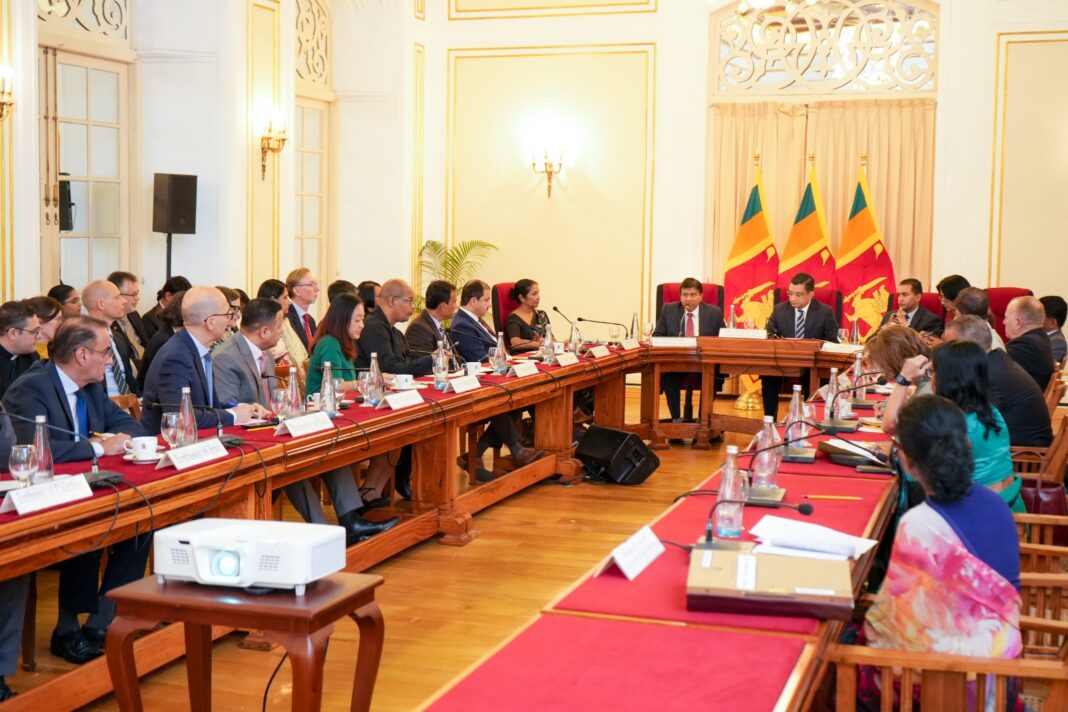
Secretary to the President Saman Ekanayake, writing to all party leaders, said that this proactive approach aims to foster national reconciliation and facilitate a constructive dialogue on the implementation of the 13th Amendment. At the all-party conference convened on 26 July, President Wickremesinghe underscored the importance of discussing the 13th Amendment with all the parties, as it is a matter that affects the entire country. He also highlighted that a decision on this matter should involve input from all relevant parties. The conference had been organised to update the Parliament’s party leaders on the national reconciliation programme and the North-East development plan.

The Supreme Lanka Coalition submitted their proposals to the President at the all-party conference held last month.

Several attempts to contact Tamil National Alliance MPs President’s Counsel M.A. Sumanthiran and Shanakiyan Rasamanickam proved futile.

Posted in Uncategorized

Sri Lanka Supreme Court rules proposed local govt amendment bills will require referendum

Sri Lanka’s government will honour a verdict delivered by the Supreme Court determining that three private member’s bills seeking amendments to local government will require a special majority in parliament and a referendum, according to Prime Minister Dinesh Gunawardena.

Speaker Mahinda Yapa Abeywardena told parliament Tuesday August 08 morning that the Supreme Court has determined that three private member’s bills titled Pradeshiya Sabha (Amendment) Act, Urban Councils (Amendment) Act and Municipal Councils (Amendment) Act are inconsistent with the constitution.

In order to become law, the bills must be passed by a special majority in parliament and approved by the people in a referendum by virtue of the provisions of article 83 of the constitution, he said.

The three bills were challenged in the courts in terms of article 121(1) of the constitution, leading to the verdict that clause 2 of the three bills are inconsistent with articles 1, 12(1), 82, 83 and 104(b) of the constitution.

Chief opposition whip and main opposition Samagi Jana Balawegaya (SJB) MP Lakshman Kiriella asked if the government is ready to go for a referendum.

Prime Minister Gunawardena replied that the government was not at any party to the origin of this bill.

“The government will always honour the determination of the Supreme Court,” said Gunawardena.

“MPs can present [any private member’s bill], but they can’t do whatever they want,” he added.

The three bills were presented to parliament on July 05 as private member’s bills by Sri Lanka Podujana Peramuna (SLPP) MP Jayantha Ketagoda, who is widely believed to be a loyalist of SLPP national organiser and former finance minister Basil Rajapaksa.

The Centre for Policy Alternatives (CPA) and its Executive Director filed three petitions on July 14 in the Supreme Court, challenging the bills.

If passed, the bill would allow the minister in charge to extend the period of any or all Pradeshiya Sabhas, urban councils or municipal councils for a period deemed fit by the minister, effectively allowing the postponement of elections to these local bodies on the grounds of a crisis.

The petitioners argued that this would violate a number of clauses in the constitution.

Local government elections in Sri Lanka have been postponed several times amid the island nation’s worst financial crisis since independence.

Over 150 Muslim academics and others reject MMDA proposals

Over 150 Sri Lankan Muslims, including academics, professionals, community leaders, business personalities, media personalities and youth from across the country, have rejected MMDA proposals put forward by Muslim Members of Parliament.

They say that the recommendations by the MPs come at the cost of the most vulnerable, especially the Muslim women and girls, who have made sacrifices to bring to the fore deep injustices, discrimination and harm caused under the current MMDA.

The signatories of the statement note that the MPs’ positions do not represent the core principles of Islam of justice, kindness, compassion and peace which guide Islamic law.

“We are extremely disappointed in the backward positions taken by the Muslim MP signatories in this document. These positions go against the principles of kindness, compassion and peace encapsulated in the Shari’ah. They also go against building a Sri Lankan Muslim identity that upholds the Sri Lankan Constitution and represents the enlightened thinking of Islam across the Muslim world,” the statement said.

The statement by the signatories urges the Muslim MPs to show genuine leadership to the community by constructively engaging with the reforms moving forward.

Further, the Minister of Justice and the Government of Sri Lanka have been urged to reject the MPs proposals and progress on much needed reforms to the MMDA.

The statement has been endorsed by:

1. Deshabandu Jezima Ismail, Co-founder Muslim Women’s Research and Action Forum
(MWRAF)
2. Professor A. H. Sheriffdeen, Emeritus Professor of Surgery, University of Colombo
3. Professor M.A. Nuhman
4. Professor Naazima Kamardeen, Prof of Commercial Law, University of Colombo
5. Justice Saleem Marsoof, PC.
6. Dr. Ameer Ali
7. Dr. Ameer Zainudeen, Consultant Chemical Engineer (retd), Former Member of
Human Rights Commission of Sri Lanka (HRCSL)
8. Dr Aysha Ziauddin, MRCOG MRCGP Family Medicine Physician
9. Dr. Farah Mihlar
10. Dr. Maleeha Ifthy
11. Dr. Rauff Zain (Ph.D) Director, Centre for Development Studies
12. Dr. Zulfiqar Ismail, College teacher/ Instructor/ Director of Muslim Women’s
Research and Action Forum (MWRAF)
13. M.Y. Minnathul Suheera, Senior Lecturer at South Eastern University
14. Ferial Ashraff, Former Cabinet Minister
15. Razik Zarook, President’s Counsel
16. Razmara Abdeen, Senior Attorney-at-Law
17. Abdur Rahuman, Founder Chairman of BCAS Campus
18. Ashroff Omar, Brandix
19. Hanif Yusoof, Entrepreneur
20. Murtaza Esufally, Co- Founder Learn4LifeLanka
21. Nawaz Rajabdeen, President of Confederation of Micro, Small & Medium Industries
22. A. C. Fathima Husna, Attorney-at-Law
23. Aboosalih Uwais, Attorney-at-Law
24. Amra Ismail, Attorney at Law
25. Azad Mustaffa, Attorney-at-Law
26. Fathima Majitha, Attorney-at-Law and Writer
27. Fazla Fazuldeen, Attorney-at-Law
28. Fazmin Ahmed, Attorney at Law
29. Haniffa Ramsiya, Attorney at Law
30. Hasanah Cegu Isadeen, Attorney-at-Law
31. Mahbooba Rifaideen, Attorney-at-Law
32. Nabeela Raji, Attorney-at-law
33. Nadhiha Abbas, Attorney-at-Law
34. Rehab Mahamoor, Attorney-at-Law
35. Roshan Aboosally Mohamed, Attorney-at-Law
36. S.F.M Zavahir, Attorney at Law, Notary Public and Justice of Peace
37. Sabra Zahid, Attorney at Law
38. Sadiyya Thasi Hassan, Attorney-at-law
39. Sainul Abdeen Kifsiya Banu, Attorney-at-Law
40. Sarah Nada, Attorney-at-Law
41. Shammarah Ismath, Attorney-at-Law
42. Thahira Cader, Attorney-at-Law
43. Usman Anwer, Attorney at Law
44. Zulaiha Sulaiman, Attorney-at-Law
45. Faizun Zackariya, Co Founder, Muslim Women’s Research and Action Forum
(MWRAF)
46. Anberiya Haniffa, Development Consultant, Director of MWRAF
47. Shafinaz Hassendeen, United Nations (retired), Director of MWRAF
48. Aneesa Firthous, President of Islamic Women’s Association for Research and
Education (IWARE), Batticaloa
49. Hyshyama Hamin, Co-Founder of Muslim Personal Law Reform Action Group
(MPLRAG)
50. K.Nihal Ahamed, Director of Human Elevation Organization(HEO), Ampara
51. Asiff Hussein, Journalist and Vice President, Outreach Centre for Islamic Studies
52. A. Mohamed Ashfaque, Filmmaker and Researcher
53. Aarah Ahamed, Marketing Coordinator
54. Abdul Azeez Mohamed Nizardeen, Freelance Journalist
55. Adel Hashim, CEO, iCON Insurance Brokers (Pvt) Ltd
56. Adheeb Anwar
57. Adnan Issadeen, Security engineer
58. Amal Mohamed, Teacher
59. Amana Zahid, Law student
60. Amani Najumudeen, Student
61. Amani Raji, Legal Intern
62. Ameena Hussein, Writer
63. Ameena Ziauddin, Deputy Managing Director of Norfolk Foods
64. Ammaarah Nilafdeen, Independent Researcher
65. Amna Rifky, Product manager
66. Amra Bhutto, Student
67. Ann Jabbar, MWRAF
68. Aqilah Nikhat Nleem, Early Childhood Educator
69. Arkam Zahid, Finance professional
70. Asma Edris
71. Azra Jafferjee, Economist
72. Cegu Abdul Cadir, Accountant
73. Dinah Markar, Retired Teacher
74. Fairooza Gaffar, Educator
75. Farahana Zain, Educator
76. Fareena Salih, Student Support Coordinator, Oxford Brookes University
77. Fathima Rasmina Ihram, Vernathee Women’s Movement
78. Fawzul Himaya Hareed, Communications Specialist
79. Florine Marzook, Independent Researcher, Activist
80. Hafsah Muheed, Gender Equality Advocate
81. Hajra Hussein, Primary school teacher
82. Haseef Kalam, Implementation Consultant
83. Hazeera Zavahir, Principal Kandy International School/ Retired Principal Peradeniya
Training College
84. Hilmy Ahamed, Young Asia Television
85. Honeida Packeer
86. Imaan Mohamed, Communications and Engagement Associate
87. Iman Saleem, Writer
88. Issath Rehana Mohamed Azeem (Anar)
89. Jariya Sameem, Vernathee Women’s Movement.
90. Jemhuthnisha Masooth, Former member of Urban Council
91. K. M. M. Nawaz, Civil society activist and Former Director of Secretariat for Muslims
92. Kamel Asmy Mohamed Shabeer, Journalist
93. Khadeeja Firaz, Consultant
94. Leila Udayar, MWRAF
95. M. A. C. M. Jawahir, Director, Harmony Centre, Kattankudy
96. M. H . Shara, Operational Manager at Xmerce
97. M. I. S. Jahitha, President, “Menik” Women Society, Kattakudy
98. M. I. Uthma Lebbe
99. M.A. Zafar Ahmed, Aeronautical Information Management Officer
100. M.H. Jiffriya, Teacher
101. M.S. Sammila, Vernathee Women’s Movement
102. Mariam Azwer, Journalist & Researcher
103. Maryam Fahim, HR Professional
104. Mazeena Ilyas, MWRAF
105. Megara Tegal, Researcher
106. Mizly Zahir-Rifkey, Business Intelligence Analyst
107. Mufliha Mahroof, Legal Consultant
108. Muheed ur Rahman, Journalist
109. Munza Mushtaq, Journalist
110. Muqaddasa Wahid, Journalist
111. Mutiara Tegal, Chartered Architect
112. Nabeela Iqbal, Activist
113. Nadia Ismail, Activist
114. Nadha Hassen, PhD candidate
115. Najath K. L., YouTuber
116. Naleem Salih, Retired University Lecturer
117. Nasreen Abdul, Accountant
118. Nazar Shaffee, Group CFO/Director
119. Nihara Lafir, IWARE
120. Niroza Hussein, Accountant
121. Nisha Najumudeen, Chartered professional
122. Nuzrath Hidaya, Accountant
123. Omar Rajarathnam, Media Development Consultant
124. Parveen Muhammad, Communication Officer
125. Ramzeen Azeez, Senior Assistant Airport Manager (retd)
126. Raviya Careem
127. Razfi Halith, Analyst
128. Rifa Muhammed Musthafa, Secretary of ADLR
129. Rikaza Hassan, Centre for Journalism & Education
130. Romola Rassool, Director, Post Graduate Institute of English
131. S. H. Imthiyas
132. S. Thasthageer, Rtd. Food Drugs Inspector
133. S. Zarina Nawaz, Befriender at Sri Lanka Sumithrayo
134. Sahul Hameed Firthous, Teacher
135. Sakina Mansoorally, Student
136. Samiha Muhsin, Administrative Coordinator
137. Shahdia Jamaldeen, Chartered Architect
138. Shamzy Jauffer, Senior Analyst at Quality Assurance
139. Shanaz Mohideen, Accountant
140. Silma Ahamed, Young Asia Television
141. Sheroon Shouketh, Assistant Manager, Social Capital, Corporate Human Resources,
Hela Apparel Holdings
142. Shifa Najumudeen, Legal Advisor
143. Shifana Niyas, PhD student, Trinity College, Dublin, Ireland
144. Sithy Sahabdeen
145. Sithy Zareena Razeen, Civil Engineer
146. Suhaina Mohideen, Software Engineer
147. Sumaiya Frahath, Psychology and Counseling Intern
148. Sumaiya Pallak, Activist and Researcher
149. Thaimi Mohamed, Sr. Project Manager
150. Thasneema Dahlan
151. Tinaz Amit, Public Relations Manager/ Writer
152. U.L. Hafeela, MWRAF
153. Ummul Zahid
154. Y. Rinoza, Women’s Rights Activist
155. Zahrah Rizwan, Feminist Researcher
156. Zainab Ibrahim, Researcher
157. Zaneera Rahim, Airline industry professional
158. Zeenath Hidaya, IT professional / Education Consultan

Posted in Uncategorized

LG bodies amendment bills inconsistent with constitution – Speaker conveys SC’s determination

The Supreme Court has determined that the Private Member’s Bills to amend the Pradeshiya Sabhas Act, Urban Councils Ordinance and Municipal Councils Ordinance are inconsistent with the Constitution.

This was conveyed to the parliament by Speaker Mahinda Yapa Abeywardena this morning (Aug 08).

In its determination, the Supreme Court has mentioned that these Bills need to be passed in the parliament by a special majority and approved in a referendum.

Posted in Uncategorized

Iran, Sri Lanka stress enhancing banking, trade ties

In a meeting between Governor of the Central Bank of Iran (CBI) Mohammad-Reza Farzin and Minister of Foreign Affairs of Sri Lanka Ali Sabry in Tehran, the two sides stressed the need for the development of monetary and banking relations between the two countries as a prerequisite for the expansion of bilateral economic ties.

In the meeting on Sunday, Farzin referred to the important role of the Asian Clearing Union (ACU) in the development of trade relations between the two countries, saying: “The ACU is a very suitable platform for the development of trade and monetary relations between the two countries and this platform can also be used to settle payments.”

The CBI governor proposed the formation of a specialized banking and monetary working group between the central banks of the two countries, noting that, “The formation of this working group can play an important role in speeding up and facilitating banking cooperation. Meanwhile, it can also be used to develop monetary and banking relations as well as cooperation and economic exchanges.”

Farzin announced CBI’s approval of the agreements made between Sri Lanka and other economic institutions in Iran, adding that the central banks of the two countries should guide monetary platforms and exchange processes in order to develop economic relations.

He pointed out that Iran has been able to establish stable trade relations with its business partners despite the U.S. sanctions without causing any problems for the other parties.

“Iran is now fully prepared to cooperate with Sri Lanka in order to expand monetary and trade relations within the ACU framework,” the official asserted.

Sabry, for his part, pointed to the long-standing and continuous relations between the two countries and announced his country’s readiness to increase the level of trade with Iran.

“The establishment of a bilateral banking committee between Iran and Sri Lanka to follow up on relevant issues and facilitate commercial affairs will definitely lead to the development of bilateral cooperation,” he said.

The Sri Lankan official went on to say that the Central Bank of Sri Lanka is following up on the measures within the ACU framework.

He also appreciated Iran’s support to Sri Lanka in the International Monetary Fund (IMF).

The ACU was established in 1974 as a payment arrangement through which participants settle payments for intra-regional transactions among the participating central banks on a net multilateral basis, according to ACU’s official website.

ACU currently has nine members including India, Iran, and Pakistan.

Source: Tehran Times

Posted in Uncategorized

Trincomalee is the gateway to the future development of Asia’ – Prime Minister

The Prime Minister Dinesh Gunawardena mentioned that the right to land should be allowed in spite of its ownership while indicating Trincomalee as the gateway to the future development of Asia.

Addressing the Trincomalee district program of ‘New Village – New Country’ National Integration Participatory Development Program held at Trincomalee district Secretariat on Saturday (05), the Premier said Trincomalee is the closest place to look at the countries beyond the Bay of Bengal.

He said it is very important to prepare a district development plan involving all the divisional secretaries to convert the future industries that can be created by utilizing the port into the development of the people of the area.

Speaking on the occasion the Prime Minister said:

Now the new harvest is coming to the market. Suggestions were put forward to make it more efficient for our institutes to enter into competition and purchase by declaring a better price. It is certain that the issues of obtaining the necessary financial provisions can be resolved by the President. A number of issues related to farmers were eased in order to allow them to produce food ten months ago.

The international community is ready to support us while we are in a position to rise again through this challenge. The President was able to remove the withhold of many projects. It is informed to restart those projects. A prearrangement is required from GA to divisional secretaries in order to support it. These projects are related to food security projects.

Loans as well as seeds are given to farmers with the objective of increasing harvest. The Government make arrangements to buy the harvest. But all the records show that 38% of the harvest is wasted. After investments, hard work, and borrowings the harvest is wasted without being able to bring it to the city or the market. That is another serious problem in our country. It should be rectified gradually and expeditiously. This supply chain and network should be interconnected and move properly. Then the farmer as well as the consumer can be assured of food safety. Divisional Secretaries should pay special attention to this matter.

The President took a decision to temporarily cultivate unused lands. We are the owners of a land that bears fruits sixty to ninety days. If the crops get water on time whatever you plant will bear fruit. That is why we are repeatedly advising the government mechanism to support the interest in cultivating different crops.

Regardless of land rights, the government’s decision to allow the rural farmers who are interested in cultivation of land should be successfully implemented.

In 1957 when my father, Mr. Philip Gunawardena was the Minister of Agriculture, he started the Kantale Sugar Factory with the help of Czechoslovakia. We must go back to the heart of the national economy.

Trincomalee is the gateway through which Sri Lanka can bequeath the future development of Asia.

Trincomalee is the closest place to look at the countries beyond the Bay of Bengal. Accordingly, you should be determined to take part in preparing the development plan. It is very important to prepare a district development plan involving all the divisional secretaries to convert the future industries that can be created by utilizing the port into the development of the people of the area.

It’s ready to set up a program to develop special industries, agriculture and fishing industries in the Eastern coast and projects for export.”

The Premier also engaged in a friendly conversation with farmers in Kawantissagama in Trincomalee during his visit to Eastern Province to attend ‘Aluth Ratak – Aluth Gamak’ District Development Programme during the weekend.

Eastern Province Governor Senthil Thondaman, State Ministers Ashoka Priyantha, Janaka Wakkumbura, Members of Parliament Kapila Athukorala, A.L.M. Ataullah, M.S. Taufik, Yadamini Gunawardena, Adviser of the President Dr. Suren Batagoda, Secretary to the Ministry of Administration Ranjith Ashoka, District Secretary of Trincomalee and other government officials and organization representatives participated.

Sri Lanka in talks with Singapore company to transform Colombo

Sri Lanka is in talks with a Singapore based company to transform Colombo and give it a new look.

President Ranil Wickremesinghe said that the vision to transform Colombo into a beautiful city is already in motion, with plans provided by Surbana Jurong.

Surbana Jurong Group is a global urban, infrastructure and managed services consulting firm, with over 70 years of track record in successful project delivery. Headquartered in Singapore, the group has a global talent pool of 16,000 across Surbana Jurong and its member companies AETOS, Atelier Ten, B+H, KTP, Prostruct, RBG, SAA, Sino-Sun and SMEC, based in more than 120 offices in over 40 countries. They include architects, designers, planners, engineers and other specialists driven by progressive thinking and creative ideas to help shape a better future.

President Wickremesinghe said that apart from Colombo, Surbana Jurong is also actively involved in creating a tourist zone from Verugal Aru to Batticaloa and Arugam Bay areas, contributing to the growth of the tourism industry.

President Ranil Wickremesinghe made these remarks at an international conference on Architecture, which was organized by the Royal Institute of British Architects (RIBA) Chapter in Sri Lanka, in collaboration with the American Institute of Architects (AIA) and the Italian Embassy of Sri Lanka, on the theme: “Architecture: A Lasting Impact,” held at Cinnamon Grand, Colombo.

The President said that the focus on expanding the tourist industry is expected to create opportunities for non-government universities in Sri Lanka. The recent enactment of the new act, allowing provincial councils to establish universities, marks the beginning of this endeavour. There is a growing need for skilled professionals, including engineers, architects, IT specialists, and others, with the demand estimated to be at least 10,000 engineers alone.

To address these requirements, discussions are underway with Japan, which has shown a willingness to assist in the past. Despite some challenges posed by the recent crisis, the commitment to progressing these plans remains strong, with the hope of securing the necessary support to meet the country’s developmental needs.

“Envisioning the future, the potential for architects to participate in the development of the Port City holds significant promise. A notable portion of the Port City land is under Government ownership and is slated for diverse utilization. The involvement of the private sector in this initiative offers an added avenue to harness architectural expertise. This exploration requires collaborative dialogues involving relevant chambers and stakeholders,” the President said.

He said that these emerging opportunities symbolize valuable prospects for Sri Lanka adding that seizing these chances has the potential to establish a notable standing for the nation.

“It’s imperative to acknowledge that as India’s progress persists, architectural possibilities might also arise there. Those with established recognition could potentially tap into this market, mirroring the engagement of architects in Africa for house design,” the President added.

The President acknowledged that his expertise lies primarily in the field of the economy and not architecture. As the discussion revolves around architecture and the lasting impression it creates, the President opted not to delve into the topic extensively. It was emphasized that ancient architects achieved the task of leaving a lasting impression through their work.

The President said that the Government is looking to involve private companies in building homes and structures.

“The Government land that’s worth more than the buildings can be used for this purpose and to relocate people from there and give the land to private companies to build affordable homes and apartments. This will also free up space in Colombo for other developments. It’s like a cycle – more buildings, more possibilities. Imagine what could happen if they repurpose places like Welikada Prison or even the railway area. Some buildings on Mount Mary can be kept, but the rest can be used for new projects. Many areas could benefit from this. And the cost of land today makes it feasible. The Treasury is working on the details, so starting maybe next year or the year after, as the economy gets stronger, this could become a reality,” he added.

The President said that the Government is actively engaged in the promotion of tourism, with a target of increasing the number of tourists from 2.5 million to 5 million, and potentially up to 7.5 million.

The restoration of historical structures to create smaller boutique hotels and the revitalization of larger hotels in various regions across the country represents a significant focus area. This ambitious goal involves doubling the existing capacity. It’s important to note that the majority of this expansion will be realized through the construction of new buildings or the renovation of existing ones, thereby offering yet another avenue for the involvement of architects.

The re-planning of Kandy Town to potentially extend its boundaries up to Teldeniya, along with considerations for incorporating Peradeniya and potentially Talatu Oya, are subjects currently under committee deliberation. Similarly, Galle is engaged in evaluating the enhancement of its urban landscape, particularly the sea frontage.

Additionally, the President said that it is likely that other regions, such as Nuwara Eliya town, will also require reimagining and redesigning in new locations.

Posted in Uncategorized

Iran says ready to share scientific, technological knowledge with Sri Lanka

Iran has voiced readiness to share its scientific and technological knowledge and expertise with “friendly” countries, including the South Asian island nation of Sri Lanka.

Iranian President Ebrahim Raisi made these remarks on Sunday in a meeting with Sri Lanka’s Foreign Minister Ali Sabry in Tehran.

According to a communique issued by his office, Iran’s president emphasized the need to activate the joint commission for economic cooperation between the two countries.

He said the island nation in the Indian Ocean has huge potential for progress and prosperity while cautioning it against “colonial and self-serving foreign interventions.”

The Sri Lankan foreign minister, for his part, expressed his country’s interest in expanding cooperation with Iran in various fields, according to the statement.

On Saturday, Sabry held talks with his Iranian counterpart Hossein Amir-Abdollahian on bilateral, regional and international developments, the Iranian Foreign Ministry said.

Amir-Abdollahian expressed Tehran’s interest in holding the meeting of the Iran-Sri Lanka joint economic commission and joint consular and tourism commissions while calling for closer cooperation between the two sides in cultural tourism, scientific and academic fields.

Sabry, for his part, described his country as the gateway to East Asia, while inviting Iranian companies to invest in Sri Lanka and stressing that “two-thirds of growth in the future will happen in Asia.”

Meanwhile, the two countries also emphasized the need for expanding trade and developing banking cooperation during a meeting between Sabry and Iran’s top banker on Sunday.

Mohammad Reza Farzin, the governor of the Central Bank of Iran (CBI) in his meeting with the Sri Lankan foreign minister emphasized that the development of banking ties is key to the development of economic ties between the two countries.

Relations between Iran and Sri Lanka have been stable since the 1979 revolution, although officials of the two countries have often spoken about the untapped potential of bilateral cooperation.

Source:www.aa.com.tr

LNG project: China-Pakistan company out, India in

The Government has decided to cancel a tender awarded to a China-Pakistan consortium to supply Liquefied Natural Gas (LNG) and lay a pipeline network after being selected through an international open competitive bidding process and instead consider an offer by an Indian company.
The China-Pakistan Engro Consortium was selected last year as part of a step towards reducing the cost of power production.

However, last Monday, Power and Energy Minister Kanchana Wijesekera submitted a Cabinet paper titled “Revisiting the National Energy Policy Related to the Development of Natural Gas Infrastructure in the Country,” to suspend the ongoing LNG procurement process.

Accordingly, the suspension covers the Development of a Floating Storage and Re-gasification Unit (FSRU) off Kerawalapitiya on a Build, Own, and Operate basis and a compatible mooring system on Build, Own, Operate and Transfer basis. It also covers the associated projects – the development of Offshore and Onshore Re-gasification Liquefied Natural Gas (RLNG) Transmission Pipeline Network with an Onshore Receiving Facility (ORF) and an associated System from the Floating Storage and Re-gasification Unit (FSRU) to existing and future Kerawalapitiya and Kelanitissa Power Plants on Build, Own, Operate and Transfer (BOOT) basis.

After following the proper tender process, the Cabinet-Appointed Negotiating Committee (CANC) in August last year granted approval to award the tender to the Engro Consortium.

Accordingly, although the Power and Energy Ministry had to submit a cabinet paper to enable the tender to be awarded thus, the ministry delayed the process, Ministry sources said.

The Sunday Times learns that the process had been delayed as the Indian government strongly objected to awarding this tender to the China-Pakistani company.

However, finally, the subject minister had requested cabinet approval to suspend this officially permitted tender, under these circumstances.

The Ministry had instead attempted to award this tender to Petronet LNG Ltd. of India, as an unsolicited procurement, but since the company did not have any experience regarding FSRU, the ministry had rejected the request and said if the Indian government supported the company, they would be able to supply LNG in containers.

“This will badly hamper the investor confidence and no genuine investor will come forward in future to this country,” the official said.

A Ceylon Electricity Board (CEB) top official said, “It will be a costly solution as there would be no competition, with prices being determined by the Indian company”. He said it could have an impact on the electricity tariff which would be increased and all costs would be passed on to the consumers.

The CEB’s Least Cost Long Term Generation and Expansion Plan (LCLTGEP) (2018-2037), which was approved by the Public Utilities Commission of Sri Lanka (PUCSL) in 2018, identifies the need for converting furnace oil and diesel power plants to LNG power plants to reduce power generation costs.

Accordingly, the CEB called for international competitive open tenders from February 18, 2021 to June 25, 2021, and two bidders came forward.

At that point, the US-based New Fortress Energy Company which gave rise to much controversy in 2021, had, without submitting an open bid for this tender, presented an unsolicited proposal to the government. The then Gotabhaya Rajapaksa government which supported this unsolicited proposal had even signed an agreement to sell 40% of the shares of the 300 MW Treasury-owned Kerawalapitiya Yugadhanavi Diesel Power Plant to the New Fortress Energy.

However, due to strong objections to the deal, the agreement had not been implemented up to now.

Against this backdrop, the CANC granted approval on August 4 last year to award the tender to the China-Pakistan Consortium, one of the two companies which had submitted proper bids for the tender.

Not holding LG polls a serious issue for democracy – Mahinda Deshapriya

The Chairman of the Delimitation Commission of Sri Lanka, Mahinda Deshapriya states that not holding the Local Government election is a serious issue for the democracy of a country.

He points out that the authorities will take measures to hold at least one election out of the provincial council and local government polls this year, adding that he hopes that at least one of the two currently postponed elections will be held before World Democracy Day falls on September 15.

While speaking to the media following an event held in Polonnaruwa, the former Election Commission chairman further claimed that the Supreme Court has declared that the ruling of the country, which is carried out by governors, secretaries and commissioners without the mandate of the people and their representatives, is unlawful.

Meanwhile, the People’s Action for Free and Fair Elections (PAFFREL) expresses that all the political parties that have ruled the country so far, are responsible for the current economic collapse.

Executive Director of the PAFFREL Rohana Hettiarachchi mentioned that the people should rally in order to create a proper political system in the country.

However, the General Secretary of the United National Party (UNP) Palitha Range Bandara has stated that there is no need to hold an election at this moment.