Fitch downgrades ratings of 7 Lankan insurers; maintains ‘Watch Negative’

Fitch Ratings said yesterday it downgraded the National Insurer Financial Strength (IFS) Ratings of seven Sri Lankan insurers following the recent sovereign downgrade and recalibration of the agency’s Sri Lankan National Rating scale. The seven insurers’ ratings have been maintained on Rating Watch Negative (RWN).

The recalibration is to reflect changes in the relative creditworthiness among Sri Lankan issuers following Fitch’s downgrade of Sri Lanka’s Long-Term Local Currency Issuer Default Rating (IDR) to ‘CC’ from ‘CCC’ on 1 December 2022.

Fitch typically does not assign Outlooks or apply modifiers to sovereigns with a rating of ‘CCC+’ or below.

National rating scales are a risk ranking of issuers in a particular market designed to help local investors differentiate risk. Sri Lanka’s national rating scale is denoted by the unique identifier ‘(lka)’. Fitch adds this identifier to reflect the unique nature of the Sri Lankan national scale. National rating scales are not comparable with Fitch’s international rating scales or with other countries’ national rating scales.

The National IFS Ratings of the Sri Lankan insurers take into consideration their creditworthiness relative to other issuers in the country. The recalibration of the Sri Lankan National Rating scale has resulted in downgrades of the National IFS Ratings of the following insurers:

• Sri Lanka Insurance Corporation Limited to ‘A(lka)’/RWN from ‘AA(lka)’/RWN

• National Insurance Trust Fund Board to ‘A-(lka)’/RWN from ‘A+(lka)’/RWN

• People’s Insurance PLC to ‘A-(lka)’/RWN from ‘A+(lka)’/RWN

• HNB Assurance PLC to ‘A-(lka)’/RWN from ‘A+(lka)’/RWN

• HNB General Insurance Limited to ‘A-(lka)’/RWN from ‘A+(lka)’/RWN

• Continental Insurance Lanka Limited to ‘A-(lka)’/RWN from ‘A+(lka)’/RWN

• Construction Guarantee Fund to ‘BB(lka)’/RWN from ‘BBB-(lka)’/RWN

Fitch said the downgrades of the National IFS Ratings of the seven insurers are driven by the downgrade of the sovereign’s Long-Term Local-Currency IDR and the recalibration of the national rating scale while also reflecting the relative creditworthiness among Sri Lankan issuers.

“We believe that the investment and liquidity risks of insurers have increased due to the weaker credit profile of the sovereign and the subsequent rating action on various financial institutions,” it said.

The rated insurers’ investment portfolios, similar to that of other insurers in the country, are dominated by fixed-income securities issued or guaranteed by the Government, deposits and securities issued by local banks, non-bank financial institutions and corporations.

Fitch maintains the ratings of all domestic Sri Lankan banks on RWN amid the likelihood of capital and funding stress as the default risk on domestic debt increases while access to foreign-currency funding remains constrained.

“We have maintained the insurers’ ratings on RWN to reflect the potential for these insurers’ creditworthiness relative to other entities on the Sri Lankan National Rating scale to further deteriorate amid high investment and liquidity risks, pressure on regulatory capital positions and a weaker financial performance outlook. The heightened investment risks and earnings pressure amid the weak operating environment could affect insurers’ regulatory capital profiles,” Fitch added.

Posted in Uncategorized

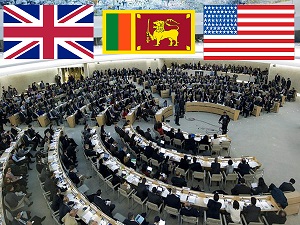
UNHRC reiterates to hold all those responsible for Easter Sunday attacks accountable

The UN Human Rights Office reiterates its recommendations to the Government of Sri Lanka to release the complete findings of previous inquiries into the Easter Sunday bombings and to establish a follow-up independent, thorough and transparent investigation with international assistance and the full participation of victims and their representatives and to hold all those responsible fully to account.

The Court unanimously held that former President Maithripala Sirisena, the former defence secretary and two other former security and intelligence officials had violated the fundamental rights of the victims by failing to prevent the attacks, and ordered them to pay personally into a victims’ fund to the value of nearly USD 850,000. More than 270 people were killed in the series of explosions at churches and hotels across the country. In a previous decision, the Supreme Court found that proceedings against the current President, who was the Prime Minister at the time of the attacks, could not continue given the immunities that he enjoys while in office.

Whilst no amount of compensation can ever erase the suffering and pain of the victims and families, this judgment marks a step in the victims’ struggle for recognition of the harm suffered and their rights to truth, justice and reparation. The UN Human Rights Office calls on the Government to ensure that victims receive adequate compensation and that they and their representatives are fully consulted in the disbursement of the funds.

In its judgment, the Court expressed “shock and dismay” at the lack of “oversight and inaction” by the security and intelligence officials – ruling that the former President and his top security officials had failed to prevent the attacks, despite detailed intelligence suggesting such attacks were imminent.

The UN Human Rights Office reiterates its recommendations to the Government of Sri Lanka to release the complete findings of previous inquiries into the Easter Sunday bombings and to establish a follow-up independent, thorough and transparent investigation with international assistance and the full participation of victims and their representatives and to hold all those responsible fully to account

Embarkation levy to be paid when leaving country through air and sea ports

A new announcement was made by the government regarding the revision of the embarkation levy to be paid by passengers who leave the country through an international airport or seaport.

The announcement has been issued with the signature of President Ranil Wickremesinghe as the Minister of Finance.

As a result, passengers who leave Sri Lanka via Colombo International Airport must pay US$ 30 as embarkation fee. These fees are levied from March 27, 2022 to March 26, 2023.

An embarkation levy of US$30 will be charged from every person leaving Sri Lanka from Jaffna International Airport. The charges will be applicable during the period from January 12, 2023 to July 11, 2023.

The announcement further said that anyone leaving Sri Lanka from an airport other than Mattala, Ratmalana, or Jaffna International Airport must pay an embarkation levy of US$60. This rule also applies to those departing from Katunayake Bandaranaike International Airport.

Those who depart from Sri Lanka by sea will also be subject to the embarkation levy of US$60.

International airlines that start operations at Mattala Mahinda Rajapaksa Airport are exempted from being charged this tax for a period of two years from the date of commencement of operations.

These embarkation levy orders are effective from January 12, 2023.

Posted in Uncategorized

Election Expenditure Bill to be debated in Parliament tomorrow

The leaders of political parties have decided to debate the Regulation of Election Expenditure Bill in Parliament tomorrow (19 Jan.).

The decision was taken at the party leaders meeting held this afternoon (18 Jan.), chaired by President Ranil Wickremesinghe.

Earlier today, Speaker Mahinda Yapa Abeywardena informed the Parliament of the aforementioned special party leaders’ meeting.

Posted in Uncategorized

AKD demands details of China FTA be made public

Claiming that there is a great danger of the small- and medium-scale industries being destroyed through the free trade agreement (FTA), which is to be signed between Sri Lanka and China, National People’s Power Parliamentarian and Janatha Vimukthi Peramuna Leader Anura Kumara Dissanayake said that the Government should discuss its contents in Parliament before proceeding with the rest of the process.

Speaking in Parliament yesterday (17), he said: “President Ranil Wickremesinghe said that there is some progress in the talks with China on debt restructuring. Against that backdrop, arrangements have now been made to sign an FTA with China. What are the contents of that Agreement? Today, the industrialists of our country are scared. That is because we all know that China is a technologically advanced country. They produce goods for a large market. Naturally, their production costs are low and it cannot be prevented, but that is not the case in our country. Sri Lankan industrialists produce goods for a small market.”

Noting that local industrialists should also reach the international market, he said that a plan should be formulated for that purpose. However, at a time when the production cost in the country has gone up in the prevailing situation, he said that local industrialists, some of whom he had met recently, are in great fear as to whether the FTA in question would affect their businesses. He said that there is a great danger of small and medium-scale industries which are already in the midst of a crisis, being destroyed through the FTA to be signed.

“Let’s discuss this agreement in the House before reaching an agreement, going to negotiations and signing the contract. What are your (Government) suggestions? How will the FTA affect our industries? Is it favourable to the exporters of our country, or are we trying to promote only an import market? Let’s discuss these matters in Parliament and then make a decision,” added Dissanayake.

Meanwhile, State Minister of Foreign Affairs Tharaka Balasuriya told The Morning in 2021 that Sri Lankan authorities are reviewing the provisions of the proposed FTA with China in order to ensure that it would not turn out to be “another Singapore FTA”. “The proposed China FTA is a huge document and there is a lot of negativity towards Sri Lanka. We are reviewing the contents and assessing harmonised system codes because we do not need a repeat of what happened with the Singapore FTA,” he said.

Posted in Uncategorized

China opposes any country receiving Dalai Lama

China has expressed opposition over the invitation extended to the Dalai Lama, the spiritual leader of the Tibetan people.

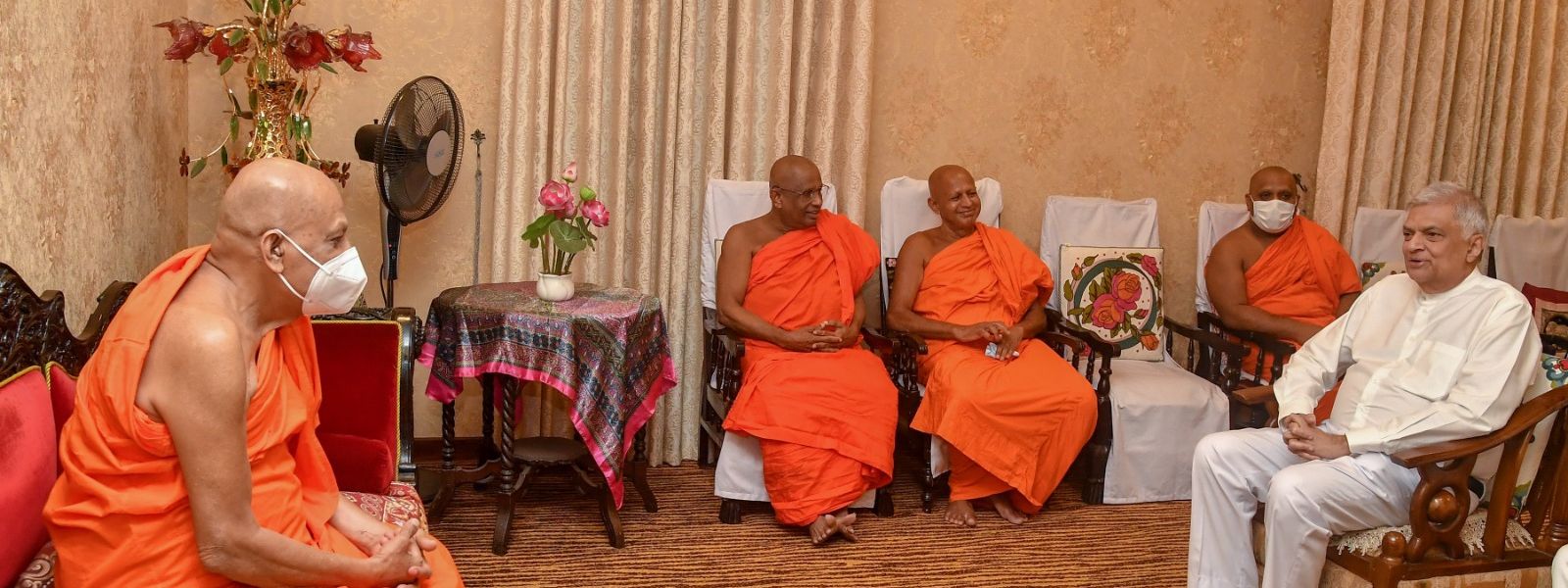
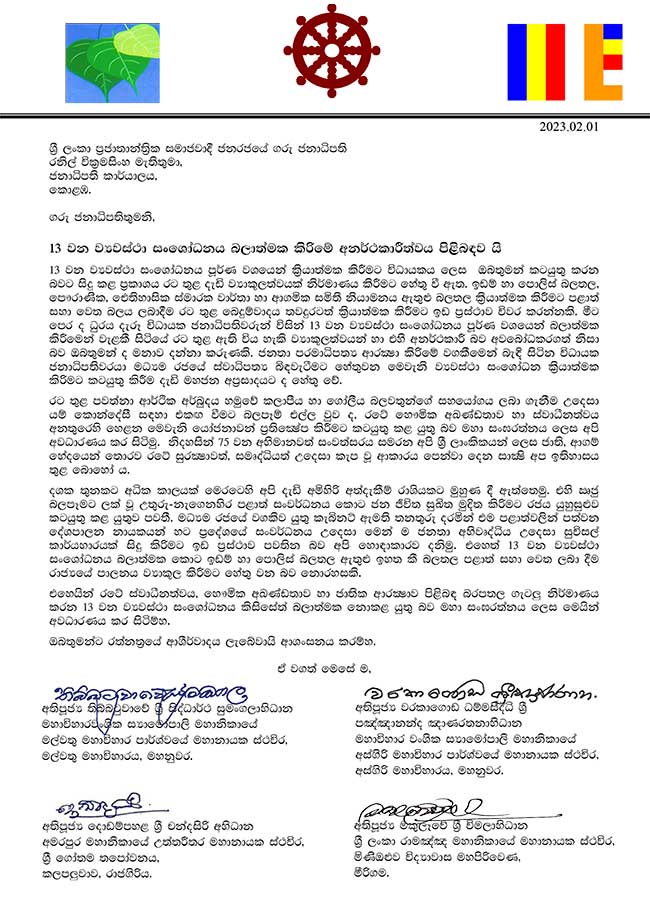
Chargé d’affaires of the Chinese Embassy in Sri Lanka Hu Wei recently called on the Mahanayake Thero of the Malwathu chapter of Siam Nikaya, Most Venerable Thibbatuwawe Sri Siddhartha Sumangala Theroand stated that the government and people of China including in the Tibet Autonomous Region strongly oppose any foreign country to receive the Dalai Lama in any name.

A statement from the Chinese Embassy on twitter noted that this is because the 14th Dalai Lama is absolutely not a “simple monk” as he self-claimed, but the head of the feudal serfdom and the theocracy in Tibet prior to 1951, a political exile disguised as a religious figure who has long been engaging in anti-China separatist activities and attempting to split Tibet from China.

Chargé d’affaires of the Chinese Embassy in Sri Lanka Hu Wei has emphasized that China and Sri Lanka have been firmly supporting each other on issues concerning each other’s core interests, including the Tibet related issue.

He had noted that both sides especially the Buddhist communities must prevent a sneaky visit of the Dalai Lama to the island to promote “Tibetan independence” and safeguard the China-Sri Lanka historical relations from being damaged.

Sri Lankan Buddhist monks recently invited exiled Tibetan spiritual leader the Dalai Lama to make his first visit to the island

Chinese Embassy in Sri Lanka slams US envoy

The Chinese Embassy in Sri Lanka today slammed the US Ambassador to Sri Lanka, Julie Chung, calling her a hypocrite for the comments she had made in a recent interview.

The embassy was angered over her view that China was the “spoiler” in Sri Lanka’s efforts to reach a deal with the International Monetary Fund (IMF).

China asked why the US did not take decisive action in the IMF for a more comfortable solution for Sri Lanka or extend a grant to the country instead of sowing discord between Sri Lanka and China.

Chung had told the BBC recently that the greater onus to move was on China, as the biggest bilateral lender.

“We hope that they do not delay because Sri Lanka does not have time to delay. They need these assurances immediately,” Ambassador Chung had told BBC Newsnight.

“For the sake of the Sri Lankan people, we certainly hope China is not a spoiler as they proceed to attain this IMF agreement.”

The Chinese Embassy said that both the Chinese and Sri Lankan people are wise enough to judge without any foreign lecturing who is the spoiler.

The Embassy also questioned the political pre-conditions for US aid while being assured of China’s “no strings attached” commitment.

Posted in Uncategorized

Election Commission gives undertaking to hold the LG Election

The Election Commission today (Jan 18) gave an assurance to the Supreme Court on the upcoming local government (LG) election.

The election body told a Supreme Court bench that LG polls would be conducted in compliance with the Local Authorities Elections (Amendment) Act, once the nominations accepting process is completed.

Nominations for the LG election are accepted from 8.30 a.m. today until 12.00 p.m. on January 21. Meanwhile, accepting election deposits of the candidates, which began on January 04, will continue until 12.00 p.m. on January 20.

Earlier, Commissioner-General of Elections Saman Sri Ratnayake stated that the date for the LG election would be announced after concluding the acceptance of nominations.

Nominations for LG election accepted from today

Accepting nominations for the upcoming local government (LG) election begins at 8.30 a.m. today (Jan 18), the Election Commission says.

Accordingly, nominations will be accepted until 12.00 p.m. on January 21.

Commissioner-General of Elections Saman Sri Ratnayake stated that the date for the LG election would be announced on Jan. 21 after concluding the acceptance of nominations.

Meanwhile, accepting election deposits of the candidates began on January 04 and will continue until 12.00 p.m. on January 20.

It is reported that a total of 29 political parties and 52 independent groups have placed deposits for the LG election between 8.30 a.m. and 4.15 p.m. yesterday.

During this period, New Lanka Freedom Party (NLFP) placed deposits for Colombo, Gampaha, Kalutara, Matale, Nuwara-Eliya, Galle, Ampara and Puttalam districts, while the main opposition Samagi Jana Balawegaya (SJB) placed deposits for Colombo, Kalutara, Matale, Galle, Jaffna, Batticaloa, Puttalam and Ratnapura districts.

Meanwhile, Sri Lanka Freedom Party (SLFP) has tendered deposits for Colombo, Nuwara-Eliya, Galle, Vavuniya, Batticaloa, Trincomalee and Ratnapura districts during this period.

In addition, Janasetha Peramuna, Freedom People’s Front and United National Party also lodged their deposits yesterday for the upcoming LG election.

Canada’s ban and TNA’s internal shocks can doom ethnic talks By N Sathiya Moorthy

If anyone thought that the recent Canadian sanctions against former Presidents Mahinda Rajapaksa and brother Gotabaya Rajapaksa, along with two army officers charged with Tamil-killing outside the battle-field could pressure the government of President Ranil Wickremesinghe to fast-track a liberal solution to the ethnic problem, it is not to be. If anything, the timing of the Canadian sanctions that denies entry for the four and freeze of their assets, if any, in any Canadian entity, may only derail whatever progress was expected in the halted (if not aborted) talks that Wickremesinghe has initiated with an already divided polity on yet another self-defeating mission.

All this, when the President initiated the quick-fix talks with a self-imposed deadline for announcing a solution by the nation’s 75th Independence Day, on 4 February. He indicated and TNA parliamentarian M A Sumanthiran detailed that the initial package would derive from 13-A without naming it, but the latter also insisted on fulfilment of Tamils’ pre-conditions for taking forward the four-day talks that was aborted on day one. Therein lies the hitch, and the reasons are not far to seek.

Vicarious culpability

Though selective western nations like the US and the UK have imposed sanctions and ban on individual Sri Lankan military officers for alleged ‘war crimes’ before they were conclusively proved, this is the first time ‘vicarious culpability’ has been passed on, bottom up, all the way to the political leadership, that too the President, who is also the supreme commander of the armed forces. Mahinda was the war-time President and Gota, Defence Secretary at the time.

The world condemned him for granting pardon, as short-lived President (2019-22), to Staff Sergeant Sunil Ratnayake, whose death sentence the Supreme Court had confirmed for the ‘Mirusuvil killings’ of eight Tamils in Jaffna Peninsula. Even without it, Sri Lanka has a principled position, owing to which even court-ordered death sentences have not been carried out for decades. Lt Commander Chandana Prasad Hettiarachchi, also known as Navy Sampath, was involved in the death of at least eight of the 11 ‘Trincomalee victims’.

The US banned the two veterans in 2021, but not the Rajapaksas. The US, the UK, Australia and others have similarly sanctioned ranking war-time army commanders. By its sanctions on Brothers Rajapaksas, Canada is now taking the lead for fixing ‘political accountability’ on allegations of human rights abuses and violations when they were in power. This reverse flow of fixing culpability may have skipped certain levels of commands and commanders, if it came to that, and this could well cause jitters across the nation’s uniformed services, both serving and retired.

This much becomes clear when the statement by Canadian Foreign Minister Mélanie Joly asserts that “Canada will continue to collaborate alongside international partners, including through relevant multilateral bodies to advocate for human rights and accountability in Sri Lanka, which is an important step toward securing a safe, peaceful and inclusive future for the country.”

It further says that “Canada, as part of the Core Group on Sri Lanka at the United Nations Human Rights Council will continue to advocate for the full implementation of resolution 51/1 and support efforts towards attaining accountability and peace on the island.” And, Canada has extended symbolic funding for humanitarian assistance, as Sri Lanka is still reeling under an economic distress that burst out last year.

Incidentally, it was the US-led Core Group’s initiative at the UNHRC in 2012 that aborted the post-war Rajapaksa government’s talks with the TNA for a political solution, which had otherwise made substantial progress on contentious issues from the pre-war past. If anything, the TNA owning up the ownership of the US-initiated resolution that put paid to the peace negotiations nearer home. After that, this was the first time that negotiations have begun with the hope of arriving at a solution, interim if not final, after two false starts under Presidents Maithripala Sirisena and Gotabaya Rajapaksa.

Dragging the feet

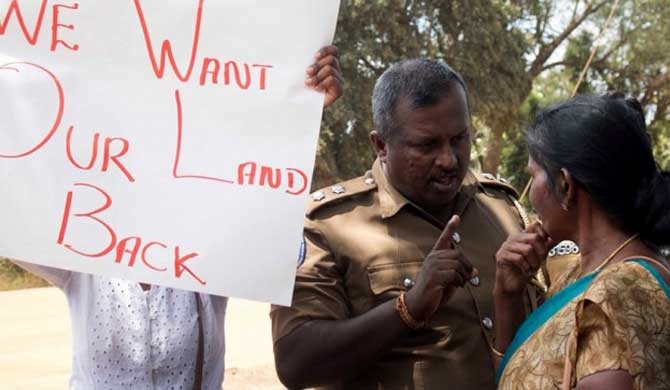
Even without the Canadian sanctions, the ethnic talks for finding a political solution were faltering as the government was dragging its feet on the three pre-conditions put forward by the Tamil National Alliance (TNA), which continues to be in the forefront of the government-initiated talks. The demands included ‘accountability for missing persons’, freedom for political prisoners and return of Tamil lands that continue to be in the possession especially of the armed forces in the North and the East.

It is anybody’s guess why the government is not keeping its word. It has also not officially clarified if it was facing any problems, especially from security forces, on all three issues, because they all sort of concern them, after all. Then, of course, there are the hurdles that ‘Sinhala majoritarianism’ could place on the road to recovering ethnic peace in the country – real and imaginary, present and future.

In fact, the government’s perceived lack of sincerity in the matter forced the three-man TNA delegation, comprising alliance chief R Sampanthan, spokesperson M A Sumanthiran and also Selvam Adaikalanathan, leader of the TELO partner, to give upon the four-day ‘marathon talks’ with the promise to return to the negotiations table, as the President-led delegation sought one more week, to tie up loose ends. A clear picture is expected to emerge only in the coming week or ten days.

TNA, not the same

Even without it all, the TNA has broken up as a common, recognisable political entity, in the one week that they gave the Government, and won’t be able to return to the negotiations table the same way it had commenced. After the ITAK leader of the three-party alliance unilaterally decided to contest the promised local government elections on its own and on traditional poll symbol, ‘House’, the TELO and PLOTE partners walked out to join hands with erstwhile TNA partners and LTTE cadres, and claim to be the TNA now.

There was another little drama on the side when C V Wigneswaran, former TNA Chief Minister of the Northern Province, walked out of the still-formed new alliance, after being reportedly denied its leadership. It was not without reason that TELO boss Selvam Adaikalanathan was claiming to be self-appointed joint leader of the ITAK-led TNA before the current break-up.

They have now decided to contest under a new, common ‘Lamp’ symbol instead of attaching to Wigneswaran-led TNPF’s brand new ‘Peacock’ symbol, as sought by the latter. The new group is also keen on registering their TNA with the Election Commission, with a new common symbol – which the ITAK leader has consistently declined, up to now. ITAK has since declared that the Tamil people (voters?) will decide which is the real TNA, even as it is increasingly clear that ITAK is not too keen to have new allies, to be able to form any alliance of any kind.

This will have consequences for the ethnic talks, as the TNA, which the government and the international community identify as the main representative of the Tamil people, would have fewer MPs than at present among the total 16 of them from the community. This is because, in his eagerness to fast-track a solution, President Wickremesinghe has restricted invitation and participation, both of the Tamils and of the larger all-party groups, to parliamentary representation.

In the past, all-party conferences on the issue got stalled as those without parliamentary representation happily stalled the proceedings by throwing up tantrums of different kinds, all flowing from the Sinhalese sense of majoritarian insecurity. It is another matter that not all parties in the non-ITAK grouping can see eye to eye, but they will still have an argument that the TNA is not the ‘sole representative’ as is being projected. They may get a sympathetic echo on the streets of the North and the East, where it matters.

Supreme Court shows the way?

The legality and feasibility of the Supreme Court’s recent verdict in the 2019 ‘Easter blasts case’ against then President Sirisena and others need to be viewed. Taken to its logical conclusion, the court could provide honourable and meaningful compensation to the families of ‘missing Tamils’, where culpability of the accused could be relatively better established. For, the international community or the Tamils nearer home to take off from UNHRC 51/1 or the Canadian initiative, could produce headlines but not any meaningful way out for the victimised families.

In today’s exchange rates, the court verdict may not mean much, but symbolically, the compensation ordered to be paid by Sirisena (LKR 100 m) to the blast-victims, Jayasundara and Jayawardena (LKR 75 m), Fernando (LKR 50 m) and Mendis (LKR 10 m) goes a long way. To this, the seven-judge Bench has unanimously directed the Government to pay a million rupees each to those who died in the attacks, and LKR 500,000 each to the injured.

But there may be a hitch. What if any or all of the persons ordered to pay the compensation do not have the wherewithal. Or, if they had no cash or bank balance, but had only assets? Or, did not even have assets adequate to be liquidated for paying the compensation? Even if they had property, will the current market conditions, in the wake of the economic crisis, fetch them a reasonable price?

If any or all such possibilities exist, what would come of the Supreme Court’s verdict, and more so, those charged with making those payments? And for the Government that has no money to pay for a lot of essentials, what kind of spending is the court talking about? Going by published accounts, 269 persons, including 45 foreign nationals, lost their lives, and around 500 others were injured. The total Government pay-out would work out to LKR 2940 m, or close to LKR 3000 m. It is a lot of money in the current economic situation.

Then, there is the unasked question: Now that the highest judiciary of the land has opened up the flood-gates for compensation/damages, how will it handle petitions from families of those dead, or from that are seriously injured that the said amount was inadequate and the Supreme Court reconsider their claims on an individual basis? What if the Supreme Court verdict implies culpability, and families of any or all the foreigners who died in the serial blasts, move victim-friendly judicial institutions in their country that also have the tendency to assume jurisdiction elsewhere, too?

Having said all this, what about the criminal culpability of those who have been asked to pay compensation? After all, the fundamental rights case flowed from the appeals filed by Fernando and Jayasundara, challenging their arrests for what was made out to be a ‘mass murder’, which otherwise tantamount only to ‘criminal negligence’ on the one hand and ‘dereliction of duty’ on the other?

If such were the complications arising out of the Supreme Court verdict, will it enthuse the families of the Tamil victims of ‘forced disappearances’, to follow suit, without pressing too much for criminal accountability of the kind – which the Bench has seemingly side-stepped in the ‘Easter blasts’ case, at least as for as those that were not directly involved in deaths and destruction?

(The writer is policy analyst & political observer, based in Chennai, India. Email: sathiyam54@nsathiyamoorthy.com)