Tamil prisoner wins state literary award

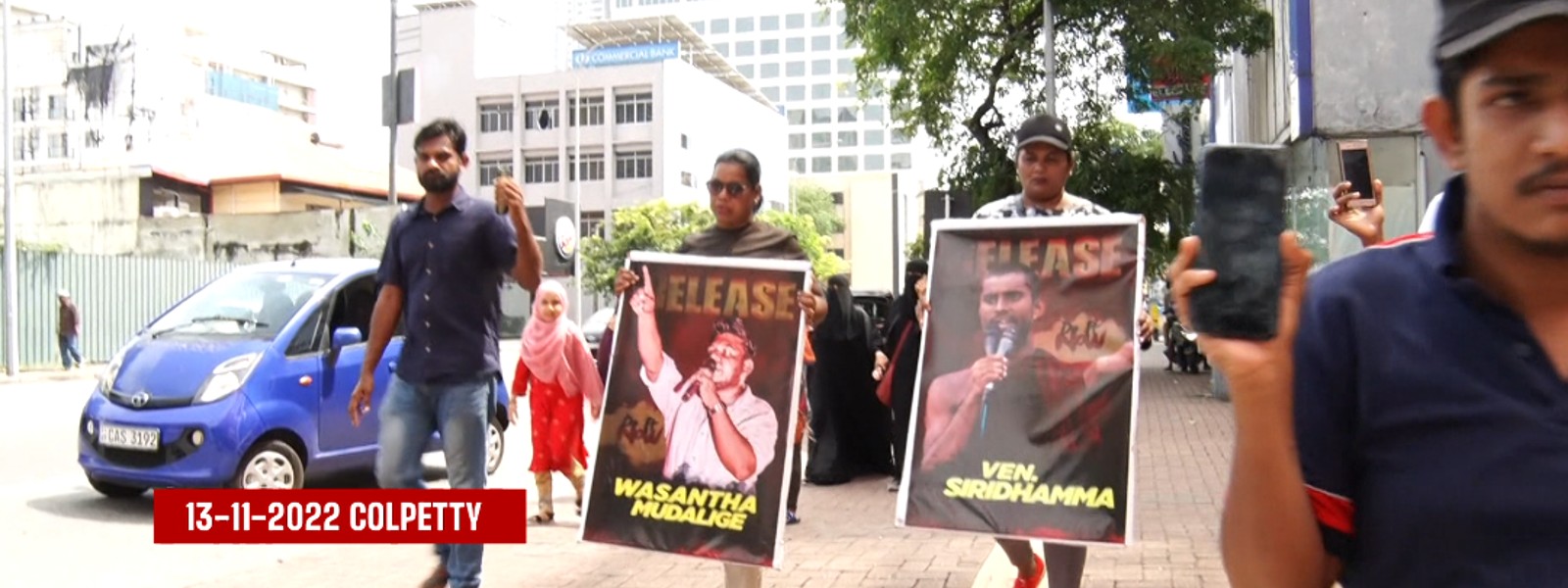
A Tamil writer who remains behind bars for 16 years under the PTA has won an award at the 65th state literary awards.

Sivalingam Aruran received the award for the best independent Tamil novel for ‘Adurasalei’ which he wrote at Magazine Prison.

An engineering graduate from Moratuwa University, he was pursuing his postgraduate studies at Peradeniya University, when he was arrested in 2006 over the bomb blast in the same year at Pittala Junction in Colombo.

No accused has so far been tried and sentenced over the attack that allegedly targeted the then defence secretary Gotabaya Rajapaksa.

Aruran, who won the 2008 award previously, has had all eight books he wrote from prison shortlisted for awards at the state literary festival this year.

He was escorted by prison officials to the awards ceremony at the BMICH to receive his award.

The best novels in Sinhala and English mediums were won respectively by Eric Ilayappaarachchi for his ‘Nakula Muni’ and Dr. Premini Amerasinghe for her ‘Footprints.’

Verité poll shows Govt. approval up marginally to 10%

The third round of the Gallup-style “Mood of the Nation” poll was conducted in October by Verité Research to assess the approval, satisfaction, and confidence of the nation in relation to the Government, country, and economy, and showed that the Government’s approval rating was up marginally to a still unflattering 10%.

Verite announced in a press release yesterday that the poll was conducted as a part of the syndicated survey instrument by Verité. The instrument also provides other organisations with the opportunity to survey the sentiments of Sri Lanka.

Government approval rating of 10% to the question: “Do you approve or disapprove of the way the current Government is working?”, only 10% said they approve. This reflects the same extreme low level it was in January 2022, but it was an improvement from the 3% approval ratings in June 2022.
Sri Lanka satisfaction of 7% to the question: “In general, are you satisfied or dissatisfied with the way things are going in Sri Lanka?”, only 7% said they were satisfied. This rating was at 6% in January and 2% in June 2022.
Economic confidence negative (-) 77.9 to multiple choice questions on the condition and trajectory of the economy, which were used to generate an economic confidence score. The score can range from negative (-) 100 to positive (+) 100. A score above zero means more people see the economic conditions positively rather than negatively. If everyone thinks that the economy is in a poor condition (instead of good or excellent), and everyone also thinks it is getting worse (rather than better), then the score would be negative (-) 100. In October 2022, 0.5% rated the economic condition as excellent, 4.8% rated it as good, and 16.2% rated it as getting better. The resulting score was a (-) 77.9 (rounded off as (-) 78). This rating was (-) 83 in January and (-) 96 in June.
The poll is based on an islandwide nationally representative sample of responses from 1,018 Sri Lankan adults, conducted in October 2022. The sample and methodology was designed to ensure a maximum error margin of under 3% at a 95% confidence interval. The polling partner was Vanguard Survey (Pvt.) Ltd.

Posted in Uncategorized

USAID agrees to provide 36,000 metric tons of TSP fertilizer to Sri Lanka

Sri Lanka’s Minister of Agriculture Mahinda Amaraweera says that the United States Agency for International Development (USAID) has agreed to provide 36,000 metric tons of Triple Super Phosphate (TSP) fertilizer needed for paddy cultivation to Sri Lanka.

Although the country’s economic crisis has had a severe impact on the provision of urea fertilizer, bandi fertilizer (Muriate of Potash) and triple super phosphate fertilizer or mud fertilizer required for rice cultivation, the government has been able to provide the complete urea fertilizer and bandi fertilizer required for rice and maize cultivation, Agriculture, Wildlife and Forest Resources Conservation Minister Mahinda Amaraweera said.

The Minister made these disclosures at the progress review meeting held at the Ministry of Agriculture regarding the distribution of fertilizers required for the 2022/23 season. A large number of officials attended the event.

The Minister said they had to face a problem in finding funds to provide the base fertilizer or TSP fertilizer for the Maha Season but the USAID has agreed to provide 36,000 metric tons of TSP fertilizer to the country as aid.

However, there is a difficulty in getting that fertilizer this season, because TSP is produced in Ukraine and Russia, they have stopped exporting that fertilizer due to ongoing conflict between them, the Minister said.

Therefore, the minister informed that the TSP fertilizer is ready to be given free of cost to the farmers in the next Yala season.

According to the soil tests conducted by the Ministry of Agriculture throughout the island, it has been confirmed that except for a few districts in the Eastern Province, the soils in almost all the other districts of the island contain enough phosphorus.

Therefore, regardless of the accusations made by some people who claim to be farmers’ organizations, by taking measures to provide fertilizers under Soil Test Basis, the impact on the yield can be minimized by using minimum amount of fertilizers, Secretary to the Ministry of Agriculture Rohana Pushpakumara said.

According to soil tests, there is a high amount of phosphorus in the soils of the North-West and North-Central Provinces. Although there is a minimum amount of phosphorus in the Eastern Province, rock phosphate can cover that amount. It has also been revealed that in other districts, phosphorus content in the soil is moderate.

Therefore, during the Maha season, there will not be a significant reduction in the yield of paddy cultivation, and there may be a yield reduction of between 05% and 10%, the Secretary of the Ministry, Mr. Rohana Pushpakumara pointed out.

Committee to further integrate Tamils of hill country origin into society – President

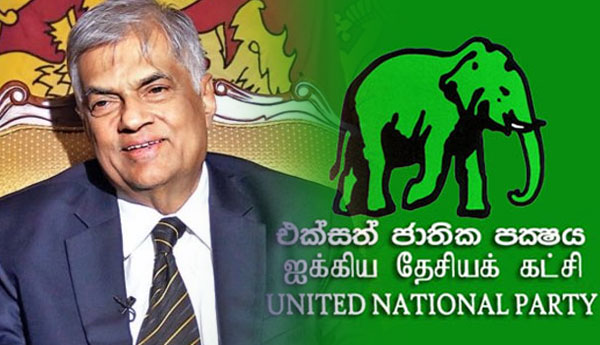
The government will appoint a committee to seek how best to integrate the Tamils of Hill Country Origin further into the Sri Lankan society, said President Ranil Wickremesinghe.

He said further that although some of the Tamils of Hill Country Origin had integrated successfully into the Sri Lankan society, some have failed and measures would be taken to assist them to do so.

President Ranil Wickremesinghe made these observations addressing at the occasion of accepting a consignment of medicines donated by the Pondicherry Union Territory and people of India on the request of Ceylon Workers’ Congress (CWC) at the Presidential Secretariat this morning (30).

The consignment of medicines was officially handed over to the President by Secretary General of the Ceylon Workers’ Congress (CWC) and Parliamentarian Jeewan Thondaman, in memory of the late Mr. Saumyamoorthi Thondaman who passed away 23 years ago on October 30th. The consignment of medicines was subsequently handed over to Health Minister Keheliya Rambukwella.

The President said that he would attend to ensure the development of schools in the plantation sector while the Ministry of Health would take over the hospitals in the plantation sector. He assured development in both these areas very soon.

Now the government is also encouraging building of houses and issuing lands to the people of Tamil origin in the Hill Country because they must have their own lands and a place to live in just like other groups in the hill country, the President added.

He said further, steps would be taken to review the plantation economy that could be affected by people leaving the plantation areas after being educated. “As people are being educated, more and more are leaving the plantation sector. The government has to find jobs for them as well as for other Sinhalese and Muslims who leave their areas to settle elsewhere. So, the government has to look at the future of the groups that would continue to live in the plantation sector and on how to improve the plantation economy as they cannot be allowed to live in a subsistence level.”

He said further that these issues would be gradually resolved in the coming years as the government resolves the whole ethnic problem in Sri Lanka.

He assured that the government would take further measures to ensure that Tamil people of Hill Country Origin would have the same facilities as other people in the country as realized and worked on under late President J R Jayawardena’s tenure.

He also requested all leaders of the Hill Country Tamils to join in this endeavor to ensure that all benefits of Sri Lankan citizenship is enjoyed by the people in the Hill Country of Tamil Origin.

The President also appreciated the service rendered by late Thondaman and said he was one of the most outstanding leaders of the 20th century in Sri Lanka as through nonviolence he achieved citizenship for all the people of Indian Origin who stayed back after the Srima-Shasthri Pact.

The President said that he got citizenship for some people who should have gone under Srima-Shastri Pact but decided to stay back in Sri Lanka.

Secretary to the President Saman Ekanayake, a representative from the Indian High Commission, several members of CWC including Senthil Thondaman were present at the occasion.

Posted in Uncategorized

Sri Lanka notes critical support given by US President

Sri Lanka noted the critical support given by US President Joe Biden at a time the country is facing a crisis.

President Ranil Wickremesinghe said that without Biden’s help Sri Lanka will not be having a successful Maha Season, the President’s Media Division said.

Wickremesinghe also said that measures have been taken to strengthen the 74-year-old ties between the United States and Sri Lanka.

He said the support rendered by the United States whenever Sri Lanka was in difficulty would never be forgotten.

Expressing his views on the diplomatic relations and mutual understanding between the United States and Sri Lanka during the war, the President also recalled with gratitude the support given by the United States under the leadership of George Bush in 2001.

The President also recalled the support provided by the US Government led by Bill Clinton to help Sri Lanka recover from the tsunami disaster in 2004.

President Wickremesinghe expressed his appreciation for the support rendered by the United States for the preparation of the first monetary law and the well-drafted legal system for the establishment of the Central Bank.

The President said that he has no doubt that Sri Lanka and the US will carry on respecting each other and working closely with each other to uphold peace and democracy.

Posted in Uncategorized

Investigations regarding MPs with dual citizenships to end today

The Department of Immigration and Emigration says that the investigations carried on regarding the dual citizenship will be completed today (Oct 31).

The relevant investigation was initiated in search of the Members of Parliament (MPs) with dual citizenships.

Accordingly, the Department of Immigration and Emigration has requested the General Secretary of the Parliament to provide the date of birth and National Identity Card (NIC) numbers of all the MPs in Parliament, last Friday.

Later, the department had initiated to inspect the relevant lists of documents.

However, no MP has been identified as a dual citizen so far during the investigations, the Department of Immigration and Emigration claimed.

The relevant department further expressed confidence that the final decision of the probes would be given within today (Oct 31).

Posted in Uncategorized

Speaker signs 21st Amendment to the Constitution Bill

Speaker Mahinda Yapa Abeywardena today endorsed the certificate on the 21st Amendment to the Constitution Bill passed by a special majority in Parliament recently.

Accordingly the Bill will come into force from today.

The Bill was presented to the Parliament on August 10, 2022 by Minister Dr. Wijedasa Rajapaksa while amendments were made as per the Supreme Court Determination.

At the end of the second reading on October 21, 179 members voted in favor and 1 vote against., 174 votes were in favor and one vote was against during the third reading vote.

The Bill provided provisions to set up the Constitutional Council which comprises Prime Minister, Speaker, Leader of Opposition and representatives of opposition parties. The legislation also prohibit those who hold duel citizenship to contest elections.

Posted in Uncategorized

Rishi Sunak – Will Britain’s new Prime Minister deliver justice for Tamils?

In August of this year, Sunak reaffirmed his commitment to justice for mass atrocities committed in Sri Lanka and discussed the possibility of applying targeted sanctions on Sri Lankan officials just as the UK has on Russians. Sunak met with Tamil conservatives where he praised their contribution to British life and addressed concerns regarding the situation in Sri Lanka.

In his opening statement earlier this year, Sunak reflected on Sri Lanka’s dire economic straits with record levels of inflation and shortages of basic necessities.

“My heart goes out to all of you and all of those in Sri Lanka,” he told the online audience. He went on to stress his vision for a democratic island free from corruption and “inappropriate influence from the military”. To achieve this and overcome the crippling economic disaster, Sunak maintained the importance of conditional aid through the International Monetary Fund, which is currently in negotiations with the Sri Lankan government.

Sunak went on to reflect on the “hurt and pain caused by the civil war and the events of 2009,” as he empathised with Tamils in their struggle for justice and accountability for mass atrocities committed during the final stages of the armed conflict.

He emphasized his support for members of international community in taking a tougher stance on Sri Lanka, prompted by Sri Lanka’s withdrawal from a resolution that was passed by the UN Human Rights Council.

“I am proud of the UK’s role, and the UK will continue to play a central role in bringing about justice and accountability,” he said.

In his statement, he stressed his support for the latest UN resolution on Sri Lanka, which mandated the collection of evidence that may be used in a future war crimes tribunal. The resolution, however, has been seen by many Tamil activists and human rights campaigners as falling short of delivering on justice and as a “time-buying exercise”.

Asked how Britain would ensure that Sri Lanka officials would not spend their “ill-gotten gains in the UK”, Sunak responded by stating that any future government under him would look at “how we’ve done this to Russian officials”.

“I helped put this together” Sunak stated. “We’ve got a much better playbook and we know more about how to do it… It is a new tool in our toolkit”.

The statement comes amidst growing calls for sanctions on senior Sri Lankan officials accused of war crimes and genocide, as well as for prosecutions in domestic courts around the world under the principle of universal jurisdiction.

Commenting on the demand to recognise the Tamil genocide, Sunak stated that he would look into the matter and that different countries would have different standards but that for the UK this would be a legal matter following a court proceeding.

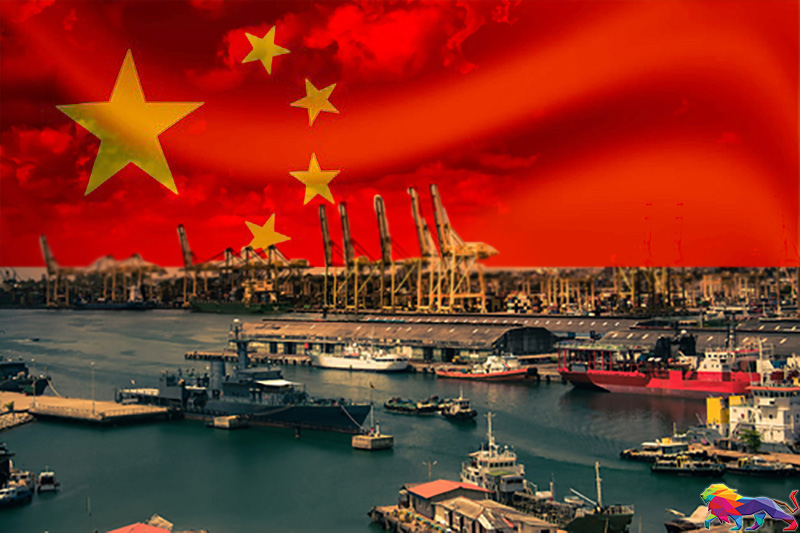
On the question of broader sanctions on Sri Lanka, Sunak maintained that this was a difficult balance as the island’s “very vulnerable need assistance” and that he does not want to “hold them hostage”. However, he stressed the need for structural reform and conditions on aid to Sri Lanka. A further concern he raised, however, was the influence of China as he warned against pushing “Sri Lanka into Chinese hands”.

This is not the first time Sunak has spoken on Sri Lanka. In October 2020, whilst Chancellor of the UK, Sunak, wrote to the British Tamil Conservatives (BTC), telling them “I want to first stress how strongly I share you concerns about the human rights situation in Sri Lanka, particularly the government’s withdrawal from the UNHRC process.”

Sri Lanka’s healthcare in distress as doctors leave for Middle East, other countries

After they lost access to most medicine and medical supplies when their country spiraled into a financial crisis earlier this year, Sri Lankans are now also losing doctors as many migrate to the Middle East and Western countries with more opportunities.

People have been struggling with daily power cuts and shortages of basic commodities amid the worst economic crisis since Sri Lanka gain independence from the British in 1948. The island nation of 22 million officially defaulted in April, and without foreign currency reserves was left unable to pay for imports.

Medical professionals in the country that relies on imported drugs for about 85 percent of its pharmaceutical needs have been sounding the alarm for months, saying they are struggling to provide timely and adequate treatment to patients.

The working conditions and little hope for improvement have lately forced hundreds of them to leave, and according to Sri Lanka’s Foreign Employment Bureau the exodus is an increasing trend.

“There is a rising trend in professionals moving out of the island in search of greener pastures because of the current situation in the country,” the bureau’s general manager Priyantha Senanayake told Arab News earlier this week. “A good number of doctors too have left.”

Data from the Government Medical Officers’ Association shows that at least 500 doctors from state medical institutions have migrated abroad in the first eight months of 2022.

But the real number may be much higher. Dr. Ruvaiz Haniffa, former president of the Sri Lanka Medical Association, said at least 100 more doctors working in the private sectors have left too, while those who traveled for training and have not returned have yet to be counted.

“We do not have an accurate estimate of doctors sent by the state for overseas training on state expense who have decided not to return at least for the foreseeable future,” he told Arab News.

“For postgraduate studies they mainly go for Australia, New Zealand and Singapore. For employment to Australia, UK and New Zealand. Middle grade doctors mainly go for employment to countries in the Middle East especially Oman and UAE.”

And there was no way to prevent them from leaving, Dr. Haniffa added.

“The government, while being aware of this massive brain drain, is not proactively or even reactively trying to stem this not because it does not want to, but simply because it can’t.”

While official estimates are not yet exact, the magnitude of the situation can be illustrated by the fact that Sri Lanka has already lost 25 percent of specialists treating kidney diseases.

“Out of the 40 nephrologists in Sri Lanka, 10 have left the country,” said Omar Sheriff, general manager for Western Hospital in Colombo, the main kidney transplantation center in Sri Lanka.

“Most of them are going to the UK because they can not only get more lucrative income but also continue their higher studies.”

The possibility to progress in their career is for specialists one of the main forces motivating them to migrate as they do not see this chance coming to their crisis-hit country anytime soon.

A doctor from a leading government hospital in Colombo, who requested not be named, said that the medical profession has lately been “downgraded to a lower level in the society.”

With no supplies to perform their duties, medics have been under increasing pressure and facing increasing stress in a situation where their hands are tied.

“There is a dearth of important medicines to treat people,” the doctor said. “It’s a sorry state of affairs.”

Source: Arab News

Paradise in Tears By Victor Ivan

Due to a sudden illness, I had to refrain myself from writing for two consecutive weeks. I must admit that the comment made by Shehan Karunathilaka, the Booker Prize winner 2022 about my book titled ‘Paradise in Tears’, which was published in September 2008, generated an innocent pride in me while I was confined to a sick bed recently.

Karunathilaka, who was eight when the war began, says that he found his memories came back when he read a book called Paradise in Tears by the journalist Victor Ivan. “It brought back the mobs, and my mum pulled my face away. Later I found out they were pulling people out of cars to test whether they could speak Sinhalese; if they couldn’t, they were set on fire.” Despite it has not been subjected to an adequate academic review, the ‘Paradise in Tears’ is a valuable pictorial resume of the main events connected with the present crisis; it contains a large number of photographs (444) of historic importance followed by a brief description of each of them, and could be considered as a significant research study on how Sri Lanka has been pushed to its present state of failure, collapse and bankruptcy.

It has covered a large portion of the episode of the great collapse in the socio-political system of Sri Lanka. In that sense, this book explains not only the historical development of the crisis but also the way Sri Lanka was moving towards great devastation. In fact, what I really wanted was to present the serious events and the grim atmosphere that affected the course of the country in the form of an appropriate pictorial resume using a collection of rare photographs that have been published in regard to each event as and when they occurred, with a brief narration of each picture in a manner they would make an intense impact and a deep shock in the reader.

I originally dreamt not only of publishing just a book with a collection of annotated photographs, but also having an exhibition of them held across the country with the aim of educating and enlightening the general public of the situation. I had been working for a long time to achieve this objective. About 15 years had passed by the time the final collection of photographs was completed. Needless to say, that the selection of 442 photographs of historic importance and illustrating them with background details with specific dates alone is not a simple or easy task

Mangala’s intervention

In 1997, Mangala Samaraweera who was a powerful minister in the Cabinet of the Chandrika government knew that I had a comprehensive collection of photographs with captions written in respect of each of them and it could be used for a photo exhibition about the crisis in Sri Lanka. He called me and not only did he have a look at the collection of photographs but also read the captions I had written on them. He was of the opinion that this collection of photographs should be exhibited across the country. Along with that, he said that the narrative on the pictures, especially the critical ones written about the Bandaranaikes, should be edited in such a way that they would be acceptable to President Chandrika Bandaranaike.

But, I was of the view that the editing could only be allowed if the facts contained in the narrations are not true, and that it is not appropriate to edit them to please the Bandaranaike family. Consequently, the efforts made by Mangala to persuade me to change my authoritarian attitude proved to be unsuccessful; he gave up the idea of ​​holding a photo exhibition at the national level using the collection in my possession. Had I not adhered to such a policy strictly and become flexible to the extent that Mangala wanted, it would have been possible to have an exhibition held across the country making a profound impact on the public. At the same time; it might have caused a big distortion in the purpose of exhibiting the photographs.

Investigator of the Rajiv Gandhi assassination case

Dr. Pathum Kerner, who can be considered as a colourful young liberal leader of the youth struggle, had commented on my book ‘Paradise in Tears’ on social media, two to three weeks ago. Some experiences I encountered in regard to this work may be of importance not only for me but also for the people of this country. One day a person came to me with three copies of the English version of it. The price of the English version was Rs. 3,500 and I was curious to know his identity since he had purchased three copies of it. The happiness I felt when he disclosed his identity was immense and inexpressible. He was the retired CBI officer K. Raghothaman, the chief investigation officer of the Special Investigation Team (SIT) that probed the Rajiv Gandhi assassination case in the early 1990s.

When asked as to why he had purchased three copies of the book, he replied that one copy was for him, one for the Central Bureau of Investigation (CBI) library and the other for Sonia Gandhi. When I asked him about the relevance and importance of it for him he said that the importance of the book can be seen from the manner in which it has been compiled, and the notes written on the assassination of Rajiv Gandhi can be considered quite special and outstanding. Unfortunately, this excellent investigator died of COVID-19 in May 2021, at the age of 76.

I had commented that it was ironic that Rajiv Gandhi was assassinated by a Tamil woman from the north when in fact he could have been killed before that by a Sinhalese navy soldier in the south. I had a great respect for Rajiv Gandhi. He tried to rectify the mistakes made by his mother. He visited Sri Lanka to sign the Indo-Sri Lanka Peace Accord in Colombo on 29 July 1987, knowing that there was a big risk involved in it. If the Indian troops were not sent to Sri Lanka at that stage at the request of President Jayewardene, Sri Lanka would certainly have ended up in a great destruction being unable to face two powerful rebellions.

If the responsibility of defeating the LTTE was entrusted to the Indian Peace Keeping Force (IPKF) instead of following a policy that demanded the IPKF to cease their operation against the LTTE, the defeat of the LTTE would have been a short-term affair and the damage to the Tamil people would have been minimal. Also it would have paved the way for arriving at a political solution to the Tamil problem. If that had been the case, the crisis facing Sri Lanka would not have reached such a decrepit state and the unfortunate situation that the country is in now. According to its location, Sri Lanka should not become a country which is either pro-Indian or anti-Indian. But, in view of the prominence India has gained in the region in terms of its location, size and power and the other aspects, it is important that Sri Lanka should always maintain close and healthy cooperation with India.

Patrick Lawrence

Another wonderful relationship that I developed as a result of this book is as follows. He was Patrick Lawrence, a British national and the editor of the Asian edition of the International Herald Tribune. One day he came to my office with a copy of the English translation of ‘Paradise in Tears’ to have it autographed by me as a memento. I asked him about his opinion of the book. He started the conversation by explaining how he came to know about it. He stayed in Mt. Lavinia. During a conversation he had with a Muslim shopkeeper whom he knew in that area, Patrick had asked him the kind of Sri Lanka that he would expect to live in. The latter had opened a table drawer in the shop and respectfully picked up a book from it and handed it to him and had said that he hopes for a Sri Lanka of the kind that the author of this book is looking forward to.

It was a copy of the Sinhala original of the ‘Paradise in Tears’ the trader had handed him. Although Patrick couldn’t read the Sinhala book, he was able to get an idea about the nature of the book to a certain extent with the aid of the visuals produced in it. Having come to know that there is an English edition as well, of the book he had bought a copy and read it. After that, we had several meetings.

He had read the English translation of ‘Nonimi Aragalaya’ (Unfinished Struggle) authored by me about the crisis in the judiciary. He said that the quality of the English translation of ‘Nonimi Aragalaya’ was not of a satisfactory standard and suggested that it should be re-edited urgently. I also knew that the English version of it was not in a satisfactory standard as the translation was done in a hurry. However, this defect was not rectified with an adequate speed as he expected. Later, he asked for the soft copy of the English translation and was kind enough to copy edit the English text by himself, improving its quality a great deal and without any payment which even after a long time I wish to place on record here as a mark of respect for this celebrated newspaper editor.

Later he quit the field of journalism for some time and worked with the Asian Human Rights Commission. During that time, he wrote and published a book about Sri Lanka titled ‘Conversations in A Failing State’ (in 2008). It was the conversation he had with me on this issue that he had included as the last conversation in that book. This can be considered as a book written on the emerging failure of Sri Lanka based on the views of various people whom he knew in Sri Lanka, about the country. It includes a critical analysis of the great collapse of the judiciary during the tenure of Chief Justice Sarath Nanda Silva. He wonders as to how the judiciary of the country has gone into such a state of ruin by the intervention of a single person.

Rectifying mistakes

The struggle I launched against Chief Justice Sarath Silva continued for 10 years. I neither won nor lost that long, protracted and abysmal struggle. More than a decade has passed since Sarath Silva’s retirement, but the legislature or the judiciary has not rectified the serious mistakes committed by him to the judiciary. Even the Bar Association has not made any effort to correct those mistakes. 15 years have lapsed since I wrote the ‘Paradise in Tears’. Sri Lanka is still living in tears. So far, Sri Lanka has not been able to rectify this ugly situation. Not only the outdated politicians but also the strugglers have failed to realise the reforms the country needs and act accordingly. What is needed now is a reform program that will bring about a profound change in the system. It is something that should be achieved with the support of the Parliament and not through a struggle on the street. Even a change of the government could be effected only by an election, not by a struggle on the street. Only if all conflicting political forces are able to work together to achieve that purpose can the country be oriented to a reform program leading to a profound change in the system.

Posted in Uncategorized