Disciplinary action to be sought on monks

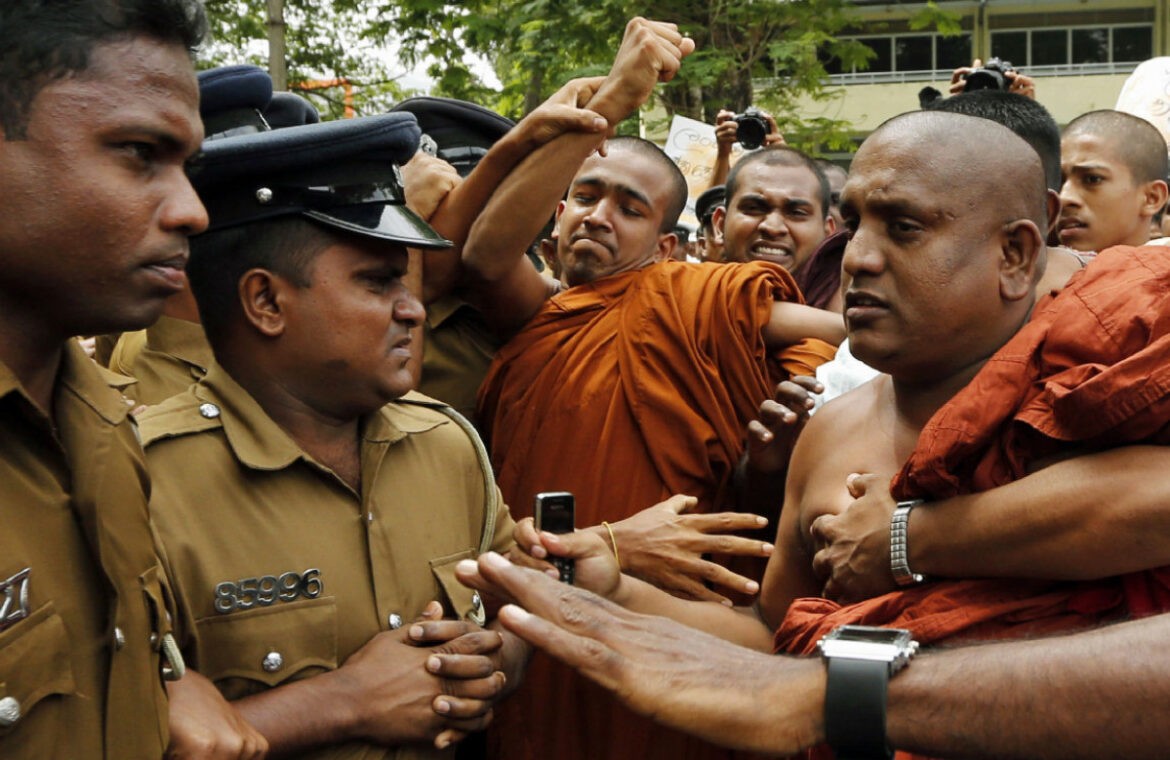
Disciplinary action is to be sought on monks in the event there is evidence to back any allegations against them.

Minister of Buddhasasana, Religious and Cultural Affairs Vidura Wickramanayaka said that he hopes to propose a mechanism to inform the Mahanayaka Theros (Chief Prelates) through the Police and his Ministry, if there is an allegation raised against a monk.

He said that they will look to enforce the law on such monks and take disciplinary action.

The Minister also said that new laws will be introduced to deal with such issues in future.

The Minister expressed these views at the Ministerial Consultative Committee on Buddhasasana, Religious and Cultural Affairs.

The committee drew attention to the damage caused to the order by monks who are engaged in certain business activities.

There was also a discussion about the release of lands that do not belong to the Department of Archaeology in connection with the Mulathivu Kurundi Vihara.

The Minister instructed officials of the Department of Archaeology to release property for the purposes of agriculture and other activities in coordination with the relevant institutions, except for property that has been surveyed by the Department of Archaeology.

Posted in Uncategorized

Basil not out for good By M.S.M Ayub

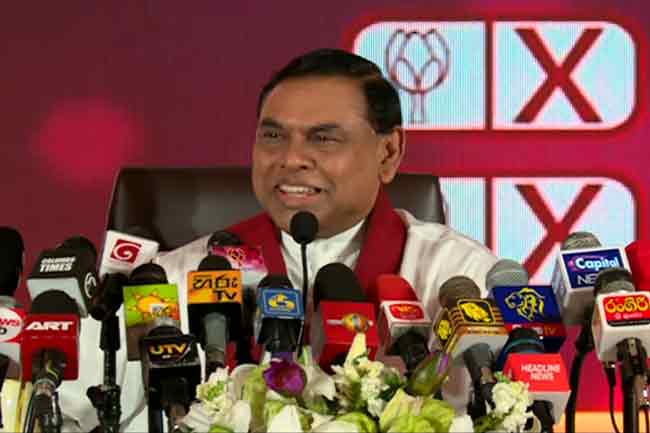
On what grounds the majority of Parliamentarians of the Sri Lanka Podujana Peramuna (SLPP) voted in favour of the 22nd Amendment to the Constitution Bill on October 21, while the so-called “strategist” of the party, Basil Rajapksa had been campaigning against it is yet to be known.
It was Basil who had until then been planning and executing all affairs of the Party. He was also said to be the “brain” behind the scuttling of the 22nd Amendment being debated in Parliament as late as on October 6 and 7, despite it being in the order paper of the House.

Until this Amendment was passed with 174 votes, majority members of the SLPP was not expected to cross the line so soon to defy the dictates of its powerful National Organiser, despite two small groups of the party and around 10 small parties having defected the ruling coalition. Besides, the Amendment deprived the dual citizens like Basil of the right to contest election in Sri Lanka. Then why did they vote for the Amendment?

There cannot be any policy decision that prompted them to vote, despite SLPP General Secretary Sagara Kariyawasam having stated that his party cannot support the 22nd Amendment that negates the gist of the 20th Amendment brought in by the party in October 2020. Principled politics is a far-flung issue in Sri Lanka. One of the best case in point in Sri Lankan political history is that many MPs of the SLPP had voted for the 17th, 18, 19th and 20th Amendments to the Constitution which alternately curtailed and strengthened the powers of the President. Hence, various theories are now being floated to explain as to why they voted for the 22nd Amendment.

President Ranil Wickremsinghe, even after taking over the top-most job has been serious about the Amendment which was meant to strengthen the Parliament, by way of curtailing the powers of the President. He has been pushing the MPs of all political parties to support it. Since he had instiled a sense of security among the MPs of the SLPP by cracking down the anti-government protesters, they have decided to support the Amendment. This is one view.

Another theory is that the MPs had been in fear that the President might dissolve the Parliament once he is constitutionally empowered to do so, when the current Parliament completes two and a half year of its tenure, in February, next year. And they wanted an assurance from him not to do so. They even wanted a clause in the 22nd Amendment extending that duration from the existing two and a half years to four and a half years. And media quoted the President days ago as assuring that he would not heed anyone’s request to dissolve the Parliament next year, even the latter worships him traditionally offering a wad of betel.

The statement indicates a threat that he would dissolve the Parliament if they defeated the 22nd Amendment. Hence, they supported it. This is a stronger view than the former. JVP leader Anura Kumara Dissanayake also ridiculed the SLPP MPs after the passage of the Amendment claiming that they supported an amendment to the basic law of the country keeping their Parliamentary pension in mind, instead of the interests of the country. Besides, this is a good opportunity for the MPs of the SLPP to get into the good books of the President which might shower them later with powers, portfolios and perks.

A crack in the Rajapaksa family also seems to have contributed this development. It must be noted that Chamal, Namal and Sashindra of that family had voted in favour of the Amendment, meaning against Basil. And former President and the Leader of the SLPP Mahinda Rajapaksa was absent at the time of the voting. He might have been of the view that if Basil succeeded Wickremesinghe as President, Namal’s chances would be pushed decades away.

The MPs of the SLPP had voted in favour of the then Prime Minister Ranil Wickremesinghe at the Parliamentary vote for the election of the President on July 20, at the instance of Basil, but interestingly, exactly in three months they voted the 22nd Amendment ousting Basil from Parliament for good, at the instance of Wickremesinghe who so took over as President.

However, in fairness to the President it has to be pointed out that the President did not seem to be interested in the dual citizenship issue. He wanted to pass the provisions that empowered Parliament, the gist of the Amendment. He even requested the SLPP on October 19, two days prior to the adoption of the Amendment to vote for it inserting any provisions during the committee stage of the debate on it.

Hence, if the SLPP members were serious about the issues they seem to be worried about, they could sometimes have allowed the provisions on dual citizenship to continue and prevent the President from dissolving Parliament in two and half years. Though he is said to be a pro-Parliament politician and the 19th Amendment brought in under his premiership contained that four and half-year limit, the President also did not subscribe to their view to go for that same provision.

The main purpose of the 22nd Amendment which later became the 21st Amendment was overshadowed by the residual issues in the Amendment such as the dual citizen’s right to contest elections, throughout the social discourse on it. The Amendment which was initiated first by former President Gotabaya Rajapaksa in April in response to the people’s agitations for a “system change” was meant to bring back the provisions of the 19th Amendment. However, the Bar Association of Sri Lanka (BASL) on Thursday said that the Amendment failed to revive the situation that prevailed prior to the 20th Amendment. Yet, the Opposition parties, SJB and the JVP voted for it considering the essence of it, claiming that it was somewhat better than the 20th Amendment.

Cracks seem to have emerged all over the SLPP and the Rajapaksa family which might be a windfall for the President. Using powers, portfolios, and perks he would now be able to attract MPs from SLPP and also from the SJB to his party’s fold.

In practical sense, whatever the laws that a government passes will serve their professed purposes only if commitment is evident on the part of the relevant officials and the leaders have the political will to achieve those purposes. It has to be recalled that the head of the Criminal Investigation Department (CID), Shani Abeysekara was made a subordinate to a high ranking police officer in the South soon after Gotabaya Rajapaksa took over as the President. It was clear then that it was not the independent decision of the independent Police Commission. And a member of the National Election Commission (NEC) openly called on the people on the eve of the 2020 general election not to vote for a particular political party. These are instances where the so-called independent commissions under the 19th Amendment were in fact not independent.

So long as people are not principled in achieving their rights, politicians will play politics with anything sacred to the masses. Hence, even Basil Rajapaksa might come again and roll back the effects of the 21st Amendment. Those who voted for the 17th, 18th, 19th, 20th, and the 21st Amendments would not hesitate at all then to vote for another Amendment that would negate the 21st Amendment as well. He turned tables last time by forming the SLPP while his right to contest elections had been deprived of.


Posted in Uncategorized

The AIIB outlines a $100 million fund for Sri Lanka -Reuters

The China-backed Asian Infrastructure Investment Bank (AIIB) has outlined a $100 million fund for crisis-hit Sri Lanka.

The AIIB is also expected to announce a major support package for Pakistan at the upcoming COP summit following the country’s devastating floods.

AIIB President Jin Liqun said “In our uncertain era, one of the lingering pandemic disruptions and rising geopolitical tensions, we remain prepared to respond swiftly to help members who may fall prey to the volatile global economic conditions ahead”.

The AIIB has warned governments against building new fossil fuel power stations out of panic during the current global energy crisis, saying such moves could result in decades of environmental harm.

There is now a real risk that worried governments rush to open or reopen coal and other heavily polluting power stations to bolster their energy supplies, Jang Ping Thia, one of the AIIB’s lead economists, warned.

“We should avoid making serious mistakes in this panic,” he said. “Don’t let a one-year crisis lock you in for the next 25-30 years.”

Beijing-headquartered AIIB’s annual infrastructure finance report, published on Thursday, lays out its stance for what is shaping up to be a difficult United Nations Climate Change COP 27 summit in Egypt next month.

It called for heavily-polluting state-owned firms to be rapidly turned into green energy “leaders”, putting special focus on China, India and Indonesia, noting that a global net-zero transition would not succeed without their cooperation.

AIIB President Jin Liqun also gave a clear nod to what is likely to be the key point of tension in Egypt – that while richer countries have produced most of the CO2 and other greenhouse gases, it will be the world’s poorest countries that bear the brunt of climate change.

“Emerging and developing economies deserve more than just access to necessary financial and technical support to address the legacies of environmental injustice. They also deserve more attention,” Jin said.

China, which accounts for around 30% of global CO2 emissions, is the largest shareholder in the AIIB holding 26.5% of its voting power.

The report called for pollution-cutting technologies to be shared globally and for countries to stop subsidising fossil fuels – something many have done this year as Russia’s invasion of Ukraine sent energy prices soaring – so that a “meaningful carbon price” can emerge and make investing in fossil fuels more costly.

The bank also pledged support for countries now facing serious debt problems.

PAFFEREL requests PM not to delay LG Polls

Election watchdog People’s Action for Free and Fair Elections has written to Prime Minister Dinesh Gunawardena over the proposed amendments to the Local Authorities Election Act.

Executive Director of PAFFEREL Rohana Hettiarachchi in his letter has requested Prime Minister Gunawardena not to take any steps that will delay the conduct of the Local Authorities election.

Rohana Hettiarachchi said the Prime Minister led a Parliament Select Committee on Electoral Reforms which deliberated a number of issues and table recommendations.

The Executive Director of PAFFEREL said he also presented documentations to the Committee in order to amend the electoral system.

Rohana Hettiarachchi said the report of the committee was tabled only recently and now proposals have been made to appoint another committee.

He said this will undermine the committee and the observations of the Parliament Select Committee which was headed by the Prime Minister itself.

Executive Director of PAFFEREL Rohana Hettiarachchi noted that they do not oppose the move to amend the electoral system or the decision to reduce the number of councilors in local government bodies.

He said however under the pretext of reforms, delaying elections further is unacceptable. Rohana Hettiarachchi also noted that the Provincial Councils have been functioning without elected representatives for nearly five years while the Local Authorities election has been postponed for one year.

Executive Director of PAFFEREL Rohana Hettiarachchi therefore urged the Prime Minister not to take any steps that will prevent the conduct of Local Authorities election before the 19th of March 2023.

Bangladeshi banks asked to stop ACU transactions with Sri Lanka

The Bangladesh Bank, the central bank of Bangladesh, has instructed banks in the country to refrain from transactions with Sri Lanka through the ACU system, foreign media reported.

The central bank’s Foreign Exchange Policy Department issued a circular yesterday and sent it to top executives of banks, reports The Business Standard.

The Asian Clearing Union (ACU) is an arrangement through which participating countries settle import payments for intra-regional transactions.

Bangladesh, Bhutan, India, Iran, the Maldives, Myanmar, Nepal, Pakistan, and Sri Lanka are members of the ACU, which has headquarters in Tehran. The central banks of the countries have to make payments every two months.

If any Bangladeshi bank wants to settle a transaction with a Sri Lankan commercial bank, it can do that by ignoring the ACU system, the report further said.

–Agencies

Posted in Uncategorized

21A doesn’t completely restore pre-20A staus quo: BASL

The 21st Amendment to the Constitution regrettably does not completely restore the status quo ante which prevailed prior to the 20th Amendment to the Constitution and does not place adequate checks and balances on the powers of the Executive President, the Bar Association of Sri Lanka (BASL) says.

This was made known via a media release by the BASL today (27), further to the approval by Parliament to enact the 22nd Amendment to the Constitution, which has now been renamed as the 21st Amendment to the Constitution

“The BASL in its previous statements on the 22nd Amendment Bill highlighted the shortcomings of the Bill and of the danger that the nominations of a majority of members to the Constitutional Council will be controlled by the party or parties in the Government, resulting in it lacking independence and consequently affect the independence and integrity of the offices and institutions to which appointments will be made through the Constitutional Council,” the statement noted.

It further stated that now that the 21st amendment is enacted into law, it is essential that the Constitutional Council which is to be appointed thereunder and the Independent Commissions which will be reconstituted thereafter, be independent, impartial and be institutions which will help restore confidence in Sri Lanka and its Institutions.

“As such the Bar Association of Sri Lanka (BASL) calls upon the President, Prime Minister, the Speaker, the Leader of the Opposition, and all political parties represented in Parliament, to firstly ensure the integrity of nominations to the Constitutional Council and to ensure that such nominations are devoid of partisanship and in a manner that will inspire public confidence,” the statement read.

The statement further mentioned that it was important to ensure that the non-ex-officio members of the Constitutional Council appointed from among Members of Parliament and from among non-Members of Parliament be done in a transparent and open manner and to ensure that those appointed will be acceptable to the members of the public and be persons of the highest integrity and reputation.

“After the Constitutional Council is established, it should thereafter adopt a transparent, open, and inclusive process by which it nominates Chairpersons and members of Independent Commissions and other institutions established by the Constitution and other laws,” the statement noted.

Further, the statement noted that upon the enactment of the 21st Amendment, the Chairpersons and members of Independent Commissions will cease to hold office upon these Commissions being reconstituted, and in doing so, it was imperative that those appointed to the Election Commission, the Public Service Commission, the National Police Commission, the Human Rights Commission of Sri Lanka, the Commission to Investigate Allegations of Bribery or Corruption, the Finance Commission and the Delimitation Commission be persons who have not
only the requisite qualifications and abilities but also be those whose appointments receive wide acceptance.

“It is equally important to ensure that the enactment of the 21st Amendment must not be used as an excuse or mechanism to discontinue Chairpersons and members of Commissions whose services helped establish public faith in such Institutions. It is also vital for the Government to make provisions for the Commissions to have financial independence and that these Commissions adopt procedures that promote accountability and transparency in their work,” the statement mentioned.

The statement concluded by stating that any failure of the 21st Amendment to address the issue of creating strong independent institutions in Sri Lanka will also have a bearing on future law reform initiatives, such as the proposed composite Anti-Corruption law, and will have an adverse impact on the Rule of Law in Sri Lanka.

Posted in Uncategorized

TRCSL moved from Defence Ministry to Technology Ministry

The Telecommunications Regulatory Commission of Sri Lanka has been placed under the purview of the Ministry of Technology through the issuance of an Extraordinary Gazette.

The TRCSL was previously placed under the Minister of Defence.

The gazette in this regard has been issued by the President with powers vested in him under Paragraph (1) (a) of Article 44 of the Constitution.

Sri Lanka to receive another stock of medicines from China

Another batch of essential medicines will arrive in Sri Lanka from China today (27).

The Chinese Embassy in Colombo said the move come in a bid to support Sri Lanka in overcoming the medicine shortage.

Accordingly, two chartered flights of essential medicines worth Rs.1.8 billion gifted by China will arrive in Colombo today.

The Embassy noted that in June and September this year China donated medicines amounting to Rs.1.2 billion.

EU puts focus on inclusive and peaceful society in Sri Lanka

An inclusive and peaceful society is one of the two priorities of the European Union’s (EU) cooperation with Sri Lanka from 2021 to 2027.

The EU Delegation in Sri Lanka and the Maldives together with its implementing partners have organized a series of activities under the broader campaign of ‘EU Support for a Peaceful & Inclusive Society’ at the Independence Arcade, Colombo 7 from 26 October till 11 November 2022. The exhibition space will be open to the public from 1pm to 6pm on weekdays and 9.30am to 6pm on Saturdays.

Speaking about the campaign, Denis Chaibi, EU Ambassador to Sri Lanka and the Maldives stated “for the European Union, inclusion, solidarity and human dignity are fundamental values, because they serve peace, our ultimate goal. Thus, an inclusive and peaceful society is one of the two priorities of the EU’s cooperation with Sri Lanka from 2021 to 2027. We hope this campaign, through art and dialogue will foster an enabling environment that promotes peace, solidarity and unity in diversity.”

Visitors can view the art exhibits of the winning entries including those shortlisted from the ‘Art for Peace’ children’s virtual art competition that was held in June this year, as part of Europe Day celebrations. This will be complemented by art workshops conducted by three renowned and talented artists.

The venue also hosts the EU-funded photographic exhibition ‘Thé Kahata’, organised by the Centre for Policy Alternatives (CPA), which features creative visual images captured by youth from the plantation community, and ‘Costumes Speak’, an exhibition that explores different social influences on Rukada puppetry and the role different communities play in shaping artistic traditions.

An interactive digital library consisting of audio and visual materials of the numerous initiatives of the EU funded projects is available for guests to access and indulge in.

The campaign on EU Support for a Peaceful & Inclusive Society, commenced with a jazz music tour across three key cities in Sri Lanka in celebration of European Day of Languages in partnership with the Embassy of Switzerland, Embassy of Italy, Embassy of France, Alliance Française, Goethe-Institut and the British Council.

This was followed by ‘Threads on Threads: An International Conference on Textiles in Sri Lanka, South Asia and Europe’, organized in partnership with the Threads of History Museum and Lanka Decorative Arts, as an initiative of the EU Cultural Heritage Series.

Posted in Uncategorized

Wijeyadasa requests Speaker to appoint PSC to amend electoral system

Minister of Justice, Prison Affairs & Constitutional Reforms, Dr. Wijeyadasa Rajapakshe has requested Speaker Mahinda Yapa Abeywardena to appoint a Parliament Select Committee to amend the electoral system.

This committee, pursuant to the provisions of the Standing Order 101 of Parliament, should not consist of more than 21 members, Minister Wijeyadasa noted in a letter addressed to the Speaker.

Meanwhile, the Speaker should name the chairman and the members for this committee, the lawmaker said further.

According to him, the committee members should be vested with powers to summon any individual, request any document or report or obtain evidence verbally or in writing, in order to conduct an extensive study into amending the electoral system.

He also suggested authorizing the committee to determine its quorum and to seek the assistance of experts and veterans in the field.