…Unable to summon the full resources of its vaunted intelligence or its political will to meet the formidable challenges issued by an unprecedented crisis, the elite presented other bizarre exhibitions of helplessness, bewilderment and naivete…Various theories were put forward like… “For God’s sake give them Trinco” …’
– The Marooned Elite, Crisis Commentaries: Selected Political Writings of Mervyn de Silva, International Center for Ethnic Studies, Colombo, 2001, pp. 55-67.
Mahinda can’t comeback
Critiquing the policies of the last decade of Chairman Mao Zedong’s life, Fidel Castro once remarked sadly that there are some leaders “who break with their feet, what they built with their hands”. That would be even truer of Robert Mugabe and Alberto Fujimori than Mao. It fits Mahinda Rajapaksa. It wouldn’t fit Gotabaya who simply broke with his feet what generations had built with their hands (i.e., agriculture).
Mahinda and his SLPP cannot come even close to anything remotely like an electoral comeback for six reasons:
1. MR nominated Gotabaya as candidate even though he could have picked Chamal. In mid-2018, I had personally warned him of the dangers of a GR candidacy (which I had supported in 2016-17) and pitched for Chamal or Dinesh in print.
2. MR could have but didn’t challenge Gotabaya when as President the latter centralised all power in his hands through the 20th Amendment, thereby devaluing the PM who happened to be GR’s vastly experienced older sibling.
3 MR could’ve but didn’t pushback publicly against the catastrophic fertiliser policy which has destroyed most of the SLPP’s and the Rajapaksas’ traditional rural peasant support base including in the South.
4. MR turned his back on his own rebellious street-agitator past which should have enabled him to empathise with the Aragalaya youth. Instead, utterly unprovoked he gave a very hardline militarist speech on 11 April 2022, well before ‘MynaGoGama’ or 9 May. His son Namal has eschewed the path of progressive dissent that Chandrika adopted even against her mother Sirimavo and brother Anura, which translated itself later into considerable political capital.
5. MR has abandoned what he symbolised and championed, and installed as President his traditional foe Ranil who still stands for everything in economic policy that Mahinda stood against.
6. The people are suffering as never before in living memory; the Rajapaksas are held responsible, and will remain indelibly associated for decades in the mass mind with this anguish and nepotism, just as Madam Bandaranaike was for 17 years after the material hardships and nepotism of 1970-1977.
Trincomalee three-card trick
The Tamil political leadership has commendably brought to light the attempt of the Sri Lankan regime, operating octopus-like through state authorities, to unilaterally alter the demographic composition, i.e., the population ratios, of the North and East. What they have not done is to grasp the perfidy of the plan in its entirety. They have not connected up the dots.
President Wickremesinghe’s grand (or sordid) design can be glimpsed in his Trincomalee Strategic Development Plan. This Plan must be read together with the demographic changes that are sought to be made through an array of administrative-cartographic operations. Districts, provinces, must not remain static and population ratios should and do change, but that has to be through evolutionary trends, chiefly of economics, not of unilateral, top-down state intervention.
The Wickremesinghe administration is trying to qualitatively add value to Trincomalee while subtracting the Tamil percentage and proportion of the populace and the land by administrative land-swaps. If his ‘strategic plan’ works, Trincomalee will be another Port City, the jewel in the crown not of the place and people as they exist or have historically existed, but of a district and province that are ‘Sinhalised’ and ‘de-Tamilised’ by several strokes of a pencil through maps and of the pen on new administrative regulations—the method greatly favoured by imperialist-colonial powers throughout history (e.g., Sykes-Picot).
The administrative exercises now under way, going by the letter to the President authored by Hon Sampanthan and the speeches by M.A. Sumanthiran and Gajan Ponnambalam, will render the 13th Amendment, the Northern and Eastern Provincial Councils and the Indo-Sri Lanka Accord automatically meaningless because the configuration and composition of those two provinces would have been drastically altered.
This is the method used by Israel’s Netanyahu to render meaningless the two-state solution of the Oslo peace accords.
The Wickremesinghe administration’s plan in effect displaces the Tamil people of the district, province and region since they will find themselves on the other side of district and provincial boundaries, as small minorities in Sinhala majority areas, overnight, while the Sinhalese majority areas will be annexed to the remaining part of the district, creating enclaves that serve as settlements.
Most cynically of all, President Wickremesinghe’s move seeks to tempt and co-opt India, a country with 80 million Tamil people, into partnering the Sri Lankan state and powering the economic success of this project which disempowers the Tamils through downsizing, while enshrining through cartographic chicanery, the hegemony of one community in an area historically inhabited by another and of a multi-communal composition and character.
Ranil Wickremesinghe is probably counting on the trade-off within the trade-off, namely that the installation of Sinhala dominance over Trincomalee will more than neutralise, or at least offset, Sinhala nationalist outrage at handing over Trincomalee to India as he handed over Hambantota to China.
The Trincomalee triple-cross is signalled in these recent remarks of High Commissioner Milinda Moragoda to the Times of India:
“Sri Lanka is in a transition phase and there is a need to renegotiate the social and political compact in the country. Sri Lanka is a complex country with many regions and ethnicities. This issue (13th amendment) also falls under the same category. We have to work out a new compact.”
The imminent/ongoing changes on the ground in the Eastern Province seem to have been ‘renegotiated’ without the Tamil and Muslim parties or the main parliamentary Opposition.
The 13th Amendment issued from the Indo-Sri Lanka Accord, the product of protracted bilateral negotiations, and cannot be ‘renegotiated’ without India.
While the Ranil regime strives to strategically shrink the Tamil geopolitical space on the island, the Tamil political parties and civic organisations have newly expanded space in the public consciousness to avail themselves of in resisting the regime’s political expansionism.
I cannot recall a time when Sinhala racism was as socially and politically marginalised as it is now and sentiments of anti-racism and pluralist democracy as widespread as they are now due to the economic crisis and a new enlightened consciousness among a whole generation. It is the Age of the Aragalaya; our May ’68.
The wording of the UN High Commissioner’s report, the latest UNHRC resolution, the statements of the Indian delegate to the UNHRC and the US Senate Foreign Relations Committee resolution could frame a joint Sinhala-Tamil-Muslim platform against renewed supremacism.
If the Trincomalee area, including its port and oil tank farm is sold or leased to India as Ranil is signalling, instead of adhering to the Indo-Sri Lanka accord and developing the oil-tank farm jointly, the populist backlash that is inevitable in the context of economic contraction and IMF cutbacks, will take a patriotic or nationalist-populist character, not merely a socioeconomic populist form
Reading Ranil’s mindset
With the sophistication that characterises European political theory as distinct from the Anglo-American, the French introduced the category of ‘history of mentality/mentalities’ (‘histoire des mentalités’) also known as ‘history of attitudes’ into the study of social history and politics. When the history of Sri Lanka’s current crisis is written it would be useful to note the particular attitudes or mentalities that characterised the contemporary political leadership—Gotabaya Rajapaksa and Ranil Wickremesinghe.
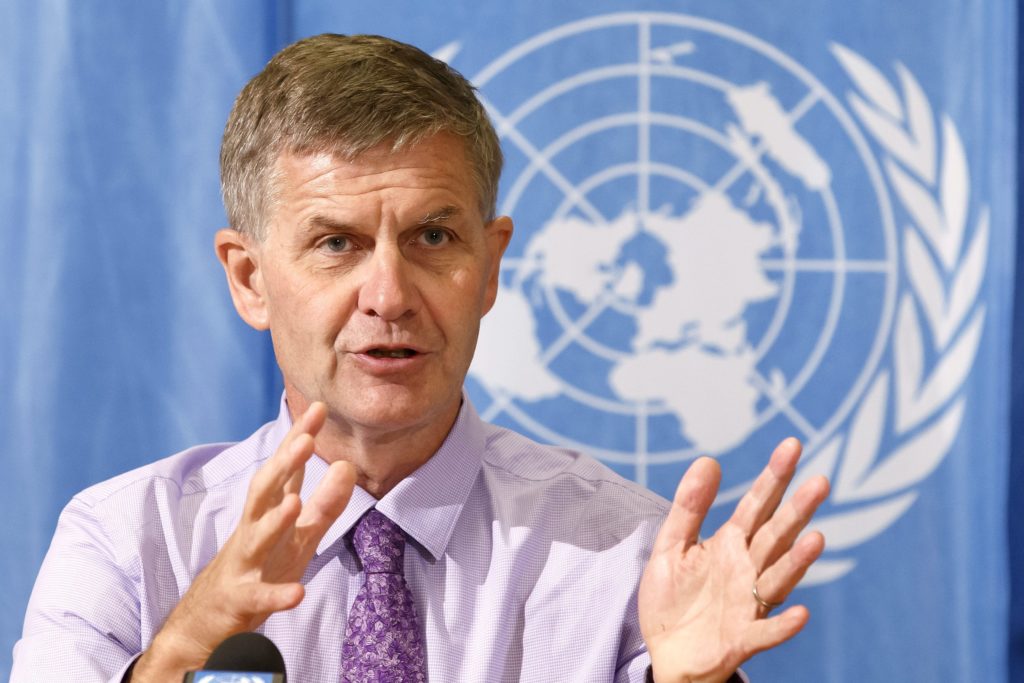
President Wickremesinghe’s mentality was very much on display last week, in a number of episodes. He appointed Erich Solheim his advisor on Climate Change. This was the week after Sri Lanka’s Prof. Mohan Munasinghe, 2021 Blue Planet Prize Laureate (known as the Environmental Nobel Prize) and co-winner of the 2007 Nobel Prize for Peace, delivered a keynote speech at the Presidential Palace in Hanoi, Vietnam in the presence of that country’s President. President Wickremesinghe preferred Erich Solheim. The Government swerved from Gotabaya’s Rajapaksa’s disastrous taxation policy to Ranil’s calamitous one last week. GR’s policy was influenced by what George HW Bush referred to as his boss Ronald Reagan’s ‘voodoo economics’ by which he meant the economics of Arthur Laffer, the main policy instrument of which was a massive tax cut. Reagan abandoned it along the way.
For his part, Ranil has just committed one of the biggest possible mistakes in the playbook of politics: imposing a huge tax burden on the middle-classes and small and medium businesses.
He has just ensured that when the Aragalaya comes around again, the middle, upper-middle, professional and middle-bourgeois classes and strata which had peeled-off after Gota left and Ranil came in, will be back again with the struggle, and this time for the long haul, i.e., until an election.
Why Ranil would do this when the obvious place to go from Gotabaya’s savage tax cuts is not savage tax burdens on the middle classes and employment-generating small and medium businesses, but precisely a policy advocated by the US Democrats and European social democrats, of slashing taxes on the middle-classes and shifting to steeply graduated taxes on the ‘super-rich’, combined with heavy corporate taxes.
Ranil has burdened the 99% rather than the 1% which benefited from the GR tax cut and the policies of the years the economy was going downhill and the middle-classes were getting poor, the poor getting poorer.
“No taxation without representation” was a founding slogan of the American Revolution of 1776. The Sri Lankan citizens didn’t elect Ranil Wickremesinghe, therefore he doesn’t represent them—but his administration is imposing taxes on them. The JVP has already signalled that it would support a taxpayers revolt.
President Wickremesinghe would do well to remember that Sri Lanka’s 1848 rebellion led by Puran Appu, which required the British troops on the island to be reinforced from India to quell it, was occasioned by an array of unfair taxes imposed on the people by the British colonial rulers.
Soon, Sri Lankans will feel that their economic agony is attributable (not entirely accurately) to decisions made by outsiders, bureaucrats sitting in Washington DC, together with a national leadership which they didn’t elect, rather than by a leadership democratically chosen by the citizens of this country.
If the Trincomalee area, including its port and oil tank farm is sold or leased to India as Ranil is signalling, instead of adhering to the Indo-Sri Lanka accord and developing the oil-tank farm jointly, the populist backlash that is inevitable in the context of economic contraction and IMF cutbacks, will take a patriotic or nationalist-populist character, not merely a socioeconomic populist form.
President Wickremesinghe said a few days ago that the Trincomalee give-away project should have been implemented in 2003 when he first started on it. The facts are that he was turfed out by President Chandrika because the nationalist backlash became too threatening on the one hand and tempting on the other. Having been fired as PM, when the country went to the polls in 2004 it endorsed his ouster by defeating him. It kept him unelected for almost 15 years since his election in 2001, until it next tried him out in 2015. At the end of that 2015-2019 term, the electorate kicked him and his party right out of Parliament.
President Mahinda Rajapaksa went to the Supreme Court and took back the oil-tanks, and his foe and successor President Sirisena dragged his feet on giving more oil tanks to neighbouring India.
Ranil is trying to override the evidence of the negative electoral verdict on his two stints as an elected PM (2001-2003/4, 2015-2019), when he strove to implement his economic policies with a partial mandate (as PM not President).
If he feels that the people have since learned their lesson and endorses his economics of sell-out, he should hold an election, win it, and return with a mandate to implement the policies which were anathema to the majority of citizens earlier.
Ranil Wickremesinghe transparently intends to do without a mandate, that which he was never given a mandate to do on all the occasions he sought the Presidency, i.e., to lead the country, because the public knew or feared he would sell out the country.
He intends to implement policies that he was twice thrown out by the electorate for trying to implement. Put differently, not only does he not have a mandate for these policies, he has a negative mandate for them—meaning that he is focused on implementing policies that the people have manifestly and repeatedly voted against.
The Wickremesinghe administration is trying to qualitatively add value to Trincomalee while subtracting the Tamil percentage and proportion of the populace and the land by administrative land-swaps. If his ‘strategic plan’ works, Trincomalee will be another Port City, the jewel in the crown not of the place and people as they exist or have historically existed, but of a district and province that are ‘Sinhalised’ and ‘de-Tamilised’ by several strokes of a pencil through maps and of the pen on new administrative regulations—the method greatly favoured by imperialist-colonial powers throughout history
Political sustainability and economic stability
Only a reckless politician would go against the grain—the representative democratic electoral ethos—of Sri Lankan politics and public opinion, and do so at a time of grave crisis in which instability is unaffordable.
International experience shows that economic contraction overturns incumbent administrations. That overturning can either be done the easy, systemic way i.e., elections or the a-systemic/extra-systemic way. Economic contractions coupled with an IMF package increase the probability of convulsions. Those convulsions can either be contained or channelled through elections, so that a government or successive governments with a sufficient measure of popular consent can stabilise the situation e.g., Greece, Lebanon.
The best practices clearly call for timely elections, and most often, the fast-forwarding of elections. Stuck in his 1970s-1980s mindset, Ranil Wickremesinghe and his backers, the Rajapaksa cartel are determined not to hold elections. The UNP chairman Vajira Abeywardena reiterated Ranil’s position that no elections will be held for many months until all the electoral reforms are completed.
The Rajapaksa-run SLPP’s backtrack on the 22nd Amendment proves that the ruling party cannot be the agency of democratising political and governance reforms.
By kicking the electoral can down the road, President Wickremesinghe has done the impossible. He has caused a convergence, in two conclaves, of 16 Opposition political parties, the broadest seen in living memory in Sri Lanka, ranging from the SJB and the SLFP, through the FPC to the FSP.
The first meeting was convened at the Monarch hotel by the Dullas Alahapperuma-G.L. Peiris group (FPC), the second, at the Public Library by the trade unions. The question is not why the FSP was present but why the JVP-JJB was absent. The Opposition conclaves announced 2 November as the kick-off date for their campaign.
Ranil will meet protests with repression. Repression would rapidly re-activate a cycle of revolt and rebellion.
Debt sustainability requires political sustainability. Without electoral legitimacy the Ranil Presidency is politically unsustainable. Ranil is treading water these days. However, that is temporary survival, not structural sustainability. Given his lack of a mandate, his polarising unilateralism and the deepening and widening of the economic pain, Ranil’s presidency is politically unsustainable in the structural and systemic senses.
Without political sustainability, there is no stability, political or economic. Sustainable economic reform must be preceded and made safe, or more simply, feasible, by restructuring the political leadership.
The only way to ensure political sustainability and stability is a steely insistence by the International Financial Institutions, the creditor states and private creditors, as well as EU states deliberating on GSP Plus, that immediate elections at all levels, front-end loaded with the presidential, constitute conditionality for support.