Why The Global South Should Support UN Action on Sri Lanka By Meenakshi Ganguly

The economic, political, and human rights calamity gripping Sri Lanka has made news around the world, but its roots go back years – or even decades. In September, the former United Nations High Commissioner for Human Rights, Michelle Bachelet, underscored in her report on Sri Lanka that “impunity for serious human rights violations [has] created an environment for corruption and the abuse of power.”

The UN Human Rights Council will soon consider a resolution to address this issue. Countries in the global south that serve on the council, – —including Benin, Côte d’Ivoire, Gabon, Gambia, Namibia and Senegal, have an important role in supporting the people of Sri Lanka to address the current crisis and its underlying causes.

Between 1983 and 2009 Sri Lanka endured a devastating civil war between the government and the separatist Liberation Tigers of Tamil Eelam (LTTE). The decades of brutality against civilians and the government’s continuing attempts to shield those responsible from justice, have cast a long shadow over the country. Both sides committed widespread violations of international law.

In the final months of the conflict in 2009, the LTTE used human shields, while tens of thousands of Tamil civilians were killed when government forces shelled no-fire zones and hospitals. As the war ended with the defeat of the LTTE and the destruction of its leadership, government forces were implicated in summary executions, rape, and enforced disappearances.
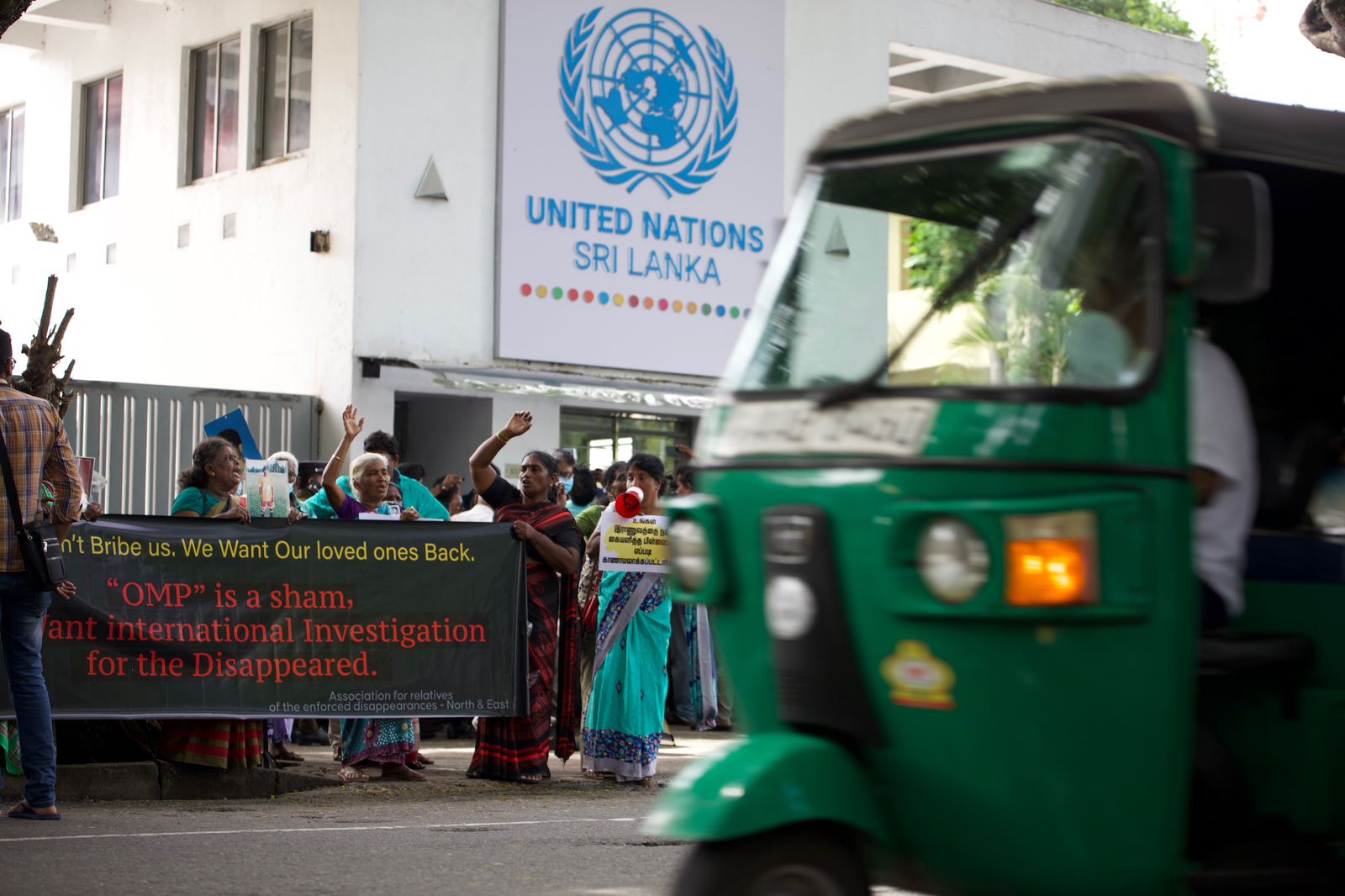
Since then, many Tamils have sought to learn what happened to those who did not return. In August, a group known as the Mothers of the Disappeared passed 2,000 days of continuous protests demanding to know the fate of their loved ones. Instead of receiving answers they have been subject to intimidation and surveillance by the government’s security apparatus. Nevertheless, representatives of the group have travelled to Geneva to ask the Human Rights Council to keep their hopes of justice alive.

Over many years, people from all of the country’s faiths and communities have taken their accounts of suffering and their search for justice to the Human Rights Council. As the prominent Sri Lankan activist Ruki Fernando recently wrote, “It is the inability to get truth and justice in Sri Lanka despite many efforts, and the subsequent loss of confidence and hope in domestic processes, that drive many Sri Lankans to Geneva.”

Successive Sri Lankan governments have appointed people allegedly responsible for these atrocities to high office, and blocked investigations, undermining the independence of the judiciary and the rule of law. In one rare case in which a soldier was convicted of murder, the president pardoned him.

Earlier this year, following years of mismanagement and corruption, Sri Lanka ran out of foreign exchange – meaning that it could no longer finance essential imports such as fuel, food and medicine, causing the government to default on its foreign debts. As inflation spiralled and people were unable to obtain basic necessities, massive protests broke out leading to the resignation of the prime minister in May and of the president in July.

On the streets, huge numbers of ordinary Sri Lankans called for constitutional reform and action to address corruption. A 2020 amendment to the constitution weakened human rights institutions and gave the president the power to appoint senior judges. It also undermined institutions such as the Bribery Commission that are responsible for combatting economic crimes.

The new president, Ranil Wickremesinghe, has promised reform. But he has responded by suppressing dissent, using the military to disperse peaceful protests and arresting dozens of alleged protest organizers. He has used the notorious Prevention of Terrorism Act to detain three student activists for up to a year without charge.

The use of the this law shows that the government’s assurances to the international community on human rights cannot be trusted. As recently as June the then-foreign minister told the Human Rights Council that there was a moratorium on the use of that law, which has repeatedly been used to enable arbitrary detention and torture, and which successive governments have promised to repeal.

The resolution currently before the Human Rights Council extends the mandate of a UN project to gather and analyze evidence of war crimes and other crimes under international law that have been committed in Sri Lanka and to prepare them for use in possible future prosecutions. It also mandates the UN to continue monitoring and reporting on the human rights crisis in Sri Lanka. As people struggle for daily necessities and the government cracks down on dissent, that is more important than ever.

The Sri Lankan government has opposed these measures, falsely claiming that it is already acting to protect human rights. To support Sri Lankans who are calling for change and accountability, Council members from the global south should fully support the resolution.

Posted in Uncategorized

European Commission says Freedom of Expression is essential in Sri Lanka , & GSP+ to be assessed soon

Ursula von der Leyen, President of the European Commission congratulating President Ranil Wickremesinghe on his election as the President of the Democratic of Socialist Republic of Sri Lanka has assured its support to the government of Sri Lanka for the efforts to overcome the crisis successfully.

Issuing a statement, Ursula von der Leyen noted that at a time of unprecedented challenges faced by the people of Sri Lanka, the European Union remains committed to support Sri Lanka’s efforts to overcome the crisis successfully, including the necessary reforms that will bring the country back to a path of inclusive prosperity and lasting national reconciliation.

She further stated that in this process, freedom of expression and assembly, dialogue among all stakeholders, as well as respect for the rule of law and fundamental rights will remain essential.

She has also made a reference to the assessment by the European Union on the progress made by Sri Lanka on GSP+ commitments. Accordingly, the European Union will assess the progress made on Sri Lanka’s GSP+ commitments very soon.

The report is scheduled to be released towards the latter part of this year or early 2023.

She also commended the success in the efforts to introduce and steer policies that will ensure the short and long-term interests of all Sri Lankans and address the devastating efforts of the unprecedented economic downturn as well as the negotiations with international financial institutions and creditors.

Ursula von der Leyen expressed her interest in working closely to strengthen further the ties and cooperation, based on commitments to shared values and common interests.

Source: President’s Media Division

Ali Sabry to lead delegation to UNHRC session in Geneva

Minister of Foreign Affairs, Ali Sabry will be traveling to Geneva for the concluding segment of the 51st Session of the Council.

The 51st session of the United Nations Human Rights Council is currently ongoing in Geneva and is scheduled to conclude on 07 October 2022.

It is expected that the draft resolution, A/HRC/51/L.1, titled “Promoting reconciliation, accountability and human rights in Sri Lanka” tabled by the United Kingdom, Canada, Germany, Malawi, Montenegro, North Macedonia, and the United States will be taken up for action on 06 October 2022.

Minister of Foreign Affairs, Ali Sabry will be accompanied by officials from the Ministry​ of ​Foreign ​Affairs.​​ ​

Posted in Uncategorized

Sri Lanka stock market closes after index plunges 5% led by heavyweights

Sri Lanka’s Colombo Stock Exchange (CSE) closed 26 minutes before its official ending time on Monday after one of the indices plunged more than 5 percent led by market heavyweights, the official data showed.

“Please note that the market has been halted due to the S&P SL20 index dropping over 5% from the previous close, as set out in SEC (Securities and Exchange Commission) Directive dated 30th April 2020. Accordingly, the market has been halted for the rest of the day,” the CSE said in a statement.

Market heavyweight Expolanka fell 9.3 percent while Lanka IOC slipped 5.2 percent, leading the index fall.

The main All Share Price Index (ASPI) fell 3.8 percent while more liquid S&P SL20 dropped 4.9 percent when the market was halted.

Posted in Uncategorized

Estate workers to strike if they’re denied pay talks

The Ceylon Estate Staff Union (CESU) yesterday (2) warned that estate workers would opt for an islandwide strike unless they are invited to another round of discussions with the plantation companies within this week regarding a salary hike.

CESU General Secretary Robert Francis told The Morning yesterday that they would engage in an islandwide strike if they are refused appointments to meet the officials of the Employer’s Federation of Ceylon (EFC).

“We would have to engage in an islandwide strike if we are not called for another round of discussions. We would have to go ahead with an islandwide struggle. Our Talawakelle picketing campaign on 1 October was to protest against the considerably low proposed pay hike by the plantation companies, and was a starting point to our trade union action on this issue,” he added.

The CESU members held a rally in Talawakelle on 1 October urging for an equal pay hike, in which around 3,000 trade union activists participated.

“We walked from the Malliyapoo Junction and reached the Talawakelle town, where we addressed the gathering,” Francis added.

He noted that the CESU will not accept the proposed 25% pay hike they were offered by the EFC, and that another round of discussions must thus be scheduled in this regard.

“The companies said they are unable to give more than a 25% increment, and stated that the collective agreement can be signed if we agree to their offer,” he added

Speaking to The Morning, EFC Plantation Group Chairman Roshan Rajadurai said: “We have made our offer very clear – even during these very dark times, when industries are closing down, we have offered a 25% increment of pay.”

Two rounds of discussions were held earlier on 30 August and 5 September between the CESU and EFC officials.

Accordingly, the CESU demanded for a 70% pay hike blaming the ongoing economic crisis, however, the EFC only agreed to a 25% increment.

According to the CESU, the 25% salary increment offered by the EFC amounts to only Rs. 7,000 for the lower category of estate staff, while the higher category will see an increase of Rs. 9,700.

Three categories of collective agreements are signed in the estate sector, namely the Executive Agreement, Staff Agreement, and Labour Agreement.

Posted in Uncategorized

Demand for beer may increase as affordability declines: Fitch

Rating agency Fitch states that the demand for beer may increase in the near future as the affordability for Sri Lankans may decline.

The US based credit ratings firm states that consumers may trade down from spirits to strong beer, given beer’s lower price point.

Moreover, Fitch forecasts that the drop in sales volumes will be moderated in the next 12-18 months, assuming an ease in inflation spikes.

Fitch also forecasts mild beer sales to rise on a gradual recovery in tourism.

Excise duties from alcoholic-beverage makers made up 11% of government tax revenue in the past year, however with the imposition of a social security tax of 2.5% on revenue in addition to the increase in Value Added Tax to 15% from 12% may increase the price of alcoholic beverages.

Crisis-hit Sri Lanka takes baby steps to boost dollar earnings

Sri Lanka is fast-tracking a move to utilise all its resources to send citizens abroad to earn as jobs are lost in an economic contraction in the wake of a forex crisis and domestic salaries have lost value.

Sri Lanka has already raised interest rates and taxes in the run up to a deal with the International Monetary Fund to reduce money printing which created forex shortages. The sovereign debt defaulted island nation is in the initial stage of debt restructuring discussions with its creditors who must agree on a plan for Sri Lanka’s anticipated 2.9 billion US dolalr deal with the International Monetary Fund (IMF) to be approved.

Sri Lanka is now taking some baby steps to raise its dollar earnings within and outside the country.

On Friday, the Ministry of Labour and Foreign Employment conducted a job fair titled “Glocal Fair” to showcase employment opportunities available to Sri Lanknas both globally and locally.

“Our Ministry is responsible for providing a wide range of services such as employment to the country’s youth and directing them for foreign jobs, giving them solutions for the issues faced by the foreign workers and the local workers as well,” Minister of Labour and Foreign Employment Minister of Manusha Nanayakkara said at the job fair.

“We have decided to go the villages and give our services to the people.”

The government has already introduced some incentives to Sri Lankan migrant workers who remit their foreign earnings in dollars. Those incentives include houses, apartments, and electric vehicle import licenses, all of which have now become a luxury.

Sri Lanka’s foreign remittances have declined by over 47 percent to 2.2 billion dollars in the first eight months of 2022 mainly because migrant workers stopped sending their earnings through formal channels as the central bank maintained a peg and a parallel exchange rate until March this year.

Though the central bank has allowed some flexibility, remittances did not recover as migrant workers still do not have confidence in the formal banking system amid speculations of a collapse of the system after the economic crisis, analysts say.

Record number of passports, sportsmen for sale

The Department of Immigration and Emigration has overstretched itself to cater to the unprecedented demand for passports this year partly because more Sri Lankans are leaving the country and partly due to workers seeking jobs abroad.

The department has already issued a record 385,000 passports in the first six months of this year compared to 105,000 in the same period last year.

It was forced to ask the public to make an appointment to visit the the Controller General to obtain passports.

Sri Lanka migrant workers who left the country this year have almost doubled to 221,551 in the first nine months of this year, compared to the same period last year, with workers in skilled, professional, and unskilled categories showing record high numbers.

The foreign ministry this week launched an e-channelling service to do away with long queues for consular services including the authentication of government certificates. The move was to ease the process and help Sri Lankans migrate quickly.

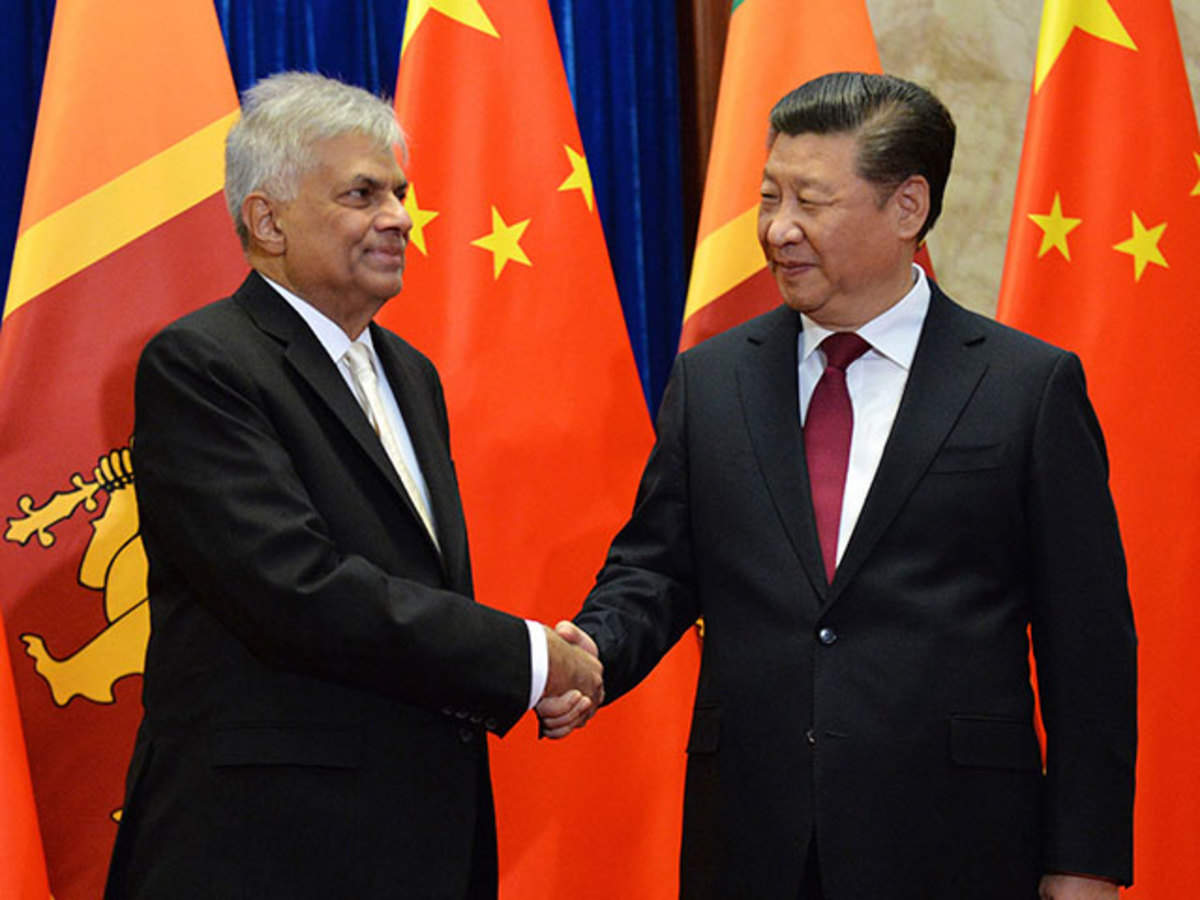
This week, President Ranil Wickremesinghe issued a gazette for Sri Lanka’s China backed Port City’s regulator to acquire operating licenses for an annual fee of 2,000 US dollars.

“We see some liquidity in the dollar market, but it is below the level we saw before the economic crisis,” a currency dealer told EconomyNext.

The island nation has already curbed many imports including some essentials to save dollars and has been encouraging exports of merchandise goods, services, and even sportsmen.

“In March, we trained 120 swimmers in four districts under the Sri Lanka Life Saving (SLLS) for both pool and coast lifeguards, and some were selected for the foreign market,” Amal Edirisuriya, Director of the Department of Sports told reporters in Colombo this week.

“In the future, we are planning to carry out this process within the 25 districts and to give 200 more lifeguard employments to our children.”

Sri Lanka needs to improve business & investment framework environments: US envoy

Ambassador of the United States to Sri Lanka, Julie Chung says Sri Lanka needs to improve its business environment and investment framework environment in order to tap into foreign direct investment.

Addressing the 2022 Annual General Meeting of the American Chamber of Commerce. The event was attended also by Governor of Central Bank, Dr. Nandalal Weerasinghe.

“It is important to reduce red tape and make sure that there are no unreasonable obstacles to investors as they look for opportunities in Sri Lanka and bring in the foreign capital that the country desperately needs.”

She noted that concerns about consistency and transparency in government decision-making, and above all, a lack of predictability, are the primary reasons American firms give as to why foreign direct investment has not grown faster.

“What our companies want is a level playing field, a good regulatory framework, and trust that their arbitration and their contracts will be honored. When you have that kind of strong investment climate, then companies will want to come.”

With regard to the staff-level agreement reached by Sri Lanka and the International Monetary Fund (IMF), US ambassador said the USD 2.9 billion program, if approved by the IMF board, would help restore macroeconomic stability, safeguard financial stability, protect the vulnerable, implement structural reforms, and most importantly address corruption, all to encourage Sri Lanka’s economy to growth at its full potential.

“While we are all celebrating this very important milestone, now is not the time to become complacent. Much more hard work lies ahead. Now more than ever, the private sector can make a difference in creating a more inclusive and sustainable economy.”

Speaking on President Ranil Wickremesinghe’s pledge to establish a “State-Owned Enterprise Restructuring Unit” to recommend how to reform Sri Lanka’s loss-making government-run companies, the US ambassador said the work on these critical reforms must start immediately and the results need to address the root causes of this crisis so that the country finally enshrines international standards of good governance and transparency for the benefit of all Sri Lankans.

“Similarly, there should be swift action to establish and convene the Parliamentary Committee on Ways and Means, National Debt Management Agency, National Agency for Public Private Partnership, and the other committees and agencies laid out in the president’s speech. We support these efforts,” she continued.

Before the IMF board approves Sri Lanka’s 17th assistance package, the Sri Lankan government must negotiate with its official creditors to provide adequate financing assurances. The US ambassador said she is encouraged to hear President Wickremesinghe and the Governor of the Central Bank of Sri Lanka talk about the need for equitable and comparable debt treatment. “The United States, through the Paris Club, looks forward to collaborating with Sri Lanka in this effort. The president asked all creditors to “sing from the same hymn sheet.” We call on all parties to come to the negotiating table and join the choir.”

Stating that United States is still Sri Lanka’s largest single country export market and thus a key and unparalleled element to the island nation’s prosperity and that the two countries’ bilateral trade amounts to about three percent of Sri Lanka’s GDP and supports at least 180,000 Sri Lankan jobs, the US ambassador noted that Sri Lanka, with the help of American Chamber of Commerce, can expand on the economic relationship between the United States and Sri Lanka and grow its exports and investments in the United States.

“This is a defining moment in Sri Lankan history, and a time when we all must come together: government, private sector, civil society, and the international community. We must do whatever each of us can constructively do to solve the problems of the day,” she added.

The US envoy reiterated that the United States continues to stand by Sri Lanka during these challenging times.

NEWSUK considers imposing sanctions on Gen. Silva, others over ‘war crimes’

The House of Commons has been told that the UK government is exploring the possibility of imposing sanctions on Sri Lanka’s Chief of Defence Staff (CDS) General Shavendra Silva and other members of the military.The UK has reiterated its readiness to use what Foreign and Commonwealth Development Office (FCDO) Minister Jesse Norman called, diplomatic tools including sanctions amidst the ongoing 51 sessions of the Geneva-based United Nations Human Rights Council (UNHRC).

The sessions, which commenced on Sept. 12, will conclude on Oct. 08.The former Financial Secretary to the Treasury has said that the government kept the situation, in Sri Lanka, under close review, including in relation to human rights and accountability. “Within this, the government keeps under active consideration how to use the diplomatic tools we have, including sanctions,” Minister Norman has said.

Lawmaker Norman received the appointment as FCDO Minister, on Sept 07, 2022,following the appointment of Elizabeth Truss as the Prime Minister, on the previous day. At the time Truss received the premiership, she served as the FCDO Minister.

Conservative Party Minister Norman has said so in response to a query raised by Beth Winter representing the Labour Party (Cynon Valley). The lawmaker has asked the FCDO Minister of the recent assessment made of the potential merits of imposing sanctions on (a) the Sri Lankan Chief of Defence Staff, Shavendra Silva, and (b) other members of the Sri Lankan military.

The question has been actually directed at Truss, at the time she served as the FCDO Minister, though the government responded to the query, following her appointed as the Prime Minister.

Minister Norman has said that their Global Human Rights Sanctions regime is a powerful mechanism in the hands of the UK Government meant to hold accountable those who had been involved in serious human rights violations or abuses. The Minister said that their strategy was intended to send a clear signal of the values the UK held.

The Minister said: “The UK Government continues to consider designations globally, guided by evidence and the objectives of the human rights sanctions regime; but it is not appropriate to speculate on potential future designations, in order to avoid reducing their impact.”

British political parties have stepped up attacks on the war-winning Sri Lankan military, especially General Silva in the wake of the US issuing a travel ban, in Feb 2020, on the wartime General Officer Commanding (GoC) of the celebrated Task Force I/58 Division. The US travel ban also covered General Silva’s immediate family.

The Sri Lanka Core Group, led by the UK, recently handed over a new resolution to the UNHRC seeking further action against those whom the group considered human rights violators. The 47-member council, divided into five zones, is expected to vote for the resolution, next week.

Former Minister and leader of Pivithuru Hela Urumaya (PHU) Udaya Gammanpila told The Island that the government should at least now place all available information, pertaining to the conflict, before the Geneva council. Acknowledging that successive governments, including those he served as a Minister, neglected the accountability issues, and thereby allowed interested parties to humiliate the war-winning military, lawmaker Gammanpila said that the move against the CDS was an affront to the country.

The Attorney-at-Law said that the FCDO’s position should be challenged on the basis of wartime dispatches it received from the UK High Commission in Colombo (January –May 2009). Thanks to untiring efforts made by Lord Naseby, the world knew the BHC, Colombo, reported to FCDO that 40,000 Tamil civilians didn’t die as alleged by interested parties, lawmaker Gammanpila said.

The ex-Minister urged the government to review the overall picture and take tangible measures to have politically motivated efforts countered. Sri Lanka brought the war to a successful conclusion in May 2009. PHU leader Gammanpila asserted that perhaps Sri Lanka’s defence in Geneva should be based on wartime US Defence Advisor Lt. Col. Lawrence Smith’s declaration in Colombo, late May 2011, two years after the end of the war, that there was no basis for war crimes allegations against the Sri Lankan military.