Is Sri Lanka a Victim of a Chinese Debt Trap? Well, It’s Complicated

The recent economic crisis and political unrest in Sri Lanka prompted a soul-searching as to whether China’s actions over the previous decade trapped Sri Lanka into a debt trap, a question that needs a nuanced answer.

China’s Playbook

There are several different paths toward increasing one’s influence in global politics. Spreading values similar to what you share, democracy and free markets, via soft power is one. Brute military force is another.

A middle path most recently pursued by China relies on providing economic inducements but also establishing economic dependencies. In some cases, China has even been accused of conducting a “debt trap diplomacy” toward other countries, most notably in Sri Lanka.

The playbook is very clear. China approaches authoritarian regimes with little accountability to its people. Projects that are key to displaying visible economic growth – highways, ports, telecoms, railways, and airports – are the most preferred for priority funding. These projects usually favor the home electoral areas of the ruling class and usually have little or no return-on-investment calculations done before being undertaken.

Sure enough, when bills come due, very few if any of the governments can afford to pay. What happens next is pretty clear as well. China often ends up being the largest bilateral debtor giving Beijing a veto over sovereign debt restructurings of these highly indebted vulnerable countries, which the IMF now increasingly requires as a prerequisite for a bailout.

After a burst of initial loose lending as part of its flagship Belt and Road Initiative, China has slowed project lending in recent years. However, China has recently started lending to these very same highly indebted vulnerable countries once again, but with shorter term maturities and higher interest rates for balance sheet support to prop up their foreign currency reserve.

Effectively China has now been playing the role of both the IMF and World Bank combined but without any of the ‘cumbersome’ conditions that come attached from such institutions such as demands for a proper macroeconomic framework, fiscal discipline, tackling corruption, and respecting human rights.

Chinese Role in Sri Lanka

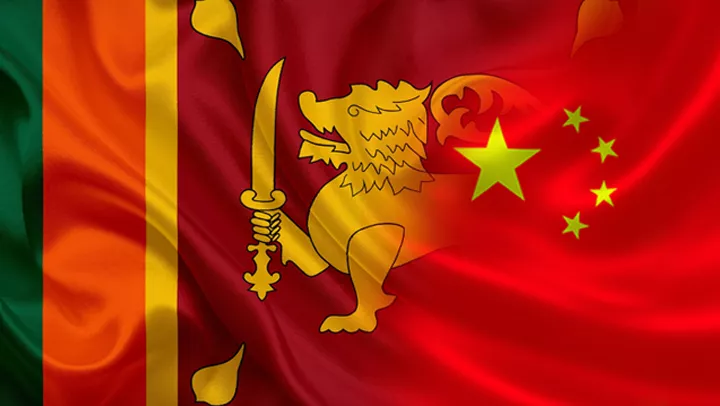
What happened in Sri Lanka followed a similar pattern. However, it was the actions of its ruling elite that made this scenario possible, with China becoming one of Sri Lanka’s largest bilateral debtors over one and a half decades.

Shunned by the West for the perceived war crimes committed by his regime during the last phase of the civil war, the newly elected President Mahinda Rajapaksa found a willing ally in China in 2005. China helped fund and construct many vanity projects in Rajapaksa’s southern voter base of Hambantota which accounts for a mere 2.6 percent of the overall population of Sri Lanka.

These China-funded projects included the world’s most underutilized international airport, the Hambantota port in Southern Sri Lanka, and a conference center that has only hosted one international conference since being constructed. Additionally, in Colombo, a China-funded Lotus Tower that is the tallest self-supported structure in South Asia is yet to open to the public. Even while other projects floundered, China financed its most ambitious project yet, the Colombo Port City, meant to be a finance hub to rival Dubai and Singapore in 2014.

Economic Woes

Despite being the first country in South Asia to implement economic reforms in 1977, Sri Lanka has had to seek 16 IMF bailout programs due to fiscal and monetary indiscipline tracing back to the 1950s. Despite the previous economic challenges, Sri Lanka maintained an unblemished debt repayment reputation for 74 years post-independence. Last year, however, Sri Lanka began to experience a forex crisis.

The most immediate reasons for Sri Lanka’s forex crunch were the loss of foreign exchange earned via tourism revenue due to the COVID-19 pandemic. Russia and Ukraine had replaced China, India, and others as the top tourist source countries as the pandemic spread, hence when the war in Ukraine erupted, it compounded the impact on tourism just as it was recovering post-pandemic.

Worker remittances and export proceeds, which are two of the main sources of forex for Sri Lanka, also contracted sharply due to the ill-fated decision to effectively fix the exchange rate in July 2021. The move pushed expatriate Sri Lankan workers to remit money via informal channels where they received better returns and also led to exporters delaying the repatriation of their foreign earnings.

The war in Ukraine led to a ballooning import bill for the two largest import items, crude oil, and refined petroleum products. By April 2022, faced with rapidly dwindling forex inflows, a ballooning import bill, and almost depleted forex reserves, Sri Lanka finally defaulted. The debt default led to unprecedented shortages of basic necessities as global suppliers who had in the past extended credit to the country were extremely reluctant to do so now.

Moreover, the country was also hit by a food crisis, precipitated by an ill-informed and arbitrary decision to ban all fertilizer imports in favor of organic farming by an all-powerful executive president lacking government experience.

As noted by the new Central Bank Governor, the inordinate delay and stubbornness in not approaching the IMF was the final nail in the coffin that resulted in running out of reserves completely, resulting in the shortages of essential items and political unrest.

The catastrophic state of the Sri Lankan economy ignited the protests that brought about the resignation of, first, Mahinda Rajapaksa as Prime Minister, and later his brother, Gotabaya Rajapaksa, from the powerful role of Executive President. This was an inglorious downfall as both of them were elected by super majorities only a couple of years before.

China’s Responsibility

China is now Sri Lanka’s leading bilateral debtor holding ten percent of the country’s outstanding debt, by the government’s estimates. Moreover, many sources claim official statistics do not fully reflect Sri Lanka’s debt figures including what is owed to China. However, what is clear is that the projects dubbed “white elephants” have been almost exclusively funded by China. Moreover, Chinese-funded projects in Sri Lanka have been accompanied by a troubling lack of transparency which stands in contrast to, for example, Japanese-funded projects where the terms are publicly disclosed and costs are challenged by the media.

Does this make China responsible for Sri Lanka’s economic and debt crisis?

This is where it gets complicated. The unsustainable costs of foreign debt were mainly comprised of international sovereign bonds (ISB) which Sri Lanka became addicted to in the post-civil war period. Coming in at a staggering $12.55 billion outstanding, these ISBs make up the largest share of Sri Lanka’s foreign debt. Unlike the borrowings from multilateral agencies like the IMF, World Bank, or ADB, where the interest rates range between 0.25 percent and 3 percent, interest rates for the current ISBs issued by Sri Lanka vary from a low of 5.75 percent per annum to a high of 7.85 percent.

Was China responsible for the debt default per se? Again – probably not.

Arrogance on part of the ruling elite of the Rajapaksa family and a few trusted government officials was the main reason. China often claims it is the host countries that choose projects for Chinese funding, and it was indeed so in Sri Lanka’s case. While unproductive assets are a drain on economies and divert capital from more productive assets, the nature of Sri Lankan politics in the post-2005 Rajapaksa era meant that some of these white elephant projects would probably have been undertaken irrespective of Chinese funding, even if not necessarily in the same grand and unsustainable scale.

Nevertheless, that does not absolve China of blame completely, as its irresponsible lending helped the Rajapaksa regime win elections, allowing the debt situation to drag on much longer than it needed to without IMF intervention.

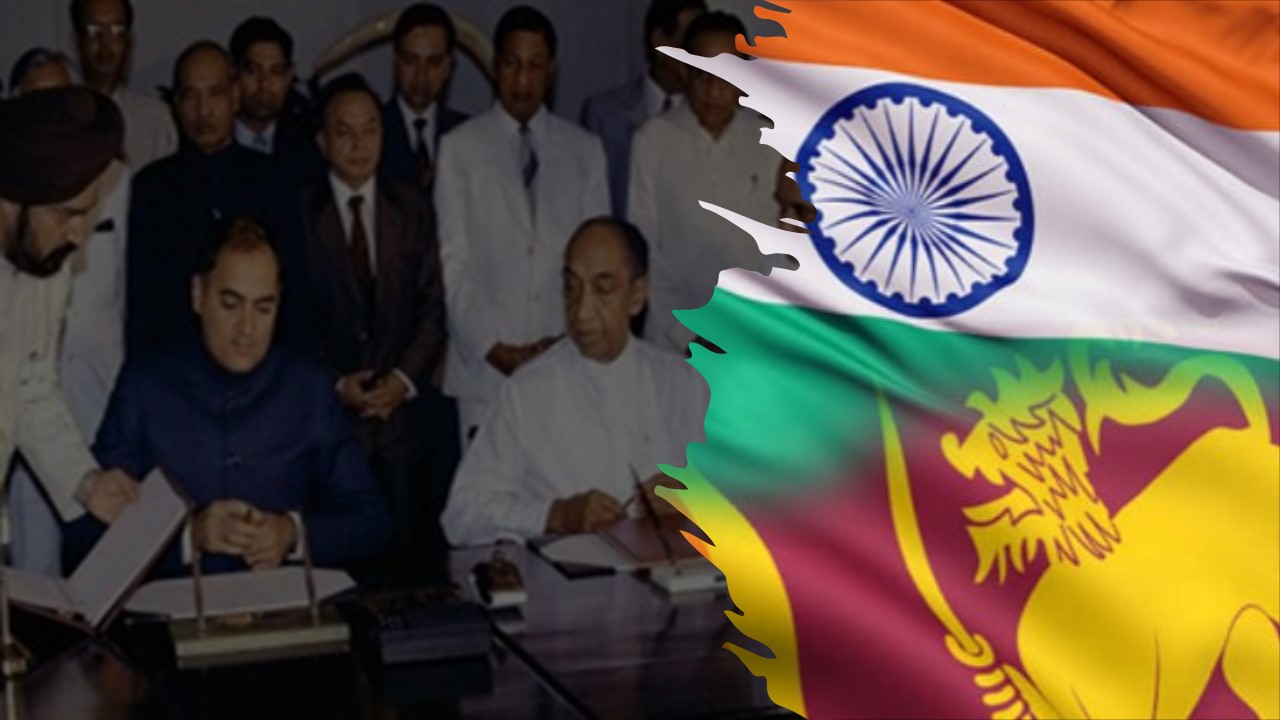
The outcome of this economic crisis has effectively given China possibly the most important voice in determining Sri Lanka’s future direction. According to the Sri Lankan Finance Ministry’s data from August, Sri Lanka’s total bilateral debt stands at $10 billion. At the end of 2021, some 44 percent were borrowings from China, with loans from Japan and India representing 32 and 10 percent of the bilateral debt burden respectively.

As the lead bilateral debtor, China will play an outsized role in setting the direction and pace of how Sri Lanka emerges from its debt malaise and ultimately, its economic crisis. If anything, China will use its leverage to further its political interests. The most recent example of the controversy related to the docking of the Chinese ‘spy ship’ Yuan Wang 5 at the Hambantota Harbour, despite hesitation by the Sri Lankan Government to let it in, demonstrates the real costs to Sri Lanka are yet to be seen.

Source:chinaobservers.eu

Posted in Uncategorized

Tokyo will coordinate with other Sri Lanka creditors on debt: Japan FM Shunichi Suzuki

Japanese Finance Minister Shunichi Suzuki said on Tuesday it was important for all creditor nations of Sri Lanka to gather to discuss Colombo’s debt issue, adding that Tokyo would coordinate with other creditors on the matter.

Sri Lanka’s President Ranil Wickremesinghe told Reuters last month that Sri Lanka would ask Japan to invite the main creditor nations to talks on restructuring bilateral debts.

Earlier on Tuesday, Japanese Foreign Minister Yoshimasa Hayashi said his country was not in talks with Sri Lanka to hold such a meeting.

“We are having various interactions with the Sri Lanka side, but no preparation is going on with Sri Lanka for holding such talks,” Hayashi told a regular news conference.

Posted in Uncategorized

Visiting IMF delegates call on Opposition Leader

The visiting delegation of the International Monetary Fund (IMF) called on Sri Lanka’s Opposition Leader Sajith Premadasa this morning (Aug 30).

The delegation consisted of Mission Chief Peter Breuer, Deputy Chief Masahiro Nozaki and IMF’s Resident Representative Dr. Tubagus Feridhanusetyawan.

The two sides held a discussion about solving the island nation’s ongoing financial crisis.

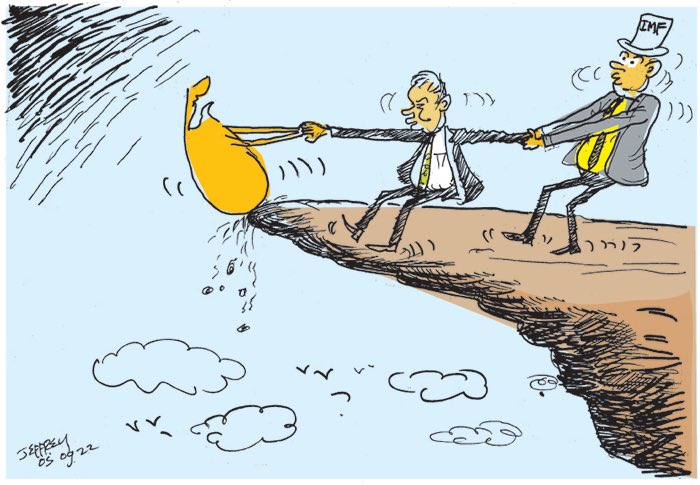
The IMF delegation is in Colombo from August 24 to 31 to finalize a staff-level agreement for a possible USD 3 billion bailout package for Sri Lanka, including restructuring debt of about USD 29 billion.

Last week, the delegation held several rounds of talks with President Ranil Wickremesinghe and the officials of the Central Bank of Sri Lanka.

Lanka needs to reform Prevention of Terrorism Act ahead of UNHRC session

The demand in the UN Human Rights Council (UNHRC) for the repeal of Sri Lanka’s Prevention of Terrorism Act (PTA) and its replacement by a law consistent with international norms has been persistent. In the September 2022 session of the council, it is likely to get top billing, given the recent events related to the civil disturbances in the island.

In February, the Gotabaya Rajapaksa government had drafted a ‘Counter-Terrorism Bill’ (CT bill) to be in conformity with international standards. But the CT bill was not substantively different from the PTA. The Ranil Wickremesinghe government has said that it is working on a new “National Security Act” deleting the “undesirable” parts of the PTA.

Opinion in Sri Lanka is divided on the nature of PTA reform. At one end of the spectrum is the notion held by Tamil National Alliance MP M.A. Sumanthiran, who says that in the absence of a threat of “terrorism” now, Sri Lanka does not need a PTA. The many crimes listed as ‘terrorist’ under PTA could well be tackled by existing laws. The definition of a terrorist act in the PTA and CT bill is so vague that any criminal act could be deemed a ‘terrorist’ act and the perpetrator subjected to very harsh treatment and denied relief given under the normal criminal law and the constitution.

At the other end of the spectrum is the opinion that while Tamil militancy has been crushed, the 2019 East Sunday blasts showed that new threats of great magnitude are possible, requiring a stringent anti-terror law.

However, given the unenviable economic situation in which Sri Lanka is presently, abjectly dependent on Western trade concessions, it has no option but to please the West by reforming the anti-terror law. Any new anti-terror law should get rid of the flaws mentioned in the Human Rights Watch (HRW) document of February 2022 entitled: In A Legal Black Hole.

The HRW said that the CT Bill did not provide a definition of terrorism as called for by UN experts. The bill did not alter the sweeping powers given to authorities to charge people. It did not change the status of confessions given to the police as evidence in PTA cases. While such evidence is inadmissible under other Sri Lankan laws, it is admissible under the PTA. This has led the police to routinely use torture and other ill-treatment to extract confessions from PTA prisoners.

Other proposed amendments merely replicated existing provisions of Sri Lankan law that have done little to date to prevent abuses, HRW says. Magistrates had made no visits to Criminal Investigation Department and Terrorism Investigation Division detention centers, HRW said. The Human Rights Commission of Sri Lanka (HRSL) has to be informed of an arrest, but the police often ignore it.

The HRW quotes a 2020 report by the HRCSL which said that, as of September 2018, at least 29 PTA prisoners had spent 5 to 10 years on remand (pretrial detention), and 11 had spent 10 to 15 years on remand. The HRCSL said that the longest period a person had been in remand before trial was then 15 years. The longest period a trial had been ongoing was 16 years. The study also found that about 84% of PTA prisoners were tortured after their arrest.

In September 2021, the Committee for Protecting Rights of Prisoners, a Sri Lankan human rights organization, wrote to the UN High Commissioner for Human Rights, Michelle Bachelet, listing 11 PTA suspects they said had been in detention for 12 to 14 years, and were facing trials that have so far lasted between seven and nine years without reaching a verdict. On January 7, 2022, the HRCSL told HRW that it had recorded 109 arrests under the PTA in 2021.

UN Benchmarks

UN experts had set out five benchmarks for PTA reform. These are: (1) Employing definitions of terrorism consistent with international norms. (2) Ensuring legal certainty, especially where it may impact rights to freedom of expression, opinion, association, and religion or belief. (3) Including provisions to prevent and halt arbitrary deprivation of liberty. (4) Including provisions to prevent torture and enforced disappearance. (5) Guaranteeing due process and fair trials, including judicial oversight and access to legal counsel.

In the existing PTA and the CT Bill, the definition of terrorism is too wide. A terrorist is (1) any person, who commits any act with the intention of (a) intimidating a population; (b) wrongfully or unlawfully compelling the government of Sri Lanka, or any other government, or an international organization, to do or to abstain from doing any act; (c) preventing any such government from functioning; or (d) causing harm to the territorial integrity or sovereignty of Sri Lanka or any other sovereign country, shall be guilty of the offence of terrorism.

Additionally, an act will be “terrorist” if it is (a) a murder, attempted murder, grievous hurt, hostage taking or abduction of any person; (b) endangering the life of any person other than the person committing the act; (c) causing serious damage to property, including public or private property, any place of public use, a State or Governmental facility, any public or private transportation system or any infrastructure facility or environment; (d) causing serious obstruction or damage to essential services or supplies; (e) committing the offence of robbery, extortion or theft, in respect of State or private property; (f) causing serious risk to the health and safety of the public or a section thereof; (g) causing obstruction or damage to, or interference with, any electronic or automated or computerized system or network or cyber environment of domains assigned to, or websites registered with such domains assigned to Sri Lanka; (h) causing obstruction or damage to, or interference with any critical infrastructure or logistic facility associated with any essential service or supply; (i) causing destruction or damage to religious or cultural property or heritage; and (j) causing obstruction or damage to, or interference with any electronic, analog, digital or other wire-linked or wireless transmission system including signal transmission and any other frequency based transmission system.

UN and UK Definitions

The UN’s definitions of terrorism are more narrow. Violence and large-scale disruptions to bring down governments seem to be critical. In 1994, the General Assembly’s Declaration on Measures to Eliminate International Terrorism stated that terrorism includes “criminal acts intended or calculated to provoke a state of terror in the general public, by a group of persons or particular persons for political purposes.”

Ten years later, the Security Council, in its resolution 1566 (2004), referred to “criminal acts, including against civilians, committed with the intent to cause death or serious bodily injury, or taking of hostages, with the purpose to provoke a state of terror in the general public or in a group of persons or particular persons, intimidate a population or compel a Government or an international organization to do or to abstain from doing any act”.

Later that year, the Secretary-General’s High-level Panel on “Threats, Challenges and Change” described terrorism as any action that is “intended to cause death or serious bodily harm to civilians or noncombatants, when the purpose of such an act, by its nature or context, is to intimidate a population, or to compel a Government or an international organization to do or to abstain from doing any act”

In the General Assembly proposed definition the following characteristics were identified: (a) injury to personal (b) serious damage to public or private property, including a place of public use, a State or government facility, a public transportation system, an infrastructure facility or the environment; or (c) damage to property, places, facilities, or systems…, resulting or likely to result in major economic loss, when the purpose of the conduct, by its nature or context, is to intimidate a population, or to compel a Government or an international organization to do or abstain from doing any act.”

In the UK, the Terrorism Act 2000 defines terrorism as the use or threat of violence for the purpose of advancing a political, religious, racial or ideological cause. However, most importantly, in the UK, terrorism crimes and terrorist-related offences are subject to the criminal justice system in the same way as all other crimes.

By P.K.Balachandran/Daily Mirror

The retirement age of government employees will be reduced to 60

As a part of efficient expenditure management, President Ranil Wickremesinghe as Finance Minister has proposed to rationalize the number of government employees.

Accordingly, the interim budget has proposed to reduce the compulsory retirement age of public sector employees to 60 years.

Already, the government has allowed those who are willing to take no pay leave for 5 years or so and go abroad or engage in educational activities in the country.

“It has been observed that there has been increasing unrest among unemployed youth as the government had decided to raise the mandatory retirement age of public sector employees to 65 years and that of semi-governmental employees to 62 years,” the President said.

Besides, it has also been reported that the increase in the retirement age has restricted the promotional opportunities available for many public sector and semi-governmental employees.

Accordingly, it is proposed to reduce the retirement age of public sector and semi-governmental employees to 60 years.

Those who have been employed beyond 60 years of age at present in the government and semi government sectors will be retired as of 31 December 2022.

The Director General of Management Services will be tasked to conduct a work study covering the entire public service for the purpose of optimally obtaining services of the primary level employees in the government entities and to submit the report to the Cabinet of Ministers within three months.

Posted in Uncategorized

If APG is not possible, next alternative is an Election: Maithree

Former President Maithripala Sirisena says that if an All-Party Government cannot be formed, the next best alternative is to have an election.

Participating in News 1st’s ‘Ilakkaya’ program, Sirisena said that it has been a few months since Ranil Wickremesinghe was appointed, and during this period he held multiple talks with political parties on the formation of an All-Party Government.

However, the former President said that although he attended the discussions and meetings, the status of consecutive meetings remain the same.

“What was discussed on Monday was the proposal of a National Council, as a base for the All-Party Government. Some parties opined that there needs to be some form of legality for it. Unfortunately, a majority is commanded by the Pohottuwa. They were of the view that this should not be produced to parliament to give it legality, because it would reduce the powers of the Cabinet,” he said.

Accordingly, the SLPP MPs have claimed that the inclusion of a Council in between the President and the Cabinet will cause confusion.

“I am sad to say that there appears to be no intention on creating an All-Party Government, without thinking about their personal powers, and benefits” he said.

Therefore, the former President said that it is clear, that if an All-Party Government is not being formed, the alternative is to go ahead for an election

Posted in Uncategorized

Prez has a challenge to setup credible mechanism to probe enforced disappearances: Sandya Eknaligoda

President Ranil Wickremesinghe has a challenge to introduce a credible and internationally trusted mechanism to probe the enforced disappearances and mete out justice to those who affected, missing journalist Prageeth Eknaligoda’s wife Sandya Eknaligoda said today.

Human rights activist Sandya Eknaligoda, addressing a press briefing held today to mark the International Day of the Victims of Enforced Disappearances (30) said the United Nations and the international human rights organisations are losing faith in the Sri Lankan mechanism to probe the missing persons.

“There are hundreds and thousands of humans killed or disappeared around the world in armed struggles or political conflicts that had been buried without even performing last rites. Likewise, hundreds of persons went missing in the Sri Lankan civil war,” she said addressing the event organised by Journalists for Rights.

Although, an Office on Missing Persons (OMP) was established during the previous Yahapalana Government, its credibility was lost when President Gotabaya Rajapaksa came into power as he appointed people close to him to the OMP. And the international community lost its faith in this office.

“Therefore, I request President Wickremesinghe to take this challenge and establish a credible mechanism to probe and carry out justice to the affected families of enforced disappearances, especially those who are in the North and East. Women can’t carry a photograph of their missing husband or son forever seeking justice,” Eknaligoda said.

President of Journalists for Rights K. Sanjeewa said over 20 journalists either killed or went missing during the last stages of the civil war and none of them had received justice to date.

“Journalists Lasantha Wickramatunga, Keith Noyahr, Prageeth Eknaligoda, Poddala Jayantha, Lal Hemantha Mawalage, Upali Tennekoon, T M G Chandrasekara, Dharmalingam Sivarama and Sampath Lakmal de Silva were a few who had been either killed, abducted or assaulted that justice has not being served yet,” he said.

“Ranil Wickremesinghe was known to be a democratic leader and this is the opportunity he could prove by opening a fresh probe on his friend Lasantha Wickramatunga’s assassination,” Sanjeewa said.

Case against Wimal over UN protest to continue in Dec.

The case filed against Parliamentarian Wimal Weerawansa and several others for holding a protest and obstructing the road in Thunmulla during the visit by the former United Nations High Commissioner for Human Rights Zeid Ra’ad Al Hussein in 2016, will be taken up for examination once again on the 12th of December 2022.

The order was issued by Colombo Chief Magistrate Nandana Amarasinghe today (29).

Parliamentarians Wimal Weerawansa, Weerakumara Dissanayake, Piyasiri Dissanayake, and Mohammad Muzzamil, defendants in the case, appeared before Court today.

Two other suspects in the case Parliamentarian Jayanath Samaraweera and actor Roger Seneviratne failed to appear before Court when the case was taken up.

Accordingly, the Chief Magistrate ordered the case to be taken up once again on the 12th of December and ordered that the defendants be present in Court.

The case was filed by the Cinnamon Gardens Police for disrupting public law and order during the arrival of the then-UN High Commissioner for Human Rights in February 2016.

49% stake in SriLankan Catering & its management up for grabs

Minister of Aviation Nimal Siripala de Silva informs that a decision has been reached to hand over a 49% stake in SriLankan Catering and its management, and a 49% stake of airport ground handling and its management to an investor.

Accordingly, the government will retain a 51% majority stake of the national carrier.

Minister de Silva revealed of this move during a media briefing held today pertaining to restructuring SriLankan Airlines.

The Minister added SriLankan Airlines is USD 1.126 billion or Rs.401 billion in debt at present.

Posted in Uncategorized

Protest against PTA near UN Colombo Office

The Citizens of the Aragalaya Organization submitted a letter to the office of the United Nations in Thummulla today requesting to observe the Prevention of Terrorism Act.

The group also engaged in a silent protest demanding the release of the people arrested under the Prevention of Terrorism Act.

The group submitted the letter to the office of the United Nations after the protest, demanding intervention with regard to the Prevention of Terrorism Act.

Sri Lanka’s new government came under international censure over the use of tough anti-terror laws to detain protesters who forced Gotabaya Rajapaksa to step down from the presidency last month.

Three student activists arrested during the first anti-government rally after the end of a state of emergency were being held under the Prevention of Terrorism Act (PTA), including student leader Wasantha Mudalige.

The PTA allows suspects to be detained for 90 days without judicial review.

An unprecedented economic collapse sparked often huge anti-government rallies in Sri Lanka this year, after the country ran out of foreign currency to finance imports, leaving its 22 million people enduring chronic shortages of essential goods, rolling blackouts and spiralling inflation.

The government imposed a state of emergency that gave security forces sweeping detention powers, but the ordinance lapsed last week.

Sri Lanka defaulted on its $51 billion foreign debt in mid-April and is in talks with the International Monetary Fund for a possible bailout.