China hopeful Sri Lanka will work out feasible solution expeditiously

China says it has been always encouraging the IMF and other international financial institutions to continue to play a positive role in supporting Sri Lanka’s response to current difficulties and efforts to ease debt burden and realize sustainable development.

“As a traditional friendly neighbour of Sri Lanka and a major shareholder of the International Monetary Fund (IMF), China has been always encouraging the IMF and other international financial institutions to continue to play a positive role in supporting Sri Lanka’s response to current difficulties and efforts to ease debt burden and realize sustainable development,” says the Embassy of China in Colombo.

“As to the bilateral financial cooperation, shortly after the Sri Lankan government announced the suspension of international debt payments in April 2022, Chinese financial institutions reached out to the Sri Lankan side and expressed their readiness to find a proper way to handle the matured debts related to China and help Sri Lanka to overcome the current difficulties,” the embassy said in a statement today.

“We hope Sri Lanka will work actively with China in a similar spirit and work out a feasible solution expeditiously,” it further reads.

SLFP decides to amend party constitution to penalize violators

The Central Committee of the Sri Lanka Freedom Party has agreed on amending its party constitution in a way that empowers the central committee and the party leadership in expelling party members who act in a manner detrimental to the policies and rules of the party.

The Party Secretary Dayasiri Jayasekara stated that this decision was reached during a discussion held at the party headquarters on Thursday (1) evening.

Posted in Uncategorized

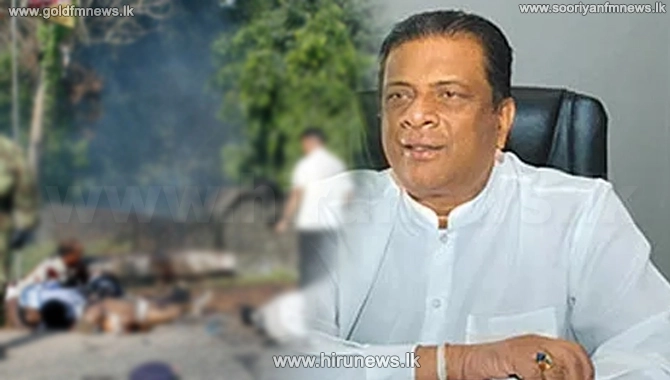
Jeyaraj murder: Former ASP and Ex-LTTE cadre acquitted and released

Former ASP for Gampaha, Lakshman Cooray and Ex-LTTE cadre Selvarajah Piribahakaran aka ‘Morris’ who were in remanded custody over the murder of former Minister Jeyaraj Fernandopulle were acquitted and released by Gampaha High Court Judge Sahan Mapa Bandara today.

They were charged and indicted for the murder of Former Minister the late Jeyaraj Fernandopulle and 15 others in 2008.

Jeyaraj Fernandopulle was killed in a suicide bomb attack, carried out by an LTTE terrorist on 6th April 2008 when he was participating in a New Year festival at Weliweriya.

IMF gives Lanka a 4-four year Extended Fund Facility and a US$ 2.9 billion loan

An IMF mission led by Peter Breuer and Masahiro Nozaki visited Colombo from August 24 to September 1, 2022 to continue discussions on IMF support for Sri Lanka and the authorities’ comprehensive economic reform program. At the end of the mission, Messrs. Breuer and Nozaki issued the following statement:

“The Sri Lankan authorities and the IMF team have reached a staff-level agreement to support the authorities’ economic adjustment and reform policies with a new 48-month Extended Fund Facility (EFF) with a requested access of about SDR 2.2 billion (equivalent to US$2.9 billion)”

“The new EFF arrangement will support Sri Lanka’s program to restore macroeconomic stability and debt sustainability, while safeguarding financial stability, reducing corruption vulnerabilities and unlocking Sri Lanka’s growth potential,” the IMF said in a statement.

“The agreement is subject to the approval by IMF management and the Executive Board in the period ahead, contingent on the implementation by the authorities of prior actions, and on receiving financing assurances from Sri Lanka’s official creditors and making a good faith effort to reach a collaborative agreement with private creditors. Debt relief from Sri Lanka’s creditors and additional financing from multilateral partners will be required to help ensure debt sustainability and close financing gaps.”

“Sri Lanka has been facing an acute crisis. Vulnerabilities have grown owing to inadequate external buffers and an unsustainable public debt dynamic. The April debt moratorium led to Sri Lanka defaulting on its external obligations, and a critically low level of foreign reserves has hampered the import of essential goods, including fuel, further impeding economic activity. The economy is expected to contract by 8.7 percent in 2022 and inflation recently exceeded 60 percent. The impact has been disproportionately borne by the poor and vulnerable.”

“Against this backdrop, the authorities’ program, supported by the Fund, would aim to stabilize the economy, protect the livelihoods of the Sri Lankan people, and prepare the ground for economic recovery and promoting sustainable and inclusive growth.”

Key elements of the program are:

Raising fiscal revenue to support fiscal consolidation. Starting from one of the lowest revenue levels in the world, the program will implement major tax reforms. These reforms include making personal income tax more progressive and broadening the tax base for corporate income tax and VAT. The program aims to reach a primary surplus of 2.3 percent of GDP by 2024.

Introducing cost-recovery based pricing for fuel and electricity to minimize fiscal risks arising from state-owned enterprises. The team welcomed the authorities’ already announced substantial revenue measures and energy pricing reforms;

Mitigating the impact of the current crisis on the poor and vulnerable by raising social spending, and improving the coverage and targeting of social safety net programs;

Restoring price stability through data-driven monetary policy action, fiscal consolidation, phasing out monetary financing, and stronger central bank autonomy that allows pursuing a flexible inflation targeting regime. A new Central Bank Act is a cornerstone of this strategy;

Rebuilding foreign reserves through restoring a market-determined and flexible exchange rate, supported by the comprehensive policy package under the program;

Safeguarding financial stability by ensuring a healthy and adequately capitalized banking system, and by upgrading financial sector safety nets and regulatory standards with a revised Banking Act;

and Reducing corruption vulnerabilities through improving fiscal transparency and public financial management, introducing a stronger anti-corruption legal framework, and conducting an in-depth governance diagnostic, supported by IMF technical assistance.

“The IMF team held meetings with President and Finance Minister Ranil Wickremesinghe, Prime Minister Dinesh Gunawardena, Central Bank of Sri Lanka Governor Dr. P. Nandalal Weerasinghe, Secretary to the Treasury K M Mahinda Siriwardana, and other senior government and CBSL officials. It also met with Parliamentarians, representatives from the private sector, civil society organizations and development partners.

“We would like to thank the authorities for their candid approach and warm hospitality and are looking forward to continuing our engagement in support of Sri Lanka and its people.”

Posted in Uncategorized

Sri Lanka invites Saudi Arabia to set up a refinery in the country

Sri Lanka’s Minister of Environment Naseer Ahmed has invited Saudi Arabia to set up an oil refinery in Sri Lanka.

Minister of Environment Naseer Ahmed has made this invitation during his recent visit to Saudi Arabia as the special representative of the President for the bilateral talks between Sri Lanka and the Kingdom.

The Minister has also said that Sri Lanka can provide sufficient oil storage facilities to cover the entire region.

The Environment Minister has said that this invitation was made to provide a modern oil refinery and storage facilities for energy security cooperation by establishing a strong long-term relationship with Saudi Arabia.

In these discussions, attention was focused on the long-term agreements that can be made for Sri Lanka to obtain gas oil, petrol, jet A-1 fuel, crude oil, etc. and the necessary activities to establish long-term economic cooperation.

The Minister also stated that Saudi Arabia, one of the leading economic powers in the Asian region, is playing a major role as a leader in the energy sector and that the “Vision 2030” of Saudi Arabia’s Crown Prince Mohammed bin Salman has attracted the whole world including Sri Lanka.

Posted in Uncategorized

GR to return back to SL on Saturday

Exiled former president Gotabaya Rajapaksa is expected back home from Thailand tomorrow night (02), according to reliable sources.

He will be accompanied by his wife, chief bodyguard Brig. Mahinda Ranasinghe and private secretary Sugeeswara Bandara, the sources say.

Incumbent president Ranil Wickremesinghe has already allotted him a safe stay at Bullers Road in Colombo with maximum security.

The Sri Lanka Podujana Peramuna’s (SLPP) general secretary Sagara Kariyawasam told the media recently that Rajapaksa would be given all facilities due to a former head of state.

Following the country-wide protests on July 09, Rajapaksa fled to the Maldives four days later and then took a Saudi Airlines flight to Singapore on temporary visa.

From there, he tendered his resignation.

After the expiration of Singapore visa, Rajapaksa left for Thailand on August 11.

Posted in Uncategorized

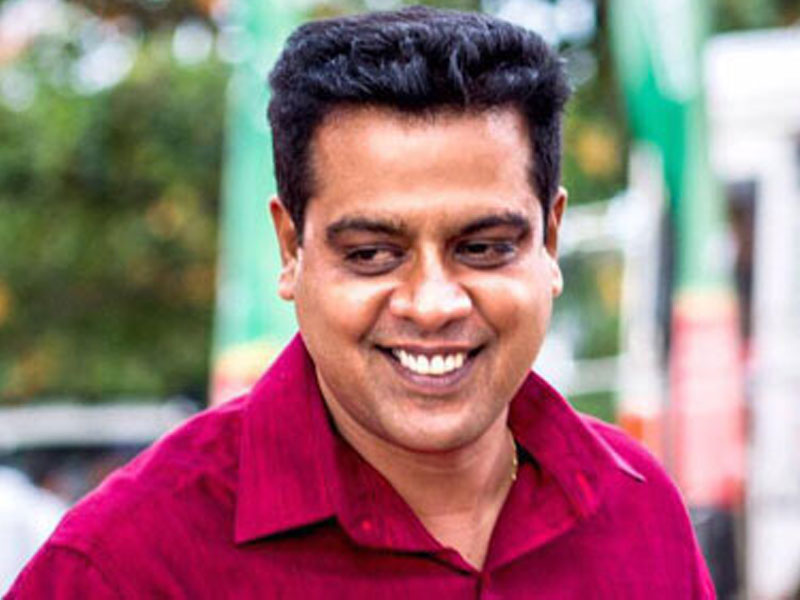
Rs 20M paid for Sanath Nishantha’s burned home

A sum of Rs 20 million has been provided to SLPP MP Sanath Nishantha as compensation for his home that was torched on 9 May.

The MP stated that he had received the said amount for his losses and the damages caused as he had paid his insurance as a businessman. Nishantha added that as a big-time businessman in the Puttalam District and that having estimated the value of his house and land, a sum of Rs 22 million had been provided to him as compensation.

The MP explained that he has no issues with regard to the said sum as he had received it for his work as a businessman and asserted that the sum does not belong either to the State or it concerns the public.

He charged that his house was not damaged by floods or tornados but set ablaze by protesters and mentioned that he had spent a sum of Rs 100 million to build it. He insisted that by current rates, it would be impossible for it to be even built for Rs 200 million.

Source:Ceylon Today

Posted in Uncategorized

Ranil urged to end use of counter terror laws on protesters

President Ranil Wickremesinghe should immediately end the use of draconian counter-terrorism laws to target peaceful protesters and release those in custody, Human Rights Watch said today.

The authorities detained three student activists who participated in an August 18, 2022 demonstration under the abusive Prevention of Terrorism Act (PTA), which allows up to a year’s detention without trial.

Since he was sworn in as president on July 21 following the flight and resignation of then-president Gotabaya Rajapaksa, President Wickremesinghe has suppressed rights including the freedoms of expression, association, and peaceful assembly. His administration imposed a one-month state of emergency, used security forces to violently disperse protesters, and arrested dozens of people who participated in peaceful protests. Successive governments have broken promises to suspend use of the PTA and replace it with rights-respecting legislation.

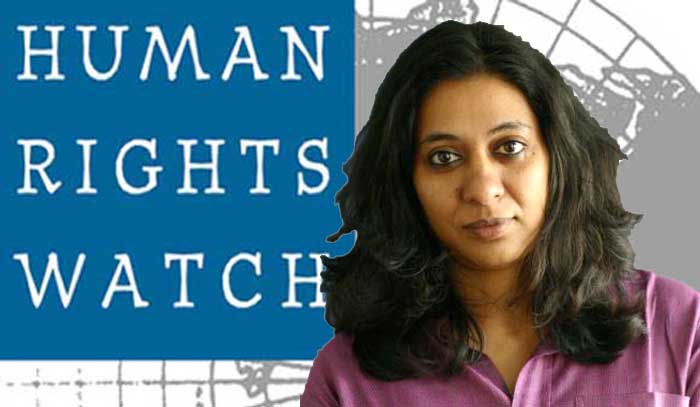
“President Wickremesinghe’s use of antiterrorism legislation to lock up people peacefully calling for reform sends a chilling message to Sri Lankans that rights won’t get priority during his administration,” said Meenakshi Ganguly, South Asia director at Human Rights Watch. “The president’s suppression of dissent at home flies in the face of his pledges to allies abroad.”

The PTA was first adopted as a “temporary” measure in 1979, and contains numerous provisions in contravention of international legal standards that have enabled arbitrary detention and torture. It has repeatedly been used to target government opponents and members of minority communities.

As prime minister in 2015, Wickremesinghe pledged to repeal the law when he supported a consensus resolution of the United Nations Human Rights Council. He repeated the commitment in 2017, when Sri Lanka was readmitted to the European Union’s GSP+ scheme, which grants tariff-free access to the EU market for Sri Lankan goods in exchange for compliance with international human rights conventions.

In July, then-Foreign Minister G. L. Pieris told the UN Human Rights Council that Sri Lanka was observing a “de facto moratorium on arrests being made under the PTA.” Earlier, on March 22, the then justice minister, now foreign minister, Ali Sabry, told parliament there was a “de facto moratorium on the use of the PTA on offenses other than those which have a direct involvement with terrorism.”

The three men detained under the PTA are Wasantha Mudalige, convener of the Inter-University Students’ Federation (IUSF); Hashantha Jeewantha Gunathilake, a member of the Kelaniya University Students’ Union; and Galwewa Siridhamma Thero, the convener of Inter University Bhikku [monks’] Federation. They were arrested following a protest on August 18 that the police dispersed using teargas and water cannon.

Wickremesinghe, who is also defence minister, later used the powers of the defence minister under the PTA to sign detention orders allowing the three men to be held for 90 days without evidence or the opportunity to seek bail. The orders can be renewed for up to a year. Lawyers for the men said they are being held at Tengalle Jail in the south of the island in poor conditions, and have not been able to speak to lawyers without guards present, in violation of international standards.

Sri Lankan politicians and civil society organizations, including the Bar Association, have condemned the detentions. The Human Rights Commission of Sri Lanka said that “no suspect exercising their fundamental rights under the Constitution should be wrongly treated as a terrorist.”

Some of Sri Lanka’s international partners, whose support the government is seeking to address the country’s economic crisis, have urged Wickremesinghe to end the suppression of dissent and especially the renewed use of the PTA. The United States Ambassador Julie Chung posted on Twitter, “Using laws that don’t conform with international human rights standards – like the PTA – erodes democracy in Sri Lanka.”

The EU said it was “[c]oncerned about reports on the use of the Prevention of Terrorism Act in recent arrests as we refer to information given [by the government of Sri Lanka] to the International Community about the de-facto moratorium of the use of PTA,” and has repeatedly reminded Sri Lanka of its obligations under GSP+.

The Sri Lankan government is currently negotiating with the International Monetary Fund (IMF) to secure a multi-billion-dollar bailout, and is in talks with international creditors to restructure the country’s foreign debt. The Wickremesinghe government should show that it tolerates peaceful dissent if the Sri Lankan people are to have any chance of holding it accountable for how new international loans are spent, Human Rights Watch said.

“President Wickremesinghe seems intent on disregarding calls by Sri Lankans for political reform and accountability, and those by his allies abroad to improve respect for human rights,” Ganguly said. “While people inside the country suffer repression and economic hardship, Sri Lanka’s international partners need to make sure that Wickremesinghe can’t ignore their message.”

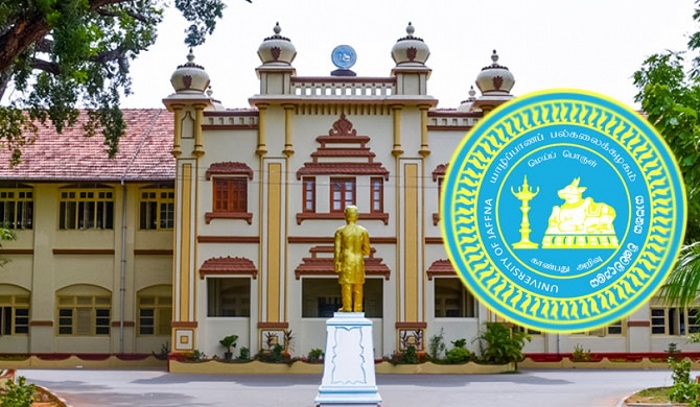
Jaffna University students resist China’s bid to make inroads into Tamil areas

The Jaffna University Students’ Union has lashed out at the Chinese envoy in Sri Lanka, Qi Zhenhong, for extending support to the Sri Lankan government’s stand on the war crimes issue that is to come up for discussion at the UN Human Rights Council’s session in September.

In an article sent to the Sri Lankan media recently, the envoy had indicated that China would support Sri Lanka in contrast to some countries which had either ruled or invaded Sri Lanka in the past. The allusion was to the Western powers and India.

Portraying China and Si Lanka as two countries which had faced, and are still facing threats from outside forces, the envoy called for a joint Sino-Lankan effort to resist such threats. The envoy was alluding to the US threat to the “One China” policy through its support for Taiwanese separatists, and to India’s objecting to the docking of the Chinese survey vessel Yuan Wang 5 at Hambantota port “on security grounds”. For the envoy, both cases represented an abridgment of the sovereignty of China and Sri Lanka.

Tamils Wary

Sri Lankan Tamils of the North and East, are wary about China’s bid to make inroads into the North and East as they fear that the Tamils too would fall into a Chinese “debt trap” as Sri Lanka had. They also fear that an increasing Chinese influence on Colombo would embolden the latter to continue its policy of not yielding to the Tamils’ long-standing demand for autonomy within a united Sri Lanka. China has consistently voted against the Western Core Group’s resolutions against Sri Lanka at the UNHRC. While China’s stand pleases the majority Sinhalese, it irks the minority Tamils whose bid to secure autonomy through peaceful means and by war had both been crushed by successive Sri Lankan governments.

The Jaffna University Students Union told a media briefing that would appeal to the Chinese envoy to understand the Tamils’ demands and their plight and stop supporting Sri Lankan governments. But the union leaders also said that they did not believe that China would change its stand. They characterized the Chinese envoy’s earlier visit to the Nallur Kandaswamy temple in Jaffna dressed in the traditional Tamil style as an effort to hoodwink the Tamils.

Perhaps due to objections from the Students’ Union, a function to be held at the university to sign a collaboration agreement between the Agriculture faculty and a Chinese Agricultural institute was indefinitely postponed and the envoy’s visit to Jaffna for this purpose was called off.

Asked about the status of the visit, Luo Chong, spokesman of the Chinese embassy, said: “Ambassador is always keen on another visit to Jaffna. Northern Province is an important part of China-SL friendship and cooperation. About the exact time of visit, I don’t have information at the moment.”

China has been making persistent efforts to make inroads into Sri Lanka’s Tamil-speaking Northern and Eastern provinces for three reasons: 1) Beijing believes that China should be able to invest and have development projects in all parts of Sri Lanka 2) India cannot claim that the Tamil-speaking North and East is under its exclusive sphere of influence and that countries “inimical” to India should not have projects there which could have security implications for India. 3) China wants to have a foothold in North Sri Lanka as part of its larger policy of encircling India.

China has set up an export-oriented fisheries development project in Jaffna. But its bid to set up three small-size power projects using renewable energy in three islands off Jaffna but close to India failed because India objected citing security issues. Earlier India had objected to a proposal to set up a Chinese-built aircraft repair facility at Trincomalee in the Eastern Province.

India’s security interest is safeguarded by the India-Sri Lanka Agreement of July 1987 signed by the then Indian Prime Minister Rajiv Gandhi and the Sri Lanka President J.R.Jayewardene.

Come September, Sri Lanka gets the jitters about censure at UNHRC By P.K.Balachandran

As September (or March) approaches every year, the Sri Lanka government gets the jitters. This is because it is hauled over the coals for its war-related and post-war human rights record at the March and September sessions of the UN Human Rights Council (UNHRC). Rights organizations both on the island and overseas, raise issues, the government indulges in some window-dressing, trots out excuses for not implementing promises made, and seeks a grace period. This appears to be an unending cycle.

Meanwhile, new issues crop up adding fuel to the fire. This September it will be the non-implementation of the promise to annul or radically modify the draconian Prevention of Terrorism Act (PTA). This is because it was used to lock up people for long periods just for seeking the ouster of the President or for minor transgressions of the law during an agitation. The definition of terrorism in the PTA (even in amendments) is so imprecise that transgressions which can be dealt with under ordinary law with due process, are dubbed as terrorist.

In a statement issued on Wednesday, Human Rights Watch (HRW) sought an immediate end to the use of the PTA. It pointed out that three student activists who participated in an August 18, 2022 demonstration, under PTA, which allows up to a year’s detention without trial. “President Wickremesinghe’s use of antiterrorism legislation to lock up people peacefully calling for reform sends a chilling message to Sri Lankans that rights won’t get priority during his administration,” said Meenakshi Ganguly, South Asia director at Human Rights Watch.

In 2015 and 2017, as Prime Minister, Wickremesinghe had pledged to the UNHRC that he would amend the law. In 2017, the EU had restored Sri Lanka the GSP Plus trade concessions on the basis of this promise. But Wickremesinghe reneged. The three men booked recently (Wasantha Mudalige, convener of the Inter-University Students’ Federation (IUSF); Hashantha Jeewantha Gunathilake, a member of the Kelaniya University Students’ Union; and Galwewa Siridhamma Thero, the convener of Inter University Monks Federation) were arrested under PTA following a protest on August 18 that the police dispersed using teargas and water cannon. Condemning this, the Human Rights Commission of Sri Lanka (HRSL) said that “no suspect exercising their fundamental rights under the Constitution should be wrongly treated as a terrorist.”

Opinion in Sri Lanka is divided on the nature of PTA reform. However, given the unenviable economic situation in which Sri Lanka is presently, abjectly dependent on Western trade concessions, it has no option but to please the West by reforming the anti-terror law here and now. The government which formulated a Counter Terrorism Act recently is now thinking of going in for a National Security Act to replace the PTA.

What needs to be done?

Any new anti-terror law should get rid of the flaws mentioned in the Human Rights Watch (HRW) document of February 2022 entitled: In A Legal Black Hole. The most frequently abused provisions include:

The act defines terrorism offenses so broadly as to include, for example, causing or intending to cause “racial or communal disharmony or feelings of ill‐will,” or interfering with “any board or other fixture on, upon or adjacent to, any highway, street, road or any other public place.” It is also an offense, punishable by up to seven years in prison, to be aware of an action that appears to be in breach of the act and fail to report it.

Section 6(1) empowers the police—without a warrant, and notwithstanding anything in any other law to the contrary—to arrest any person; enter and search any premises; stop and search any individual or vehicle, and to seize any document or thing.

Section 7(1) provides that a magistrate will remand any person in custody until the completion of their trial, if requested by the police. There is no provision for bail, unless approved by the attorney general.

Section 7(3) empowers the police to take “any person” arrested under the act “to any place for the purposes of interrogation.” This provision has frequently been used to facilitate torture.

Section 9(1) provides that if the defense minister suspects “any person is connected with or concerned in any unlawful activity,” he can order them detained for up to 18 months.

Section 10 states that “[a]n order made under section 9 shall be final and shall not be called in question in any court or tribunal by way of writ or otherwise.”

Section 15(a) gives discretion to the secretary of defense to order that a PTA suspect “be kept in the custody of any authority, in such place and subject to such conditions as may be determined by him having regard to such interests [of national security or public order].” The provision does not set out any criteria for making this determination, and the decision is not subject to judicial oversight.

Section 16 reverses the burden of proof, stating that “any statement” made by the accused in any circumstances, and recorded in any manner, is admissible as evidence and “[t]he burden of proving … [it] is irrelevant … shall be on the person asserting it to be irrelevant.” This, along with other provisions of the act, has contributed to convictions based on confessions obtained under torture.

Section 17 states that provisions of the Evidence Ordinance, which make confessions given to a police officer inadmissible, do not apply in PTA cases.

Section 26 grants immunity to officials for “for any act or thing in good faith done or purported to be done in pursuance or supposed pursuance of any order made or direction given under this Act,” giving broad cover to security forces to engage in torture, arbitrary arrest, and other abuses.

According to section 28, “The provisions of this Act shall have effect notwithstanding anything contained in any other written law and accordingly in the event of any conflict or inconsistency between the provisions of this Act and such other written law, the provisions of this Act shall prevail.”

Detentions

The HRW quotes a 2020 report by the HRCSL which said that, as of September 2018, at least 29 PTA prisoners had spent 5 to 10 years on remand (pretrial detention), and 11 had spent 10 to 15 years on remand. The HRCSL said that the longest period a person had been in remand before trial was then 15 years. The longest period a trial had been ongoing was 16 years. The study also found that about 84% of PTA prisoners were tortured after their arrest.

In September 2021, the Committee for Protecting Rights of Prisoners, a Sri Lankan human rights organization, wrote to the UN High Commissioner for Human Rights, Michelle Bachelet, listing 11 PTA suspects they said had been in detention for 12 to 14 years, and were facing trials that have so far lasted between seven and nine years without reaching a verdict. On January 7, 2022, the HRCSL told HRW that it had recorded 109 arrests under the PTA in 2021.

UN Benchmarks

UN experts had set out five benchmarks for PTA reform. These are: (1) Employing definitions of terrorism consistent with international norms. (2) Ensuring legal certainty, especially where it may impact rights to freedom of expression, opinion, association, and religion or belief. (3) Including provisions to prevent and halt arbitrary deprivation of liberty. (4) Including provisions to prevent torture and enforced disappearance. (5) Guaranteeing due process and fair trials, including judicial oversight and access to legal counsel.

In the UN General Assembly proposed definition the following characteristics were identified: (a) injury to persons (b) serious damage to public or private property, including a place of public use, a State or government facility, a public transportation system, an infrastructure facility or the environment; or (c) damage to property, places, facilities, or systems…, resulting or likely to result in major economic loss, when the purpose of the conduct, by its nature or context, is to intimidate a population, or to compel a Government or an international organization to do or abstain from doing any act.

In the light of the above definition, the PTA would have to be repealed and a new anti-terror act fashioned on totally different lines.


Posted in Uncategorized