Chinese envoy says Sri Lanka and China should jointly protect their sovereignty, territorial integrity and independence

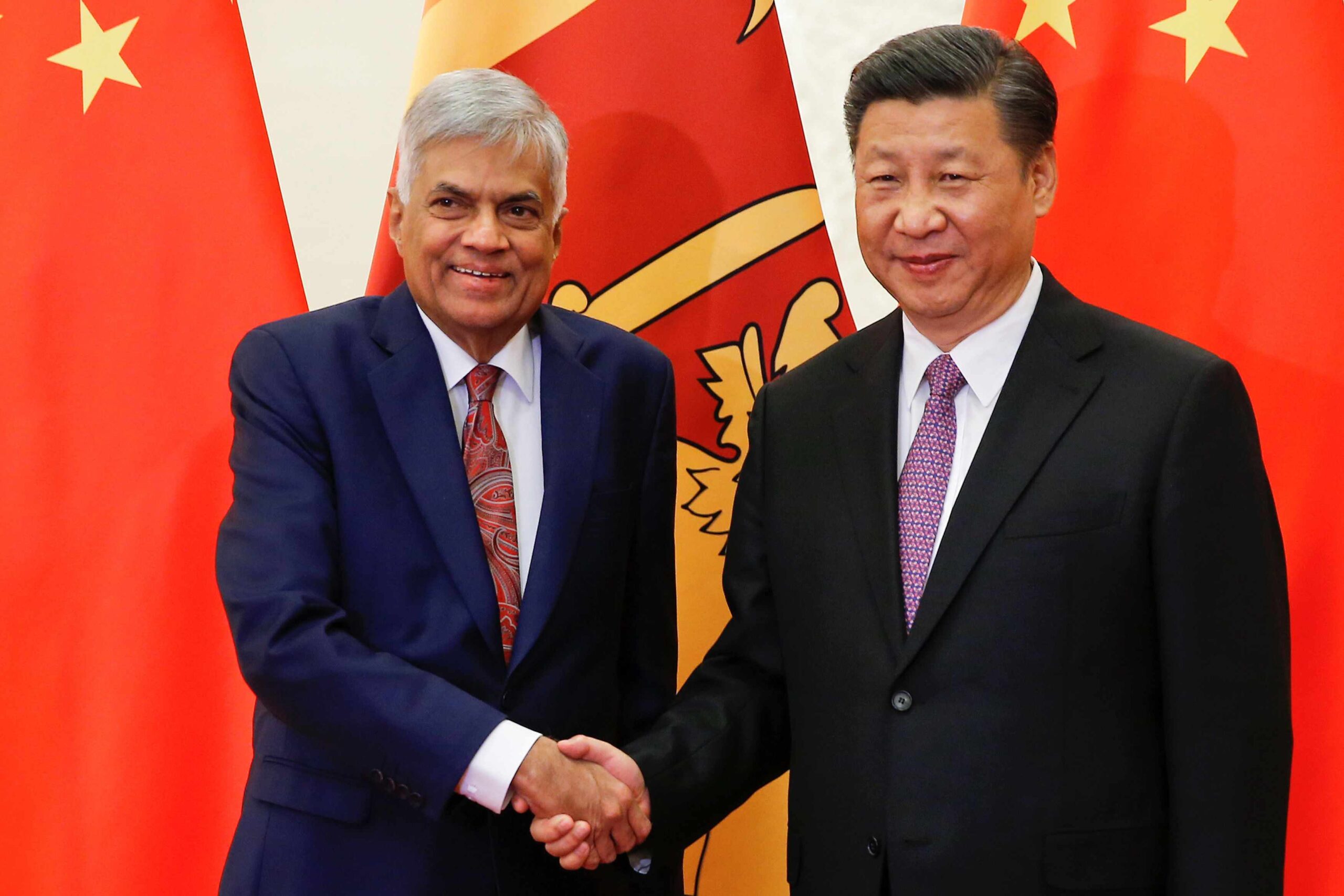
The Chinese envoy in Sri Lanka, Qi Zhenhong, has in an article circulated among the media here on Friday, said that Sri Lanka and China should jointly protect their sovereignty, territorial integrity and independence in view of the threats they face.

Qi mentioned US House Speaker Nancy Pelosi’s visit to Taiwan and the “northern neighbor’s” objections to the docking of the Chinese research vessel Yuan Wang 5 as recent examples of attacks on the sovereignty of China and Sri Lanka and said that China and Sri Lanka should stand together to nullify these threats.

Here is the text of the letter:

In recent days, two pieces of news related to China have widely caught the eye in Sri Lanka. Early this month, after the US House Speaker Nancy Pelosi’s sneaky visit to China’s Taiwan region, the Chinese side responded with firm countermeasures immediately. Over 170 countries around the world have all expressed their firm support for the “One-China” Principle and strong objection against the US provocation. I’m grateful to see that H.E. President Ranil Wickremesinghe, many Sri Lanka’s political parties and social groups have also openly spoken up for justice in support of China.

Meanwhile, in the middle of this month, with China and Sri Lanka having altogether resisted the rude and unreasonable interference from third parties, the Chinese scientific research vessel “Yuan Wang 5” successfully docked at the Hambantota Port for replenishment after receiving the latest approval from the Sri Lankan government.

Those two matters may seem irrelevant and thousands of miles apart, but both share the same great significance between China and Sri Lanka, that is to jointly safeguard each other’s sovereignty, independence, and territorial integrity.

The two matters, both the process and results, have also fully shown a fine tradition in our bilateral relations, that is since diplomatic ties were established 65 years ago, China and Sri Lanka have always been mutually understanding, respecting and supporting each other on issues of core interests and major concerns.

In October 1971, the UN Resolution 2758, co-sponsored by Sri Lanka (then Ceylon) and 22 other countries, was adopted with an overwhelming majority of votes in the 26th Session of the United Nations General Assembly. The Resolution officially acknowledged the One-China Principle and the position that There is but one China in the world, Taiwan is an inalienable part of China’s territory, and the Government of the People’s Republic of China (PRC) is the sole legal government representing the whole of China. It also recognizes PRC as the only legitimate representative of China to the United Nations. Since then, the One-China Principle has become a common understanding of the international society and a basic norm of international relations, and upon that principle, 181 countries, including the US, established diplomatic relations with the People’s Republic of China.

Nancy Pelosi’s visit is a serious violation of the One-China Principle and the provisions of the three China-U.S. joint communiqués. It seriously infringes China’s sovereignty and territorial integrity, gravely undermines peace and stability across the Taiwan Strait, and sends a seriously wrong signal to the “Taiwan independence” separatist forces.

However, I noticed that some local newspapers have forwarded voices from western media, falsely claiming that China “overreacts, escalates the tension and changes the Taiwan Strait status quo”, which are just their habitual tactics of standing facts on the head and of a thief crying “stop thief”. It is the US and the Taiwan separatists that commit irresponsible acts, changes and escalates the Taiwan Strait situation, not China.

China has every reason to respond unhesitatingly to the severe impact caused by the Taiwan visit of Speaker Pelosi, second in line to the US Presidency and the No. 3 official of the US government.

Upholding the One-China Principle is not only about safeguarding China’s core interests, but also safeguarding the UN Charter and the basic norms of international relations. If China and the international society had not resisted such extremely irresponsible and irrational acts by the US side, the general principle of Non-Interference, National Sovereignty and Territorial Integrity in international relations would have just become a mere scrap of paper.

More seriously, the world might slide back to jungle rules and barbarian times. With separatists and extremists being encouraged, national sovereignty and territorial integrity of medium and small countries might be severely challenged. The peace and stability in the region and the world enjoyed by countries including Sri Lanka would also suffer serious damage.

Yuan Wang 5

Looking back at the great history of the island of Sri Lanka, which overcame aggression from its northern neighbor 17 times, colonization by the West for 450 years, and an anti-terrorism war for nearly 3 decades, is now still standing in the world bravely and proudly.

Any infringement on national sovereignty, independence and territorial integrity of Sri Lanka shall not be tolerated. Approving a foreign vessel’s port call at Hambantota or any other port for replenishment is a decision made by the Sri Lankan government completely within its sovereignty, not to mention all the scientific research activities of “Yuan Wang 5”that comply with the international law and common international practice.

External obstruction based on so-called “security concerns” but without any evidence from certain forces is de facto a thorough interference in Sri Lanka’s sovereignty and independence. Fortunately, with China and Sri Lanka’s joint efforts, the incident was resolved properly, which not only safeguarded Sri Lanka’s sovereignty and independence, but also defend international fairness and justice once again.

Just like Sri Lanka, China had suffered a hundred years of humiliation from 1840 till 1949. Because of the similar dark experience, China has always been supporting Sri Lanka in international fora for protecting its sovereignty, independence, and territorial integrity. We will continue to do that.

In contrast, some countries, far or near, always make various groundless excuses to bully Sri Lanka, and trample on Sri Lanka’s sovereignty and independence repeatedly.

Next month, the 51st session of the UN Human Rights Council will be held in Geneva where human rights issues in Sri Lanka might probably be stirred up again. As the Sri Lankan people are still grappling with severe economic and humanitarian difficulties, many might wonder what those countries who have been always been preaching about human rights will actually do. Will they help Sri Lanka to ease its human rights crisis by providing concrete support? Or will they again use human rights as a cover-up tool to interfere in the island nation’s internal affairs and continue to rub salt into the wound of Sri Lankan people? Just let’s wait and see.
India says Chinese envoy has violated basic diplomatic etiquette

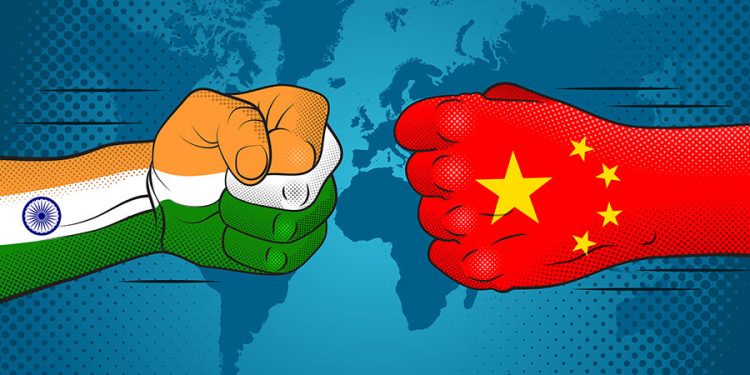
Responding to a newspaper article written by the Chinese Ambassador in Sri Lanka Qi Zhenhong, the Indian High Commission on Saturday accused the Chinese envoy of violating “basic diplomatic etiquette.” In a series of tweets, the mission pointed out that what Sri Lanka needs now is not a controversy thrust on it to serve another country’s agenda, but support.

Sri Lanka is now undergoing a severe economic crisis and is seeking international support.

“We have noted the remarks of the Chinese Ambassador. His violation of basic diplomatic etiquette may be a personal trait or reflecting a larger national attitude. His view of Sri Lanka’s northern neighbor may be colored by how his own country behaves. India, we assure him, is very different,” a tweet said.

Further: “His imputing a geopolitical context to the visit of a purported scientific research vessel is a giveaway. Opaqueness and debt-driven agendas are now a major challenge, especially for smaller nations. Recent developments are a caution. Sri Lanka needs support, not unwanted pressure or unnecessary controversies to serve another country’s agenda.”

Envoy’s Article

In the article published in the Sri Lankan media, the Chinese envoy accused India of trying to dominate Sri Lanka as it allegedly did in the past, and said that Sri Lanka should join China to fight against forces which pose such threats.

Here are portions of the article referring to India and Sri Lanka:

“Looking back at the great history of the island of Sri Lanka, which overcame aggression from its northern neighbor 17 times, colonization by the West for 450 years, and an anti-terrorism war for nearly 3 decades, is now still standing in the world bravely and proudly.”

“Any infringement of national sovereignty, independence and territorial integrity of Sri Lanka shall not be tolerated. Approving a foreign vessel’s port call at Hambantota or any other port for replenishment is a decision made by the Sri Lankan government completely within its sovereignty, not to mention all the scientific research activities of Yuan Wang 5 that comply with the international law and common international practice.”

“External obstruction based on so-called security concerns but without any evidence from certain forces is de facto a thorough interference in Sri Lanka’s sovereignty and independence. Fortunately, with China and Sri Lanka’s joint efforts, the incident was resolved properly, which not only safeguarded Sri Lanka’s sovereignty and independence, but also defended international fairness and justice once again.”

“Just like Sri Lanka, China had suffered a hundred years of humiliation from 1840 till 1949. Because of a similar dark experience, China has always been supporting Sri Lanka in international fora for protecting its sovereignty, independence, and territorial integrity. We will continue to do that. In contrast, some countries, far or near, always make various groundless excuses to bully Sri Lanka and trample on Sri Lanka’s sovereignty and independence repeatedly. “

“Next month, the 51st session of the UN Human Rights Council will be held in Geneva where human rights issues in Sri Lanka might probably be stirred up again. As the Sri Lankan people are still grappling with severe economic and humanitarian difficulties, many might wonder what those countries, who have been always been preaching about human rights, will actually do. Will they help Sri Lanka to ease its human rights crisis by providing concrete support? Or will they again use human rights as a cover-up tool to interfere in the island nation’s internal affairs and continue to rub salt into the wound of Sri Lankan people? Just let’s wait and see,” Qi Zhenhong said.

Posted in Uncategorized

SJB pledges to make Ranjan National List MP

The Samagi Jana Balawegaya (SJB) has pledged to appoint Ranjan Ramanayake as an MP through the National List when the opportunity arises.

In a tweet, Opposition Leader Sajith Premadasa said, the SJB, has agreed to provide the appointment on the National List at the first available opportunity.

“We the SJB wholeheartedly pledge to appoint Ramanayake to Parliament in the first instance of an occurrence of a vacancy in the National List,” Premadasa tweeted.

The SJB’s pledge comes after Sri Lankan actor and politician Ramanayake was released from prison on 26 August after a ‘conditional’ Presidential Pardon.

SJB MPs Ranjith Maddumabandara, Tissa Attanayake, Imthiaz Bakeer Markar, Eran Wickramaratne, Mayantha Dissanayake, and Diana Gamage were appointed as MPs on the SJB’s National List. Subsequently, two former SJB MPs, Harin Fernando and Manusha Nanayakkara who recently became independent in Parliament were also appointed as MPs on the SJB National List.

Perak ruler pays tribute to Jaffna Tamil community

PETALING JAYA: Jaffna Tamils have long played an important role in Malaysian society by producing numerous professionals in fields ranging from medicine to politics, says Sultan of Perak Sultan Nazrin Shah.

Launching a book titled “They Came from Jaffna”, he said the Jaffna Tamil community has contributed to Malaysian culture and heritage through music, dance, movies and culinary arts.

“These contributions are an integral component of the multicultural nature of Malaysia that we all cherish,” he said.

Sultan Nazrin congratulated the book’s author, Indra Rani Lavan Iswaran, for the contribution her book has made to both Jaffna Tamil and Malaysian culture.

In the book, Iswaran details the historical journey of her ancestral family from Jaffna in Sri Lanka to Malaya in the 1890s, while highlighting the original culinary heritage of the Jaffna Tamils.

“She weaves these various strands together most effectively. Insightful tales of personal and national history are brought to life in the many evocative photographs and drawings,” Sultan Nazrin said.

He said the Jaffna, or Ceylon Tamils, have contributed significantly to the development of both Malaysia and Singapore since their migration to this part of the world in the late 19th century.

“Travelling by rail back in the old days, one would have encountered many Ceylon Tamil stationmasters, and many of the chief clerks in government offices and business agencies also came from this community,” he said.

“Many Ceylon Tamils also became teachers, reflecting their sound grasp of the English language.”

Source:freemalaysiatoday.com

Posted in Uncategorized

IMF team to hold talks with Sri Lanka on restructuring $29 billion debt

Colombo/LondonA team from the International Monetary Fund (IMF) will meet Sri Lanka’s president on Wednesday for talks to finalise a bailout package, including restructuring debt of about $29 billion, amid the nation’s worst financial crisis in more than seven decades.

The second such IMF visit in three months comes as the Indian Ocean island scrambles to lock down a staff-level pact with the global lender for a possible $3 billion programme to pave its way out of the crisis.

“The IMF team will meet with the president and a finance ministry delegation later today,” an official at the presidential secretariat told Reuters, declining to be identified as he was not authorised to speak to the media.

The team will also hold talks with the central bank governor and other officials, including representatives of Sri Lanka’s financial and legal advisers Lazard’s and Clifford Chance.

The main sticking point of the talks is how to find a sustainable track for Sri Lanka’s unwieldy debt, which stood at 114 per cent of GDP at the end of last year, so as to clinch a staff-level agreement in September.

Sri Lanka’s debts
Sri Lanka has $9.6 billion in bilateral debt and its private credit, which includes international sovereign bonds, stands at $19.8 billion, finance ministry data show.

Japan and China are the largest holders of bilateral debt, with the latter accounting for about $3.5 billion. Overall, when commercial debt is added, China holds about a fifth of Sri Lanka’s debt portfolio.

“The issue will be how Chinese and domestic debt will be included in the talks,” said Timothy Ash, senior emerging markets sovereign strategist at Bluebay Asset Management.

“Other bilateral creditors won’t be willing to allow China to get away with not having comparable treatment this time. China is part of the problem, and needs to be part of the solution this time.”

An economic crisis
For months, the population of 22 million has struggled with soaring inflation, economic contraction and a severe shortage of essential items of food, fuel and medicine caused by a record slump in foreign reserves.

The country’s most severe financial crisis since independence from Britain in 1948 stemmed from the combined impact of the Covid-19 pandemic and economic mismanagement, stoking unprecedented protests.

In July, the then-president Gotabaya Rajapaksa fled the country and resigned after a mass uprising triggered by what many Sri Lankans saw as his mishandling of the financial crisis.

President Ranil Wickremesinghe, who is also the finance minister, plans to ask Japan to lead talks on bilateral debt restructuring after Sri Lanka secures IMF support.

Source: Business Line

Posted in Uncategorized

Tamil Nadu CM calls for release of Indian fishermen detained in Sri Lanka

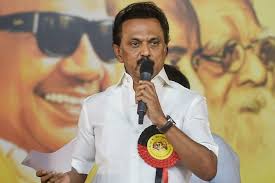
Citing the arrest of 10 Indian fishermen by Sri Lanka, Tamil Nadu Chief Minister M K Stalin urged the Centre in India to take steps for their release and freeing all the 94 boats in the neighbouring country’s custody.

In a letter to External Affairs Minister S Jaishankar, Stalin drew his attention to the arrest of 10 Indian fishermen and the seizure of their mechanised fishing boats on August 22 by the Sri Lankan Navy. These fishermen hailed from Nagapattinam and Mayiladuthurai districts of Tamil Nadu.

“This is the fifth such instance since June and these incidents continue unabated intimidating the fishermen and hampering their livelihoods.” As of now, 94 Tamil Nadu fishing boats are under the custody of Sri Lanka. The apprehended Tamil Nadu fishermen were released on the condition that the owner of the boat should appear before the Sri Lankan court in person to claim the ownership of the boat.

This is, however, not feasible considering the prevailing situation in Sri Lanka and therefore exemption from personal appearance may be sought for the boat owners, the Chief Minister said.

“I request you to press for the early release of all the fishermen and fishing boats apprehended by the Sri Lankan navy,” he said.

Source: Colombo Gazette

Posted in Uncategorized

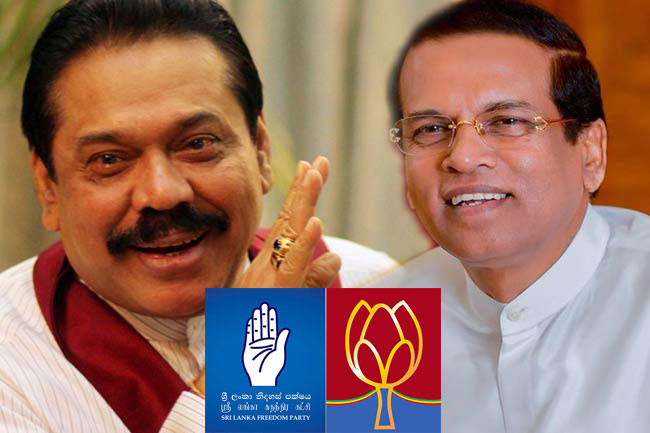
SLFP accuses Mahinda of lying

The Sri Lankan Freedom Party has accused Minister and party member Mahinda Amaraweera of lying when he claimed he accepted a ministerial position in the current government with the approval of the party’s central committee.

In a release issued by the party on the comments made by Amaraweera, the SLFP said it was decided to only accept positions in the government if the conditions presented by the party are accepted and a true all-party government is formed. The release pointed out that the Chairman of the party had also issued the statement saying accepting ministerial positions in the current government was against the decision of the party central committee.

The release said the party was shocked that Amaraweera along with Nimal Siripala Silva accepted the Ministerial position against the decision made by the SLFP. “The decision to accept the position was personal and not done in agreement with the central committee approval” it noted.

Source: Asian Mirror

Posted in Uncategorized

Gov agrees to lift ban on six Islamic organizations

The government has decided to lift the ban on 6 of the 11 banned Islamic organizations in Sri Lanka.

The decision was taken following a request by Digamadulla District MP H.M.M. Haris and Anuradhapura District MP Ishaq Rahuman to President Ranil Wickremesinghe.

Accordingly, it is reported that this decision was taken during a special discussion held yesterday (24) led by President’s Chief of Staff, Sagala Ratnayake.

It is reported that the representatives of the Islamic organizations that lifted the ban also participated in this discussion.

Source: Asian Mirror

New import bans hit multiple sectors hard

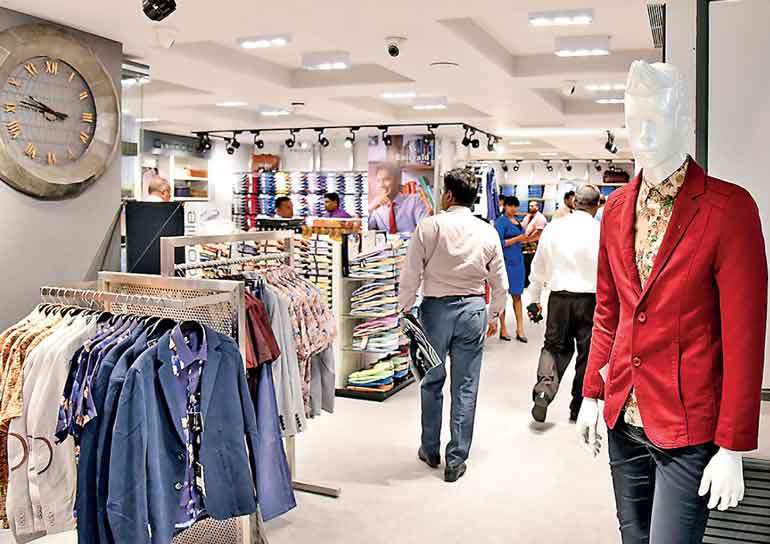
Following President Ranil Wickremesinghe, in his capacity as Minister of Finance, issuing regulations temporarily suspending the importation of over 300 items with effect from Tuesday (23) under the Imports and Exports (Control) Act, many sectors in the country are facing issues and are in dire straits.

The import of over 300 items has been temporarily suspended with effect from Tuesday under the Imports and Exports (Control) Act through a Government notification by the Finance Ministry. The host of items included in the list range from chocolate and other food preparations containing cocoa, condensed milk, yoghurt, coconuts, coconut based arrack, roses, perfumes, beauty or make-up preparations, deodorants and dental floss, to trunks, suitcases, briefcases, and various clothing items.

Speaking to The Morning, salon owner and beautician Udeshika Perera said that the industry is at great risk due to the ban, and the shortages.

“We can’t afford to retain several staff members due to this crisis, as we can’t pay them. Now, most of the products we use are also banned, and the products in the market are highly priced. We cannot provide certain services due to the shortage.”

She also said that even though they are willing to provide services using locally manufactured brands, those are also lacking due to the shortage of ingredients imported from other countries.

At Pettah, the small- and medium-scale shop owners also raised concerns over the latest ban, saying that the price of bags and shoes would increase to the point where people cannot afford to buy them.

“I sell imported luggage bags, and the current price is at Rs. 6,000. I think that it would increase up to Rs. 10,000. We might have to close our shops,” he said.

According to shoe-sellers in Pettah, they are having a difficult time selling shoes at the moment due to the high price. “Customers will run when we tell them the price. It’s that expensive now.”

Speaking to The Morning, Channy Ceylon Clothing Owner Dilini Warnasooriya, representing the apparel industry, said that the production sector is facing a lot of difficulties due to the material shortage.

“Normally, we import swimwear from Bangkok, Thailand, and sell it at a price of Rs. 2,000, but now the price of the material could also increase. Even if we try to produce them locally, we will not be able to achieve a profit, since the customers will not be able to afford the prices. A yard of fabric has increased from Rs. 375 to Rs. 575, while the prices of clothes have increased from Rs. 2,000 to Rs. 5,000. Now, clothes have become a special commodity.”

Meanwhile, the owner of a cosmetic shop in Maharagama said that they could provide shampoo and other cosmetics at a normal price since they have already been imported, but that the next shipment would cost double the price.

Meanwhile, the traders of Pamunuwa, Maharagama, also protested against the increase of electricity tariffs by 75%.

“I think that this decision was made to destroy small-scale industries. If the Government is trying to stop bringing in material, then they should have a plan to produce locally.”

Another said that the prices of all materials have increased at the moment.

“This protest is not to change the Government, but to show our struggle. We want to live. More than one million people depend on this business. Is the Government asking us to engage in farming instead?”

At Pamunuwa, 70% of those in stalls are women. They start their business early in the morning at around 4 a.m.

One of them told The Morning: “No one buys clothes from us. The price of skirts has increased from Rs. 550 to Rs. 1,000. We urge the Government to provide us with solutions.”

The regulation was issued by President Wickremesinghe in his capacity as the Minister of Finance, Economic Stabilisation, and National Policies, in terms of the powers vested in him by Section 20 of the Imports and Exports (Control) Act, No. 1 of 1969. Cited as the Imports and Exports (Control) Regulations, No. 13 of 2022, it temporarily suspended the importation of items listed under 305 Harmonised System Codes, effective from Tuesday, and effective until further notice.

However, it states that any goods specified in these regulations, which have been shipped onboard with the date of bill of lading and airway bill on or before Tuesday, and which arrive at any seaports or airports in Sri Lanka on or before 14 September 2022, shall be cleared for Customs clearance. It also says that the regulations shall not be applied for the importation of any goods specified in these regulations by any enterprises or operators approved under the Temporary Importation for Export Purposes Scheme of the Customs, or any enterprises approved under Section 17 of the Board of Investment of Sri Lanka Law.

It further states that the importation of any goods, specified in these regulations, by any approved enterprises for processing and re-export purposes may be allowed by the Controller General of Imports and Exports on the recommendation of the Secretary to the Ministry of Industries, or the Export Development Board Director General, on a case-by-case basis.

Source: The Sunday Morning

Sri Lanka to replace draconian counter-terrorism law with new national security Act

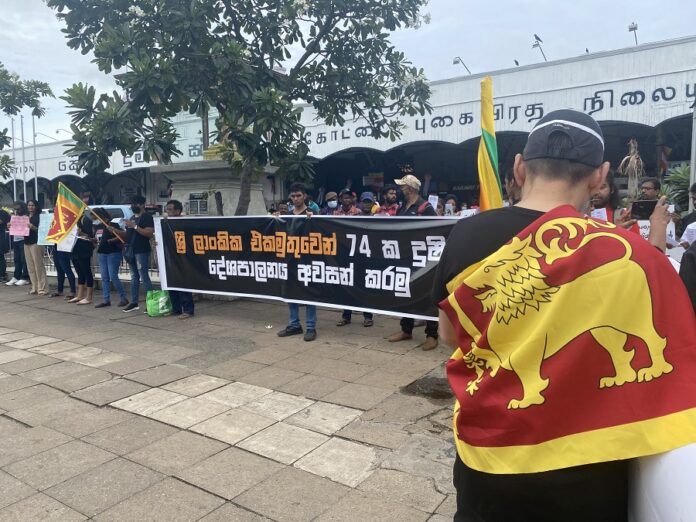
Sri Lanka on Tuesday announced that it will soon replace the controversial Prevention of Terrorism Act (PTA) with a new security law, amid international condemnation over Colombo’s use of the draconian counter-terrorism law to detain student activists.

“PTA has been there since 1979. The justice minister informed the cabinet that a new National Security Act would be drafted by deleting the undesirable parts of the PTA,” Cabinet spokesman and minister Bandula Gunawardena told reporters.

The development comes a day after the US and the European Union on Monday expressed concern over the detention of three student activists under its draconian counter-terrorism law for participating in protests, which led to the resignation of former president Gotabaya Rajapaksa.

“Using laws that don’t conform with international human rights standards – like the PTA – erodes democracy in Sri Lanka. We encourage the government to uphold the rights of the people to express their views,” US Ambassador to Sri Lanka Julie Chung tweeted.

The European Union also voiced its concern.

“Concerned about reports on the use of the PTA in recent arrests as we refer to information given by the (Sri Lankan) government to the international community about the de-facto moratorium of the use of PTA,” an EU statement said.

Mary Lawler, US special rapporteur on Human Rights Defenders, has also expressed concern over the use of PTA to detain the students.

The three students – Mudalige Wasantha Kumara, Hashan Jeewantha and Buddhist monk Galwewa Siridhamma – of the Inter-University Students Federation (IUSF) have been detained since August 18 when the IUSF staged an anti-government demonstration.

The Sri Lankan police on Sunday began a probe into their possible links to an anti-government conspiracy and inciting violence and arson attacks across the country amid widespread protests over the worst economic crisis.

Also read: IMF delegation to visit Sri Lanka this month: Central Bank Governor

The Bar Association of Sri Lanka has asked the President and the law enforcement authorities to refrain from using the PTA and immediately rescind the Detention Orders.

The Bar Association of Sri Lanka (BASL) in a statement said it is deeply concerned at the use of the provisions of the PTA to arrest and detain persons who have been involved in protests against the Government.

The rights group, Amnesty International, too said protesters must not be detained under the PTA.

On Monday, the police said that three student activists have been detained under PTA. The detainees were transferred to the southern prison at Tangalle on Tuesday.

The police said the IUSF activists are needed to be detained to probe the alleged anti-government conspiracy in the background of recent incidents of violence since 9 May.

After months of protests over Sri Lanka’s unprecedented economic crisis, President Gotabaya Rajapaksa fled to the Maldives from Sri Lanka on July 13, then flew to Singapore, where he announced his resignation as the president a day later.

The anti-government protesters accused the Rajapaksa family, which has dominated Sri Lanka’s political scene for nearly two decades, of plunging the country into the worst economic crisis since the country’s independence in 1948 through mismanagement and corruption.

Sri Lanka is under pressure from the EU to reform the controversial PTA, which allows detention up to 90 days without being charged with provisions for further extension of the time.

The European Parliament in June 2021 had called for the repeal of the PTA and urged the EU Commission to consider temporarily withdrawing Sri Lanka’s access to GSP+, a favoured trade concession for the island’s exports.

Senior EU officials visited the island nation in October last year and discussed the PTA, recalling that its amendment was a key commitment in readmitting Sri Lanka to the GSP+ in 2017.

GSP+ preferences for Sri Lanka were withdrawn in 2010 due to significant shortcomings in the country’s implementation of three UN human rights conventions. Sri Lanka was readmitted to GSP+ in May 2017.

The EU’s GSP+ trade concession allows Sri Lankan exports to Europe without taxation. This has been a big boost to Sri Lanka’s apparel and fishing industries.

The EU remains Sri Lanka’s biggest exports partner followed by the US and India. Over 80 per cent of Sri Lanka’s exports to the EU are eligible for GSP+ concessions.

Source: Financial Express

Posted in Uncategorized