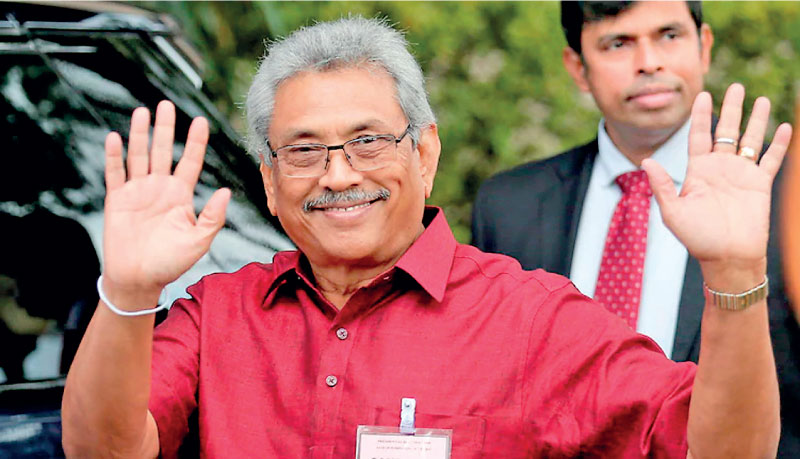
‘The family took over’: how a feuding ruling dynasty drove Sri Lanka to ruin -UK Guardian

The inside story of Rajapaksa family infighting that toppled a country into violence and bankruptcy

Dilith Jayaweera can still recall the moment he realised Sri Lanka was hurtling, unstoppably, towards financial ruin.

It was around October 2021 and Jayaweera, a Sri Lankan media magnate and close friend of the Sri Lankan president, Gotabaya Rajapaksa, had invited Basil Rajapaksa, the president’s younger brother, who was also the finance minister, to join him for dinner.

There was little love lost between Basil Rajapaksa and Jayaweera, who had long mistrusted each other. But nonetheless, as the pair ate in his sleek Colombo office, the media mogul had some urgent questions for the man responsible for Sri Lanka’s economy. Was the country heading for a terrible crash?

“Basil couldn’t answer even my basic questions,” recounted Jayaweera. “He was giving very lousy answers – that we’ll find money from here, from there, saying it would all be fine to pay our debts. I saw then he really didn’t understand the economy at all; that it was done, dusted, finished for us.”

What came less than six months later was the worst economic crisis that Sri Lanka has experienced since independence in 1948. The suffering it has caused, as the treasury ran dry and the country became unable to import fuel, food and medicine, has left barely anyone on the island of 22 million people unscathed. According to the UN, Sri Lanka is facing a “dire humanitarian crisis”; many struggle for one meal a day, surgeries and cancer treatments are being halted, schools have shut and petrol sales have stopped as fuel has run out. “Our economy has completely collapsed,” the prime minister, Ranil Wickremesinghe, recently told parliament.

Sri Lankans shout slogans during a protest against Gotabaya Rajapaksa in front of the presidential secretariat building in Colombo

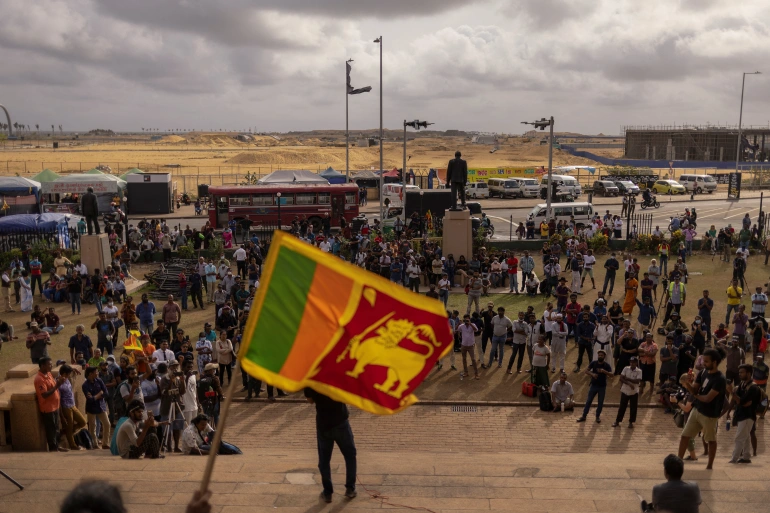
It has prompted an unprecedented political reckoning in Sri Lanka, focused largely on the Rajapaksa family dynasty, which has held power over Sri Lankan politics for two decades. Since March, mass protests have called for the resignation of the president. Mahinda Rajapaksa, his brother and a former prime minister and president, has already resigned because of the pressure, as have Basil Rajapaksa and several other family members who were in the cabinet or held political posts.

According to those who witnessed it from the inside, the story of Sri Lanka’s crisis is rooted in this family, who concentrated power to the point that the country came to resemble an autocratic family business, accountable to no one until it pushed the nation to bankruptcy. As Sri Lanka began to unravel, the family became riddled with infighting and the once cordial relationship between the two brothers Gotabaya and Mahinda descended into bitterness as they both clung to power. On 9 May, the family divisions spilled out on to the streets as the country’s worst violence in more than three decades took place.

Cabinet ministers, opposition politicians, Rajapaksa aides and confidantes – many of whom still have vested interests and strong ties to various Rajapaksa family members – pointed overwhelmingly to Basil, the younger of the brothers and so-called strategist of the family, as the one who oversaw the downfall. Operating first as a shadowy power broker behind the scenes before becoming finance minister, he was described by several ministers as having unparalleled influence over the president and cabinet, yet proved incompetent at running the economy and ignored multiple warnings that a financial meltdown was coming.

Mahinda and Gotabaya Rajapaksa wave to supporters at party convention in 2019

“Basil was the true power,” said Udaya Gammanpila, who was a cabinet minister between 2020 and 2022 before Basil had him removed in March for being publicly critical. “Gotabaya didn’t know how bad things were and Mahinda was getting old and not in the best health, he was just the figurehead. Everything was controlled by Basil.” Basil declined to be interviewed for this article and his close aides refused to speak on the record.

Sri Lanka’s economic problems began long before Gotabaya took power in late 2019. From 1977 onwards, successive governments built the country on a precarious foundation of debt. Imports overwhelmingly exceeded exports and a progressive but costly welfare state widened the deficit further, which was covered by more high-interest borrowing.

“This was a timebomb that had been accumulating for several decades now,” said Gammanpila. “Everything was built with borrowed, not earned, money.”

From 2005, when Mahinda was elected as president and the family began to dominate the political landscape, they, too, began rampantly borrowing, first to pay for Sri Lanka’s three-decade civil war against Tamil minority separatists, which was brought to a brutal end in 2009, then for a “super-growth” development spree of roads, airports, stadiums and power grids. GDP grew from $20bn (£16.6bn) to $80bn but more than $14bn was borrowed in the process, and all the Rajapaksas became mired in accusations of vast-scale corruption, from bribes to money laundering.

Mahinda lost the 2014 presidential election but the dynasty had no intention of relinquishing its hold on power. Basil, who was out on bail on corruption charges that were later dismissed, set about forming a new political party, the Sri Lanka Podujana Peramuna (SLPP). After an amendment to the constitution meant Mahinda was not allowed to run for a third term, it was decided – after considerable resistance by some in the family ranks – that Gotabaya would be their candidate in the November 2019 presidential elections. But, speaking in 2018, Basil made his intentions known. “The truth is that if Gotabaya comes forward it will be I who will run the country since he is new to politics,” he told local media.

Gotabaya, an austere, devout and straight-talking military man, was the opposite to his older brother, the charismatic and politically savvy Mahinda. He had attracted the backing of an influential group of intellectuals, business leaders and academics, who believed he would forge his own path from the previous Rajapaksa regime. However, Gotabaya’s experience in politics was limited; he had only held the unelected post of defence secretary in Mahinda’s administration, where he was celebrated for ending the civil war, despite accusations of war crimes.

As soon as Gotabaya took office, “the family took over; he was dancing only to their tune”, said Nalaka Godahewa, a former CEO turned SLPP MP who had backed Gotabaya. Basil loyalists were given the key cabinet portfolios and the family parachuted in PB Jayasundara, a bureaucrat who had a decades-long relationship with Mahinda and Basil, to become secretary and economic adviser to the president. Jayasundara had once been barred from holding public office, but that was later overturned.

“Gotabaya had no political experience and knew nothing about economics; he depended entirely on PB Jayasundara to run the economy,” said Charitha Herath, an SLPP MP who sat on several parliamentary finance committees. “The problem was, he was giving very bad advice.”

It was on his advice that Gotabaya implemented sweeping tax cuts in 2019, despite international warnings against it, causing government revenue to fall by more than a trillion rupees in two years. As Sri Lanka was hit by Covid, and money from tourism and foreign remittances dried up, Jayasundara pushed back against import bans and going to the IMF to restructure the country’s loans, even as debt repayments were mounting and warnings were given by the central bank monetary board from November 2020. He is also accused of feeding the president misleading information, including a cashflow statement – which Jayaweera said he saw himself during a meeting with Gotabaya in early 2021 – that presented a rosy picture of Sri Lanka’s outgoings.

The Rajapaksas’ grasp over the government tightened further after the SLPP swept the 2020 parliamentary elections. Mahinda became prime minister, while his son and heir apparent, Namal Rajapaksa, was brought into cabinet, as was the eldest Rajapaksa brother, Chamal.

“The Rajapaksas controlled the entire country,” said Asanga Abeyagoonasekera, a Sri Lankan political analyst and author. “The government became autocratic, ultranationalist and heavily militarised.”

They pushed through an amendment to the constitution that concentrated more power into the president’s hands and allowed for dual citizens to become MPs. Not long after, in July 2021, Basil – who is also a US citizen – was made finance minister, though several in the cabinet believed he had already been running the economy with Jayasundara behind closed doors.

According to several ministers, Basil swiftly became the de facto head of the cabinet. He would decide which cabinet papers were approved and had the last word on all big decisions, while Gotabaya and Mahinda – who was now in his mid-70s and had stepped back from decision-making – would nod along. “The president accepted whatever proposal Basil put before him,” said Vasudeva Nanayakkara, a leftwing MP who was a cabinet minister in Gotabaya’s ruling coalition until April this year.

Basil did not tolerate dissent in cabinet and under his watch, those in the cabinet and on financial oversight committees claim they were presented with misleading information about the country’s finances.

Demonstrators with an effigy of Gotabaya Rajapaksa in Colombo

“I submitted 11 cabinet papers warning about the impending crisis,” said Gammanpila. “But whenever we raised an economic issue, Basil felt we were interfering with his work and he got offended. He repeatedly said that everything was fine. But in my assessment, he doesn’t have even a basic understanding about economics.”

Meanwhile, dysfunction reigned at Sri Lanka’s central bank. A glaring rift had developed between Basil and the bank governor, Ajith Nivard Cabraal. They refused to speak for months and blamed each other for the mounting financial problems. Cabraal began excessively printing money to try to fill the gaps in the treasury, triggering mass inflation.

Government bureaucracy was also in a state of disarray after Gotabaya had appointed military generals, some implicated in war crimes, to run 15 civilian government ministries, which proved autocratic and inefficient. Defence spending, higher under Gotabaya than during the civil war, further drained the treasury while his presidential order suddenly banning all chemical fertilisers resulted in agricultural devastation.

By the beginning of 2022, it was clear that Sri Lanka’s economy, in particular its reserves of foreign currency, was facing an unprecedented catastrophe. The country owed $51bn in foreign loans, of which it was expected to pay back almost $7 billion that year, but it was running out of dollars and had been locked out of all international markets to borrow any more.

As Sri Lanka struggled to pay for food, petrol and medicine imports and inflation kept soaring, people began to protest in droves. Internally, the Rajapaksa family were shocked that the anger on the streets was viscerally directed towards them. As the demonstrations grew, the president was advised that even if he would not go, others in his family needed to.

In early April, to the fury of Basil, Gotabaya asked for the resignation of all Rajapaksas who held government positions, except Mahinda. However, this did little to ease public anger and Gotabaya quickly became convinced the only way to secure stability was for Mahinda also to also step down as prime minister.

Those on the inside say Mahinda agreed to resign on three or four occasions, but would then return to his inner circle – including his wife and two sons who were in politics – to be persuaded he did not need to go. “This kept on happening for about two weeks,” said Godahewa. Frustration and anger grew between the two brothers.

“The relationship between Gotabaya and Mahinda had always been very cordial, very loving and paternal,” said Nanayakkara. “But towards the end, as Gotabaya told Mahinda in so many words to step down, it was very, very bitter.”

It was on 9 May, during a rally at the prime minister’s Colombo residence – a few days after Mahinda had finally agreed to go – that the rupture between the two brothers came to a head. Some described the meeting as a farewell to Mahinda, others as a show of strength to demonstrate to Gotabaya that it was Mahinda who was still the true political magnet of the family.

Arranged by Basil, Mahinda’s son Namal and their close cabinet allies, hundreds of Mahinda’s loyal grassroots supporters were bussed into the prime minister’s residence. But as witnesses and video footage testify, the meeting quickly got out of hand. Riled by chants of “Whose power? Mahinda’s power” and the government’s chief whip, Johnston Fernando, calling out “let’s start a fight … he [the president] should hand power over to us”, some of the supporters charged out of the gates, led by several SLPP

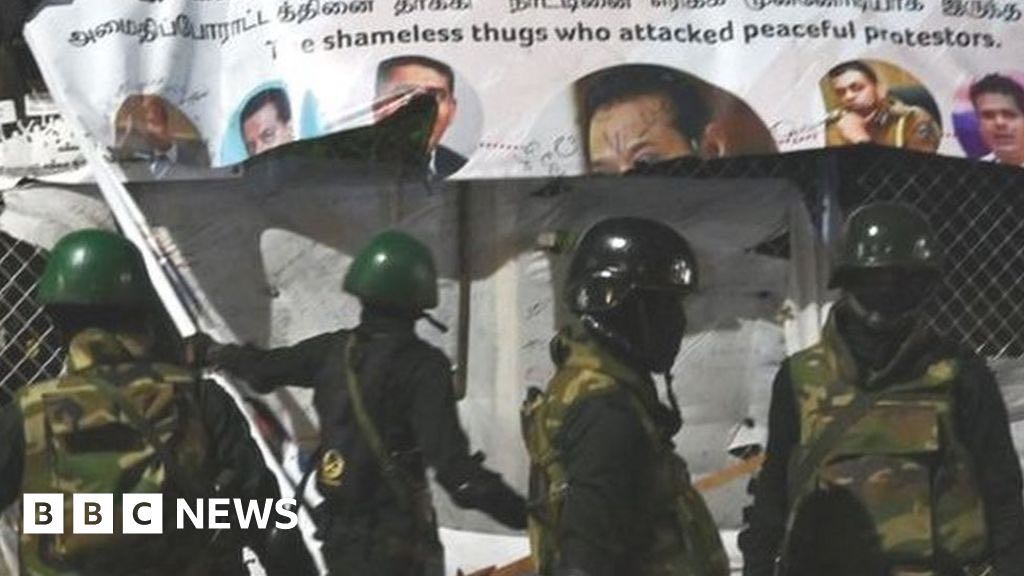
They marched towards Galle Face, the anti-government protest camp where thousands had been gathering to demonstrate for weeks, and began violently beating hundreds of protesters and setting alight their tents.

As reports of the attacks reached Gotabaya Rajapaksa, who was at home in Colombo, he exploded in anger. The night before, having already had concerns about the gathering, he had given instructions to the chief of police to be ready with officers, teargas and water cannon.

“The president was screaming over the phone to the senior DIG, asking why the hell haven’t you prevented these people entering Galle Face,” said Godahewa, who was holed up at Gotabaya Rajapaksa’s home for two days as it all took place. “He was shouting: ‘I’m the president, you do what I say, somehow stop these people.’”

Drivers queue for fuel in Colombo.

But, according to police and ministerial sources, the police chief held back from taking action against the mobs attacking Galle Face, having been told by his seniors that this was a family matter between Mahinda and Gotabaya and it was safer for police to not be seen to take sides.

By the time the police responded, the spark of violence had been lit, engulfing Sri Lanka in some of the worst attacks in decades. A mob tried to storm the prime minister’s residence, leaving him barricaded in his bedroom with his sons and allies until he was evacuated by special forces at 4am. The houses of more than 70 SLPP MPs and Rajapaksa allies were set alight and an MP was beaten to death by a mob. Many believe militant political elements who wanted to bring down the government seized the opportunity to launch a coordinated attack.

Gotabaya also appeared to have lost control of the military, who failed to intervene, many said out of fear by top brass that they would be held accountable if anyone was killed. “I saw how much the president pleaded with the army chief to take action, saying: ‘Send troops, do something,’” said Godahewa, whose own house was burned down. “The president was so frustrated because everybody’s house was burning and the army was not stopping them.”

In the aftermath, the Rajapaksas were a family divided: Gotabaya and Chamal, the eldest of the brothers, on one side, and Basil, Mahinda and his sons Namal and Yoshita on the other. Gotabaya blamed those around Mahinda for stirring up violence with “that stupid meeting” and publicly Chamal condemned Mahinda for not resigning earlier. Privately those close to Basil pushed the narrative that Gotabaya was not up to the job any longer.

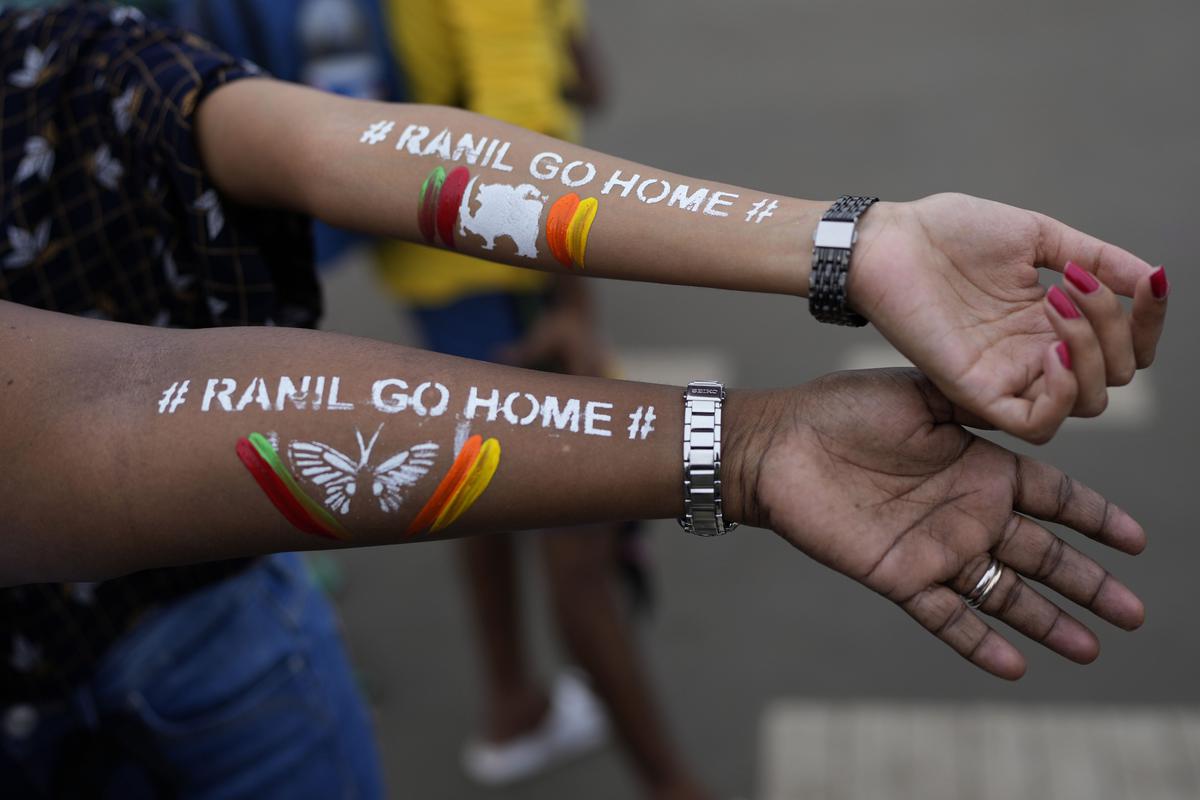
Those around Gotabaya – who was frequently described as “out of touch” with the mood of the people – believe he still has no intention of stepping down as president, even though he cuts an isolated figure; this week he was driven out of the parliament chamber by chants of “Gota Go Home” by MPs.

Some said he was staying put out of a militaristic obligation to duty and preserving the Rajapaksa name, while Godahewa said that “in his mind, he’s still naively determined to have a positive legacy”.

The future of the Rajapaksa dynasty now looks increasingly uncertain. A new amendment to the constitution has been submitted to cabinet for approval, which will reduce presidential powers and once again ban dual citizens holding office. Basil initially put up a fierce resistance to it but last month pre-emptively stepped down as an MP, though other SLPP MPs continue to try to halt it and it has been criticised for not going far enough.

Yet some remain unconvinced Sri Lanka has permanently thrown off the shackles of dynastic politics. “The Rajapaksas are known to play the long game, so I couldn’t say for sure if this will be the end of them – look at the Philippines, there’s a Marcos back in power after 30 years,” said Herath. “But right now, there’s no place left for them here.”

Posted in Uncategorized

Hirunika and group arrested for protesting near Presidential residence

Former Parliamentarian Hirunika Premachandra and several others who were engaged in a protest opposite the President’s House in Colombo, Fort have been arrested.

The former MP commenced a protest opposite the President’s House this morning while around 10 individuals were seen at the protest alongside her.

The group arrived outside the main entrance to the President’s official residence this morning where security was beefed up.

Finance Minister Ranil Wickremesinghe must RESIGN – Min. Dhammika Perera

Minister of Investment Promotion Dhammika Perera has extended his support to the People’s Struggle and called for the immediate resignation of Finance Minister (PM) Ranil Wickremesinghe.

‘Sri Lanka’s Finance Minister has planned for disaster,’ he told gathering in Colombo adding that the Finance Minister has no plan to resolve the current dollar crisis.

He said that all of Sri Lanka’s economic challenges are linked to the dollar crisis and the Finance Minister has planned to borrow money from friends.

“The Minister of Finance has no future in cash-flow planning for the country,” he said adding that the Minister delayed all matters relating to dollar earnings, borrowings, bridging finances, available credit lines, and essential goods credit lines.

Minister Dhammika Perera said for these reasons the Finance Minister should resign.

Posted in Uncategorized

Cardinal says Rajapaksa family must go home

The Archbishop of Colombo, Malcolm Cardinal Ranjith says the Rajapaksa family must go home.

Speaking to reporters today, the Archbishop said that the biggest obstacle to liberating the country from the sad situation it is facing is the fact that the Rajapaksa family continues to stay in power.

He said that the majority of the people in Sri Lanka do not have any trust in them in any way.

“This family considers their political power more important than the wellbeing of the people,” he said.

He said the credibility of the Rajapaksa family has fallen to such a level that all the attempts they have made for financial, political or constitutional changes have been rejected by the public.

Malcolm Cardinal Ranjith also called on President Gotabaya Rajapaksa and the Government to accept responsibility for the situation in the country and step down.

“They have no moral right to continue in office,” he added.

He said the people should be allowed to establish a multi-party interim Government to effect a system change.

Posted in Uncategorized

Jaishankar says India helping Sri Lanka cope with crisis

India’s External Affairs Minister S. Jaishankar says India is helping Sri Lanka cope with the economic crisis.

Jaishankar said that India is paying a lot of attention to South Asia and the neighbouring countries are looking up to it to take lead in the integration of the region.

Addressing an event in Delhi, the Minister was quoted as saying that India is now perceived as a lifting tide which can lift the entire neighbourhood.

The Minister was speaking at a discussion on the book Modi@20: Dreams Meet Delivery’ at the Delhi University, the Press Trust of India reported.

He also asserted that India has taken the “right course” on the Ukraine conflict, noting that it is a very complex matter where the most urgent issue is to prevent hostilities from escalating.

Likening India’s strategy in the Ukraine war to that of Lord Krishna in Mahabharata, the Minister said that Krishna does everything in his power to prevent the war and that is New Delhi’s position also.

Posted in Uncategorized

No safety measures for hanging bus, train passengers

No new safety measures have been implemented by the Ministry of Transport and Highways in the wake of the severe fuel crisis that has hampered transportation systems across the country, causing commuters to hang onto buses and trains, thus placing their safety at risk.

Speaking to The Morning on Monday (4), Ministry Secretary R.W.R. Pemasiri said that the Ministry has duly instructed bus drivers and station masters to avoid jeopardising the safety of passengers by overcrowding and permitting passengers to travel on the footboard.

“It is a risk to travel in this manner, but due to the prevailing crisis, they do not observe this. We ask passengers to avoid hanging onto trains and buses,” he added.

He further said that the only option at the given moment is to increase the number of buses and trains. “Thus far, we have increased the number of coaches in eight trains that operate during peak times. We have also introduced a new train service from Waga in Avissawella to Maradana.”

“We are also conducting a study at present to determine how we can increase the number of trains that travel on the same line. We are developing a new communication system between the train driver, station master, and control centre, which will enable us to increase the frequency of trains. Through Asian Development Bank (ADB) funding, we are developing a communication system for the entire railway system which will be implemented in August or September,” he said.

In terms of the increase in the number of buses, Pemasiri noted that measures are being taken to procure fuel for buses.

Meanwhile, speaking to The Morning on Monday, the Sri Lanka Railway Station Masters’ Union General Secretary Kasun Chamara said that owing to the reduced operation of buses, more people are opting for trains, which results in the overcrowding of trains with people travelling on the footboard, thereby risking their safety.

While stating that they cannot limit the number of passengers that travel by train, Chamara also added that they have not limited the number of tickets being issued either. “While we announce from time to time asking passengers to avoid crowding, we cannot limit the number of people travelling due to the present situation. We ask commuters to avoid risking their lives, and if they are not constrained for time, we ask that they opt for the next scheduled train and avoid crowding.”

He also added that following a notice issued early this year by an international organisation with regard to an impending global fuel crisis, the SLRSMU had written to the Minister of Transport and Highways on 15 March, with proposals that included the increase of scheduled trains during peak hours, increasing and doubling the number of coaches in trains that operate during peak times, and introducing new train timetables according to the demand. Despite this, he added, the Ministry had failed to take appropriate measures resulting in this situation.

Meanwhile, speaking to The Morning, Lanka Private Bus Owners’ Association (LPBOA) Chairman Gemunu Wijeratne said that safety measures cannot be taken because people are compelled to travel in whichever way possible. He added that the only solution is to increase the number of buses being operated, but that that is a challenge due to the ongoing fuel crisis.

UK reinstates warning against travel to Sri Lanka

The UK government has reinstated advice against all but essential travel to Sri Lanka as a severe economic crisis has sparked civil unrest. A shortage of basic necessities including medicines, cooking gas, fuel and food has sparked protests and violence in the Asian country.

Sri Lanka’s government said it only had enough petrol to last one day as it faces its worst crisis in 70 years.

The travel warning was previously in place from 13 May to 10 June.

The popular tourist destination ended a state of emergency prompted by angry demonstrations over the economic crisis on 21 May.

But on Sunday, the nation said its petrol stocks had almost run dry once again and its next shipment was not due for two weeks.

The Foreign Office warned holidaymakers could encounter “demonstrations, roadblocks and violent unrest at short notice”.

Visiting countries against Foreign Office advice would be likely to invalidate your travel insurance, the Association of British Insurers said.

It said anyone who changed their plans as a result of a travel warning should also check their insurance could be transferred to cover their new destination.

The Sri Lankan government has blamed the Covid pandemic for the crisis, which affected the country’s tourist trade – one of its biggest foreign currency earners.

Nearly 200,000 Britons travelled to Sri Lanka in 2019, but this figure dipped to 55,455 in 2020.

But Sri Lanka’s government exacerbated its foreign currency shortage in 2021, when it banned imports of chemical fertiliser.

Widespread crop failure forced the country to import food from abroad, compounding its foreign currency crisis.

BBC (Source)

Posted in Uncategorized

Debt restructuring plan will be given to the IMF in August-PM

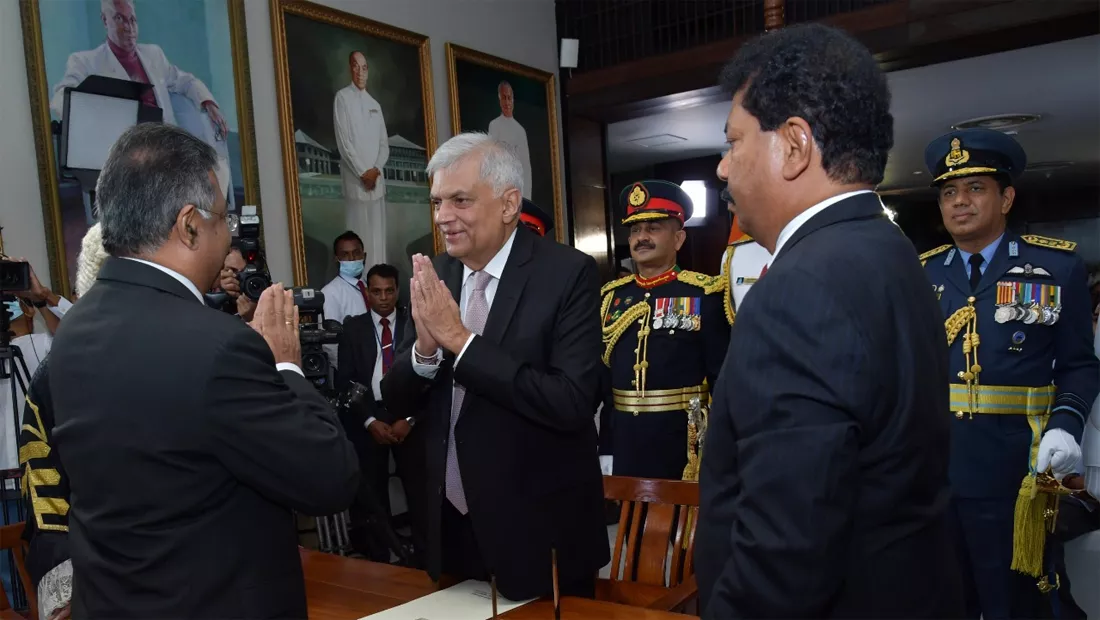
Prime Minister Ranil Wickremesinghe says the government’s next step with the International Monetary Fund is to submit the plan on debt restructuring and sustainability.

Delivering a special statement in Parliament today pertaining to the progress of talks with the IMF, the Premier said the plan is being prepared by financial and legal experts Lazard and Clifford Chance.

Premier Wickremesinghe said the government hopes to submit the report to the IMF by August.

Full statement

Today, in front of this Assembly and the citizens of this country, I am ready to outline the roadmap that we are following which will revive the economy that has collapsed.

We were able to successfully proceed with the round of negotiations with the International Monetary Fund.

Our country has held talks with the IMF on many occasions before. But this time the situation is different from all those previous occasions. In the past, we have held discussions as a developing country. In such a case, both parties have only to reach an agreement on the EFF or Extended Credit Facility. It is like moving along a straight line.

But now the situation is different. We are now participating in the negotiations as a bankrupt country. Therefore, we have to face a more difficult and complicated situation than previous negotiations. Once a staff-level agreement is reached, this will be submitted to the IMF Board of Directors for approval. But due to the state of bankruptcy our country is in, we have to submit a plan on our debt sustainability to them separately. Only when they are satisfied with that plan can we reach an agreement at the staff level. This is not a straight-forward process.

But we have been able to end the round of discussion effectively despite these difficulties. According to the IMF’s official announcement, “Positive and productive discussions were held on supportive economic policies and reforms. Significant progress was achieved.”

Now the next step is to submit to them the plan on debt restructuring and sustainability, which is being prepared by financial and legal experts Lazard and Clifford Chance. We hope to submit this report to the IMF by August.

Once this is done we will be able to reach an agreement. However, even after this agreement, it must be presented to the IMF Board of Directors for approval. After approval for this plan is provided, a comprehensive loan assistance program will be prepared for a period of 4 years. We are now on that path.

After obtaining the staff-level agreement, we will organize a donor-aid conference by bringing together the friendly countries that provide us with loan assistance, such as India, China and Japan. We hope to create a system where we can get loan assistance through a common agreement.

Among the problems we are facing today, the primary problem is the fuel crisis. At the same time, we are also facing the problem of food availability. In terms of fuel and food, our country was going to have to face this crisis at some point in time. Fuel was scarce. Food prices went up.

Due to the recent global crises, this situation has become more acute and we who were in the frying pan fell into the oven. Due to the Ukraine-Russia war, our problem has been made worse. What has happened now is the addition of an international crises on top of our crisis. This situation is not unique to us. This affects other countries as well. India and Indonesia are also affected by this global crisis. Therefore, India has had to limit the loan assistance that they have given to us.

This situation affects the whole world equally. As a result of this, the United Nations Secretary General has warned that the gap between developed and under-developed countries will increase. He also warns that the gap between the upper class and the lower class within a country may increase. No country in the world can isolate itself themselves from this world crisis. We all have to face this.

We have prepared this road map considering all the domestic and global challenges that are facing us. We can refuse to change our ways. But if things do not change, the whole country will collapse.

Therefore, we should strive to move forward on this path. It is not an easy journey. I have reminded you of that from time to time. This will be a difficult and bitter journey. But we can get relief at the end of this journey. Progress can be made.

Our economy is currently shrinking. We are trying to reverse it. According to central bank statistics, our current economic growth rate is between negative four and negative five. According to IMF statistics, it is between negative six and negative seven. This is a serious situation. If we make a determined journey along this road map, we can achieve an economic growth rate of negative one by the end of 2023.

By 2025, our aim is to create a surplus in the primary budget. Our effort is to raise the economic growth rate to a stable level. Our expectation is to establish a stable economic base by 2026.

I would like to give you an idea of ​​the debt we have to pay off so far. $3.4 billion between June and December this year. $5.8 billion in 2023. $4.9 billion in 2024. $6.2 billion in 2025. $4.0 billion in 2026. $4.3 billion in 2027.

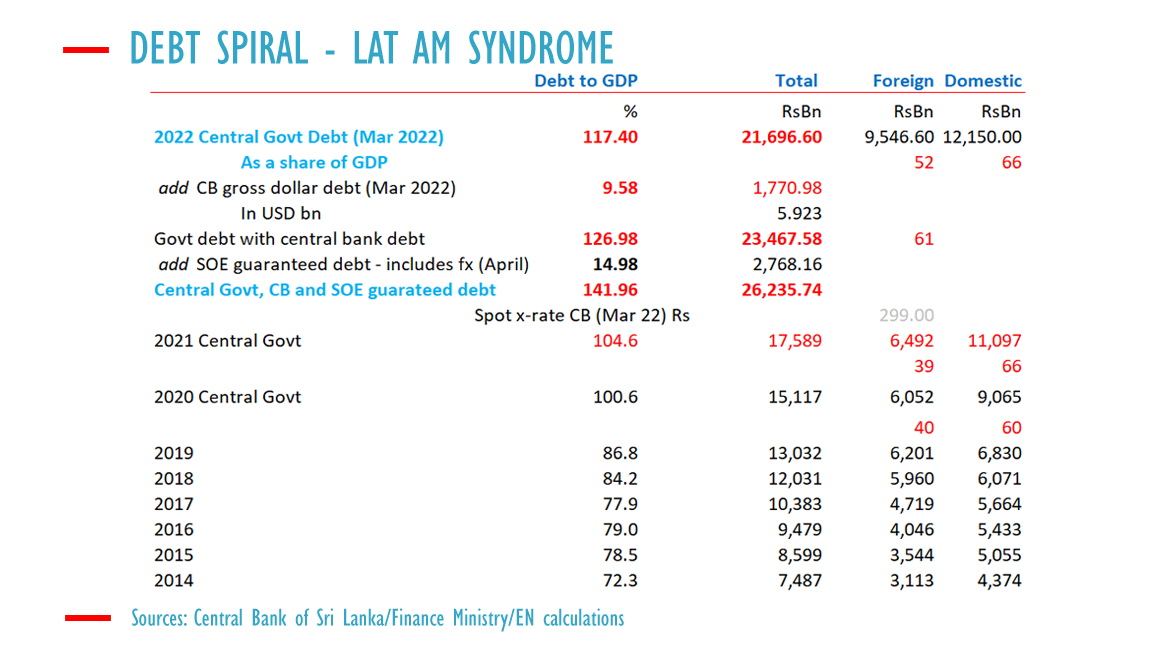
The total debt burden of the government at the end of 2021 was Rs 17.5 trillion and by March 2022 it has increased to Rs 21.6 trillion.

This is the real situation. In addition, we are facing the effects of many problems that have worsened in the past two or three years. These are not problems that can be solved in two days. We are suffering from the effects of certain traditional ideas that have been followed in our country for many years. Therefore, as I mentioned earlier, we will have to face difficulties in 2023 as well. This is the truth. This is the reality. Some may try to cover up this reality by showing the people a false image. But this reality will be confirmed in time.

Our plan is to control inflation. By the end of this year, inflation will rise to 60%. This is mainly due to the increase in the prices of goods in the world and the fall in the value of the rupee.

Due to the current inflation, the depreciation of the rupee has reduced the value of the money in the Employees’ Provident Fund and the Employees’ Trust Fund by 50% and the real value of pensions has also decreased by 50%. Think about how this situation affects our senior citizens. Poverty is spreading among all of them. The value of the money they receive has decreased by 50%. Their purchasing power has decreased by about 50%. Presenting positive ideas is easy. But it is difficult to find answers to these problems.

What is the solution to this? Stabilizing the rupee as soon as possible, strengthening the rupee without letting it fall. For that purpose, we have implemented a plan to limit the printing of money in the future.

In 2023, we will have to print money with restrictions on several occasions. But by the end of 2024, it is our intention to stop printing money completely.

We aim to reduce the inflation rate to between 4 and 6 percent by 2025.

Another top priority for us is to protect the banking and financial system. The pressure on these systems during an economic crisis does not need to be explained anew to this House. But due to this pressure, we will not allow the banking system to be pressured by poor policies. The government has given priority to strengthening the banking and financial system.

Meanwhile, we pay special attention to state banks. They have been beaten from both sides. On the one hand, the economic crisis, on the other hand, the huge amount of loans they have given to state enterprises.

As of March 31, 2021, SriLankan Airlines owes Rs. 541 billion as of May 31, 2022, the Electricity Board owes Rs. 418 billion. Petroleum Corporation owes Rs. 1.46 trillion.

When public enterprises continue to incur losses, the entire citizenry suffers. People who have never traveled on a plane in their lifetime are suffering for the loss of SriLankan Airlines. The people who have paid money for fuel all their lives are suffering for the loss of the petroleum corporation. After hours, days and days of waiting in queues to get fuel, they pay compensation to the oil company to cover the loss of the company. The people who get electricity by paying money all their life, sit in the dark for several hours a day and suffer for the loss of the electricity board.

Excuse have been used for a long time to cover up the sufferings, persecutions and troubles of the people and the compensation paid for the losses of the institutions. People’s resources, people’s property as well as the failure of the respective institutions are covered up by this mask. If these are real people’s properties and people’s resources, they should provide relief, convenience, ease and profit to the people. But the people have inherited sufferings, troubles and losses from these institutions.

Therefore, we have to think anew about such institutions which have become a burden to the country and the people. Is it fair to burden the people like this for thirty or forty years? Should we continue to burden the people and run these institutions? Why can’t the services provided by these institutions be provided without burdening the people? Are there no other options for providing these services? Considering all these facts, we are taking immediate steps to restructure these institutions. It will be ensured that they are maintained in a manner that does not burden the country.

There are a number of other issues that need to be addressed in our journey forward to overcome the current challenges.

One is to prepare the background of getting food without shortages and keeping the increase in food prices under control.

On the other hand, taking steps to increase food availability. We have now prepared the necessary background for the successful harvest of the next season. All measures have already been taken to provide chemical fertilizers without shortage. Provisions for seeds and planting materials are allocated through the interim budget.

Also, we have started a program to increase food availability in collaboration with the World Food Program and the Food and Agriculture Organization. Currently, their delegation is studying the food crisis in Sri Lanka. At my invitation, the head of the Food and Agriculture Organization will visit Sri Lanka next week.

No matter how much we are in the middle of a huge economic crisis, we cannot forget the problems faced by the poorest sections of the society regarding food. The upcoming interim budget will allocate money to provide short-term relief to the highest sections of the society. This relief will be given to the people under the Social Welfare Benefits Act.

We are also launching activities to prevent malnutrition caused by lack of food.

In parallel to these activities, necessary incentives are being provided for cultivation. Facilities are being provided. An island-wide cultivation program is being launched with the intervention of the Prime Minister’s Office along with the Ministry of Agriculture and other relevant ministries. The aim of this program is to increase food availability at a decentralized level. In this regard, the responsible institutions meet weekly and take necessary actions. We hope to increase overall food production in the next six to seven months.

We are taking steps to take a number of policy decisions to boost the export economy. The upcoming Interim Budget will include detailed information about it.

If we continue on this planned path, we can have hope for a brighter future. All of us should shoulder that task unitedly. We must all come together to lift the net we are tangled in and fly.

If we do so, we will be able to fulfill the expectation of reaching the situation we were in 2019 by 2025. This journey cannot be stopped from there. We have to continue this journey until we create a new economy.

We hope to prepare the necessary background for this progress through the interim budget.

When I assumed the responsibility of the Prime Minister, I made a written request from the opposition parties to come forward to work together for the country in this difficult and crisis situation. You all know about the responses received at that time.

The importance of this unity, the importance of getting out of this difficult time together, has been pointed out by a number of our Parliamentarians from time to time.

Remembering that, I once again request all party representatives in this House to come together to overcome this challenge.

Our ultimate goal is to create a highly competitive social market economy. Here we also have examples to take from countries like China and Vietnam. They are countries that successfully maintain competitive socialist market economies.

As far as I know there are no shortcuts to achieve our goals. There is no magic or panacea. Dr. Harini Amarasuriya MP also emphasized that the other day. She said: “We get an empty pot. This is not easy. We don’t think that everything will be solved once we come to power. Everything will not be solved just by coming to power. There are several things that need to be done. It will take time to get this right. It will be a difficult time for all of us. You have to make commitments. You have to work very hard.”

As MP Harini Amarasuriya said, this crisis is not one that can be resolved in a few days or a few months. A more serious one.

But if there is a more effective plan than the one we have presented, if there is a faster plan, then present it. We can discuss it. Run it if the most effective path to recovery.

MP Anura Kumara Dissanayake has stated that if he is handed over the country, it will be restored in six months. Indeed, it would be a very good thing if it could be done. Taking a country whose economic growth has fallen to negative six or seven to a positive economic growth rate in six months is an action that has never happened in any country in the world. But we cannot rule out Mr. Anura Kumara Dissanayake’s opinion that it has not happened so far. It would be great if he has a plan to restore the country within six months. With such a plan, we will be able to restore the economy in a short period of time. Not only that, it also sets a good precedent for the world.

That is why I am asking MP Anura Kumara Dissanayake to submit this plan to the President. If you don’t want to go to the President, present it to this Parliament. Let us discuss it in this Parliament. If that plan is better and more effective than the plan we are implementing now, we will implement it. Such a plan would be brilliant enough to win the Nobel Prize in Economics.

So if there is such a plan, I am ready to resign and let him take up this position. I am ready to give up my position and support that program. Because the positions I hold are not new to me. At a time when the country has become anarchic and no one has taken responsibility, I have not accepted this position out of desire for the chair.

At that time the country was in an anarchic and dangerous situation. If that situation had developed further, the country would have turned into a sea of blood. There would have been an environment where no country in the world would look at us with friendship.

I accepted this position with the aim of saving the country from that situation. I took up the responsibility for the country, using my experience and connections to help the country recover from its fallen state. That’s why I took over this anarchic country without any conditions and now we were able to prevent the country from falling into the abyss. Now we have to slowly raise the country again.

The main thing for me was not the power, but the country. Therefore, I have no desire or need for power. I only have a need to see this country recover. I would like to let this House know that we are moving forward in a planned and steady way towards meeting that need.

The journey we are on is a good opportunity to change the system that we followed in our country previously. Past experience has shown us that no victory or progress can be achieved by changing persons or characters. The importance of implementing a common national plan has been confirmed through past experiences.

So if there are better ways than the method we are following now, please point it out, put forward. Let us all join in the effort to lift the country up. Let’s join together as one people to rise again from this place. Let’s make this journey more an acceptable one through collective ideas and suggestions.

Opposition chants “go home gota” in Parliament while Prez attends sessions

A protest by the Samagi Jana Balawegaya (SJB) forced President Gotabaya Rajapaksa to walk out of Parliament today.

The President was in Parliament briefly today when Prime Minister Ranil Wickremesinghe made a special statement on the economic crisis.

However, the SJB held placards and protested by shouting slogans telling Goatabaya Rajapaksa to go home.

The President later left the chambers surrounded by some Government MPs

Parliament has been adjourned for 10 minutes after the opposition staged a protest during the Prime Minister’s speech.

Accordingly, the Parliament was adjourned at around 10.40 am today.

PM Ranil Wickremesinghe today delivered a special statement in Parliament regarding the progress of negotiations with the International Monetary Fund (IMF).

He said that Sri Lanka’s discussions with the IMF had ended successfully and that the next step is to submit a report on debt restructuring.

Meanwhile President Gotabaya Rajapaksa had also arrived at the Parliament, a short while ago, to attend the parliament sessions.

Wickremesinghe was presenting the road map with proposed solutions to the existing economic problem to the Parliament, and the President had entered the chamber and listened to the speech.

Opposition MPs representing the Samagi Jana Balawegaya (SJB) had then proceeded to stage a protest in the chamber while holding placards that read ‘Go Home Gota’ resulting in a tense situation.

Opposition MPs protest at Parliament

Members of the Opposition at the Parliament took steps today (05) to express their disappointment with the President, while the President was on visit to the Parliament.

Prime Minister Ranil Wickremesinghe also took steps to brief the Parliament on the current status of the International Monetary Fund’s assistance program.

Following the Opposition MPs protest, the Speaker adjourned Parliamentary sittings for a period of 10 minutes.