Sri Lanka Supreme Court orders arrest of pardoned murder convict Duminda Silva

Sri Lanka’s Supreme Court has ordered the Criminal Investigation Department (CID) to arrest former parliamentarian and murder convict Duminda Silva, effectively nullifying a presidential pardon granted to him a year ago, the privately-owned NewsFirst reported on Tuesday (31).

A travel ban has also been imposed on the former MP while the Attorney General has been directed to assist the CID in his arrest, NewsFirst reported.

Silva, who was serving a death sentence over murder charges, was released from prison on a “special presidential pardon” in June 2021 along with 93 prisoners including 16 ex-Tamil Tiger combatants.

He and two others were sentenced to death over the murder of former MP Bharatha Lakshman Premachandra in 2011.

The presidential pardon of Silva and his subsequent release from prison were widely condemned.

The Bar Association of Sri Lanka (BASL) said after his release that, if certain considerations regarding the pardon were not satisfied, the pardon would result in “erosion to the rule of law and result in a loss of public confidence in respect of the administration of justice”.

The United Nations High Commissioner for Human Rights (OHCHR) said was “typical of arbitrary pardoning that serves to weaken the rule of law”.

“President Gotabaya Rajapaksa’s recent pardons highlight the need for genuine rule of law in Sri Lanka, not favours to friends or blatantly cynical measures to keep trade preferences,” the Human Rights Watch said in a statement.

21A: SLPP divided, Sarath W takes clear stand against it

SLPP lawmaker Rear Admiral (retd.) Sarath Weerasekera has declared that he will not vote for the proposed 21 st Amendment to the Constitution under any circumstances.

The former Public Security Minister and Colombo District lawmaker said he couldn’t accept the 21st Amendment as it was meant to restore the provisions in the treacherous 19th Amendment to the Constitution enacted in 2015.

MP Weerasekera said so at a meeting chaired by President Gotabaya Rajapaksa on Monday (30) evening at the President’s House to reach a consensus on the proposed Amendment.

Among those who had been present at the discussion were Prime Minister Ranil Wickremesinghe, former Prime Minister Mahinda Rajapaksa, SLPP founder Basil Rajapaksa, MP, members of the cabinet and members of Parliament.

At the onset of the meeting, Justice Minister Dr. Wijeyadasa Rajapakse, PC, has briefed the gathering of the proposed Amendment meant to do away with the 20th Amendment enacted in Oct 2020.

Lawmaker Weerasekera asked how he could accept 21 Amendment after having voted against the 19th Amendment that sought to empower the Premier at the expense of the President.

The former Navy Chief of Staff has questioned the move to amend the constitution, hastily in response to essentially an economic crisis. The former minister said that he kept quiet in spite of the appointment of a new Prime Minister along with cabinet of ministers. However, a blind eye couldn’t be turned to the controversial moves to bring back provisions of the 19th Amendment, MP Weerasekera said. The nationalist warned that enactment of 21 meant the betrayal of 6.9 mn people who exercised their franchise in support of wartime Defence Secretary Gotabaya Rajapaksa at the Nov 2019 presidential election and the SLPP at the subsequent general election in August 2020.

MP Weerasekera asked how President Gotabaya Rajapaksa could hand over executives powers bestowed on him at a national election to a person who represented Parliament with just one vote there. The ex-minister urged the grouping to take into consideration the President had been elected whereas the PM was selected.

Lawmaker Weerasekera emphasized that President Gotabaya Rajapaksa couldn’t follow a course of action contrary to that of his overwhelming mandate.

President Gotabaya Rajapaksa last month invited UNP leader Ranil Wickremesinghe to accept premiership in the wake of violent protests demanding the resignation of both the President and Premier Mahinda Rajapaksa, who quit on May 09.

The main Opposition Samagi Jana Balavegaya, the JVP and the BASL are still pushing for the abolition of the executive presidency.

MP Weerasekera, who transformed the Civil Defence Force from a ragtag outfit into a fighting arm during the war also questioned the status of the draft Constitution prepared by a 9-member expert team led by President’s Counsel Romesh de Silva. The Navy veteran said that Gotabaya Rajapaksa received a mandate to enact a new Constitution. Therefore, a constitutional amendment couldn’t be brought into appease those bent on working against the wishes of the people.

However, several lawmakers, including Harin Fernando, Charitha Herath and Nimal Lanza backed the 21 Amendment. They strongly endorsed the proposed amendment that has received the backing of a wider section of the public. However, the BASL insists the amendment in its present form didn’t meet the aspirations of those demanding the restoration of democratic governance.

Trinco Port to be devloped as industrial harbour

Expressions of interest have been called from private investors to develop the Trincomalee Port as an industrial port, Sri Lanka Ports Authority (SLPA) Chairman Prasantha Jayamanne said today.

“There are 2400 hectares of land in Trincomalee Port and we have called for expressions of interest from the potential investors to develop it as an industrial port. We are mainly focusing on local investors,” Jayamanne told a press conference.

At the same time Mr. Jayamanne and heads of private terminals and a major stakeholder Ceylon Association of Shipping Agents claimed that Colombo Port is functioning smoothly despite the FOREX issue.

“We have decided to allow local customers who face issues to make payments in rupees instead of dollars,” he said. The SLPA earlier notified all customers to make payments in dollars. He said this concession will be given to local customers only.

Ceylon Association of Shipping Agents (CASA) Chairperson Shehara de Silva said the member companies of the association had not received any complaint about the port to date.

“Colombo Port is not about container distribution but other services are also carried out by it,” she said.

Chief Operating Officer South Asia Gate Terminal (SAGT) Romesh David said the Port and the SAGT are functioning smoothly despite minor setbacks.

SLPA claimed that Colombo Port had achieved a 4.3% growth in terms of TEU (containers and a 5% growth in transshipment in 2021 and the SLPA Chairman assured that the Port will achieve a growth this year as well.

Posted in Uncategorized

Sri Lanka Urges Airlines to Fly Full Tank or Fill Elsewhere

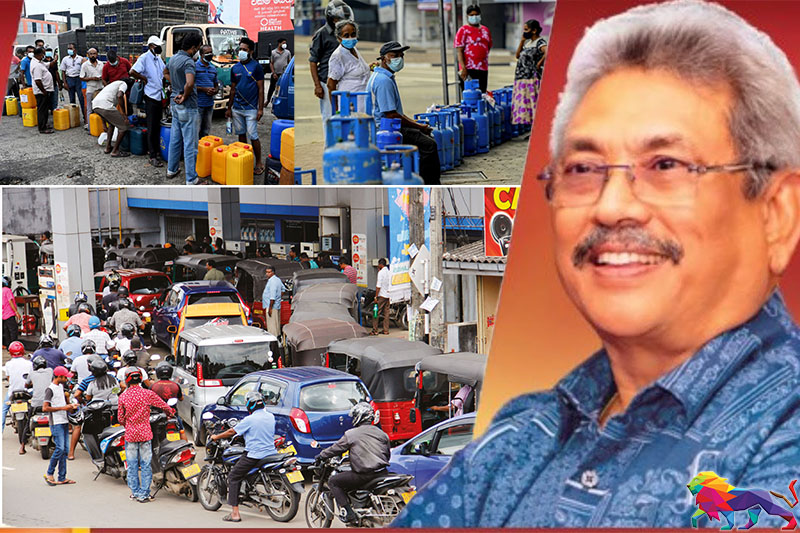
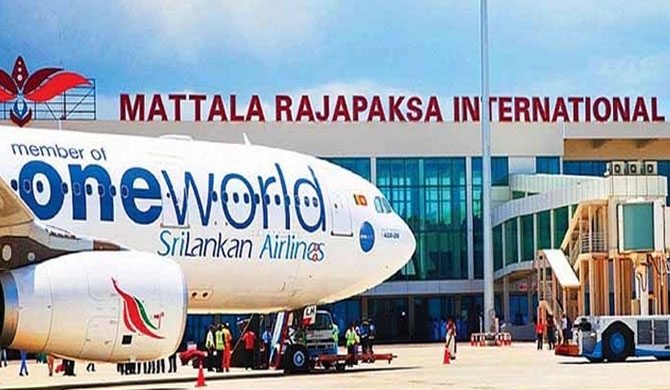
Sri Lanka is recommending airlines carry enough jet fuel to last return trips or fill up elsewhere, as the island grapples with a shortage of everything from oil to food due to a foreign-exchange crisis.

“We’ve asked airlines to carry the required fuel while operating to Sri Lanka, because there is a shortage of aviation fuel, and we have to manage the situation,” Rayhan Wanniappa, a director of Sri Lanka’s Civil Aviation Authority, said in a phone interview Monday. “Airlines are bringing certain additional supplies, while we are also providing from our stocks.”

Airlines that fly to Sri Lanka, including Dubai’s Emirates Airline are tankering — carrying more fuel than required — while the island’s flag carrier is using the Southern Indian city of Chennai and Dubai to refuel for long-haul flights, people familiar with the matter said, declining to be identified as plans are confidential. There’s increased refueling at southern Indian airports by international flights to and from Colombo to offset the shortage, according to an official at Indian Oil Corp.

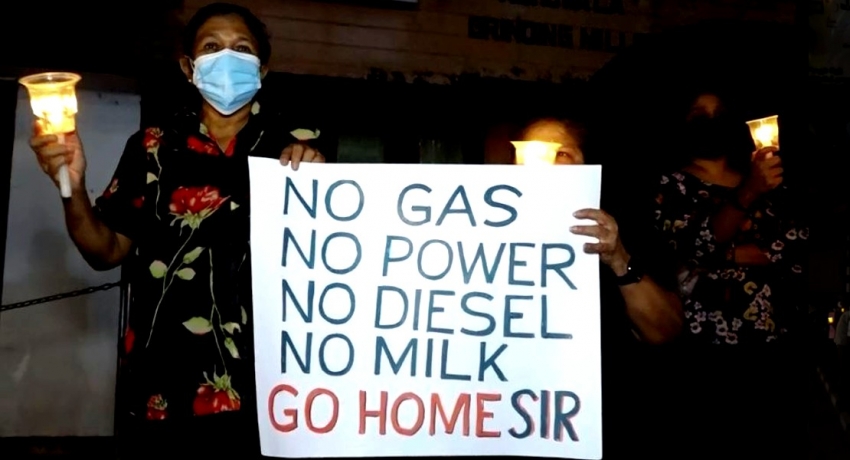
Sri Lanka has been plagued by a dearth of necessary items, power cuts and rampant inflation, leading to public protests calling for the ouster of President Gotabaya Rajapaksa. The country defaulted on its foreign debt for the first time this month, and has started bailout talks with the International Monetary Fund.

SriLankan has taken measures for minimum interruption to flight schedules, a spokesman for the airline said. The steps include fuel tankering and refueling aircraft through technical stops at foreign airports, he said.

Singapore Airlines Ltd. is uplifting additional fuel on flights departing Singapore to Sri Lanka due to the shortage, a representative said in an email. Emirates didn’t immediately respond to a request for comment.

“There’s been no effect in airport and airline operations,” said G.A. Chandrasiri, chairman of the Airport and Aviation Services, that operates the main airport in Colombo. “This is just a preventive measure.”

The Indian ocean nation has been trying to come up with cash to pay for oil that’s been sitting on tankers off its coast as its fuel crunch persists. The country’s sole refinery is attempting to restart after three months of shutdown, with crude supplies from Russia which it hopes to refine into usable fuel.

Posted in Uncategorized

‘People are going to die’: crisis-hit Sri Lanka runs out of medicine

Chandrapala Weerasuriya can’t remember when he last took his medication. The 67-year-old retired businessman, living in Sri Lanka’s Gampaha district, has always relied on a drug to keep at bay his hereditary nervous condition, which makes him dizzy and unable to walk.

But since his prescription recently ran out, he cannot get another supply. The drug is simply not available in Sri Lanka any more.

“I am afraid that I might become paralysed because there is no one to care for us,” he said fretfully. “My wife and I do everything alone. We split the household chores and manage it between ourselves. My wife has a knee problem and she can barely walk.”

Sri Lanka’s financial crisis, its worst since independence, is swiftly becoming an alarming health crisis. The government’s coffers have fallen to their lowest levels on record and last week the country was forced to default on its international loans for the first time in its history. Without crucial foreign currency, Sri Lanka has been unable to import the essentials: food, fuel – and medicine.

Sri Lanka imports more than 80% of its medical supplies. Now almost 200 medical items are in shortage, including 76 essential, life-saving drugs, from blood-thinners for heart attack and stroke patients to antibiotics, rabies vaccines and cancer chemotherapy drugs. Essential surgical equipment and anaesthesia is running out so fast that the decision was made this week for only emergency surgeries, mostly heart and cancer patients, to go ahead. All routine surgeries – anything from hernias to swollen appendixes – have been put on hold. Some government hospitals have been instructed to only admit emergency patients.

“Ultimately, people are definitely going to die,” said a doctor in Colombo who had been told not to speak to the media.

She described how the hospital was so low on certain drugs they had to instruct families of patients to go out to pharmacies and try to buy it themselves. “There have been incidents where the family members have gone around looking for drugs and by the time they’ve come back with the drug, it’s been too late and the patient has died,” she said.

The doctor said the shortages were getting worse. “I’m worried about pregnant mothers because soon I don’t know whether we will have enough drugs to perform cesarian sections,” she said.

Cancer drugs, which are notoriously expensive to import, have been particularly badly hit by shortages in recent weeks, and the responsibility to source them has fallen on the heads of oncologists themselves. They have been putting out global appeals for donations, and writing letters to private supporters, organisations and governments, to ensure cancer treatments are not delayed.

Dr Buddhika Somawardana, an oncologist at Colombo’s largest cancer hospital, described the “great stress” he and other doctors were under as essential cancer drugs began to run out over a month ago or stopped being available at all.

“One of the drugs we give patients undergoing chemotherapy, which boosts their blood count so they aren’t liable to serious infections, is not available any more,” he said. “So far, we managed to get donation of 80,000 vials. But that will not last very long.”

He added: “Somehow, thanks to donations, we have mostly been managing without any huge issues. But we had to postpone some chemotherapy, which may have detrimental effects on the cancer outcome.”

Somawardana said the crisis was placing a huge “financial and psychological burden” on cancer patients, who were having to source and pay vast sums for their own medicines to continue their treatment, previously free and easily accessibly in hospitals under Sri Lanka’s lauded universal healthcare system.

Cancer doctors too were feeling the pressure of having to be the ones both to appeal for global drug donations, as well as treat their patients. “I didn’t know how long we will be able to go on like this,” he said.

Ruvaiz Haniffa, a doctor in Colombo, expressed his frustration that doctors had “seen this coming as early as January” but little had been done by authorities to set up backup plans to ensure no medicines ran short, even as the country’s foreign reserves began to deplete to worryingly low levels.

“We are facing great ethical dilemmas as doctors,” said Haniffa. “We used to have a very efficient health system. But at the moment, it has become ineffective. More people will die, which is not acceptable.”

He said his patients were being forced to find their own drugs and pay prices over 40% higher, if they could find them at all. Haniffa said many of his patients were having to choose between medicine or paying for the school tuition for their children or fuel to take them to work.

Haniffa said he feared for the long-term impacts on the life expectancy of Sri Lankans. “With the kidney disease and the diabetes and the hypertension we are not treating now, it causes long term damage,” he said. “So in five years, we will see strokes go up, heart attacks go up, neurological problems go up, cancers go up.”

With the newly appointed prime minister, Ranil Wickremesinghe, warning recently that the situation would “only get worse” and that Sri Lankans are facing tough months ahead, those without medicines said they faced an uncertain future. On Sunday, India delivered 25 tonnes of medical supplies to the country while France donated some essential equipment, but most working in the healthcare system say Sri Lanka can not rely on donations for ever.

Among those riddled with anxiety was Sushantha Weerasuriya, 42, who has struggled to get hold of his epilepsy medicine, travelling long distances to track a few pills down. Even when he manages to find the medicines, they have become almost impossible for him to afford, totalling 10,000 rupees (£22) in May.

But as soon as he stops taking the medication, he begins to have regular seizures, which cause him to lose consciousness and being unable to work.

“If I am without it for five days, then the condition will return and continue non-stop, which I really fear,” he said. “I am the primary breadwinner of my family and I have to support my wife and four-year-old daughter. But when the condition comes, I cannot work. If the medication completely stops then my family’s livelihood is in danger,” he said.

Posted in Uncategorized

21A will not abolish Executive Presidency -FSP

The Frontline Socialist Party charges that the draft 21st Amendment to the Constitution will not abolish the Executive Presidency.

Education Secretary Pubudu Jagoda speaking during a media briefing yesterday said requests for ‘Gota to go home’ will not be fulfilled as a result.

He said the 21st Amendment is a mere effort to secure power for those already in power, and is a deal between each other that will undermine the power of the people.

Jagoda said the people are calling for the individual they elected to power, to be sent home without having to wait for five years.

He charged that people have no faith in Parliament, and the political and party system claiming the people believe that there is no true public representation in these bodies.

Posted in Uncategorized

Five-point assistance from China to overcome crisis

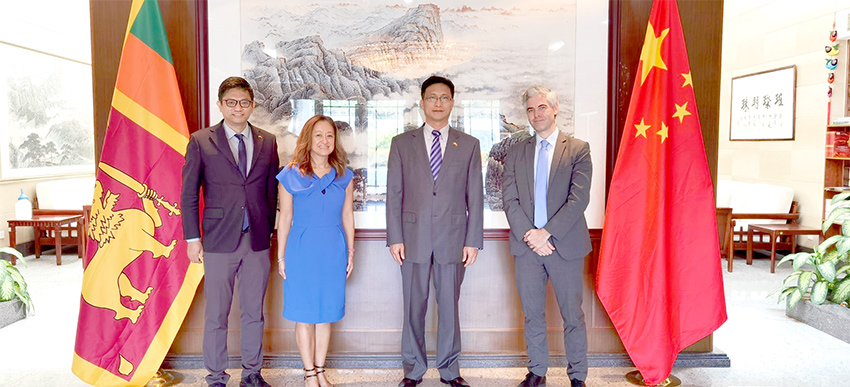
Chinese Ambassador Qi Zhenhong highlighted a five–point assistance from China to Sri Lanka in view of the economic crisis, fast-track ongoing projects and more FDI (Foreign Direct Investment) and Trade, bilateral debt settlement, support to Sri Lanka in its talks with the International Monetary Fund (IMF) and regarding International Sovereign Bonds and tourism after Covid, a statement from the Embassy said.

He, along with his spouse Jin Qian started their three-days visit to the Eastern Province of Sri Lanka on May 24 from Trincomalee. They are grateful to receive a warm welcome by Governor Anuradha Yahampath and children from different backgrounds.

Ambassador Qi and Ms. Yahampath co-chaired a business forum with the Chinese Business Chamber representatives. China encourages more investment to Sri Lanka including EP to overcome current difficulties.

After the meeting, Ambassador Qi Zhenhong took a boat visit to the Trincomalee Harbour and China Bay.

The Sri Lankan Ports Authority and the Eastern Province invite Chinese investment to the port-related industries and tourism.

To support low-income families to overcome difficulties, Ambassador Qi handed over food packs (Rs. 5200 each) donated by the people of Yunnan Province of China to Trincomalee, Batticaloa and Ampara Districts.

In total, 10,400 underprivileged families in the Eastern Province of Sri Lanka have received the support from the people of Yunnan.

Ambassador Qi Zhenhong and Madam Jin Qian also donated a batch of sports equipment supporting local youth in Kalmunai.

On May 26, Ambassador Qi visited the Kayakerni archaeological site where the China sherd of the China Song Dynasty (960–1279), the glass from ancient Europe and the stone bridge uncovered show that Sri Lanka’s eastern coast has always been an important global trade hub on the Maritime Silk Road.

During his visit, Ambassador Qi visited the Kuchchaveli Pichchamal Viharaya.

Posted in Uncategorized

Cabinet approves supplementary budget of Rs. 695 Bn

Sri Lanka’s Cabinet of Minister approved the proposal to to submit a supplementary estimate to the Parliament for the provision of Rs. 695 billion under the “Budget Assistance Services and Emergency Responsibilities” project of the National Budget Department.

The proposal was made by the Prime Minister in his capacity as Minister of Finance, Economic Stabilization, and National Policies, said the Department of Government Information.

“The government has introduced a assistance package for Samurdhi Beneficiaries, Estate Communities, Pensioners and Government Servants at the beginning of 2022 to reduce the hardships faced by the public due to the adverse economic conditions,” said the Department in a statement.

The Department of Government Information noted that it was decided to submit a supplementary estimate to Parliament to cover the cost and secure the necessary funds to maintain the essential public services without hindrance.

Posted in Uncategorized

Sri Lankan YouTuber and anti-government protestor Ratta arrested and granted bail

Social activist and Sri Lankan YouTuber Rathidu Suramya Senaratne, popularly known as “Ratta”, has been granted bail by the Fort Magistrate’s Court.

He was released on bail after being produced before the court, a short while ago.

Popular Sri Lankan YouTuber Rathindu Suramya Senarathna, also known as Ratta, was arrested Monday (30) for allegedly obstructing the duties of police officers during a protest in front of the Fort Magistrate Court on Thursday (25), police said.

The protest had taken place demanding the arrest of suspects allegedly connected to the Black Monday violence by government supporters on peaceful protestors on May 09.

Ratta, who has 1.4 million subscribers on YouTube, was a prominent figure in Sri Lanka’s anti-government protests demanding the resignation of President Gotabaya Rajapaksa and his government over the country’s worsening economic crisis. While his usual content focused on comedy and satire, he has been using his platforms to share information regarding the protests since they began.

According to fellow protestor and civil activist Shehan Malaka, Ratta was summoned to courts a few days ago. “He went to give his statement today, and after he did, the police arrested him.”

‘Govt. has to find another $ five billion immediately for everyday expenses’ By Hiran H.Senewiratne

The government has to find/borrow another US $ five billion immediately for day-to -day expenditure, to provide essential services to citizens this year, even with the complete restructuring of debt by other countries. This amount has to be generated through credit lines, currency swaps, a couple of investments into the country and selling of assets, which also give temporary relief to the country, Prof Sirimal Abeyratne said.

“We are now in the early stage of bankruptcy and I am not surprised at the position in which we are today because of our excessive spending. This resulted in a Balance of Payments problem for the country, Prof. Abeyratne, who is a senior economist attached to the University of Colombo and a former chairman of the Monetary Policy Consultative Committee of the Central Bank of Sri Lanka explained.

Abeyratne made these observations while addressing the Colombo South Rotary Club on the topic, “Sri Lanka’s Current Debt Crisis and Beyond”, last week at the Dutch Burgher Union Hall in Colombo.

Abeyratne added: ‘In 2007 Sri Lanka raised US $ 500 million through International Sovereign Bond issues. During the period 2009 to 2019, Sri Lanka issued US $ 17 billion in sovereign bonds with a 5 to 10 year maturity span. Therefore, we have to pay US$ 6 billion every year for those bonds but unfortunately the country does not have a financial buffer to arrest the situation.

‘Due to the Covid-19 pandemic situation the revenue that came from the tourism sector and inward worker remittances that came to the country from the Middle East, dramatically dropped.

‘This crisis was predicted two years ago but the relevant authorities never heeded the warning. When we were having budget deficits we spent beyond our capacity and in the internal financial area major tax cuts soon after the presidential election, which cost more than Rs 500 billion annually to government coffers, left us with insufficient finaces to pay our debts.

‘Amid these developments, young educated professionals who could contribute to the economy will leave the country and ultimately we will be left with a poor set of people. This happened in Venezuela, where more than five million young educated professionals left for other countries. This set of people could play an important role in economic development.

‘Since our country’s foreign reserves ran dry and due to major tax relief provided, we are facing a major rupee shortage in the country and are unable to pay salaries for government servants and for day- to- day operations.

‘At this moment we have to build trust in the eyes of the international community to attract direct foreign investments into the country. Foreign investors do not trust our politicians. If we could build trust we could attract direct foreign investments. Sri Lanka should take every possible step to drive exports, which is the most important task at this juncture.’