The great crisis and 21A: Urgent imperative for constructive engagement and consensus By DR.Dayan Jayatilleka

If there is an acute food shortage, the people will come for Gota because it was his signature fertiliser ban that caused the shortage. Even now, the foreign exchange shortage would not have been so acute if tea export earnings hadn’t collapsed due to the ban.

But he, like Prabhakaran in 2009, rejects a negotiated exit. Dr. Nandalal Weerasinghe confirms that the Sri Lankan economy will undergo its worst contraction in history. It will be a very short list of Presidents and Prime Ministers globally –if any—who survived even far fewer extreme contractions. Certainly, there were none who were re-elected, many had to resign mid-term, and even the dictator Pinochet’s rule started rocking (mass rioting, an assassination attempt) and ended a few years later.

President Gotabaya Rajapaksa must execute an orderly retreat.

Any attempt by Gota to derail, dilute or delay the Constitutional amendment aimed at rolling back the 20th Amendment enhances the risk of being thrown out of office not so much on that issue but by an irresistible tsunami of violent mass protest born of a despair so widespread the military cannot contain it.

The likely popular uprising will have two prongs: the peasantry, due to the continuing absence of subsidised chemical fertiliser, and the urban masses, lacking food supplies owing to the crash of agriculture.

Ranil as Kerensky

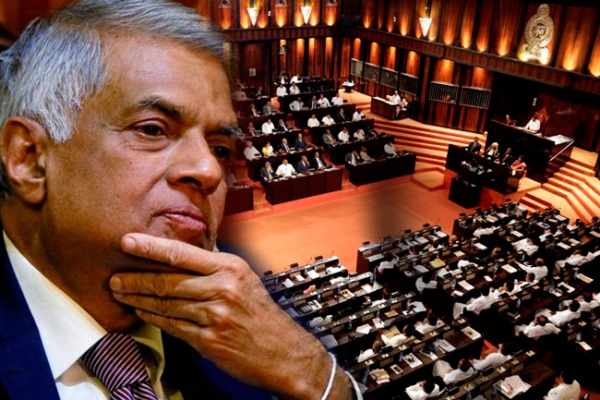
I supported Ranil Wickremesinghe in 1993-1997, and opposed him for a quarter-century since, but I sincerely wish him the very best of luck. It is he, not Minister Ali Sabry, who is now the nightwatchman.

If the PM uses his brilliant ex-Trotskyist-turned-Cold Warrior intellectual father’s excellent library, he would understand that he could become a Kerensky, who, unlike the original one, has not taken over after the Tsar’s ouster but is serving under the Tsar and perceived as his prop.

The Kerensky administration didn’t last because it couldn’t meet the basic needs of the people: ‘Land, Peace, Bread’. Similarly, the Wickremesinghe administration cannot fulfil, quickly enough, the basic needs of Fuel, Gas, Medicine, Fertiliser.

During the recent four-day parliamentary debate the only MP who presented a practical policy perspective for economic crisis-management was not Prime Minister Wickremesinghe but ‘outlier’ Patali Champika Ranawake of the 43 Brigade and SJB alliance.

Price of Parliament’s failure

The 21st Amendment to the Constitution produced by the Wijeyadasa Rajapakshe committee is a measured power-shift from the hyper-centralised executive presidency, a de-concentration of power pragmatic enough to secure a parliamentary two-thirds majority with no clauses requiring a Referendum. It is the first, fastest chance to shift the needle towards the separation of powers and checks-and-balances.

The BASL’s statement contains an excellent critique of the Wijeyadasa draft which could be accommodated as amendments moved by the Opposition. The BASL’s text neither raises the demand for the abolition of the executive presidency, nor uses it as a measuring rod for rejecting Wijeyadasa’s draft.

The SJB’s opposition to the Wijeyadasa draft is not completely coincident with the BASL statement. Rather, it counterposes the abolition of the executive presidency to the Wijeyadasa text. It is rejectionist and maximalist.

Reforming the presidency is a moderate-centrist position. Abolition is not. It is an extreme position. The (Buddha-inspired) Middle Path between the autocratic post-20th Amendment presidency and its opposite extreme, the total abolition of the executive presidency, is a structurally-reformed presidency.

Outright rejection of the Wijeyadasa text is not a moderate position. The Middle Path between the Wijeyadasa text and the abolition of the executive presidency is critical yet constructive engagement with the proposal on the table, with consensus the objective.

Abolition would be a protracted process, and worse, a non-starter because the SLPP and SLFP will not vote for it. The Wijeyadasa amendment would bring with it SLPP votes and a quick process because it issues from the Cabinet.

The SJB, TNA and JVP should introduce the BASL’s suggestions as amendments, but should desist from anything that would require a referendum which could abort a speedy reform and buy time for the status-quo.

If the 21st Amendment cannot make it through the gates to the finish-line, there may not be a second chance for civilian democracy, which may either be overrun by an uprising of the people which could turn savagely violent and destructive, or be placed in suspended animation by an unavoidable military intervention intended to restore stability and order of the most basic Hobbesian sort.

The Opposition should push the limits of possible consensus but demonstrate moderation and responsibility to settle for one. The intensifying crisis is not the time for a polarisation, especially one that the Opposition doesn’t have the numbers to win

Opposition’s opportunity and obligation

The Opposition should push the limits of possible consensus but demonstrate moderation and responsibility to settle for one. The intensifying crisis is not the time for a polarisation, especially one that the Opposition doesn’t have the numbers to win.

The Government Parliamentary Group might shoot down the 21st Amendment as taking away too much power from the presidency or may resist attempts to accommodate the BASL’s points. That would be counterfeit because such a victory means nothing outside the House, and counterproductive because it further delegitimises the Government while heightening hatred towards government parliamentarians.

The Opposition could divide, with the larger segment obstructing the amendment on the grounds that it fails to go far enough. A split in the Opposition would strengthen the regime. This would discredit the democratic alternative as a whole and enhance the extra-parliamentary, anti-systemic Opposition, putting paid to prospects for stability or even systemic survival.

If the SJB-TNA-JVP Opposition votes against the incoming 21st Amendment instead of reasonably tweaking it, it would be making a mistake that so tragically doomed iconic democratic revolutions.

Theodore S. Hamerow is the author of ‘Restoration, Revolution, Reaction: Economics and Politics in Germany 1815-1871’ (Princeton 1958). In an essay entitled ‘1848’ on the liberal-democratic German Revolution of that year, a tragic landmark defeat that provided the backdrop for the rise of Nazism in the next century, Hamerow quotes Charles Schurz, a youthful militant of that revolution, who reflectively concluded in his memoirs that:

“The Frankfurt Parliament suffered from…a lack of that political experience and insight which recognize that the better is often the enemy of the good, and that the true statesman will beware of forfeiting the favourable moment by endangering the achievement of the essential through an obstinate insistence on the less essential.” (T. Hamerow, ‘The Responsibility of Power’, Doubleday, New York, 1967 pp. 145-161)

In Sri Lanka today, “the essential” is to outrun the explosion that is imminent. The “essential” is the demonstration to the public of the Parliament’s continued relevance; of the continued functioning of the democratic institutions and process in achieving results; of the ability of democratic institutions to rapidly produce reform and improvement; of the possibility of consensus among democratic parties.

The “essential” is to show that the democratic institutions, processes and personalities can go halfway in meeting the demands and aspirations of the citizens’ revolt led by the youth.

The Opposition must not vote against this 21st Amendment, thereby “forfeiting the favourable moment” and “endangering the achievement of the essential through an obstinate insistence on the less essential.”

If the 21st Amendment cannot make it through the gates to the finish-line, there may not be a second chance for civilian democracy, which may either be overrun by an uprising of the people which could turn savagely violent and destructive, or be placed in suspended animation by an unavoidable military intervention intended to restore stability and order of the most basic Hobbesian sort

SJB parameters

It is downright reckless to fight a battle on this issue and lose, thereby exhibiting weakness, or to win a pyrrhic victory, prolonging the autocratic 20th Amendment and entrenching Gotabaya.

It is also irrational, because all reliable indicators of public opinion show that the highest degree of consensus is that Gota and the Rajapaksas should go and the 20th Amendment should be scrapped. That is far wider than the consensus for scrapping the executive presidency. A referendum on the issue is not merely unviable at the moment, it would be needlessly divisive and diversionary—displacing (yet again) the focus of the struggle away from Go Home Gota.

In 2015, Ranil Wickremesinghe, the UNP and TNA wanted the abolition of the executive presidency. When the Supreme Court aptly tossed back the original draft legislation presented by Wickremesinghe, flagging those provisions that required a two-thirds majority, it was President Sirisena who in a masterful display of consensus-building, got the 19th Amendment through. It proved to have dangerous gaps from a national security point of view which caused the backlash resulting in the 20th Amendment. Amendments moved by Field Marshal Fonseka, the SJB chairman could plug those gaps.

The country’s ‘death dive’ began with Gotabaya Rajapaksa’s hyper-concentration of power through the 20th Amendment. Reason tells us that’s the problem to be fixed, rather than dismantle the system as a whole. Opposition Leader Sajith Premadasa should work closely with SLFP leader and ex-President Maithripala Sirisena to pilot the structural reform through, thereby drawing the SJB and SLFP closer in a broad coalition of moderates; a coalition which can offer a rational, realistic progressive alternative, re-building the democratic centre.

Ranil Wickremesinghe was wrong to accept the Prime Ministership and serve unconditionally under Gotabaya Rajapaksa whom the vast majority of citizens want to see the back of, like, yesterday. The SJB mustn’t commit the opposite error. If it wishes to abolish the executive presidency it must first seek and obtain a parliamentary mandate for it at an election. It certainly doesn’t have the votes for it presently in parliament and therefore should not hold to ransom a reformist constitutional effort to dismantle or seriously dent the 20th Amendment.

The abolition of the 20th Amendment, the post of PM for the Opposition Leader, a timeline for early elections and a dialogue on the transitioning-out of President GR should be sufficient to assume co-responsibility for managing the national crisis. A ‘historic compromise’, to use the celebrated phrase of Enrico Berlinguer (the famous Italian communist leader and Euro-Communist giant); a power-sharing agreement of all major parties, is urgently necessary for crisis-management and conflict-prevention. The 21st Amendment could be a bridge.

If not, Sri Lanka which has a failed economy but is not yet a failed state, will have a failed parliament. Then, only extra-parliamentary, anti-systemic change will remain an option.

Weakening the State

When the facts show that all discriminatory legislation against the Tamils was enacted during the decades Ceylon/Sri Lanka had a Westminster model, why is the TNA so stridently insistent on the abolition of the executive presidency under which there was hardly any such legislation, several discriminatory acts were actually reversed, and provincial level devolution pushed through? An answer suggests itself when one extrapolates the result: the centrifugal weakening of the state and the automatic if surreptitious upscaling of the 13th Amendment to federal proportions.

When the evidence over decades shows a great many more leftwing Presidents (including former guerrillas and political prisoners of dictatorships) than Prime Ministers, why is it that the JVP-NPP and FSP-IUSF insist on the abolition of the executive presidency rather than of the autocratic 20th Amendment?

The outcome of the JVP and FSP demand would be to weaken the state itself; to implant a weak model of state, prone to deadlock, indecision and debility in crisis-management, preventing the implementation of a de-radicalising Rooseveltian New Deal (such as President Premadasa’s programs). Perhaps that’s the plan.

Leftism or Anarchism?

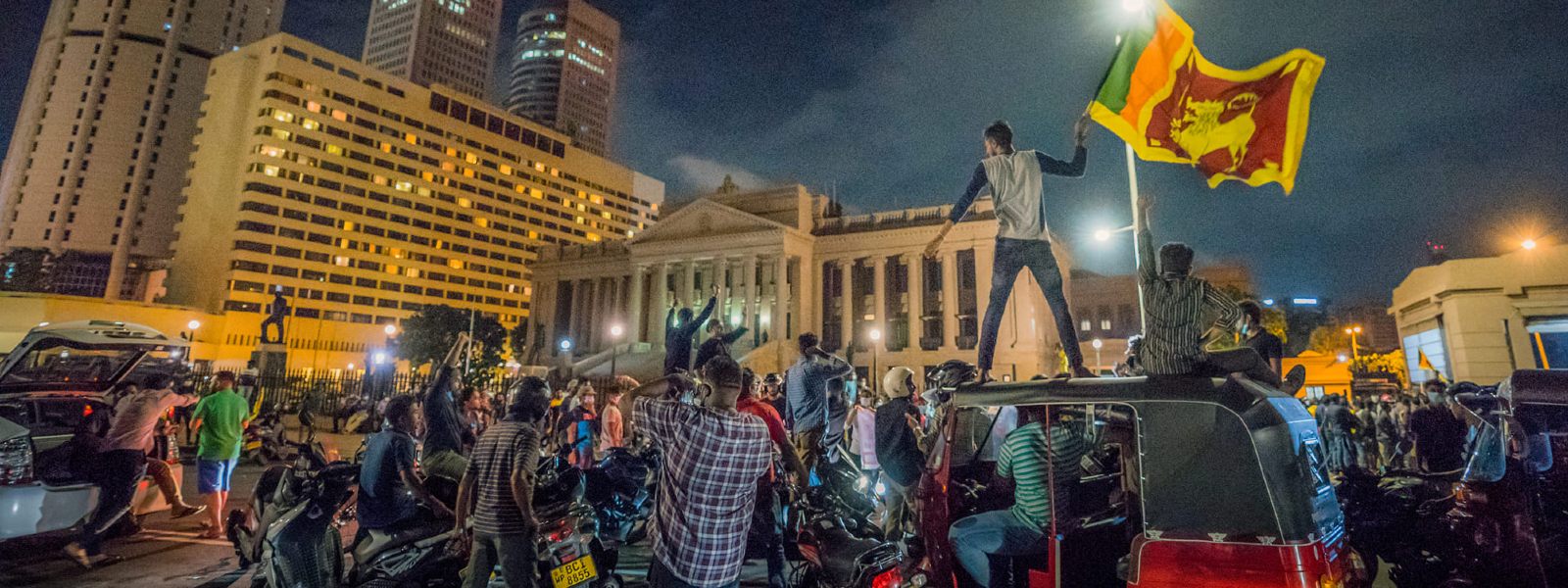
The Aragalaya –including the FSP-IUSF and the JVP-NPP—fell into a trap by opening a second front against a secondary enemy, Mahinda, thereby giving the main enemy time and space. The militant IUSF march deviated to Temple Trees and MynaGoGama appeared two weeks before 9 May. That diversion created the opening for Ranil’s return, the resultant stalling of the Aragalaya and shrinkage of the GGG.

In a reload, a new hashtag calls for everyone to march on Colombo as soon as the O-level exam ends. Surely the correct moment for such a mega-march would not be early June as urged, but August-September when the collapse of agriculture coincides with food shortages, making for a worker-peasant undergirded urban-rural alliance? The drivers of the exercise seem unaware of Friedrich Engels’ sardonic admonition that “impatience must not be mistaken for a theoretical argument”.

It takes both the Police riot squads and the army to handle student demonstrations in the city—demonstrations by single contingents of students (e.g., HND) who have now mastered the tactic of climbing onto water-cannons. What happens when all contingents of university students converge in Colombo? And when unorganised others go spontaneously searching for food supplies and targets of perceived affluence?

Practice in street-fighting tactics is impressive, but the Left’s refusal to denounce barbaric lynch-mob killings have caused the romantic-idealistic mask to drop, and the system – including, most importantly, the hard-drive of the state—to comprehend the character of the challenge, the real stakes involved.

A huge wave of a scarcity-driven social uprising which the Aragalaya Left can surf is capable of drowning the system, but that’s the system of governance and the economy, not necessarily the state. Even if several soldiers break ranks and join the protestors, and/or some of the rifles carried by the Police and infantry are wrenched away during demonstrations, that won’t change the essential equation of hard power.

Hostile towards the Gotabaya autocracy and the Rajapaksa clan, the world community will not support Sri Lanka to the fullest extent possible unless this country presents a new face as its leader and logo. That does not mean that the Big Powers will alter their cold evaluation of the implications of a JVP or FSP takeover of state power on this strategically situated island.

In a crunch, the equation between the Sri Lankan and neighbouring militaries could become manifest.

If Sri Lanka has a failed economy, a failed Parliament, dysfunctional political parties and a morally, ethically and behaviourally unconstrained anti-systemic Left, but is not yet a failed state, it is because the state contains components which have not failed and have been functional and successful. These may kick-in to regenerate the system by re-configuring the model (not tearing-down the system or sinking what remains of the economy), thereby saving Sri Lanka. Again

Contending vanguards

As we can see from behaviour patterns and dynamics already in evidence, an emerging scenario is of a Hobbesian “war of all against all” where life would turn “solitary, poor, nasty, brutish and short”. This is what made Hobbes argue strongly for public order and a State—the Leviathan—to enforce it, as the basis of all else; indeed, of civilised life itself. The problem is that Sri Lanka hasn’t had a ‘smart state’ since 2010. But the state has smart components.

In Sri Lanka today there aren’t just two formations of a vanguard type, formations which can play a vanguard role, the JVP-NPP and the FSP-IUSF. There are three. The third is the Sri Lankan armed forces.

While the JVP and FSP are nihilistic about 74 years of post-Independence history which they want to “put an end to”, and are destructive in their practices, a contrastingly constructive, confident discourse is articulated by the Army Commander, Maj-Gen Shavendra Silva in recent TV interviews. Determined Churchillianism doesn’t come from the PM but from the Army chief. Emanating from an institution with its own coherent narrative and the credibility of a proven record of success in crisis and adversity, this practical, positive, motivational perspective could seize the public imagination.

If Sri Lanka has a failed economy, a failed Parliament, dysfunctional political parties and a morally, ethically and behaviourally unconstrained anti-systemic Left, but is not yet a failed state, it is because the state contains components which have not failed and have been functional and successful. These may kick-in to regenerate the system by re-configuring the model (not tearing-down the system or sinking what remains of the economy), thereby saving Sri Lanka. Again.

Posted in Uncategorized

IMF says “require adequate assurances” on Sri Lanka’s debt sustainability restoration

The International Monetary Fund (IMF) on Thursday said it requires sufficient assurance from Sri Lanka of restoring debt sustainability during the debt restructuring process in which the island nation has started appointing financial and legal advisors.

“The (INF) team welcomed the appointment of financial and legal advisors to engage in a
collaborative dialogue with their creditors is an important step toward restoring public debt
sustainability,” the IMF said after the end of technical level negotiations between Sri Lankan officials and the IMF team.

“Since Sri Lanka’s public debt is assessed as unsustainable, approval by the Executive Board of an IMF-supported program for Sri Lanka would require adequate assurances that debt sustainability will be restored.”

The global lender’s comments come as Sri Lanka struggles to find a way out of its economic crisis with heavy foreign debts, no dollars to finance imports, significantly lower government revenue, and excess money printing.

“Inflation has accelerated driven by many factors, including the shortages of goods, fuel price increases, and currency depreciation,” the IMF said.

“In this context, we are deeply concerned about the impact of the ongoing crisis on the people, particularly the poor and vulnerable groups.”

“The IMF team held technical discussions on a comprehensive reform package to restore
macroeconomic stability and debt sustainability. The team made good progress in assessing
the economic situation and in identifying policy priorities to be taken going forward.”

“The discussions focused on restoring fiscal sustainability while protecting the vulnerable and poor;
ensuring the credibility of the monetary policy and exchange rate regimes; preserving financial
sector stability, and structural reforms to enhance growth and strengthen governance.”

The IMF comments also came as details of how Sri Lanka’s Monetary Board at the Central Bank and Finance Ministry last year failed to address the debt sustainability issue despite the global lender in April 2020 advising the island nation to go for debt restructuring.

Posted in Uncategorized

India, Japan to work together to help Sri Lanka during crisis

India and Japan have agreed to work together on assisting crisis-hit Sri Lanka, the Japanese government said, following a recent meeting between Prime Ministers Narendra Modi and Fumio Kishida in Tokyo.

Mr. Modi and Mr. Kishida met on May 24 on the sidelines of the Quad summit and held bilateral talks on “close cooperation” to promote efforts to realise a ‘Free and Open Indo-Pacific’, in addition to collaboration in spheres including defence, clean energy, and investment.

Following the meeting, Japan’s Ministry of Foreign Affairs said the leaders “discussed the situation in Sri Lanka and confirmed that they will cooperate with each other in light of the current economic crisis and deterioration of the humanitarian situation in the country.” Further, they “shared the view to work together to develop Indo-Pacific Economic Framework into an inclusive framework that will bring substantive benefits to the region,” according to a statement.

Ministry of External Affairs made no specific mention of Sri Lanka. “The two leaders exchanged views on recent global and regional developments. They noted the convergences in their respective approaches to the Indo-Pacific and reaffirmed their commitment towards a free, open, and inclusive Indo-Pacific region,” read its May 24 statement.

For over half a century, Japan has been one of Sri Lanka’s top donors and development partners, although its grants and investments have received much less attention compared to those from China or India.

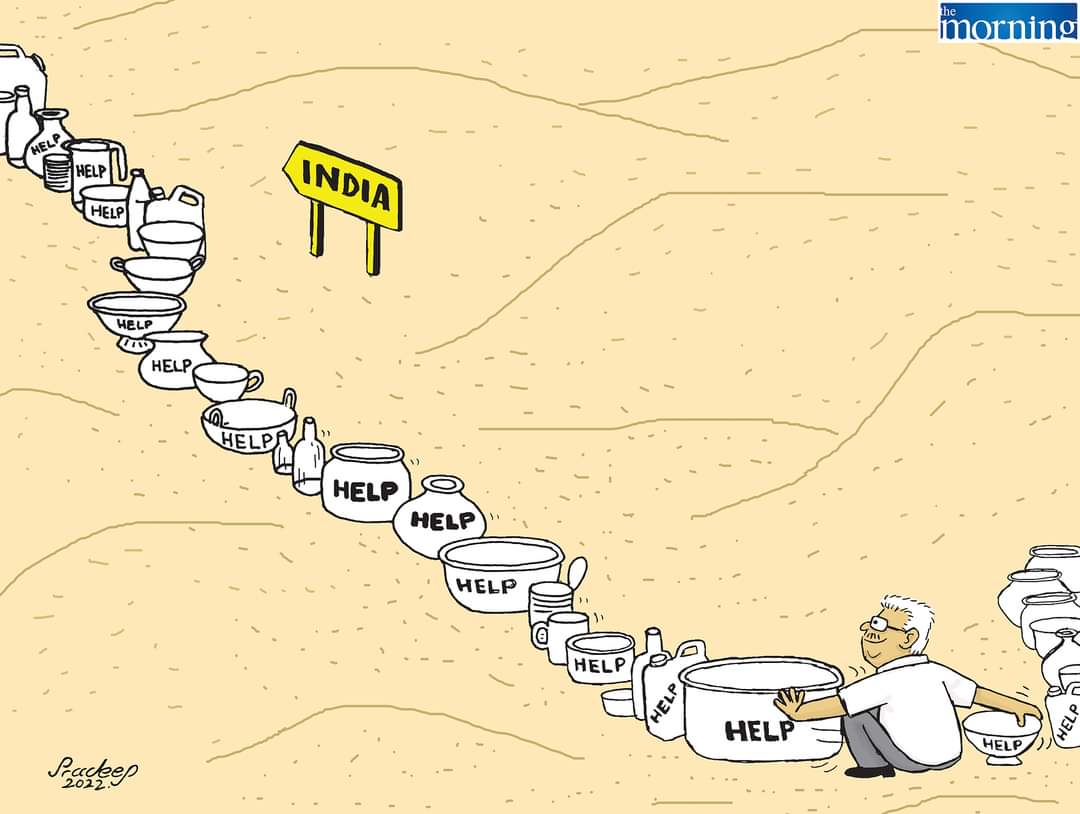
Japan’s announcement of collaborating with India to help Sri Lanka, assumes significance, coming shortly after Sri Lankan Prime Minister Ranil Wickremesinghe’s proposal that Quad members— United States, India, Japan, and Australia — take the lead in setting up a foreign aid consortium to assist Sri Lanka, that is reeling under the worst economic crisis since Independence. India has extended about $ 3.5 billion assistance since January this year, by way of loan deferments and credit lines for essential imports.

Japan’s initiative also comes despite Colombo scrapping two major infrastructure projects with Japanese involvement. In September 2020, Sri Lankan President Gotabaya Rajapaksa ordered the termination of a $ 1.5-billion Japanese-funded light rail project, on that basis that it was not a “cost-effective solution”. In early 2021, Sri Lanka ejected Japan and India out of a trilateral project to jointly develop a container terminal at the strategically located Colombo Port, causing considerable diplomatic tensions. India’s Adani Group was subsequently roped in to develop another terminal at the same port.

Meanwhile, addressing the ‘International conference on the future of Asia’ organised by Nikkei virtually, Mr. Gotabaya said Sri Lanka “urgently requires” assistance of friends in the international community “to ensure that our immediate needs in terms of the importation of essential medicines, food supplies, and fuel are met.”

Japan “remains one of Sri Lanka’s key development partners”, the Sri Lankan President said, expressing hope that ongoing negotiations on “bridging funds” from Japan would soon conclude. “We are also in urgent need of bridging financing to restore confidence in our external sector and stabilise our economy until the debt restructuring process is completed and an IMF programme commences,” he said, while thanking India, Sri Lanka’s “close friend and neighbour”.

Colombo earlier sought India’s help in securing bridge financing to cope with the downturn, until an International Monetary Fund package materialises. The government is in talks with IMF on debt restructuring after opting for a preemptive default on its foreign debt of about $ 50 billion.

Source: The Hindu

Basil fights back to save his political future as RW pushes for 21A today

In a move to push for the 21st amendment to be accepted by the party leaders today, Prime Minister Ranil Wickremesinghe will lobby for it at the party leaders’ meeting at 3.30 pm today in order to reduce the powers of the President and also remove dual citizens from holding a parliamentary seat, which in turn will end Basil Rajapaksa’s political career in Sri Lanka.

The party leaders who have already been given a draft of the 21st amendment for them to study can raise any proposals or objections on the clauses today so that a final draft can be prepared and submitted at the next cabinet meeting.

The committee that has drafted the 21st amendment will also be present at the meeting today afternoon to note the changes that will be proposed by the party leaders and incorporate them in the final draft.

The Daily Mirror learns that while SLPP Leader Mahinda Rajapaksa may not attend the meeting, he will send a representative to be present.

However, despite Mahinda Rajapaksa being the SLPP Leader, it is learnt that Basil Rajapaksa is the man now calling the shots among the majority in the party and is lobbying against the 21A so that he can save his political career in Sri Lanka. The SLPP is specifically trying to leave out clauses such as the abolition of the dual citizenship as well as the reduction of the President’s powers on Basil’s insistence and is aiming not to pass it when it is presented before the Parliament.

Other party leaders have already consented to the 21A but may propose some changes. However, all other leaders are of the view that the President’s powers must be reduced as a way of further strengthening the Parliament as well as discontinuing dual citizens from holding future parliamentary seats.

Senior UNP sources have also requested law enforcement authorities to probe as to who carried out a protest outside the Prime Minister’s Office yesterday, as the Gota Go Gama protesters had said it was not their protesters. UNP Seniors suspect and alleged that the SLPP was now trying to create protests against the Prime Minister in a way to pressure him against presenting the 21A.

If the 21A is approved by the party leaders today, even with the changes they propose, it will be presented to the cabinet again. Once approved by the cabinet of ministers, it will then be presented to Parliament for a vote.

Prime Minister Wickremesinghe is already in discussions with all party leaders to keep the two clauses on reducing the President’s powers and the dual citizenship clause in order to minimise the Rajapaksas representation in the government.

India will support democracy, stability in Sri Lanka: PM Modi

Indian Prime Minister Narendra Modi said on Thursday that India will continue to stand with the people of Sri Lanka and support democracy, stability and economic recovery in the neighbouring country.

Noting Sri Lanka was passing through difficult times, Mr. Modi, who was in Chennai to inaugurate and lay the foundation for several schemes involving an investment of over ₹31,000 crore, said “As a close friend and neighbour, India is providing all possible support to Sri Lanka. This includes financial support, fuel, food, medicine and other essential items.”

India has also spoken strongly in international fora on the cause of giving economic support to Sri Lanka, the Indian Prime Minister said.

Seeking to connect with the people of Tamil Nadu, who share closed bonds with the ethnic Tamils in the island nation, Mr. Modi recalled his visit to Jaffna some years ago. “I can never forget my visit to Jaffna a few years ago. I was the first Indian PM to visit Jaffna. The Government of India is undertaking numerous projects to assist the Tamil people in Sri Lanka. These projects cover healthcare, transportation, housing and culture,” Mr. Modi said here, in the presence of Chief Minister M.K. Stalin.

While he did not react to Mr. Stalin’s statement (who spoke earlier) that “this was the right time to retrieve Katchatheevu [an island given by India to Sri Lanka decades ago], the Prime Minister said many Indian organisations and individuals have sent assistance for their brothers and sisters in Sri Lanka, including the Tamils in the northern and eastern parts of Sri Lanka. Mr. Modi did not make a mention of the material aid which was sent by the Tamil Nadu government to Sri Lanka through the Ministry of External Affairs recently.

The Prime Minister, who sought to counter the perception that the Centre had not taken adequate steps to give the Tamil language its due devoted a significant part of his speech hailing the Dravidian language.

“The Tamil language is eternal and the Tamil culture is global. From Chennai to Canada, from Madurai to Malaysia, from Namakkal to New York, from Salem to South Africa, the occasions of Pongal and Puthandu are marked with great fervour,” he said and recalled how Union Minister of State L. Murugan, who was on the dais, had recently walked down the red carpet in Cannes in traditional Tamil attire, which made Tamils all over the world very proud.

The government of India was fully committed to further popularising Tamil language and culture, Mr. Modi said and recalled that the new campus of the Central Institute of Classical Tamil inaugurated in Chennai in January had been fully funded by the Union government. A ‘Subramania Bharati Chair’ on Tamil Studies at Banaras Hindu University was recently announced, he said.

“The National Education Policy gives special importance to promoting Indian languages. Due to the National Education Policy, technical and medical courses can be done in local languages. Youngsters from Tamil Nadu will benefit from this,” Mr. Modi contended.

Mr. Modi said in every field, someone or the other from Tamil Nadu was always excelling and recalled how six of the 16 medals the Indian Deaflympics contingent won recently were by athletes from the State.

Elaborating on the projects he unveiled. Mr. Modi said that the government of India was fully focused on building infrastructure that is top quality and sustainable.

His government has also gone beyond what was conventionally called infrastructure, he said, and added that till a few years ago, infrastructure referred to roads, power and water. “Today we are working to expand India’s gas pipeline network. Work is happening on i-ways,” he said.

“A few months back we launched the PM-Gati Shakti programme. This programme will bring together all stakeholders and Ministries with the aim to ensure India has top quality infrastructure in the coming years,” he said.

Recalling his speech from the Red Fort, where he spoke about a National Infrastructure Pipeline, Mr. Modi said: This is a project worth more than ₹100 lakh crore. “Work is under way to turn this vision into reality.”

Tamil Nadu Governor R.N. Ravi participated in the programme. Earlier, the State BJP accorded a rousing reception to Mr. Modi.

The Prime Minister left for New Delhi on Thursday night.

Source: The Hindu

Posted in Uncategorized

Reclaim Kachchatheevu : Stalin tells Modi

The Chief Minister of Tamil Nadu, M.K. Stalin has made a number of important demands from the Indian Prime Minister Narendra Modi, who is currently on a visit to Chennai.

Drawing the attention of the Prime Minister to the issues faced by the Indian fishermen in Tamil Nadu, Stalin requested the Prime Minister to reclaim the Kachchatheevu island from Sri Lanka.

Additionally, he stated that this is an opportune time to save Kachchatheevu Island and ensure the traditional fishing zone and rights of the Tamil Nadu fishing community, so that a solution can be found to the issues of the coastal fishing community in Tamil Nadu.

Posted in Uncategorized

How hubris and Covid transformed Sri Lanka from ‘donor darling’ to default-Financial Times-Benjamin Parkin

The country has opened talks with the IMF over a $4bn bailout with observers waiting to see how China, one of the main creditors, will react

It is 10am and the queue outside a petrol station in one suburb of Sri Lanka’s commercial capital Colombo is already hundreds of people long. At the front is Malar Peter, whose family has taken turns to keep their place for 12 hours already. A few paces behind her is Padmasiri, who arrived at 1am. And right at the back of the queue stands Arumugam Annaletchumi, 50, who expects to be there for the rest of this hot, humid day.

They are all waiting for kerosene, carrying empty plastic canisters for a few litres with which to cook and burn lamps during the long blackouts caused by power shortages. Yet they are there in hope as much as anything else. There is no kerosene at the station and it’s unclear if it will arrive. For Sri Lankans, who until recently enjoyed some of the highest living standards in South Asia, such queues were rare until a few months ago. “People just want to live without problems like this,” Annaletchumi says. “This country has been robbed.”

Sri Lanka this month defaulted on its overseas loans after missing interest payments on two $1.25bn sovereign bonds, the first country in Asia-Pacific to do so in more than two decades, according to Moody’s data. The latest estimates put the country’s total foreign debt at more than $50bn, with a $1bn bond maturing in July. President Gotabaya Rajapaksa’s government says it has all but run out of foreign reserves and fuel, relying on ad hoc shipments to top-up supplies in the most visible manifestation of a crisis that, the Eurasia Group consultancy warns, is turning the island into a “failed” state.

After the end of a devastating 26-year civil war in 2009, the island of 22mn had the makings of an Asian economic success story. Under governments run by the powerful Rajapaksa family, annual economic growth peaked at 9 per cent. By 2019, the World Bank had classified the island as an upper-middle income country. Sri Lankans enjoyed a per capita income double that of neighbours such as India, along with longer lifespans thanks to strong social services such as healthcare and education. The country tapped international debt lenders to rebuild, becoming a key private Asian bond issuer and participant in China’s Belt and Road Initiative.

Much of that progress is now in jeopardy. Some observers argue Sri Lanka’s debt crisis is the product of the hubris, mismanagement and alleged venality of political elites including the Rajapaksa family, as well as irresponsible lending on the part of its creditors.

But, on another level, it is an extreme example of the economic and political churn facing developing countries around the world as rising inflation and Russia’s invasion of Ukraine prompt higher interest rates and surging food and fuel prices globally. Within South Asia alone, countries including Nepal have imposed import restrictions in order to protect foreign reserves while Imran Khan was removed as Pakistan’s prime minister in April amid popular anger over inflation.

Sri Lanka’s “economy has been built on unsustainable debt. They were spending more than the money that was coming in,” says Hanaa Singer-Hamdy, the UN’s resident co-ordinator in Colombo. “You don’t have fuel [so] people queue for three or four kilometres waiting in the heat.”

Popular outrage has boiled over in recent weeks after a wave of retaliatory violence following attacks on anti-government protesters and the temporary imposition of a military-enforced curfew. Gotabaya Rajapaksa is fighting for his political survival after the resignation on May 9 of his once-powerful brother Mahinda as prime minister. The president has struggled to form a new cabinet with Ranil Wickremesinghe, the new prime minister, on Wednesday also taking on the role as finance minister after the post was vacant for more than two weeks.

Chinese loans to Sri Lanka, which total about $3.5bn, according to the Advocata Institute think-tank, has proved particularly controversial. While Sri Lanka owes more to private bondholders and countries like Japan, critics argue that China’s BRI loans have been extended at high interest rates for infrastructure projects that have often failed to generate returns.

Sri Lanka has begun talks with the IMF for a bailout of up to $4bn, and is preparing debt restructuring negotiations with creditors. Analysts say the talks will be closely watched to see how China — one of the largest and most important lenders to the developing world in recent years — will respond amid growing signs of financial strain in other Belt and Road participants.

“Sri Lanka is a real canary in the coal mine,” says Gabriel Sterne, head of emerging markets at research group Oxford Economics. “It’s the most interesting case in years. There’s going to be lots of low-income debt crises, and the treatment of China in all that is going to be crucial.”

Postwar economic boom

Sri Lanka has many of the ingredients needed for economic and political success — from rich natural resources to strong social services and a strategic location near many of the world’s busiest shipping lanes.

But in the 1980s tension between the majority Sinhalese Buddhists and Tamils — groups that make up about 70 and 15 per cent of the population respectively — culminated in civil war when the Liberation Tigers of Tamil Eelam launched a brutal separatist campaign amid Tamil resentment over widespread discrimination.

The conflict dragged on for more than two decades before Mahinda Rajapaksa was elected president in 2005. With Gotabaya Rajapaksa serving as defence secretary, the brothers would lead an unrelenting campaign to crush the Tigers. Government forces were accused of war crimes including indiscriminately bombing civilian areas and executing suspected militants. The Tigers were also accused of atrocities and the UN estimates that about 40,000 civilians died in the final years of the conflict, almost half the total. Mahinda and Gotabaya have been subject to sustained scrutiny from civil society groups for the alleged abuses committed under their rule, with Human Rights Watch alleging that Gotabaya is implicated in human rights abuses. He has always denied the allegations.

The end of the war in 2009 was followed by a boom in Sri Lanka’s economy. The government of Mahinda Rajapaksa tapped international bond markets and longtime ally China for debt to fund the construction of everything from roads and airports to “Port City”, an ambitious project to turn reclaimed land in Colombo into a financial hub. Tourists flocked to the island.

Yet this growth masked deep economic and social imbalances. Critics argue that the Rajapaksas shunned efforts at postwar reconciliation and continued to use ethno-nationalism to drum up their Sinhalese Buddhist base. Several debt-backed projects failed to generate a return, most notoriously a Chinese-backed port in the Rajapaksas’ home district that was ultimately handed over to Beijing on a 99-year lease. Critics say that easy money for large infrastructure projects fuelled a culture of kickbacks and corruption that became widespread in politics and business.

“The biggest issue is corruption,” says Harini Amarasuriya, an MP from the leftwing Janatha Vimukthi Peramuna party, one of Sri Lanka’s largest. “For the past 25-30 years, our economic decisions have not been made on any economic analysis but on kickbacks and commissions.”

Some members of the Rajapaksa family have been accused of wrongdoing on various occasions though they have always denied allegations and have not been convicted. Gotabaya Rajapaksa was charged in a corruption case in 2016 though the charges were dropped on grounds of immunity after he was elected president in 2019, according to media reports. He denied the allegations.

Gotabaya Rajapaksa’s 2019 landslide victory came after the Easter Sunday terrorist attacks that killed 269 people. He vowed to right an already struggling economy but instead made a series of idiosyncratic decisions that economists say tipped the island into crisis. He cut taxes sharply — eroding government revenues — and changed the constitution to concentrate power around him and his family, with several relatives also in government. He also imposed a shortlived but destructive ban on chemical fertilisers, designed to promote organic farming and save money on imports, that led to a sharp drop in crop yields.

Anushka Wijesinha, an economist at the Centre for a Smart Future in Colombo, says that Sri Lanka was considered a “donor darling” in the decades after independence, before Mahinda Rajapaksa’s government embarked on its postwar infrastructure boom. “The money [was] coming in easily from bilaterals, multilaterals and commercial loans,” he says. “Financing is not a constraint, doing the policy reforms is not a constraint, and — woohoo, bonus — the room for graft is huge.”

A series of ratings downgrades following the 2019 tax cuts locked Sri Lanka, which had never defaulted before, out of international debt markets, leaving it unable to refinance. The pandemic cut off remittances and tourism, vital sources of dollars. A poll in January by think-tank Verité Research found that only 10 per cent of Sri Lankans approved of the government. Yet Rajapaksa dismissed warnings to begin restructuring or approach the IMF for assistance until March, after protests over the growing economic hardship had spread across the island.

Sri Lanka’s reserves have fallen from $7.5bn in November 2019 to the point where finding $1mn is “a challenge”, Wickremesinghe, the new prime minister, said in an address last week. This has meant shortages of not only fuel but food and medicine, with hospitals forced to postpone surgeries. The country has the worst inflation in Asia at about 30 per cent in April and the currency has almost halved in value since it was floated in March.

The UN Development Programme says that nearly half the population is in danger of falling below the poverty line, and warns of a looming humanitarian crisis as the urban poor and former middle class begin to cut back on meals.

WN Thilini lives with her two-year-old daughter in a low-income Colombo neighbourhood. She says she has stopped giving milk to her child and that they now eat mostly rice, dhal and grated coconut. The 38-year-old says she has enough food and fuel in the house for a couple more meals, before she too will need to join a queue.

“Most people are down to one meal a day”, says her neighbour, Mohammad Akram, “but are embarrassed to admit it.”

A default test case

On top of Rajapaksa’s mismanagement and Covid, observers say the final trigger for Sri Lanka’s default was the war in Ukraine — a worrying example of the aftershocks of the conflict for low- and middle-income countries. Some, including Belize and Zambia, had already defaulted in the wake of the pandemic.

In addition to depending on imported energy and staples such as wheat, the conflict has hit Sri Lanka in unexpected ways. Russia and Ukraine were the country’s first- and third-largest tourist markets in early 2022 respectively. Russia was also the second-largest buyer of Ceylon tea, Sri Lanka’s main goods export.

The island’s default could have significant geopolitical ramifications. Its strategic location in the Indian Ocean has long made it an arena for jockeying between countries such as India and China, arch-rivals who have used combinations of easy credit and diplomatic pressure to secure their interests on the island.

Critics of Chinese activity on the island accuse it of using BRI projects to ensnare the country in a “debt trap”, allegations that it denies. Yet while China has so far rejected Sri Lanka’s requests to restructure its outstanding debts, India has sought to cement its primacy on the island, offering a series of credit lines, debt swaps and other assistance measures that it [India] says total about $3.5bn.

Sri Lanka’s upcoming debt restructuring negotiations are being viewed as a case study for how China works alongside other creditors such as private bondholders, given the rise of Chinese lending in Africa and Asia.

Analysts say that in countries such as Zambia, as well as Sri Lanka, it remains unclear whether Chinese lenders — which includes the government as well as state banks — will be willing to accept losses on their loans or look to enforce claims for full repayment.

Zambia’s restructuring has shown “there’s somehow this expectation that [Chinese lenders] would be senior creditors,” and therefore prioritised for repayment, argues one London-based fund manager, who holds Sri Lankan bonds.

The fund manager argues that had Rajapaksa started the restructuring process earlier, when Sri Lanka had more foreign reserves left, creditors could have recouped larger amounts. “What would have been a fairly mild restructuring process is now a more complicated one.”

The success of any restructuring is likely to be tied to the IMF programme. Any assistance package will take months to negotiate and, while Sri Lanka has already been through 16 IMF programmes in its 74-year history, it has only completed nine. International groups also warn that the reforms the fund is likely to demand, such as reversing Rajapaksa’s 2019 tax cuts and reducing energy subsidies, could exacerbate the suffering without adequate protections for vulnerable populations.

Improvement is “not going to come immediately,” warns Nalaka Godahewa, an MP from Rajapaksa’s ruling Podujana Peramuna party. “It’s going to be difficult because nothing much is going to change [in the short term].”

It is unclear whether Rajapaksa and his government can survive even before implementing a series of potentially unpopular economic reforms, prompting analysts to warn that the island could face prolonged political instability.

“To go into an economic restructuring, you need political stability. This is now challenging,” says the UN’s Singer-Hamdy. “The most important is how you discuss with the creditors now, in terms of agreeing to a haircut. This is [what] will help . . . Everybody is waiting to see how the government will negotiate the restructuring with the creditors.”

Ranil: Return of the Master By Jathindra

Despite all indications to the contrary, a single seat in parliament has disproved political assumptions that shape our opinion. Just weeks ago, it was unthinkable that Ranil Wickremesinghe’s political future could be resurrected, even resuscitated. The takeover of the premiership when he truly was on his last legs is an opening gambit that may prove to be clever and enshrine him as a sharp-eyed lynx that outfoxed geopolitical apprehensions in the region.

When the Rajapaksa cookie crumbled, the stakes were high. And so was the punditry when the premiership was taken. Harsha de Silva, a member of the opposition in parliament, maintained that the appointment was neither ethical nor moral. M.A. Sumanthiran of the Tamil National Alliance asserted that it was undemocratic.

This is not a moral or democratic issue. It is a strategic move to deal with a crisis that Sri Lanka has not witnessed before. The idealized conception of parliamentary democracy may not be relevant. Was Ranil Wickremesinghe the right choice? This is a vexed question that must be answered using other sensibilities than just idealized parliamentary democracy. One could perhaps begin by asking if it was strategically correct or not. Ranil Wickremesinghe may walk like a proverb and talk like a question but he is the only person who can handle this crisis. Many Tamils are of this opinion. Nevertheless, the relationship between Ranil Wickremesinghe and the Tamil is worthy of note.

The Tamils have often referred to Ranil as the fox. This allusion is derived from Machiavelli’s use of immoral means in politics and the suggestion of a blend between a lion and a fox for political leadership; the fox to recognize the traps and a lion to frighten the wolves. However, there is another important dimension – the Tamil experience with the old fox J.R. Jayewardene. J.R. was Ranil Wickremesinghe’s maternal cousin. This heady mix makes the Tamils view Ranil Wickremesinghe with suspicion.

A section of Tamil political activists and opinion makers are still copying this simulation related to Ranil. It is basically a fear of statecraft. This fear made LTTE leader Vellupillai Prabhakaran to devise a strategy to defeat him through an election boycott in 2005.

In 2005, Ranil would have been elected as president if the Tamils in the North East had voted. Nevertheless, Prabhakaran preferred to confront the war of hardliner Mahinda Rajapaksa rather than confronting Ranil’s clever strategies. Prabhakaran’s choice was doomed for him in the end. The LTTE’s usual approach is bringing down their invincible political opponents with suicide attacks. The case of Ranil was different. He was defeated by Tamil votes, not by suicide bombing. This was unusual in the LTTE’s hunting strategy.

Beyond his capacity, experiences and international reputation, the pro-western outlook of Ranil is the main reason why he seems an apt person for the current situation. Against this background, the defeat of Ranil in the 2005 election was a tragedy both politically and economically. Prabhakaran defeated not only Ranil, but the U.S interest in the peace process and the personal interests of then Deputy Secretary of State Richard Armitage. This is when the West turned entirely against the LTTE.

The former ambassador of the United States to Sri Lanka, Jeffrey Lunstead, described this in his paper United States’ Role in Sri Lanka’s Peace Process (2002-2006) published by the Asia Foundation. Lunstead explained how U.S interests had enhanced due to the peace process:

“The pattern of limited U.S. engagement with the Sri Lankan ethnic conflict changed dramatically with the start of the new peace process in 2001-2002. This was not due to any dramatic change in U.S. strategic interests in Sri Lanka, but rather to a combination of other factors:

The post-Sept. 11, 2001 atmosphere that ushered in a new determination by the U.S. to confront terrorism on a worldwide basis.
The election in Sri Lanka of a UNP/UNF government led by Ranil Wickremesinghe that was markedly more pro-West and pro-free market/globalization.
The personal interest of then-Deputy Secretary of State Richard Armitage.”
In the words of Lunstead, Armitage’s personal interest was bolstered by the politics of the new UNP-led government. The UNP was traditionally a right of centre party. It is a member of the grouping of international conservative political parties, the International Democrat Union (IDU). In an MTV interview in 2003, Armitage pointed out this in different words. “I was very heartened by the comments of Prime Minister Ranil regarding a new infrastructure to provide assistance transparently to all segments of society very openly.”

In light of Ambassador Lunstead’s analysis, Ranil Wickremesinghe’s government came to power with a clear economic reform program based on free market principles in line with U.S. government thinking on economic and international development issues. In Erik Solheim’s words, (Mark Salter’s ‘To End a Civil War: Norway’s Peace Engagement with Sri Lanka) he wanted to reform the economy to make Sri Lanka the Singapore or Taiwan of the Indian Ocean. When Ranil was defeated by the election boycott, the whole programme collapsed. If one looks at this in depth, the foundation for the country’s economic uncertainty today was laid in 2005 when Ranil was defeated.

The mistakes of the Ranil-Maithri government were a significant factor in the Rajapaksas’ resurgence. In 2015, the regime changed by giving space to Ranil again. But Ranil failed to prove his mettle because of the infighting with President Maithripala Sirisena. The question arises now about how Ranil will deal with calamity as it is a different challenge that he has never faced before. As Erik Solheim specified, Ranil Wickremesinghe is a great intellectual, not a street fighter. It has been proved that his intellect failed before the face of the Sinhala street fight-loving masses. Ranil never rose as a populist leader but he always created his own ground for chess. He is now batting on a pitch where the street fighting Rajapaksas fell.

Prime Minister Ranil Wickremesinghe rallied, hoping he would rescue the nation without rescuers. If Ranil succeeds in this challenge, he will be an unforgettable leader among the people. If Ranil fails or others fail him, the country will be plunged into an irreversible crisis. History is a great teacher and hides many surprises. When the Tamils were responsible for defeating Ranil in 2005, it caused a disaster for them. If the Sinhalese defeat Ranil now, it will cause a disaster for the Sinhalese. Ranil may or may not need Tamils now but he needs the Sinhalese.

Jet fuel shortage forces Sri Lankan Airlines to refuel in India, UAE, Singapore – sources

Sri Lankan Airlines has started refuelling its aircraft from Chennai, Dubai, and Singapore due to a shortage of jet fuel in Colombo amid a foreign currency scarcity, sources said.

The shortage also has led the Airport and Aviation Services (Sri Lanka) (Private) Limited (AASL) to inform foreign flights to take necessary steps in refuelling.

“There is less jet fuel in Colombo. So we have been using Chennai, Dubai, and Singapore to refuel Sri Lankan Airlines’ flights,” a source from the state-run SriLankan Airlines under anonymity confirmed to Economy Next.

The island’s main Bandaranaike International Airport has a 7.8 million liter capacity fuel tank while Mattala International airport has a 3 million liter fuel tank.

However, Sri Lanka’s economic crisis with a severe shortage of dollars has led to a scarcity of fuel as the Indian Ocean island nation has no dollars to import oil. Sri Lanka has been sourcing fuel from an Indian credit line.

“We informed the (foreign) airlines 10-days ago that the airport is running on limited fuel, so to take necessary measures,” another source from Sri Lanka’s airports said.

“We do have fuel for emergency purposes but this matter is entirely handled by CPC (Ceylon Petroleum Corporation). They are the ones who supply the fuel to the airports.”

Officials from CPC were not immediately available for comments.

Experts say there is a possibility of air carriers cancelling their flights to Sri Lanka as using an alternative route just to refuel is an added cost to the airlines unless the is adequate traffic.

AASL Officials told Economy Next late in April that their daily consumption was around 1.3 million liters amid a drop in air traffic to the country with the onset of the off tourism season and the Ukraine-Russia war.

Posted in Uncategorized

Basil attempting to block 21st Amendment

Former Finance Minister and founder of the Sri Lanka Podujana Peramuna (SLPP) Basil Rajapaksa is said to be leading attempts to block the 21st Amendment from being passed by Parliament, Daily Mirror learns.

Government sources told Daily Mirror that Rajapaksa has secured the support of a number of SLPP members to oppose the 21st Amendment.

However, the Government is confident it will be able to convince a majority of the SLPP members to vote in support of the draft proposal when it is tabled in Parliament for a vote.

The 21st Amendment has already been presented to the Cabinet and will be tabled in Parliament after it is discussed with political party leaders.

Government sources told Daily Mirror that the draft is expected to be discussed with political party leaders tomorrow (Friday).

Sources said that the Government is also in talks with the main opposition Samagi Jana Balawegaya ( SJB ) to seek their support for the draft proposal.

Newly appointed Justice Minister Wijeyadasa Rajapakshe was instrumental in drafting the 21st Amendment to the Constitution and is involved in talks with a number of political parties in Parliament and outside to obtain their views.

When contacted by Daily Mirror, Minister Wijeyadasa Rajapakshe said that the draft proposal is not the final document and is open for amendments.

A number of concerns have already been raised over the proposals in its current form.

However, Minister Wijeyadasa Rajapakshe said that the proposed 21st Amendment will go through changes after considering the proposals made by others.