Peaceful expression of dissent is not an emergency: UN Resident Coordinator

The Resident Coordinator for the United Nations in Sri Lanka, Hanaa Singer-Hamdy states that the limitations to the exercise of fundamental rights and freedoms are only acceptable when exceptional, proportional and justified.

Taking to Twitter, she stated that peaceful expression of dissent is not an emergency, while root causes for dissent must be tackled first.

UNICEF condemns violence against children during protests in Sri Lanka

UNICEF is concerned with reports of violence during protests involving children in Sri Lanka.

Issuing a statement UNICEF said all actors must guarantee the right to peaceful assembly and freedom of expression, including for children.

According to the Convention on the Rights of the Child, children and adolescents have the right to participate and express their opinions on issues that affect them. The State, local communities and families have a shared responsibility to protect children and safeguard their rights.

All acts of violence must stop. Every adult must act with a sense of responsibility and avoid exposing children to any form of violence, including during protests. We call on law enforcement agencies to avoid the use of force and ensure that fundamental guarantees for the protection of children remain applicable everywhere, at all times”.

Bar Association calls on the President to revoke the State of Emergency as stifling public protest is not a solution to the crisis

The Bar Association of Sri Lanka (BASL) expressing grave concern over President Gotabaya Rajapaksa declaring an island wide State of Emergency requested the President to revoke the proclamation as it is not the solution to the present situation in the country.

The BASL requested the President to explain the reasons for his decision to the public and ensure that the fundamental rights are not violated by the decision.

“We call upon His Excellency to revoke the proclamation declaring a state of emergency and to ensure that the fundamental rights of the people such as the freedom of expression including the freedom of speech and publication and the freedom of peaceful assembly which are aspects of the sovereignty of the people are respected and protected and not violated by the State or its agents,” the Bar Association said.

The Bar Association also called on the people of the country to remain calm and to act in a peaceful manner so that their fundamental rights which form part of their intangible heritage remain protected.

The Bar Association further said it is committed to protecting the rights of the people of Sri Lanka and will take all necessary steps for that end including the providing of assistance to those whose rights may be infringed during this time.

Following is the Full statement issued by the BASL:

The Bar Association of Sri Lanka (BASL) is gravely concerned of the declaration of a state of emergency by His Excellency the President with effect from midnight on the 6th of May 2022.

Consequent to the declaration of a state of emergency the President is empowered to make Emergency Regulations which can override, amend, or suspend the provision of any law, except the provisions of the Constitution. We also note that the declaration of emergency needs to be placed before Parliament and approved by a resolution within the period set out in the Constitution.

As was stated earlier on the 2″ of April 2022, when the President declared a State of Emergency for a brief period of time, the BASL remains of the view that a declaration of a state of emergency is not the answer to the present situation in the country including the spate of public protests and strikes which have occurred. These protests reflect the desperate situation of the people who are seeking to secure for themselves, and their families some of the most basic essentials in life. Similarly, the declaration of the State of Emergency will further complicate the efforts at restoring political stability in Sri Lanka.

The BASL is firmly of the view that the right to protest and the right to dissent are important aspects of the fundamental rights of the people including the freedom of expression and the freedom of peaceful assembly. These rights are of course subject to the restrictions set out in Article 15 of the Constitution including in the interests of public order. Any restrictions that are imposed by law to these rights must be proportionate and reasonable. We re-iterate that the state of emergency must not be used to stifle peaceful protests and dissent or to make arbitrary arrests and detentions. The protests in turn must not be violent and must remain peaceful at all times.

We appeal to all parties in both government and the opposition to recognize the grave crisis that is facing the country and its people and the urgent need to resolve the political impasse in the country. We call upon the immediate implementation of the proposals of the BASL including the formation of a Government of National Unity with a Common Minimum Programme (CMP) ; the introduction of the 21st amendment to the Constitution and the abolition of the executive presidency as suggested by the BASL.

The BASL calls upon His Excellency the President to forthwith explain to the people the reasons as to why he has declared the State of Emergency. We call upon His Excellency to revoke the proclamation declaring a state of emergency and to ensure that the fundamental rights of the people such as the freedom of expression including the freedom of speech and publication and the freedom of peaceful assembly which are aspects of the sovereignty of the people are respected and protected and not violated by the State or its agents.

The BASL for its part is committed to protecting the rights of the people of Sri Lanka and will take all necessary steps for that end including the providing of assistance to those whose rights may be infringed during this time.

The BASL for its part is committed to protecting the rights of the people of Sri Lanka and will take all necessary steps for that end including the providing of assistance to those whose rights may be infringed during this time.

Posted in Uncategorized

Deputy Speaker Drama Takes Another Turn: Ranjith Siyambalapitiya Reigns Again

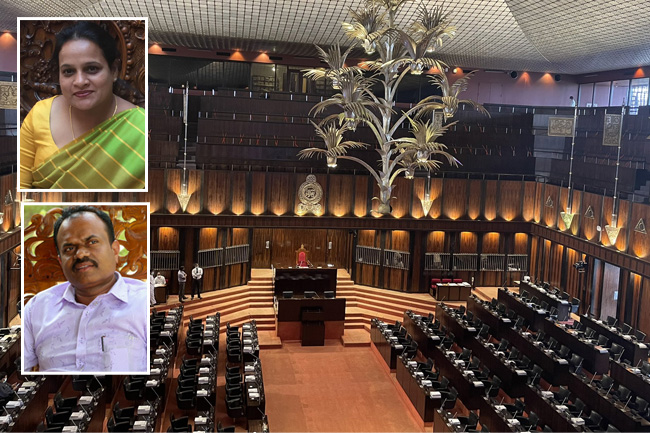
Ranjith Siyambalapitiya, who was elected the Deputy Speaker of the House yesterday, has resigned from the position again.

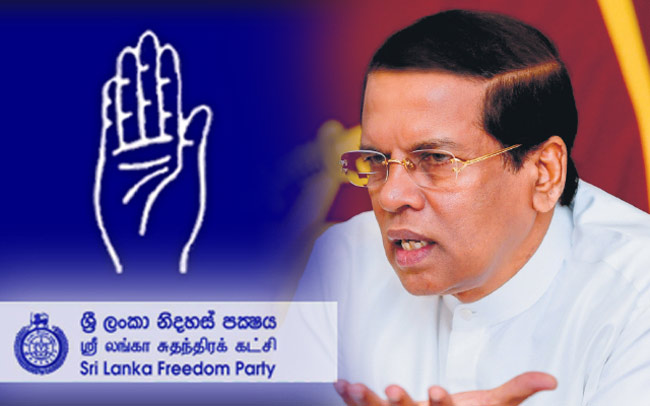
Siyambalapitiya, a member of the SLFP, first resigned from the post after a political crisis broke out in the country.

After Siyambalapitiya’s first resignation, the SLFP, the independent group and other parties of the opposition decided to reappoint him to the position as the unanimous choice of the opposition. However, this took a different turn after the government also decided to back Siyambalapitiya’s appointment.

This forced the main opposition to nominate Imthiaz Bakeer Markar as the opposition’s choice and appoint the new Deputy Leader through a secret ballot.

At the vote, Siyambalapitiya was elected to the position with the support of 148 MPs.

In his new letter of resignation, Siyambalapitiya has expressed disappointment over the drama unfolded in Parliament yesterday. This development will force Parliament to have another ballot to the appointment a suitable candidate to the post.

Posted in Uncategorized

EU provides emergency relief to families most affected by Sri Lanka’s crisis

The European Union (EU) is providing €200,000 (over 74 million Sri Lankan rupees) in humanitarian funding for essential assistance to 80,000 low-income families across all 25 districts of Sri Lanka.

The current political and economic crisis has resulted in shortages of essential commodities, including of medicines, and has reduced the ability of thousands of families to cater for their basic needs. Many children have also seen their education disrupted due to power cuts and lack of stationery items.

The EU funding will support affected families with multi-purpose cash grants that will help with first aid, medical supplies and school packs for children. Priority will be given to the most in need such as pregnant women, children, people with disabilities, women-headed households, and people who have become vulnerable due to this crisis.

The funding is part of the EU’s overall contribution to the Disaster Relief Emergency Fund (DREF) of the International Federation of Red Cross and Red Crescent Societies (IFRC).

The European Union together with its Member States is the world’s leading donor of humanitarian aid. Relief assistance is an expression of European solidarity towards people in need around the world. It aims to save lives, prevent and alleviate human suffering, and safeguard the integrity and human dignity of populations affected by natural disasters and human-made crises.

Through its European Civil Protection and Humanitarian Aid Operations (ECHO), the European Union helps over 120 million victims of conflicts and disasters every year. For more information, please visit ECHO’s website.

The European Commission has signed a €3 million humanitarian contribution agreement with the International Federation of Red Cross and Red Crescent Societies (IFRC) to support the Federation’s Disaster Relief Emergency Fund (DREF). Funds from the DREF are mainly allocated to “small-scale” disasters – those that do not give rise to a formal international appeal.

The Disaster Relief Emergency Fund was established in 1985 and is supported by contributions from donors. Each time a National Red Cross or Red Crescent Society needs immediate financial support to respond to a disaster, it can request funds from the DREF. For small-scale disasters, the IFRC allocates grants from the Fund, which can then be replenished by the donors. The contribution agreement between the IFRC and ECHO enables the latter to replenish the DREF for agreed operations (that fit in with its humanitarian mandate) up to a total of €3 million.

Posted in Uncategorized

Rupee continues to tank against the USD

The Sri Lankan rupee is continuing to depreciate against the US dollar amidst the current economic crisis in the country.

According to the latest foreign currency exchange rates issued by the Central Bank of Sri Lanka, the US dollar was buying at Rs.361.72 while the selling rate was Rs.374.99.

Meanwhile, the Sterling Pound was buying at Rs.449.34while the selling rate was Rs.468.62.

The Euro buying rate has meanwhile increased to Rs.385.46 while the selling rate jumped to Rs.400.96.

Posted in Uncategorized

Sri Lankan Police fire tear gas again at #HoruGoGama protestors; Children among those affected

Sri Lanka Police had fired tear gas at a group that was protesting at the latest protest township ‘HoruGoGama’ located along the road leading to the Parliament.

News 1st correspondents said that police fired tear gas sporadically.

The people who were dispersed from the site moved to Denzil Kobbekaduwa Mawatha.

Sri Lanka Police personnel dressed in Riot Gear were seen manhandling a protestor and dragging him away from the rest.

The protestor was demanding all 225 Parliamentarians resign with immediate effect.

Among those affected by the tear gas attack were children.

Posted in Uncategorized

Sri Lanka Under State Of Emergency Again Amid Its Worst Economic Crisis

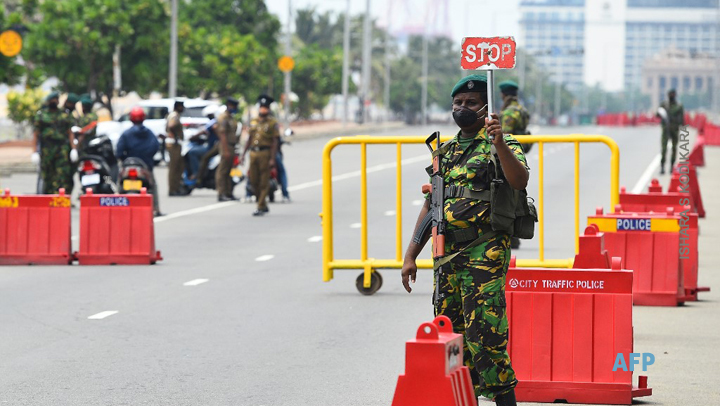
Colombo: Sri Lanka President Gotabaya Rajapaksa today declared a state of emergency giving security forces sweeping powers for the second time in five weeks to deal with escalating anti-government protests. A spokesman for the President said he invoked the tough laws to “ensure public order” after trade unions staged a nationwide strike Friday demanding his resignation over a worsening economic crisis.
Earlier today, the police again fired tear gas and water cannon at students trying to storm Sri Lanka’s parliament as the country was brought to a halt by a trade union strike demanding the government step down.

Months of blackouts and acute shortages of food, fuel and pharmaceuticals have caused widespread suffering across the island nation of 22 million people.

Public anger has sparked sustained protests demanding the government’s resignation over its mismanagement of the crisis, Sri Lanka’s worst since independence in 1948.

Thousands of student protesters had been camped on the road leading to the legislature, which is on a man-made island on a lake in the capital Colombo, since Thursday.

Officers fired a barrage of tear gas followed by water cannon from two trucks, but the crowd quickly reassembled behind police barricades set up to block access to the parliament.

It was the second time police tried to disperse the crowd with tear gas, after an earlier unsuccessful attempt on Thursday afternoon.

Millions of workers stayed off the job today in a strike organised by the country’s trade union movement, with all but one scheduled train service cancelled. Privately owned buses were off the roads while industrial workers demonstrated outside their factories and black flags were hung across the country in an expression of anger against the government.

“We can pinpoint the policy blunders of the President that led to this very sorry state of our economy,” said trade union leader Ravi Kumudesh. “He must go.”

Private buses, which account for two-thirds of the country’s fleet, were also off the road, Private Bus Operators Association chairman Gemunu Wijeratne said. “We are not providing services today, but if groups of people want to join the anti-government protests within a radius of 20 kilometres, we will give our buses free of charge,” Mr Wijeratne told reporters in Colombo.

Mr Rajapaksa has insisted he will not step down despite escalating demonstrations across the island, including a protest that has been camped outside his seafront office for nearly a month.

Sri Lanka’s economic crisis took hold after the coronavirus pandemic hammered income from tourism and remittances.

Unable to pay for fuel imports, utilities have imposed daily blackouts to ration electricity, while long lines of people snake around service stations for petrol and kerosene. Hospitals are short of vital medicines and the government has appealed to citizens abroad for donations.

Last month Sri Lanka announced it was defaulting on its $51 billion foreign debt, and finance minister Ali Sabry warned this week that the country will have to endure its unprecedented economic hardships for at least two more years.

Midnight protests rock Sri Lanka’s Parliament

Several hundred people gathered outside Sri Lanka’s Parliament late Thursday night, hours after police tear-gased students who marched to the spot as part of ongoing citizens’ protests against the ruling Rajapaksas.

Their agitations continued all day on Friday, braving fresh rounds of water cannons and tear gas unleashed by police, as the Parliament convened.

Meanwhile, nearly 2,000 worker unions from the public and private sector joined a massive Hartal on Friday, in one of the largest strike actions in Sri Lanka in recent history. Train and bus transport came to a virtual standstill across the island, with only private vehicle seen on the road. Employees at most commercial establishments, including banks, did not report to work.

The demonstrators chanted anti-government slogans outside the Parliament complex, in the latest escalation of agitations demanding that President Gotabaya Rajapaksa and Prime Minister Mahinda Rajapaksa resign, taking responsibility for the economic meltdown in the island.

For months now, citizens have been holding street protests in different parts of the country, as they battle acute shortages of essentials and long power cuts. On April 9, the protests intensified as thousands culminated at Colombo’s seafront, near the Presidential Secretariat, asking the Rajapaksas to quit immediately. The seaside protests have persisted for nearly a month now, with several protesters camping adjacent to the country’s most powerful office. More recently, demonstrators set up tents outside the Prime Minister’s official residence, and now, the agitations have spread to the road leading to the Parliament, where police have placed iron barricades to prevent protesters from entering the premises. Parliament sittings have been postponed to May 17, despite objections raised by Opposition parties.

On Thursday night, the crowd continued to swell well past midnight, as families, including children, arrived in the area, in a show of support to the protesting youth. Most waited for hours, listening to student leaders, activists and trade unionists slamming the government for its “arrogance” and “failure”. A live band played music, mostly songs of resistance, on a temporary stage erected on top of the road.

Convenor of the Inter-University Student’s Federation Wasantha Mudalige said the government is “strangling people’s necks” as there is “no food, no fuel, nothing!”. “In such a situation, university students must speak up. Police tear-gased us, but we will continue agitating here, to tell Parliament that its members are not representing us, or our concerns,” he told The Hindu.

Civil activist Gamini Viyangoda described the protest as “a very important step forward”. Observing that society now has “many new avenues” to express themselves, he said “rulers have not understood” that, and think in the “same old methods”. He was referring to the Parliament electing a Deputy Speaker on Thursday.

The Rajapaksas’ ruling party, along with its former allies who claim to be independent now, voted together for the former Deputy Speaker, who had recently resigned, effectively re-electing him. They cast 148 votes in total, while the opposition managed to garner less than half the number in the 225-member House. The move exposed both, the firm loyalty of apparent deserters to their former political bosses, and the Opposition’s weakness in the legislature, where it hopes to move trust votes against the government and President.

Source:The Hindu