‘Sri Lanka is a case study on how not to run a country’

In the backdrop of public protests in Sri Lanka, Harsha De Silva, MP of the opposition Samagi Jana Balawegaya, spoke to TOI in Colombo:

How would you sum up the crisis?
It is a political, economic and social crisis like never before.

What were the early warning signs that the government missed?
Immediately after the presidential election in 2019, ahead of the parliamentary election, they cut taxes by almost a third. The rating agencies changed their outlook from ‘stable’ to ‘negative’, but the government ignored it and started printing currency. And the downgrades kept coming. Denial was their strategy. And it blew up into this.

Did the government fail to seek the right advice?
Absolutely. While we were in an unstable macro situation, unable to control inflation and exchange rates, besides being in the middle of a pandemic, the president, against expert advice, banned import of chemical fertilisers. And now the harvest of tea, export crops, plantation crops, grains and rice are down by 50%. IMF was willing to give us reserves to try and hold the Sri Lankan rupee at 230 (against the US dollar), which they said was the level it was going to fall to. But then it kept dropping and today we are at 330. The government was utterly negligent, inconceivably idiotic. This is a case study of how not to run a country.

Why did the government delay approaching the International Monetary Fund?
I don’t understand why they delayed it. Every independent economist in Sri Lanka and abroad advised the president that he should do it (approach the World Bank). But certain people, particularly, former central bank governor Ajith Nivard Cabraal (who resigned on April 4) and Basil Rajapaksa (former finance minister) thought they had some home-grown solution. I think they misdiagnosed the problem; or they diagnosed it, but didn’t want to accept the reality. They kept saying this is a liquidity problem. There was also a liquidity problem, but the bigger problem was a solvency problem. These people have been utterly negligent.

Do you think there should be war-like action?
Yes. The only positive thing is that they have now appointed a professional as the governor of the central bank (P Nandalal Weerasinghe). The first thing he did after taking charge was to raise key interest rates by 700 basis points (7 percentage points) – a first. And, the opposition, not wanting to play politics at this time, supported him. A three-member advisory group on multilateral engagement and debt sustainability to advise the president has been constituted. It includes former governor of the central bank Indrajit Coomaraswamy, former chief economist of World Bank Shanta Devarajan and former director of the Institute of Capacity Development of the IMF Institute Sharmini Coorey.

Do you think India should help more? If so, how?
As a citizen of Sri Lanka, I must tell you the people of our country are thankful to the people of India. They have come to our help when we needed it the most. If India didn’t postpone what are called these Asian clearing union credits, that is payment for goods purchased coming due, we would have defaulted on some other loan three months ago. They have given us credit to buy food and medicine, given us credit to buy fuel. It is embarrassing for us to ask for food and medicines from anyone. It is tough for us, but we will come out of this and we will rise much faster.

Why did the opposition reject the president’s move to form a unity government involving opposition members?
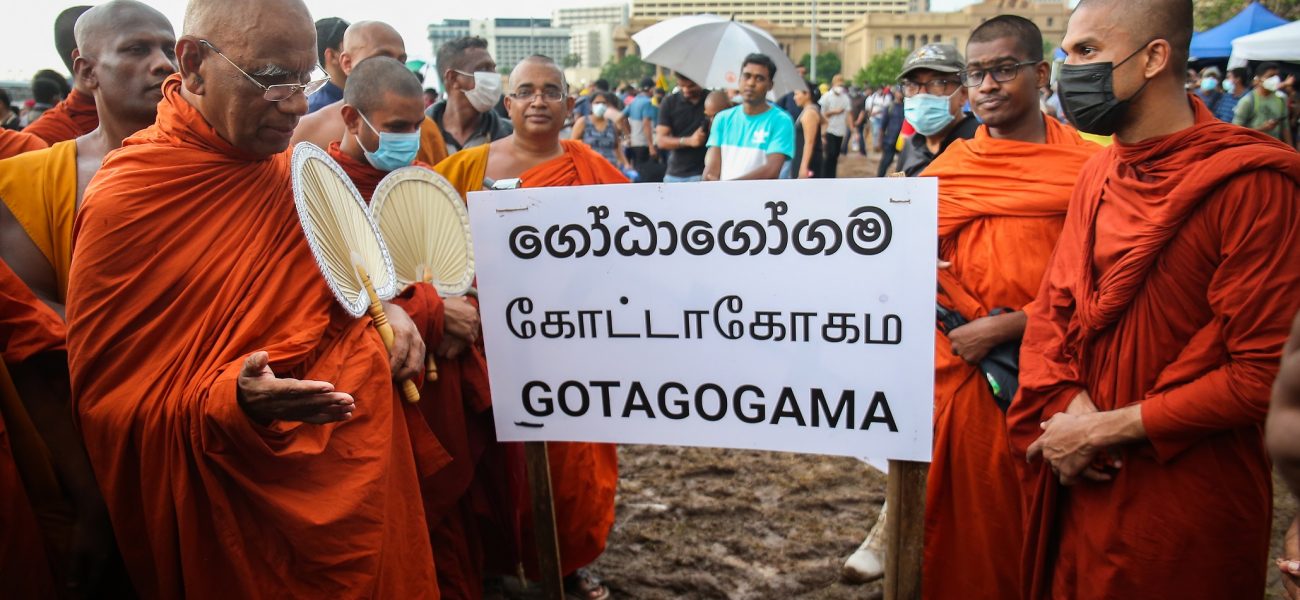
The country is saying ‘Go home Gota’. How can we go against such sentiments? We said we are willing to take over the government and turn around the situation. We have the skills, the people, the connections. The way out now is by invoking the 21st amendment of the constitution to abolish the executive presidency. For this we need the support of two-thirds in parliament and a referendum. If Gotabaya agrees to that, a pathway will open to reset the economy. The referendum can happen along with a general election. Crises create opportunities. This is a good time to fulfil the promise of almost every presidential candidate since 1994 – Chandrika, Mahinda, Sirisena – to get rid of this concentration of power in one individual.

Can you give us a preview of the economic blueprint your team is working on?
First, we need to stabilise the macro-economy. We need to rein in inflation, hold the currency and have some meaningful intrastat. We should restructure jobs. We should revise taxes, rationalise expenditure, remove the stranglehold of government in the market by liberalising the trade and investment policy. We should focus on social safety banks because lower income people are getting hammered.

Posted in Uncategorized

US Report Against Human Rights Abuse in Sri Lanka

While acknowledging that Sri Lanka is a constitutional, multiparty, democratic republic with a freely elected government, the US State Department’s human rights report on the island nation for 2021 has few compliments to pay on the way it handled human rights issues. Abuses of various kinds were “significant” the report released on April 12 said.

According to the report, the government took “minimal steps” to identify, investigate, prosecute, and punish officials who committed human rights abuses or corruption. There were several reports that the government or its agents committed arbitrary or unlawful killings.

The report refers to the ‘Harm Reduction International’ to say that deaths in police custody increased during 2021. The press reported that Melon Mabula (alias “Uru Jawa”) and Dharmakeethilage Tharaka Wijesekara (alias “Kosgoda Tharaka”), were shot dead by police in May while they were in detention. The Bar Association of Sri Lanka condemned the killings.

On June 16, the Court of Appeal granted bail to former Director of the Criminal Investigations Department (CID) Shani Abeyesekera, who had been in pre-trial detention since July 2020 without charge for allegedly fabricating evidence in a 2013 case. Civil society considered his arrest in 2020 to be reprisal for his investigations into several high-profile murder, disappearance, and corruption cases involving members of the sitting government, including members of the Rajapaksa family.

Lack of accountability for conflict-era abuses persisted, the report stated. On January 11, the Attorney General’s Department (AGD) informed the Batticaloa High Court that it would not continue with the murder charges against the Tamil Makkal Viduthalai Pulikal party leader Sivanesathurai Chandrakanthan, aka Pillayan and five others for the 2005 killing of former Tamil National Alliance (TNA) member of parliament (MP) Joseph Pararajasingham. Pillayan, a former Liberation of Tamil Tigers Eelam (LTTE) cadre, had a plethora of allegations against him, but he became an ally of the Rajapaksas after the war.

On May 5, the Jaffna Magistrate Court ordered the release of six suspects in the October 2000 death of BBC Tamil reporter Mayilvaganam Nimalarajan, after the Attorney General advised the court that the government would no longer pursue the case. Nimalarajan was allegedly shot and killed by members of the pro-government Eelam People’s Democratic Party in his home in Jaffna.

On June 24, the President issued a special presidential pardon to former Sri Lanka Freedom Party (SLFP) parliamentarian Duminda Silva, sentenced to death in 2016 for the 2011 killing of fellow SLFP MP Bharatha Lakshman Premachandra during local elections. On July 16, the President appointed Silva as the chairman of the National Housing Development Authority.

Disappearances during the war and its aftermath remained unresolved. In February 2020 the Office on Missing Persons (OMP) received authorization to issue Interim Reports to the relatives of the missing and disappeared. The Interim Reports and Certificates of Absence could be used by family members to legally manage the assets of missing persons and assume custody of children. But the families of the disappeared said that issuing death certificates for the missing and disappeared, without investigation and disclosure of what happened to them, only promoted impunity.

On August 4, the Attorney General’s Department announced its intent to drop charges against former Navy Commander Adm. Wasantha Karannagoda for alleged involvement in the abduction and disappearance of 11 persons from Colombo in 2008 and 2009 as the complaint against him was allegedly politically motivated. On December 9, Karannagoda was sworn in as Governor of North Western Province.

As of December 14, 2021, there had been no progress on the trial of seven intelligence officers accused of participating in the 2010 disappearance of Prageeth Eknaligoda, a journalist and cartoonist.

Civil society organisations asserted that the government, including the courts, were reluctant to act against security forces alleged to be responsible for past abuses.

On October 21, the Supreme Court ordered the IGP to launch a criminal investigation into the allegation that former State Minister of Prisons Lohan Ratwatte threatened to kill Tamil terrorist suspects in the Anuradhapura jail on September 12. But as of October 25, Ratwatte had not cooperated with the CID.

Under the Prevention of Terrorism Act (PTA), detainees may be held for up to 18 months without charge, but in practice authorities often held PTA detainees for longer periods, some for more than 10 years. Judges require approval from the AGD to authorise bail for persons detained under the PTA. The AGD provided such approval in some cases. However, the law requires the provision of counsel for those without counsel only in cases before the High Court and Court of Appeal.

On August 25, the Inspector General of Police told the press that the government had arrested 723 individuals for alleged involvement in the 2019 Easter Sunday bombings, and that 311 individuals remained in detention. According to civil society, almost all these individuals were being held without charge under various combinations of the PTA, the International Covenant on Civil and Political Rights (ICCPR) Act, and the penal code.

On August 28, the President appointed a three-member advisory board to make recommendations on holding or releasing individuals held under PTA detention orders. According to civil society, at year’s end the government had released 16 PTA detainees on the recommendation of the board.

The government arrested five prominent Muslims in 2020 and 2021 for alleged involvement in the 2019 Easter Sunday bombings and indicted three of them on speech-related offenses under the PTA. Poet Ahnaf Jazeem was arrested under the PTA

in May 2020 for a collection of Tamil poems he published that allegedly contained “extremist” messages But Amnesty International asserted that the writings actually spoke out against extremism, violence, and war.

On September 7, the international NGO ‘Freedom Now’ filed a petition on his behalf with the UN Working Group on Arbitrary Detention, noting that “Ahnaf’s poetry should be celebrated, not condemned.” He was released on December 16.

On March 16, authorities arrested former Western Province governor Azath Salley under the PTA after he criticized the cabinet’s decision to ban polygamy at a March 10 press conference. The arrest came after a ruling government MP filed a complaint alleging Salley had “direct or indirect” links to the Easter Sunday attacks. On December 2, the Colombo High Court acquitted Salley of all charges.

Political opposition and civil society raised alarm over the government’s Presidential Commission of Inquiry (PCoI) on Political Victimisation report, which alleged the previous government had targeted members of the existing government and their loyalists with politically motivated investigations and prosecutions. It was feared that the report would be used to get many guilty ruling party men off the hook.

The attorney general filed indictments against human rights lawyer Hejaaz Hizbullah for speech-related offences under the PTA, ICCPR Act, and penal code on March 12. He remained in detention at year’s end, more than 20 months after his April 2020 arrest. The UN High Commissioner for Human Rights Michelle Bachelet in her September 13 update at the UN Human Rights Council (UNHRC) raised concerns regarding the application of the PTA, citing Hizbullah and Jazeem by name.

A Muslim businessman, Fazl Muhammed Nizar, was detained by police under the PTA for a January 9 Facebook post accusing the government of using heavy-handed tactics to govern.

There were reports of harassment and intimidation of journalists when covering sensitive issues. Reporters alleged that the authorities, sometimes in government vehicles, surveilled journalists, especially those covering protests.

The US report further said that the 20th constitutional Amendment (20A) of 2020 is marked by a “broad expansion of executive authority that activists said would undermine the independence of the judiciary and independent state institutions.” Institutions such as the Human Rights Commission and the Election Commission are subverted by granting the President sole authority to make appointments to these bodies with Parliament afforded only a consultative role.

Posted in Uncategorized

The Colombo cascade: Sri Lanka halts debt payments, raising fears it could be the first of many emerging market economies to collapse

Sri Lanka is a country which has lived through multiple catastrophes since winning its independence from Britain in 1948.

Most calamitously, there were three decades of civil war between the majority Sinhalese and the minority Sri Lankan Tamils.

Yet throughout this troubled history, the government in Colombo has never reneged on its debts.

But with protesters on the streets complaining about soaring food and fuel prices and the leadership of the ruling family, the finance ministry felt it had few other choices but to suspend payments.

It stressed the country’s uninterrupted record of paying its way through thick and thin, adding that to continue to do so ‘was no longer tenable.’

Sri Lanka is no Argentina, which has formally defaulted on its debt nine times since 1827 and twice in recent decades.

As the country seeks to deal with what IMF boss Kristalina Georgieva describes as ‘crisis on top of crisis’ – the pandemic followed by the war in Ukraine – it decided it has no other choice but to try to reshape the financial and economic landscape.

In spite of past strife, Sri Lanka with its highly talented, well-educated government elites, is not the first nation which would be thought of as sparking a global meltdown.

Its difficulties, however, mirror a huge build-up of debt, social inequality, poverty and hunger across emerging markets and the developing world during Covid.

The Western nations have been so focused on their own health and economic disruption in the pandemic that the rest of the world barely has received any attention.

A report, just compiled by the UN trade and development arm Unctad, warns ‘we are on the brink of a global debt crisis.’

Before the Ukraine war, developing countries were on average spending 16pc of export earnings on servicing debt. The figure among smaller and island states is twice that.

To place matters in perspective, Germany’s debt obligations when they were reorganised (effectively written off) by its creditors in 1953 never exceeded 3.4 per cent of exports.

Sri Lanka crisis: China to provide emergency assistance

The Chinese government has decided to provide emergency humanitarian assistance to Sri Lanka to help the country cope with the current difficulties, news agencies reported.

The spokesperson for China International Development Cooperation Agency, Xu Wei, on Tuesday, said China had noticed Sri Lanka’s economic difficulties and was ready to help.

Wei said, “We believe that the Sri Lankan government and people will overcome the temporary difficulties and maintain economic and social stability and development.”

Sri Lanka had been in the midst of a severe economic crisis featuring shortages of foreign exchange, fuel, and other essential supplies as well as rising inflation.

On Tuesday, protests had resumed across the country over the fuel price hike.

The protesters were demanding the resignation of President Gotabaya Rajapaksa and Prime Minister Mahinda Rajapaksa, who is the president’s brother.

The economic crisis in Sri Lanka had meant a lack of the United States dollars, which had affected imports.

U.S. Ambassador calls for a transparent investigation into Rambukkana incident

The U.S. Ambassador to Sri Lanka Julie Chung has called for a full, transparent investigation on the shooting by the Rambukkana Police at unarmed protesters who were protesting against the fuel prices hike announced yesterday.

Issuing a statement on Twitter, the U.S. Ambassador condemned violence against the protesters or the police and called for restraint and calm from all sides.

She said a full, transparent investigation is essential and the people’s right to peaceful protest must be upheld.

“I am deeply saddened by the horrible news coming out of Rambukkana. I condemn any violence – whether against protesters or police – and call for restraint & calm from all sides. A full, transparent investigation is essential & the people’s right to peaceful protest must be upheld,” Ambassador Chung tweeted.

Posted in Uncategorized

Police curfew in Rambukkana following unrest

Police curfew has been declared within the limits of Rambukkana police area with immediate effect.

The curfew order will be effective until further notice, the Police Spokesman said.

The move came after one person died this evening (April 19) following a clash between the protesters and the police during a demonstration staged in Rambukkana against the recent fuel price hike.

The victim, who was rushed to the Kegalle Teaching Hospital, was pronounced dead due to gunshot wounds, the director of the hospital Dr. Mihiri Priyangani confirmed.

At least 24 other injured persons including 08 police officers who were at the scene have also been admitted to the Kegalle Teaching Hospital. Several of them are reportedly in critical condition.

As per reports, one of them is receiving treatment in the intensive care unit of the Kegalle Teaching Hospital.

It was the first death in the protests against the government that has prevailed from March 31.

The fuel price hike resulted in the price increase of wheat flour, bread, and transport, which angered the public.

Police Spokesman Nihal Thalduwa said the police fired after protesters started pelting stones at them.’

Posted in Uncategorized

One killed, 27 injured As Sri Lanka Police Fire At Anti-Government Protesters

One person has been killed and at least 27 others were injured after Police opened fire to disperse protestors in Rambukkana, Sri Lanka on Tuesday (19) evening.

The police have fired tear gas and opened fire to curb the tense situation in Rambukkana due to a protest against the increase in fuel prices today.

The injured have been admitted to Kegalle and Rambukkana hospitals.

Ten persons injured in the incident have been admitted to the Kegalle Hospital and one of them has succumbed to his injuries, hospital director Dr. Mihiri Priyangani confirmed.

The director of the hospital said the condition of two of the other nine injured persons was serious. The director of the hospital stated that it is suspected that the injuries sustained by the injured were due to gunshots.

Among the injured were 10 policemen including an Assistant Superintendent of Police, They are receiving treatment at the Kegalle Hospital.

Hospital sources said that four of the injured admitted to the two hospitals were in critical condition.

It is reported that troops have been deployed to ensure security in the area.

Sri Lanka Police confirmed that the police opened fire to disperse a group of protestors who were obstructing the Rambukkana Railway Crossing since early morning.

Police Spokesperson SSP Nihal Thalduwa said police issued warnings to the protestors to leave the area but they did not comply. He said the protesters were preparing to set a petrol bowser on fire.

A tense situation arose when the Rambukkana Police fired tear gas to disperse the protesters who were blocking roads and the railway line for more than 15 hours and the protesters have pelted stones at the Police.

The protesters have been protesting since 1:30 am Tuesday demanding a solution to the fuel crisis have closed the Kandy-Colombo main railway line from Rambukkana town, while others have closed the Rambukkana-Kegalle, Kurunegala and Mawanella roads.

As a result, train services on the main line were severely disrupted from this morning and many trains were canceled by the railway authorities.


Wimal-Gammanpila-Vasu group MP joins the Government

A Parliamentarian from the Democratic Left Front led by MP Vasudeva Nanayakkara has joined the Government.

He was among the group of MPs from the 11 constituent parties of the Government that withdrew their support for the incumbent Government.

A total of 42 MPs from the 11 constituent parties, including Vasudeva Nanayakkara, Wimal Weerawansa, and Udaya Gammanpila quit the Government last week.

However, Gayashan Navananda from the Democratic Left Front was sworn in as the State Minister of Health today.

Meanwhile, the group of 42 MPs that had quit the Government earlier has now reduced to 38 Parliamentarians, as four MPs from the group have accepted ministerial portfolios under the incumbent Government.

Along with Gayashan Navananda, Sri Lanka Freedom Party (SLFP) MPs Shantha Bandara and Suren Raghavan have also accepted ministerial portfolios.

SLPP MP Priyankara Jayaratne also accepted a State Ministry.

Suren Raghavan was sworn in as the State Minister of Education, Services, and Reforms today.

SLFP MP Shantha Bandara accepted the ministerial portfolio of State Minister of Agriculture last week.

A total of 4 MPs from the independent group of MPs have rejoined the Government as of now.

Moody’s downgrades Sri Lanka sovereign rating to Ca

Moody’s Investors Service (“Moody’s”) has today downgraded the Government of Sri Lanka’s long-term foreign currency issuer and senior unsecured debt ratings to Ca from Caa2. The outlook is stable.

The decision to downgrade the ratings is driven by the authorities’ announcement of debt servicing suspension [1] on external public debt repayments, which will lead to a series of defaults with the first coupon payments for the government’s international bonds coming due today, 18 April 2022.

Given the low level of foreign exchange reserves, compounded by the rise in balance of payment pressures with higher fuel and food prices and the slow recovery in tourism and foreign direct investment inflows, Moody’s assesses that private sector creditor losses stemming from the eventual debt restructuring is likely to be material and exceed the limited levels of loss consistent with the previous Caa2 rating.

This assessment further reflects governance weaknesses in the ability of the country’s institutions to take measures that decisively address the very low adequacy of foreign exchange reserves and very weak debt affordability, thereby contributing to loss given default, at least in line with precedents by other defaulting sovereigns.

Although credit pressures remain significant, the stable outlook reflects Moody’s view that the scale of losses that private sector creditors would face in a debt restructuring would likely be consistent with levels associated with the Ca rating.

A status quo scenario without the implementation of fiscal reforms and presence of a large external financing envelope may result in deeper losses than implied by the Ca rating.

However, the government is seeking financial support from the International Monetary Fund (IMF), which would likely be accompanied by reforms and a gradual recovery of foreign investor confidence. A quicker recovery of foreign exchange inflows, including non-debt generating flows, would in turn limit losses to private sector creditors.

Sri Lanka’s local and foreign currency country ceiling have been lowered to Caa1 and Ca from B2 and Caa2, respectively. The three-notch gap between the local currency ceiling and the sovereign rating balances a contained government footprint, against the very low foreign exchange reserves adequacy that raises macroeconomic risks as well as the challenging domestic political environment that weighs on policymaking.

The three-notch gap between the foreign currency ceiling and local currency ceiling takes into consideration the high level of external indebtedness and the risk of transfer and convertibility restrictions being imposed given low foreign exchange reserves adequacy, with some capital flow management measures already imposed.

RATINGS RATIONALE

RATIONALE FOR DOWNGRADING THE RATINGS TO Ca

The announcement of the interim policy to suspend the servicing of external public debt after 5pm Colombo time on 12 April 2022 will lead to a series of default on Sri Lanka’s international bonds with coupon payments due as soon as today. The default is unlikely to be cured during the grace period, given the stated intent of the authorities to undertake comprehensive external public debt restructuring in coordination with a potential IMF programme, for which an agreement will take time.

While the manner of the debt restructuring and extent of losses for private sector creditors are yet to be determined, Moody’s assesses that the losses are likely to exceed levels consistent with the previous Caa2 rating because of Sri Lanka’s very low foreign exchange reserves adequacy and significant debt sustainability challenges. A Ca rating is consistent with losses between 35% and 65%, in line with – a relatively wide range of – precedents by defaulting sovereigns.

Sri Lanka’s foreign exchange reserves adequacy has continued to decline despite continued financing support from bilateral development partners including India and China. Foreign exchange reserves excluding gold and special drawing rights stood at $1.7 billion at the end of March 2022, sufficient to cover only around 1 month of imports, with the Central Bank of Sri Lanka having fully drawn down its $1.5 billion swap with the People’s Bank of China. This compares to foreign exchange reserves of $2.1 billion as of the end of September 2021 and with the swap still a backup facility.

Higher global energy and food prices will intensify the external challenge by increasing Sri Lanka’s import bill and need for external financing for the wider economy. The country’s current account deficit widened to 3.9% of GDP in 2021 from 1.5% in 2020, and Moody’s expects the deficit to widen further to an average of 6-7% in 2022-23, with the larger deficit in dollar terms magnified by a decline in nominal GDP due to currency depreciation.

Until a large external financing envelope becomes available, Moody’s expects foreign exchange inflows into Sri Lanka to remain subdued. The tourism recovery had been hampered by the emergence of the omicron variant of the coronavirus when Sri Lanka’s international borders reopened, while lengthy power cuts and food shortages amid import restrictions to preserve foreign exchange, coupled with street protests, are likely to deter tourists.

Tourist arrivals from January to March 2022 were only around a third of the pre-pandemic level over the corresponding period in 2019. Likewise, the same factors deterring tourists are also likely to weigh on foreign investor confidence and foreign direct investment. Both tourism and foreign direct investment were key parts of the authorities’ strategy to shore up foreign exchange reserves.

The authorities have recently approached the IMF for financial support, which may unlock further external funding from multilateral development partners and lead to a credible and secure external financing envelope. However, an agreement will take time, and Moody’s believes that private sector creditors of Sri Lanka’s external commercial debt are nonetheless likely to incur losses that exceed the limited loss levels consistent with the previous Caa2 rating.

Besides the very low adequacy of foreign exchange reserves, Sri Lanka faces significant debt sustainability challenges. Its debt burden is high and rising because of its narrow government revenue base and wide fiscal deficits, while debt affordability is weakest across sovereigns that Moody’s rates, by some distance. Moody’s estimates that the government’s debt burden was 104% of GDP as of the end of 2021 and interest payments absorbed more than 70% of revenue, with revenue amounting to less than 9% of GDP.

RATIONALE FOR THE STABLE OUTLOOK

The stable outlook reflects Moody’s view that private sector creditor losses in the eventual debt restructuring will likely be consistent with levels associated with the Ca rating.

On the downside, extensive delays to the implementation of fiscal adjustments and reforms, and the inability to secure a large, credible and secure external financing envelope from multilateral development partners may result in even larger losses than implied by the Ca rating. In a status quo scenario, Moody’s projects that Sri Lanka’s debt burden would rise to more than 125% of GDP by the end of 2022, in part exacerbated by the depreciation of the Sri Lankan rupee this year, while interest payments will continue to absorb around 70% of revenue even with the suspension of external public debt servicing, since domestic debt accounts for around 70% of interest payments.

On the upside, any agreement with multilateral development partners that unlocks significant external financing may gradually restore foreign investor confidence and crowd in private sector investment. Combined with Sri Lanka’s tourism potential, a rapid recovery of foreign exchange inflows may limit the losses to private sector creditors.

ENVIRONMENTAL, SOCIAL, GOVERNANCE CONSIDERATIONS

Sri Lanka’s ESG Credit Impact Score is very highly negative (CIS-5), reflecting its very weak governance that significantly constrains the government’s capacity to address its highly negative exposure to environmental and social risks.

The exposure to environment risk is highly negative (E-4 issuer profile score). Variations in the seasonal monsoon can have marked effects on rural household incomes and real GDP growth: while the agricultural sector comprises only around 8% of the total economy, it employs almost 30% of Sri Lanka’s total labour force.

Natural disasters including droughts, flash floods and tropical cyclones that the country is exposed to also contribute to higher food inflation and import demand. Moreover, ongoing development projects to improve urban connectivity have increased the rate of deforestation, although the country continues to engage development partners to preserve its natural capital, such as its mangroves.

The exposure to social risk is highly negative (S-4 issuer profile score). Balanced against Sri Lanka’s relatively good access to basic education, which has continued to improve throughout the country in the post-civil war period, are weaknesses in the provision of some basic services in more remote and rural areas, such as water, sanitation and housing.

As the country’s population continues to grow, the government will face greater constraints in delivering high-quality social services and developing critical infrastructure amid ongoing fiscal pressures.

The influence of governance is very highly negative (G-5 issuer profile score). While international surveys point to stronger governance in Sri Lanka relative to rating peers, including in judicial independence and control of corruption, persistent delays to the implementation of credit-positive reforms indicate significant institutional challenges. These challenges have resulted in the crystallisation of external vulnerability and government liquidity risks and the sovereign’s debt default. Domestic political developments also tend to weigh on fiscal and economic policymaking.

GDP per capita (PPP basis, US$): 14,123 (2021 Estimate) (also known as Per Capita Income)
Real GDP growth (% change): 3.7% (2021 Estimate) (also known as GDP Growth)
Inflation Rate (CPI, % change Dec/Dec): 14.0% (2021 Estimate)
Gen. Gov. Financial Balance/GDP: -11.3% (2021 Estimate) (also known as Fiscal Balance)
Current Account Balance/GDP: -3.9% (2021 Estimate) (also known as External Balance)
External debt/GDP: 60.0% (2021 Estimate)
Economic resiliency: b1

Default history: No default events (on bonds or loans) have been recorded since 1983.
On 13 April 2022, a rating committee was called to discuss the rating of the Sri Lanka, Government of.

The main points raised during the discussion were: The issuer’s economic fundamentals, including its economic strength, have materially decreased. The issuer’s institutions and governance strength has materially decreased. The issuer’s fiscal or financial strength, including its debt profile, has not materially changed. The issuer has become more susceptible to event risks.

FACTORS THAT COULD LEAD TO AN UPGRADE OR DOWNGRADE OF THE RATINGS

Sri Lanka’s credit fundamentals will likely remain very weak for the foreseeable future. Prospects of smaller losses for private sector creditors than currently implied by the Ca rating as part of the government’s eventual debt restructuring would likely lead to a higher rating.
Conversely, the rating would be downgraded if losses for private sector creditors were likely to exceed levels associated with the Ca rating, as part of the government’s debt restructuring plan.

Posted in Uncategorized

USD selling rate jumps to Rs. 340 at several banks

Several licensed commercial banks in Sri Lanka have declared their selling rate of US dollar at Rs. 340 today (April 18).

The selling rate of US dollar per Sri Lankan Rupee according to the daily exchange rates of several licensed commercial banks is as follows:

BOC – Rs 340.00
People’s Bank – Rs 329.99
Sampath Bank – Rs 340.00
HNB – Rs 340.00
NDB – Rs 335.00
Amana Bank – Rs 340.00

In the wake of the Central Bank’s decision to float the currency, the buying and selling rates of the USD have been fluctuating daily.

On March 07, the Central Bank of Sri Lanka announced that greater flexibility has been allowed in the exchange rate with immediate effect. However, the Central Bank had said it is of the view that the rate will not exceed Rs. 230 per USD.