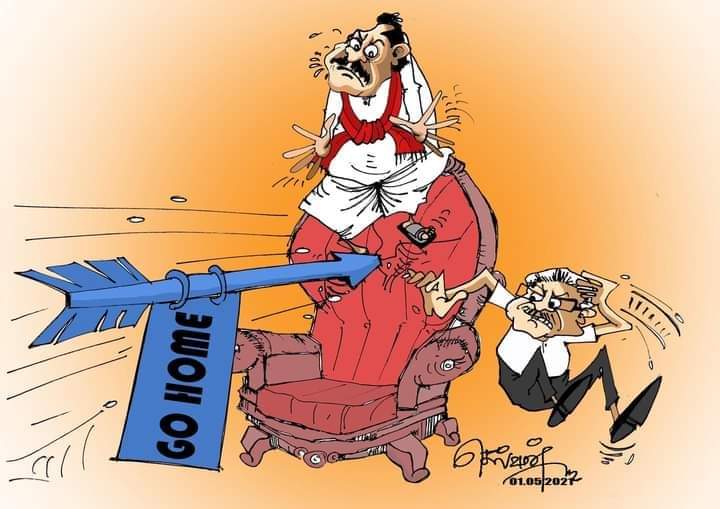
Gota’s gotta go, Lankans say, Destination Uganda?

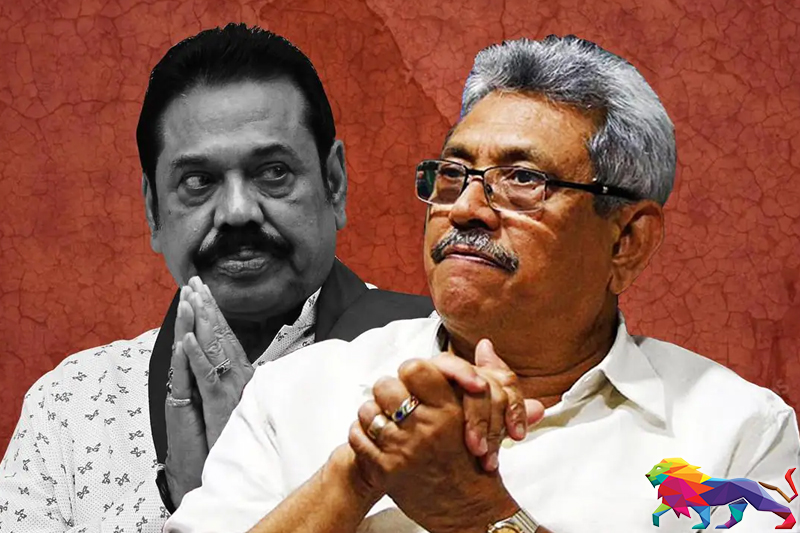
Visitors to one of the many homes of the embattled President of Sri Lanka, Gotabaya Rajapaksa — now facing a wave of street protests over a crippling economic meltdown — almost always stop to admire an unusual ‘aquarium’ in the living room.

Not only is it on the floor, covered with a sheet of glass, the fish in the water body isn’t your usual garden variety goldfish, but a school of man-eating piranhas!

The President’s choice of pet fish — straight from James Bond villain Blofeld’s playbook — epitomises not just his luxe lifestyle, but his ‘take no prisoners’ persona of conducting business, in keeping with the image he’s carefully cultivated as the ‘Terminator’. The annihilation of the separatist Liberation Tigers for Tamil Eelam (LTTE) in the long-running 30-year battle, powered him to the presidency in the 2019 polls, polling 6.9 million votes for himself, and a massive two-thirds majority for his Sri Lanka Podujana Perumana Party; the whispered silencing of nearly every one of his critics, the stuff of legend.

Mangala Samaraweera, who served as both finance and foreign minister in then-president Mahinda Rajapaksa’s cabinet, was only sacked from the job when he was suspected of tracking where the Rajapaksas parked their wealth. Others paid a much bigger price. The ‘white-van disappearances’ targeted close family friend and journalist Lasantha Wickrematunga, editor of the Sunday Leader, gunned down at a traffic light in the heart of the capital Colombo in 2009 as he drove to work.

Wickrematunga’s letter, revealed post-assassination, named Mahinda – Gotabaya’s elder brother, two-term president and head of the family — was a shocking indictment of the clan’s brute tactics in silencing critics.

Fewer dare to speak of Gota’s rumoured meltdown when he served in the army as a young soldier and reportedly sought an honourable discharge!

The difference between then and now, 13 years after he led the slaughter of the Tamil Tigers as Mahinda’s defence minister, is that Gotabaya has overnight turned into his country’s most reviled leader; as has the rest of the family, five of whom held top posts in the recently dissolved cabinet — including younger brother Basil Rajapaksa, who was finance minister until April 4.

The resignations, seen as a move to buy time, are unlikely to help shift the blame away from the first family for the economic mess the country finds itself in, or stop them from facing the music. Based on a complaint that he was “misusing public funds”, a Colombo magistrate has already ruled that the Governor of the Sri Lankan central bank, Ajith Nivard Cabraal, a key presidential aide, cannot leave the country.

The Rajapaksas are under public scrutiny, too.

The economic crisis, with foreign reserves down to an estimated $1.7 bn and gold reserves down to $29 mn, has been a long time coming. Indeed, on Tuesday, Sri Lanka defaulted on payments on $51 bn of external debt. Paikiasothy Saravanamuttu, Executive Director at Colombo’s Centre for Policy Alternatives, blames it on the “systemic failure of the government, its profligate spending to boost its own popularity rather than safeguard the economy.”

Former President Mahinda’s wooing of Chinese investment to build white elephants such as the international port facility in hometown Hambantota and capital Colombo are only two examples of many such projects that yield no revenue. The famed Lotus Tower convention centre, an international airport at Mattala, a cricket stadium named after the Rajapaksas, and a string of highways are other examples of wasteful expenditure. Raising public sector employment in government and the military in peace time, with the attendant costs of pensions eating up dwindling revenue, was in keeping with the Mahinda-Gotabaya ploy to use debt – the first International Sovereign Bonds were tapped as early as 2007 — to ensure their popularity among the gullible populace, just like Gotabaya’s tax cuts in 2019, which favoured a select few.

The blinkers are now off. The popular uprising that has exploded on the streets of Colombo, gathering pace across this once prosperous country, has angered the very same Sinhala majority that had catapulted the Rajapaksas to power.

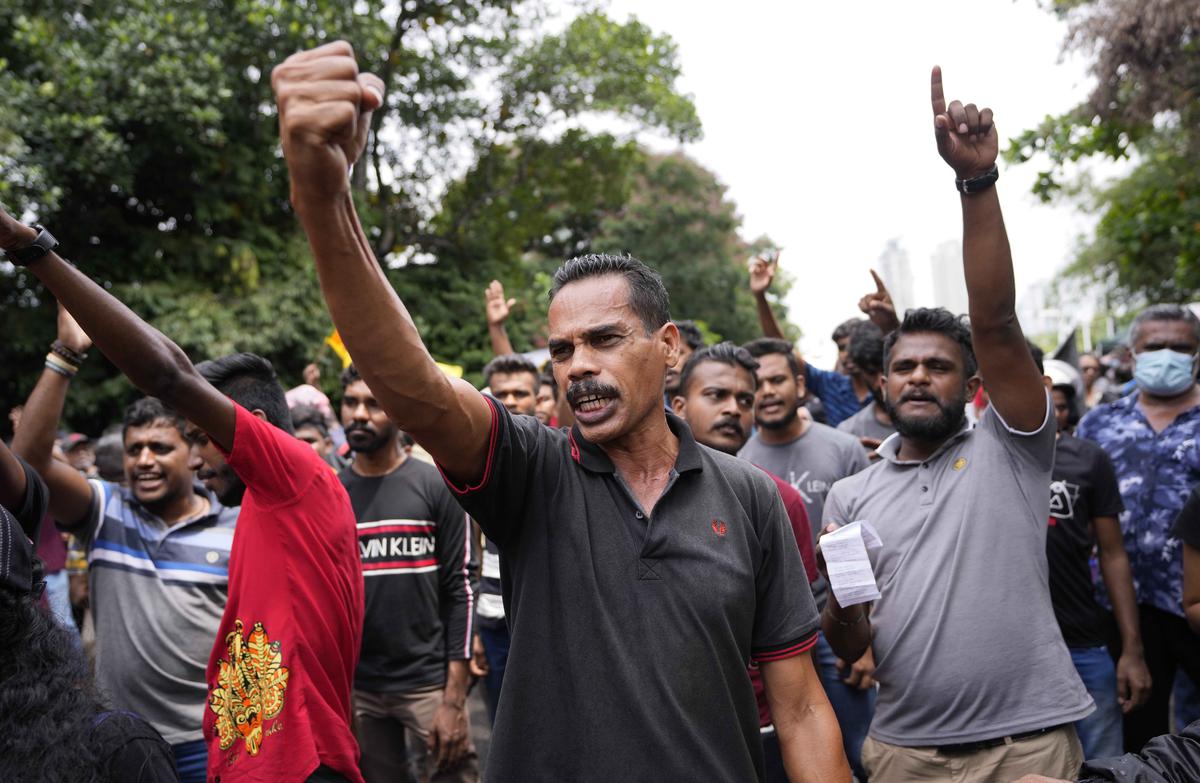
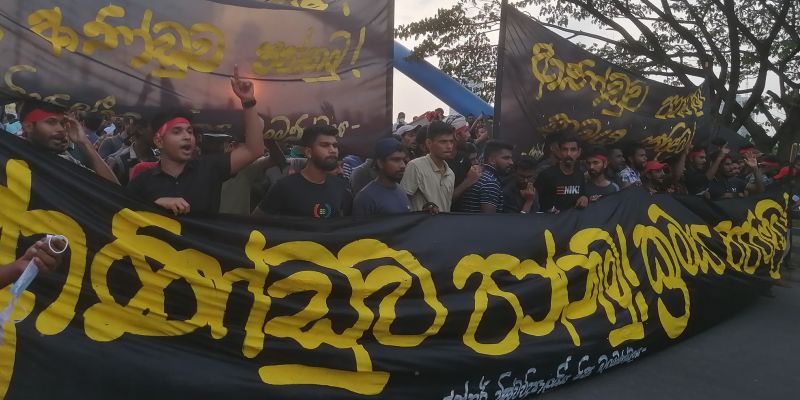
Dubbed Sri Lanka’s ‘Arab Spring’, the protesters do include members of the Tamil-speaking minority whose war-ravaged north continues to cry out for re-development, as much as justice for war crimes — the UNHRC is reportedly set to charge the President on this count. But the hundreds of thousands who are laying siege to the presidential secretariat on Colombo’s seafront have little or no political leanings. They are drawn not just from the Sinhala-speaking majority, but also Muslims, Catholics, and the clergy — both Buddhist and Christian — with nary a political leader in sight. A prominent Buddhist monk who had led poll rallies for the Rajapaksas was booed out of one such protest. Holding placards and shouting slogans are Sri Lanka’s educated and aware, young and old, doctors and factory workers, as well as fruit vendors and IT professionals, cutting across the ethnic and class divides.

Unlike even a few months ago, the fury against the Rajapaksas is because their mishandling of the economy now impacts their daily lives. The depleted forex reserves have made it near impossible to import fuel and food, causing a widespread food shortage, and the misery made worse with crippling 13-hour power cuts that have brought hospitals and all vital services to a grinding halt.

The deeply unpopular – and ill-considered — move by Gota’s government to ban the use of chemical fertilisers in this agricultural hub, with the government only allowing the import of unaffordable organic fertiliser, was a death blow to the hugely lucrative tea industry, and cultivation of staples like paddy, vegetables and fruit, making it impossible for the common man to afford even the basic necessities.

“My fruit vendor asked me not to bargain as I usually do as he didn’t have enough money to even buy food for his children,” said a resident of Galle Face, who ended up buying the whole cart of fruits and giving the tearful orange seller a set of clothes for his family for the new year on April 13-14.

This is when protests are expected to turn violent, with sources close to the government leaking the minutes of a meeting on how pro-government rowdy elements would be introduced to create the circumstances that would bring in the army and the imposition of a possible Emergency.

The first big blow to the man on the street came with the huge drop in tourism earnings after the Easter bombings of 2019, followed by tourist numbers dipping alarmingly from an average of 2.52 mn visitors in the previous years to a mere 540,000 in 2020, with tourist sector earnings declining from $ 5 bn to $ 1 bn post-pandemic. With remittances from the Middle East shrinking as thousands lost their jobs, and inflation peaking at 18.7%, the island nation’s largely prosperous 22 million population is now increasingly stretched.

Stoking the people’s rage further are the persistent — if hitherto unproven — reports of the first family robbing the exchequer and looting the economy, amid growing calls for seizure of the Rajapaksas’ properties and assets abroad. The finger-pointing at Basil’s dual citizenship, alongside questions resurfacing on whether Gotabaya had, in fact, given up his US citizenship, a criterion to be eligible for the presidency, have now reached a crescendo, with the Opposition calling for the abolition of the Executive Presidency brought in through the 20th Amendment to the Constitution, which gave Gota sweeping powers.

Gota has set up a panel to address the economic distress, and has approached the IMF for talks to restructure outstanding international sovereign bonds that amount to $12.55 billion, and seek a moratorium on the $1 billion in payments due this July. But in a reflection of government ineptitude, within 24 hours of appointing Ali Sabry as the new Finance Minister, Sabry put in his papers, but with no one else willing to take his place, returned to his post!

Gota had dispatched his brother and then Finance Minister Basil a number of times to India this past year, with the same motive, putting aside the past game of playing Delhi off against Beijing, a ploy that had infuriated the Narendra Modi government, particularly when he scrapped the Colombo Port Terminal project that had been promised to India, and handed it over to China. Adding to India’s ire, Gota handed over three islands in the north, barely 50 km from the Indian coastline to China. The Rajapaksas have since made amends by offering India an alternative to the Colombo port project and scrapping the development of the three islands with China and handing it over to India. In turn, Delhi has extended a $2.5 billion credit line and sent food and goods to its beleaguered neighbour and may well sign off on another $500 million credit line for fuel.

China’s cold shoulder is no mystery. “If China agreed to do this for Sri Lanka, it would set a very bad precedent for other countries in the China debt trap,” explains Sravannamuttu, who had urged the Rajapaksas to approach the IMF to restructure the debt, which the brothers had refused to do till this week. Too late. On Tuesday, Sri Lanka announced that it had defaulted on all its external debt.

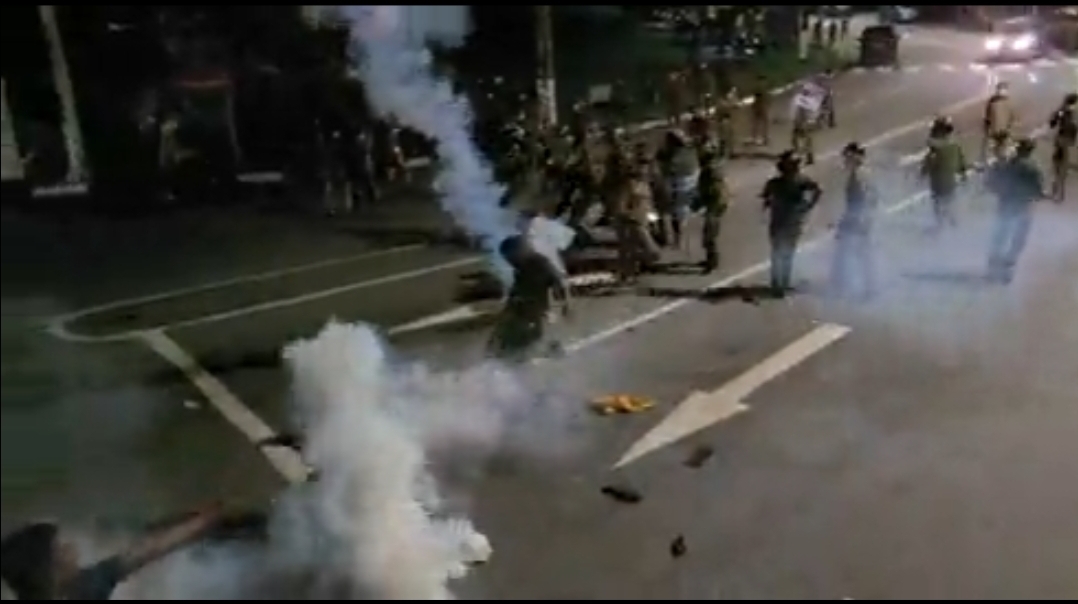
Either way, in characteristic Gota fashion, as the social media erupted last Friday, and mobs converged on the offices and homes of lawmakers, including one of the President’s homes in Mirihana where luxury cars were parked in the driveway on March 31, he declared an Emergency and announced a ban on social media. When he called it off within 48 hours, under intense pressure from the diplomatic community, one of the most popular memes doing the rounds under the #GoGotaGo hashtag is a screengrab of Mahinda’s son Namal Rajapakse with his baby son sporting Gucci baby shoes!

Namal’s family has reportedly fled the country already, but he has stayed on. But rumours of a flight of capital, showing three Sri Lankan airline aircraft heading to Uganda in February 2021 refusing to divulge the contents of the ‘paper’ cargo, and the controversy over Mahinda’s trip to the Indian temple town of Tirupati on a chartered flight that flew from Uganda’s Entebbe airport via the tax haven of San Merino, were also doing the rounds. Also circulating were reports of the close relationship between the Rajapaksas and the Sri Lankan Ambassador to Uganda and Kenya, Velupillai Kananathan, who hosted Mahinda and his wife during a visit to Kampala.

Speaking on condition of anonymity, a prominent businessman in Kampala told this reporter that it was common knowledge that Kananathan, whom The Sunday Times of Sri Lanka called “a racketeer and profiteer”, was involved in gun-running for the LTTE before he befriended the Rajapaksas. The comment could not be independently confirmed.

Also doing the rounds was a list of 10 companies that the Rajapaksas have reportedly invested in – most of them in Kampala but one each in Dubai and Liechtenstein. The family is named on the board of the Kampala-based companies which are largely real estate firms, heavy engineering and concrete manufacturing units, while the Dubai facility is a company set up to import oil from Qatar to Sri Lanka.

The Opposition alliance, led by Sajith Premadasa of the Samagi Jana Balawegaya, and former PM Ranil Wickremesinghe, backed by the Tamil National Alliance, have belatedly got into the act, attempting to cobble together a two-thirds majority, with plans to begin a no-confidence motion, and impeachment proceedings against the President. They are pushing for Gota to resign immediately, the Rajapaksas are playing for time.

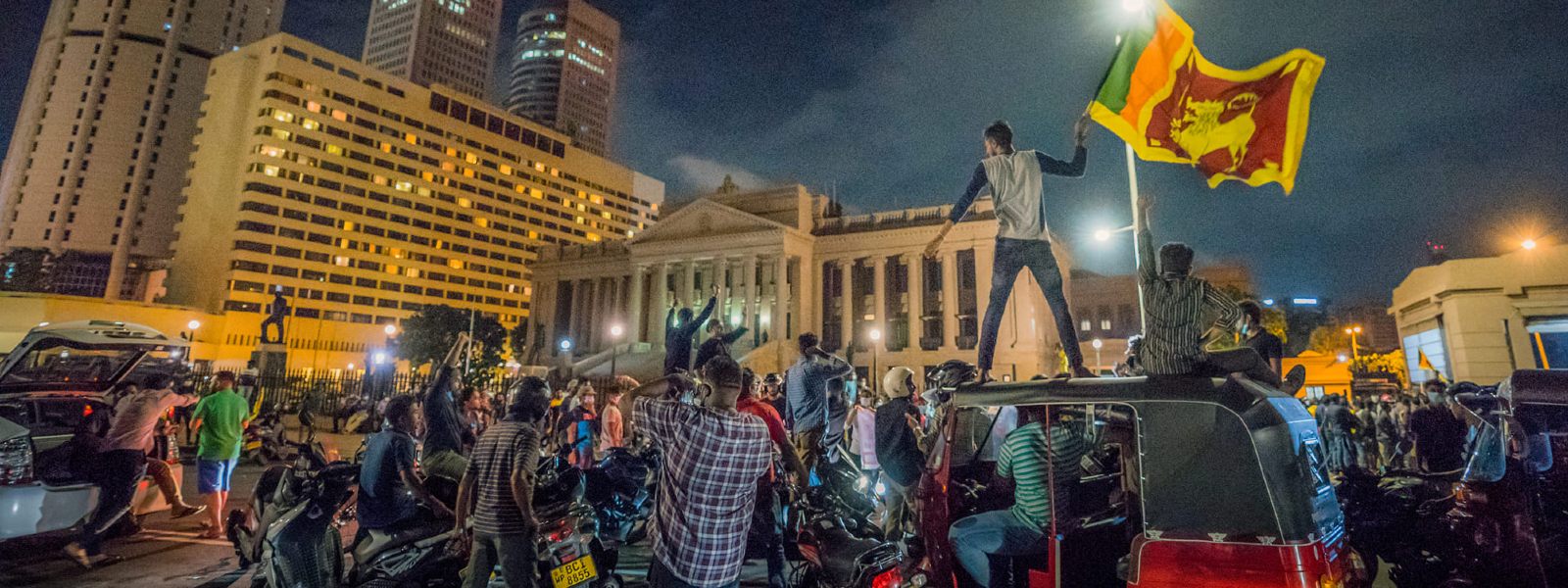
As the protesters converge on Independence Square in the heart of Colombo, steadily upping the ante, the big question is: Will the Rajapaksas stay on and fight, or scoot. Destination Uganda?

In Sri Lanka, an uneasy calm before the storm

Since Sri Lanka slowly but surely opened its doors to international travel, anyone planning to visit has had to make some compromise or the other. Till not too long ago, one had to accept rather draconian quarantine measures to be able to set foot in the country. But just as the world was limping back to some semblance of normalcy, Sri Lanka’s self-made economic crisis, heightened by the pandemic, was starting to make world headlines.

When I saw a window of opportunity with COVID restrictions being relaxed, I decided to squeeze in a ten-day personal visit towards the end of March. In the lead-up though were scenes of protests outside government offices, reports of gas shortages and cylinders stuck at the harbour because the government was broke on foreign exchange. Fuel shortages made power outages inevitable, and it would only get worse.

What does a tourist do? Accept a compromise and hope for things to get better. Why was I even slightly hopeful? Having visited Sri Lanka several times over the course of 25 years, I have seen the country undergo rapid transformation since the tension of the ethnic conflict. In the mid-2000s, I experienced phased power cuts of not more than three hours in the evenings, definitely more manageable than the current crisis. Around that time, a suicide bomber detonated a police station in the heart of Colombo, forcing a curfew, that was mercifully lifted soon.

However, the current economic crisis is extraordinary in itself and at the time the writing, non-violent protests have swelled with cricketers and middle-class working professionals calling for the President and his family to resign. It’s also a stroke of luck perhaps that I departed for India hours before the Emergency was declared, just when the muck had truly hit the fan.

During my cab ride from the airport to my father’s place in central Colombo, we pass through pitiful scenes of people holding cans queuing up for fuel at petrol stations under the harsh afternoon sun. My driver Sriyantha is simultaneously making arrangements to source a gas cylinder for his home, though at a hefty premium. He shrugs and tells me there is no other alternative. He offers his services if I plan to travel elsewhere during my stay. I ask him for his card. He tells me rather apologetically he had run out of them and can’t get any more printed due to the shortage of printing ink. This time he chuckles, though it’s more out of sheer hopelessness.

The shortages were spreading. The Island newspaper announced it would not print its Saturday edition due to a newsprint shortage. Another report mentioned the halting of printing school text books with ink in short supply. Liquid milk in supermarkets was like gold dust. Schools were cutting back on sending their vans to fetch and drop students home due to the fuel crisis. I saw swanky SUVs queuing up for diesel at the fuel station at Horton Place all the way deep into Maitland Crescent. Mind you, this area houses the city’s elite, embassies and diplomats.

The power cuts were unpredictable. It began with outages in two phases for around 5-6 hours in total. However, towards the end of March, it doubled overnight to 10 hours and then a doomsday 13 hours. I heard it wasn’t consistently this way across all areas. The outer suburbs reported much longer outages, some exceeding the 11 pm deadline, going by some social media posts.

As the cuts mounted to 10 hours and more, the newspapers published power cut schedules across the country, split into different phases. Despite this, power would be erratic, going off schedule and making it nearly impossible for people to plan their day around the cuts. One can only imagine the nightmare in a work-from-home scenario.

However, the popular southern coast was bustling with tourists, particularly from Europe. Even during the hottest hours, tourists were seen hitting the waves with their surfboards and exploring the seaside towns in groups, presumably to escape the ongoing power cuts. Save for the upscale ones, most do not have power backup. It was sultry when I checked into my resort in Mirissa, further down the coast from Galle. Power wasn’t expected for at least another three hours. We all could do nothing else but smile and accept the new reality. The sea breeze was the only saviour.

In the week leading to the Emergency and subsequent curfew – both of which were revoked quickly after citizens’ unrest – there was an eerie calm around Colombo. The peace itself seemed disconcerting, as if you knew something was about to happen but you could never tell when.

On the evening of March 31, power had returned, breaking with schedule and central Colombo was lit up. While some parts were in darkness, malls were buzzing, skyscrapers in the downtown Fort area were brilliantly lit in a thoughtless exhibition of opulence, as people ventured out for their mid-week social. What was impossible to tell was that in another part of town, outside the President’s house in Mirihana, tensions were escalating. Within hours, a nightlong curfew was imposed.

A brief chat with a three-wheeler driver summed up the general cynicism around the ruling party. I mention that the cuts have been scaled up to 13 hours. “No hope, sir. Tomorrow they say 15, next it will be full 24 hours,” he thunders.

World Bank says Sri Lanka’s economic outlook is highly uncertain, needs urgent policy measures

Sri Lanka’s economic outlook is highly uncertain due to the fiscal and external imbalances, the World Bank said today expressing concern about its impact on people.

The World Bank, in its twice-a-year regional update on economic outlook said Sri Lanka needs urgent policy measures to address the high levels of debt and debt service, reduce the fiscal deficit, restore external stability, and mitigate the adverse impacts on the poor and vulnerable.

Released today, the latest South Asia Economic Focus Reshaping Norms: A New Way Forward projects the region to grow by 6.6 percent in 2022 and by 6.3 percent in 2023. The 2022 forecast has been revised downward by 1.0 percentage point compared to the January projection, mostly due to the impacts of the war in Ukraine.

Countries in South Asia are already grappling with rising commodity prices, supply bottlenecks, and vulnerabilities in financial sectors. The war in Ukraine will amplify these challenges, further contributing to inflation and deteriorating current account balances.

“The World Bank is deeply concerned about the uncertain economic outlook in Sri Lanka and the impact on people,” said Faris Hadad-Zervos, World Bank Country Director for Maldives, Nepal, and Sri Lanka.

“We are working on providing emergency support for poor and vulnerable households to help them weather the economic crisis and we remain committed to the wellbeing of the people of Sri Lanka, and to a narrative of sustainable and inclusive growth that will require concerted and collective action”

Sri Lanka needs to address the structural sources of its vulnerabilities. This would require reducing fiscal deficits especially through strengthening domestic revenue mobilization. Sri Lanka also needs to find feasible options to restore debt sustainability. The financial sector needs to be carefully monitored amid high exposure to the public sector and the impact of the recent currency depreciation on banks’ balance sheets. The necessary adjustments may adversely affect growth and impact poverty initially but will correct the significant imbalances, subsequently providing the foundation for stronger and sustainable growth and access to international financial markets. Mitigating the impacts on the poor and vulnerable would remain critical.

In South Asia, though GDP growth continues to be solid during the recovery, all countries in the region will face challenges ahead. On a positive note, exports of services from the region are on the rise as the pandemic subsides.

The war and its impact on fuel prices can provide the region with much-needed impetus to reduce reliance on fuel imports and transition to a green, resilient and inclusive growth trajectory. The report recommends that countries steer away from inefficient fuel subsidies that tend to benefit wealthier households and deplete public resources. South Asian countries plan to move towards a greener economy by gradually introducing taxation that puts tariffs on products which cause environmental damage.

Another challenge the region faces is the disproportionate economic impact the pandemic has had on women. The report includes in-depth analysis of gender disparities in the region and their link with deeply rooted social norms, and recommends policies that will support women’s access to economic opportunities, tackle discriminatory norms, and improve gender outcomes for inclusive growth.

Posted in Uncategorized

India’s aid to Sri Lanka: Well begun is barely half done

Reams can be written on the tragedy called Sri Lanka, and wagonloads of midnight oil can be burnt in debating the causes and remedies for this human disaster that consumed three generations and is threatening the health of the gen-next. India cannot ignore this latest Lankan tsunami of shortages, especially with the stalking Chinese dragon eyeing to gobble up the island and open a new battlefront barely 30 minutes by speedboat across the Palk Strait down south.
Sri Lanka, the lovely little pearl of the Indian Ocean, should not be in such deep distress, not so frequently. The Eelam war ended in May 2009 after consuming close to 2.5 lakh lives and just when the world expected the tear-shaped island to start smiling at spiking inflows into its treasury through a revival of tourism, tea exports and remittances of its citizens working abroad, yet another crushing load of woes has sunk it deeper. Redemption seems pretty tough unless a series of miracles happen from multiple magic wands, even as the rulers in Colombo and their detractors remain locked up in their selfish agendas.
With the decimation of the Tamil Tigers and their dreaded leader Velupillai Prabhakaran, President Mahinda Rajapaksa was hailed by the Sinhala majority (constituting about 75 per cent of the 22 million population) as the saviour of the country, a reincarnation of Emperor Dutugemunu, the legendary Sinhala king who had vanquished a Tamil monarch and unified much of the country under his rule over 2000 years ago. He was crowned by his masses as the Lion in the Sri Lankan flag (it has a roaring lion holding a raised sword in one hand).
Mahinda’s brother Gotabaya, the powerful defence secretary who had steered the war victory along with the military commander, General Sarath Fonseka, was his poster-mate when the presidential election was held eight months later, in January 2010. Mahinda won with a huge margin against his rival Fonseka, who was then put up as the combined opposition candidate in the hope he would be able to steal some of that war glory.
Riding regally upon the yuan-spitting Chinese dragon, ‘Emperor’ Mahinda has had a free run of Sri Lanka but for a brief topple in January 2015 when he lost the presidential election to his little-known cabinet colleague Maithripala Sirisena. He blamed India’s RAW for his defeat.
The Chinese quickly retrieved the throne for Mahinda after ‘neutralising’ Maithri with their time-tested therapy of bribes and bubbly perks. By the end of 2019, the Rajapaksa family was back in control, while pro-Delhi/pro-West Prime Minister Ranil Wickremesinghe of the rival UNP lost his seat in what was then seen as the first big victory for China over India in the tussle for control of the island.
With no challenger visible anywhere on the political horizon, Mahinda could have ruled the country for life if only he had not chosen to drown it in high corruption. Had he used his post-war popularity to push for constitutional reforms that replaced Sinhala supremacy with multiracial inclusivity, he would have gone down in history as one of the greatest statesmen in the world.
Instead, Mahinda, along with his Rajapaksa clan, chose to waste the opportunity that destiny presented him with. As the country thus seemed to be heading for disaster, the present crisis was hastened by a series of stupid revenue-depleting decisions—such as cutting taxes during the Covid hit, shifting the island’s agriculture to the less-yielding organic mode and using up huge chunks of foreign borrowings for servicing external debt and to create unproductive fancy structures.
A steep drop in foreign exchange reserves needed to import the essentials such as food, fuel and medicines led to unprecedented shortages of essentials. The expected happened when the finance ministry on April 12 admitted there was no option but to default on the $51 billion external debt, awaiting a bailout from the International Monetary Fund.
When the hungry-angry Sinhala people marched to President Gotabhaya’s house demanding he quit office, Gotabhaya saw an external hand—read India—in the rebellion and vowed not to quit. Hoping to distract the public anger, Prime Minister Mahinda got his entire 26-member cabinet to resign late-night April 4, but he stayed put in power.
Mahinda brought in Ali Sabry as his finance minister in a move seen by many as placating the oil-rich Gulf region. Sabry resigned within 24 hours but announced later he would rather stay since nobody came forward to accept the responsibility.
While China gleefully fanned the greed and arrogance of the Lankan First Family, getting in return one major project after another and gradually inching towards taking control of the island to strengthen its ‘String of Pearls’, India seemed to have all but lost the game. Delhi woke up to the threat of a new battlefront evolving down south only when the Chinese Ambassador Qi Zhenhong undertook a provocative trip to Jaffna (December 2021) and declared, “This is just the beginning”.
A series of quick remedial measures undertaken by the External Affairs Ministry, backed by a determined prime minister keen on India keeping its regional interests preserved and the loosening of purse strings by the Finance Ministry, plus the QUAD support, led to India stepping up its role to help Sri Lanka from its crisis. In this process, Delhi also managed to get Colombo to sign up six agreements during External Affairs Minister S Jaishankar’s visit there in March.
Three of them are of great strategic significance—wresting from China the project to build hybrid power projects in three Palk Strait islands close to south Tamil Nadu; creating a maritime rescue coordination centre that would mean access to the Sri Lankan air and sea space for Indian air-sea craft; and, helping in the maintenance and upgrade of fisheries harbours in the island. Needless to say, the last-mentioned project could bring almost the entire island coastline under India’s scrutiny if not controlled.
Of course, all these ambitious deals could get derailed by some succeeding regime in this slippery political mosaic unless India maintains its firm grip over the southern neighbour by keeping its lifeline going for the Sri Lankans from its own resources and through ‘safe’ collaborations with international financial institutions, such as the IMF, while also creating a monitoring mechanism to ensure that all the global aid coming into the island is properly utilised.
In this process, two challenges need to be overcome by some deft Jaishankarian diplomacy – winning the confidence of the majority Sinhala population that always had deep suspicion if not allergy towards India while regaining the support of the Tamils that was lost when the Eelam war collapsed, and they accused Delhi of collaboration in the massacre.
The second big challenge would be to get democracy back on its feet in Sri Lanka and help bring in a government that would be honestly friendly to India’s geopolitical interests, which means keeping a safe distance from the Dragon. This is the first time since their ascendancy that the Rajapaksas are facing this kind of Sinhala street anger, and Delhi must help in politically channelising this into positive energy for the good of the region.
External Affairs Minister Jaishankar seems to be on the right track and must work harder in bringing in the Tamil leadership to fall in line as well; right now, most of these Eelathalaivars with expiry tags stuck to their punctured lapels are squabbling over the leadership of the Tamil National Alliance (TNA). This is what I had meant when I spoke of miracles happening off multiple magic wands.

Posted in Uncategorized

SJB signs No-Confidence & Impeachment motions

The Samagi Jana Balawegaya signed a no-confidence motion against the government and an impeachment motion against the President on Tuesday (12).

Thus, the Opposition Leader Sajith Premadasa, with his group of parliamentarians, signed them at the Office of the Leader of the Opposition, according to a Facebook post.

The Leader of the Opposition said that the Samagi Jana Balawegaya stands together with the people fighting on the streets against the government and will work for all possible democratic victories in Parliament to realize it.

He added that, in addition to the no-confidence motion and the impeachment, they will continue a fight for the reversal of the 20th Amendment and re-enactment of the 19th Amendment and for all democratic victories by constitutional means.

Posted in Uncategorized

13 Sri Lankan banks placed on Rating Watch Negative – Fitch

Fitch Ratings has placed has placed 13 state and private banks in Sri Lanka under watch for possible downgrade (rating watch negative) due to forex shortages in the banking system.

The rating watch negative “reflects heightened near-term downside risk stemming from constrained access to foreign-currency funding and the resulting indications of stress experienced by the banks in the system,” Fitch said.

“This risk is exacerbated by the sovereign’s credit profile (Long-Term Foreign-Currency Issuer Default Rating (IDR): CC, Long-Term Local-Currency IDR: CCC) and the ensuing risks to the stability of the financial system.”

The full statement is reproduced below:

Fitch Places 13 Sri Lankan Banks on Rating Watch Negative

Fitch Ratings – Colombo – 12 Apr 2022: Fitch Ratings has placed the National Long-Term Ratings of 13 Sri Lankan banks on Rating Watch Negative (RWN). The banks are:

-People’s Bank (Sri Lanka) (PB)

-Commercial Bank of Ceylon PLC

-Hatton National Bank PLC

-Sampath Bank PLC

-National Development Bank PLC

-DFCC Bank PLC

-Seylan Bank PLC

-Nations Trust Bank PLC

-Pan Asia Banking Corporation PLC

-Union Bank of Colombo PLC

-Amana Bank PLC

-SANASA Development Bank PLC

-Housing Development Finance Corporation Bank of Sri Lanka (HDFC)

A full list of rating actions is at the end of this rating action commentary. Fitch will review the National Ratings of Sri Lankan financial institutions that are not mentioned in this commentary separately. Fitch has also taken rating action on Bank of Ceylon; please see Fitch Places Bank of Ceylon on Rating Watch Negative.

KEY RATING DRIVERS

The RWN reflects heightened near-term downside risk stemming from constrained access to foreign-currency funding and the resulting indications of stress experienced by the banks in the system. This risk is exacerbated by the sovereign’s credit profile (Long-Term Foreign-Currency Issuer Default Rating (IDR): CC, Long-Term Local-Currency IDR: CCC) and the ensuing risks to the stability of the financial system.

We believe mounting currency stress increases the likelihood of restrictions being imposed on banks’ ability to service their obligations in foreign currency – excluding
HDFC, as the bank does not have any outstanding foreign-currency obligations – and local currency in the event of a sovereign default, or prior, should confidence deteriorate.

We aim to resolve the RWN in the next six months, depending on the evolution of the banks’ funding and liquidity positions, which could result in multiple notch downgrades.

We believe the domestic banks’ foreign-currency funding and liquidity positions are prone to sudden changes amid already weak creditor sentiment. Loan and deposit dollarisation for the sector was at 18% of total loans and 17% of total deposits as at end-2021.

Sri Lanka’s operating environment remains challenging and our negative outlook on the score reflects the significant near- to medium-term downside risk presented by the weakening sovereign credit profile, as spillover effects could damage the country’s economic performance.

This has lead us to revise our 2022 outlook on the banking sector to ‘Deteriorating’, from ‘Neutral’.

Macroeconomic challenges are likely to be greater than we initially anticipated which could result in a sharp deterioration in asset quality and impaired profitability metrics that expose the banks to capital deficiencies.

The RWN on the ratings of the banks’ senior unsecured debentures, where assigned, stem from the RWN on the corresponding banks’ National Long-Term Ratings. Sri Lanka rupee-denoted senior debt, where applicable, is rated at the same level as the National Long-Term Rating in accordance with Fitch criteria. This is because the issues rank equally with the claims of the banks’ other senior unsecured creditors.

SUBORDINATED DEBT

The RWN on the ratings of subordinated debt, where assigned, also stems from the RWN on the corresponding National Long-Term Ratings. Sri Lanka rupee-denominated subordinated debt, where applicable, is rated two notches below banks’ National Long-Term Ratings. This is in line with our baseline notching for loss severity for this type of debt and our expectations of poor recovery.

RATING SENSITIVITIES

Factors that could, individually or collectively, lead to negative rating action/downgrade:

The RWN reflects rising risks to the banks’ ratings from funding stresses, which could lead to multiple notch downgrades. We expect to resolve the RWN in the next six months once the impact on the banks’ credit profiles becomes more apparent. Potential triggers that could lead to a multiple notch downgrade include:

– funding stress that impedes banks’ repayment ability

– significant banking-sector intervention by authorities that constrain banks’ ability to service their obligations

– a temporary negotiated waiver or standstill agreement following a payment default on a large financial obligation

– where Fitch believes a bank has entered into a grace or cure period following non-payment of a large financial obligation.

A downgrade of the sovereign rating stemming from a default event could also lead to a downgrade of the banks’ ratings.

Senior and subordinated debt ratings will move in tandem with the National Long-Term Rating

Factors that could, individually or collectively, lead to positive rating action/upgrade:

There is limited scope for upward rating action given the RWN.

PB has a 1.78% equity stake in Fitch Ratings Lanka Ltd. No shareholder other than Fitch, Inc. is involved in the day-to-day rating operations of, or credit reviews undertaken by, Fitch Ratings Lanka Ltd.

REFERENCES FOR SUBSTANTIALLY MATERIAL SOURCE CITED AS KEY DRIVER OF RATING

The principal sources of information used in the analysis are described in the Applicable Criteria.

Posted in Uncategorized

China says doing ‘utmost’ to help debt-ridden Sri Lanka but silent on specifics

BEIJING: China on Tuesday reiterated that it is doing its “utmost” to provide assistance to debt-ridden Sri Lanka, even as Beijing maintained a steady silence on Colombo’s request for debt rescheduling as well as extending the promised $2.5 billion assistance.

Saddled with a huge forex crisis, Sri Lanka on Tuesday suspended servicing external public debt pending the completion of its discussions with the International Monetary Fund (IMF) and the preparation of a comprehensive debt restructuring program covering the obligations.

The policy shall be in effect for all international bonds, all bilateral loans excluding swaps between the Central Bank and a foreign central bank, all loans with commercial banks and institutional lenders, the Sri Lanka finance ministry said.

Asked about the reported request of Sri Lanka to China for monetary help to tide over the present crisis, Chinese foreign ministry spokesman Zhao Lijian on Tuesday reiterated his ministry’s previous remarks that China has been doing its utmost for Sri Lanka and will continue to do so.

“Since the establishment of diplomatic ties between China and Sri Lanka, the two countries have lent mutual support and understanding to each other,” Zhao told a media briefing here.
“China has been doing its utmost to provide assistance for the socio-economic development of SL and we will continue to do so going forward,” he said, reiterating what his ministry said on March 9.

Last month China acceded to Pakistan’s request to rollover $4.2 billion debt repayment to provide a major relief for its all-weather ally, which is reeling under major economic crisis.

Though there was no official announcement, the then Pakistan foreign minister Shah Mahmood Qureshi said this after talks with his Chinese counterpart Wang Yi during his visit to China on March 30.

Beijing is yet to react to last December’s request by Sri Lankan President Gotabaya Rajapaksa to reschedule debt owed by his country to China.

China is also silent on last month’s announcement by Chinese ambassador Qi Zhenhong that China is considering a $2.5 billion credit facility to Sri Lanka.

Qi’s announcement came close on the heels of an announcement by India to extend $1 billion line of credit to Sri Lanka as part of its financial assistance to help the country deal with the economic crisis.

India had extended a $500 million line of credit to Sri Lanka in February to help it purchase petroleum products.

“Sri Lanka has asked for $2.5 billion that includes a $1.5 billion buyer’s credit. It (the request) is under consideration,” Qi told reporters here.

“Both the countries now have to discuss how the loan and buyer’s credit will be used,” he added.

Qi, however, did not give any direct answer to questions on whether China would be restructuring the debt owed by Sri Lanka.

In his meeting with Chinese foreign minister Wang Yi in December in Colombo, Rajapaksa raised Sri Lanka’s deepening forex crisis and spiralling external debt and sought Beijing’s assistance.
Rajapaksa pointed out that it would be a great relief to Sri Lanka if attention could be paid on restructuring the debt repayments as a solution to the economic crisis that has arisen in the face of COVID-19 pandemic.

It is estimated that Sri Lanka owes debt payments to China in the region of USD 1.5 to 2 billion this year. Over all China’s loans and investments in Sri Lanka was estimated to be more than $8 billion in the last few years.

China’s takeover of the Hambantota port on 99 years’ lease for $1.2 billion debt swap drew international concerns over Beijing acquiring strategic assets far away from home by providing heavy loans and investment to smaller nations.

The Hambantota port together with Colombo port city project, where China is building a new city with reclaimed land in the sea, were viewed with concern, especially in India as Beijing solidified its footing in Sri Lanka, strategically located in the Indian Ocean.

Source:TOI

Posted in Uncategorized

Tamils in the Homeland and the Diaspora Must Stand United

Markham, Canada – The current political crisis and the peoples uprising in Sri Lanka have caught the attention of the world in recent days. The Sri Lankan citizens on ground are calling on President Gotabaya Rajapaksa and his 225-member legislature to step down, with the expectation that a regime change will salvage the country. However, in a televised address to the nation yesterday evening, the Prime Minister Mahinda Rajapaksa – who is the former President and a brother of the current President – not only made it clear that the ruling Rajapaksa family will not be giving up power but also proceeded to make ominous references to how anti-government protests have been suppressed in the past.

While undoubtedly the economic mismanagement, entrenched corruption, and the downturn in tourism caused by the COVID-19 pandemic can all be attributed toward precipitating this crisis, one of the major underlying factors has been the vast and unjustified military spending used to oppress the Tamil people and the devastation caused by the 26-year long war that has contributed to the decimation of growth and stability in Sri Lanka.
The Tamil Rights Group (TRG) wishes to highlight to the world the following as major underlying causes among others for Sri Lanka’s present crisis.
• The total military spending by the Sri Lankan Government from 1983 to 2020 has been a staggering USD 33.76 Billion. This total amount constitutes of USD 14.91 Billion spent during the war period of 1983 to 2009 and then the USD 18.85 Billion spent during the period of 2010 to 2020, an increase even after the military conflict had ended.
• Even for 2022 before the dire state of the economy was fully exposed, the government had proposed a defence budget of USD 1.86 Billion for 2022, a 14% increase over the allocation for 2021. This plan was contained in the appropriation bill for 2022 (as presented to parliament during October) and according to the bill would have accounted for 15% of total expenditure.
• The total capacity of the Sri Lankan military is over 300,000, with active personal deployed being around 255,000. This capacity makes the Sri Lankan military the 17th largest in the world, bigger than countries such as Japan, Mexico, Ukraine, France, Iraq, Germany, Israel and UK.
The war perpetrated on the Tamils ravaged Sri Lanka’s environment, economy and physical and social infrastructure, with the cost of the 26-year war being estimated at USD 200 Billion. (Note: The above data is from reliable reports attributed to World Bank, Janes, World Population Review and studies done by Asian Development Bank and other economic institutes in Asia.)
The situation in Sri Lanka is so desperate with people suffering without food, fuel, electricity and medicines, the Sinhalese masses are turning out on the street in unprecedented numbers for the first time to protest vehemently against the President and Government that, earlier today, began defaulting on its foreign debt payments. They are demanding his resignation and a regime change which they think will resolve the problems. While TRG stands in solidarity with these people suffering in all parts of the island, we want to highlight the fact that inflicting grave sufferings on people is not a new phenomenon for this government. Successive Sri Lankan governments, including the ones led by the Rajapaksa brothers, have subjected the Tamil people continuously to severe oppression and hardships, perpetrating untold atrocity crimes including genocide of the Tamils for decades. Even after more than 12 years have past since the end of the military conflict which culminated with the mass killings of Tamils through the “Mullivaikkal massacre”, the Tamils are continuing to be persecuted by the security forces who are conducting a de-facto military occupation of their traditional homeland in the North and East of the island.
As such the current uprising and unrest in the island nation was something expected. As a group advocating for Tamils’ rights in the island of Sri Lanka, the TRG urges all the Tamil politicians on ground and all the organisations in the Diaspora, to be vigilant at this critical time and join hands to take combined action as required to ensure that any steps being taken to resolve this crisis are built upon a solid foundation and political reform that will deliver a just resolution to the Tamil national question.
In this context, we also emphasize that the current crisis in Sri Lanka is one that, the successive governments of the island nation have precipitated since independence in 1948, through anti-Tamil government policies, incitement of hatred, human rights violations, corruption, and mismanagement of public funds. The need to find this just resolution is now extremely urgent, due to the authoritarian and corrupt rule by a president militarising civilian functions and bringing Sri Lanka to this desperate financial crisis, which may push the country irretrievably into the hands of powers employing coercive diplomacy. This is not only creating a disastrous scenario for the future wellbeing of everyone in Sri Lanka, but also creating a serious threat to the security and stability of the region.
TRG urges the Tamils and the international community to stand in unison, in calling on the governments of India, the QUAD nations and other institutions such as IMF to suspend any planned aid programs to Sri Lanka; until effective measures to address the following critical issues are negotiated and implemented prior to the commencement of any rescue program in Sri Lanka.
1. Accountability for surrenderers to the Army.
2. Demilitarisation with immediate withdrawal of troops from the North and East.
3. Immediate halt to land grabs and return of all confiscated land to the Tamils.
4. Repeal of the Prevention of Terrorism Act (PTA).
5. Immediate release of all political prisoners detained and convicted under the PTA.
6. Recognize Tamils’ Right to Self-determination and initiate dialogue with stakeholders to find a just political solution for the Tamil National Question with guarantees of non recurrence under the auspices of India and the international community.
7. Ensure that as part of the resolution, the respective government must agree to an International Criminal Tribunal of Sri Lanka to progress justice for the victims of atrocity crimes in Sri Lanka, including Transitional justice and institutional reforms based on guarantees of non-recurrence.
We also call upon the UN bodies and the international community to fulfil their obligations of Responsibility to Protect (R2P) under the UN Charter and take immediate action to prevent any brutal crackdowns on the protesting masses by the Government and Armed Forces of Sri Lanka.
For media inquiries: Katpana Nagendra, + 1 (778) 870-5824 | katpana@tamilrightsgroup.org

Tamil Rights Group (TRG) is an international not-for-profit organisation, headquartered in Markham, Canada, that seeks to further strengthen advocacy efforts for transitional justice and accountability for the Tamils of Lanka through international law measures, expanded global diplomacy, and defending their civil liberties within Sri Lanka. To this new chapter, TRG brings together a multigenerational team, deep networks within civil society in the traditional homelands and across the diaspora, and activists directly connected to the struggle for Tamil rights since the early 1970s.

Tamil Rights Group respectfully acknowledges that we are situated on the traditional territories of the Haudenosaunee, Huron-Wendat, Anishnabeg, Seneca, Chippewa, and the current treaty holders Mississaugas of the Credit peoples. We thank you for allowing us to continue our work in your territory.

Posted in Uncategorized

Sri Lanka defaults on entire $51 billion external debt

COLOMBO: Crisis-stricken Sri Lanka defaulted on its $51 billion external debt on Tuesday, calling the move a “last resort” after running out of foreign exchange to import desperately needed goods.

The island nation is grappling with its worst economic downturn since independence, with regular blackouts and acute shortages of food and fuel.

Sri Lanka’s finance ministry said in a statement that creditors, including foreign governments, were free to capitalise any interest payments due to them from Tuesday or opt for payback in Sri Lankan rupees.

“The government is taking the emergency measure only as a last resort in order to prevent further deterioration of the republic’s financial position,” the statement said.

It added that the immediate debt default was to ensure “fair and equitable treatment of all creditors” ahead of an International Monetary Fund assisted recovery programme for the South Asian nation.

The crisis has caused widespread misery for Sri Lanka’s 22 million people and led to weeks of anti-government protests.

International rating agencies had downgraded Sri Lanka last year, effectively blocking the country from accessing foreign capital markets to raise much-needed loans to finance imports.
Sri Lanka had sought debt relief from India and China, but both countries instead offered more credit lines to buy commodities from them.

Omalpe Sobhitha Thera joins ‘Gota-Go-Gama’ protestors

Amarapura Sect Chief Sanghanayake Ven. Omalpe Sobhitha Thera showed his solidarity with protestors at the newly-established village dubbed “Gota-Go-Gama” at the Agitation Site near Galle Face, by joining the protest being staged against the President and the Government, along with a group of monks.

The group of monks handed over a petition with their demands to the Police officers deployed on security duty at the entrance of the Presidential Secretariat, as they were denied entrance to the premises.

Ven. Omalpe Sobhitha Thera urged the Government to implement the proposals put forth by the Mahanayake Thera.

Protestors, who have occupied Galle Face and its surroundings since Saturday (9), in a massive protest against the President and the current Government, have set up a camp in the Agitation Site close to the Presidential Secretariat dubbed “Gota-Go-Gama”, with dozens of tents.

“Gota-Go-Gama” offers free food, water, toilets, and a makeshift medical camp for health emergencies, through the support of protestors.

In what may have been the largest crowd witnessed at a protest not organised by a political party or a trade union in recent decades in Sri Lanka, tens of thousands of people converged on Galle Face and its surrounding areas on Saturday (9) to demand the resignation of President Gotabaya Rajapaksa, increasing the pressure on the Government and the President himself.

Estimates of the attendance ranged from 100,000 to over 500,000, although no official count is available. The protestors were seen still standing outside the Presidential Secretariat yesterday (12), having commenced the protest on Saturday (9) morning. As the day went on, the protestors who had left returned to the site to boost the numbers.

Protestors have vowed to continue their protests until their demands are met. However, Chief Government Whip Johnston Fernando stated in Parliament that the President would not be resigning under any circumstances.