SLPP squashes rumours: Ranil Won’t be Appointed PM

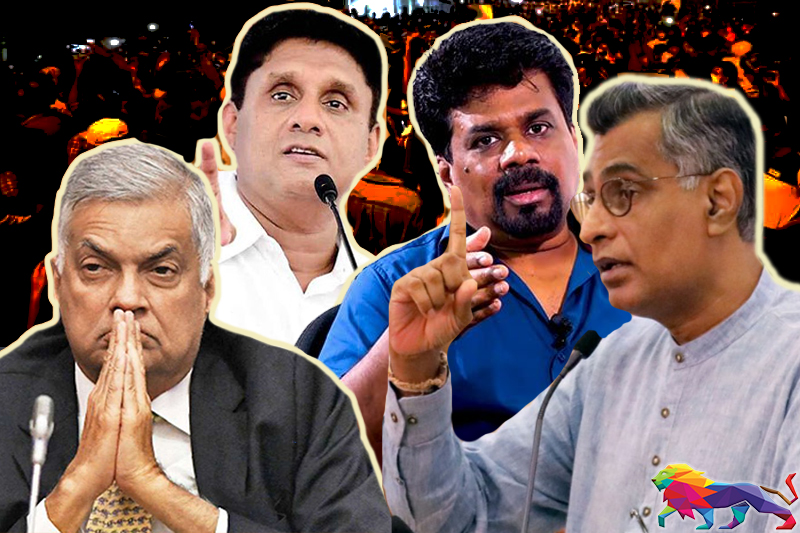
Sri Lanka Podujana Peramuna (SLPP), while challenging the recently ousted MPs Wimal Weerawansa and Udaya Gammanpila to make the Government lose its majority in Parliament, as they claimed they would, also squash speculation that UNP Leader, Ranil Wickremesinghe would soon be appointed as Prime Minister of a soon-to-be-formed National Government.

SLPP MP and Minister Rohitha Abeygunawardena addressing a media briefing yesterday (28) when Gammanpila and Weerawansa have time and again said the Government will lose its majority in Parliament but has not done anything to that effect.

Abeygunawardena said, certain people have issues with the Minister of Finance Basil Rajapaksa and are trying to slander him, noting that Rajapaksa was the one who formed the SLPP and has worked relentlessly to make it victorious.

He rejected claims that UNP MP Wickremesinghe would be appointed Prime Minister. Meanwhile, General Secretary of the SLPP Sagara Kariywasam added the most suitable person to be Prime Minister is currently in office and there is no need to make any change.

Kariyawasam said the Government is strong and will overcome the economic crisis and will secure a huge win in the next election.

Weerawansa on 23 March, stressed that they will ensure the Government would lose its majority in Parliament, while visiting Malwathu and Asgiri Maha Nayaka Theras in Kandy to present proposals of 11 constituent parties of the Government.

Posted in Uncategorized

Crisis-hit Sri Lanka seeks further US $ 1bn credit line from India: sources

REUTERS: Sri Lanka has sought an additional credit line of US $ 1 billion from India to import essentials amid its worst economic crisis in decades, two sources said yesterday, as the Indian foreign minister began talks with the government of its neighbour.

The island nation is struggling to pay for essential imports of food and fuel after a 70 percent drop in foreign exchange reserves since January 2020 led to a currency devaluation and efforts to seek help from global lenders.
New Delhi has indicated it would meet the request for the new line, to be used for importing essential items such as rice, wheat flour, pulses, sugar and medicines, said one of the sources briefed on the matter.

“Sri Lanka has requested an additional US $ 1 billion credit line from India for imports of essentials,” the second source said.
“This will be on top of the US $ 1 billion credit line already pledged by India.”
Both sources declined to be identified as the discussions were confidential.
The finance and foreign ministries of Sri Lanka, as well as India’s foreign ministry, did not immediately respond to requests seeking comment.

Sri Lankan Finance Minister Basil Rajapaksa signed the earlier credit line of US $ 1 billion this month in the Indian capital of New Delhi to help pay for critical imports.
Indian Foreign Minister Subrahmanyam Jaishankar met Rajapaksa yesterday after arriving in the Sri Lankan capital of Colombo late the previous day.

“Discussed the economic situation and India’s supportive response,” Jaishankar said on Twitter, with a photograph of the two officials next to each other.

In addition to the credit lines, India extended a US $ 400 million currency swap and a US $ 500-million credit line for fuel purchases to Sri Lanka earlier this year.

Sri Lanka’s imports stalled, causing shortages of many essential items, after foreign currency reserves fell to US $ 2.31 billion by February.

The nation just off India’s southern tip has to repay debt of about US $ 4 billion in the rest of this year, including a US $ 1 billion international sovereign bond that matures in July.
Rajapaksa is set to fly to Washington, D.C. next month to start talks with the International Monetary Fund (IMF) for a rescue plan.

“India is also very supportive of Sri Lanka’s decision to seek an IMF programme and has given their fullest support,” one of the sources added.

Posted in Uncategorized

Foreign Minister briefs South African Ambassador on reconciliation efforts

Minister of Foreign Affairs Prof. G.L. Peiris discussed the reconciliation efforts underway in Sri Lanka with Ambassador of South Africa Sandile Edwin Schalk, at the Ministry of Foreign Affairs last Friday (25), as per a Foreign Ministry media release.

The ministry stated that the main focus of the discussion was the experience of the Truth and Reconciliation Commission of South Africa. The Foreign Minister explained to the Ambassador that it was the intention of the Government of Sri Lanka to closely study the positive experiences of other countries, while taking care to ensure that these experiences were creatively adopted to suit the circumstances of Sri Lanka.

Ambassador Schalk comprehensively briefed Prof. Peiris on all aspects of the process in South Africa, and on various initiatives by former South African President Nelson Mandela upon his election as President.

Prof. Peiris had said last week, at a media briefing held jointly with US State Department Undersecretary for Political Affairs Victoria Nuland, following the fourth Sri Lanka-US Partnership Dialogue in Colombo, that the Government hopes to develop a truth-seeking mechanism, similar to the one used in South Africa, as part of Sri Lanka’s reconciliation process.

“The Nawaz Commission of Inquiry (CoI) report is very informative. One of its recommendations that we want to develop is the truth-seeking mechanism. Here, we do not wish to reinvent the wheel. There is no purpose in going back. No two situations are exactly alike, when we look at the experiences of other countries such as South Africa in particular. But we are always taking care to adopt the successful experiences of other countries to suit the circumstances in our country,” Prof. Peiris had said.

He added that the assistance of the US is “most welcome” in this endeavour of a truth-seeking mechanism.

Nuland had said that the notion of setting up a truth-seeking mechanism is a “very good step” and that the US looks forward to supporting Sri Lanka in that process.

“Setting up a truth-seeking mechanism, as other countries with difficult histories have done, particularly taking advantage of the South African experience, is a very good step,” she noted.

Dissenting parties plan to dissolve Parliament

The 11 parties which unveiled their own manifesto recently, despite being the coalition partners of the incumbent Sri Lanka Podujana Peramuna (SLPP)-led Government, plan to present a motion to Parliament to dissolve Parliament, as soon as nine more SLPP Members of Parliament (MPs) join their group.

Speaking to The Morning yesterday (27), Pivithuru Hela Urumaya (PHU) Leader MP Udaya Gammanpila said that only nine more MPs need to join their group to pass a motion to enable the dissolution of Parliament, as there are two SLPP MPs with them already.

“We need only 11 SLPP MPs to defeat the Government. However, when a motion is submitted to Parliament, there may be last-minute changes in the minds of certain MPs. For instance, MPs are vulnerable to various perks such as ministerial portfolios, vehicles, and cash rewards. There may also be threats to expose certain MPs’ misconduct and corruption. Therefore, we need MPs three times higher than the actual requirement, so we need 33. This is so that we can be 100% confident that a motion is passed in Parliament. Right now, we have 24 and as soon as the remaining nine MPs join us, we plan to submit such a motion,” he said.

The said 11 parties including the National Freedom Front (NFF), the PHU, and the Sri Lanka Freedom Party (SLFP) last week warned that they would soon collectively take away the parliamentary majority of 113 seats enjoyed by the current Government.

Asked if they would be able to get the support of the remaining nine MPs any time soon, Gammanpila said that the support of those MPs would be delayed if the public was to receive some relief thanks to the Indian credit line. However, he claimed, even if so, “things” would worsen again in some time, and that it would be possible to get the MPs’ support at such a time.

When the said 11 political parties’ representatives met the Mahanayakes (chief prelates) of the Malwathu and Asgiri Chapters of the Siam Sect on 24 March, Gammanpila said: “Our 11 parties have 30 MPs. When those 30 are removed, the Government will be left with only 124 seats. As soon as another 12 MPs quit the Government, it will lose its parliamentary majority. Because of the mad things this Government is doing, there are far more than 12 MPs who are extremely disappointed and disillusioned.”

NFF Leader and SLPP Government MP Wimal Weerawansa, during the meeting and speaking to the media afterwards, stated that it would not be difficult to take away the parliamentary majority of the Government.

“An all-party conference was convened for all parties to work together in unity, but Finance Minister Basil Rajapaksa has shown that he is arrogant so much so that he called a former Prime Minister (a reference to incumbent United National Party (UNP) Opposition MP Ranil Wickremesinghe) ‘you’. He wants to create a conflict there as well. This country cannot move forward with such an arrogant, ‘ugly American’. We will soon end this Government’s majority of 113 seats and thereby put an end to this arrogant regime,” he claimed.

Following the said 11 parties of the Coalition Government having unveiled the “Mulu Ratama Hari Magata (the entire country on to the correct path)” document – a set of proposals to overcome the current economic crisis in the country – on 2 March, Weerawansa was removed from the post of Industries Minister. In addition, Gammanpila, who attended the launch of the said proposals, was also removed from the post of Energy Minister.

Sri Lanka, India bilateral naval exercise in Sea of Sri Lanka

A bilateral naval exercise between Sri Lanka Navy and Indian Navy commenced in seas off Colombo on 26th March and it will be held until 29th March.

The exercise is being conducted by Sri Lanka Naval Ship Sayurala and the shipborne Advance Light Helicopter – IN 715 of Indian Naval Ship Sharda, which arrived in Colombo on 23rd March.

Chief among the exercises demonstrated were deck landing and communication exercises between the ship and helicopter. The exercise is also joined by a group of personnel from Sri Lanka Air Force.

This bilateral naval exercise is expected to increase operational readiness and interoperability between both navies when conducting coordinated search and rescue operations, anti-smuggling operations in the Indian Ocean Region as well as to strengthen cooperation between both partners.

Further, this kind of naval exercises will pave the way to find collective solutions to common maritime challenges in the Indian Ocean Region as well.

Posted in Uncategorized

Give the Finance Minister post to PM – Ven. Muruththettuwe Ananda Thero

Venerable Muruththettuwe Ananda Thero says that in order to minimize the public dissatisfaction which has built up towards the government, the Finance Minister’s position should be handed over to the Prime Minister.

Speaking to reporters in Colombo, the Chief Incumbent of the Abhayarama Temple in Narahenpita said that the people of the country did not appoint a government to stand in queues or stay in the dark or travel by foot.

He said that the aspiration of the people was to develop this country and build a beautiful Sri Lanka. The Chancellor of the University of Colombo said that although 69 lakh people voted to give power to the government, it is not listening to those 69 lakh people.

He accused the government of listening to only one person and doing that person’s work and that this has led to an increase in the public’s dissatisfaction.

He proposed that to minimize the disappointment and frustration of the people, the Minister of Finance Basil Rajapaksa should be handed another development task, and the the affairs of the Ministry of Finance should be handed over to the Prime Minister for him to take the country forward.

The Venerable Thero said their only demand is that the President continues to hold the presidency.

He said that if this “era of queues” continues for much longer the people of the country will fall from the prying pan to the fire.

Posted in Uncategorized

Sri Lanka Crisis: India Helps, China Holds Back -NDTV

Hi, This is Hot Mic and I’m Nidhi Razdan. This week, you may have seen the heart-wrenching pictures of a batch of Sri Lankan refugees arriving on the coast of Tamil Nadu. Including little children, one as young as four months old. They are fleeing an unprecedented economic crisis in their own country. The situation in Sri Lanka is so bad at the moment that there is a shortage of food, a shortage of fuel, long power cuts and a massive rise in prices across the board. Intelligence agencies in Tamil Nadu say that thousands more may land upon Indian shores in the next few weeks. So why has this happened? What has caused this economic crisis – the worst that Sri Lanka has ever seen?

The meltdown has been driven by a shortage of foreign currency, which has led to a reduction in the imports of essential items. Sri Lanka depends heavily on imports, whether it’s for essentials like food, sugar, daal, petroleum, paper, medicines, cement and much, much more. The shortage of foreign currency has hit these imports badly, so badly, in fact, that the Sri Lankan government has had to cancel all examinations for schools for millions of children simply because they didn’t have paper. There have been long queues of people waiting to buy food and fuel. Angry protests have also broken out on the streets.

On Tuesday, the army was sent in to prevent protests from breaking out at petrol pumps because people had begun protesting there. There were reports that three people died while waiting for fuel in a queue for several hours. So how has the shortage of foreign currency actually happened?

Well, last week Sri Lanka’s president said in an address to the nation that the country has a trade deficit of $10 billion. This basically means that the country imported more items last year than it exported. That means more money went out of the country and less money came into the country. Over the years, this policy has led to a shortage of foreign currency within Sri Lanka. The collapse of Sri Lanka’s tourism industry is a major reason for this, since it contributes to around 10% of the country’s GDP. The 2019 serial bomb blasts across Colombo during Easter had already hit the country’s tourism sector. And then the last couple of years of the pandemic have made things exponentially worse. Another reason that Sri Lanka’s foreign currency reserves have gone down is that foreign direct investment into the country has also plummeted over the last few years. If you look at government data, FDI into Sri Lanka decreased to $540 million in 2020 compared to $793 million the previous year. And $1.6 billion in 2018. In this crisis, Sri Lanka has turned to other countries for help, including India.

On the 17th of March, India announced a $1 billion line of credit to Sri Lanka to procure food, medicines and other essential items. Last month, India extended a $500 million line of credit to Sri Lanka to help it buy petroleum products. But ironically, one of Colombo’s closest friends, China, has actually added to their problems and turned out to be less dependable than they had hoped. Sri Lanka has been borrowing recklessly from China over the last few years to fund its infrastructure projects. Before the pandemic, Sri Lanka owed China, about $5 billion amounting to 10% of the country’s external debt that is dominated by sovereign bonds. Faced with the economic crisis now, President Rajapaksa had asked China to restructure its debt to the country.

But according to a report in the Hong Kong Post a few days ago, Beijing actually turned its back on Colombo. Publicly, China has only said that the two sides are negotiating the matter and hasn’t given any specific details. In recent days, soon after New Delhi extended help to Sri Lanka, Sri Lanka sought a new loan and buyer’s credit from China for $2.5 billion. It’s interesting to note here that President Rajapaksa has been seen as pro-China. But over the last year or so, the mood within Sri Lanka has turned more wary about Beijing. A lot of the debt burden on Sri Lanka is a result of China’s Belt and Road Initiative projects like the Hambantota Port and Colombo Port City, for which Chinese agency lent large amounts to Sri Lanka under stiff terms of repayment.

A media report recently said that China-assisted projects in Sri Lanka are likely to deepen the debt of the island nation. Moreover, locals have been protesting against some of these projects which they say will affect their livelihoods. One of these projects is an industrial park attached to the Hambantota International Port, which has incited violent protests by locals because they fear that the area will turn into a Chinese colony. As a result of all of this, Sri Lanka may be reassessing the extent to which it can bank on China At the end of the day, India has turned out to be a more dependable neighbour.

Citing Sri Lankan crisis, Kerala Finance Minister asks Centre to correct its policies

Citing the financial crisis in Sri Lanka, Kerala Finance Minister K N Balagopal on Sunday said that the Central government should correct its policies and added that states should be given Goods and Services Tax (GST) compensation and additional grants.

“Central government should look into the financial crisis of Sri Lanka which is happening due to international policies. The Indian government is also following the same and should correct its policies. States should be given GST compensation and additional grants,” Balagopal told ANI.
“The price hike is a basic issue which we would be going to face in a big way. The cost of administration and cost of living will be increasing in every sphere, which will get very difficult for the state,” said Balagopal.

Sri Lanka’s economy has been in a free-fall since the COVID-19 pandemic due to the crash of the tourism sector. The country’s foreign reserves have dried up and the country is facing a severe shortage of fuel and other essential commodities.

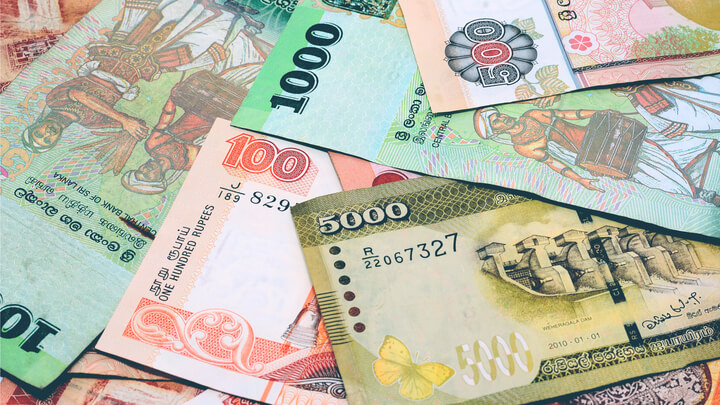
Sri Lanka’s currency has devalued by almost SLR 90 against the US dollar since March 8, as the country’s central bank attempts to stabilise the economy.

India provided more than USD 500 million in foreign currency swaps to strengthen Sri Lanka’s foreign reserves, taking the total up to USD 900 million. India also extended the repayment time frame for the USD 500 million debt of Sri Lanka under the Asian Clearance Arbitration. (ANI)

Tamils fear prison and torture in Sri Lanka, 13 years after civil war ended -UK Guardian

The sun had barely risen the morning that the military turned up for Vijay*. Grabbing him from his home in a village in the Northern Province of Sri Lanka while his pregnant wife and baby lay asleep next to him, they blindfolded him and drove him deep into a jungle.

For the next 12 hours, in a small dark shack away from prying eyes, they interrogated Vijay. Pliers were repeatedly brandished, with threats that his finger nails would be removed if he did not give the army officers the information they wanted.

The accusation hurled at him over and over again was the same: that Vijay was part of a conspiracy to restart the militant Tamil separatist group the Liberation Tigers of Tamil Elan (LTTE), widely known as the Tamil Tigers, and was involved in training and recruitment.

The military let Vijay go after two days of clandestine interrogation but it was only the beginning of his ordeal. On the third day, it was officers from Sri Lanka’s notorious Terrorism Investigation Department who turned up for him. This time, his arrest was official.

Sri Lanka’s brutal and bloody ethnic conflict officially ended, after 26 years, on 20 May 2009. Yet Vijay’s arrest was in June 2020. Though it has been 13 years since the end of a war in which at least 100,000 people were killed and the LTTE was defeated by the Sri Lankan army, the roots of the conflict remain unresolved. The country is as segregated as ever, with the Sinhalese Buddhist-majority concentrated in the wealthy south and the Tamils in the less-developed and heavily militarised north and east of the country.

In recent years some of the worst abuses that were rife in the years after the war, from white-van abductions, torture and sexual crimes against Tamils, have abated. What never disappeared was the draconian Prevention of Terrorism Act (PTA). Since it was passed in 1979, the PTA has been a stain on Sri Lanka’s human rights record, enabling arbitrary arrest, detention without charge or evidence, forced confessions and torture of anyone suspected of terrorism.

Vijay was detained for a year and a half under the PTA. He endured daily interrogations, in which he was accused of involvement in assassination attempts and asked to name Tamil Tiger accomplices, without any evidence being presented. On one occasion they brought out a confession written in Sinhala, the language of the Sinhalese majority, which Vijay, like many Tamils, does not speak.

“They were making threats that they would shoot me if I did not sign it, holding the gun against my leg, so I signed it even though I don’t know what it said,” he said. “I didn’t think I would survive otherwise.”

As a young Tamil man growing up in the north of Sri Lanka where civil war waged between the Tamil Tigers and the state until he was aged 10, he was no stranger to harassment and violence at the hands of the armed forces. His elder brother, then a separatist militant, had been abducted by the army years before, and friends had died and disappeared. But that was over a decade ago.

“They say the war is over but they are still doing what they have always done to Tamils: abducting us, torturing us, taking our land and using PTA to imprison us on no evidence. Tell me what has changed?” said Vijay, who was finally released in February. Repeating an oft-heard refrain in the Tamil north, he added: “We are still living in an open prison.”

A 2020 report by the Human Rights Commission of Sri Lanka found that 84% of PTA prisoners were tortured after arrest and they are regularly held for between five and 10 years without trial. The European parliament recently declared that the act “breaches human rights, democracy and the rule of law”.

Previous hopes for the law’s repeal disappeared in late 2019, when Gotabaya Rajapaksa, a fierce Sinhalese nationalist who was in charge of the military in the final, bloodiest years of the civil war and has been accused over overseeing war crimes, was elected as president.

“The abuses of PTA, the surveillance never went away,” said Ambika Satkunanathan, the former human rights commissioner of Sri Lanka. “But since 2019 when Rajapaksa came back to power, it’s just become more overt, more brazen. Every week, I can give you a minimum of one or two incidents related to the PTA being used to harass and intimidate civil society organisations and journalists.”

Over the past two years, human rights organisations and the UN have reported an escalation of the harassment, surveillance and arbitrary detentions of Tamils, journalists and civil rights activists, and a “colonisation” policy, involving the systematic seizure of Tamil land by the government and military.

In the aftermath of the deadly Easter suicide attacks carried out in churches and hotels by Islamist militants in April 2019, Muslims, too, have become targets of the state. In November 2021, Police Scotland suspended their programme training Sri Lankan police officers over human rights concerns.

The Rajapaksa government, faced with mounting international pressure and the prospect of losing a multi-million dollar trade concession with the European Union, has denied all abuses of the PTA. The country’s foreign minister recently told the UN Human Rights Council that “we endeavour to strike a just balance between human rights and national security when dealing with terrorism”.

In a bid to appease international critics, the Rajapaksa government last week passed a bill amending the PTA. But UN experts, human rights groups and the political opposition were damning of the amendments that left “intact some of the most egregious provisions of the PTA” and called into question Rajapaksa’s real commitment to reform.

“What is needed is a complete scrapping of the PTA and not cosmetic changes,” an opposition MP, Anura Dissanayake, told parliament.

In Jaffna, the capital of the Tamil-majority Northern Province, the fear was pronounced. Komahan Murugaia, who was detained and tortured under the PTA between 2009 and 2016 and now runs an organisation in Jaffna to help the families of those imprisoned under the law, said that “under the present government the situation for Tamils is getting much worse,” with more than 100 arrested under the legislation, accused of regrouping the Tamil Tigers.

“It’s not as bad as 2009 when the war ended but there’s torture, and harassment, our right to freedom of speech is reduced, more arrests are happening, more surveillance,” said Murugaia. “My passport has been blocked and I have been summoned in for a police inquiry for participating in a memorial. There is a lot of fear.”

This month the wives and children of several Tamil men detained under the act since 2020 stood in protest outside a government office. As rain poured down, ink wept from damp signs pleading “Please release my father”.

Kamalaharan Easwary, 37, said her husband had been held under the PTA for 18 months, accused of trying to recreate the LTTE, but had not been charged. “There is no evidence. How can they do this? “ she said.

“Without him we have no income. Life is so difficult. This law is being used to repress the Tamils even after the war is long over, and it is radicalising people, pushing them back to war again.”

Muslims, too, have increasingly been subjected to sweeping arbitrary arrests under the PTA in the wake of the Easter 2019 bombings. More than 500 Muslims arrested under the act in the aftermath have languished in jail for more than 34 months without charge, including two maulvis – Islamic religious leaders – who have alleged to the courts they were tortured and beaten with pistols.

One of the most prominent arrests was Hejaaz Hizbullah, a Muslim human rights lawyer from Colombo, who had been outspoken against actions taken by the Rajapaksa government. Arrested under the PTA in April 2020 on what human rights groups described as “no credible evidence”, Hizbullah was held in jail for more than 22 months without charge as security agencies sought to prove an unsubstantiated theory that he had “aided and abetted” the Easter attacks.

In the end, none could be found, and after international pressure, including Amnesty International designating him a “prisoner of conscience”, he was released on bail in February, though he still faces charges of radicalising children through a charity.

Hizbullah’s wife Maram confirmed that the harassment began in late 2019 when Hizbullah and his relatives started receiving warning messages and strange calls warning him to “be careful, keep quiet and stop all his human rights work”. His sister and father were called in for questioning by the Criminal Investigation Department (CID) and then one of his clients was told to drop him as their lawyer because he was on a “hit list”.

In his first interview since his release, Hizbullah spoke cautiously, still fearful of repercussions for his ongoing case.

“I have worked on many PTA cases as a lawyer but my own case was the worst I had ever seen,” said Hizbullah, who missed the birth of his child while he was detained. “From the beginning my lawyers were clear that there was no evidence to detain me but the CID were looking for something really big to pin on me. The officers kept telling me my life was over. Now we know for sure, after all those months of pain, they could find nothing.”

“The key objective,” he added, “was to silence me forever.”

* Vijay’s name has been changed

… we have a small favour to ask. Tens of millions have placed their trust in the Guardian’s fearless journalism since we started publishing 200 years ago, turning to us in moments of crisis, uncertainty, solidarity and hope. More than 1.5 million supporters, from 180 countries, now power us financially – keeping us open to all, and fiercely independent.

Unlike many others, the Guardian has no shareholders and no billionaire owner. Just the determination and passion to deliver high-impact global reporting, always free from commercial or political influence. Reporting like this is vital for democracy, for fairness and to demand better from the powerful.

And we provide all this for free, for everyone to read. We do this because we believe in information equality. Greater numbers of people can keep track of the global events shaping our world, understand their impact on people and communities, and become inspired to take meaningful action. Millions can benefit from open access to quality, truthful news, regardless of their ability to pay for it.

If there were ever a time to join us, it is now. Every contribution, however big or small, powers our journalism and sustains our future.

Support the Guardian from as little as £1 – it only takes a minute. If you can, please consider supporting us with a regular amount each month. Thank you.

Posted in Uncategorized

Sri Lanka to introduce ‘Paradise Visa’

A new type of visa named ‘Paradise Visa’ will be introduced, says Minister of Youth and Sports, Namal Rajapaksa.

Speaking at the event of a Maldivian aircraft landing at the Ratmalana International Airport after 54 years, the Minister stated that he hopes to issue the ‘Paradise Visa’ to long-term travelers in Sri Lanka.

Moreover, he stated that he hopes to issue such visas to investors in the City of Colombo and outside Colombo.

“Foreign tourists usually prefer to visit small airports in Sri Lanka, and they will be offered the Paradise visa,” he added.