
Police curfew has been imposed in Colombo North, South, Colombo Central and Nugegoda police areas until further notice due to the tense situation that erupted outside the private residence of President Gotabaya Rajapaksa today evening.
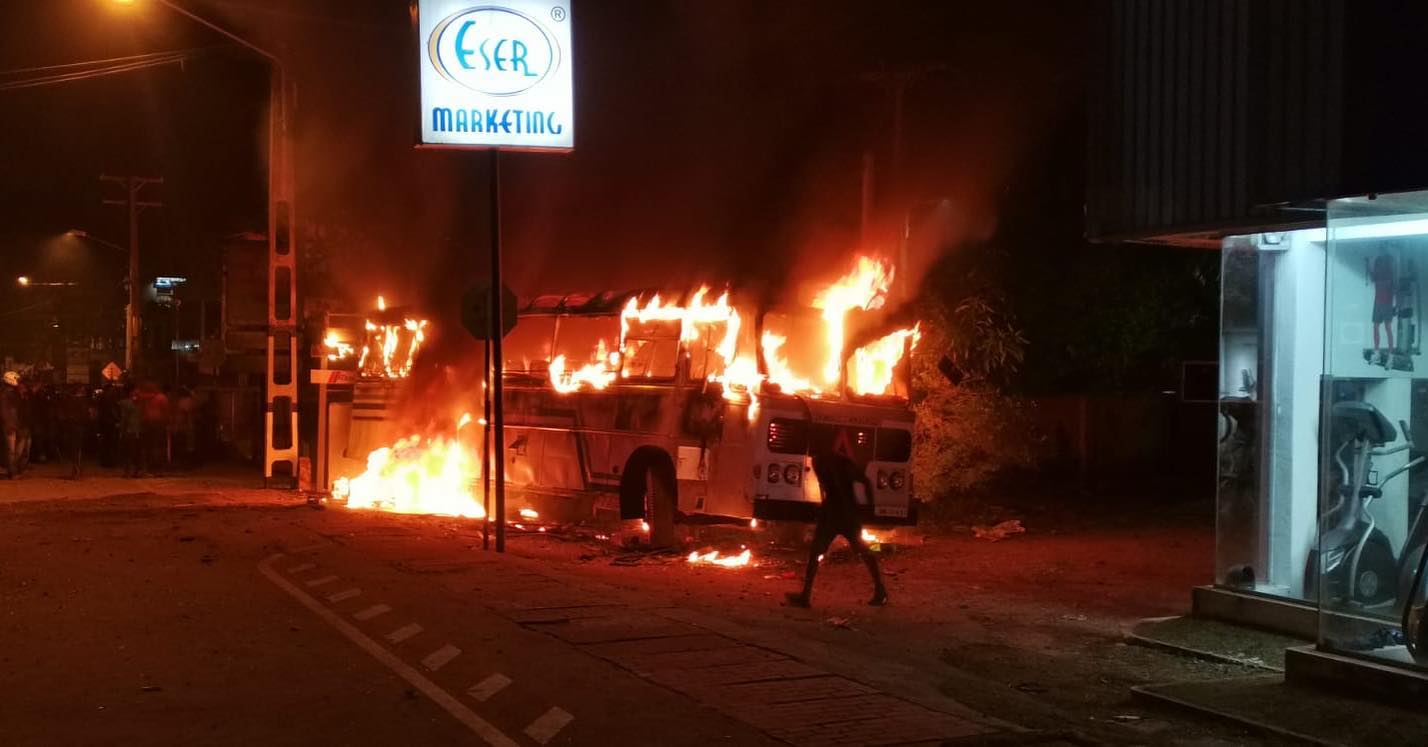

Police curfew has been imposed in Colombo North, South, Colombo Central and Nugegoda police areas until further notice due to the tense situation that erupted outside the private residence of President Gotabaya Rajapaksa today evening.
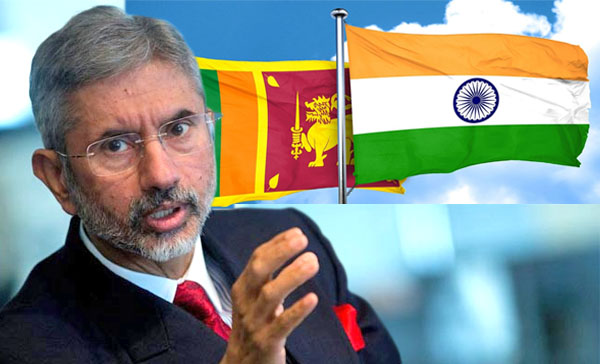
India-China rivalry in Sri Lanka has been playing out for years now but the unprecedented economic crisis in the island nation has given it fresh impetus. Over the last few months, New Delhi and Beijing have both been going out of their way to help Colombo through loans, credit lines and even medicines to ensure surgeries, hoping to gain more influence in return.
The island nation is in the throes of food and fuel shortages, power cuts, inadequate supply of medicines and other items.
External Affairs Minister S. Jaishankar, who is currently visiting Sri Lanka, has met almost all key political leaders of that country in a span of two days, while also extending help in addressing some local issues there. He met Sri Lankan President Gotabaya Rajapaksa, Prime Minister Mahinda Rajapaksa, Finance Minister Basil Rajapaksa and Minister of Fisheries and Aquatic Resources Douglas Devananda.
Earlier this month, New Delhi provided Colombo with a $1 billion line of credit (LoC) for procuring food, medicines and other essential items.
While Jaishankar went to Sri Lanka mainly to attend the Bay of Bengal Initiative for Multi-Sectoral Technical and Economic Cooperation (BIMSTEC) summit and secure the country’s maritime domain, he even attempted to help with their daily needs, to give out the message that India truly believes in ‘Neighbourhood First’.
China is trying “to gain maximum advantage out of this crisis” and is “following up” on the measures that India is announcing, diplomatic sources told ThePrint.
The sources said that while New Delhi is mostly giving LoCs to help Sri Lanka, China is providing loans, which will be difficult for Sri Lanka to pay later.
On Tuesday, Jaishankar stepped in to resolve a crisis in one of Sri Lanka’s renowned hospitals — Peradeniya Hospital — where all surgeries had to be stopped due to shortage of medicines.
“Disturbed” by the situation, External Affairs Minister Jaishankar instructed India’s High Commissioner to Sri Lanka, Gopal Baglay, to resolve the issue.
Disturbed to see this news. Am asking High Commissioner Baglay to contact and discuss how India can help.@IndiainSL #NeighbourhoodFirst https://t.co/jtHlGwxCBL
— Dr. S. Jaishankar (@DrSJaishankar) March 29, 2022
The Indian High Commission subsequently reached out to the Peradeniya University vice-chancellor in order to understand “their requirements for medicines to continue regular and scheduled surgeries”.
Disturbed to see this news. Am asking High Commissioner Baglay to contact and discuss how India can help.@IndiainSL #NeighbourhoodFirst https://t.co/jtHlGwxCBL
— Dr. S. Jaishankar (@DrSJaishankar) March 29, 2022
Jaishankar also visited the 1990 Suwa Seriya ambulance service in Colombo Tuesday, which he said has responded to 5 million calls to date.
Heartwarming to visit the 1990 Suwa Seriya Ambulance service in Colombo.
Impressed by your record and achievements: Responded to 5 million calls to date.
India is proud to be your partner in saving lives. pic.twitter.com/1HNhTP75q7
— Dr. S. Jaishankar (@DrSJaishankar) March 29, 2022
“The Indian External Affairs Minister assured the support of the Government of India to ensure economic stability in Sri Lanka, and reiterated that India understands the real issues of Sri Lanka being a close neighbour,” the Foreign Ministry of Sri Lanka said in a statement after Jaishankar’s meeting with his Sri Lankan counterpart G.L. Peiris.
Jaishankar Tuesday also met Sri Lanka’s former prime minister and arch rival of the Rajapaksas — Ranil Wickremesinghe — and discussed India’s help to Sri Lanka.
Tamil reconciliation, fishermen issues
While India is trying to help Sri Lanka tide over the current crisis, it is also ensuring that its interests in terms of the Tamil reconciliation and fishermen issues are effectively addressed.
During Jaishankar’s meeting with Peiris, the former was assured that the Sri Lankan government will work towards the Tamil reconciliation issue.
“Minister Peiris briefed Minister Jaishankar on the successful discussion the President of Sri Lanka and the Government had with the Tamil National Alliance (TNA, main Tamil party in Sri Lanka) last week, during which the President had acknowledged the concerns of the people of the North and East in terms of reconciliation,” the Sri Lankan Foreign Ministry’s statement said.
“Minister Jaishankar welcomed the positive developments that the Government of Sri Lanka has made towards resolving issues concerning Tamils in Sri Lanka and achieving (a) long-lasting solution,” it added.
At the BIMSTEC ministerial meeting, which took place Tuesday, Jaishankar spoke about cooperation between all members in connectivity, maritime security and countering terrorism.
BIMSTEC comprises as members India, Bangladesh, Bhutan, Myanmar, Nepal, Sri Lanka, and Thailand. Prime Minister Narendra Modi will Wednesday address the BIMSTEC summit virtually.
China’s outreach
A day after India announced the $1 billion LoC, China’s Ambassador to Sri Lanka Qi Zhenhong said that Beijing is considering a request from Colombo for a $2.5 billion assistance package, including a $1.5 billion credit line and $1 billion loan.
China is also pushing Sri Lanka to immediately conclude the China-Sri Lanka free trade agreement (FTA), which the Chinese claim will benefit Colombo’s local market and products.
“Ambassador Qi, while stating that China had signed over 26 FTAs, expressed that finalising the proposed FTA between Sri Lanka and China would immensely benefit the Sri Lankan local market and products. He also urged the Sri Lankan authorities to resume the 7th round of FTA negotiations at the earliest,” said a statement issued after Qi’s meeting with Peiris last week.
The Chinese have also expedited some of their small and medium projects there, especially a few road projects in the rural provinces of the Indian Ocean island.
It even gifted 2,000 tonnes of rice worth $2.5 million to Sri Lanka last week to help address the growing food crisis there.
‘India can do more’
Sumith Nakandala, senior director, Bandaranaike Centre for International Studies, told ThePrint from Colombo that “India can do more” to help the country.
“Sri Lanka is in a state of major economic crisis. India has reached out with assistance, but this is not enough. It is important to understand that India can do more. India’s helping hand at this moment will strengthen our case. India will have to understand our problems. These are accumulated problems,” Nakandala said.
“We want India to expedite the projects it was handed over a long time back. For example, the LNG (liquefied natural gas) project that was given to India and Japan in 2017. The plan was to develop three power plants having a capacity of 100 MW,” he added.
“If that project was up and running today, we wouldn’t have faced such massive power cuts. Then there are long queues to get food and medicines. India can help us through the Food Corporation of India and SAARC food reserve.”
Nakandala said that China had also extended help, “but these are loans unlike a line of credit”.
“We do understand that countries have their own limitations and we have to do domestic arrangements in terms of cost of living adjustments, balance of payments, currency rate management etc,” he added.
Written by Arun Janardhanan
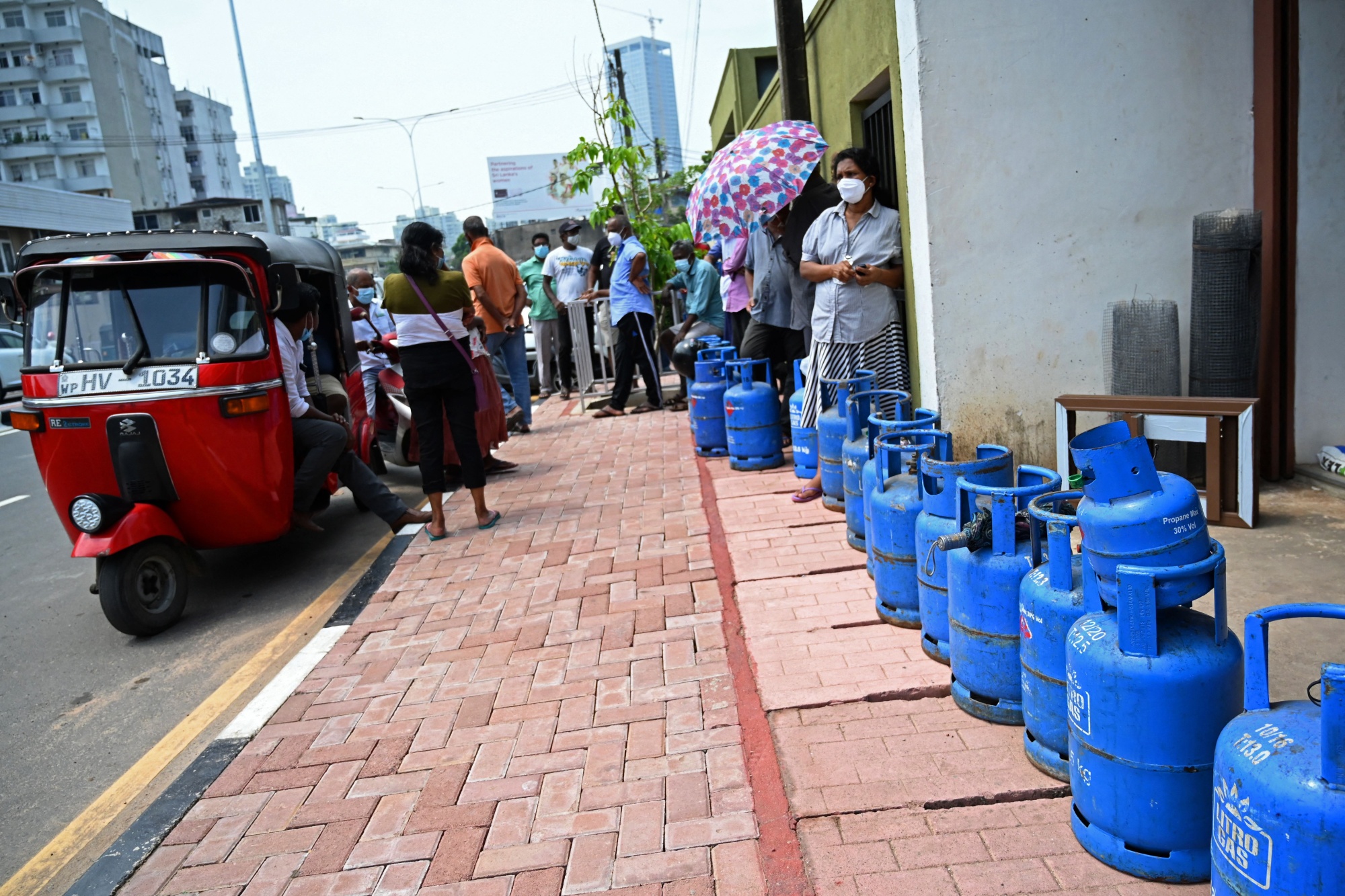
Vani Susai, a 31-year-old school teacher working in Batticaloa in Sri Lanka’s eastern province, recalls the first signs of the economic crisis in the last week of January. “That Sunday morning, I ran out of gas. I called the agency to check for a cylinder and was told they could not deliver it for several days. I went in search for one, going shop to shop. I finally found a cylinder after three hours.”
Two months later, the cooking gas supply is down to once a week. “Everybody goes to this one place on Sunday and stands in a queue that starts forming at 4 am.
They give 300 tokens at one time, while the queue has over 1,000 people,” says Susai, adding that as a working woman and mother, she can’t spare the time to stand in a queue. Her husband works in the Gulf. “If I get a chance, I will leave.”
Last week, Tamil Nadu received more than a dozen people who had fled Lanka under similar economic duress. The country is facing one of its worst economic crises, battered by the Easter Sunday blasts of April 2019, two Covid waves and now the Russia-Ukraine war. The setbacks have hurt the tourism industry that is the bedrock of the Lankan economy. The island country that imports almost everything from outside has been struggling to manage supplies.
Susai says that her usual expense on essentials for a family of three, her mother, daughter and her, was around Sri Lankan Rs 30,000 a month. “But this month, I have already spent Rs 83,000. There is a shortage of milk powder. One has to struggle for rice and daal. There is seven hours of load shedding but there are no candles. A strip of 12 paracetamol tablets costs Rs 420 and many medicines have disappeared. My salary is Rs 55,000 and we can manage with cash sent by my husband. But can we eat money?”
Dr Samantha Kumara, a dental surgeon from the Kurunegala northwestern province, is in a similar situation. His son is studying in Australia and he has not been able to send money to him. “All dollar accounts have been frozen,” says Dr Kumnara.
Rahaman Thasleem, who worked as a taxi driver, has taken up carpentry work now in Negombo, a western coastal city. He wonders whether India will give him asylum or he should try for Dubai. Thasleem, who has changed five jobs in the last three years, says they are struggling to manage. “I was able to get some firewood due to gas and fuel shortage, but my wife has never cooked on firewood. And cooking on firewood takes too much time; she also works.”
Hussain Mohammed, who plies a taxi in Colombo, says they are bracing for a further impact from rising fuel prices. “Many private buses have stopped services, government services have become erratic, some train services have been affected.”
Batticaloa Bishop Joseph Ponniah says “people are suffering from north to south, east to west”. “I hear stories of misery everyday.” The bishops across the country held a meeting in Colombo on Tuesday to discuss the situation.
Dilith Jayaweera, a Colombo-based business tycoon, says he feared such a situation ever since President Gotabaya Rajapaksa appointed P B Jayasundhara as his secretary. He was referring to a controversial official who worked with previous regimes and is being blamed for many decisions leading to the financial mismanagement. Jayaweera’s businesses include an advertising company that worked for the Rajapaksas during the war against the LTTE, a popular TV channel, FM stations, dailies, and a leading mercantile establishment, George Steuart and Co.
“My company (George Steuart) recently found it difficult to import some life-saving medicines. My newspapers are facing problems. We have reduced the number of pages,” Jayaweera says.
Raza Akram, a film producer based in Colombo, says the crisis has hit at a time when Hollywood was increasingly looking to Lanka for shooting. “I can see at least a 30% increase in budgets of my two ongoing productions,” he says.
A senior official in Colombo says “every person is suffering”. “The government is trying to make people work from home, but the load shedding is a challenge. Hospitals are affected as there is no diesel for generators.”
The official adds that that the government hopes to announce some financial assistance for everyone, ahead of the coming New Year festivities. Attempts are being made to get a few shipments of rice from China, and petrol and gas supplies.
United National Party leader and former Prime Minister Ranil Wickremesinghe, however, warns that the crisis will last at least five years. Blaming this on the “reversal of economic policies” by the Rajapaksa government, he says it has shaken the confidence of investors.
Milinda Rajapaksa, Additional Director General, Ministry of Information, says they are banking on Indian and Chinese credit lines. “In April first week, the Finance Minister will meet chiefs of the World Bank and IMF. Talks have been held already with the IMF on a restructuring plan.”
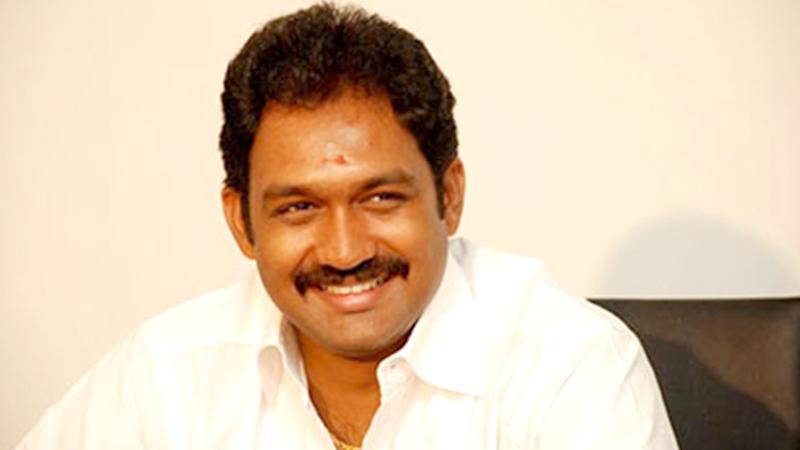
Senthil Thondaman has been appointed as the new leader of the Ceylon Workers Congress.
The CWC Working Committee convened today at the Party headquarters in Kotagala to elect the new officer bearers.
Accordingly, former Vice President of the party Senthil Thondaman was elected as the new CWC Leader while State Minister Jeevan Thondaman has been elected as the General Secretary.
Meanwhile, Parliamentarian Marudapandy Rameshwaran has been elected as the Chairman, PP Sathyawel as the National Organizer, and Anusha Sivaraja and Kanapathy Kanagarajah as Deputy Chairpersons of the CWC today.
State Minister Thondaman said 14 other Vice Presidents were also appointed during today’s meeting.

Four individuals succumbed to the novel coronavirus during the past 24 hours.
The Department of Government Information said Sri Lanka’s COVID-19 related death toll increased to 16,473.
All four victims were males aged over 60 years.
Applications are invited from the children of estate workers, for award of scholarships by the Ceylon Estate Workers’ Education Trust (CEWET).
These scholarships are available for G.C.E. Advanced Level, Undergraduate courses and for students undergoing Vocational/Technical education in any other Government Technical Colleges in Sri Lanka.
Students who have passed G.C.E. Ordinary Level (with minimum 6 credit passes) or Advanced Level examination and below 25 years of age are eligible to apply for this scholarship. The completed application forms must be attached with photocopies of birth certificate, result sheet of G.C.E ‘O’ Level or ‘A’ Level, latest salary slip of parents and Estate Superintendent’s certificate regarding parent’s occupation. Application forms could be downloaded at the High Commission of India, Colombo website www.hcicolombo.gov.in
Application forms could also be obtained from High Commission of India, 36-38, Galle Road, Colombo-03 and the Assistant High Commission of India, 01A, Mahamaya Mawatha, P.O.Box 47, Kandy.
Duly completed forms should reach the Honorary Secretary, CEWET c/o High Commission of India, P.O. Box 882, Colombo-03 on or before 29 April 2022.
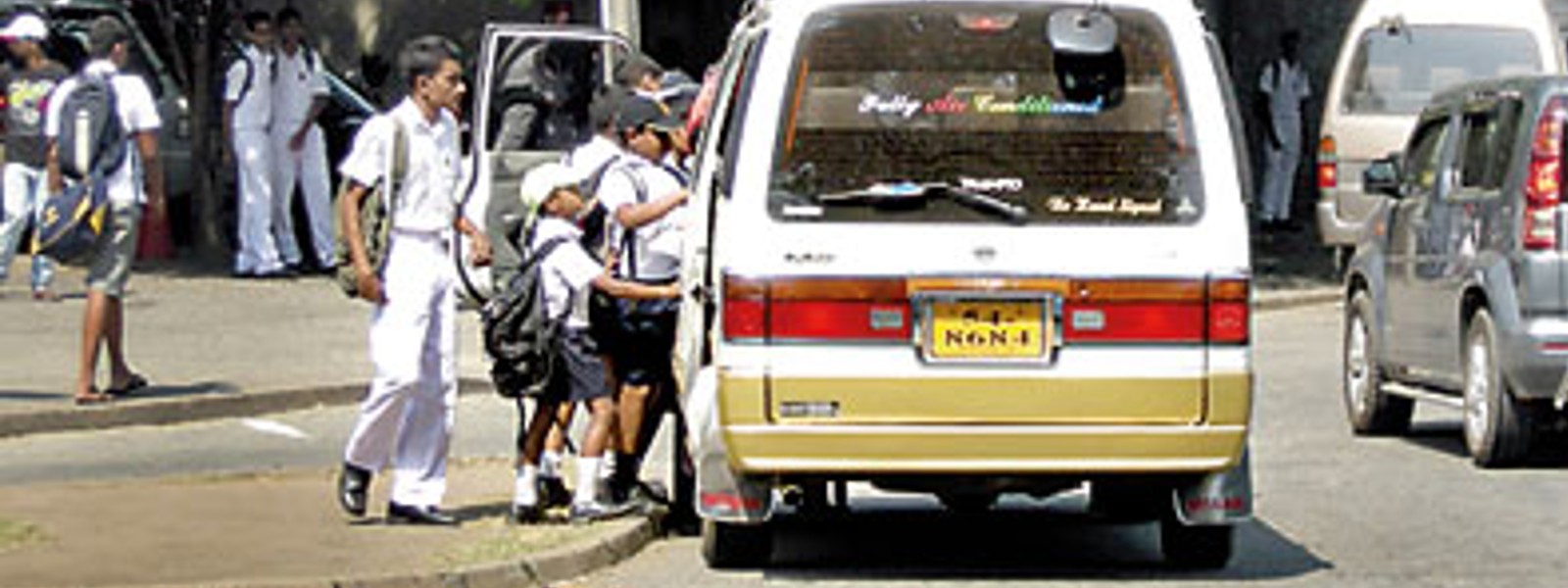
The All Ceylon Inter-District School Transport Services Association said that they will refrain from providing services from next Friday (1st April) if the fuel crisis is NOT resolved immediately.
The Chairman of All Ceylon Inter-District School Children Transport Services Association, N.M.K Harishchandra Padmasiri said despite not receiving any support, they are engaged in transporting school students considering the fact of examinations and academics.
He warned that if a favorable solution is NOT provided by Friday (1), they will refrain from their services.
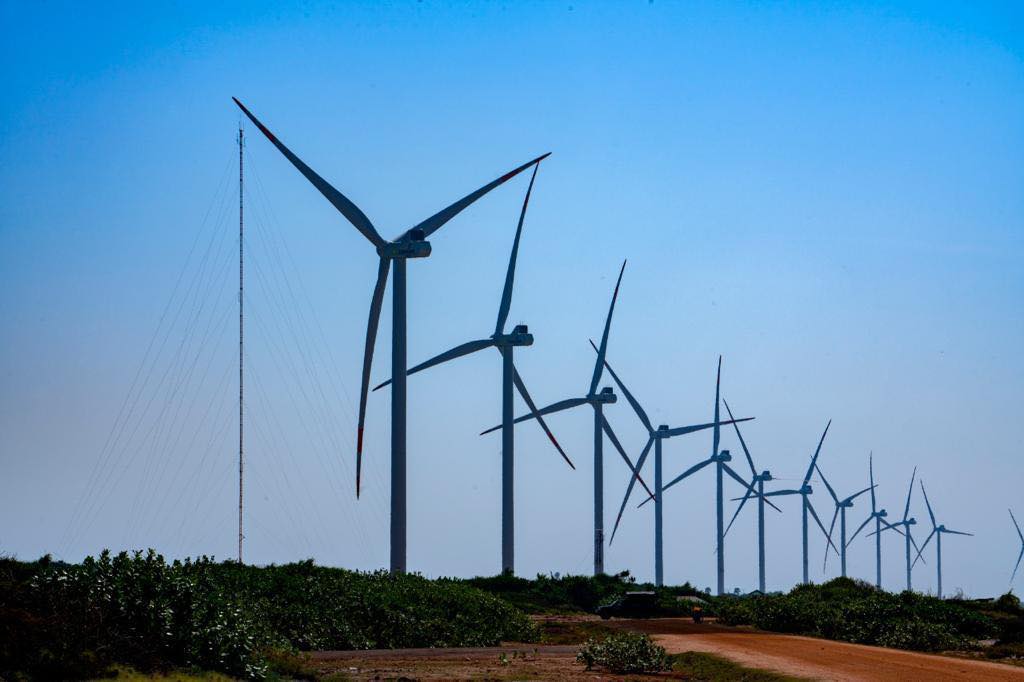
Sri Lanka and India have signed a Memorandum of Understanding (MoU) on implementing hybrid power projects in Jaffna, which was initially awarded to China.
The project was initially awarded to MS/Sinosar–Etechwin Joint Venture in China but was reconsidered following objections raised by India.
Visiting External Affairs Minister (EAM) Dr. S.Jaishankar and Foreign Minister Prof. G.L Peiris witnessed the signing of the MOU on implementation a hybrid power projects in three Islands off Jaffna.
India and Sri Lanka also signed an MOU on the implementation of a Sri Lanka Unique Digital Identity (SL-UDI) programme with India’s grant assistance. MOU for providing Maritime Rescue Coordination Center, MOU on cooperation in development of Fisheries Harbours in Sri Lanka, MOU for the establishment of Modern Computer Labs and smart boards with customized curriculum software in 200 schools in Galle District and an MOU between the Sushma Swaraj Institute of Foreign Service and the Bandaranaike International Diplomatic Training Institute.
During the ongoing visit, Dr. S. Jaishankar assured India’s continued support in Sri Lanka’s economic recovery process.
The EAM reiterated that India’s partnership with Sri Lanka was rooted in the ‘Neighbourhood First’ approach and S.A.G.A.R (Security And Growth for All in the Region) doctrine and that India has stood by Sri Lanka in the hour of its need.
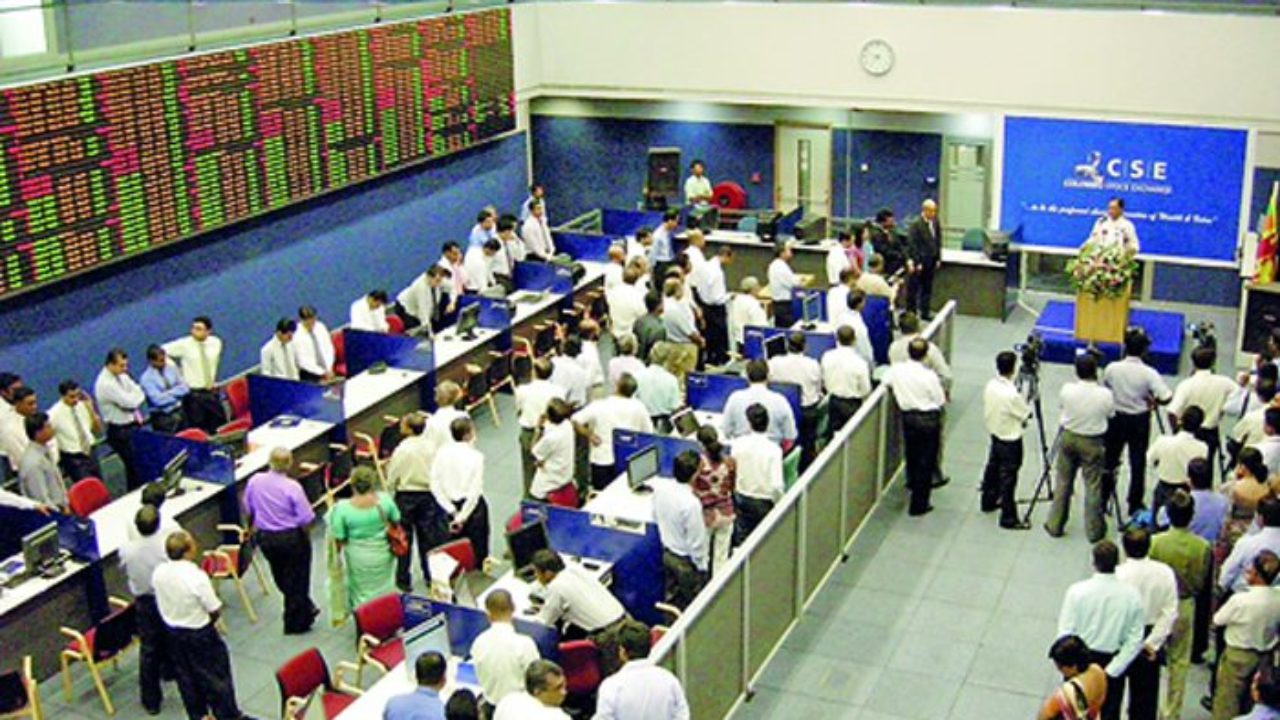
Sri Lanka’s Colombo Stock Exchange halted trading at 10.38 am as an index of liquid stocks plunged more 5 percent in intra-day trading.
The broader All Share Index was down 3.72 percent.
“Please note that the Market has been halted for 30 minutes due to the S&P SL20 index dropping over 5% from the previous close, as set out in SEC Directive dated 30th April 2020,” the Colombo Stock Exchange said in its website.
“The halt will be lifted at 11.08 A.M.”
Sri Lanka stocks have been on the decline since the central bank allowed flexibility in the currency. The currency has fallen over 50 percent so far since it was allowed flexibility on March 7.
Market analysts have expected a long-overdue correction, amid macro-worries.
The stock has been driven by loose monetary policy both at home and abroad. Some stocks have been bought as an inflation hedge with the rupee expected to fall.
Others have also benefited from imports controls.
Sri Lanka’s loose monetary policy however has led to increasing external weakness which has translated into disrupted supplies.
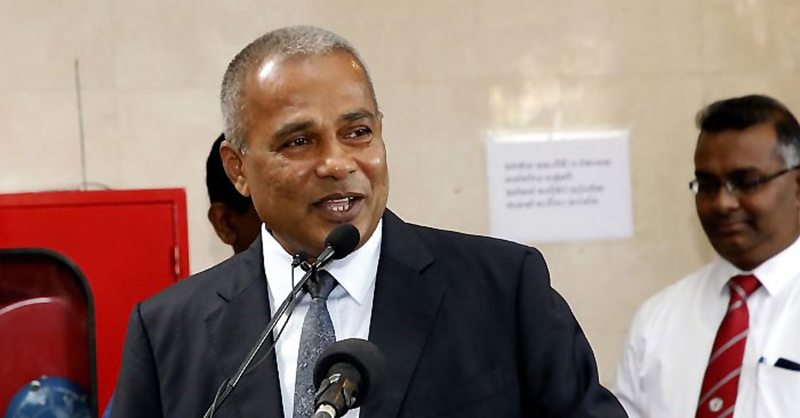
Ceylon Petroleum Corporation (CPC) Chairman Sumith Wijesinghe last morning (30) appealed to the public not to wait in queues near fuel stations as they had no capacity to supply sufficient stocks of diesel to fuel stations yesterday and today (31).
Addressing a media briefing held at the Presidential Media Centre yesterday, he said: “I urge the public not to wait in queues at fuel stations, as we are not able to meet the demand for diesel for these two days. However, with the receipt of the Indian credit line in April, we expect stocks of fuel to be available in the country without any shortage.”
He also commented on the huge increase in the cost of fuel imports due to the recent rise in fuel prices in the world market. “By 2020, we had to spend a limited amount of money on fuel imports, and in 2021, about $ 2.5 billion was spent on fuel imports. However, in the three months of January, February, and March 2022 alone, between $ 1.1 and 1.2 billion had to be spent on fuel imports. If we are going to face the same situation for the rest of the year, we will have to spend more than $ 5 billion on fuel imports.”
Commenting on the fuel prices in the world market, Wijesinghe said that while the price of a barrel of fuel was around $ 87 by January 2022, by February, it had risen to $ 110. By 12 March, it had risen to $ 176, he said, adding that the current price of a barrel of fuel is $ 144.
“Last year, we spent only about $ 24-27 million to buy a fuel tanker, but now we have to spend $ 45-55 million for it. We had to work hard to manage this situation. However, we were able to manage the situation with the co-operation of all the institutions, including the Energy Ministry, the Finance Ministry, the banks, the Central Bank of Sri Lanka (CBSL), and the Presidential Secretariat.”
Meanwhile, he said that the fuel consumption in the country has increased abnormally from 2021 to date. “Diesel consumption in January 2021, was 139,000 metric tonnes (MT). By January 2022, it had increased to 198,000 MT. Diesel consumption in March was 201,500 MT. If fuel can be supplied without a shortage, this amount will increase to 225,000 MT by the end of March. This is an abnormal consumption and is 30-35% higher than in previous years.”
He added that despite the Government having restricted the importation of vehicles with the Covid-19 pandemic, a significant increase in fuel consumption in this manner should be looked into.
Meanwhile, addressing a media briefing on Tuesday (29), Energy Minister Gamini Lokuge stated that while 8,000-9,000 MT of fuel are being distributed to fuel stations daily at present, which is 1,000-2,000 MT more than the average daily fuel stocks released to fuel stations prior to the shortages, the fuel runs out at stations due to people purchasing fuel in large quantities.
He said: “In the past, an average of about 7,000 MT of fuel was distributed to fuel stations, but now 8,000-9,000 MT of fuel are being released. However, that amount is not enough, as people buy fuel in large quantities. People are carrying fuel in cans and stockpiling fuel these days. We have not imposed restrictions on fuel sales.”
He further said that a fuel bowser, which is usually sent to a fuel station, was enough for two or three days in the past, but that these days, a fuel bowser is only enough for a few hours. Responding to a question on the stock of fuel distributed to fuel stations, he added that one bowser of diesel, petrol, and kerosene each were sent to every fuel station last week.
The country has been hit by a fuel crisis over the past few months, with the economy being hit hard due to the serious deficit of US dollar (USD) reserves needed for imports. Over the last few months, many arrivals of stocks of fuel have been delayed due to the said USD shortage. As a result, the country is facing a shortage of fuel – particularly diesel – these days, and people are seen waiting in long queues near fuel stations.