PTA is an insult to Sri Lanka’s independent judiciary!

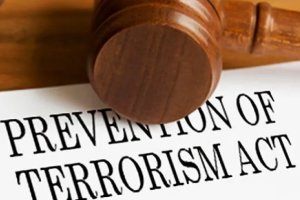
Opposition Leader Sajith Premadasa says he believes the Prevention of Terrorism Act is an insult to Sri Lanka’s independent judiciary. Sajith Premadasa has stated this in a letter to Sumanthiran regarding the Prevention of Terrorism Act.

Hon. M. A. Sumanthiran, MP

Parliament of Sri Lanka

Sri Jayewardenepura – Kotte.

Dear Hon. Sumanthiran,

I write to you with respect to the Prevention of Terrorism (Temporary Provisions) Act, No. 48 of 1979 (PTA), and your laudable campaign to repeal it.

In June 2021, in a public statement, the Samagi Jana Balawegaya (SJB) stated, that it is committed to the development of ‘a robust and effective national security framework, without compromising on human rights and democracy’. I wish to express that the SJB unequivocally maintains this position.

We recall the PTA was enacted as a ‘temporary provisions’ Act for a period of six months in 1979. Yet, this law has remained on Sri Lanka’s statute books for 43 years.

The PTA contains major weaknesses, which we believe are irredeemable. These weaknesses have enabled the persecution of political opponents, journalists, lawyers, and human rights activists. Indeed, even twelve years after the war ended, the PTA is being weaponised against these stakeholders.

We believe that the PTA is an insult to Sri Lanka’s independent judiciary, as it deprives judicial officers of powers afforded under the constitution and ordinary law, and places undue authority in the hands of the executive branch of government. For example, under ordinary law, a confession may be made only to a magistrate, whereas under the PTA a confession may be made to a police officer. Moreover, under ordinary law, a trial judge has the power to consider a suspect’s bail application, whereas, under the PTA, the trial judge is stripped of that power. These provisions reflect an undue lack of trust in the competence and capacity of judicial officers to make appropriate decisions, within the purview of the constitution.

We find that none of the many weaknesses of the PTA are addressed by the proposed amendments to the PTA that have been placed on the order paper of parliament. Therefore, the SJB rejects the proposed amendments in toto. Our position is that the PTA cannot be tinkered with. It must be repealed, and a law that accords with international standards and effectively balances public and national security, and personal liberty must replace it.

In its public statement in June 2021, the SJB noted that it does ‘not merely wish to point out the failings of the present government without offering viable solutions’. In this context, we recommend that the 2016 proposals of the Sri Lanka Law Commission, a body comprising eminent members of Sri Lanka’s legal fraternity, be adopted as the starting point to repeal and replace the current PTA. The proposals, titled the ‘Protection of National Security’ Bill are concise and effective, and are compatible with international best practices and our national security and human rights interests.

Warm regards.

Yours sincerely,

Sajith Premadasa, MP

Leader of the Opposition &

Leader of Samagi Jana Balawegaya

Posted in Uncategorized

Sri Lanka limits import of 367 non-essential items

A Gazette Extraordinary has been issued by the Department of Import and Export Control limiting the import of 367 non-essential goods into Sri Lanka unless with a valid licence.

Thereby, the Imports and Exports Control Regulation No 05 of 2022; Imposing requirement of Import Control License (ICL) on selected items comes into effect at midnight today (March 09).

The relevant gazette notification was issued by Finance Minister Basil Rajapaksa.

The regulations prescribed in the communiqué are only applicable to the importation of goods, which have the date of Bill of Lading/Airway Bill on or after March 10.

Licence to import the specified non-essential items will be issued subject to the recommendation of the Secretary to the Finance Ministry.

Any importers who wish to import the specified goods are thereby required to be in possession of a valid licence issued by the Controller-General of Imports and Exports Control, prior to the date of the Bill of Lading/Airway Bill of such importation.

Posted in Uncategorized

China looks to strengthen ties with Sri Lanka Parliament

China has sought to strengthen ties with the Parliament in Sri Lanka.

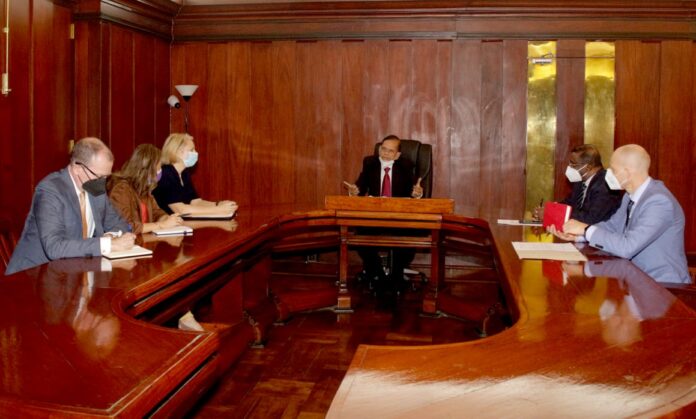
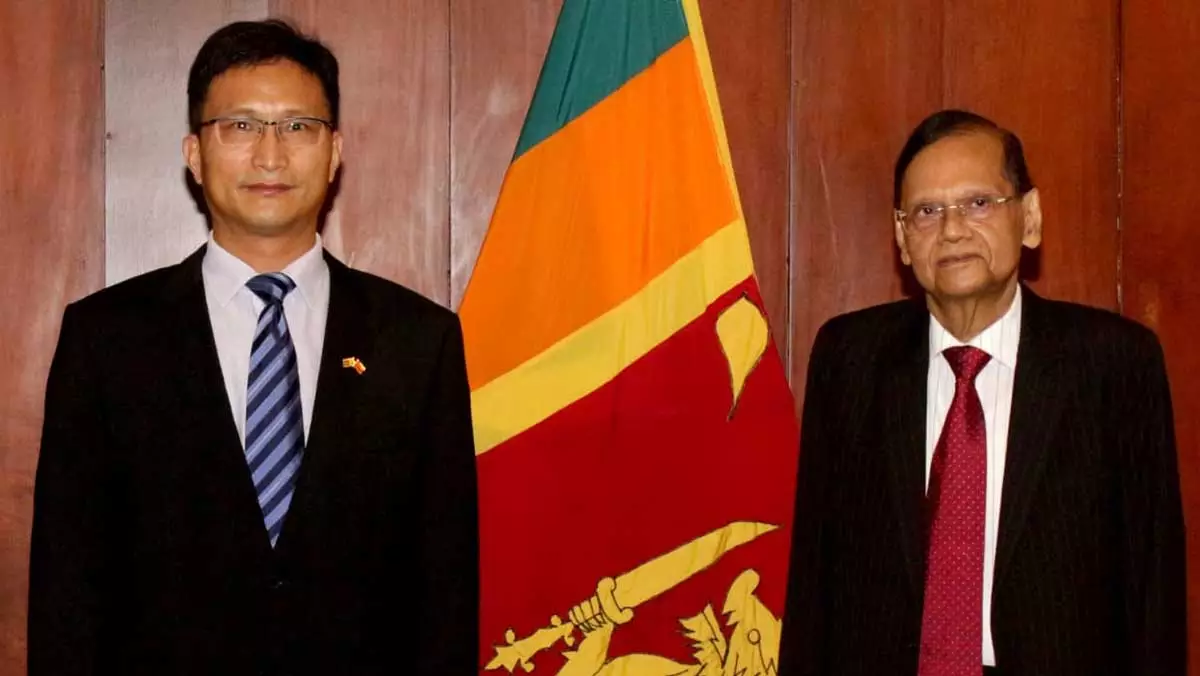
The Chinese Ambassador to Sri Lanka, Qi Zhenhong, called Speaker Mahinda Yapa Abeywardena, the Parliament media unit said today.

Discussions focused on strengthening ties between the two countries in various fields including inter-parliamentary relations.

The Speaker also expressed his gratitude to the Chinese Government for its continuous support to Sri Lanka in various fields during the Covid -19 pandemic.

Secretary General of Parliament Dhammika Dasanayake was also present at the meeting.

Ranil says no national govt, but calls for all parties in Sri Lanka to unite to come out of crisis

Rumours have been rife that UNP Leader Ranil Wickremesinghe is in talks with Prime Minister Mahinda Rajapaksa and President Gotabaya Rajapaksa to form a national government amidst the ongoing crises, but sources close to Wickremesinghe yesterday denied these rumours saying the UNP Leader would not form a national government.

When contacted, senior members closely associated with Wickremesinghe told Daily Mirror that Wickremesinghe had discussed the ongoing issues with Mahinda Rajapaksa in a personal capacity but no official discussions had been held between the duo or even with President Gotabaya Rajapaksa.

Wickremesinghe had also not held any discussions, even unofficially, in forming a national government with the SLPP.

However, Wickremesinghe who has been calling for the government to go to the IMF to seek economic assistance has called on all political parties to unite with the government and identify the root cause of the issues so that they can be resolved.

He has also called for all parties to approve a national policy in Parliament that could take the country forward for at least the coming 15 years, and once this policy is agreed upon by all parties, then an election should be held so that a new government can be formed.

“In this national policy, we must ensure that the country does not fall into another crisis of this sort. Whoever the next government is elected will then have to work based on this iron framework or else policies keep changing and this is affecting the citizens,” Wickremesinghe has informed senior parliamentarians.

Meanwhile, the Daily Mirror learns that some of the government backbenchers in Parliament had been notified that an IMF assistance would be sought only after a local government election is held. However, all parties have presently agreed that now is not the time to hold the LG Polls due to the present economic crisis and the suffering burdened on the citizens.

Sri Lanka tourism sees arrival, revenue drop after Russian invasion

Sri Lankan tourism industry is likely to see a dip in arrivals and revenue as Russian national carrier Aeroflot halted international flights amid western sanctions over Vladimir Putin’s Ukraine invasion.

Aeroflot on Saturday 5th announced that it will be halting all international flights from March 08. The airline was flying to 146 destinations including Sri Lanka before the February 24 invasion.

Western nations including the USA, the European Union and Canada have imposed heavy sanctions including closing their airspace to Russia.

“Russia was the key market for Sri Lanka. This is not good news for us,” Nalin Jayasundera, the Vice-President of Sri Lanka Association of Inbound Tour Operators (SLAITO) and the Managing Director of Aitken Spence Travels told ECONOMYNEXT.

“But the disadvantage could be offset if SriLankan airlines continue to fly to Moscow.”

Russia and Ukraine were Sri Lanka’s key markets for tourists since it reopened the country for tourism in December 2020 after long Covid-19 lockdown.

The island nation, popular for its beaches and diverse nature, saw one fifth of its total 268,340 tourists visited from December to February were from Russia and Ukraine.

Winter Travel
Winter is a peak season for Sri Lanka tourism that runs from December to March.

Traditionally, tourists from Eastern Europe including Ukraine travel from harsh winters in the region till about mid-May.

“Russia is strong till about May 10 but now with what has happened and Aeroflot halting, we have seen a few cancellations,” Jayasundera explained.

“It is too early to say the full impact, but we are seeing cancellations.”

“Till April we have Russians and it drops afterwards. We can’t determine a figure at the moment but there will be a considerable drop from Russians,” Mahen Kariyawasam, immediate past president of SLAITO said.

However, industry veterans are hopeful about the situation because the Winter travel season is coming to an end while SriLankan Airlines and Emirates continue to offer flights to and from Moscow.

SriLankan Airlines has not increased the frequency from three per week, a national carrier official said.

More Trouble

Russians tourists also face issues in transactions because of some of their foreign assets being frozen while the Europeans and the Americans have been banned from
dealing with the Russian central bank or its wealth fund amid threats to cut off from Swift, a cross-border financial transaction system that’s connected to over 11,000 banks
with over 200 countries.

Visa, American Express and Mastercard have already suspended their operations in Russia. Although reports said the cards can be used until their expiry dates within Russia, they will be invalid abroad or for international payments online.

“Now the issue is the impact on arrivals and the uncertainty since Master Cards and Visa have been cancelled in Russia,” Charith De Alwis, General Manager of Tangerine Tours said.

“This will have a huge impact on people travelling, moreover the ruble has also depreciated by more than 30% right now,” he said.

“That means they are having issues in terms of spending and travelling will be less because disposable income is reducing and will be more cautious, as per what I feel this will affect tourism and arrivals.”

Sri Lanka has already seen a drop in tourism booking from Russia after the invasion and that is likely result in lower revenue in the leisure industry, hoteliers and travel agents.

“We have very few new bookings, we actually are waiting to see what will happen day by day. The situation is changing. We don’t have high hopes as of now. We are going to an off season. We are waiting till the situation cools down and hoping that won’t last longer than 4 to 5 months,” a spokesperson at Ceylon My Dream, a travel agency that caters to English, Russian and Japanese said.

“We are still getting clients but the majority of it has dropped by roughly 80%, new bookings we get but not as much as we did earlier. Currently, we have zero Ukrainians, but the rest are still coming in but of lower quantity than before.”

Posted in Uncategorized

Sirisena says: President, PM to convene all-party conference

Chairman of the Sri Lanka Freedom Party (SLFP), former President Maithripala Sirisena said the President and Prime Minister pledged to convene an all-party general assembly at the end of this month, to discuss the current crises in the country.

Sirisena said so after the SLFP meeting with the President at the Presidential Secretariat yesterday (8).

“As the President promised, all parties in Parliament will be invited to the general assembly by the end of this month. This assembly will be convened to discuss and take immediate action to save the people from the country’s crises. Also, 15 proposals presented by the SLFP were approved at the meeting,” he said.

Sirisena also said, in addition to the all-party general assembly, the President will convene a scholars’ assembly, as requested by the SLFP. “The President will convene two separate assemblies in the presence of religious leaders. Meanwhile, as the SLFP, we brought to the President’s attention the fact that the SLFP does not agree with the proposal tabled in Parliament in connection with the Local Government Elections,” he said.

Sirisena said the need for the involvement of religious leaders in discussions was also emphasised during the meeting.

“The SLFP also opposed the proposals made for the amendment of the Local Government Election system put forward by the Parliamentary Select Committee on Election Law Reforms,” he said, adding that the election system should be reformed in a manner that minority political parties also have a possibility of winning elections.

Meanwhile, Minister of Environment Mahinda Amaraweera claimed that the President also vowed that there will be a monthly meeting with the SLFP to discuss current affairs in the country. He also said the meeting for the following month had been scheduled, but no date had been set.

The meeting was held at the Presidential Secretariat and fifteen points that were proposed by the SLFP were discussed for over two hours. Prime Minister Mahinda Rajapaksa, Ministers Basil Rajapaksa and Dinesh Gunawardena, MP Sagara Kariyawasam and Sri Lanka Freedom Party representatives, former President Maithripala Sirisena, Ministers Nimal Siripala de Silva and Mahinda Amaraweera, State Ministers Duminda Dissanayake, Dayasiri Jayasekara and Lasantha Alagiyawanna, Deputy Speaker Ranjith Siyambalapitiya, MPs Angajan Ramanathan, Jagath Pushpakumara, Shantha Bandara, Sarathi Dushmantha, Shan Vijayalal de Silva, Chamara Sampath and Suren Raghavan were present at the discussion.

Posted in Uncategorized

Cabinet approval to set up 25 boards of inquiry to look into complaints of missing persons

The Ministry of Justice has decided to appoint 25 Boards of Inquiry to expedite the investigation into complaints received regarding missing persons.

The Office on Missing Persons has been established in accordance with the provisions of Act No. 14 of 2016. Regional offices has been established in Matara, Mannar, Jaffna, Batticaloa and Kilinochchi and those offices have received 14,988 complaints on missing persons.

The office has to play a big role, including issuing reports to relatives of missing persons after conducting formal investigations in accordance with the provisions of the Act.

The Minister of Justice Ali Sabry has proposed to the Cabinet to appoint 25 Boards of Inquiry to expedite the investigation of these complaints and to implement an expeditious program.

Accordingly, the approval was given to the proposal made by the Minister of Justice at a cabinet meeting chaired by the President on the 7th.

One-year multiple entry tourist visa introduced

The Sri Lanka Tourism Development Authority states that the Ministry of Tourism has taken an initiative to introduce a one-year multiple entry tourist visa.

Accordingly, this is aimed at promoting increased tourist arrivals to the country.

The visa will be USD 200 per year with multiple opportunities to enter with each stay up to 90 days. It it will be in effect upon the announcement of the Department of Immigration and Emigration.

Sri Lanka likely to face more scrutiny in September UNHRC session

ECONOMYNEXT – Sri Lanka may have to convince the international community more on its human rights efforts before another resolution at the United Nations Human Rights Council (UNHRC) meeting in September as the island nation has been asked to do more to address past alleged rights abuses.

Before the Sri Lankan delegation left to Geneva to participate in the 49th UNHRC session, the government attempted to activate some of its domestic processes including the Office of Missing Person (OMP) and the Office of National Unity and Reconciliation (ONUR).

The government also tabled an amendment to the country’s anti-terrorism law, the Prevention of Terrorism Act (PTA,) in parliament and released a number of people arrested under the PTA including lawyer Hejaz Hizbullah and poet Ahnaf Jazeem, long demanded by international rights groups.

However, it also faced new allegations that were forwarded at the latest UNHRC session including the government’s alleged failure to find the masterminds of the 2019 Easter Sunday attack and the alleged muzzling of opposition legislators and minorities critical of the government.

Apart from these, individual complaints by Sri Lankans also have been sent in a confidential manner to the UNHRC about how their fundamental rights are being breached under successive governments, sources who were aware of such complaints told EconomyNext.

Sri Lanka’s Catholic Church leader Cardinal Malcom Ranjith’s meeting with the UN human rights chief Michelle Bachelet has sought to change the perception of Catholic nations, especially in the Latin American belt, a source who has the knowledge on the meetings said.

According the resolution passed at the UN body last year, Bachelet has received a mandate to collect evidence of crimes allegedly committed during Sri Lanka’s long civil war, which ended with an upsurge of alleged civilian deaths attributed to both the Sri Lankan army and Tamil Tiger rebels.

Many rights activists and some Western nations still see Sri Lanka’s measures including proposed amendments to the anti-terror law, reactivating the work of the OMP and ONUR as attempts to hoodwink the international community.

However, none of these measures managed to convince the UN and international community.

No credible road map

Bachelet on Friday’s session in Geneva said there have been some recent signs of increased engagement by the government with her office and certain steps to initiate reforms.

“I encourage the Government to take further steps to address the fundamental problems with the PTA, as well as undertake the deeper legal, institutional and security sector reforms that are critically needed, to put an end to impunity and prevent any recurrence of past violations,” Bachelet said.

“Regrettably, the past year has also seen further obstruction and setbacks to accountability. Victims and their families continue to be denied truth and justice. And the Government’s response to criticism has constricted democratic and civic space, including for essential human rights advocacy.

“Two years after the expression of commitments to pursue an “inclusive, domestically designed and executed reconciliation and accountability process” before this Council, the Government has still not produced a credible road map on transitional justice towards accountability and reconciliation.”

President Gotabaya Rajapaksa’s Sri Lanka Podujana Peremuna (SLPP)-led coalition, which earlier opposed all views on addressing past rights abuses from the West, the UN, and global rights groups, has been on reverse gear since the country started to face an economic and debt crisis.

The European Union has threatened to withdraw Sri Lanka’s access to the GSP plus trade concession worth over 500 million US dollars if Sri Lanka does not fulfil its commitments including repealing the PTA as it agreed to in 2016.

Some western nation including Canada and the United States have already imposed targeted sanctions on military personnel who are accused of war crimes.

“The current Government has not only demonstrated its unwillingness to pursue accountability – it has incorporated military officials implicated in alleged war crimes into the highest levels of Government, reinforcing a narrative of impunity,” the UN rights chief said.

Though Sri Lanka started to address most of the rights concerns, it hardly had the time to reconcile with minorities which have accused the SLPP-led coalition of not taking strong action against racism and targeted violence against minorities since it came to power.

Visible ethno-religious nationalism

“The expression of ethno-religious nationalism in State institutions has become more visible, increasing the marginalisation and fear of minority communities, and undermining reconciliation,” Bachelet said.

“Since the end of 2020, we have noted a significant increase in land disputes, mainly related to Buddhist heritage conservation or forestry protection, that are exacerbating grievances of minority communities and creating new tensions.”

The UN rights boss also questioned the independence of country’s key commissions and institutions after the passage of the 20th amendment to strengthen the powers enjoyed by the president.

“I am also deeply concerned by continued reports of surveillance, harassment and intimidation of civil society organisations, human rights defenders and journalists by police and intelligence services,” Bachelet said.

“Repeated incidents of deaths in custody and in alleged armed encounters with police are alarming. We also continue to receive allegations of ill-treatment and torture by police and military. This highlights the importance of fundamental security-sector reforms.”

She also said the victims of the 2019 Easter Sunday bombings and religious leaders also continue to call for justice, reparation and a full account of the circumstances of those attacks, in particular the role of the security establishment.

Cardinal’s request

Bachelet’s comments on Easter Sunday victims came after Sri Lanka’s Malcom Cardinal Ranjith personally visited Geneva and placed his statement officially to the UNHCR on the plight of the victims in the attack along with a request to ensure justice.

The Cardinal said the Easter Sunday attack – which killed 269 including 47 foreign nationals from 14 countries – first appeared to be the work of Islamic extremists but subsequent investigations indicated that “this massacre was part of a grand political plot.”

He said the SLPP-led government has failed to mete out justice to the victims despite repeated requests and there are attempts to harass and intimidate those who clamour for justice instead of uncovering the truth behind the attack and prosecuting those responsible.

Many rights activists say the Cardinal’s request could become a game changer in the future in forcing Sri Lanka’s government to address alleged past human rights violations, given the likelihood of Catholic-dominated nations will now also call on the government to address UNHRC demands.

Meanwhile, Sri Lanka’s Core Group said its concerns over surveillance and intimidation of civil society persists and detentions, threats and intimidation of journalists and human rights defenders continue while the proposed changes to the PTA are very limited and its longstanding concerns still remain.

“The new ‘One Country One Law’ taskforce risks undermining Sri Lanka’s pluralist society. We urge Sri Lanka to ensure that this taskforce’s work is inclusive and non-discriminatory,” the UK’s Global Ambassador for Human Rights Rita French in her statement on behalf of the core group said.

Alarm bell rings

Human rights activists and officials who visited Geneva said the sessions on Sri Lanka for the first time saw Christians and Sinhalese speaking against human rights violations by an incumbent government for the first time.

Opposition legislator Harin Fernando and Cardinal Ranjith were given 1.5-minute slot each under the NGO time slot where 10 NGOs were given the opportunity to speak.

“It is an alarm bell for Sri Lanka,” said a rights activist based in Geneva told EconomyNext.

“Now pressure is mounting on Sri Lanka as most countries spoke on Monday asked it to address concerns.”

Sri Lanka for its part said there were serious anomalies and weaknesses in Bachelet’s report presented to the Council.

However, some diplomats based in Sri Lanka say Sri Lanka’s credibility among the international community has eroded due to its past record and another resolution is likely in September depending on the government’s responses to UNHRC’s call to address human rights abuses.

Sri Lanka responds

Sri Lanka’s Foreign Minister G L Peiris criticized the UNHRC’s move to find evidence against the government’s past human rights abuses.

“The fundamental deficiency is its intolerably intrusive character, impinging as it does on core functions and responsibilities of organs of the Sri Lankan State, overwhelmingly mandated by the people of our country at three successive elections” he told the UNHRC,” he told in his statement addressing the Council.

“Despite our rejection of the resolution, we will continue our voluntary international undertakings on human rights and engage with the United Nations, including with this Council,” he said.

“We are dismayed by the High Commissioner’s unwarranted onslaught on seminal institutions of our country which function under the aegis of Sri Lanka’s Constitution and legal system, emanating from a rich and varied cultural heritage, and are subject to stringent review processes which form an integral part of our tried and tested laws.”

On Tuesday, Sri Lanka’s foreign ministry said the country “received overwhelming support from countries of the Global South who expressed support for the Government’s significant efforts towards reconciliation and reiterated the importance of objective and constructive cooperation as the fundamental basis for multilateral engagement”.

“Of the 45 countries that spoke at the Interactive Dialogue, 31 spoke in support of Sri Lanka. Sri Lanka received cross-regional support from a broad spectrum of states of South, South East and Central Asia and the African Group,” the Foreign Ministry said in its statement.

Posted in Uncategorized

US Political Affairs Under Secretary of State to visit SL

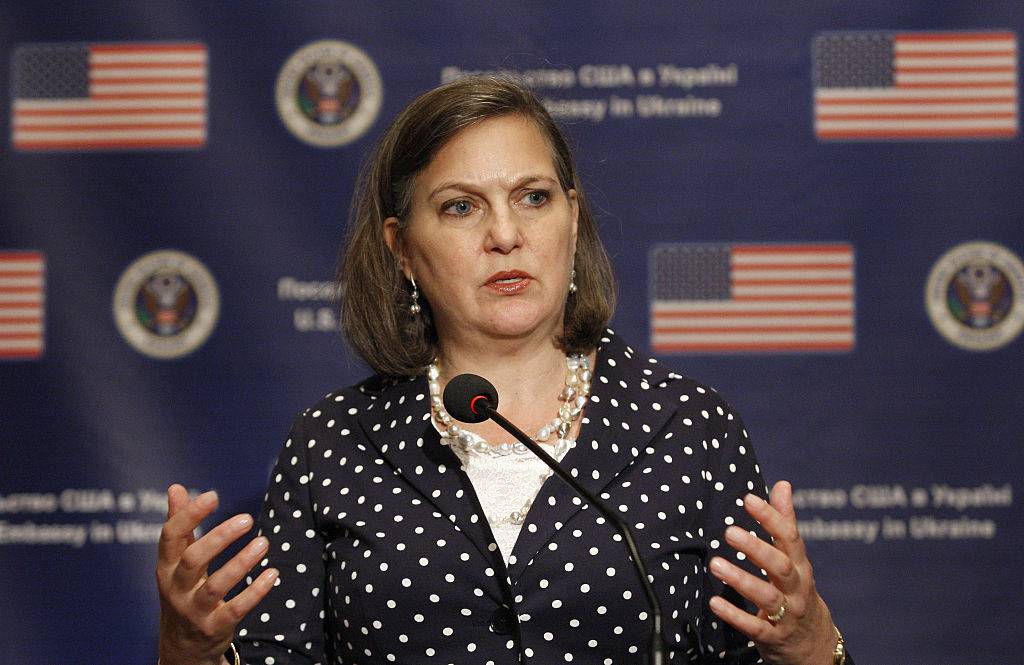
US State Department Undersecretary for Political Affairs Victoria Nuland is due to visit Sri Lanka on 22 March to hold a range of high-level discussions, including with President Gotabaya Rajapaksa.

The Morning learnt that Nuland, along with another US State Department official, will be in Sri Lanka for a three-day visit from 22 March. She is due to meet the President, Prime Minister (PM) Mahinda Rajapaksa, and Foreign Minister Prof. G.L. Peiris.

Furthermore, she is also due to hold discussions with Opposition and Samagi Jana Balawegaya (SJB) Leader Sajith Premadasa and Tamil National Alliance (TNA) Leader R. Sampanthan.

On 7 March, at the interactive dialogue of the United Nations Human Rights Council (UNHRC) session, the US called upon the Government of Sri Lanka to engage with Tamil and Muslim political parties and civil society organisations in order to advance an inclusive and lasting political solution. The US further noted that in order to foster reconciliation, the Office on Missing Persons (OMP) and the Office for Reparations should operate independently and transparently.

Prof. Peiris attended the UNHRC session this month in Geneva, Switzerland, where he referred to serious anomalies and weaknesses in the update presented by UN High Commissioner for Human Rights (UNHCHR) Michelle Bachelet. In her written update this month, Bachelet called upon the UNHRC and its Member States to co-operate with the Office of the UNHCHR in its discharge of accountability-related work under Resolution 46/1, and to provide it with adequate human and financial resources in order to enable it to effectively deliver the full mandate given under the said Resolution.