Revolting rupee dip sends prices high

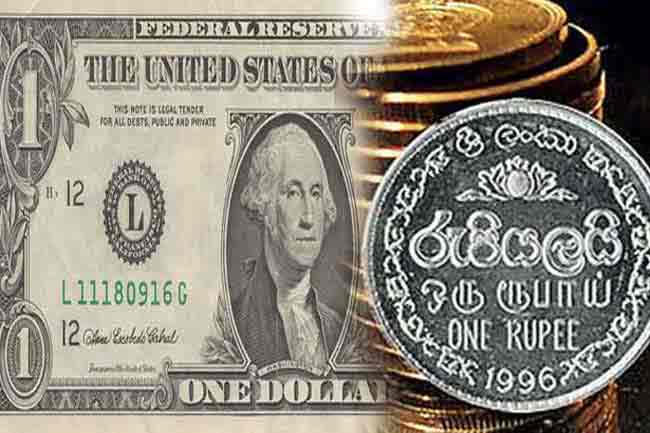
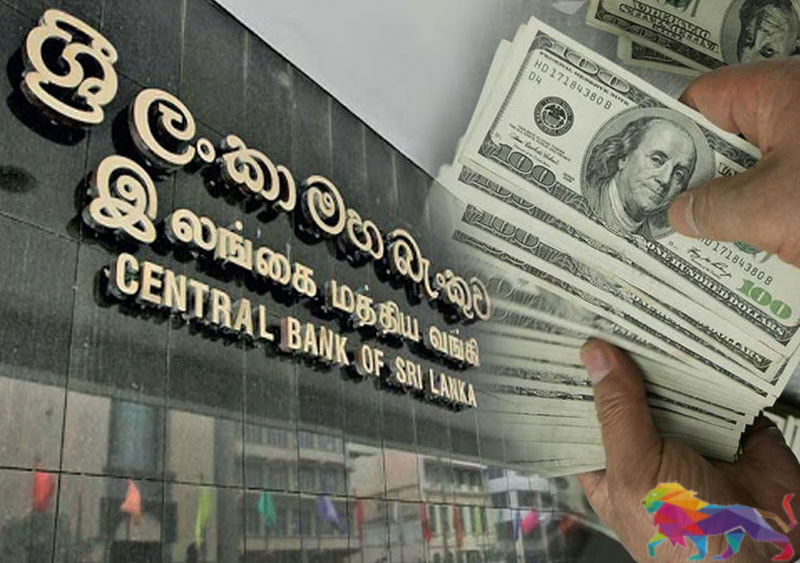
The sharpest depreciation of the rupee following the free float of the currency ignited across the board prices hike with cost likely to soar further if Ceylon Petroleum Corporation revises upwards its pricing whilst the Central Bank said spikes are temporary and its recent moves will usher longer-term benefits and stability.

Of the announced hikes, most centred around food on the basis that producers will incur higher prices on account of imported flour and other ingredients would be costlier following the near 30% depreciation of the rupee.

Forex markets and the private sector saw continued uncertainty as at interbank level the US Dollar was quoted at between Rs. 260 and Rs. 280. Dealers said the highest-level transactions were done at Rs. 265. However CBSL continued to quote Telegraphic Transfer rates at Rs. 249.96 (buying) and Rs. 259.99 (Selling).

Prima said that One kilogram of Wheat Flour was increased by a price between Rs. 35 to Rs. 45 whilst the other producer Serendib increased it by Rs. 35.

The All Ceylon Bakery Owners’ Association said the price of a loaf of bread has been increased by between Rs. 20-30 and a loaf would cost between Rs. 110 and Rs. 130. The price of a sweet bun has been increased by Rs. 10.

The All Ceylon Restaurant Owners’ Association said the price of a rice packet has been increased by Rs. 20; Kottu by Rs. 10 and Short Eats by Rs. 5.

Separately the Civil Aviation Authority said the price of airline tickets has increased by 27%

The Ceylon Cellular Vendors Association said due to the increase of the dollar, the price of phones and accessories will be increased by 30%.

The hikes are coming as inflation hit a record 16.8% in January with food prices up 25%.

Prices are likely to go up further as State-owned Ceylon Petroleum Corporation (CPC) under growing pressure to adjust its prices upward following global spikes. Lanka IOC revised its prices citing devaluation as well as rise in global prices. It increased diesel by Rs. 75 per litre and petrol by Rs. 50 per litre. Though losing Rs. 1,201 per litre of diesel, the CPC has avoided increases despite LIOC implementing two revisions within a month.

Even without CPC hike, three-wheelers drivers are demanding that the base fare for the first kilometre must be Rs. 80 up from Rs. 60 implemented in early this year.

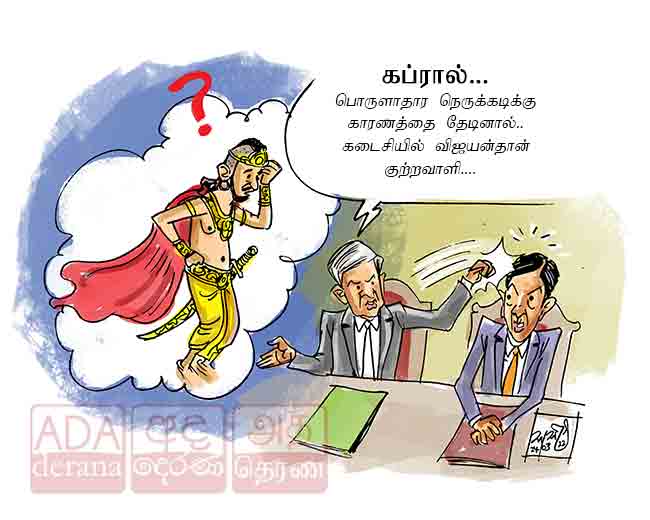
Under flak from the Opposition and economists for sheer mismanagement and late decisions, Central Bank Governor Nivard Cabraal took to video and CBSL Facebook to reassure markets and the public.

“We are aware of the implications of these moves. It will be short term and greater stability will ensure long-term benefits to all,” he said.

Cabraal said that recent policy rates hike and allowing flexibility of the exchange rate (depreciation) were made in ensuring economic and financial system stability which are core responsibility of the CBSL. “These decisions are not avoidable,” he said in discharging CBSL’s duties.

Stressing that a flexible exchange regime will boost foreign exchange inflows thereby help stabilise the economy, Governor however stressed that “CBSL stands ready to meet any challenges post devaluation.”

Difficult and challenging times. Maintaining macroeconomic stability is an arduous task. CBSL initiated a host of measures amidst the COVID pandemic to cushion the impact. He said that the Russia-Ukraine war posed the biggest setback globally. In that context CBSL had to opt for new tools to ensure macroeconomic stability. They included hiking interest rates and introducing flexibility for the exchange rate.

CBSL Head of Economic Research Anil Perera said a managed exchange rate since the pandemic helped the country to mitigate the impact of global and local shocks to the economy. However support extended to the economy and the public by way CBSL actions needed to be relaxed to ensure greater stability and sustainability.

He said that reforms were required especially since the outbreak of the Russia-Ukraine war and resultant spike in oil prices. He said depreciation will cause short term challenges such as rise in prices but expected stability in the currency will help.

“Foreign inflows will increase and exchange rate flexibility will boost exports whilst discouraging imports,” Perera said, adding that the CBSL will closely monitor the behaviour of forex markets and take appropriate action to ensure further stability if necessary.

Posted in Uncategorized

Renewable energy projects: Adani gets Mannar and Pooneryn

The Government last Friday (11) signed a Memorandum of Understanding (MoU) with India’s Adani Group allocating two large-scale renewable energy generation projects in Mannar and Pooneryn in the Northern Province to the company, The Sunday Morning learns.

The two renewable energy projects are to generate a combined capacity of an average of 500 MW while the value of both projects has been estimated at around $ 500 million.

The MoU with Adani was signed last Friday at the Finance Ministry soon after the Ceylon Electricity Board (CEB) signed a Joint Venture (JV) with India’s National Thermal Power Corporation (NTPC) to set up a 50 MW solar power park in Sampur in Trincomalee.

The MoU with Adani was signed by representatives of Adani Group, CEB, the Sustainable Energy Authority (SEA), and the Board of Investment (BOI).

State Ministry of Solar Power, Wind and Hydro Power Generation Projects Development Secretary K.H.D.K. Samarakoon confirmed to The Sunday Morning that agreements for the proposed renewable energy plants in Mannar and Pooneryn were signed with the Adani Group on Friday.

However, when asked for the value of the projects and the generation capacities of the two projects, Samarakoon said he was unaware of the exact details as he was not a signatory to the document.

When contacted, SEA Chairman Ranjith Sepala told The Sunday Morning that both projects had a combined generation capacity of around 500 MW and the value of both projects had been set as $ 500 million.

It is learnt that the Adani Group has informed the Government of its intentions of completing the proposed projects within a period of one year.

The Sunday Morning on 24 October and 5 December 2021 exclusively reported that the Adani Group was to invest in renewable energy projects in the Northern Province.

However, three key renewable energy generation projects in the North and Eastern Provinces have now been assigned to Indian investments.

Posted in Uncategorized

Sri Lanka and India sign agreement to develop a solar power plant in Sampur

On 11 March, the High Commissioner of India to Sri Lanka, Gopal Baglay attended the signing ceremony of the Joint Venture & Shareholders’ Agreement (JVSHA) for the Trincomalee Power Company Limited (TPCL) which is a joint venture between NTPC Limited from India and the Ceylon Electricity Board (CEB) for developing a 100 MW Solar Power Plant at Sampur in Sri Lanka.

The signing ceremony took place at the Ministry of Finance of Sri Lanka in presence of the Minister of Finance, Basil Rajapaksa; Minister of Power, Hon. (Mrs.) Pavithradevi Wanniarachchi; State Minister of Aviation and Development of Export Zones, D.V. Chanaka; and State Minister of Solar, Wind and Hydro Power Generation Projects Development, Duminda Dissanayake. The signatories to this tripartite document included Narinder Mohan Gupta, Head of International Business Development, NTPC; M.M.C. Ferdinando, Chairman of the CEB; and N.S. Ilangakoon, Vice-chairman (CEB) and Chairman TPCL.

may be recalled that during the visit of Minister of Finance of Sri Lanka, Hon. Basil Rajapaksa, to India last year, both sides had resolved to enhance investments from India in various sectors in Sri Lanka that would contribute to growth and expand employment. The Sampur Solar Power Project is an important step in this direction.

Signing of this JVSHA demonstrates yet again, India’s ability to respond to Sri Lanka’s priorities in a comprehensive and mutually beneficial manner. We will continue to encourage and facilitate the expedited and effective implementation of this project.

India is committed to expanding the role of renewable energy and helping build cleaner, greener and climate-resilient societies. At the international level India has provided institutional solutions such as the International Solar Alliance and the Coalition for Disaster Resilient Infrastructure for Climate Adaptation. Our cooperation with Sri Lanka in this domain will only become stronger with the implementation of the US$ 100 million Line of Credit offered by India to Sri Lanka for the development of solar power projects in Sri Lanka. Similarly, there is significant interest in the private sector on both sides for cooperation in renewable energy which is likely to increase in the coming years.

India’s Western naval fleet visits Sri Lanka

In continuation of Indian Navy’s endeavor to build ‘Bridges of Friendship’, with the Sri Lankan navy, four ships of the Western Fleet of Indian Navy under the charge of Flag Officer Commanding Western Fleet (FOCWF), Rear Admiral Sameer Saxena, visited Sri Lanka from 09-12 March.

The indigenous guided missile frigate BRAHMAPUTRA along with frigate TALWAR entered Hambantota port while the advanced indigenous destroyer INS CHENNAI and frigate TEG entered Colombo harbor.

The ships were warmly welcomed in both these places by the Sri Lanka Navy in accordance with naval traditions.

The High Commissioner of India , Gopal Baglay hosted a reception onboard INS Chennai on 10 March 2022. Foreign Minister Prof G.L Peiris represented H.E Gotabaya Rajapaksa, President and Defence Minister of Sri Lanka, at the event. Parliament Speaker Mahinda Yapa Abeyawardena also graced the occasion.

Welcoming the guests, High Commissioner Gopal Baglay highlighted the importance of oceans and how they bind the two countries to achieve common prosperity, security and also health in the present scenario. He reiterated the commitment of the Government of India to stand shoulder to shoulder with Sri Lanka in addressing these common challenges. He also highlighted that Colombo Security Conclave is a significant initiative in this field and cooperation through the forum needs to be developed further.

In his remarks, FOCWF highlighted the historic bonds of friendship between the two navies and emphasized the need for cooperative efforts to ensure Security and Growth for All in the Region (SAGAR).

Lankan Foreign Minister Prof G.L Peiris lauded Prime Minister Narendra Modi’s ‘Neighborhood First’ policy. He appreciated the fact that the Finance Minister of India had assured priority to Sri Lanka in the sphere of economic cooperation. Prof. Peiris also called for deeper people to people ties, development of ports and harbors, cooperation in oil and gas, tourism and increased investments from India. He further emphasized that the future of the world lies in Indo- Pacific and BIMSTEC region and thus, through platforms like IORA and Indian Ocean Conference, Sri Lanka will strive to establish a ‘Rule Based Order’ for continued peace in the region. He also welcomed more such visits by the Indian Navy in future.

On 10-11 March, FOCWF made courtesy calls on the Foreign Secretary, Chief of Defense Staff & Commander of Sri Lanka Army and Commander of Sri Lanka Navy. Further, the visiting ships carried out various mutually beneficial training activities with the Sri Lanka Navy and other social engagements.

The visit of the Western Fleet to Sri Lanka strengthens the close bonds of friendship between the two navies and helped achieve greater interoperability through the conduct of various activities in harbor and at sea as part of Maritime Partnership Exercise including Flying Operations, replenishment approaches and tactical manoeuvres.

PM says Ranil a good friend, but no national government

Amidst rising reports that a national government was being discussed between the Rajapaksa brothers and UNP Leader Ranil Wickremesinghe which would see President Gotabaya Rajapaksa as head of state and Wickremesinghe as the new Prime Minister, Prime Minister Mahinda Rajapaksa yesterday firmly denied these reports saying such a matter was not discussed with the UNP.

In a meeting with some senior journalists at Temple Trees, Prime Minister Rajapaksa said that while Wickremesinghe and he were very good friends, their policies and political ideologies were different hence they could not work together in a joint government. Rajapaksa who was however of praise for Wickremesinghe also said that a national government, amidst the present crises, was not being discussed with any political parties and the government would resolve all the issues soon.

The Daily Mirror learns that proposals and recommendations by all political parties to address the present issues, will be discussed at an All Party Conference chaired by President Gotabaya Rajapaksa and Mahinda Rajapaksa, when they meet on March 23 at 10 pm.

All political party members have been told to attend the conference, where several issues will be discussed. Meanwhile. when questioned as to why he made a statement last week stating that the fuel shortage was artificially created, Prime Minister Rajapaksa said that at a time when former minister Udaya Gammanpila had made a public statement saying there was fuel to last only 4 days in the country, the Prime Minister had immediately telephoned the Chairman of the Ceylon Petroleum Corporation who informed him that ships with fuel had already docked at the Colombo Port.

The CPC Chairman had also informed the Prime Minister that they had the necessary funds to purchase the fuel and it was surprising that Gammanpila had made such a statement. However Gammanpila’s statement had caused panic among the public and excess buying which led to an immediate shortage at the fuel stations. He said this could have been avoided.

The Prime Minister further at the meeting yesterday said that the forex crisis was being looked into and soon the power and fuel crisis would also be resolved.

Posted in Uncategorized

Sri Lanka rupee falls to Rs. 260 against US Dollar for the first time

The Central Bank of Sri Lanka announced that the selling price of one US dollar Thursday is close to 260 rupees and buying rate is Rs. 250 per US Dollar.

Following the Central Bank’s decision to free float the value of the rupee against US Dollar, the buying and selling prices of the US dollar against the rupee are rising rapidly. Accordingly the buying price of a dollar today is 249 rupees 96 cents and the selling price is 259 rupees 99 cents.

Several of Sri Lanka’s leading commercial banks today have set a selling price of 260 rupees for a US dollar and 250 rupees for buying a dollar.

However, the Central Bank recently allowing greater flexibility in the exchange rate said expected that forex transactions would take place at levels which are not more than Rs. 230 per US dollar.

Posted in Uncategorized

SLFP will go solo at next elections : MP Nimal Siripala

Senior Vice President of the Sri Lanka Freedom Party Nimal Siripala de Silva states that the party will contest any upcoming election on its own.

Addressing the Colombo District Convention of the Sri Lanka Freedom Party, the MP stated that there was a discussion involving several professionals at the Central Committee of the Sri Lanka Freedom Party on its policies.

Accordingly, the MP stated, the SLFP central committee held discussions on the program which will be implemented if the party comes into power, solutions to the dollar crisis, solutions for the employment crisis, and solutions for the issues faced by the farming community.

Together with professionals and intellectuals, the SLFP prepared a 15-part document on this issue, he said.

“The Sri Lanka Freedom Party is not a party which initiates blind action. We, the Sri Lanka Freedom Party, will contest the next election alone. Do not have any doubts about that,” he added.

India gives US$500mn credit line, hopes to end fuel shortages

India has given effect to the a 500 million US dollar credit line using which Sri Lanka can import oil, as money printed to keep rates low, boosted imports to record levels, triggering forex shortages and made it difficult to import oil.

Sri Lanka can use the credit line to buy oil from India and also third countries, the Press Trust of India reported, following the approval of the Reserve Bank of India.

Sri Lanka has to buy 75 percent of the goods from Indian exporters and the balance from any other country.

The line of credit can be used for six months of signing the agreement and extended at the request of the borrower.

The Reserve Bank of India has said extension should not be more than 12 months, the report said.

Sri Lanka is in the habit of borrowing dollars to buy oil after money printing creates forex shortages.

State-run Ceylon Petroleum Corporation is indebted to the hilt due to past borrowings from banks to import oil.

Suppliers have now refused to give any more credit and are asking for upfront payment. Meanwhile some suppliers

The CPC has for many years got suppliers’ credit to buy oil and has ended up billion over 3 billion US dollars of loans despite market pricing oil.

It is not clear whether the 500 million dollar credit line would be used to subsidise oil, adding to the overall public debt burden.

Sri Lanka’s state economists have a habit of using borrowings and credit lines after printing money and then jumping up and crying wolf about a widening current account deficit.

Sri Lanka rupee at 260/275 to dollar after opening at 240/260

Sri Lanka’s rupee opened at 240/260 and is quoted t 260/275 to the US dollars Thursday after the central bank re-confirmed there were no restrictions on trading, dealers said.

Amid the uncertainty quotes are wide.

A float of the currency helps match inflows to outflows and the central bank no longer has to give reserves as long as no more money is printed to sterilize the intervention.

The currency tends to fall steeply when a float starts and then stabilizes.

“We observe the banks are cautious and that is a good sign and their guidance to clients would also be helpful at this juncture,” Central Bank Governor Nivard Cabraal said.

“Our bankers are mature and responsible breed and we have confidence and that they too act in a responsible manner that would be fair to all stakeholders, importers exporters borrowers, lenders and expatriate workers.”

Sri Lanka allowed a float of the currency after reserves fell to low levels.

W A Wijewardene former Deputy Governor of the Central Bank said a rate hike will help support the rupee by reducing aggregate demand and imports and arbitrage opportunities.

Posted in Uncategorized

Geneva bunker-buster, Rajapaksa regime retrenchment and 2015 reset BY DR Dayan Jayatilleka

For the first time in the history of the United Nations Human Rights Council and in all probability the history of the United Nations system, and for the first time in the long history of the Roman Catholic Church, a Cardinal addressed the UNHRC. It was also the first time in Lankan history that a top religious leader addressed a UN body and made a moral-ethical denunciation of ‘the incumbent government’.

Those who make justice unattainable nationally, render inevitable the call for justice internationally. Those who fail to follow the trail of guilt wherever it may lead, and are thought to kick over the traces of mass atrocities nationally, generate a powerful plea to switch on the searchlight of justice globally.

Church militant

His Eminence Cardinal Malcolm Ranjith who met the leader of the world’s 1.3 billion Catholics, Pope Francis, and doubtless obtained permission and blessing for his UNHRC move from His Holiness, had a 45-minute conversation in Spanish (one of the seven languages he has mastered) with United Nations Human Rights High Commissioner Michelle Bachelet, and addressed the UNHRC.

After years of forbearance, His Eminence took the stand of moral and ethical denunciation of an Old Testament prophet and called out for globalised justice. He dropped a thermobaric bomb on the regime bunker:

“…The first impression of this massacre was that it was purely the work of a few Islamic extremists. However, subsequent investigations indicate that this massacre was part of a grand political plot.

…Instead of uncovering the truth behind the attack and prosecuting those responsible, there are attempts to harass and intimidate those who clamour for justice.

…we earnestly call upon the UNHRC and all its member countries to support the continuation of evidence gathering initiated by the Council last year and to devise a means to ensure an investigation to unravel the truth behind the Easter Sunday massacre.”

The Cardinal’s speech reached the world.

Foreign Minister G.L. Peiris’ speech against the Sri Lanka Accountability Project was collateral damage. GoSL’s global South card lies shredded, not only by India’s sharp reminder about the 13th amendment but by the realities that Pope Francis and Cardinal Ranjith are from the global South and the global South contains the majority of the world’s Catholics (Latin America, the Philippines).

Catholic priests were being pressurised and lay activists harassed by the authorities. Ministers and top officials were supercilious and patronising. The regime’s puffed-up hardliners shouldn’t have strayed out of their strictly local league, picked a globalised target and started something they can’t possibly finish.

Militarisation-accountability nexus

The recent vote demonstrated the appetite of the UN Human Rights Council for an international inquiry into the Ukraine war so as to establish accountability for possible violations of international law. This mood is certainly going to impact the Sri Lankan case, concerning which the UN Human Rights High Commissioner has already called for “alternate strategies” to advance international accountability, arguing that military and ex-military personalities have been appointed to an unprecedented number of high places in the Sri Lankan state structure, thereby turning entrenched impunity, structural if not systemic, and negating the chances of domestic accountability.

Sri Lanka’s Foreign Minister Prof. G.L. Peiris made a strong critique of an international accountability mechanism on the grounds that it was polarising rather than therapeutic in its domestic effects. A valid point, but absent an essential component, it was akin to a stern warning about the dangers of COVID-19 while refraining from providing the vaccines. The only possible protection against international accountability is a robust national accountability mechanism as clearly set out by the Presidential Commissions appointed by President Mahinda Rajapaksa.

As High Commissioner Bachelet notes: “Two years after the expression of commitments to pursue an ‘inclusive, domestically designed and executed reconciliation and accountability process’ before this Council, the Government has still not produced a credible roadmap on transitional justice towards accountability and reconciliation.”

Nothing of the sort has been established and what is worse, a soldier who was found guilty by the Sri Lankan courts of slaughtering children in cold blood by cutting their throats, was set free by President Gotabaya himself and visited upon release by his erstwhile commanding officer, the current Secretary/Defence, Gen. Kamal Gunaratne.

The UN Human Rights High Commissioner paints the over-exposed target with a laser beam:

“…The militarisation of civilian government functions is further deepening. I remain deeply concerned by the concentration of civilian positions in the hands of military officials – some of them implicated in serious allegations of human rights violations…The current Government has not only demonstrated its unwillingness to pursue accountability – it has incorporated military officials implicated in alleged war crimes into the highest levels of Government, reinforcing a narrative of impunity. For these reasons, and to provide some form of redress for victims. I have called on the Council to pursue alternate strategies to advance accountability at the international level.”

The operative phrase here is “For these reasons”. Thus has President Gotabaya’s unwise practice of fertilising and seeding the state with his former comrades-in-arms (while de-fertilising the food-producing farmlands) actually made the Sri Lankan armed forces and the war, more rather than less of an international target.

High Commissioner Bachelet’s exact recommendation to the UNHRC and member states should be studied: “…to investigate and prosecute perpetrators of international crimes committed by all parties in Sri Lanka, through judicial proceedings in their jurisdictions, under accepted principles of extraterritorial or universal jurisdiction.”

If international accountability moves forward under the rubric of universal jurisdiction, non-compliance could culminate in unilateral sanctions.

Sources of post-war folly

When Sri Lanka won the post-war vote at the UNHRC decisively in May 2009, it had engaged in a trade-off: domestic devolution for external accountability. After my dismissal from Geneva, GoSL double-crossed our partners and unilaterally reneged on that arrangement—indeed my removal was symbol and signal of that U-turn.

The Geneva May 2009 trade-off formula was the cheapest price we would ever have to pay. Just two things to do, neither of which were done. Now the chickens are well and truly coming home to roost.

One of those two things was to implement the 13th amendment—an issue that was flagged in India’s speech at the UNHRC last week. Coincidentally, Sri Lanka’s Ambassador/PR in Geneva, an ideologue of the GR project was a long-standing polemicist against the implementation of the 13th amendment and advocate of its post-war abolition.

Indian Ambassador/PR Pandey’s statement in Geneva at the on-going UNHRC session unambiguously reminded GoSL of the issue:

“…As its friend and immediate neighbour, India has consistently called upon Sri Lanka to fulfil its commitments on addressing the issues related to protecting the interest of Tamils in Sri Lanka. India believes that it is in Sri Lanka’s own interest that the expectations of Tamils in Sri Lanka for equality, justice, peace and dignity, within a united Sri Lanka, are fulfilled. This applies equally to the commitments made by the Sri Lankan Government on meaningful devolution, including through the 13th Amendment to the Sri Lankan constitution.

…We call upon Sri Lanka to take the necessary steps to address the legitimate aspirations of the Tamil community, including by carrying forward the process of reconciliation and the implementation of the Thirteenth Amendment to the Constitution of Sri Lanka, to ensure that the fundamental freedoms and human rights of all its citizens are fully protected.

We will continue to urge the Sri Lankan Government for the early conduct of elections to the Provincial Councils in keeping with its commitment to devolution of power.”

The other issue was a robust domestic accountability mechanism and process on emblematic cases. That too remains undone.

There was a third post-war task, and that was not part of the UNHRC Geneva process. It was to accept the deal on the table in the form of the Kerry-Lugar Report of the US Senate Foreign Relations Committee in late 2009, which listed just these two issues i.e., devolution and accountability. This would have normalised relations with the US, but it was ignored. Post-war Sinhala state nationalism assumed it was a seller’s market.

Unresponsiveness to the Kerry-Lugar report was not Prof. G.L. Peiris’ folly (we were both in Vietnam with President Mahinda Rajapaksa when the report came out). Where Prof. Peiris blundered was when he declined (to President MR’s dismay) US Secretary of State Hillary Clinton’s invitation for a discussion in Washington DC somewhere in 2011-2012.

The clock is ticking on the EU’s decision on GSP+. Sri Lanka’s National Human Rights Commission headed by a retired Supreme Court judge appointed by President Gotabaya Rajapaksa, has made strictures and recommendations on the PTA which the Sri Lankan government is ignoring despite the danger of losing GSP+.

President Gotabaya Rajapaksa and his myopic uber-nationalist hawks such as Minister Weerasekara (and Ven. Dr. Medagoda Abeytissa) now have to decide whether it is a worthwhile risk to continue their policy of filibustering on the 13th amendment—which I had warned against publicly in 2017-2018—in the face of the current convergence of circumstances:

(a) Forex bankruptcy and Minister Basil Rajapaksa’s impending visit to Delhi with a begging-bowl

(b) The tightening noose of international accountability, and

(c) The recently reiterated Indian insistence on devolution, the 13th amendment and the early holding of Provincial Council elections.

Sri Lanka would have continued to have India’s support, neutralised the USA’s hostility and enjoyed the unstinted backing of China, Russia and the global South, if GR and BR hadn’t taken turns in blocking MR’s wartime and immediate post-war international commitments on devolution and limited accountability.

MR allowed his wartime commitments to a post-war roadmap, manifested in his May 21st and 23rd joint communiques with India and the UNS-G, and the UNHRC Geneva May 27th 2009 Resolution, to be ripped apart by his siblings, who imposed their respective blueprints instead.

This is not merely a matter of external relations but also of economics. Sri Lanka would have had capital inflows from China, India, Japan and the West, avoiding the deep economic crisis we now find ourselves in. Post-war, Sri Lanka could have had it all. So could the Rajapaksas.

MR’s brothers were positioning themselves or were being flatteringly positioned by their respective fan-clubs (“Gota’s War” 2012), for post-MR succession. With secession defeated, succession moved to the top of the agenda. The state bureaucracy and state apparatus as a whole was carved up between GR and BR into spheres of influence. Ministers and top officials felt the need to take the cue from one or the other brother or operate in the zone between the two, rather than take the line from MR.

Head for an off-ramp
Succession has never been less meaningful than today. Succession to what? The captaincy of the Titanic? It is doubtful that the Rajapaksas could retain even the Ruhuna at a national election. The clan brand has become toxic. Once this Titanic sinks, it will take Namal longer to resurface it than it might take Dullas Alahapperuma, but as in the case of the Bandaranaikes and the Nehru-Gandhi dynasty, the Rajapaksas would rather the party be defeated than relinquish their death-grip on it. It will take over a decade for the electorate to forgive and forget the economic trauma inflicted by the Rajapaksas. After the fate of Wimal and Udaya, no one will come forward to defend them as the duo did.

Thanks to the policies of President Gotabaya Rajapaksa, which recently made the pages of one of the most prestigious international periodicals– though hardly positively—there is rage in the rural heartland. (Sri Lanka’s Organic Farming Experiment Went Catastrophically Wrong (foreignpolicy.com)

Things are reaching boiling point. One reason is debt repayment. Without a plan for “sensible restructuring” (Yanis Varoufakis’ phrase), the government will be left with a ‘Prisoner’s Dilemma’ in June: default, or pay up and risk bankruptcy, triggering a tsunami of social unrest. Dr. Nishan de Mel’s question is the crux of the matter: “if you make the repayment on schedule what are you going to be left with to pay for essentials?”

The only realistic strategy for the ruling clan is not one of winning elections or remaining in power without elections, but a survival strategy of a double-exit.

Firstly, exit from the economic downward spiral, because if the economy crashes, the ruled will come looking for the rulers and the military won’t be able to stop them because it will itself split.

Given that China (a) instituted the greatest economic miracle in the history of economic development (b) is a close friend of Sri Lanka and (c) cannot be accused of being an imperialist Western power, President Gotabaya Rajapaksa should immediately request President Xi Jinping to send a team of top economic experts to help us evade the coming economic catastrophe.

Ceylon/Sri Lanka had a history of seeking top-notch foreign expertise on matters of economic policy. No less a nationalist than Prime Minister SWRD Bandaranaike brought in Nicholas Kaldor and Joan Robinson. No less self-confident a leader than JR Jayewardene asked Lee Kuan Yew to send him an economic wizard and Lee sent Goh Keng Swee.

Significantly, President GR hasn’t named to his National Economic Council, Dr. Nalaka Godahewa who delivered the key presentation on economic development at the Shangri-La Viyath Maga-2 (2018).

I wouldn’t trust any National Economic Council under any administration, that doesn’t have Nishan de Mel and Dushni Weerakoon (discrepant as their current views are) as lead economists.

Secondly, an early election –which takes a legislative amendment through Parliament—and a peaceful transfer of power, is better than the alternative.

The ruling clan is playing for time in the hope of a turnaround. Why play for time when time is working against you? As the sovereign citizenry finds everyday life unliveable, it will sooner rather than later, make the place ungovernable by the rulers. Or is that the plan?

SLFP: Necessary ally

The 2015 Rajapaksa replacement strategy had three sources and components:

(i) Chandrika Bandaranaike Kumaratunga’s notion dating back to late 2005 of a bi-partisan government comprising Ranil’s UNP and the SLFP (she didn’t expect Mahinda to win), for a federal Constitution. CBK failed to foresee the genetically-encoded blowback of the vote base of her own party, the SLFP, against the West-centric neoliberalism of the Ranil-Mangala UNP.

(ii) Mangala Samaraweera’s formula of a majority of the minorities plus a minority of the majority.

(iii) Senior ambassadors and their experts who were probing for a fissure; an improvement on the SF option of 2010.

The sole rational element of the 2015 strategy was component (iii), the ‘Sison-Honigstein’ postulate: the Rajapaksa vote needed to be politically ‘hacked’ by a dissident, moderate-nationalist SLFP faction.

Today’s economically antagonised SLPP voter has left the Medamulana manor but may not move all the way over to the SJB or JVP-NPP, and therefore needs a halfway house. That makes the Sirisena SLFP an indispensable factor in any regime replacement scenario.