What Made Me Take Part In The Demonstration By Tamil MPs Opposite The President’s Office

C.V. Wigneswaran

The question for this month posed in English to me, is as follows;

Question – At your age and with your background what made you take part in the demonstration by Tamil MPs recently opposite the President’s Office at Galle Face?

Response- The urgency of our request! I organized an International Virtual Conference on Land Grabbing some time ago with International Experts taking part, apart from our own Senior Parliamentarian Hon’ Mr. Sambanthan and others.

A significant statement was made by an International Expert from Israel by name Professor Yiftachel who participated in the Conference. He is a highly cited Israeli Scholar in geography and urban studies. He formulated over two decades ago the theory of ethnocratic regimes. He did research into the nature of land grabbing taking place against Tamils and Muslims in Sri Lanka by the successive majority Sinhala Governments and came to the conclusion that Sri Lanka too like Israel is an ethnocratic regime.

This reference to Sri Lanka as an ethnocratic regime is very significant. The successive Sri Lankan Governments in recent times have all been ethnocratic in their nature and attitude towards the Tamils especially, and against the Muslims in recent times.

An ethnocracy is a type of political structure in which the state apparatus is controlled by a dominant ethnic group to further its interests, power and resources. From the time of Independence the Sinhalese leaders have been plotting and planning against the Tamils to drive them out of the regions they had occupied in Sinhala majority areas during British times and to then take control of areas within the traditional homelands of the Tamils.

There is now sufficient evidence to show the Tamils occupied these traditional homelands for more than 3000 years continuously. In fact the original inhabitants of this Country were Tamils. The original Tamil inhabitants swelled up subsequently with the coming of the Pandyas, Pallavas, Cholas, Cheras and the Arya Chakrawarthy group, all leaving behind Tamil speaking people to add up to the numbers of the original Tamils who occupied the areas now identified as Northern, Eastern and parts of Western, North Central and North Western Provinces. If you look at the old title deeds of many a Sinhala family of those who lived along the coast from Colombo to Puttalam they would be found to be in the Tamil language. When I visited Munneswaram Temple during my childhood, the area was full of Hindu Tamils. Now hardly any noticeable Hindu Tamils live there.

Sri Lankan state-sponsored colonization schemes were the successive Sinhala majority governments’ program of settling mostly persons from the South in the North and the East and elsewhere. Within predominantly Tamil speaking areas, persons from outside the said Provinces were brought and settled. This is taking place since the 1950s. According to International Law principles people of the area of settlement should be given first preference. Not only that. They should reflect the racial demography of the area.

Since irrigation settlements occurred under direct state sponsorship, most of those who were settled in the North and East were ethnic Sinhalese . It was no doubt a deliberate attempt of the Sinhalese-dominated state to marginalize the Tamils further by decreasing their numbers in their own areas. This no doubt was one of the reasons if not perhaps the most immediate cause of inter-communal violence in the early days.

Shortly after independence, the government of Ceylon started a program to settle Sinhalese in the jungles of the Trincomalee District. The forests were cleared and water tanks restored. As a consequence of these schemes the Sinhalese population of the Trincomalee District which was quite low rose to 33% in 1981.In the 1980s the government extended the colonization schemes into the Dry Zone area of the Northern Province, drawing up plans to settle up to 30,000 Sinhalese in the area. Colonization schemes also took place in the areas of Ampara and Batticaloa districts. The Sinhalese population rose in the combined Batticaloa and Amparai Districts to numbers far in excess of the natural projected growth.

The notion of the “traditional Tamil homeland” became a potent component of popular Tamil political agitations while the Sinhalese nationalist groups viewed the resettlement schemes in these areas as “reclamation and recreation in the present of the glorious Sinhalese Buddhist past”. But the Sinhalese were wrongly advised by their Politicians and others about their past.

Tamils were the original inhabitants of this Island. When Buddhism was introduced there were no Sinhalese. It were the Tamils who were converted to Buddhism. All the Buddhist remains now found in the North and East going back to 2000 years are the remnants from the time of the Tamil Buddhists. (Demala Baudhayo as Professor Sunil Ariaratne refers to them). Sinhala language came into being in the 6th and 7th centuries AD. There were no Sinhala speaking people before that. Their first grammar book Sidath Sangaraya came out in the 13th century AD.

The Mahawansa was a fiction written in the Pali language. Atta Katha also was written in Pali though some Sinhalese try to make out that it was written in Sinhalese. In recent times there is an insidious habit among the Sinhalese to translate ancient Tamil names used in the areas in the North East, into Sinhalese and claim those translated names were the original Sinhala names used in Sinhala areas of yore which predated Tamils’ occupation!

Coming back to the Colonisation schemes of the successive Governments the first colonisation scheme was in the Gal Oya Valley in the Batticaloa District in 1952. Tens of thousands of Sinhalese peasants from the Kegalle and Kandy districts were given fertile land in the upstream end of Gal Oya. Gal Oya became later the site of the first major anti-Tamil riot in 1956.

The next colonisation scheme was around the Kanthalai tank where peasants from outside of the Trincomalee District were settled in the then Tamil dominant village of Kanthalai, 39 km south-west of the Trincomalee town. Almost all the settlers were Sinhalese. When I was a child Kantalai was a Tamil speaking area.

Another colonisation scheme was set up at the areas surrounding the Kantalai Tank, 25 km south of Trincomalee town. 65% of settlers were Sinhalese and the rest were Muslims.

A scheme was started at Pathavik Kulam 65 km North-East of Anuradhapura town. The scheme lay in Trincomalee District but was administered by the Sinhalese majority Anuradhapura District. Land Development Department employees from this scheme took part in the 1958 anti-Tamil riots.

In 1961 a colonisation scheme was started at Muthali Kulam, 24 km west of the Trincomalee town. There too Sinhalese were settled.

In the 1980s, funded by aid received from the European Community, a Sinhala colonisation scheme was started at Periya Vilankulam (Mahadiulwewa) tank, 30 km North-West of Trincomalee town.

This colonisation scheme was extended into the Northern Province with the introduction of the Manal Aru (Weli Oya) scheme, which covered the districts of Mullaitivu, Trincomalee, Vavuniya and Anuradhapura. Sinhalese were settled in lands that were formerly populated by ethnic Tamils, given land, money to build homes and security provided by the Special Task Force. Although the scheme covered four districts, administration was handled by the Anuradhapura district, which constituted a Sinhalese majority demography. The Weli Oya scheme aroused much anger amongst the Tamils.[19] This anger boiled over into violence when the Liberation Tigers of Tamil Eelam attacked the Kent and Dollar Farm settlements at Weli Oya.

When the Indian Peace Keeping Forces were withdrawn in 1990, Tamil homes in the suburbs of Trincomalee were occupied by Sinhalese settlers. Tens of thousands of Sinhalese were reported to have been brought in by the advancing government forces and made to occupy local villages and lands, denying resettlement to its original inhabitants who had earlier fled to the jungles due to the murder of Tamil civilians at the hands of the Army.

After May 2009 several settlement programmes were initiated by the government that extended towards the Northern Province. In the Vavuniya district 3000 acres in Madukulam were cleared for a village, while work of a settlement is underway in Othiyamalai Kaadu. A settlement is being created in Rampaveddi bordering a minor tank area and new settlement of approximately 2500 ethnic Sinhala families (about 6000 people) from the South have been settled in the village of Kokkachaankulam and the Hindu temple in the village was demolished and replaced with a Buddhist Stupa. Tamils in Barathypuram in the Kilinochchi District were evicted and a Muslim settlement is being created in the area due to the large economic opportunities provided by an apparels’ factory built there.

Several new settlements are also being built in Mullaitivu District while the Manal Aru (Weli Oya) settlement is being expanded as well. Several fishing colonies are being built in the Mannar district and Muslim settlements have been built in lands previously owned by Tamils that fled to India during the war.

‘Navatkuli Housing Project’ is being built in Navatkuli, Jaffna District to house 135 Sinhalese families, including 54 families who had, in 2010, attempted to set up temporary residences at the Jaffna Railway Station with funding from Buddhist Organizations and Political parties.

Tamils are being ethnically cleansed in the Jaffna peninsula and Mullativu districts, and this was being supplemented with the construction of Buddhist stupas and Sinhalisation of names of streets and places. Over 400 Sinhala families were reported to have been settled in Nelukkulam in Mullativu district recently .The Tamil populace had been reduced to a fourth, based on Government figures. Tamil locals also complained of the State waging an accelerated campaign of Sinhala Buddhist colonisation by destroying historic Hindu shrines in the East.

Another incident of State colonization before the Final Eelam War was reported by Muslim residents of the Pulmoddai village in the Trincomalee District who claimed that several acres of their traditional land had been annexed by the Government for settlements from South on the pretext of industrial development.

The settlements are made easy to the Government due to the large presence of its Military who hold 65000 acres of State Land apart from the private lands held.

Now to answer your question. My age and background need not be barriers when the Traditional Homelands of the Tamils of this Country are being misappropriated under several guises through several Government Departments like the Mahaweli Authority, Forest Department, Wild Life Department and the Archaeology Department. The recent One Country One Law project seems to be a deliberate attempt to erase our identity and individuality. The chances are the Government is trying to bring in a new Constitution sans Federalism, sans Thirteenth amendment, sans Indian intervention through the Indo Sri Lankan Agreement and restrict unit of Local Authority to Districts instead of Provinces under a centralized Unitary constitution.

Why do you expect me to think of my background, age and the inconvenience of sitting on the roadside at the Galle Face, when the entire Sri Lankan Tamil population are facing slow extinction at the hands of the Sri Lankan Government?

Posted in Uncategorized

GL attends bilateral meetings on the sidelines of UNHRC sessions

Minister of Foreign Affairs Prof. G.L. Peiris and the Sri Lanka delegation had high level bilateral meetings on 28 February with the United Kingdom, the Commonwealth Secretariat, the Organisation of Islamic Cooperation (OIC) and the World Intellectual Property Organisation (WIPO) on the side lines of the High-Level Segment of the 49th session of the Human Rights Council which commenced 28 February.

During his meeting with Minister of State of the United Kingdom for South and Central Asia, UN and the Commonwealth Lord Tariq Ahmed, the Minister of Foreign Affairs discussed bilateral cooperation and progress achieved by Sri Lanka in advancing reconciliation as well as the Government’s comprehensive efforts at fostering unity and harmony. The Minister emphasised the need for understanding and recognition of Sri Lanka’s efforts.

At the Meeting with Secretary General of the Commonwealth Baroness Patricia Scotland, the Minister discussed avenues of furthering Sri Lanka’s cooperation with the Commonwealth including on the economic front, tourism and opportunities for youth such as vocational training. The Commonwealth Secretary General commended Sri Lanka’s lead role on the Blue Economy and requested enhanced engagement in this area.The Minister and the delegation also had a constructive meeting with Permanent Observer of the Organisation of Islamic Cooperation in Geneva Ambassador Nassima Baghli, where Sri Lanka’s longstanding friendly relations with members of the OIC, the multi-ethnic and multi-religious nature of the Sri Lankan society, the significant contribution from its Muslim community and matters relating to advancing their interests, were discussed.

The Minister also had a productive meeting with Director General of WIPO Daren Tang and exchanged ideas on further advancing technical cooperation in intellectual property in the areas of policy development, digitisation, geographical indications and empowerment of youth in the use of IP for research and development.

The Minister was accompanied by Minister of Justice Ali Sabry, State Minister of Production, Supply and Regulation of Pharmaceuticals Channa Jayasumana, Secretary to the Ministry of Foreign Affairs Admiral Prof. Jayanath Colombage, Additional Solicitor General Nerin Pulle and Permanent Representative of Sri Lanka to the UN in Geneva C.A. Chandraprema.

Basil plans to meet IMF/WB officials before the Spring Meetings

Finance Minister Basil Rajapaksa is scheduled to leave for the United States in the second week of April to commence the Balance of Payments (BoP) discussions with top officials of the International Monetary Fund (IMF), World Bank (WB) and US Treasury officials, as exclusively reported by Ceylon FT on 23 February.

A top Finance Ministry official told Ceylon FT, the Lankan delegation is scheduled to leave on 10 or 11 April for this high-level meeting before the Spring Meetings of the WB Group and the IMF scheduled for 22 to 24 April in Washington DC.

Sources revealed, the Sri Lankan Ambassador to Washington Mahinda Samarasinghe is making the necessary arrangements to fix the dates and times for the said meetings. However, independent economic commentators say that there are number of issues that need to be addressed before embarking on any BoP support programme with the IMF. They emphasise the urgent need to understand the parameters within which the existing unmanageable External Debt Stock could be restructured.

According to the IMF Debt Sustainability Analysts (DSA), SL’s Debt dynamics are in a very critical stage. Therefore, it cannot seek IMF support without introducing a viable Debt Restructuring mechanism.

Based on the recently concluded Article IV Consultation team of DSA, SL has a high risk of debt distress, with debt burden indicators well above the relevant thresholds in the baseline and all the stress scenarios. Accordingly, international tenders should be called for internationally recognised consultants/managers to implement this Debt Restructuring programme.

Thus, the world’s leading debt restructuring specialists, Rothschild and Co and Lazard Ltd have already focused their attention on SL.

According to sources familiar with the subject, they have recently met government officials and discussed potential plans to help the nation raise funds, including asset sales and securitised debt facilities.

Thereafter, the Debt Restructuring programme would take the course of implementation with the technical assistance of the IMF, usually a timeline of about six months before its actual implementation based on a binding agreement with the IMF for the BoP assistance programme. Accordingly, the Government would have to focus on ‘bridging finance options’ to meet the dollar demand during this transit period.

SL is eligible for IMF support under the four-year Extended Fund Facility (EFF), possibly about US$ 2 billion at an interest rate of less than 2 per cent.

An IMF programme would assist in Debt Restructuring under the Paris Club and secure new facilities from the World Bank and enable re-entry into global capital markets.

There is a reasonable probability of achieving debt sustainability, removing import controls without facing a costly restructuring of commercial loans, economists said.

Posted in Uncategorized

Foreign Minister Peiris meets UN High Commissioner for Human Rights

Sri Lanka’s Minister of Foreign Affairs Professor G.L. Peiris today held wide ranging discussions with the United Nations High Commissioner for Human Rights, Michelle Bachelet at her office in the Palaise des Nations in Geneva.

He was accompanied by Minister of Justice, Ali Sabry, State Minister of Production, Supply and Regulation of Pharmaceuticals, Prof. Channa Jayasumana and Secretary to the Ministry of Foreign Affairs, Admiral Jayanath Colombage.

Foreign Minister Prof. Peiris is leading the Sri Lanka Delegation to the 49th Session of the UN Human Rights Council in Geneva.

During the visit, the Foreign Minister is slated to address the High Level Segment of the 49th Session of the Council and thereafter speak at the Interactive Dialogue on Sri Lanka.

The Foreign Minister is also scheduled to have meetings with other dignitaries during his visit, the Ministry of Foreign Affairs said.

Prof. G.L. Peiris had met with the delegations of Pakistan, Palestine, South Africa, Saudi Arabia and Egypt on March 01, 2022.

He held talks with the Foreign Minister of Palestine, Rizad Al Maliki, Federal Minister for Human Rights of Pakistan, Shireen M Mazari, Minister of International Relations of South Africa, Dr. Naledi Pandor and the Vice Minister of Foreign Affairs, Human Rights and Humanitarian Affairs of Egypt, Khaled El Bakry.

Posted in Uncategorized

Sri Lanka abstains from UN resolution against Russia

The United Nations General Assembly (UNGA) voted overwhelmingly to condemn Russia’s invasion of Ukraine “in the strongest terms”, although Sri Lanka was among the countries that abstained from voting.

Titled “Aggression against Ukraine”, the resolution demanded an immediate halt to the offensive and the withdrawal of all Russian troops. It was backed by 141 of the assembly’s 193 members, with five votes against the resolution and 35 abstentions.

It prompted a standing ovation among delegates who supported the resolution, with Assembly President Abdulla Shahid struggling to read out the result over the long, loud applause which filled the New York chamber.

In asking delegates to vote against the resolution, Russian Ambassador to the UN Vasily Nebenzya said Western countries were putting “unprecedented pressure” on other countries to pass it.

“This document will not allow us to end military activities,” he said.

“On the contrary, it could embolden Kyiv radicals and nationalists to continue to determine the policy of their country at any price, holding peaceful civilians hostage, but not in the figurative sense of the term, but in the literal sense of it.”

This resolution was passed after a rare General Assembly emergency special session was called on Monday (28 February), with proceedings kicking off on Tuesday (1) and continuing on into Wednesday (2).

It’s the first time such a session has been called in decades; the last emergency session was in 1997 during the Israeli-Palestinian conflict.

The UN’s website says those meetings are called when, because of a lack of unanimity of the permanent members, the UN’s Security Council fails to “….exercise its primary responsibility for the maintenance of international peace and security in any case where there appears to be a threat to the peace, breach of the peace, or act of aggression”.

As one of the five permanent members of the Security Council, Russia has a special power called the “right to veto”, which means if it votes against a resolution, it won’t be approved. China, France, the UK, and the US also have these powers.

There are also 10 elected committed members who serve two-year, non-consecutive terms – they get a vote, but can’t veto decisions.

Last Friday (25 February), Russia used its voting powers to block a Security Council resolution demanding that it stop attacking Ukraine and withdraw troops immediately.

The result of last week’s vote was 11-1, with China, India, and the UAE abstaining.

Russia’s veto prompted other delegations to call for the emergency session, which does not allow any vetoing.

Russia held the presidency of the committee for the month of February, but the UAE took over the chair on Tuesday.

India, Ireland, Kenya, Mexico, and Norway will be on the committee until the end of the year, with Albania, Brazil, Gabon, Ghana, and the UAE to remain until the end of 2023.

Unlike a Security Council resolution, a General Assembly resolution does not have the potential to become legally binding. As the UN puts it, they’re “considered to be recommendations”.

However, it does have strong symbolic value and reflects international opinion. UN Secretary General António Guterres said the resolution sent a message “loud and clear” to Russia.

“End hostilities in Ukraine now. Silence the guns now,” he said. “Open the door to dialogue and diplomacy now. The territorial integrity and sovereignty of Ukraine must be respected in line with the UN Charter. We don’t have a moment to lose.”

Posted in Uncategorized

Wimal and Gammanpila removed from minister posts

Ministers Wimal Weerawansa and Udaya Gammanpila have been removed from their respective ministerial portfolios by President Gotabaya Rajapaksa.

The President’s Media Division said that under the powers vested in him by the Constitution, the President has removed the two MPs from their Cabinet minister posts with effect from this evening (03).

This was followed by the reshuffling of several ministerial positions.

Gamini Lokuge was sworn in as the Minister of Energy while Pavithra Wanniarachchi was sworn in as the Minister of Power before the President this evening at the Presidential Secretariat, the PMD said.

Secretary to the President Gamni Senarath was also present on this occasion.

Meanwhile SLPP Member of Parliament S.B. Dissanayake has been sworn in as the new Minister of Industries, the position held by MP Wimal Weerawansa.

PHU leader Udaya Gammanpila has served as the Minister of Energy while NFF leader Wimal Weerawansa served as Minister of Industries.

It was reported earlier today that the President has decided to reshuffle several key Cabinet positions.

Minister Gamini Lokuge had confirmed that he was sworn in as the new Minister of Energy, the position previously held by MP Udaya Gammanpila.

The minister revealed this while speaking to reporters outside the Presidential Secretariat in Colombo his evening, following the sudden Cabinet reshuffle.

Minister Lokuge also said that Pavithra Wanniarachchi, who was serving as the Transport Minister, was sworn in as the new Minister of Power, the post previously held by him.

Chinese envoy meets Sri Lanka leader, discusses Belt and Road projects

Chinese Ambassador to Sri Lanka Qi Zhenhong met Sri Lankan President Gotabaya Rajapaksa on Monday and discussed bilateral and diplomatic relations including Belt and Road projects, the Chinese embassy in Colombo said.

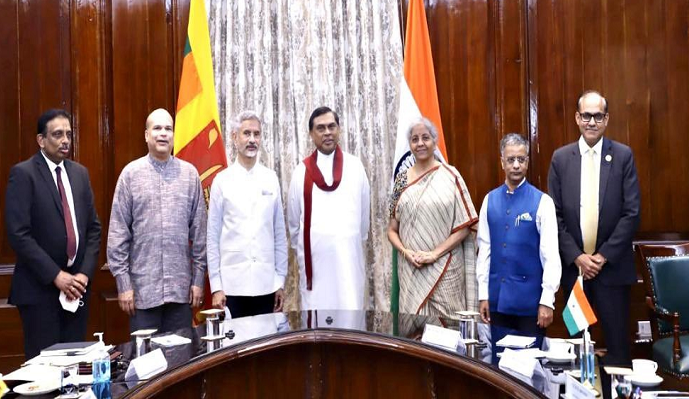
The meeting comes weeks after India pledged to assist Sri Lanka with much needed financial assistance including a 400 million US dollar swap arrangement, a 500 million US dollar credit line to purchase fuel with, and a 1 billion US dollar credit line to buy essential foods and medicines.

Both Sri Lanka and China are celebrating the 65th anniversary of diplomatic relations as well as the 70th anniversary of the historic rubber-rice pact signed between the two countries.

“Zhenhong emphasised that the biggest inspiration from the 65th anniversary of the establishment of diplomatic relations between China and Sri Lanka is that no matter how the domestic and international situation changes in Sri Lanka in the past, present or future, China will always be Sri Lanka’s most trustworthy good friend, true friend and old friend (sp),” the Chinese embassy said in a statement.

“The current world situation is changing rapidly, and the spirit of the rubber-rice pact of ‘independence, self-reliance, unity and mutual support’ is even more significant today, 70 years later. At the new historical starting point, China is willing to join hands with Sri Lanka to make unremitting efforts to improve the quality and upgrade of bilateral relations.”

According to the statement, the two sides also conducted friendly and in-depth exchanges on topics such as economic, trade and financial cooperation between the two countries, major “Belt and Road” projects, and regional cooperation.

Sri Lanka has been in the middle of a geopolitical tussle between China, the US and India, analysts say.

China has invested in and loaned billions of dollars for Sri Lanka’s post-war infrastructure and also owns the country’s largest port in the southern district of Hambantota and reclaimed land worth 1.5 billion US dollars next to the island nation’s main port in Colombo.

The Chinese embassy statement further said President Rajapaksa discussed Sri Lanka’s current economic and financial situation and thanked China for its long-term and firm support for Sri Lanka’s national development. The president said he looked forward to further strengthening cooperation with China to bring more benefits to the two nations.

The president’s office confirmed the meeting with the Chinese Ambassador but did not reveal any details.

Sri Lanka is facing a financial and dollar crisis with the country running out dollars to buy fuel, essential foods, and gas.

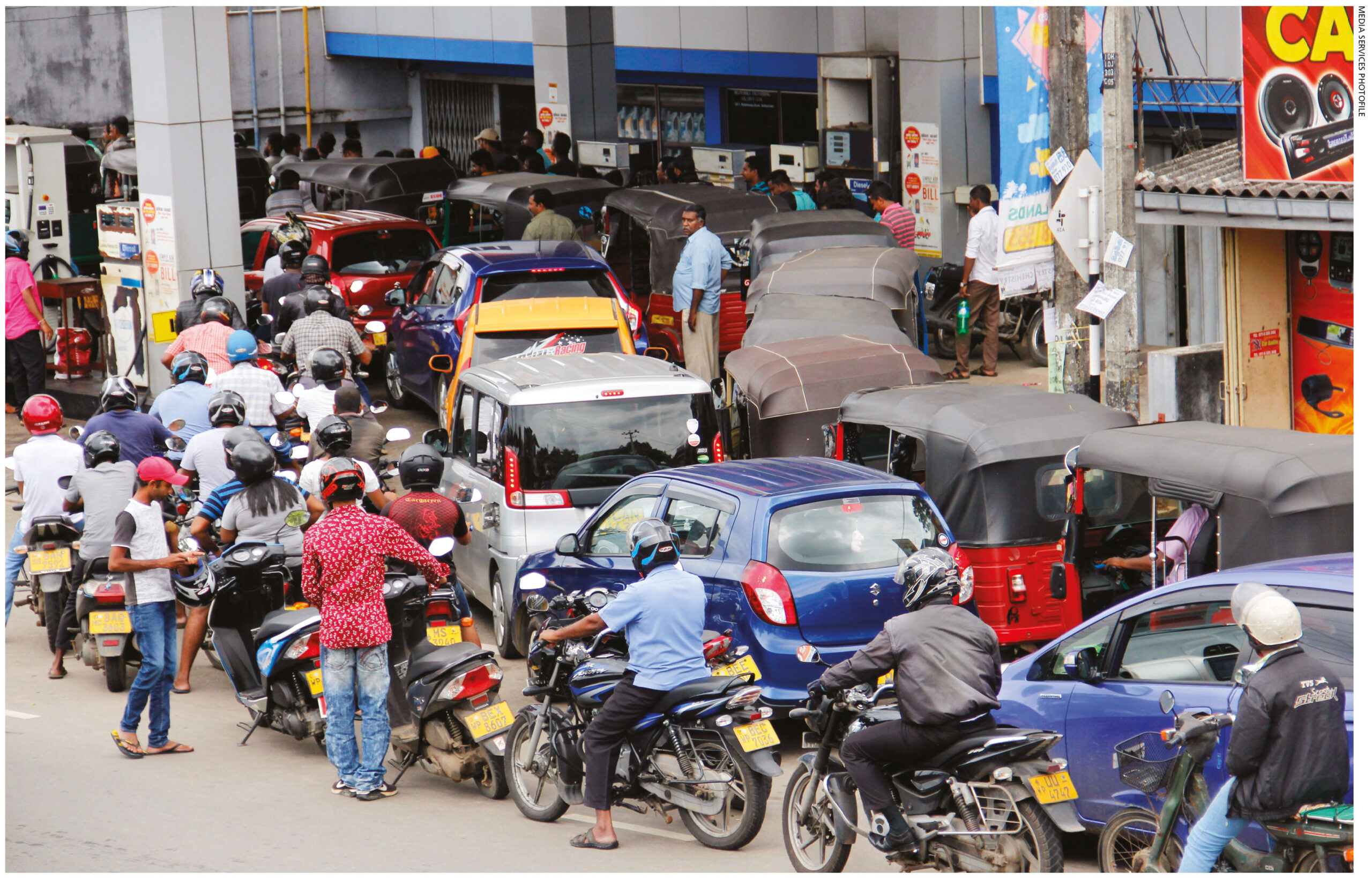
Lack of fuel imports due to the dollar shortage has already resulted in extended power cuts and long queues for fuel.

Posted in Uncategorized

Wimal launches scathing attack on Basil

Cabinet Minister Wimal Weerawansa today launched a scathing attack on Finance Minister Basil Rajapaksa over the way he is handling the economy.

Weerawansa noted that despite the economic crisis in the country, the Finance Minister has not had direct talks with the Governor of the Central Bank for six months.

The Minister was speaking at an event held today where 11 political parties came together to issue a policy statement to address the national issue.

Weerawansa noted that the Governor of the Central Bank, Ajith Nivard Cabraal had said that he had written nine times to the Finance Minister on the economic issue but did not receive a response.

Ajith Nivard Cabraal had also reportedly made some proposals but did not receive a single response.

The Minister also said that when there is a need for major intervention in the issue, the Finance Minister had proposed appointing sub-committees to have talks with a number of countries to seek financial assistance.

Weerawansa suspected that the Finance Minister is letting things get worse with a sinister agenda.

He also accused the Finance Minister of dealing with black money in Sri Lanka.

UN experts call on Sri Lanka government for immediate moratorium on PTA and reform of counter-terrorism law

UN human rights experts* have called for an immediate moratorium on the use of Sri Lanka’s Prevention of Terrorism Act (PTA), and urged the Government to substantively review and revise the legislation to comply with international human rights law.

“There is a grave risk to the rights and liberties of people who may be detained arbitrarily, especially religious and ethnic minorities, and the use of the law may curtail political dissent with no effective due process guarantees,” the experts said. “An immediate moratorium on the use of the PTA is required until the necessary amendments can be made.”

The Sri Lankan Government has committed to reforming the PTA as part of its negotiation for trade-related assistance from the European Union. On 10 February 2022, a bill to amend the PTA was presented to the Sri Lankan Parliament. The experts said the revisions fell short of their recommendations, as well as those expressed by the Office of the High Commissioner for Human Rights and other mechanisms.

The PTA has been used for over 40 years to enable prolonged arbitrary detention, extract false confessions through torture, and target minority communities and political dissidents in Sri Lanka. Its application may also enable the commission of enforced disappearances. Suspects detained pursuant to the PTA have been held for decades without charge.

The experts acknowledged that the proposed reduction of the period of pre-trial detention, an increase of magistrates’ powers to visit places of detention and the speeding up of trials were welcome changes to the PTA. However, they expressed regret that the PTA Amendment Bill did not comply fully with Sri Lanka’s international human rights obligations, according to a statement issued by the OHCHR.

“The current proposals leave intact some of the most egregious provisions of the PTA, which have led to alleged human rights violations, including arbitrary detention, torture and enforced disappearances,” the experts said. “The actions of the Sri Lankan Government call into question its commitment to reform. Sri Lanka has an immediate obligation to put forth solutions to address the human rights violations carried out under the PTA.”

In a recent letter to the Sri Lankan Government as well as in the May 2020 country visit report of the Special Rapporteur on the rights to freedom of peaceful assembly and of association, the experts identified key amendments to ensure the PTA is compliant with international law obligations, including:

1. Employ definitions of terrorism that comply with international norms;
2. Ensure precision and legal certainty, especially when this legislation may impact the rights of freedom of expression, opinion, association and religion or belief;
3. Institute provisions and measures to prevent and prohibit arbitrary deprivation of liberty;
4. Ensure the enforcement of measures to prevent torture and enforced disappearance and adhere to their absolute prohibition and non-derogable prohibition; and
5. Enable overarching due process and fair trial guarantees, including judicial oversight and access to legal counsel.

The experts also urged Sri Lanka to adopt counter-terrorism legislation that is fully compliant with international human rights standards as it negotiates a trade deal with the EU. “The EU should stress that the government, as a good faith gesture, implements an immediate moratorium on the use of the PTA and release all those unjustly jailed under this abusive law,” said the experts.

*The experts: Fionnuala Ní Aoláin, Special Rapporteur on the promotion and protection of human rights and fundamental freedoms while countering terrorism and Clément Voule, Special Rapporteur on the rights to freedom of peaceful assembly and of association; Luciano Hazan (Chair-Rapporteur), Aua Baldé (Vice-Chair), Tae-Ung Baik, Gabriella Citroni, Henrikas Mickevičius, Working Group on Enforced or Involuntary Disappearances; Elina Steinerte (Chair-Rapporteur), Miriam Estrada-Castillo (Vice-Chair), Leigh Toomey, Mumba Malila, and Priya Gopalan, Working Group on arbitrary detention; Fernand de Varennes, Special Rapporteur on minority issues; Fabián Salvioli, Special Rapporteur on the promotion of truth, justice, reparation and guarantees of non-recurrence; Ahmed Shaheed, Special Rapporteur on freedom of religion or belief, and Nils Melzer, Special Rapporteur on torture and other cruel, inhuman or degrading treatment or punishment.

11 parties of Government launch separate national manifesto

A total of 11 political parties representing the Sri Lanka Podujana Peramuna (SLPP)-led Government launched a new national statement yesterday (2), with over 30 government MPs, including a number of cabinet ministers and state ministers, attending the launch event held in Sri Jayawardenepura Kotte.

The manifesto, titled “Mulu Ratama Hari Magata” (the entire country towards the right path), was launched by the Sri Lanka Freedom Party (SLFP), the National Freedom Front (NFF), the Democratic Left Front (DLF), the Lanka Sama Samaja Party (LSSP), the Communist Party of Sri Lanka, the National Congress, the Pivithuru Hela Urumaya (PHU), the Sri Lanka People’s Party, the Vijaya Dharani National Council (NC), the People’s United Front, and the Yuthukama National Organisation.

Among the proposals included in the said manifesto were, increasing foreign exchange earnings and reserves; penetration of the foreign employment market by employing skilled workers and professionals; making a complete revival of the tourism industry based on indigenous medical treatments; introducing a National Policy and Targeted Action Plan that includes a long-term generation plan to address the power crisis; ensuring public confidence in the prevention of tax evasion, frauds in government revenue collection, and poor financial management as well as frauds through re-export rackets, and taking appropriate action on issues that are hotly debated among the public; appointment of a Presidential Commission to look into all tax scams, including sugar and coconut oil scams; providing relief to the poor from import taxes, serving justice to the victims of the Easter Sunday terror attacks; eliminating religious extremism and ensuring national unity; strengthening local food production,;ensuring food security in the country and protecting the living standards of farmers, fishermen, and small producers; establishment of farmer-centred economic centres to replace the so-called purchasing centres dominated by wholesalers; reconstruction of nearly 33,000 small tanks and annicuts and associated ecosystems throughout the country; resumption of local seed planting material research and production using farming systems owned by the Department of Agriculture; restarting the Agrarian Bank and relieving the farmer from the debt burden, payment of fertiliser subsidy to the farmer in cash; strengthening the local industrial system; starting important industries at the selected national level and not just waiting for foreign investors to come; supporting the small producer who is mired in microfinance, especially women, thereby utilising their contribution to economic development; expanding opportunities for young people seeking to leave the country to pursue vocational and technical education locally; ensuring social justice in the current crisis and protecting low-income and socio-economically disadvantaged people; protecting the consumer by cracking down on racketeering; providing care and relief to those working abroad; managing the long-standing geopolitical crisis in the Indo-Pacific region; reaffirming national security; strengthening public confidence in the State and making the most of local resources; calling war heroes to economic war; harvesting the fullest from marine and mineral resources; identifying the root causes of corruption in the State and preventing corruption; and considering proper financial management as a precondition not only for the economic development but also for the prevention of corruption and fraud.

The event was attended by SLFP Chairman and incumbent Government Parliamentarian Maithripala Sirisena, NFF Leader and Industries Minister Wimal Weerawansa, DLF Leader and Water Supply Minister Vasudeva Nanayakkara, LSSP Leader and SLPP National List Member of Parliament (MP) Prof. Tissa Vitarana, NC Leader A.L.M. Athaullah, PHU Leader and Energy Minister Udaya Gammanpila, Sri Lanka People’s Party Leader and Government MP Asanka Navaratna, and Government MPs Ven. Aturaliye Rathana Thera and Gevindu Cumaratunga.