When a country reels from a severe crisis, its people rely on their Government to come together, present a unified front and lay out clear strategies on how it intends to overcome it. Most of all, the people expect their Government to be honest with them regarding the seriousness of the crisis.
In Sri Lanka, where the country has been beset by a multitude of crises, none of these things is happening. The Government has been plagued by disunity and open confrontation between various coalition partners. Its leaders express views that are completely opposite of each other and consequently, the people are none the wiser as to what’s going on.
The fact that a majority of the people have lost trust in the Government has been plain for some months and Government leaders have only themselves to blame. Their messaging has often been convoluted at the best of times. There have also been occasions where some Ministers and MPs have peddled complete falsehoods.
The results are reflected in the way that the people have been reluctant to accept the Government’s claims over various issues in recent months. Motorists have rushed to filling stations to fill up their tanks over rumours of fuel shortages, ignoring numerous assurances from the Government that there is no such shortage. Many people continue to be wary about using LP gas cylinders despite claims that the cylinders now being issued to the market are safe. Even the widespread hesitancy among the public to obtain a third COVID vaccine dose as a “booster” can partly be blamed on the trust deficit between the Government and the people. The Government has been unable to counter a wide array of misinformation being peddled on social media by various anti-vaxxer elements because most of the people are prepared to believe online falsehoods and rumours spread by word-of-mouth than statements made by Government politicians and officials.
One need not look further than the previous Yahapalana Government regarding how much self-inflicted damage can be caused by different people expressing differing viewpoints. During the Yahapalana years, one Minister would make a statement only for the then Co-Cabinet Spokesperson Rajitha Senaratne to say something that completely contradicted it. The then minister Senaratne also had a penchant for going off script during post-Cabinet media briefings, leaving journalists confused as to whether he was expressing Government policy or his personal opinion.
The Sri Lanka Podujana Peramuna (SLPP)-led Government has fared little better. The stormy relationship between the SLPP and its coalition partners has only worsened as the country’s economic crisis went from bad to worse. Some, on the other hand, do argue that it is a good thing that there are internal breaks on a Government that is being run by a family.
Coalition partners have been frustrated at the way the SLPP has given them the cold shoulder since the Government came to power. A meeting of the alliance — comprising the SLPP and its coalition partners and officially known as the Sri Lanka Nidahas Podujana Sandanaya (SLNPS) — has not been convened since the 2020 Parliamentary elections. The Sri Lanka Freedom Party (SLFP), in particular, has publicly accused the SLPP of reneging on the agreement the party signed with it in the run up to the Parliamentary elections. Opposition from coalition partners was one of the primary reasons that the Government was forced to backtrack on the tripartite agreement with India and Japan to develop the East Container Terminal (ECT) of Colombo Port. The same parties have also strongly come out against the proposed agreement on selling Government owned shares of the Yugadanavi power plant to US based New Fortress Energy.
Immediate solutions
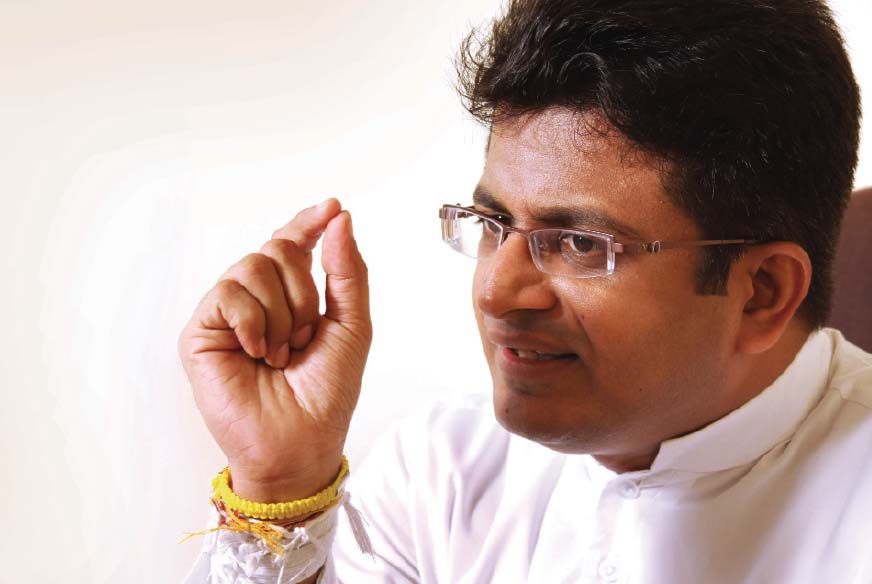
Many of these same coalition parties are now planning to present a document containing a set of proposals detailing “immediate solutions” to the various pressing issues currently faced by the country. Some of these parties met last week for initial discussions on the issue. Leaders of these parties are due to meet again next week to finalise the document, at which point the parties will make it public by holding a news conference. Those involved in the discussions include Ministers Wimal Weerawansa, Vasudewa Nanayakkara and Udaya Gammanpila and MPs Athuraliye Rathana Thera, Weerasumana Weerasinghe and Gevindu Kumaratunga.
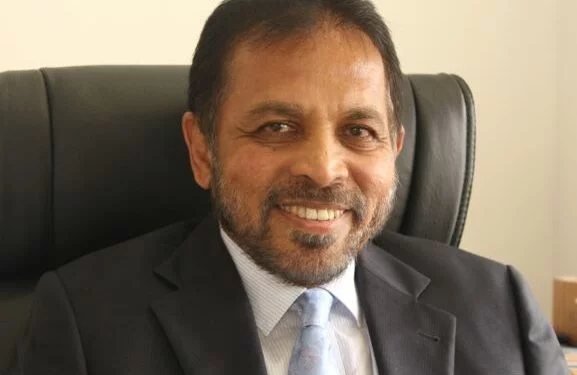
Though the crisis has reached critical levels, neither the Government nor the Opposition is discussing the situation in-depth, claimed DEW Gunasekara, the Communist Party’s former General Secretary, who, along with current General Secretary Dr. G. Weerasinghe, is also involved in the formulation of the document. “This crisis came about due to the Government’s wrong economic strategy and the COVID-19 pandemic. The Government claims it is only due to the COVID pandemic that the economy has crashed while the Samagi Jana Balawegaya (SJB) and the United National Party (UNP) insist that it is due to Government’s inefficiency. The Janatha Vimukthi Peramuna (JVP) cites corruption as the main issue. Yet, we have observed that no one is doing an in-depth analysis of the country’s debt crisis,” the veteran politician told the Sunday Times.
The matter has not been seriously discussed in Parliament while the President’s recent speech during his Statement of Government Policy also did not address the issue, Mr Gunasekara remarked. “This is wrong. The people have to be kept informed. Otherwise, they don’t know.”
The former Government Minister wondered why the Central Bank did not raise the alarm earlier over the way the country’s foreign reserves plunged from USD 7.1 billion when Gotabaya Rajapaksa took over as President to just USD 1.5 billion late last year.
In recent weeks, some prominent members of the Government have increasingly spoken out in favour of seeking a bailout from the International Monetary Fund (IMF) to prevent Sri Lanka from plunging into bankruptcy. Parties such as those of Mr Gunasekara, however, have staunchly opposed the neo-liberal policies of the pro-West IMF for many years and they are not about to back down now: “You can go to the IMF, but will that solve the crisis?”
As pressure mounts on the Government to explain to the people how it is going to solve the multiple crises and how soon, a beleaguered President was seen taking part in a religious programme organised by Sri Lanka Army on Thursday
The current situation all over the world was a “crisis of neoliberalism” and it was up to all parties to engage in a serious discussion on the best way to come out of it, he opined.
The Government continues to flood the market with rupees in desperation but has not been able to find dollars. The economy is sinking at an alarming rate. With around 70% of the country’s workforce informally employed, the concern is that if the situation continues to deteriorate, those depending on the informal economy will no longer be able to earn enough to support themselves and their families. This could drive people to revolt. No political leadership has been given to address the crisis, according to Mr Gunasekara. “You need to be honest with the people. When the country was facing an economic crisis, Dudley Senanayake admitted to the extent of the crisis and people tightened their belts. Parliament is the main forum where we can educate the public about the situation. When I was young, we would go there and listen to the speeches of the MPs to educate ourselves on matters such as the economy. Where are those speeches now?” the Communist Party stalwart asked.
Indeed, today’s Parliament has been reduced to little more than MPs hurling crude insults at each other. Many rarely stick to the topic that they are supposed to talk about. Some don’t say a word about the subject of the debate they are supposed to be speaking of. They clearly make no effort to learn about the subjects either, a fact reflected in the numbers of books borrowed by MPs last year. A House of 225 MPs borrowed just 330 books from Parliament’s extensive library reserved exclusively for MPs. Of these, 122 were fiction books while only 11 books on economics were borrowed — perhaps this is a reflection of what Mr Gunasekara says. Most MPs don’t really analyse the economic situation in-depth because they do not understand the extent of the crisis. Parliament has not been able to provide the educational qualifications of MPs even when asked. Little wonder then that the people constantly complain how they are sick of all 225 of their representatives in the House.
Mr Gunasekara claims he warned President Gotabaya Rajapaksa during the height of the COVID pandemic that he needed to do more to educate both the MPs and in turn the public about the country’s economic crisis. “He (the President) convened a meeting of Government party leaders to discuss the pandemic at which point, I told him that our health sector was more than capable of controlling the pandemic but appealed to him to organise a workshop to educate the MPs on the economic situation and also to keep the people informed. I told him then that if he did that, at least half the people who voted for him would stand by him. He merely smiled.”
SLFP’s proposals
While other coalition partners are trying to finalise a list of immediate solutions to the prevailing crisis, the SLFP is formulating its own set of proposals with the aid of a group of university lecturers and professionals that are working with the party. The document will include the party’s solutions to the major crises affecting the country, SLFP MP and Environment Minister Mahinda Amaraweera said. “The other coalition partners have not approached us so far over formulating such a document but we are also open to it. If they wish, we can all work from the document we are currently formulating on the matter.”
Formulating such proposals is one thing. Whether any of them are practical is another matter altogether. Moreover, it remains to be seen whether the SLPP will accept them.
For all the tensions between the SLPP and the SLFP, the latter remains a member of the Government. The question of whether the SLFP will leave the Government has hung in the air over the past several weeks due to the war of words that has been taking place between the two parties. The party has faced pressure from frustrated supporters to quit the Government and go its own way. Yet, when the SLFP’s Central Committee met last week, the subject of leaving the Government did not even come up for discussion.
While MPs of the two parties continue to take shots at each other, the SLFP seems to have resolved that leaving the Government at this juncture will be of no advantage to them. Instead, the party is moving ahead with discussions with smaller political parties with the aim of forming a broader alliance to contest elections separately from the SLPP. Opposition parties have always insisted that the SLFP was never serious about leaving the Government and it was simply a media circus designed to divert people’s attention from more pressing issues.
The Government coalition parties aren’t the only ones attempting to come up with “solutions” to the country’s problems. The SJB yesterday (29) unveiled its Samagi Govijana Prakashanaya (Farmers’ Proclamation) at a ceremony held in the vicinity of the historic Parakrama Samudraya in Polonnaruwa. The proclamation will detail the solutions the party proposes to help farmers recover from the tragedy that has befallen them due to the Government’s self-inflicted fertiliser crisis, said Kurunegala District MP Nalin Bandara, who is also National Organiser of the Samagi Govijana Balawegaya.
The proclamation will contain 17 main points. This includes a demand made by farmers and farmers’ organisations that the Government provide compensation up to Rs. 100,000 per acre for agricultural lands that suffered damage owing to the fertiliser crisis. The Cabinet this week approved a proposal to allocate Rs. 40 billion to provide compensation for farmers who have suffered losses to their crops owing to the fertiliser issue. In essence, taxpayers have been forced to pay for the Government’s ill-conceived overnight ban on agrochemicals, but as farmers point out, even Rs. 40 billion in taxpayer funds will not be enough to compensate them. Yet, the Government officially refuses to acknowledge its failure on the issue, preferring to blame officials, Opposition parties, the media and farmers themselves for the catastrophe.
Darker days are ahead
As farmers brace for street protests demanding more compensation for their losses, the country’s energy sector is also facing a herculean task due to the foreign exchange crisis. The Government is struggling to find foreign exchange needed for fuel imports. The country’s power grid has been hit by shortages over the past several weeks owing to lack of diesel and furnace oil for thermal power plants, which now supply the bulk of electricity, especially during peak demand times.
The Ceylon Electricity Board (CEB) has been mulling power cuts lasting up to 90 minutes due to the energy shortfall and has been seeking approval from power sector regulator Public Utilities Commission of Sri Lanka (PUCSL). After reviewing the situation on Thursday (27), the PUCSL ruled that power cuts were unnecessary till January 31. The regulator is due to review the situation tomorrow.
Even those within the Government advocate 90-minute power cuts now to stave off what they say will be cuts lasting up to three hours or more in a few weeks if the fuel situation does not improve. Energy Minister Udaya Gammanpila is the most notable among them. Addressing a media briefing on Thursday, he offered “advice” to the CEB to go for 90-minute power cuts now, warning that the Board might be compelled to impose three-hour power cuts in a few weeks if the situation could not be managed. The minister has been at odds with his Cabinet colleague, Power Minister Gamini Lokuge over the power crisis ever since the Ceylon Petroleum Corporation (CPC) under Mr. Gammanpila refused to provide fuel to the CEB under Mr. Lokuge until the latter paid for fuel supplies in dollars.
The Energy Minister’s comments are in line with the Ceylon Electricity Board Engineers’ Union (CEBEU), which has warned that the situation has reached a tipping point. Trade union action by the powerful union helped trigger changes to the topmost posts of the CEB this week, with Dr. D.C.R. Abeysekera appointed as the CEB’s new General Manager, putting an end to what the CEBEU has called the “illegal” appointment of Dr. Susantha Perera as Acting GM. CEB Chairman M.M.C. Ferdinando, who the union had called on earlier to resign due to his decision to appoint Dr Perera as Acting GM, also submitted his letter of resignation to President Gotabaya Rajapaksa this week. The chairman is to step down effective from February 1.
Yet, changes in personnel will not help alleviate the country’s power crisis, CEBEU President Saumya Kumarawadu said. “It is up to the Government to offer solutions to the crisis. There is no doubt, however, that we will be forced to go for extended power cuts if hydropower generation continues to fall,” he added.
With rain being so scarce in the catchment areas, the situation is not expected to improve anytime soon. Kumarawadu blamed the Yahapalana Government for the current mess, citing former President Maithripala Sirisena’s abrupt decision to cancel the 500 MegaWatt Sampur coal power plant. “That plant was due to be commissioned in 2020. Another 250 MegaWatt power plant was due to be commissioned at Kerawalapitiya last year but that wasn’t built either. The failure by the previous Government to build more power plants has led us to this situation.”
The CEBEU has also been criticised by some Government politicians, including Power Minister Lokuge. It has been noted that it is the CEBEU that has been announcing power cut schedules over the past few weeks instead of the Board itself — a highly questionable practice where a trade union seems to be making decisions independent of the CEB’s administration. The union is also facing accusations that it is part of the “mafia” that exists in the energy sector, with its members actively trying to sabotage renewable energy projects in favour of coal.
The CEBEU President, however, brushed these allegations aside. He claimed the union was compelled to make its own announcements regarding power cut schedules after the previous administration refused to publish power cut schedules that engineers had drafted. “Wouldn’t it be better to carry out power cuts to designated areas according to a pre-announced schedule rather than impose unscheduled power cuts to certain areas to try and balance the system? That’s why we announced the schedules when the administration refused.”
As things stand now, the Rajapaksa Government has set a target of increasing the country’s renewable energy mix to 70% by 2030. Mr. Kumarawadu would not be drawn into the practicality of the plans. “Our job as engineers is to come up with a Least Cost Long Term Power Generation Plan in line with Government policy. We are doing that. It is up to the Government to find the resources and the funds to implement that policy.”
Meanwhile, some Opposition politicians, energy experts and even some CEB officials are claiming that if the situation does not improve by March and the rains do not come, it could lead to a situation where the CEB would be forced to announce power supply times to the public. Accordingly, power might only be available for limited hours of the day. This nightmare scenario, if it does happen, will result in further retardation of an economy already in recession.