Sri Lankan journalists remember their dead with NO answers from authorities

Journalism is not for the faint-hearted.

Journalists are often looked down upon, frowned upon, and criticized. Everybody will have an opinion about journalism.

But the heart of true journalism is solidly placed within the foundation of the Truth.

The single-minded pursuit of the truth, against all odds.
And bringing that truth to the people.

Protecting YOUR, right to know. Your, right to the Truth.

As the world recognizes the importance of protecting journalists and takes a stand against crimes against journalists, it is important to remember the voices that were silenced in Sri Lanka as well.

The Editor of the Sunday Leader, Lasantha Wickramatunga was killed in broad daylight on the 8th of January 2009.

His killers roam free today.

On the 22nd of May 2008, newspaper editor Keith Noyahr was abducted and tortured.

What action has been taken against those responsible?

Journalist Prageeth Eknaligoda went missing on the 24th of January 2010.

His disappearance remains a mystery.

On the 29th of April 2005, journalist Dharmeratnam Sivaram was kidnapped and murdered.

On the 6th of January 2009, the Sirasa TV station in Depanama was attacked.

On the 22nd of March 2010, the head office of the Sirasa TV media network was attacked, putting the lives of hundreds of reporters, engineers, and technicians at risk.

On the 25th of March 2009, the Udayan newspaper in Jaffna was attacked by a hand grenade.

The office of the newspaper was attacked again in 2013.

What has happened to the investigations on the attack on Siyatha TV on the 30th of July 2010?

These attacks are not attacks against journalists. Or Media Institutions. But against the People.

It is the Journalist who stands by the peoples right to know.

And when journalism is silenced, by bombs, bullets or Fear it is the Truth, that is the casualty.

Today, on the International Day to End Impunity for Crimes against Journalists, we remember the lives that were lost and the blood that was shed in the name of the TRUTH.

But it is also a day to remember this: There is no escape from the Light of the Truth.

Posted in Uncategorized

Mahinda appeals to SLPP alliance to stay united

Prime Minister Mahinda Rajapaksa today appealed to the alliance led by the Sri Lanka Podujana Peramuna (SLPP) to remain united.

Rajapaksa said that the political parties and others who supported the SLPP cannot be forgotten.

The Prime Minister said that big or small, all the parties that worked with the SLPP must be recognised.

Rajapaksa was speaking at the 5th Anniversary of the SLPP today.

Meanwhile, in a video message played at the event, President Gotabaya Rajapaksa said that the SLPP was created to fulfil a need of this era and its ultimate goal is to accomplish the aspirations of the people.

President Rajapaksa said that the vision of the SLPP is clear and therefore objectives are target-oriented.

The President recalled that the then Government, which had vowed to promote good governance, had not only deliberately undermined national security, a basic requirement of a country’s existence but had also opened the country to a massacre by creating an environment for extremist religious groups to nurture.

President Rajapaksa said that national security, which was the main demand of the people of the country, had been established today and the existing mistrust and despair had been eradicated.

Posted in Uncategorized

Disappearance of 11 persons: AG to explain why he intends to withdraw indictment against Karannagoda

Attorney General Sanjay Rajaratnam has received permission from the Court of Appeal to submit a confidential report as regards the disappearance of 11 persons during the conflict. The disappearances have been blamed on the Navy

The Additional Solicitor General Nerin Pulle, PC appeared for the Attorney General when the case was taken up yesterday (01)

ASG Pulle told the Court of Appeal that the Attorney General’s Department, had prepared a confidential report to explain why the AG wished to withdraw the indictment against wartime Navy Commander the then Vice Admiral Wasantha Karannagoda. Since then Karannagoda has been promoted to the rank of Admiral of the Fleet.

The case attracted the attention of the Geneva-based United Nations Human Rights Council (UNHRC) and local and international NGOs.

Of the missing eleven persons, five were allegedly taken into custody on 17 Sept. 2008 by navy personnel along with a vehicle. Police have identified them as Rajiv Naganathan (21 years/Colombo 13), Pradeep Vishvanathan (18 years/Wasala Rd, Colombo 13), Mohammed Sajith (21 years/Dematagoda), Thilakeswaram Ramalingam (17 years/Bloemendhal housing complex, Colombo 13) and Jamaldeen Dilan (Maradana). Those involved in the operation were believed to have been accompanied by a navy informant Mohammed Ali Anwar alias Hadjjiar of Karagampitiya, Dehiwela. Subsequently, the 28-year-old informant, too, disappeared and listed among those eleven missing.

The remaining five persons are Kasthuriarachchilage John Reid (21 years/Kotahena/8-9-2008)), Amalan Leon (50 years/Arippu, north/25-8-2008)) and his son Roshan Leon (21 years/Arippu north/25-8-2008), Anthony Kasthuriarachchi (48 years/Kotahena/10-10-2008) and Kanagaraja Jegan (32 years, Trincomalee).

The Court of Appeal will peruse this report, once it is submitted.

The Writ Application will be mentioned again on November 02. The Court will then decide a date for the order in respect of this issue.

Romesh de Silva, President’s Counsel appeared with Sugath Caldera for Karannagoda.

Counsel Nuwan Bopage appeared for the petitioner parents.

The bench comprised Justice Sobitha Rajakaruna and Justice Dhammika Ganepola.

A Writ application has been filed against the move to discharge the former Navy Commander.

Is the cow slaughter ban linked to Provincial Council polls?

The Sri Lanka Podujana Peramuna (SLPP) government is moving closer to giving effect to the September 2020 decision to ban cow slaughter. Given its political importance, a comprehensive and integrated law banning cow slaughter will be passed by parliament before long, with few MPs saying “nay”.

The ban is ostensibly meant to increase milk production, obviate imports of milk and boost the income of dairy farmers. But the real reason is politico-cultural and appears to be aimed at raking in Sinhala-Buddhist and Hindu votes in the coming Provincial Council elections.


This consideration is important as the ruling Sri Lanka Podujana Peramuna (SLPP) will be fighting the elections with its back to the wall. The COVID-19 pandemic, serial lockdowns and the ban on chemical fertilizers and pesticides have led to a noticeable decline in the popularity of the ruling party. The regime hopes to stage a quick recovery in the economic sphere since the relaxation of the restrictions. But that is easier said than done, given the adverse reaction to certain quick fix solutions to the economic and health issues.

Given this grim scenario, the only way open to the government is to tap into the socio-cultural and religious sentiments of the majority community – the ruling party’s traditional voter base.


The bid to bring about a common law for all Sri Lankans by doing away with separate religious laws, is one of the measures to activate the support of the Sinhala-Buddhist community. The other measure is the proposed ban on cow slaughter.

The ban is promoted on the grounds that it will help increase milk production. But Canada-based Sri Lankan scientist Dr.Chandre Dharmawadana writes that for various reasons, the cost of milk production in Sri Lanka is much higher than in the US or New Zealand. Furthermore, pasture necessary for dairying needs a lot of land but Sri Lanka has a scarcity of land. Pasture maintenance also needs a lot of water and fertilizer both of which are not in short supply. And cows need to drink a lot of water to produce one litre of milk. Therefore, Dr.Dharmawardana recommends that Sri Lanka continues to import milk even though the import expenditure is about US$ 300 million per annum.


There is another nagging question: If there is a ban on cow slaughter what will farmers do with cows which have ceased to yield milk or what will they do with bulls which cannot be put to use? The government has no convincing answer, except saying that it will allow export of cattle or make other arrangements. If cattle cannot be killed, Sri Lanka cannot export beef. And to meet the needs of the Christian and Muslim minorities, says beef will be imported government says. But imported beef will certainly be out of reach for the common man. And importing beef will only add to the problems created by the existing foreign exchange shortage.

Owners of tanneries have been quoted as saying that they would be badly hit by the leather shortage if the slaughter of cattle is not allowed. V. Ram proprietor of PPK Velaiyappa Nadar, a leather manufacturer, is quoted by a news website as saying : “If there is no cowhide, the leather industry will completely crash.” He further said: “The import of raw cowhides is impossible as its export is banned by other countries.” A Samagi Jana Balawegaya (SJB) leader, Harin Fernando, has warned that 300,000 leather workers would lose their jobs if there is a ban on cow slaughter.

Be that as it may, government believes socio-cultural and religious sentiments over-rides all other considerations during the elections. Sinhala-Buddhists may not worship the cow as Hindus do, but killing the cow and eating beef are considered culturally undesirable and avoidable. This is partially rooted in the importance of milk in Sinhala-Buddhist culture.

James Stewart of Deakin University who wrote Cow Protectionism in Sinhala Buddhist Sri Lanka, (January 2013) says that it rests on the closeness of Sinha-Buddhism (as practised, if not in theory) to Hindu beliefs and practices. He points out that cow protectionism comes to the fore when there is a social or political need to use it to differentiate Buddhists from people following Abrahamic religions like Islam and Christianity.


When Englishman Robert Knox was imprisoned in Kandy in the 1600s, he observed that many Kandyans were disdainful of captive Europeans, who they referred to pejoratively as ‘beef-eating slaves’. Dutch records show that the Sinhalese in Galle rioted against Dutch traders and soldiers because the latter were killing cows for food. According to Stewart, with the decline of Buddhism following the establishment of Portuguese hegemony in the 16 th.Century, Sinhalese Buddhists began to eat beef. And over the next 300 years of European rule, beef-eating had become common, pointed out Aryadasa Ratnasinghe in a piece in Daily News Feb 5, 2002.

It was only in early 19 the. Century, when there was a Buddhist revivalist movement in Sri Lanka under the leadership of Anagarika Dharmapala that cow slaughter and beef eating became an issue again. Ratnasinghe recalls how Anagarika Dharmapala, the Buddhist revivalist, went from place to place in his vehicle, displaying a banner that ead Gawa mas nokanu (Don’t eat beef). At that time, beef-eating was common in Sri Lanka even among Buddhists as it was cheap, selling at 30 cents a pound.

However, the cow slaughter issue went into oblivion and was revived only in the 2000s, with a rise in anti-Muslim feelings. Sinhala Buddhist nationalists and Buddhist monks raised the cow slaughter issue. In 2009, parliament discussed a bill brought by Wijedasa Rajapakshe who alleged that the absence of a ban on slaughter was responsible for cattle thefts. In September 2012, the Kandy Municipal Council passed a resolution banning animal slaughter within municipal limits. In 2013, a 30-year-old Buddhist monk, Bowatte Indraratna Thera committed self-immolation in protest over the killing of cattle by Muslims. The act was committed near the main entrance of the Temple of the Tooth to have a religious effect.

But the matter was not pursued as other anti-Muslim issues like Halal certification and the burqa grabbed the attention of Buddhist radical organizations like the Bodu Bala Sena and the Sinhala Ravaya.

Meanwhile, the anti-cow slaughter movement was incorporated in the larger animal protection movement. Stewart says that the Mettasutta, a popular text amongst Sinhala Buddhists, was used by the Organization for the Preservation of Life to propagate cow protectionism. The reason for the use of the cow as a symbol in the animal protection movement is that the cow is adored by Sinhala Buddhists for the milk it gives. Milk is seen as the source of life, and the cow is equated with the life-giving and loving mother Kiri Amma, Stewart says.

The Organization for the Preservation Life carries a piece of advertising that prominently utilizes an image of Shiva, Parvati, and Kama Dhenu—the latter, of course, being a precursor deity to Kiri Amma? A billboard of the organization carries a picture of a cow with a caption asking “How can we eat this?” The Gawa mas nokanu community has a Facebook page in which there is a picture of a teary-eyed, terror-stricken cow in an abattoir with a caption asking “Are we the only ones who fear death?”

Sri Lanka reports 10 Covid-19 deaths on Tuesday, toll rises to 13,770

Sri Lanka Tuesday reported 10 deaths due to COVID-19 after the figures were confirmed by the Director General of Health Services on Monday, November 01.

Among the deaths reported today, 05 are of males and 05 of females. The majority of deaths – 08 – are of elderly people in the 60 years and above age group. A female below 30 years of age also succumbed to the disease.

According to the data reported by the Government Information Department, the total deaths due to Covid-19 since the pandemic began last year has now risen to 13,770.

Posted in Uncategorized

SLPP celebrates its 5th anniversary today

Sri Lanka Podujana Peramuna (SLPP) celebrates its fifth anniversary today (November 02).

A special event themed “Towards Prosperity with Pride”, graced by Prime Minister Mahinda Rajapaksa and Finance Minister Basil Rajapaksa, is taking place at the Nelum Pokuna Theatre in Colombo.

President Gotabaya Rajapaksa did not attend the ceremony as he is currently in Glasgow, Scotland for the COP26 – the UN Climate Change Conference. He, however, sent a congratulatory message to mark the party’s anniversary.

The ceremony is held in compliance with the health guidelines due to the prevailing COVID-19 pandemic situation.

Previously a minor political party registered as “Our Sri Lanka Freedom Front” (Ape Sri Lanka Nidahas Peramuna), with the symbol of a budding flower, it was re-launched as “Sri Lanka Podujana Peramuna” in 2016.

Former Defence Secretary Gotabaya clinched the victory in the 2019 presidential election as the representative of the SLPP and was sworn in as the new Head of State of Sri Lanka. The SLPP also claimed a landslide win in the parliamentary elections in August 2020.

Posted in Uncategorized

Enforced Disappearances : Mothers demand for an International War Crimes Tribunal

Mothers of victims of enforced dissapearances in Sri Lanka have launched a protest in the North calling for an international intervention by way of an International War Crimes

Tribunal in a bid to locate their missing loved ones.

They have pointed out that the government of Sri Lanka has repeatedly failed to provide satisfactory answers on the fate of their missing family members and deliver justice to the families of the victims.

According to provincial reporters, the mothers commenced a protest on October 30 at the Old Vavuniya Bus Stand calling for an International War Crimes Tribunal to be established.

The mothers have stressed they will not give up their struggle and intend to hold a protest monthly demanding for justice.

Two other protests on October 28 and 30 had been held in Mullaitivu and Jaffna respectively.

According to reports at least 90 parents of forcibly disappeared persons have passed away since launching their continous protests demanding to know the fate of their children.

Meanwhile, the Office of Missing Persons (OMP), established to support the families of missing persons has completed three years in office without providing any favourable solutions to the victims.

President Gotabaya Rajapaksa, who was the wartime Secretary of Defence had told Hannah Singer, the UN Resident Representative in Sri Lanka in 2020, that people who went missing during the war in the North during the rule of his brother Mahinda Rajapaksa had died.

I have submitted the strongest communication to the ICC – Wayne Jordash

World-leading expert in international rights and humanitarian law Wayne Jordash QC is calling on the International Criminal Court (ICC) and the UK to investigate crimes perpetrated against Sri Lankan Tamils.

“It’s crystal clear that the [Sri Lankan] government has been involved in a policy of persecuting the Tamils,” he told the Tamil Guardian in an interview this week. “The evidence is quite overwhelming that these crimes are occurring, and it is quite crystal clear from the 200 victims that we represent, that there are thousands, if not tens of thousands more.”

Wayne is the co-founder and managing partner of Global Rights Compliance (GLC) which, earlier this week, filed a submission under Article 15 of the Rome Statute, requesting the ICC Prosecutor to exercise territorial jurisdiction to initiate investigations into crimes committed in Sri Lanka.

The Communication to the international tribunal names several senior Sri Lankan officials, including President Gotabaya Rajapaksa, defence secretary Kamal Gunaratne, former army commander Jagath Jayasuriya and others as individuals “responsible for crimes against humanity of deportation (through underlying acts of abductions, unlawful detention and torture), deprivation of right to return and persecution”.

To see the full interview, click the link below.

The submission was made ahead of next week’s UN Climate Change Conference 2021 in Glasgow and was also forwarded to the UK Metropolitan Police for action against President Rajapaksa and members of the Sri Lankan delegation attending the Conference.

Wayne has also worked as a legal representative to 400 Rohingya women, who are victims of crimes committed in Myanmar and Bangladesh. In 2018, he filed a submission to the ICC, on behalf of the victims, requesting the ICC pre-trial chamber to provide clarification of the ICC’s jurisdiction over the crimes of deportation, persecution, apartheid and genocide committed against the Rohingyas.

Representing 400 women in Myanmar “was an inspiration for this”. “There are not many places where you can go and find accountability for them [Rohingya]and so, the ICC opened up a very narrow possibility,” he said. “When I look at the situation of the Sri Lankan Tamils and the way in which they are treated by the [Sri Lankan] government and the way in which they leave the country, having been forced out through persecution and torture, it struck me looking at those facts, looking at those crimes and looking at the very narrow possibilities for justice for the Sri Lankan Tamils that we should try”.

When questioned on what he believed are the prospects of success of the ICC permitting an investigation into the crimes committed in Sri Lanka, Wayne answered that “this is the strongest communication I have submitted to the ICC”. “There is overwhelming evidence of the range of acts of abduction, unlawful detention, torture, deportation, deprivation of the right to return, persecution in the UK, persecution where the Tamils end up in another country seeking refugee status. There is no doubt that these crimes occurred, there is no doubt that they are continuing to occur. The question will be whether these men we allege are responsible, …, are responsible and to what extent.” “I would say the evidence against them is really looking pretty strong,” he added.

Biggest Challenge

Wayne explained the biggest challenge to the ICC and UK investigation being approved is twofold. Firstly, the UK will be “reluctant” to arrest one of the alleged perpetrators, Gotabaya Rajapaksa, due to his presidency.“On the basis of this evidence, …the challenge will not be the evidence. The challenge will be whether we can get hold of the President.”

On a positive note, he then said that Gotabaya Rajapaksa “won’t be president forever”. “If we can encourage the UK to fulfil its obligations which is to investigate these types of crimes, whether they occur on the UK soil or not and when we can encourage the ICC to investigate crimes which occur in the Rome Statute signatory states, like the UK, then we can inch forward.”

As the second challenge, Wayne mentioned that ICC processes are “very slow”. They “take a very long time and tend to, because of a lack of resources, take even longer,” he said. “Justice is a long game.”

If the request to investigate is successful, what can the victims expect to happen next?

The ICC Prosecutor would open up a full investigation which would include sending investigators to Sri Lanka and/or to the UK to start the investigation. “That’s what happens if the prosecutor is satisfied that there is a reasonable basis for believing that these crimes, crimes of deportation, persecution and deprivation of the right to return, have been committed,” said Wayne.

“On the basis of the communication we filed, there is plenty of evidence. In my view, the prosecutor could move quite swiftly or should be able to move quite swiftly to a full investigation.”

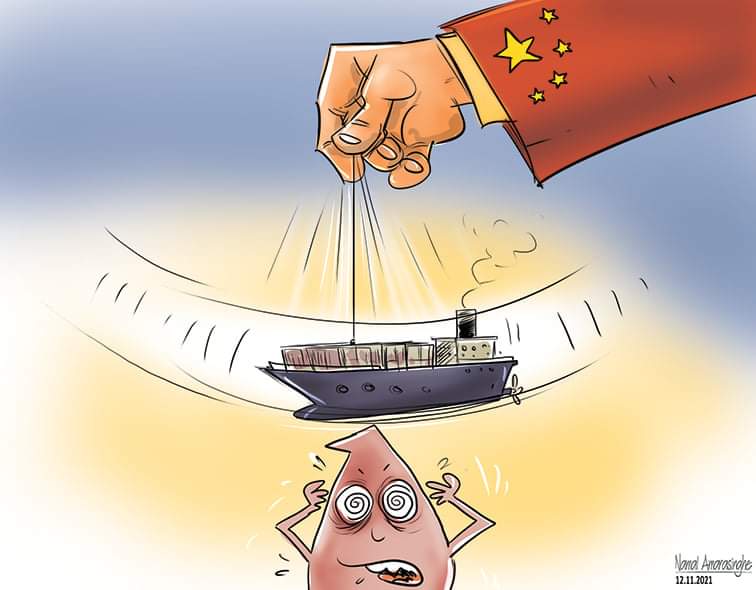
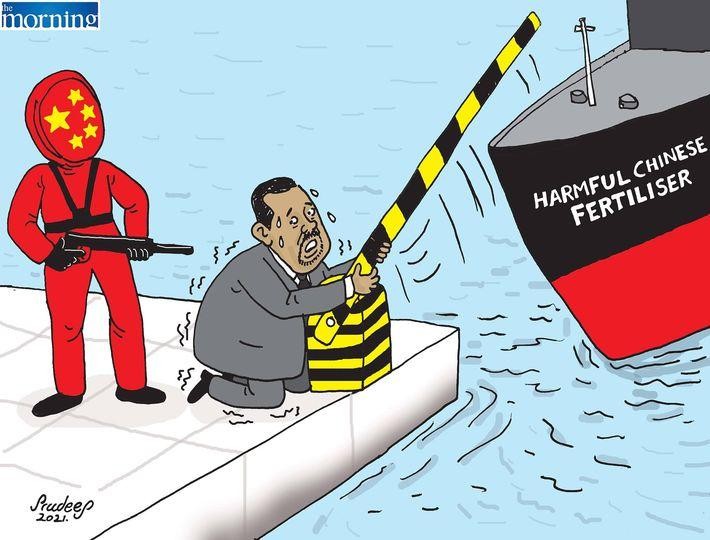
Hippo Spirit – Ship carrying rejected Chinese fertilizer, untraceable ?

The exact location of the Hippo Spirit carrying rejected Chinese Organic Fertilizer, remains unknown.

On Sunday (31) Marine Traffic websites confirmed that the Hippo Spirit vessel, also sailing as Seiyo Explorer, had entered the Sea of Sri Lanka.

The last confirmed sighting of this vessel was on the 24th of October, some 4.18 nautical miles away from the Yala National Park.

The Hippo Spirit is carrying tonnes of rejected Chinese Fertilizer from Qingdao Seawin Biotech Group Co., Ltd to Sri Lanka.

Earlier, it was reported that the Hippo Spirit, the ship carrying Chinese Organic Fertilizer, did not return to China after the first samples were rejected by Sri Lanka.

Instead, the Hippo Spirit had sailed to Singapore and altered its course back to Sri Lanka, without returning to China.

On the 22nd of September, the Hippo Spirit ship carrying 20,000 metric tonnes of organic fertilizer left for Colombo from China’s Qingdao Port.

But the ship was diverted to Singapore after harmful bacteria was detected in the samples of this fertilizer shipment.

The Hippo Spirit ship that didn’t return to China had left Singapore declaring it would be heading to the Colombo Port.

But on the 14th of October, the automatic identification system (AIS) used to track the ship had been deactivated at the Malakka Strait.

Vessel trackers showed the last position of the ship as the Malakka Strait before it went out of range.

Data available online showed the Hippo Spirit ship in Hambantota on the 24th of this month under the name Seiyo Explorer.

The Hippo Spirit and the Seiyo Explorer both share the same IMO number, and therefore it can be confirmed the Hippo Spirit is the Seioy Explorer.

The IMO Ship Identification Number is a unique seven-digit number that remains unchanged through a vessel’s lifetime and is linked to its hull, regardless of any changes of names, flags, or owners.

Although the ship was seen in Sri Lanka’s waters off the Hambantota District on the 24th of this month, the ship has gone out of range on tracking systems.

Posted in Uncategorized

BBS proposals will make it to ‘one country, one law’ task force: Sri Lanka hardline monk

Sri Lanka’s controversial Buddhist monk Galagodaaththe Gnanasara Thero said on Monday (01) that recommendations by his ultranationalist outfit the Bodu Bala Sena (BBS) will make it to the proposals to be made by the recently appointed presidential task force titled ‘One Country, One Law’.

President Gotabaya Rajapaksa appointed the firebrand monk to lead the 13-member task force last week to come up with proposals to implement one law for all Sri Lankans abolishing all other personal laws including Muslim marriage law and some other regional laws that had existed for centuries in Sri Lanka.

Gnanasara’s appointment comes as the administration is facing rising protests over a ban on agrochemicals and rising inflation with money printing worsening the fallout from a Coronavirus pandemic.

In his first press conference as the head of the task force, Gnanasara thero said the BBS had spoken about unethical conversions, destruction of archaeological monuments and cultural invasion.

“Today we have got a result of all our hard work. The president’s attention has been drawn to speak about these issues emphatically,” he told a news briefing organised by the Presidential Media Centre for handpicked journalists.

“We will have to discuss the same things we spoke about as the BBS within this gazette as well and include them in the bill,” the monk said.

For many speculative questions posed to him by journalists, the monk said he will answer after February 28, 2022, when the task force submits its report to the president. He will be fair by all, he said.

In 2012, Gnanasara thero was allegedly at the forefront of an anti-Muslim campaign which called on the majority Sinhalese to boycott Muslim-owned businesses.

The United States in 2014 cancelled a visa issued to the monk while social media platform Facebook blocked his account after his group’s alleged involvement in violence against Sri Lanka’s minority Muslims in the Western coastal town of Aluthgama.

He was later arrested for contempt of court in 2018 during the previous administration but was later pardoned by President Maithripala Sirisnena.

Critics have said Gnanasara Thero has been used to create a rift between the Sinhala majority and Muslim minority for political reasons. But the monk has denied the allegation and has said Sri Lanka’s Sinhala majority has issues that have been ignored by politicians, issues that he had tried to address.

Gnanasara said not all court cases against him were individual acts carried out by his person, but rather due to his intervention on behalf of people who did not have a voice.

“All those court cases are politically motivated,” he said.

“Politicians want the issues to remain the same,” said the monk who in 2019 said the Buddhist clergy should decide Sri Lanka’s parliament.

“We have been talking about tourism development and economic development. If you want to do that, national security should be secured and the bond among all ethnicities must be ensured.

“We have a number of suggestions. If we can put all these together and stand up, that will be the day we will rise as a nation. That is why we struggled,” he said.

The Presidential Task Force led by him has come under severe criticism for not including ethnic minority Tamil representation. President Rajapaksa has agreed to include Tamil representation though Gnanasara said the priority is not that.

“We are trying to create a framework at the moment. We can discuss and agree later,” he said.

Gnanasara thero was praised by some quarters after the Easter Sunday attack in 2019 as he had purportedly warned strongly against rising Islamic extremism said to be linked with foreign Islamist military groups such as ISIS.

President Rajapaksa had promised One Country, One Law in his election manifesto, which laid much emphasis on national security, particularly in the wake of the Easter bombings.

The monk also blamed the country’s public officials for the current situation of not passing the required laws that could help the country prevent another ethnic riot.

“We always blame politicians, but public administrative officials should be responsible for 70-80 percent of the current issues,” he said.

The monk said a request for a law on publications to ensure no wrong opinions are created has not been done because of public officials’ dragging their feet on the issue.

“So, it is not the sir who has failed. It is the public officials who have failed,” he said, ostensibly referring to President Rajapaksa who has come to be referred to as ‘sir’ on social media.