‘Gotabaya Rajapaksa is coming to your city,’ warns advert in Scottish national paper

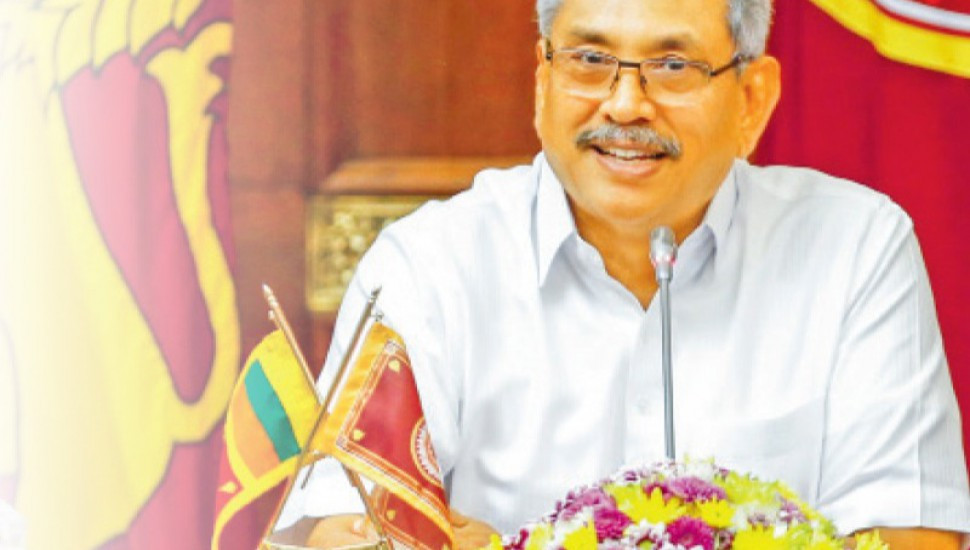
A full page advert in this morning’s The Herald warns the people of Scotland that Sri Lankan president Gotabaya Rajapaksa, who stands credibly accused of war crimes and genocide, will be coming to Glasgow next week.

The advert, as part of a campaign led by Scottish Tamils with the support of other Eelam Tamils from around the world, goes on to state that Rajapaksa, who has been nicknamed “The Terminator”, and the Sri Lankan armed forces are accused of Tamil genocide.

The Herald, which is the longest running national newspaper in the world and is the eighth oldest daily paper in the world, is one of Scotland’s highest circulating broadsheet newspapers. The campaign is being run in the print edition, as well as on the website.

We want to send a message to Rajapaksa and others like him that the people of Scotland will never allow war criminals to step foot in our country,” said Malathy, one of the organisers of the campaign.

“If Rajapaksa chooses to come here, he should be prepared to face the full force of our campaign for justice, accountability and legal action.”

Protests have been planned in Glasgow next week, as Rajapaksa travels to the United Kingdom for the first time since taking office to attend the 2021 United Nations Climate Change Conference, also known as COP26.

Rajapaksa previously served as Sri Lanka’s defence secretary and oversaw a military campaign that saw hospitals shelled and tens of thousands of Tamils killed. He has repeatedly vowed not to prosecute those accused of war crimes, which includes senior military generals and his elder brother Mahinda Rajapaksa, who is currently Sri Lanka’s prime minister.

“Our fight for justice will never stop until every single Sri Lankan war criminal is held accountable and our people finally have justice, freedom and liberation,” added Malathy.

Posted in Uncategorized

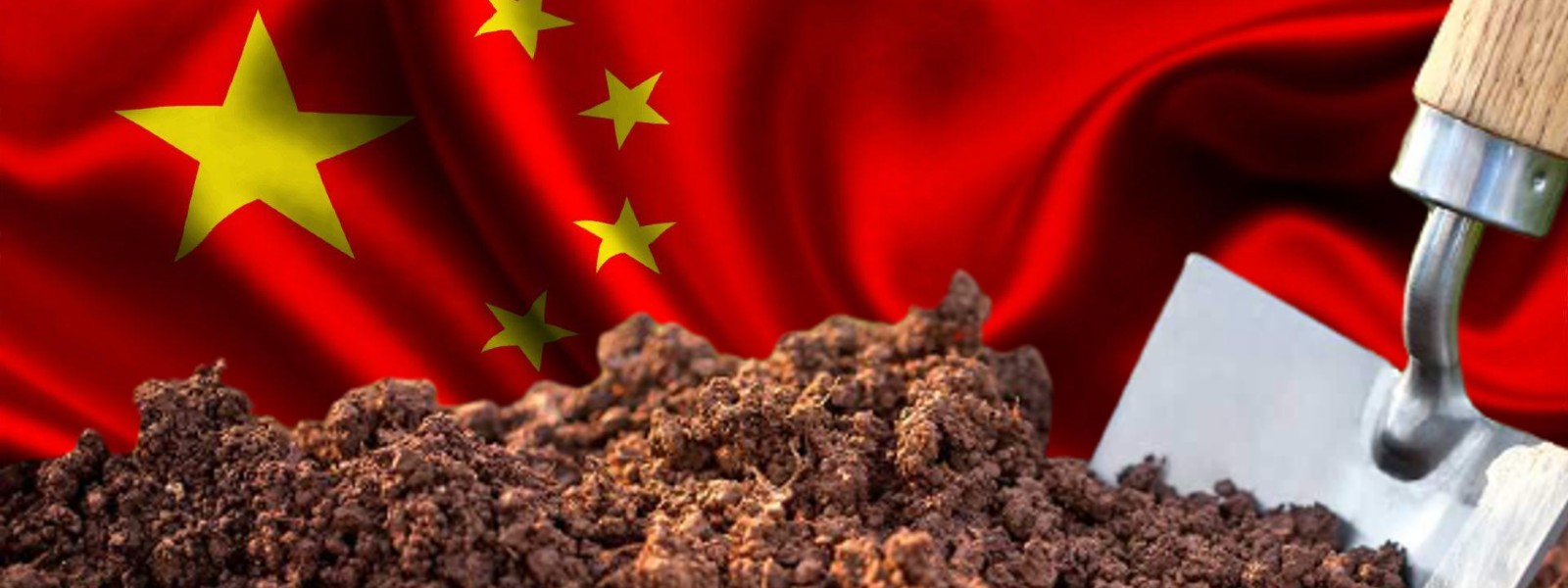
‘Re-test our rejected fertilizer from 3rd party’ – China requests from Agri Ministry

The Chinese Ambassador to Sri Lanka and representatives from Qingdao Seawin Biotech Group Co., Ltd. have made a request from the Agriculture Ministry to re-test the rejected Chinese Organic Fertilizer via a third party.

This was confirmed to News 1st by the Director-General of Agriculture.

This development comes after the Colombo Port Harbour Master said he was unaware of the whereabouts of the ship ‘Hippo Spirit’ carrying contaminated Chinese Fertiliser to Sri Lanka and, issued stern directives preventing it’s entry to the port.

On the 17th of September Sri Lanka’s Minister of Agriculture confirmed that a microorganism identified as ‘Erwinia’ was discovered in samples brought down ‘unofficially’ to Sri Lanka and tested.

The supplier was the same, Qingdao Seawin Biotech Group Co., Ltd.

On September 29th, Sri Lanka’s Agriculture Minister Mahindananda Aluthgamage announced the suspension of organic fertilizer imports from China.

This was after Director-General of Agriculture Dr. Ajantha De Silva on 28th September confirmed that Harmful Bacteria was detected in a fresh sample (2nd batch) of Chinese Organic Fertilizer.

However, on the 10th of October 2021, the Chinese Embassy said the comments noting that Erwinia was found in the samples from Qingdao Seawin Biotech Group Co., Ltd. has no scientific basis.

Yet, the Ceylon Fertilizer Company Limited had got a court order to block payment to Qingdao Seawin Biotech over the shipment of organic fertilizer which was contaminated.

The Colombo Commerical High Court had issued the order on October 22nd, against the Qingdao Seawin Biotech, its local agent, and the People’s Bank.

Counterfactual history Ratwatte’s drunken prison escapade: If it happened this way

It has been more than six weeks since that epic moment when a ruling party politico who happened to be the state minister of prison reforms stormed the Anuradhapura Prison, and forced a group of Tamil inmates on their knees, threatening them at gunpoint.

What happened since then was path defining. It was the Prison Commissioner who broke the news to the public and ordered an investigation. A sycophantic pet poodle might have claimed ignorance and might even have defended the errant minister’s nightly visits.

The Minister had a clean slate in the past did not matter. Surely the courts and even the party seniors might have been tougher if the errant politico had a history of violence, and had surprisingly gotten away with the alleged murder of an expat Rugby players and mass murder in the hill country

The president who was visiting New York for the UN General Assembly woke up to the news that the police had arrested the minister of prison for endangering the lives of prison inmates. The Attorney General charged the errant minister with a series of criminal charges, which if found guilty would land him in jail for a long time.
In any Third World Banana Republic, the police have awaited the green light from the political leadership. The Attorney General would have cared more about saving his grace than charging politicos of thuggery, even if the alleged behaviour amounted to attempted murder. But, not in Sri Lanka, where independent institutions stood tall and are not a captive of anyone’s- even the president’s – whims and fancies.

The President, so to speak had a hectic schedule in New York; after a string of meeting with G8 leaders and Prime Minister Narendra Modi, and a much sought-after interview with the CNN, a reception fit to his larger than life persona at home. His counterparts from forsaken places might go sightseeing and do a bit of babysitting. But, not here. The public money was at work to the optimum return.

By the time his brother, the Prime Minister also on a major international engagement on the invitation of the Prime Minister of Spain – who threw his Sri Lankan counterparts a state banquet, and the duo watched a bullfight- checked up with the party secretary back in Colombo, the Party seniors have already launched the process to sack the Minister from the party.

That the Minister had a clean slate in the past did not matter. Surely the courts and even the party seniors might have been tougher if the errant politico had a history of violence, and had surprisingly gotten away with the alleged murder of an expat Rugby players and mass murder in the hill country.

The country’s independent institutions were at their best. The independent Human Rights Commission launched an investigation and called on immediate legal action and sacking of the errant minister. The President and the government heard it loud and clear.

For Sri Lanka’s illustrious bureaucracy, competent legal service and independent-minded judges, these are probably the best of the times to serve the nation, according to their conscience. The fall out of Ratwatte’s drunken prison escapade is proof that nothing and no one is above the rule of law.

In the following day, despite a hangover, the state minister was humble enough to take responsibility for his actions and to admit that he had one too many shots. But, before he resigned, the president had sacked him of all positions, not just from one portfolio, which would have reeked hypocrisy.

It was the naysayers of the Gotabaya Rajapaksa government, who claim it is a familial cabal of corruption and rights abuses – and that the president himself has skeletons in the closet- that got egg on their faces.
The UN Human Rights Commissioner had all that in her pre-written speech before she sucked up the words, seeing how Sri Lanka’s straight-shooting institutions and officials launched themselves against the politically powerful miscreant.

President’s much-avowed promise for one country – one law was out there in full force.

Even the critics, some of the bitterest were pleasantly surprised. Sri Lanka seemed to have come a long way, from the dark days when prison inmates were picked, allegedly according to a list of names authorized by high officials and were killed, and their killers got away, they confided in private.

For Sri Lanka’s illustrious bureaucracy, competent legal service and independent-minded judges, these are probably the best of the times to serve the nation, according to their conscience. The fall out of Ratwatte’s drunken prison escapade is proof that nothing and no one is above the rule of law.

Really? Probably this is how things would have unfolded in any civilized nation. Now you should know, why every other local with a sense of fair play, the international community, NGO captains, media have a low opinion of the current administration, and by extension, sadly though, of the country it represents. Do not blame them for that, blame those who have made it happen and who keep reinforcing that law of the jungle.

Follow @RangaJayasuriya on Twitter

Posted in Uncategorized

SLFP to contest independently at future elections

The SLFP in a bid to go separate ways at future elections rather than in alliance with the SLPP will start selecting district and electoral organisers tomorrow (27) at the party head office, a spokesman of the party said yesterday.

The SLFP has already appointed a five-member panel of top party officials to select suitable members as district and electoral organisers aimed at the Provincial Council polls expected in early next year.the first interview in this respect is scheduled to be held tomorrow, he added.

“The party head office has received several thousand applications from all 25 districts for consideration for positions at the SLFP.WE have requested about 300 applicants to appear before the interview board at 9.00 in the morning at the party office on Wednesday,” he said.

Priority would be given to educated youth to be appointed as constituent organisers. Experience in politics would be also considered when selecting district organisers. However, a clean sheet of character, standing in the society and free from allegations of corruption, criminal acts and court cases would be the first and foremost qualifications to be selected for any responsible post in the SLFP, the spokesman noted.

The interview panel led by the SLFP General Secretary, State Minister Dayasiri Jayasekara will comprise, Environment Minister Mahinda Amaraweera, State Minister Duminda Dissanayaka, Parliamentarian Shan Wijayalal Silva and senior advisor of the SLFP, Prof. Rohana Lakshman Piyadasa.

Posted in Uncategorized

Teachers, principals vow to continue TU action

Even though the Teachers’ and Principals’ Trade Union Alliance has temporarily withdrawn from trade union action, trade unions yesterday (25) staged islandwide protests from 2:00 p.m. after school hours. Ceylon Teachers Union (CTU) General Secretary Joseph Stalin said they will stage protests, awareness campaigns, etc., on 25, 26 and 27 October at 300 different locations islandwide.

Meanwhile, protesters who attempted to get into the North Western Province Governor’s Office and meet Governor Raja Collure were turned away. “We want to show our objections regarding the conduct of the Governor. But we were turned away and barriers were erected to prevent us from entering. But we will continue our protests to show the Government that we haven’t abandoned our fight without fair solutions for our demands. We urge the Government to provide solutions for our demands before finalising the Budget 2022,” added Stalin.

Stalin said they have decided to refrain from all other duties other than teaching. “We will only work during weekdays from 7.30 am to 1.30 pm and we will refrain from working on weekends and other holidays like we used to. All teachers and principals will stay away from paperwork that we are supposed to submit to the Zonal Offices. We will not commence any extracurricular activities such as field visits other than teaching, even activities that have been suggested by the health authorities,” added Stalin.

Speaking to Ceylon Today, Stalin said that even principals have agreed to use only their professional land line telephone connections during working hours claiming that they were only doing this for the sake of the children who were away from schools for several months. Meanwhile, the road from Colombo Fort to the Presidential Secretariat in Colombo was blocked to traffic due to the protest march that was organised by the TeachersPrincipals’ Trade Unions Alliance who demanded solutions for their salary anomalies. The protestors marched from near the Fort Railway Station towards the Presidential Secretariat and were marching back along the same route.

Posted in Uncategorized

Sri Lanka GSP+ loss will hit multiple sectors, rural women: JAAF chief

The loss of GSP+ free trade benefits will hit multiple sectors and hurt rural women, an apparel industry official has said.

The EU has given trade concessions to several low income countries where the ruling class has held back liberties and absolute guarantees of equality which have been available in most countries for decades in the expectation of improvement.

The EU has started a review of Sri Lanka’s concessions given weaknesses in rule of law among others which is crucial to keeping a European-style nation state in check.

Sri Lanka inherited a European-style nation-state with a standing army, police where an elected ruling class may make any law they wish through a legislating parliament including removing constitutional checks to coerce unarmed citizens.

This analysis by the Chairman of Sri Lanka’s Joint Apparel Association says A Sukumaran the impact of loss of trade concessions goes beyond the mere numbers of export data given the fallout already experienced by the Coronavirus pandemic.

Amidst pandemic-induced volatility GSP+ to the EU is critical for Sri Lanka

The recent European Union (EU) monitoring mission visit to Sri Lanka on the Generalised Scheme of Preferences (GSP) Plus trade concessions scheme, has ignited much speculation locally, on the potential costs of losing GSP+ to the EU.

However, many such analyses have significantly under-estimated the potential losses, often failing to account for vital factors.

Based on available evidence, it is highly probable that this carries heavy economic as well as ‘social and human costs’ – the latter particularly from a poverty and vulnerability perspective.

EU: A vital trade partner

First, placing the vital importance of EU’s GSP+ in context, exports to the EU – Sri Lanka’s second largest destination for exports – accounted for nearly a quarter (23%) of Sri Lanka’s total export earnings in 2020. This is equivalent to roughly 3.2% of Sri Lanka’s entire Gross Domestic Product (GDP) for 2020.

The EU accounts for a large component of the total exports of many of Sri Lanka’s biggest export industries. Approximately two thirds (61%) of the country’s exports to the EU benefit from GSP+ concessions. While slightly more than half of these are apparel – which accounted for 43% of the sector’s earnings in 2020 – EU is also a key market for Sri Lanka’s plastics and rubber product exports, vegetable products, machinery and appliances, food, beverages and tobacco.

In fact, industries such as seafood, rubber products, and footwear make even greater utilization of GSP+ than apparel does (more than 90%, compared with less than 50% for apparel) and hence, as per a local think-tank, would also be highly vulnerable if GSP+ is lost.

Opportunity costs are another consideration. Available data overwhelmingly indicates that the GSP+ scheme is beneficial to countries which are eligible for these concessions. From 2011 to 2017, exports to the EU by GSP+ beneficiaries had increased by 82%.

In Sri Lanka’s case in specific, much of the growth that enabled Sri Lanka’s apparel industry to achieve export earnings of more $5.3 billion prior to the pandemic in 2019 is attributed to the EU. It’s also important to note that that Sri Lanka’s competitors, such as Bangladesh for instance, will continue to enjoy these privileges.

Far-reaching employment impact

The implications of a GSP+ loss on local employment are significant even if one were to consider only apparel and food product exports – both of which benefit from the EU GSP+ scheme.

The industry has provided steady and uninterrupted employment to around 350,000 apparel workers, while indirectly creating livelihood for an additional 700,000 within the country.

According to the 2019 edition of the Annual Survey of Industries, more than 360,000 people are employed in the food products sector. Even after removing employees of non-export businesses in the food products sector, this would imply that export industries which are significant beneficiaries of EU’s GSP+ are also some of the country’s biggest employers.

Furthermore, in the case of apparel, nearly 80% of the employees/associates are predominantly rural women, implying that vulnerable rural groups stand to be disproportionately impacted if GSP+ is lost.

This would further exacerbate already high levels of income inequality in the country. SMEs in the apparel sector could also be affected to a greater extent, which too could contribute to inequality.

Academic studies done on loss of GSP+ by Sri Lanka in 2010 (for example, the study done by Bandara and Naranpanawa in 2014)have indicated that poverty and income inequality likely increased as a result at that time. A highly respected Sri Lankan trade expert also stated at a public forum few months ago that loss of GSP+ led to around a 1% loss of GDP for the country.

Trade shifts and beyond

Beyond the above context, it is also important to take into account the likely outcomes of the loss of GSP+ to the EU, to understand the full extent of the costs involved. There are two important factors that should be considered in this regard; likelihood of trade shifts and the potential for negative cascading effects such as the loss of Sri Lanka’s other trade concessions.

Apparel brands and buyers now strongly prefer end-to-end solutions providers. Hence, if Sri Lanka were to lose GSP+ to the EU – which would increase the cost of our apparel by 9.5% for buyers in the EU – the loss of market share will not be limited to products that receive GSP+ concessions. Buyers could shift en masse to Sri Lanka’s competitors, resulting in trade shifts which would be further detrimental to the interests of our country.

Furthermore, there are significant parallels between the conditions under which tariff concessions are provided to Sri Lanka via EU’s GSP+ and other similar schemes which Sri Lanka currently benefits from.

Hence, if Sri Lanka were to lose GSP+ to the EU, there is high probability of trade concessions to the UK and even USA coming under review. These markets are also vital markets for Sri Lanka’s exports – with US and UK collectively accounting for more than one third (34%) of Sri Lanka’s national exports in 2020.

In addition, two other markets that the Sri Lankan apparel industry hopes to enter – Japan and Australia – also have GSP schemes, modelled on the EU. Hence, the European Commission’s actions could potentially affect those plans.

Potential loss of FDI

Foreign Direct Investments (FDI) too would be negatively impacted, if GSP+ to the EU is lost.

Fabric processing, which would strengthen the apparel industry’s backward integration enabling greater utilization of trade concessions such as GSP+, is one of Sri Lanka’s key sectors newly designated for FDI. However, if the country is no longer eligible for trade concessions, questions would arise with regard to the sector’s viability.

This would carry a significant opportunity cost for the country. Potentially, thousands of employment opportunities – both directly in fabric processing and in the apparel sector which would expand as a result – will be lost, together with millions of Dollars in much-needed FDI inflows.

Loss of foreign exchange earnings from exports, employment and FDI will have cascading impacts that would lead to other negative consequences. For instance, foreign exchange earned from apparel and other exports are essential for Sri Lanka’s critical imports – including food, medicine and fuel. Currency depreciation pressure etc. would also exacerbate.

GSP+ more important than ever

The above indicates that the potential loss of EU’s GSP+ would have far-reaching adverse impacts on many fronts that could trickle down to all sectors of the economy. Export industries and the country’s economy as a whole have taken a heavy blow from the pandemic.

The apparel sector too was significantly impacted and is still grappling with many economic shocks. These include order cancellations and reductions, drop in margins, having to provide longer credit periods to buyers, supply chain disruptions and having to work with reduced staff, in adhering to safety protocols.

Given these challenges, the need for GSP+ is perhaps greater than ever. In this regard, we appreciate the government demonstrating its clear commitment to retaining it. We are optimistic and hopeful that any concerns can be ironed out through constructive engagement.

However, this should not be construed as an indication of the industry relying on GSP+ concessions indefinitely in the medium to long-term. We have put in place concerted initiatives to enhance the sector’s competitiveness.

This includes developing strategic (as opposed to transactional) relationships with buyers, upgrading research and development capabilities and increasing innovation, developing branded products and efforts to diversify export markets. These are not mere claims by the sector and have been recognized by buyers and even in publications of the World Bank.

Retaining our existing preferential trade concessions together with the initiatives underway to enhance the industry’s competitiveness will enable Sri Lanka’s apparel industry to achieve its goal of becoming a $8 billion export earner by 2026. This will significantly increase our contribution to the domestic economy in terms of export earnings, employment, technology infusion and investment.

The industry is fully-committed to this task but requires sufficient stability, especially protection from further economic shocks at present, to achieve this goal.

The author is the Chairman of JAAF and started his career in the industry three decades ago. He presently holds the position of Managing Director of Star Garments Group and is also a fellow member of the Institute of Chartered Accountants of Sri Lanka and is also a fellow member of the Chartered Institute of Management Accountants of the United Kingdom.

Adani to meet Gotabaya in Colombo

Gautam Adani, chairman of the Adani Group that was chosen to develop a major port terminal project in Sri Lanka, is scheduled to meet President Gotabaya Rajapaksa in Colombo on Monday, according to official sources in Colombo and New Delhi.

“It is a private visit and Mr. Adani is expected to meet the President to discuss the West Container Terminal project,” a senior official told The Hindu on Sunday night.

The source requested anonymity while confirming the “high profile visit” that is said to include meetings with “top Sri Lankan dignitaries”.

Mr. Adani’s visit comes less than a month after the Adani Group, in a virtual ceremony, signed a Build-Operate-Transfer (BOT) agreement with its Sri Lankan partner in the project John Keells Holdings, and the Sri Lanka Ports Authority (SLPA), to jointly develop the West Container Terminal (WCT) at the Colombo Port.

According to sources in India familiar with the development, Mr. Adani “is interested in projects related to ports, power and renewable energy” in Sri Lanka.

“Mr. Adani will discuss possible projects in these sectors when he meets President Rajapaksa,” a source said.

Following Sri Lanka’s controversial decision early this year to scrap a 2019 trilateral agreement with India and Japan to jointly develop the East Container Terminal at the Colombo Port, the Rajapaksa government offered the WCT project as “a compromise”.

Private investor
Unlike in the ECT project envisaged earlier, there is no Indian governmental role in the WCT project, with the Adani Group entering the picture as a private investor, amid questions from Sri Lankan experts on the apparent lack of transparency in how the investor was chosen.

Confirming the project in a tweet on March 15, 2021, Mr. Adani said: “Grateful to the leaders of GoI, GoSL, SLPA & John Keells for the opportunity to build WCT, Colombo. This partnership is a symbol of the deep strategic relations between countries with great intertwined history. It will launch decades of container growth.”

Adani Ports and Special Economic Zone Limited (APSEZ), which runs a dozen ports in India, said it was “bolstering its global footprint” with the WCT.

As per the 35 year-long BOT agreement, the Adani Group will have majority, 51% stakes in the project, while John Keells will hold 34%, and the SLPA, 15%.

(With inputs from Mahesh Langa in Ahmedabad)
Source : The Hindu

Posted in Uncategorized

Church wants Ex-SIS Director prosecuted

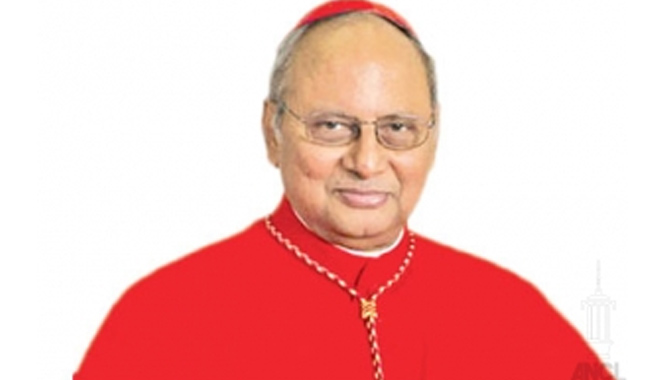
The Catholic Church has said that instead of naming former State Intelligence Service (SIS) Director Senior Deputy Inspector General of Police (SDIG) Nilantha Jayawardena as a state witness in the cases pertaining to the Easter Sunday terror attacks of 21 April 2019, he should be prosecuted for not having prevented the said terror attacks despite receiving prior warnings of such an attack.

Attending an online meeting with a group of Sri Lankans living abroad, Archbishop of Colombo His Eminence Malcolm Cardinal Ranjith revealed that the last warning, which was given to Jayawardena before the terror attacks, contained all the information such as where the bombings were going to take place.

“Despite these warnings, he didn’t do anything. However, he could have, as a responsible police official, acted upon this intelligence information. Under the Police Ordinance, if a police officer comes to know that there is a threat to any citizen, it is their responsibility to take actions regarding it without waiting for orders from higher authorities,” he said.

Further pointing out that the Presidential Commission of Inquiry (PCoI) into the Easter Sunday terror attacks has clearly recommended that judicial proceedings be instituted against Jayawardena, the Archbishop queried as to how he could be made a state witness. “I don’t understand Attorney General (AG) President’s Counsel Sanjay Rajaratnam at all. This is unacceptable behaviour on the part of any government or law enforcement agency. He cannot be made a state witness and should be prosecuted instead.”

Speaking further, the Cardinal mentioned that he had sent a letter to the AG mentioning 15 reasons as to why Jayawardena cannot be named as a state witness.

Furthermore, referring to the incident where two police officers were killed in the Vavunathivu area on 30 November 2018, the Archbishop claimed that when considering Jayawardena’s actions, it is very clear that he (Jayawardena) not only manipulated the evidence in the said case, but also attempted to hide the connection between the killing of the said two police officers and the National Thowheeth Jama’ath (NTJ) organisation led by Mohamed Cassim Mohamed Zaharan alias Zaharan Hashim (the suicide bomber who carried out the attack on the Shangri-La Hotel in Colombo on 21 April 2019, along with Mohamed Ibrahim Ilham Ahmed).

The Archbishop added: “It is very clear from the evidence that there was a deliberate attempt to pass the responsibility onto the Liberation Tigers of Tamil Eelam (LTTE), whereas the SIS was aware that the guns that were in the possession of the two police officers were taken by the Zaharan-led group. There was a deliberate attempt on the part of the SIS to hide that.”

He also charged that Jayawardena has been promoted and given a very satisfactory appointment instead of being prosecuted. “Now he doesn’t talk anything about this matter. The promotion is kind of a bribe given to him to keep quiet. The authorities are protecting this man. Even when the PCoI has very clearly said that he has committed the crime of the culpable neglect of duties, this is the situation.”

Meanwhile, addressing the said online meeting, National Catholic Social Communication Centre Director and Kurana St. Anne’s Church Parish Priest Rev. and Fr. Cyril Gamini Fernando also commented on reports that Jayawardena is to be named as a state witness.

He said: “Everyone now acknowledges that there was a conspiracy behind the Easter Sunday terror attacks. This conspiracy could have been prevented if these attacks had been prevented. Therefore, our view is that these attacks were not prevented because they wanted to allow this conspiracy. Therefore, Jayawardena is not just a person who has neglected his responsibilities, but an accomplice in this conspiracy.”

Fernando further claimed: “What Jayawardena did was very serious. How can an accomplice in this conspiracy who allowed such an attack become a state witness in this case? If this is what is to happen, we doubt whether it is another conspiracy.”

He also claimed that the intelligence information received by Jayawardena before the Easter Sunday bombings contained all the facts, adding that no explanation had been given as to the basis on which they were considered general information. “The PCoI did not accept what he said. They say that the information he received was clear intelligence. The PCoI also does not accept that the then President Maithripala Sirisena was not informed about this. This shows that the former President was also aware of this.”

Meanwhile, during the said discussion, a presentation was made, which alleged that there is credible evidence that current SIS Director Maj. Gen. Suresh Sallay, who was the then Directorate of Military Intelligence (DMI) Director, and other intelligence agencies, had provided financial and other forms of support to the NTJ group, including Zaharan, prior to 2015.

The presentation, which was seen by The Morning, read: “Credible evidence exists that the NTJ terror group led by Zaharan was supported by the intelligence services, including the receipt of funding. Brigadier Suresh Sallay was the Director of the DMI. He had employed Zaharan and the group for intelligence work and kept the group in the payroll of the Defence Ministry. Sallay was removed during the United National Front-led Government. However, he was appointed to the Sri Lanka High Commission in Malaysia by President Sirisena for unknown reasons. He had been in India during the Easter Sunday terror attacks.”

Speaking at the time of the display of the said presentation, Fernando said that the intelligence services must have been aware of Zaharan and others who had been active since 2006.

“Sallay has been the Head of State Intelligence since 2009. We have seen the Thowheeth Jama’ath group active in the Eastern Province since 2006. During that time, there were several clashes between Sufi Muslims and extremist groups. The Kattankudy Police, the then Defence Secretary, and the President have been informed that such a group was being formed. Therefore, there is no doubt that the intelligence services were well aware of these groups.”

He also said: “Did the person in charge of the intelligence unit not know these things? If he had known, why hadn’t he taken any action on this? It has been shown that after the formation of the NTJ, an area like Kattankudy seemed to be completely under the control of the extremist group. Accordingly, the SIS and this person should be responsible for protecting these people and not bringing them before the law.”

Meanwhile, a complaint was filed at the Criminal Investigations Department (CID) against Fernando by Sallay yesterday (25) with regard to the aforesaid statements made in reference to him during the said discussion.

The Morning spoke to the Police Media Spokesperson Senior Superintendent of Police (SSP) Nihal Thalduwa, who confirmed the same.

“A complaint has been filed against Fernando and a few others by Sallay. The complaint was with regard to the allegations made by Fernando who claimed that Sallay had close contacts with Zaharan and the Thowheeth Jama’ath and that Sri Lanka’s intelligence units had provided financial and other forms of assistance to Zaharan,” said Thalduwa.

He added that additional details pertaining to the complaint cannot be disclosed as this would hinder the investigations.

“All I can say is that Sallay had mentioned in his complaint that he has never communicated with Zaharan or anyone affiliated to the Thowheeth Jama’ath. Sallay has also mentioned that the objective of these allegations is not only to mislead the public, but to deliberately tarnish his reputation, as well as to put his life and the lives of his family members in harm’s way,” he concluded.

Adani Group delegation surprise visit to Mannar

Family members of Indian Billionaire Gautam Adani were seen engaged in a visit to Mannar on Monday (25).

Billionaire Gautam Adani, chairman of the Adani Group that was chosen to develop a major port terminal project in Sri Lanka arrived in the country on Monday (25) and according to reports he is scheduled to meet President Gotabaya Rajapaksa in Colombo.

“It is a private visit and Mr. Adani is expected to meet the President to discuss the West Container Terminal project,” a senior official told The Hindu on Sunday (24) night.

Adani’s visit comes less than a month after the Adani Group, in a virtual ceremony, signed a Build-Operate-Transfer (BOT) agreement with its Sri Lankan partner in the project John Keells Holdings, and the Sri Lanka Ports Authority (SLPA), to jointly develop the West Container Terminal (WCT) at the Colombo Port.

Confirming the project in a tweet on March 15, 2021, Adani said: “Grateful to the leaders of GoI, GoSL, SLPA & John Keells for the opportunity to build WCT, Colombo. This partnership is a symbol of the deep strategic relations between countries with great intertwined history. It will launch decades of container growth.”

Ten Constituent Parties Of Govt. Decide To Hold Public Gathering Against Deal With US Company On Yugadanawi Plant

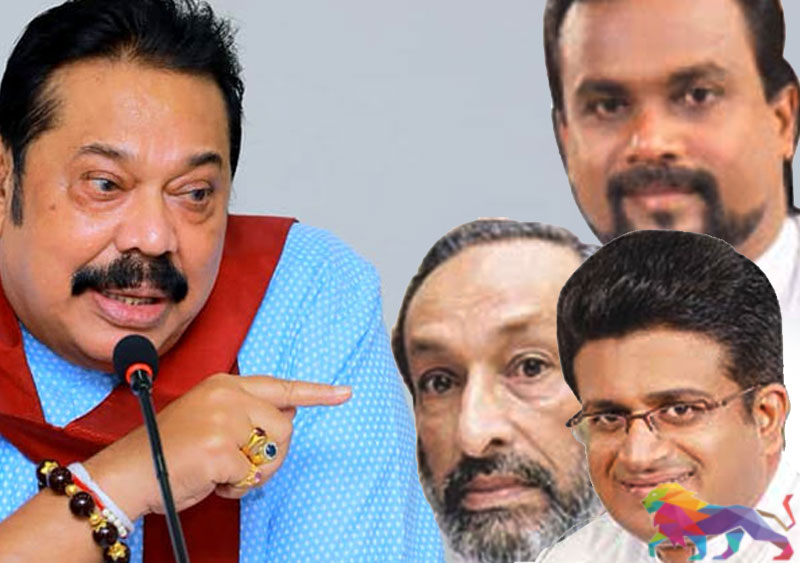
Ten constituent parties representing the government have decided to hold a public meeting called ‘People’s Assembly’ (Mahajana Sabha) against the government’s decision to transfer 40% of the Kerawalapitiya Yugadanavi power plant to an American company.

Accordingly, it has been decided to hold this assembly in Colombo on the 29th, a source familiar with the matter said. He said that the decision was made at a meeting held at the office of MP Tiran Alles on October 23.

Member of Parliament Athuraliye Rathana Thero, Ministers Vasudeva Nanayakkara, Wimal Weerawansa, Udaya Gammanpila, Members of Parliament Prof. Tissa Vitarana, ALM Thawulla, Asanka Navaratne, Tiran Alles, Gevindu Kumaratunga, Weerasumana Weerasinghe, Communist Party General Secretary G.Weerasinghe and former Minister DEW Gunasekera.

They have also decided to issue a joint statement against the transfer of shares in the Yugadanavi power plant to an American company and to hold discussions with trade unions in the Petroleum, Electricity Board and Ports sectors at the Communist Party Headquarters.