China tells Sri Lanka to respect science and facts

China has told Sri Lanka to respect science and facts with regards to the import of organic fertilizer from a Chinese company.

The Agriculture Ministry had recently announced that a decision was taken not to import organic fertiliser from the Chinese company after harmful bacteria was found in a second set of samples.

The bacteria was found during tests carried out by the National Plant Quarantine Service (NPQS).

The Chinese Embassy in Sri Lanka noted that the “hasty” conclusion made by the National Plant Quarantine Service lacks scientific basis,

In response to controversy surrounding organic fertilizer samples imported from China, the Chinese embassy in Colombo said both the Chinese company and the Sri Lankan authorities should cooperate on the principles of respecting science and facts and the spirit of contract with the view to resolving this issue promptly, and address differences through dialogue in good faith for the mutual benefits of the China-Sri Lanka cooperation.

The Embassy said in a statement that it contacted the product supplier, Qingdao Seawin Biotech Group Co., Ltd. to examine the issue, and found out that these reports and statements, which had already harmed the reputation of the company in question, directly contradict the facts.

The Embassy would like to clarify as follows:

1.Qingdao Seawin Biotech Group Co.,Ltd.(here after referred to as Seawin),is a high-tech enterprise focusing in the production of new-type seaweed organic fertilizer, found in 2000 with are gistered capital of 132 million RMB (approximately 4.1billion LKR).It’sproducts,which have passed the EUECOCERT Organic Certification, OMRI Certification,REACH Certification,and Australian Organic Input Certification etc.,have been exported to more than 50 countries and regions in the world,including Europe and the United States. It also set up oversea branch companies in the U.S. and Australia.

2. Seawin was selected by the Ministry of Agriculture of Sri Lanka through open tender to supply the urgently needed organic fertilizer.

3.Thecompany has undertaken obligations strictly in accordance with the signed contract.In their production process,the organic fertilizer must be sterilized at 600 °C, thus all harmful microorganisms are killed by the high temperature, which is in line with the standards required in the bidding documents,the contract,the letters of credit as well as the widely accepted international standards for organic fertilizers.

4.In the process of enforcing the contract,however,the Sri Lanka National Plant Quarantine Services(NPQS) claimed that the sample received contained harmful bacteria including Erwinia,after only THREE(3)days of test and analysis,which lead to the above-mentioned news reports.

It is noted that, according to the International Plant Protection Convention, it will take at least SIX (6) days to detect Erwinia. The hasty conclusion made by NPQS islack of scientific basis. As such,the decision made by the authorities to reject Seawin’s organic fertilizer based on the NPQS report is not only questionable but also causing great financial loss to the company.

5.Therefore,theEmbassy hopes that the related parties in SriLankan side and the Chinese company could coordinate on the principles of respecting science and facts and the spirit of contract with the view to resolving this issue promptly, and address differences through dialogue in good faith for the mutual benefits of the China-Sri Lanka cooperation.

Posted in Uncategorized

Sri Lanka’s Défense University and Pakistan’s COMSATS to collaborate in advanced biomaterial research

COMSATS University Islamabad in Pakistan (CUI) and General Sir John Kotelawala Défense University (KDU) in Sri Lanka have inked a Document of Understanding to collaborate on advanced biomaterial research.

Prof. Dr. Muhammad Tabassum Afzal, Rector CUI and Major General Milinda Peiris, Vice Chancellor, KDU signed the document of collaboration at a ceremony held online COMSATS said in a press release.

The Interdisciplinary Research Centre in Biomedical Materials (IRCBM), a state of the art research center at CUI Lahore campus will collaborate with KDU on respective national regulations on safety and security of sensitive materials, goods, technologies and equipment.

Prof. Afzal said that the core focus of partnership between CUI and KDU will be in the field of advanced biomaterials and allied areas that are much needed in Pakistan. “While there is a limited development of products such as synthetic skin substitute, wound dressings for foot ulcer patients, artificial bone fillers, disease monitoring and diagnostic devices and stem cells linked with therapies in our part of the world. The future is indeed bright with the kind of functional partnership such as the one we are signing today.”

Prof. Afzal also added that interdisciplinary research in IRCBM is globally recognized and transnational in nature. “It is our crown jewel because of its high impact factor research. While CUI continues to grow within Pakistan, we are also very keen on developing our international linkages and partnership with centers of excellence in developing world.”

The center was established in year 2008 to research and deliver indigenously-developed low-cost healthcare solutions to the local market.

Prof. Afzal conveyed his satisfaction that currently three brilliant and outstanding Sri Lankan students are studying in CUI doing their MS degrees. He desired hosting more international students from Sri Lanka, thus offered 100 percent tuition fee waiver to the Sri Lankan students particularly from KDU.

Major General Milinda Peiris said that the objectives of collaboration is to cooperate and develop the activities related to any field in which CUI and KDU have shared interests, such as biomaterials, tissue engineering, regenerative medicine, sensors and biosensors and allied fields. In addition, both universities will explore possibility of exchange of programs for students, faculty members and scientists, joint supervision of PhD students, mutual organization of lectures, conferences, symposia and training programs.

Maj. Gen. Dr. Shahid Ahmad Hashmat (Retd.) former High Commissioner of Pakistan in Sri Lanka informed about efforts of the Government of Pakistan for the promotion of educational and research opportunities with Sri Lanka. He explained efforts of the Higher Education Commission, Government of Pakistan to offer fully funded scholarships to the students of Sri Lanka who wish to study BS, MS and PhD programs in leading universities of Pakistan.

UI Niyas, Counsellor (Political & Trade), High Commission of Sri Lanka in Pakistan thanked for giving opportunity to the Sri Lankan High Commission in Islamabad to witness signing of DOU between top universities of the both countries. He appreciated KDU as well as CUI’s development and growth. He said that he is very happy and confident that this collaboration will be the initial step and will open more avenues of partnership between the two universities.

Posted in Uncategorized

Thiyagarajah appointed Northern Governor

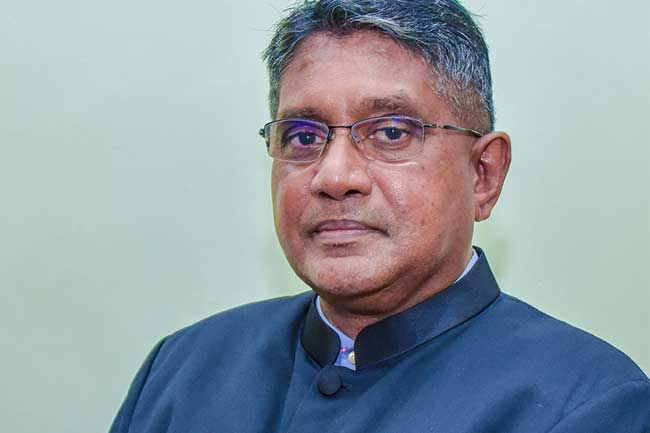
Member of the National Election Commission, Jeevan Thiyagarajah, was appointed as the Governor of the Northern Province by President Gotabaya Rajapaksa on Friday (8). He replaces P.S.M. Charles, who was appointed last year. The letter nominating Thiyagarajah to the post has been issued by President’s Secretary P.B. Jayasundera.

He can accept the post, subject to his resignation from the Commission, the letter added. Accordingly he has stepped down from the post. He earlier served as the Head of the Consortium of Humanitarian Agencies (CHA). Thiyagarajah was a member of GOSL delegation to Geneva twice in 2012 and has held several key positions in the Mahinda Rajapaksa Government.

Trade Unions meet Ex-President on controversial LNG deal

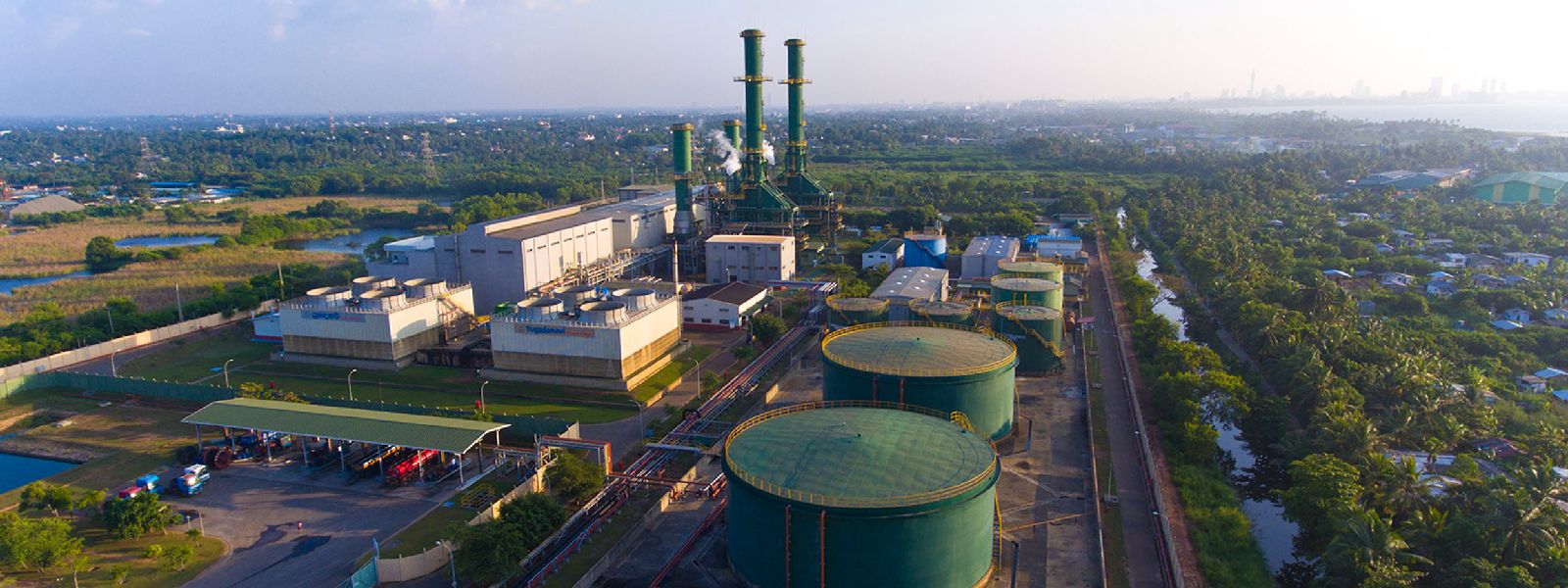
Trade Union representatives met with Former President Maithripala Sirisena and members of political parties affiliated with the government, to discuss matters surrounding the controversial Kerawalapitiya Power Plant deal.

The meeting took place at the Sri Lanka Freedom Party headquarters in Colombo and saw representatives from 11 political parties affiliated with the government, present for the meet.

At the meeting, it was decided to discuss with the President on the need to protect national resources.

Ranjan Jayalal, the General Secretary of the CEB Employees Union said the political party representatives understood the government made a wrong move.

‘Yet, they are not in a position to say if it is right or wrong,” he said noting that all efforts will be made to defeat this effort undertaken by the government.

Energy Minister Udaya Gammanpila who also attended the meeting said another meeting will be called for with the Trade Union representatives, however, declined to comment on his position against the sale of national assets.

Minister Vasudeva Nanayakkara who is also the leader of the Democratic Left Front stressed national assets should not be sold and said that efforts will be made to ensure it does not happen.

Former President Maithripala Sirisena stressed the need to rebuild the country and there is no need to seize the power or topple a government.

TPA tells India to push Sri Lanka on 16th Amendment

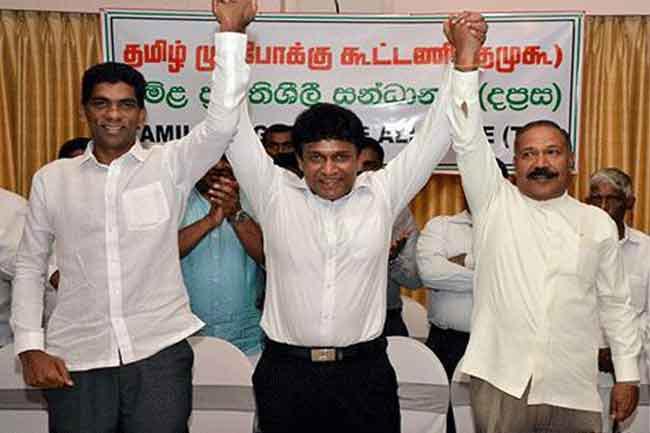
The Tamil Progressive Alliance (TPA) has urged India to push Sri Lanka to fully implement the 16th Amendment to the Constitution.

The request had been made when the TPA led by former Minister Mano Ganesan met Indian Foreign Secretary Harsh Vardhan Shringla recently.

In a media release, Ganesan said that the 13th Amendment to the Constitution must be fully implemented and the Provincial Council elections expedited.

“We want immediate elections for the Central, Western, Uva and Sabaragamuwa PCs along with the Northern and Eastern PC.

Ganesan added that the 16th Amendment must also be fully implemented to ensure the dignity of the Tamil language.

The TPA leader pointed out that the 16th Amendment has been completely ignored and forgotten, adding that it was through this amendment that Tamil language was recognized as an administrative language, an educational language and a judicial language.

“Both the 13th and 16th Amendments were incorporated into the Constitution of Sri Lanka through the Indo-Lanka Accord. Therefore, we believe that the Government of India has a responsibility in this regard,” Ganesan noted.

He also said that the rights enjoyed by other citizens of Sri Lanka should also be extended to the upcountry Tamils who are citizens of Sri Lanka.

The TPA pointed out that the families of Tamil workers living in the plantations have been denied land rights.

Ganesan urged India to raise the matter with Sri Lanka.

Posted in Uncategorized

Appropriation Bill for 2022: Defence gets highest allocation; Health reduced

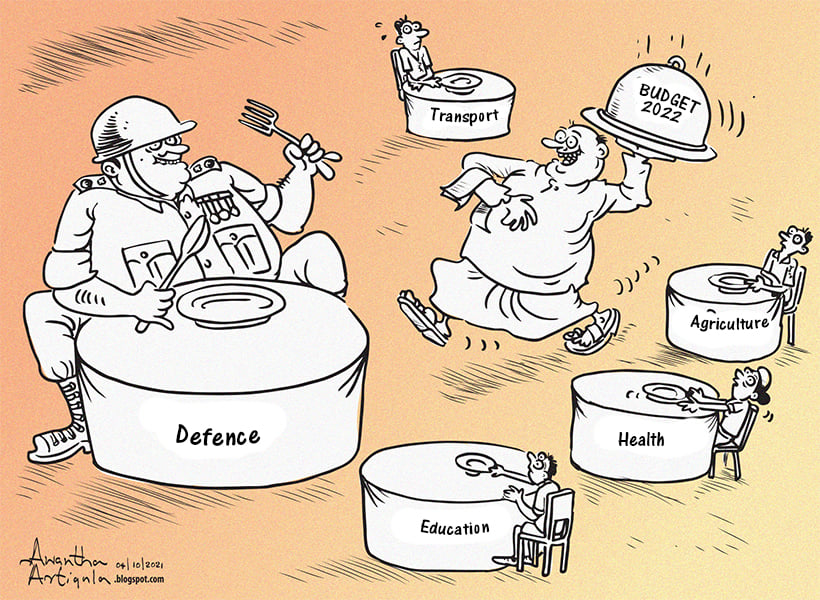
The Appropriation Bill for the 2022 financial year was presented in Parliament yesterday (7) by Finance Minister Basil Rajapaksa, with the budgetary allocations for the defence, education, and finance sectors being increased whilst those for the health sector and the President being decreased when compared to the 2021 financial year.

The Appropriation Bill notes that the total expenditure of the Government allocated for the year 2022, including for both recurrent and capital expenditure, has decreased by Rs. 33 billion compared to the 2021 fiscal year. Thus, the total expenditure for 2022 is estimated at Rs. 2,505.3 billion (2.5 trillion).

The Defence Ministry has been allocated Rs. 373.1 billion for the year 2022, a Rs. 18 billion increase from the fiscal year 2021, making it the highest allocated sector. Following the Defence Ministry, the Public Services, Provincial Councils (PCs), and Local Government (LG) Ministry has been allocated the second highest expenditure of Rs. 286.7 billion. The Highways Ministry has been allocated Rs. 250.1 billion, while the Education Ministry has been allocated Rs. 185.9 billion for the year 2022, which is a Rs. 28 billion increase from the fiscal year 2021, but still below the amount allocated to the Highways Ministry, which was the case last year as well.

Despite the pandemic, the Health Ministry has been allocated Rs. 6 billion less for the year 2022, in comparison to the fiscal year 2021. Thus, the Bill has allocated Rs. 153.5 billion for the Health Ministry for the year 2022.

Meanwhile, the President’s expenditure has been decreased by Rs. 6.6 billion for the year 2022 at Rs. 2.78 billion.
It was also announced in Parliament yesterday that the debate on the 2022 Budget will take place from 12 November 2021 to 10 December 2021.

Posted in Uncategorized

Sri Lanka reports 44 Covid-19 deaths on Thursday, toll rises to 13,229

Sri Lanka Thursday reported 44 deaths due to COVID-19 after the figures were confirmed by the Director General of Health Services on Wednesday, October 06.

Among the deaths reported today, 25 are of males and 19 of females. The majority of deaths – 39- are of elderly people in the 60 years and above age group.

According to the data reported by the Government Information Department, the total deaths due to Covid-19 since the pandemic began last year has now risen to 13,229.

Diana Gamage expelled from SJB

SJB working committee which met today decided to expell Diana Gamage from the party.

SJB General Secretary Ranjith Madduma Bandara told the Daily Mirror that the decision was made by the working committee considering the reformation of the disciplinary committee which was appointed to look into her case.

“We have expelled Ms. Gamage from the party for acting against party decision to vote against the 20th amendment to the constitution” Mr. Madduma Bandara said.

“Action against other MPs who voted in favour of the 20th amendment will be taken by the respective parties they belong to,” he added.

Ms. Gamage when contacted by the Daily Mirror said she would file legal action against the move.

“This is nothing but a joke. Mr. Sajith Premadasa called former Prime Minister Ranil Wickremesinghe a dictator, but he (Sajith) is a bigger dictator. At least Mr. Wickremesinghe has more brains than Mr. Premadasa,” she added.

US remains concerned about some aspects of Port City law

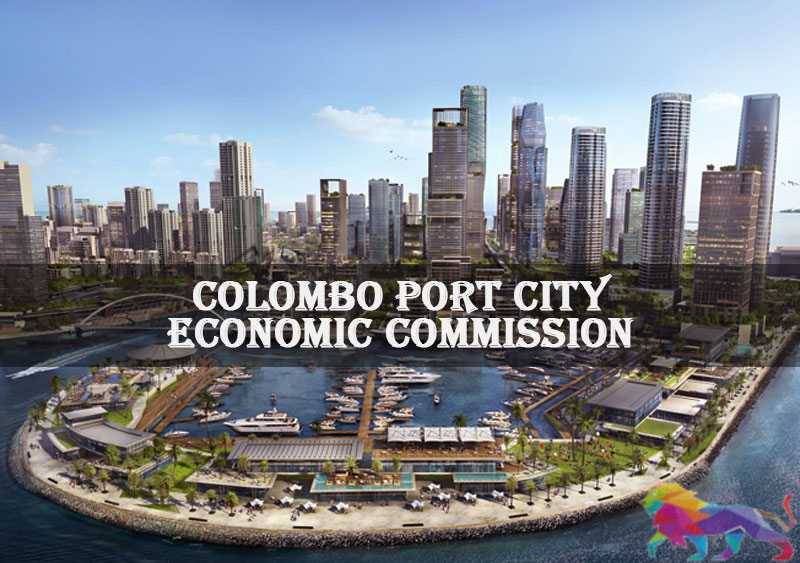
The United States says it continues to be concerned about some aspects of the Port City legislation that was passed in Parliament.

The US Ambassador to Sri Lanka, Alaina B. Teplitz says there appears to be openings for corrupt influences and the potential for illicit financing, money laundering, and/or other activities by nefarious actors who want to take advantage of what they perceive to be a permissive environment for illegal activity.

She expressed these views in an interview with the Centre for Strategic Studies.

“US companies are going to be wary of that. US companies considering investing in Sri Lanka want predictability and a clear understanding of the investment environment. They’re going to need to know that if they’re investing, they’re not going to be confronted with risks that could present problems for them, either from regulatory bodies, their own shareholders, or their boards of directors. Under the Foreign Corrupt Practices Act (FCPA), it is unlawful for a US company or individual to offer, pay, or promise to pay money or anything of value to any foreign official for the purpose of obtaining or retaining business,” she said.

The Ambassador noted that a US company considering investing in Sri Lanka must be confident that they’re not going to be exposed to – or collaborating with – entities that could have economic measures levied against them by the U.S. Treasury or Commerce Department.

Teplitz said that the US recognises that the Government in Sri Lanka wants to take advantage of the investment already made in the Port City project.

However, she said the simple caution is that for such a large infrastructure / development project, it is incredibly important to get the legislation and regulations right – and ensure the door is not left open to illegal activity and unfair competition.

She also noted that the Hambantota port project incurred a tremendous amount of debt for the country, and ultimately Sri Lanka needed to lease out the port for the next century as a result.

“The Colombo Port City could possibly open Sri Lanka to a host of suspect economic practices and corruption,” she added.

The Ambassador said that ensuring the right conditions prevail in order to attract high quality, US private sector investment and to help Sri Lanka stake its claim as an attractive and reliable economic partner in the region should be a priority policy goal for the Government.

Posted in Uncategorized

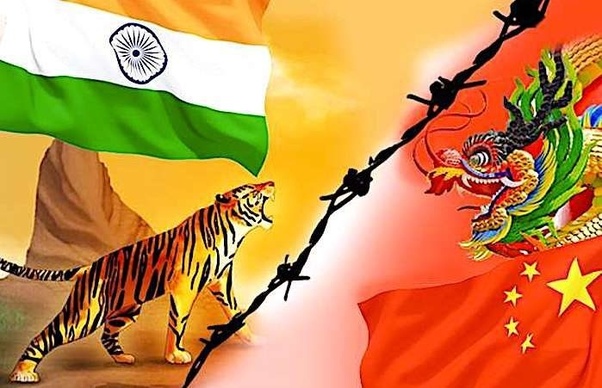
Is India’s ‘neighbourhood first policy’ unable to win regional allies? TRTWORLD

In an online webinar hosted by a Danish think tank, experts highlighted how the rise of China across South Asia has left an unpleasant impact on India’s relations with its smaller neighbours.
India’s ‘neighbourhood first policy’ was Prime Minister Narendra Modi’s signature foreign policy initiative that sought to develop better relations with the country’s neighbours.

But experts, who last week spoke at an online conference organised by the Nordic Institute of Stability Studies (NISS), a Copenhagen-based think-tank, believe that the policy has failed to take a meaningful direction as Modi’s aggressive posture and growing Chinese pressure has prevented the country from winning allies in the region.

The conference’s title was “Failure of India’s Neighborhood First Policy under BJP Government: Implications for Regional Cooperation”.

Speaking at the conference, Scott Lucas, a professor emeritus of political science and international studies at the University of Birmingham, said that “Modi’s confrontational rather than collective approach in the region” has hurt India’s political prospects across South Asia.

The Modi government’s “focus on military measures rather than social elements” has also helped increase tensions across the region, increasing anti-India sentiment, according to Lucas.

Many experts in the conference echoed a common view that China appears to have benefited from increasing anti-India sentiment in the region, helping Beijing solidify its connections with other South Asian nations.

In the first few years of Modi’s rule, regional organisations like SAARC (South Asian Association for Regional Cooperation) were given utmost importance, but the ‘neighbourhood first policy’ failed to produce any positive outcome and instead, the country found itself competing with a far more belligerent China.

The Bharatiya Janata Party (BJP) government’s domestic policies, which many criticise for being exclusionary against non-Hindu minorities, and attacks on press freedom have also made matters worse and further alienated India from its neighbouring countries, the experts said.

Muhammad Athar Javed, director-general of the NISS, who moderated the conference, also viewed that due to India’s patronising attitude towards smaller neighbours such as Nepal, Maldives, Bangladesh and Sri Lanka, New Delhi is “now grappling with multilayered diplomatic challenges with SAARC member states.” The SAARC, which was established in 1985, includes states of Bangladesh, Bhutan, India, Maldives, Nepal, Pakistan and Sri Lanka.

Long enmity

Lucas also drew attention to the fact that when it comes to Pakistan, India’s regional policy sees a sudden shift “due to the factors such as Kashmir or Afghanistan”, making New Delhi’s foreign policy confrontational in nature.

The erstwhile princely state of Jammu and Kashmir has been a disputed region between India and Pakistan since 1947. India has always accused Pakistan of supporting an armed guerrilla movement that either seeks independence from both India and Pakistan or wants the complete merger of the disputed territory with Pakistan.

Another conflict that pits India against its neighbour Pakistan is Afghanistan. Islamabad has long been one of the patrons of the Taliban, a group which has recently come to power in Kabul after a long insurgency against the US-backed Afghan government. Pakistan has also raised concerns over growing hate crimes against India’s Muslim minority.

“India-Pakistan Economic relationship will be damaged if they don’t come to understand Afghanistan and they don’t make some good favorable decisions,” said Samuel Ramani, a tutor of politics and international relations at the University of Oxford, during the conference.

Both countries need to work together for projects like the Turkmenistan-Afghanistan-Pakistan-India (TAPI) pipeline, which is also known as Trans-Afghanistan Pipeline, Ramani said. The TAPI project aims to transport natural gas from Turkmenistan through Afghanistan into Pakistan and finally to India.

Projects like TAPI will test Modi’s mood on whether he is ready for such projects, which will empower India’s neighbourhood first policy, or “it’s just in papers”, Ramani said.

India-Nepal tensions

Ramani found similarities between the post-Arab Spring political environment in the Middle East and current South Asia. Relations among neighbouring countries in South Asia have not improved or gotten worse to some extent and it’s parallel could be found in deteriorating ties between the Middle Eastern states following the Arab Spring uprisings, according to Ramani.

While India’s ‘neighbourhood first policy’ is something New Delhi was keen on pursuing in the beginning, it now appears to be going nowhere, Ramani observed.

“India is interfering in the domestic affairs of neighbouring countries especially in Nepal in the violation of their sovereignty. India is also creating hurdles in free transit and free trade within and beyond Nepal and keeps suppressing its people and government,” the academic said.

A lot of things are “going wrong” in India’s foreign policy, Ramani added.

Anil Sigdel, founder of Nepal Matters for America, a Washington DC-based think-tank agreed with Ramani’s conclusions on India’s foreign policy. Sigdel also thinks that India urgently needs to address various demarcations across Nepal-India borders, which has particularly made Nepali citizens suffer.

As the Eminent Persons Group, comprising high level politicians and experts from both sides for a joint comprehensive review of the bilateral ties, sat down and finalised a list of recommendations, “Modi’s leadership was showing some promise,” Sigdel said, during the conference.

“But that goodwill quickly evaporated as there was no response from the Modi government or not even willingness to receive the joint group’s report,” the Nepali activist said.

According to Sigdel, Ajit Doval, India’s National Security Adviser, “opined that Nepal has benefited from the existing arrangements; therefore Modi does not want to move forward with the report recommendations. And that was it”.

There are also various remaining problems between the two countries such as the water management along the border, especially regarding high structures being built on the Indian side to manage flooding that exposes Nepali villages to danger in monsoon season, according to Sigdel.

During the monsoon season in South Asia, heavy rainfall is recorded between June and September every year.

On top of all these issues, Indian authorities wanted to show their disregard toward Nepal by organising a road inauguration ceremony in Kalapani, a disputed region between Nepal and India, according to Sigdel. But that triggered “an unprecedented defiance” by Nepal as the country’s parliament unanimously passed an upgraded map that included Kalapani as a Nepali territory, “giving a massive setback to the Modi government”.

Is Bangladesh a bright spot for India?

Among others, India- Bangladesh relationship is “a sign of promise”, Ramani said, during the conference. But even in that relationship, things are not bright on the ground as many ordinary Bangladeshis find the political leadership of India under Modi as Islamophobic or anti-Islam, Ramani said. They think that the BJP is “pushing Hindus against the Muslims that create violence,” he viewed.

Nazmul Islam, an assistant professor of political science at Ankara Yildirim Beyazit University, also thinks that “India’s domestic policies are creating problems” in Bangladesh, a Muslim-majority country, showing India’s neighbourhood first policy faces serious challenges even in friendly territories like Bangladesh.

Modi’s recent visit to Dhaka sparked deadly protests. The protesters in the capital city Dhaka chanted anti-Modi slogans to draw attention to his controversial policies that many find to be discriminating against Indian minorities, especially the Muslims.

Across India-Bangladesh borders, things are not looking good either with occasional skirmishes continuing to take place as “smuggling is at its peak”, according to Ramani.

In December 2020, India and Bangladesh held a virtual summit, where the countries discussed topics like boosting trade, investment and transportation links, but avoided the thorny issue of sharing the water of the Teesta River, which flows into Bangladesh from the Indian states of Sikkim and West Bengal, Islam said.

“Bangladesh, like most nations, will sign up for something for its economic benefit”, the academic said.

While India has disagreements with Bangladesh on several issues, “it’s wrong to assume that economic deals with China will make Bangladesh move away from India but India doesn’t like Chinese interest and its investment in Bangladesh”, Islam added.

“Bangladesh’s foreign policy sides with China and Pakistan over India in a few cases, and that Dhaka should be careful regarding its foreign policy and strategic choices as Indian interference in the region and in Afghanistan to gain its power will affect its relationship with Bangladesh in the future”.

Sri Lanka-India ties

One of India’s clashing points with China across South Asia happens in Sri Lanka for different reasons.

“India draws closer to the West, particularly through the Quad and other multilateral and mini-lateral initiatives”, said Shakthi De Silva, an assistant lecturer of international relations at University of Colombo, Sri Lanka, during the conference. Quad refers to a strategic dialogue between the US, India, Japan and Australia as a response to China’s assertive presence in the Pacific region.

But Sri Lanka’s connections with the West are not moving in a good direction as the country’s Rajapakse government faces increasing criticism from Western capitals on human rights issues and freedoms, according to Silva. As a result, Sri Lanka has begun moving toward China, increasing the possibility that Indo-Sri Lankan ties might deteriorate at some point, he said.

“Sri Lanka’s tilt towards China was not an inevitable outcome. Rectifying the situation requires India and the West to adopt a more nuanced posture on the issue of human rights and accountability,” Silva viewed.

But Silva still thinks that “Sri Lanka has, and will, continue to maintain warm ties with India, giving deference to Indian security interests and welcoming high level Indian visits,” Silva added. But the country has also increasingly inclined towards China owing to the latter’s FDI inflows, investment volume and Beijing’s ability to grant Sri Lanka much needed loans as the island tries to extricate itself from its economic crisis.

“Although Sri Lanka curtails its own behaviour to appease India’s security interest, it is increasingly relying on China and will continue to interact with China in the future.”

Source: TRT World